Horizon

There’s been a couple of false dawns. Now, the morning’s News is that the UK will rejoin the European Horizon programme. The EU’s Horizon Europe Framework Programme (HORIZON) provides grant funding for research priority topics for the years 2021-2027.

The recognition that there’s a common interest in research across Europe is welcome. There are important areas of investigation that go well beyond the resources available to any one country. Benefiting from collaboration is a win-win.

Access to Horizon Europe will be a great opportunity for UK aerospace[1]. It has been in the past and surly will be in the future. Of the billions available there’s a good chunk for funding opportunities for aerospace research and technology. This funding is particularly focused on greening aviation.

Such subjects as the competitiveness and digital transformation in aviation are addressed too. Advancing the regions capabilities in a digital approach to aerospace design, development and manufacturing will be invaluable to UK industry. Artificial Intelligence (AI) used for Machine Learning (ML) and complex modelling are the tools that will be deployed throughout the global industrial environment.

Europe can pioneer the first hydrogen-powered commercial aircraft. The major role the UK can play in advancing this aim is self-evident. Ambition, capabilities, and expertise reside here. The magnification of this to tackle what are enormous challenges can only be a good move.

Projects like ENABLEH2[2] provide a pathway to the introduction of liquid H2 for civil aviation. These projects are not easy, but they do provide a long-term environmental and sustainability advantages. Access to these projects can minimise duplication and the dangers of spending valuable resources on pursuing blind alleys.

Research is not just a matter of hard technology. Without the new skills that are required to meet the targets for a green transition it will fail. Investments in upskilling and reskilling opportunities are equally important to enabling change.

The principles of propulsion of hydrogen and electric systems need to be taught at every level. It’s not academics in lab coats that will keep civil aviation flying on a day-by-day basis. Training programmes for a new generation of manufacturing and maintenance engineers will need to be put in place. Research will underpin that work. 


[1] https://www.ati.org.uk/news/access-to-horizon-europe/

[2] https://www.enableh2.eu/

Failure

It’s frequently said that we shouldn’t fear failure. On my desk is a mat with the words: Ever tried. Ever failed. No matter: Try again. Fail again. Fail better. These are Samuel Beckett’s words[1],and they are often used out of context. He was a bit of a gloomy soul. Curiously, given that Beckett wasn’t in the business of inspiring, these words have become a calling to be positive whatever the barriers.

Maybe what I want to talk about is better captured by a stoic Greek. “We don’t abandon our pursuits because we despair of ever perfecting them[2]”.

Well, some people do. I’ve met numerous skilled and talented people who bulk at trying something new because they have a deep-seated fear of not doing it well. No one is immune from that basic apprehension that can run through our veins when we are faced with challenges or significant obstacles.

That said, some of this reluctance, or cognitive distortion comes from what we experienced in education. The constant rewarding of those at the top of the tree can undermine the confidence of others. Particularly those whose in-built self-confidence is low. Even if they have an abundance of natural talent. There’s a destructive impact of the all or nothing approach.

There’s also the sad factor that this can serve the interests of flawed individuals. To stay on the top of the tree they can find it advantageous to big-up their own achievements and diminish others. Not nice. Trouble is that this is real. Politics has more than its fair share of such individuals.

What I like about the – have a go – approach is that it’s rooted in pragmatism. It means putting aside hang-ups and worries, not to ignore them but to keep them in check. None of us are ever going to be perfect. None of us are robots (yet). None of us are immune from failure.

The best of us will try to make thing better. However little progress that is made it’s better that progress be made. Even if that little progress fails into obscurity. Of course, this pragmatism comes with oceans of potential disappointment along the way. But what is disappointment? It’s only another emotion amongst the massive range of emotions that are human.

In design, development and testing failures will occur. If you hear that something new has been a complete success, it’s probably more public relations than reality. Most failures are a long way from total failure. That’s the same as saying something wasn’t a complete success. That’s human. That’s normal.


[1] https://booksonthewall.com/blog/samuel-beckett-quote-fail-better/

[2] Epictetus.

Oppenheimer

Nuclear physicists did change the world forever

It’s a movie that’s immerses. On the walk to Reigate’s small cinema, the thought of sitting in the front row for over 3-hours was making me wonder if I should follow the recommendations coming my way. Locally, having a “must see” film showing hasn’t happened for a while. Views of friends were almost universal about the film[1]. All positive.

It’s intense. Even in the 3-hour run there’s no wasted time. No spinning the wheels. The story is two or three films in one. Given that this movie is about a life, what we see is a compressed drama against a backdrop of world events.

It’s serious. Not much room for everyday humour. Just a sprinkling of irony. Nuclear physicists did change the world forever. Would the change have happened anyway? Yes, most probably, but the world would now be a different place if the bomb had been realised in the Europe of the 1940s rather than the US.

When big science meets national and global politics the results are disturbing. Robert Oppenheimer acted as a nexus. Events pulled him like a powerful magnet from one impossible situation to another. At the same time, he made choices based on strong convictions and a single-minded assurance.

His faith in a “liberal” America was tested to the limit as the devils of political intrigue and ambition kicked against him. The human choices of the head and the heart were stirred into conflict. The sharp tension between right-wing politicos and left-wing intellectuals killed any middle way to bring the globe together to manage the new threat of nuclear confrontation.

Sub-stories ranged over challenges I recognised. The whole art and practice of managing experts, in his case on a large scale, of the Manhattan project, were on display. How do you create urgency and unity around a controversial project? The military couldn’t do it by compulsion alone. The ethical and moral case had to be made for pursuing an aim that would transform the world, or even destroy the world. Once made, the atomic bomb could not be un-invented.

The war to end all wars became nothing of the sort. One bomb led to another and the dangerous stalemate of the Cold War. The later shaped my life as much as anyone who’s over 60-years.

On the technical front, what is fascinating to an engineer, like me, is the vexed question of – what if? What if the massive technical risks of the Manhattan project had not paid off[2]? Or it had taken years more to make a viable bomb? We will never know.

This film, part biography, written and directed by Christopher Nolan was so much in his style. However, on the screen there was no doubt who was dominant. The Irish actor Cillian Murphy is stunning. His Robert Oppenheimer burns into the eyes. What an incredible role.

The temptation is to use a wide range of adjectives that reach a crescendo. There’s a pile of reviews that do. So, I’ll turn to the parts that were not so coherent. Strangely Kenneth Branagh as Niels Bohr worked. However, the portrayal of Einstein was less convincing. The use of black and white pictures to demark different times worked well but was annoying. And sometime the thunderous noises and dramatic flashes were a bit OTT.

Overall, it’s a “must see” film for 2023 and best on the big screen. But don’t sit in the front row.


[1] https://www.imdb.com/title/tt15398776/

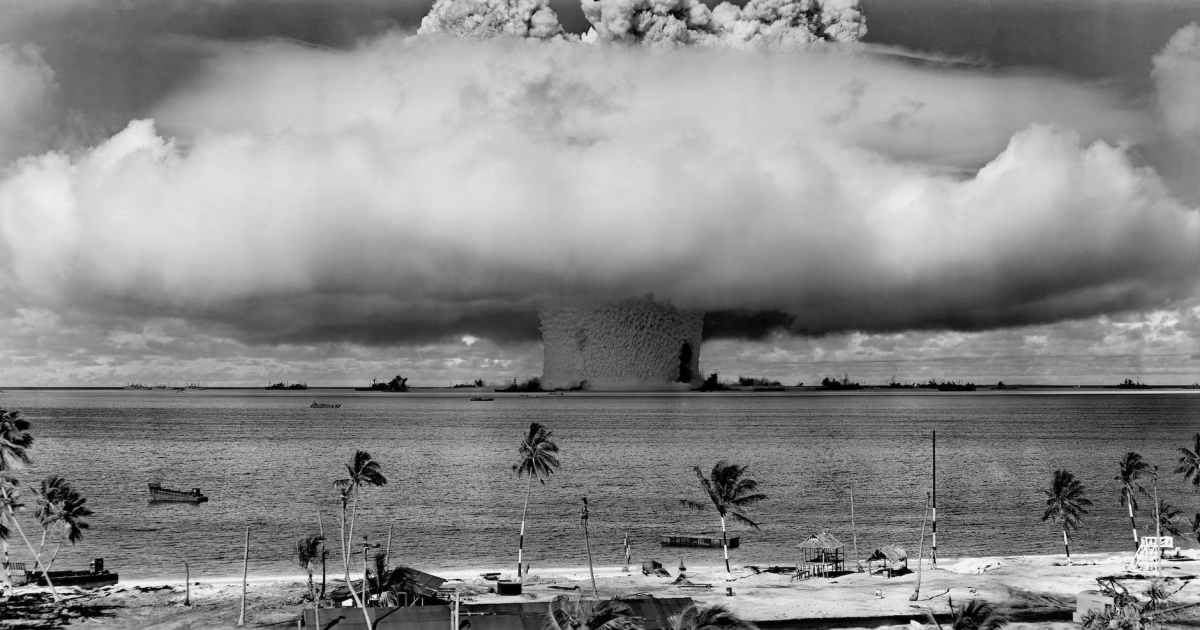
[2] Early morning of 16 July 1945, in New Mexico, work at Los Alamos led to a test of the first nuclear weapon.

Stomping off

Boris Johnson is going from the green benches but, like it or not, he will still be with us as a voice for Brexit

Middlesex is a place that isn’t a place. When I lived in the English town of Staines, the postal address would often have Middlesex as the county. In fact, Staines is in the county of Surrey. History, and former administrative boundaries still echo into the present. It’s not confusing for postmen and women but for anyone unfamiliar with that part of the world, it’s strange.

Uxbridge is in Middlesex, or it was in past times. In electoral terms, the UK Parliament constituency of Uxbridge and South Ruislip [1] is a marginal seat. It’s that far west boundary of London.

Uxbridge is a university town. Uxbridge has a London tube station.

During the 2016 UK referendum on European Union (EU) membership, I stood with local students at a table in the street outside Uxbridge’s tube station. We had lots of interesting encounters with residents talking about what would, or would not happen if the Leave campaign won the referendum. If I remember rightly, the disposition of people we met was about 50:50.

A conversation with one local businesses man turned out to be quite revealing. He put it like this – my head tells me to vote to stay in the EU, but my heart tells me to vote to leave the EU. On the day, for a majority it seems that the heart won out over the head. The consequences of that vote we all now know.

Uxbridge and South Ruislip is in the News. Projections focusing on the next General Election are confident that the Parliament constituency will flip from Conservative to Labour. The polls show a highly likly swing.

That would mean that Boris Johnson’s time as Member of Parliament (MP) would come to an end with electoral defeat next year. So, the current News that Boris Johnson has resigned as a Conservative MP is not such a surprise to me. Usually, an MP in such a position does what’s called the “chicken run”[2]. That is, they get selected as a candidate in a more winnable seat so that they can retain a career in Parliament. Boris Johnson has moved seat before.

Boris Johnson is all about drama. Boris Johnson is all about exceptions. Stomping off and ranting about the unfairness of his enemies is designed to get weekend newspaper columnists filling pages about him. He’s never going to go quietly. Even outside the House of Commons there’s always going to be a well-paid pulpit for this torrid man. The loud noises he makes appeals to a section of the country, much as Trump does the same in the US.

Middlesex has gone but it’s still with us. Boris Johnson is going from the green benches but, like it or not, he will still be with us as a voice for Brexit. The reality is that the Conservative Party is split. Broken apart by in-fighting. It’s in chaos. In a way, there is a parallel with the mid-1990s. Disputes over our place in the world, and Europe continue to fracture our politics.  

POST: It has been noted that there’s no former UK Prime Minister in modern times who has so strongly attacked Parliament’s institutions and former colleagues as Boris Johnson. How British voters will respond to his victim narrative will play out next week.


[1] https://members.parliament.uk/constituency/3817/overview

[2] https://www.spectator.co.uk/article/are-mps-doing-the-chicken-run/

Why become an engineer?

At times in our lives there are choices to be made. That is if you are lucky enough to be able to make those choices. What courses to study at different stages of youth, is a big question. My story has more pragmatism that idealism. I was a great deal better at maths, physics, and geography than history or english langauage. Underlying that was as much interest as natural ability. It wasn’t so much a typical divide between the arts and humanities and science and technology. I enjoyed art. I’d say it’s having more of a graphical mind than a one that’s tunned to langauage and words.

I had a fascination with machinery. Growing-up on a farm I had plenty of opportunities to work with machinery. Taking engines apart and fixing anything and everything that needed fixing. What I found frustrating was the make-do-and-mend approach. It’s the classic agricultural attempt to fixing everything with 6-inch nails or baler twine. When money is tight, it’s a question of keeping machinery going for as long as possible before having a big bill or to chuck it away.

It was evident that small family livestock farming wasn’t for me. That feeling gave me more incentive to study. I left school at 16 yrs. with a moderate number of exams under my belt. What to do wasn’t clear but it wasn’t an open book either. I applied for apprenticeships within commuting distance of home. Local engineering employers of the time, Westland helicopter in Yeovil, Racal in Wells and Plessey Marine in Templecombe were targeted with letters from me. That’s the businesses of aircraft, radar, or sonar.

I’m a great believer in serendipity. Events come together by chance and an outcome can be better than might have been imagined. In 1976, I got a positive response from Plessey Marine Research Unit (PMRU). That year, the company sponsored two apprentices. Me being one of them.

Westland helicopter had a large long-established apprentice training school. A couple of my school mates ended up in Yeovil. Then, so did I but at Yeovil college. It ran an Engineering Industry Training Board (EITB)[1] training programme. This gave a bunch of 16-year-olds their first exposure to machine tools. The 48-week programme was much more. Some skills are life skills, that like riding a bike, are not forgotten. Today, I can still make a reasonable decent weld.

Training within PMRU was a series of placements moving from department to department. Although I was employed as a drawing office trainee there were other possibilities opened. The mix included a day-release to continuing studying.

Back to the original question. Why be an engineer?

There were professional engineers I worked with, and who mentored me, who did much more than put up with a curious local youth. They were inspiring. I wanted to do what they did. I wanted to understand design. I wanted to know the theory behind Sonar systems. Those steppingstones in the years between 16 and 18 are of immense importance. My opportunity to cultivate fascination drove my motivation to study. It worked. It set me on a path.

It’s one thing to put STEM[2] in schools. It’s another to give students real experience, of real work in real workplaces. Both are needed.


[1] https://mrc-catalogue.warwick.ac.uk/records/WDP/3

[2] Science, technology, engineering, and mathematics (STEM) the umbrella term used to group together the distinct technical disciplines.

Talent

We all met talented people throughout our lives. This can evoke a wide range of feeling. From the wide-eyed awe to the upset of the green-eyed monster of jealousy. Those blessed with a facility to achieve more, and the dedication to make the most of that talent, can have an immensely positive impact on their communities. It’s doesn’t always turn out that way but when it does our focus is attracted. We look on with admiration, joy, and hopefulness. Hopefulness that the joy will rub off onto others and inspire.

The passing of the Brazilian footballer Pelé is the passing of an era. If it’s an image of a screen or picture in a newspaper he had the capability to shine. It’s a heavy weight to be classed as the “greatest players of all time.” Such accolades can be the ruination of a normal mortal. Afterall we are not built to be super-human.

To anyone under 30 years old, it’s not easy to convey the transition of television from a Black and White screen to a Colour screen. It seems so primitive. The kick-off of Pelé’s fame took place in the monochrome world. That didn’t dim our amazement at his talent. The dynamics of his movement. His ability to outwit those around him on the football field. The delight of elegant goals striking the back of the net. This summed up to be special.

Who would have thought that a Brazilian professional footballer would make the world a better place. For generations of young people kicking footballs around hard-hit neighbourhoods there’s a star. It doesn’t matter that few will have such great skill to show-off. What matters is the inspiration.

World Cup glory came his way three times. That’s unmatched. The bar has been set for those to come. Good luck to those who try.

R.I.P. Pelé.

Snobbery

It hadn’t occurred to me at all. We’ll not as far as this person’s abilities to communicate a topic that clearly fascinates her. Yes, I know that part of that work is to promote a book just before Christmas.

I enjoyed Dr Lucy Worsley exploration of the life of the author Agatha Christie[1][2]. She looked, not just at the chronological facts but tried to piece together Christie’s motivations and the forces that were acting on her at different stages of her life. A well-crafted story was presented that was far more interesting than may have been commonly understood.

Now, I’m told that the reaction of some people is as “marmite”, that is you either love it or hate it, with little room in-between. It seems Worsley’s dramatisation of the incidents of Christie’s life are considered frivolous and superficial by some pedantry types.

As a presenter, Worsley loves to dress up and is not shy of debunking long-standing historical myths. It’s a style that leads viewers and listeners into the feeling that things were not as simple as our school textbooks had us think. That there’s a twist and tail in every story of the past.

The snobbery that can be directed towards those who step outside the box and challenge, even with great care, embedded assumptions, and folklore is not nice to see. It’s not limited to academic historians who have a fondness for telling stories. There is a little too much of this trend in the aviation world too. Ten minutes on Twitter and you’ll be convinced.

I remember one of Quino’s cartoons[3] showing a university professor sitting in the middle of a room. In true cartoon abstract his head was a big arrow that pointed towards the roof. Sitting around him was a group of smiling acolytes. Their heads were extended too. They each wrapped around the professor’s head like a vine. The message being that it’s all too easy to give up independent thinking and follow a classical or standard line. An illustration of “group-think”. That tendency for people to cling to an ideology regardless of its sensibility.

Here’s a Christmas message. If tempted to be a pedant or a snob, even with the best intentions in mind, count to ten before launching reactions to the creative and more demanding thoughts of others. Especially, when thoughts and ideas step on your own cherished field of expertise.

It’s worth a try.


[1] https://www.bbc.co.uk/programmes/m001g91r

[2] https://www.bbc.co.uk/programmes/p0d9cd6n

[3] https://www.quino.com.ar/homequino

Unsustainable

One Minister say we want more immigration. Another Minister says we want less immigration. One Minister say we want to tax less. Another Minister says we want to keep taxes. One Minister say we want shale gas. Another Minister says we do not want shale gas. One Minister say we want more building everywhere. Another Minister says we want less building everywhere. One Minister say we can put tackling climate change on hold. Another Minister says we must act on the climate. One Minister wants to privatise the NHS. Another Minister supports public health provision. And, so on and so on.

What we have is an unsustainable UK Government without a mandate. No wonder the financial markets have been spooked. The more Ministers zigzag, U-turn, and twist and turn the more damage they do. In Truss and Kwarteng’s first month of Government chaos, it is reported that around £300 billion has been wiped off value of UK assets.

The UK is facing its biggest crisis since the Second World War. The threat is the Conservative Party. Their abject inability to set-out what they stand for has left the Conservative Party vulnerable to volatile knee jerk reactions and being led by the nose by fringe interests.

Poltical parties contain people with different interests and views. When there’s no alignment and common purpose holding those people togther then the fabric of a party fails. Trying to head this off, leaderships often get louder, more irrational and clutch at straws. Prime Minister Truss received Conservative Party conference applauds to her “anti-growth coalition” slogan but this is crazy in the context of recent Government preformance.

What is observable across the globe is that right-wing populist politicians love confrontation. They enjoy shouting down opponents. They like controversies of their own making that they can then attribute to others. The Conservative Party is broken.

Our immediate concern needs to be that this Government is sleep-walking into a mass of avoidable catastrophes as we move into the winter of 2022. Sadly, now, they are practicing the cartoon pose of an ostrich with its head in the sand.

topsy-turvy

2022 is only a few days old. Yet, it seems a lot older. The bizarre confusion of last year has followed us across the threshold of the years. What do I mean? It’s an upside down, back to front state of almost permanent upset.

Go get tested we are told. Testing will help us avoid further restrictive measure to contain this 3rd wave of COVID-19 infections. So, I walked up to the door of our local Boots the chemist and right in front of me was a notice saying they had no test kits but were waiting for the next order to arrive.

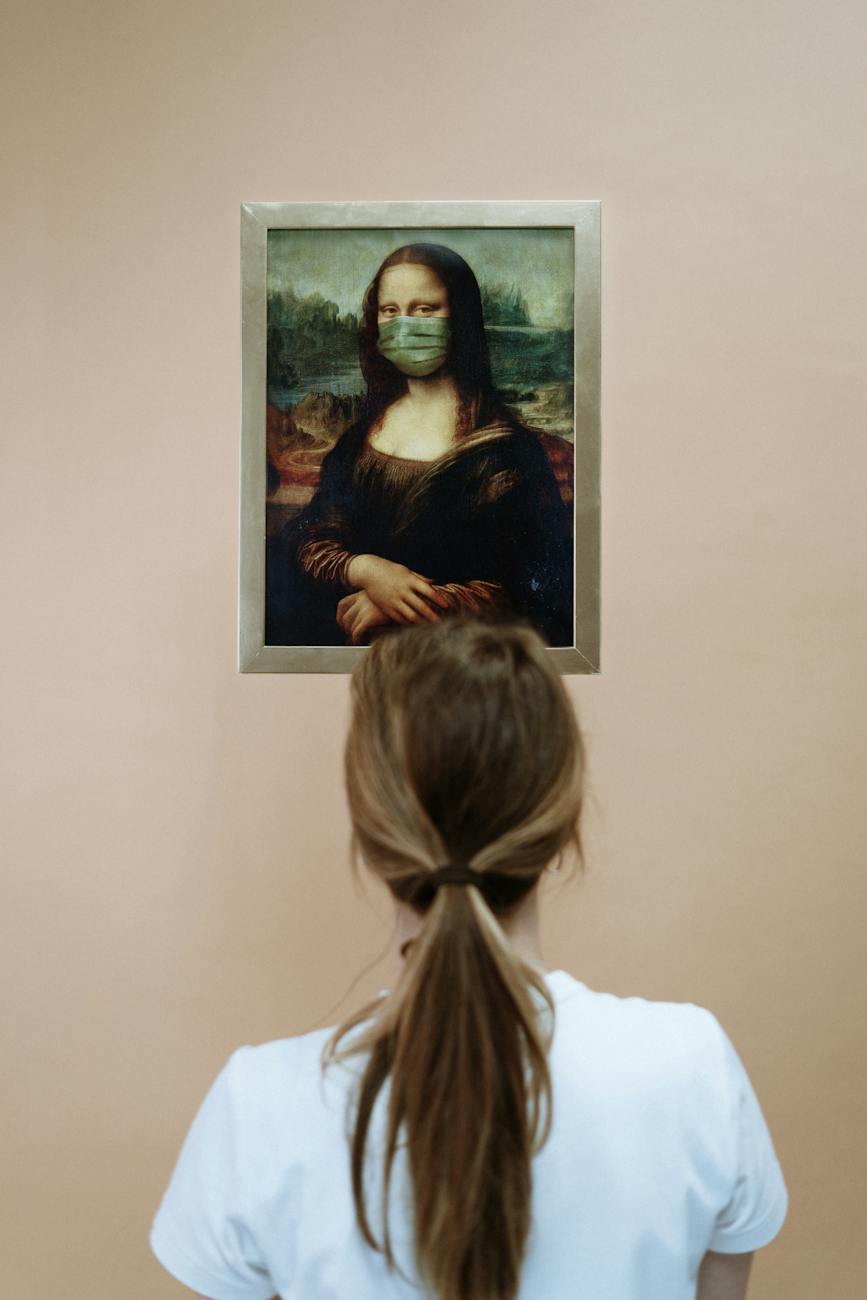
Put on a mask[1]. Don’t wear masks. Children must wear masks. Masks cause mental illness in schools. So many contradictory confused messages bouncing off the walls. Constantly senior politicians are racing to say the opposite to their colleagues. It’s possible to see a relish in the discomfort that they cause their colleagues.

Plan B or not plan B. But what is the plan? It’s clear the pandemic is far from over. Wishfull thinking does not make a threat go away.  The reality is that very large numbers of new coronavirus cases have been recorded. Their impact is being seen in the NHS and on the High Street.

A record number of job vacancies remain unfilled[2]. We are told to be prepare for a quarter of the work force being off sick. Ministers put on a brave face and say: don’t worry everything will be hunky-dory. That bright red, much reprinted “Keep Calm and Carry On” wartime motivational poster is now Government policy.

By the way, I’m not talking about the 1961 film: “Carry On Regardless[3]” but maybe I should be. Comedy farce is as British as British can be. The cast of characters in that film would probably make a better Government than the one we have in office. I shouldn’t even go down this avenue of thought. It’s too tragic.

Prime Minister Johnson is thought to be delaying decisions waiting for new data to become available. By the time official COVID-19 data is available it’s clear it’s going to be way behind the curve. Omicron’s progress over Christmas has been rapid.

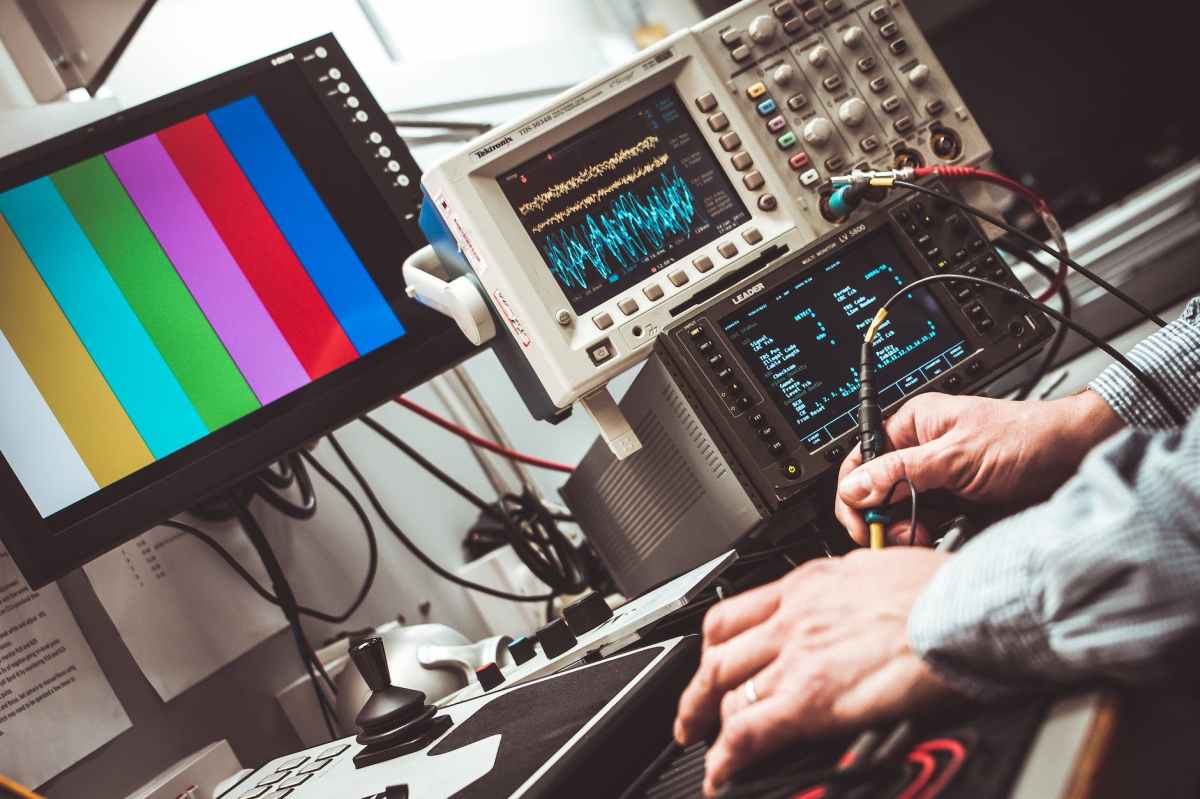
As an engineer, I wish we had politicians who had just smidgen of systems engineering knowledge. Just a tiny appreciation of how control systems work can go a long way. How we respond to feedback can have a determining impact on what happened next. An approach solely based on “let’s wait and see what happens next” has a huge potential to result in undesirable outcomes.

The topsy-turvy world of tabloid media and Conservative backbench thinking is blinding Johnson. Our peculiar British fairground ride is continuing.


[1] https://www.who.int/news-room/questions-and-answers/item/q-a-children-and-masks-related-to-covid-19

[2]https://www.ons.gov.uk/employmentandlabourmarket/peopleinwork/employmentandemployeetypes/bulletins/jobsandvacanciesintheuk/latest

[3] https://www.imdb.com/title/tt0054727/

2222

As we welcome in 2022 with the hope that it will be an order of magnitude better than the last 2 years, it’s a good time to look ahead. Better that is for general wellbeing.

I’m a fan of Science Fiction. Maybe it was my years of childhood influenced by Gerry Anderson’s imagination. “Space 1999” envisioned a fully functioning moon base[1] before the 21st century had begun. It was a popular UK TV Series between 1975 and 1977. That’s me at age 15 to 17.

Now, here we are in the 2nd decade of the 21st century and space travel has a long way to go. There’s no first moon base in prospect in 2022. It maybe 50 years before imagination becomes reality. Rare examples of predictions that got the future right do exist. However, there’s a lot more cases where fanciful ideas, plausible in their day are lost in the mists of time.

As we enter 2022, I wonder what 2222 will look like. Naturally I’ll never see that day. That is unless a magical means of extending life is discovered in the next decade.

Projecting forward 200 years is mighty challenging. Before I go there let’s look back 200 years. A long time in human terms but a short time in so far as the universe is concerned. That was a time when the secrets of the Rosetta Stone were deciphered.

In the year 1822, Englishman Charles Babbage publishes a plan for a difference engine. That could be said to be the start of the computing era. He got support to build a working computer but sadly it was not completed in his lifetime.

French microbiologist Louis Pasteur was born in 1822. Today, as we struggle out of a pandemic, we have a lot to be thankful for his work.

In that year Mary Shelley’s Frankenstein was on the bookshelves. Thus, the notion of a “mad scientist” conducting dangerous experiments with technology was on the streets. That could be said to be the start of the science fiction era.

Given an acceleration of technical advancement, looking 2 decades ahead the scope opens for some dramatic and transformational changes to take place. Without getting bogged down with dystopian futures that will see humanity on its knees I’ll consider some positives.

Unlike Frankenstein there will certainly be “nice” autonomous robots that work alongside humans in every setting. The extent to which these companions will be self-aware and free to do as they wish is potentially the subject of an endless debate. I think they will be constrained by some well-considered fixed laws.

Life will still be a mystery. That said, the microbiologist 200 years hence will be studying lifeforms discovered on other planets. No other intelligent life, evolved as far as humans will be communicating with Earth. That’s not to dismiss the likelihood that they are out there somewhere.

The word computing will have lost its meaning in 2222. Abstract and virtual worlds of immense capacity, performance and realism will be part of everyday life. It’ll add new dimension to physical life. It may bring us to value our physical environment much more.

Travelling through time will still be science fiction. But simulated time travel will be available to all. In 2222 it will be possible to step back into a realistic simulation of 2022. That will make history lessons a warp around experience. I’m wondering if such a high-fidelity knowledge of our past will make us better people or not. Who will be the keeper of the truth of the past?

The political world of 2222 is likely to exhibit new versions of past problems. 200 years isn’t much in human evolution so we will still be struggling with our place in the universe. Granted the knowledge of how it works will be off the scale when measure in comparison with 2022.

I’m confident that a human colony, or more than one will be up and running as industrial enterprises on the Moon. It will be there to facilitate every kind of space travel. Human will not venture much beyond the immediate vicinity of Earth. Our automatons will be spread throughout the solar system. Some to explore and some to extract valuable elements and harvest fuels.

The Earth’s population will have stabilised at about 15 billion people. There will not be much uninhabited or underpopulated land surrounding established mega cities. To compensate there will be massive parks and reserves under global governance dedicated to preserving environmental diversity.

This is just a flight of fantasy. The most remarkable changes in 2 centuries will be the ones that are impossible to predict. Today. we have taken to the smart phone and social media in a decade to the point of dependency. That’s one busy decade. Multiply that by 20 and who knows?


[1] https://www.imdb.com/title/tt0072564/