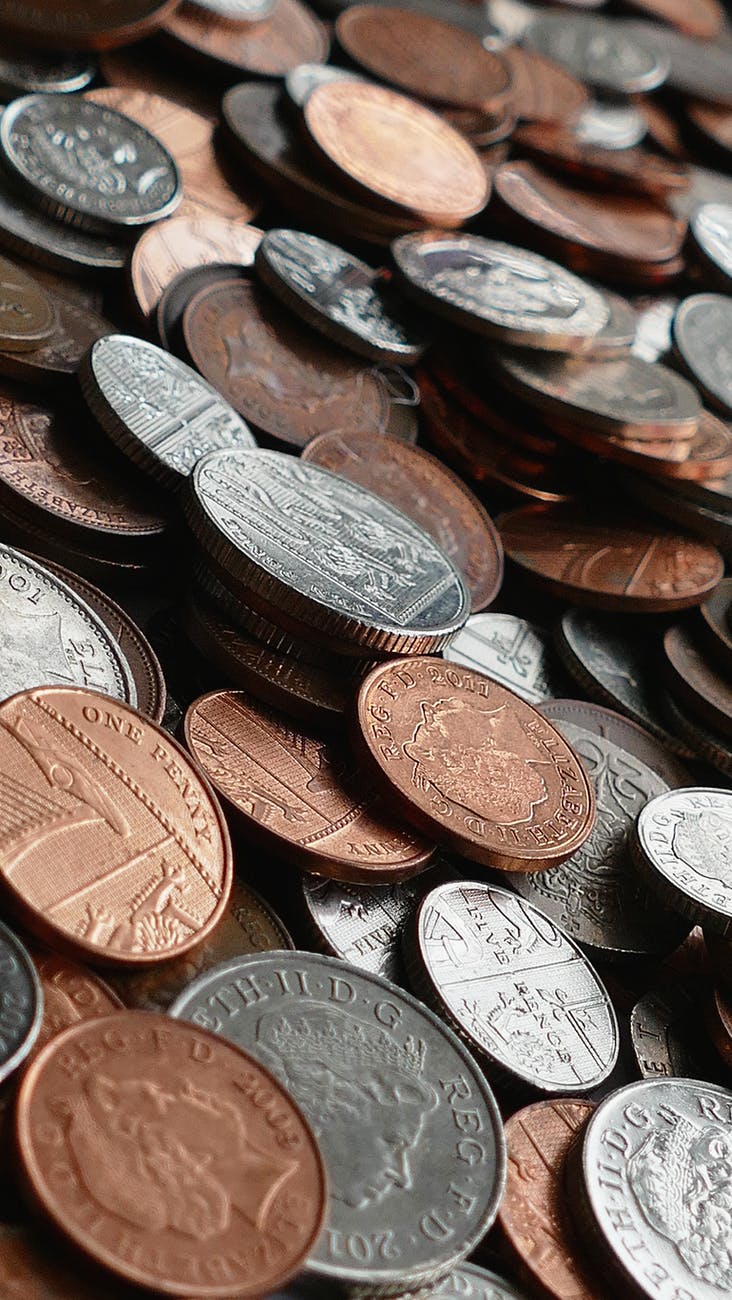
2222

As we welcome in 2022 with the hope that it will be an order of magnitude better than the last 2 years, it’s a good time to look ahead. Better that is for general wellbeing.

I’m a fan of Science Fiction. Maybe it was my years of childhood influenced by Gerry Anderson’s imagination. “Space 1999” envisioned a fully functioning moon base[1] before the 21st century had begun. It was a popular UK TV Series between 1975 and 1977. That’s me at age 15 to 17.

Now, here we are in the 2nd decade of the 21st century and space travel has a long way to go. There’s no first moon base in prospect in 2022. It maybe 50 years before imagination becomes reality. Rare examples of predictions that got the future right do exist. However, there’s a lot more cases where fanciful ideas, plausible in their day are lost in the mists of time.

As we enter 2022, I wonder what 2222 will look like. Naturally I’ll never see that day. That is unless a magical means of extending life is discovered in the next decade.

Projecting forward 200 years is mighty challenging. Before I go there let’s look back 200 years. A long time in human terms but a short time in so far as the universe is concerned. That was a time when the secrets of the Rosetta Stone were deciphered.

In the year 1822, Englishman Charles Babbage publishes a plan for a difference engine. That could be said to be the start of the computing era. He got support to build a working computer but sadly it was not completed in his lifetime.

French microbiologist Louis Pasteur was born in 1822. Today, as we struggle out of a pandemic, we have a lot to be thankful for his work.

In that year Mary Shelley’s Frankenstein was on the bookshelves. Thus, the notion of a “mad scientist” conducting dangerous experiments with technology was on the streets. That could be said to be the start of the science fiction era.

Given an acceleration of technical advancement, looking 2 decades ahead the scope opens for some dramatic and transformational changes to take place. Without getting bogged down with dystopian futures that will see humanity on its knees I’ll consider some positives.

Unlike Frankenstein there will certainly be “nice” autonomous robots that work alongside humans in every setting. The extent to which these companions will be self-aware and free to do as they wish is potentially the subject of an endless debate. I think they will be constrained by some well-considered fixed laws.

Life will still be a mystery. That said, the microbiologist 200 years hence will be studying lifeforms discovered on other planets. No other intelligent life, evolved as far as humans will be communicating with Earth. That’s not to dismiss the likelihood that they are out there somewhere.

The word computing will have lost its meaning in 2222. Abstract and virtual worlds of immense capacity, performance and realism will be part of everyday life. It’ll add new dimension to physical life. It may bring us to value our physical environment much more.

Travelling through time will still be science fiction. But simulated time travel will be available to all. In 2222 it will be possible to step back into a realistic simulation of 2022. That will make history lessons a warp around experience. I’m wondering if such a high-fidelity knowledge of our past will make us better people or not. Who will be the keeper of the truth of the past?

The political world of 2222 is likely to exhibit new versions of past problems. 200 years isn’t much in human evolution so we will still be struggling with our place in the universe. Granted the knowledge of how it works will be off the scale when measure in comparison with 2022.

I’m confident that a human colony, or more than one will be up and running as industrial enterprises on the Moon. It will be there to facilitate every kind of space travel. Human will not venture much beyond the immediate vicinity of Earth. Our automatons will be spread throughout the solar system. Some to explore and some to extract valuable elements and harvest fuels.

The Earth’s population will have stabilised at about 15 billion people. There will not be much uninhabited or underpopulated land surrounding established mega cities. To compensate there will be massive parks and reserves under global governance dedicated to preserving environmental diversity.

This is just a flight of fantasy. The most remarkable changes in 2 centuries will be the ones that are impossible to predict. Today. we have taken to the smart phone and social media in a decade to the point of dependency. That’s one busy decade. Multiply that by 20 and who knows?


[1] https://www.imdb.com/title/tt0072564/

A Year On

Here we are with one year of Brexit under our belts, and the unmitigated disaster that it is couldn’t be clearer. No European Union (EU) Member State has shown any interest in following the UK and departing from the block. If anything, observing the negative impact of Brexit on the UK has strengthened unity within EU. The end-of-year review of Brexit by Bloomberg finds not a one economic positive and a lot of significant damage[1]. It’s not alone either. Finding positives is like the search for the Yeti.

Such is the great embarrassment of Brexit that UK civil servants are told not to mention it. Brexit does not mean Brexit anymore. It means shush be quiet.

There is little doubt the COVID-19 pandemic has shifted the focus away from the effects of Brexit and allowed the UK Government to avoid the scrutiny that would normally be applied. So far, worldwide COVID-19 deaths total 5,410,921 (Source: Johns Hopkins). Thankfully the extensive vaccination programmes across the globe are working. New Year’s Eve parties will be going ahead in England. Nevertheless, there’s an atmosphere of caution and it’s likely that 2022 will arrive to muted celebrations.

There’s no rational way of explaining why the Conservative Government in power enacts policies that they know will damage the Country’s strength, safety, security, economy, and social fabric. The only explanation is a ridged adherence to dogmatic arrogance, preventing any acceptance of responsibility for the outcome of past decisions. There can be no rational explanation for a trading Nation that chooses to erect trading barriers with its closest neighbours, at a time of considerable global uncertainty[2]. Origin of manufacture customs regulations begin on 1st January 2022 for goods exported from the UK to the EU. This is yet more red tape that will impact UK exports and livelihoods.

Claims made in 2016 that food prices would fall, tax and energy bills would be lower post-Brexit are now completely farcical. It’s true that people were warned that these claims didn’t stand-up but that didn’t deter those who made those outlandish statements. Many of those who made such statements have profited from the last 5-years of troubles. If not always in financial terms they have profited in terms of power and influence[3].

Some of the architects and managers of Brexit have chosen to resign to escape responsibility for the self-inflicted wound. However, a significant advocate of Brexit remains in post. UK Prime Minister Johnson still resides in Number 10 Downing Street. I wonder for how much longer.

If the pandemic has taught us anything it is that the solution to global problems is collaboration. Acting in splendid isolation may appease a small domestic political audience for the short term but longer term it is a hopeless approach. Working togther to meet global challanges is the way forward.

Brexit simply isn’t working and those that have been dealing with it can see a looming crash. The UK starts the New Year with so many Brexit issues still unresolved. Sadly, Brexit supporters continue to pump out fibs and practice chicanery. But slowly and surly the great British public are beginning to wake up and the political tide is turning. 


[1] https://www.bloomberg.com/news/articles/2021-12-22/how-a-year-of-brexit-thumped-britain-s-economy-and-businesses

[2] https://www.bbc.co.uk/news/business-59761292

[3] Examples can be seen by looking at the list of those elevated to the House of Lords.

Bury the Past

Politics does descend into absurdity. It’s not unique to our time. What important is that we don’t ignore what’s going on. That approach just abdicates power to the worst amongst us. Attention must be paid to uproot any burying of the past. Corrective action must be taken to re-establish competency and trust.

An absurdity of the moment is the pretence that what happened in the past is irrelevant. That no one in power is answerable for past events. Even those newsworthy events that are relatively recent. This political strategy elevates talk of future actions to cover-up the deficiencies and negligence of the past.

We’ve heard from a Minister of Justice saying that a suspect crime, that happened a year ago, is not the sort of event that the requires investigation. He’s saying that past mistakes and stupidly can escape scrutiny. For any member of the public, a law degree is not needed to know that this is absurdity. It’s right that questions be asked at the highest level.

The UK’s Prime Minister seems intent on concealing any revelations about a Christmas party that may or may not have taken place in No 10 Downing Street[1]. To deny the past is not sustainable. The open display of a culture that ignores rules is shameful[2]. If this proves to be the case strong corrective actions, including resignations would be appropriate.

In addition, there’s a bad habit of saying that criticism of past actions is only “hindsight”. That word is used to diminish the importance of an important issue. What’s worse is that it’s used to justify ignoring fair questions or legitimate criticisms.

Absurdity becomes the norm when this political strategy is used frequently and with little thought. A default position that says, all past events are irrelevant is dangerous and rapidly erodes credibility. A position that then justifies lying to bury past events is supremely crooked.

Conservative politicians in Westminster have got themselves into this extremely bad habit. It’s an arrogant assertion that accountability is for other people. It’s an attempt to by-pass the checks and balances that are necessary in any successful democracy.

As inflation rushes to exceed 5%, the denial that Brexit has had anything to do with this is another absurdity. This habit of burying the past extends to supply chain problems and a decline in trade[3].

Parliament needs to rise and challenge these absurdities. The fabric of our democracy is fraying.

Government credibility is sinking in the quicksand of denial.


[1] https://www.reuters.com/world/uk/uk-pm-johnson-under-fire-over-christmas-lockdown-party-2021-12-08/

[2] https://news.sky.com/story/this-party-is-not-going-to-be-investigated-by-the-police-in-a-years-time-rees-mogg-jokes-about-government-christmas-parties-12489616

[3] https://ukandeu.ac.uk/wp-content/uploads/2021/12/The-impact-of-Brexit-on-UK-services.pdf

Reflection

Without wishing to sound too much “told you so”, looking back on what I’ve written here over the last 5-years, it’s evident that a lot of it was on the money. Overall, the experience of the last 5-years has diminished our national prosperity and damaged reputations.

There’s a number of central points that shine through the fog. 

For a start, Brexit was not just one event which when delivered would bring an end to decades of introspection about Britain’s place in the world. If anything, the subject is higher on the agenda than it has been for a long time. All twists and turns are analysed in terms of – where are we going?

The underlying theme of the recent years has been to try to restore an imagined past. For some people this is an imperial role. It’s a lamenting of a time when the school map was red with the British empire.  This is, in part, a culture war like that played out by Trump in his term in office in the United States. Instead of applying the immense variety of our heritage as a solid foundation it’s being weaponised. 

Political deception has been fuelled by an age of ubiquitous social media. When so much information, true and false, is pumped out every moment, opinions eclipse facts more frequently than in the past. The louder the incessant shouting, the more money backing the campaigns, the more likely the result impacts policy and decision making.   

Perpetual uncertainty is now expected. Any deals, agreements or working arrangements, however magnificent, are viewed as moments that pass. The traditional phrase “my word is my bond” has no meaning amongst a large band of politicians. Maybe this is a tactical chasing of public opinion data that’s pushed aside any strategic thinking. 

The question can be asked: was all this inevitable? Would it have happened in one form or another even if the referendum vote of June 2016 had gone a different way? On this one, I’m pessimistic.  The idea that a public vote won or lost by a very small margin puts a subject to bed for all time is childish, to say the least.  Such votes are an indication of something deeper.

Yet again our technology speeds ahead of us, far exceeding our ability to cope with it. Both our salvation and our prison warden, we can articulate grander visions but are tied by primitive instincts. 

In my view this is the great merit of social liberal politics. The need for balance. The need for fairness. Instead of letting the libertarian monster out of the bag or denying our human frailties, taking them both into the mix is far wiser than our current destructive course.   

A British politician once said all political careers end in failure. That failure can be avoided, like a mature sports personality, stepping down at the optimal time. For Prime Minister Johnson, all indications are that he’ll crash the ship of state rather than change direction.  Let’s hope the choice is taken from him by a change made by the public. The humble voter.

FR4978

The case of the forced diversion of Ryanair flight #FR4978, a commercial passenger aircraft over Belarus on Sunday, 23 May 2021, is a matter for grave concern.

So, what’s the problem? A civil aircraft with passengers on-board, on a scheduled flight, flying over a sovereign State was diverted because of an alleged terrorist threat. Aircraft lands safely and in the end most of the passengers continue to their intended destinations.

Well, the case of the forced diversion of Ryanair flight #FR4978, a commercial passenger aircraft over Belarus on Sunday, 23 May 2021, is a matter for grave concern. The aircraft was carrying European citizens and residents between two European Union (EU) capitals.

The track of the Ryanair flight FR4978 from Athens (ATH) to Vilnius (VNO) was posted on Twitter[1]. The Boeing 737-800 was diverted to Minsk in Belarus whilst it was about to start its approach to Vilnius airport in Lithuania.  The Ryanair flight maintained 39,000 ft toward Lithuania before beginning a diversion about 73km from VNO and only 30 km from border.  The Polish registered Boeing passenger aircraft (SP-RSM) was forced to land in Belarus.  

More than 5 hours after the landing of flight FR4978, the aircraft remained on the ground in Minsk.  Whilst the aircraft was on the ground the Belarusian authorities detained opposition activists, Raman Pratasevich and Sofia Sapega.

Was the aircraft hijacked to go to Minsk? Well, there’s no report of force being used on-board the aircraft, so strictly speaking this may not be a hijacking.  The mystery deepens when considering that if the alleged terrorist threat was credible, it would have been far safer to continuing into Lithuanian airspace and land at the intended destination. 

Also, there’s the Belarusian military fast-jet aircraft (MIG 29) that accompanied flight FR4978. This could be considered aggressive intimidation of the Ryanair flight crew.  It certainly limited their flight’s options in respect of the situation.  The military interception of a civil aircraft for political reasons is a serious act and one that can put the safety of passengers in peril. So, whether it’s called a “forced diversion” or a “State Hijacking” it could be in contravention of the Chicago Convention. That’s the basis on which international civil aviation is normally conducted. 

It’s now clear that the International Civil Aviation Organisation (ICAO)[2] will carry out an independent investigation into this Ryanair flight[3].   Strong condemnation has come from the European Union (EU)[4]. The aircraft operator, the State of Registry, and many of the passengers were from EU Member States. 

If the investigation concludes that officials in Belarus faked a bomb threat to divert this Ryanair flight for political purposes, then this is a gravely troubling act that has horrendous implications for international civil aviation.  No other authorities had knowledge of a bomb threat to this Ryanair Athens-Vilnius flight. The Greek Civil Aviation Authority, as the aircraft took-off from Athens, has stated that it received no bomb warning.

This event is an attack on European democracy, freedom of expression, freedom of movement and safety. The Belarus authorities need to immediately release Raman Pratasevich and Sofia Sapega.

Update 1: EASA issues Safety Directive calling on Member States to mandate avoidance of Belarus airspace.

Update 2: Simillar thoughts: The interception of #Ryanair Flight #FR4978 – legal or not, carriers have been put on notice.


[1] https://www.flightradar24.com/

[2] https://www.icao.int/Newsroom/Pages/ICAO-Council-agrees-to-pursue-fact-finding-investigation-into-Belarus-incident.aspx

[3] https://news.un.org/en/story/2021/05/1092812?123

[4] https://www.consilium.europa.eu/en/press/press-releases/2021/05/24/belarus-declaration-by-the-high-representative-on-behalf-of-the-eu-on-the-forced-diversion-of-ryanair-flight-fr4978-to-minsk-on-23-may-2021/

Here’s where we are, I think.

May is a month of rebirth. Trees look greener than they do all year round. A fresh breeze and light rain fans this greenness as the natural world wakes up. It’s a good time for looking at life anew.  Sunny spells and showers come and go as we take stock of the spring. 

Worldwide COVID-19 pandemic deaths are up to just over 3.3 million[1].  Despite the successes of its suppression in the UK, the virus continues to rage around the world.  Sadly, desperation continues to spread across India.  On the positive side, vaccination plans are successfully being implemented. I’m more than ready for my second jab in just over a week’s time. 

What hasn’t changed is that aviation chiefs continue to provide roadmaps to bring back some semblance of normal but often sit back mystified at Government reactions and peculiar decisions. 

For international travel, to and from the UK, a curious traffic light system[2] is being put in place in the UK.  Unfortunately, there’s a lack of transparency as to why countries are categorised as they are in this unique national system.  Obviously, it’s better than a national lockdown with unending uncertainty but there’s little to be happy about. 

On entry control, the practice of quarantine hotels is unpopular and of highly questionable effectiveness. They are a crude measure that is discriminating, expensive and unsustainable.

The European Union (EU) has been slow in reaction and is still testing COVID-19 vaccination, test, and recovery certificates.  There are reports that this system is on-track to be rolled out next month.

It’s a miserable time to travel across borders. Plans are made and cancelled and re-made. Travellers are often left out of pocket and in limbo.  Yes, these are extraordinary circumstances but as advanced nations our general performance in managing the situation is remarkably poor. 

Although UK Government decisions are said to be guided by evidence and the science, there’s a fair amount of ideology driving decisions contrary common sense. 

Surprisingly, if the recent round of elections is anything to go by, the UK Government is sitting pretty. Now, its political opponents who are the ones who are struggling.  Commentators have speculated that this is a kind of national Stockholm syndrome[3]. I wonder. 

Post Coronavirus recovery of UK air traffic may not be seen until the end of 2022. 

The EU has developed a broad system of relationships with neighbouring states. Post Brexit there remains lots of loose ends in the relationship between EU and UK.  In fact, it’s probably time to stop using the word Brexit altogether. It’s not a meaningful word looking forward.    

Calls for a Bilateral Aviation Safety Agreement (BASA) and a Comprehensive Air Transport Agreement (CATA) between the EU and UK are muted but their importance remains.  Aviation and aerospace industry voices are being ignored. 


[1] Worldwide (from Johns Hopkins): Deaths: 3,322,294.  

[2] https://www.gov.uk/government/speeches/traffic-light-system-safe-return-to-international-travel

[3] What is Stockholm syndrome? https://www.bbc.co.uk/news/magazine-22447726

Still work in progress

Has it really been 100 days since the final, final, final Brexit day? 

The UK left the European Union (EU) on 31 January 2020.  A Withdrawal Agreement (WA) that the UK Government agreed with the EU, established a transition period that came to an end the day this year started.  Now, a new EU-UK Trade and Cooperation Agreement (TCA) has been in force for 97 days. So, it’s not a bad time to have a go at writing a 100-day review.  It’s often a period of reflection that is used to assess a newly elected politician.  It gives an indication of the direction of travel. 

Last year, although it was a top priority of UK industry to stay in, the UK has left the European Union Aviation Safety Agency (EASA) based in Cologne.  So, there’s no official UK participation in the EASA activities by right and the UK is treated as any other 3rd Country.  EU law no longer applies to the UK. Much of what was previously applied has been swept up in new UK Legislation[1]

Regulation-wise, to figure out where we are now, it’s necessary to combine the officially published corresponding text of UK Legislation and EU Commission Regulations with the EASA Acceptable Means of Compliance and Guidance Material, including amendments.  Some smart people have done this work, but the challenge will be keeping the whole paperwork construction up to date. 

Informed commentators have often said that a Bilateral Aviation Safety Agreement (BASA) and a Comprehensive Air Transport Agreement (CATA) are needed between the EU and UK.  To some extent the TCA starts the ball rolling by calling for the establishment of a number of committees. 

On the basis that there’s far to much still in flux to discuss, I’ll bite off one key aviation related subject. 

Despite the massive impact of the COVID pandemic on international civil aviation there remains a demand for qualified engineers.  In many ways their roles as Airworthiness Inspectors or Licenced Aircraft Maintenance Engineers have become even more important than ever. Traditionally, there’s no doubt that the UK has been good at training aircraft engineering personnel. Students from all over the world have gained their licences in the UK.  It’s one of the most demanding professions in the world but their dedication to the highest standards keeps flying safe. 

Whilst the UK was a member of the EASA system a licence granted in the UK by an approved organisation was recognised throughout the EASA Member States and beyond.  One of the powerful arguments for continued participation in EASA was the avoidance of the duplication of approvals, certification, and licencing. Each duplication comes with a fee and time consuming paperwork.

The political decisions having been made and that’s exactly what we now have in place. Duplication. In fact, it’s worse than that because there’s asymmetry in the current situation. 

The UK CAA advises Part 66 licence holders to take action to minimise impact on their privileges.  There are several combinations and permutations that can be considered.  There’s a useful updated section of information for licensed engineers on the UK CAA website[2]

Engineers who continue to release EU-registered aircraft to service outside the UK will need to transfer their licence to the National Aviation Authority (NAA) of an EASA Member State. If an engineer works outside the EU and UK, on EU-registered aircraft, a UK Part-66 licence will no longer be valid. 

If an engineer has a non-UK Part-66 licence they will be able to continue to work on UK-registered aircraft for up to two years after the end of the transition period, unless your licence changes or expires (whichever occurs soonest).

There’s also an exemption for engineers who hold a EU Member State issued EASA Part-66 licence who only received
or changed their EASA licence after the departure of the UK from the EU.

All of this is high politics because a Part 66 licence, UK or EU is granted on the same technical basis. Yes, there’s potential of regulatory divergence or new ways of doing business in future. However, it’s difficult to understand what the justification for any divergence might be but the possibility exists.  And as avid Brexit supporters like to point out the UK is no longer subject to EU legislation.  That has no impact of the UK’s need to meet its international obligations. Both UK and EU need to be complient with the ICAO Convention.

There’s much work in progress. Now, is a moment when it all looks like a kitten as been playing with a large ball of wool that has rolled down a staircase.


[1] https://info.caa.co.uk/uk-regulations/

[2]https://info.caa.co.uk/uk-eu-transition/licensed-engineers/

Meldrew – not by a long way!

All the world’s a stage, And all the men and women merely players, They have their exits and entrances, And one man in his time plays many parts, His acts being seven ages.

The great man is not the origin of the idea that human life can be partitioned into phases. He’s the one who captured the idea in the best poetic of language. 

It was an on the sofa conversation that brought my attention to the “Viewpoint” in the Radio Times. That tells something of my stage in life. Who reads the Radio Times anyway? I don’t as a habit. On this occasion Sue pointed out a short article by Charlie Higson titled: “Old people don’t feel old”. 

I think he hit the nail on the head with that one. The COVID pandemic has brought out the worst in parts of the British media. It’s as if anyone over the age of 60 lives in their slippers, is bent double and hardly ever goes out of the house.  Call it ageism if you like. It’s all over the place.

Yes, I do watch shows about gardening, so the stereotypes are not entirely without foundation.  But just as Charlie says, the notion that people of my age are computer illiterate or never used an App in their lives is downright insulting. After all, for good or ill, we are the generation who invented the digital era.  The silicon revolution happened on our watch. 

It’s true that I often see other mature people acting as grown-ups.  Off the peg at M&S and quoted saying sensible and wise utterances. But I’m convinced that some of that’s a front. Carved to confuse younger people to give them the impression of the possession of superior knowledge. 

I have real difficulty in thinking of myself as over 60. I guess, it’s a stubborn rejection of the images of the over 60s that I had in my head 40 years ago. The world has changed beyond recognition in that time.  The kind of jobs people do, their expectations and what was considered “normal”. 

Next time, I see an advert for retirement flats where the eligibility is for the over 60s, I will speedily pass by in abhorrence.  You will not catch me anywhere near such a place until my 90s. 

So, stop it British media. Stop putting us in the later stages of our seven ages before our time. 

*Shakespeare’s Seven Ages of Man

#PolicingBill

It’s bad. It’s bad when a Government drafts legislation badly. To put a draft text out there which has a mixture of headlining positive proposals, but also mind-bendingly bad measures is bad politics. I can’t use the word “bad” enough.

Today, the #PolicingBill is being debated in the UK Parliament. The bill is an unparalleled attack on civil liberties. This post-Brexit slide towards authoritarianism under this Conservative Government is dangerous.  The Bill contains the most draconian crackdowns on the right of peaceful protest that any of us have seen in our lifetime.

Protest by its very nature causes a level of disruption. So, if UK legislation makes disruption illegal it effectively bans public and personal protect.  This is shocking. 

This incredibly badly drafted legislation has proposals that look like they were taken directly out of 1984.  10-years in jail for annoying someone, particularly a police officer. This is dangerous politics.

Protest isn’t a gift from given by a generous authority. It’s our fundamental right. It’s our fundamental right to show that we disagree. If this bad bill passes unamended, we will end up with a police state where our civil liberties are eroded in ways that it will be difficult to claw back.

If you don’t believe me then I recommend you read the text of the proposed Police, Crime, Sentencing and Courts Bill (PCSC Bill).  See: 59 Intentionally or recklessly causing public nuisance. https://publications.parliament.uk/pa/bills/cbill/58-01/0268/200268.pdf

You will get 10-years in jail for serious annoyance, serious inconvenience, or serious loss of amenity to a person or even risk of such.

What is a lot of money?

I’m marking a birthday in a few days. Although, I think I will imagine my age as being minus one year. 2020 had some notable moments but if I was asked: would you like to do it again? I’d say: make it ten days and you’re on.  One of the beauties of age is reminiscence. Yes, I can remember a pre-decimalisation England.  Pounds, shillings, and pence were what I was taught at my primary school in a small Somerset village. 

I remember the Callaghan led the Government in 1976 and its financial woes. The Labour government was forced to apply to the International Monetary Fund (IMF) for a loan.  Those turbulent years were a lot of fun for me. The summer of 1976 was magnificent in every way. 

As I started work as an apprentice, unemployment stood at a post-war high and inflation was in double digits. Punk rock was running riot.  England was changing.  It was a dynamic period. 

Although, as a young man I had no interest in it at the time, the way Governments spent money shaped a lot of what was happening.  Money did matter and does matter. It’s the difference between being able to do things and stagnation or recession. 

However, never be deceived. Government spending is not like household spending, as Mrs Thatcher would have had you thinking. For a start, none of us has our own mint. None of us are directly compared with other countries or issue our own bonds. 

So, what are we to make of the apparent calmness expressed over massive Government borrowing and reckless spending? We are in truly unprecedented times. A pound for every time that word was used, and the national debt would be a lot smaller. 

How do we make sense of a 1% pay offer for nurses when they have been so pivotal in the national response to the COVID-19 pandemic?  When there’s no evidence that a Government funded Test & Trace made a difference and yet it cost over £30 billion.  To top that, there’s been 130,000 COVID-19 deaths making the country stand out as one of the worst performing of all. 

Are these the new late 1970s? Except for the absence of inflation, and astonishingly low interest rates it does look that way.  But let’s get back to that word: unpresented. I don’t think there’s an analogous situation in my lifetime that might give some clues as to what comes next. 

For the moment, the so called “cockpit of the nation”, the House of Commons seems all but useless given the power of the ruling executive.  Government actions are not held to account. 

The billions spent on the Test & Trace system are a perfect example.  Well over £500 per head of UK population has been spent on this system in a short period.  But few know where the money went or what it bought. There needs to be far greater accountability and transparency. This is an urgent matter.