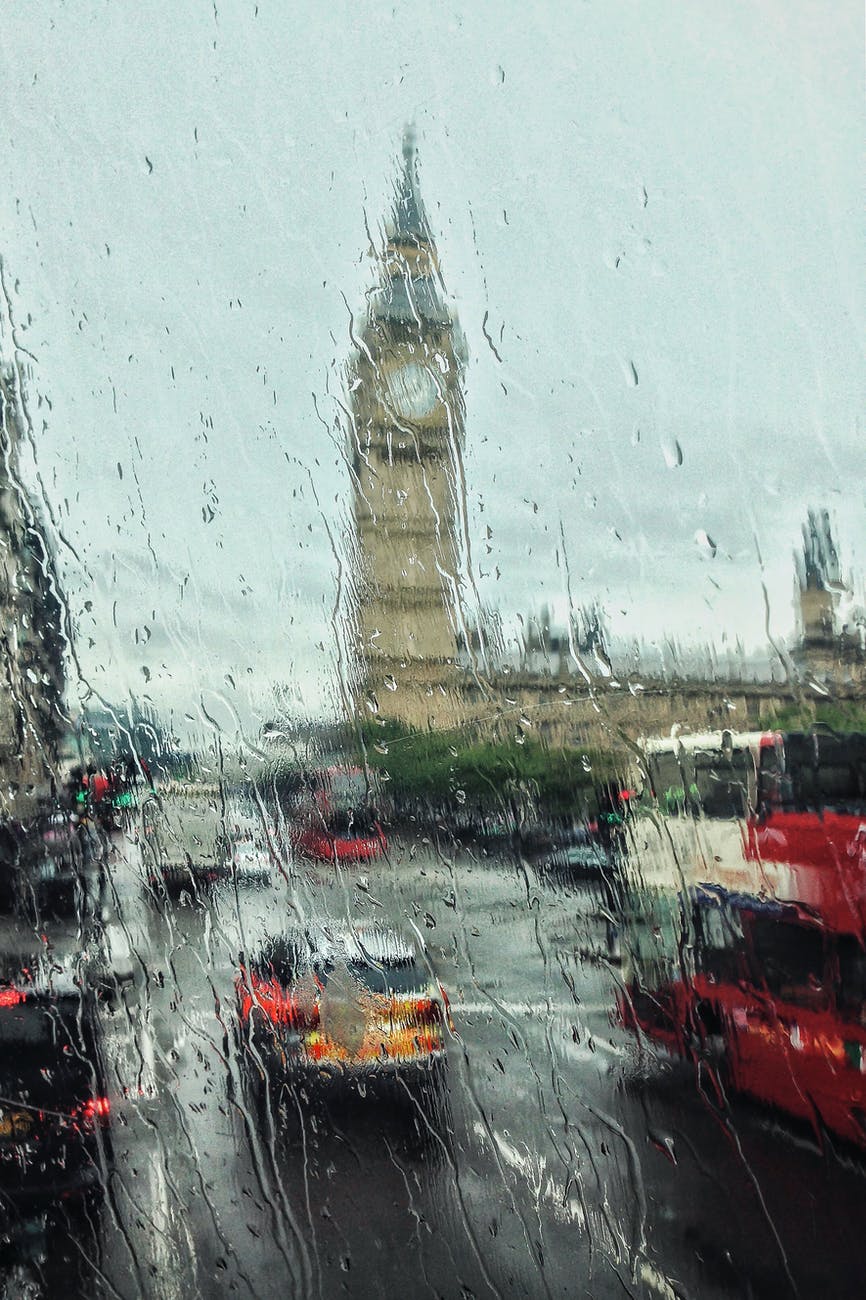
Lock-down the sequel 2

Lock-down 2.0 is only days but it already feels a lot longer. The News cycle adds more COVID-19 cases day by day. It’s too early to tell if this restraint on liberties is having the desired impact.

Wearing a mask has become so much of a habit its going to be difficult to shake when this is all over.

Mild weather is opening the opportunity to be outside. Much as this is pleasant there’s places where people naturally congregate. Being socially distanced isn’t so easy in places. My recent walk along the ridge of the North Downs was busier than it would normally be. Coming to the car park near Junction 8 of the M25 it was crowded. Since take-away coffee and a wonderful view come together it was a magnet for many people.

I’m trying to leave the car at home and go by shank’s pony. Building up lock-down legs is an investment for the winter. Getting out before the cold hits. Although, I’m reminded of being told that there’s no such thing as bad weather just bad clothes.

We all need human interaction, so it was nice to have a chance meeting with some friends while out walking. All the time we stopped and talked I was conscious of the perception that we might be doing something wrong. These strange feelings were especially crazy as we more than doubled minimum 2 meter spacing.

It’s sad to hear that there are people taking advantage of the rules and a few being crooked. I overhead of one case where a consignment of PPE was stolen. Businesses may be shut up but those with a criminal mind have found ways of profiting out of the situation.  Junk mail has risen as cyber criminals have upped their game to snare people. 

There’s a level of general public trust in the science but the politicians handling of the pandemic is poorly regarded.  Faith in the Government being stretched paper thin.  The use of incorrect and exaggerated data has contributed to this position. 

It has been said that if lockdown goes on one day beyond 2nd December then it’s curtains for PM Johnson. His own MP will turn on him with scorn and vitriol. This may happen regardless of the pandemic statistics at the time.
All Change

Disproportionate effects play a bit part in life.  It’s like the story of waiting for a bus. Nothing happens and then three turn up at once.  This week’s news is of Joe Biden’s electoral victory in the United States (US). My congratulations and best wishes to the people of the US.

For the last four years there has been a continuous drone of incoherence and self-absorption coming from Trump. It looked as if this was going to go on forever. In just a few days that unpredictable regime has been unseated even if they haven’t yet accepted the fact. Now, there’s a chance to strengthen transatlantic relations and rebuild after all the bluster, buffoonery and time wasted during the Trump era.

Joe Biden’s electoral victory means a shift of direction.  Climate change is back on the agenda.  There’s likely to be more multilateral efforts to solve common international problems. Most of all there’s the need for healing and to no longer drive wedges between peoples. 

Clearly it’s a time to be optimistic but a moment of caution is necessary.  There’s a couple of reasons for me thinking this way.

One, although over 70 million people in the US voted for change a considerable number didn’t. Where in the past, polarisation was a political tool used by the populists, the damage caused will not be fixed instantly. Considerable effort must be expended to reach out and heal wounds. So, how much time will the administration have for international relations?

Two, the ability of an administration to get things done depends not just on the Presidency in the US system of governance. The Republicans held a 53-47 majority in the US Senate chamber heading into this election. The Senate race in the State of Georgia has become pivotal.  If Democrats gain control of the Senate, this shake-up will have major implications. 

What happens next isn’t so clear. Populism gave the world Trump, and in the UK, it gave us Brexit. It’s given the UK an incompetent Government during a pandemic.  Will the changes going on in the US have powerful ripples and bring about positive changes in the UK? No one knows – yet.

Lock-down the sequel

It’s obvious? Certainly, seems obvious to me. This lock-down has a completely different feel to it from the springtime one. Then a wave of solidarity swept over us all. Back in April – May the days were getting longer. Tulips were flowering. For a while it did feel like we were are all in this together.  A great national effort to pull together and beat this ghastly virus. Then as we got into the summer a cautious clam settled. It looked, for a while as if a sense of normality had been restored.

Where did it go wrong? Such has been the general incompetence since that there’s a sourer atmosphere with this latest incarnation of a national lock-down.  No longer can we turn a blind eye to mistakes made in haste. A succession of Ministers over promising and under delivering has erased credibility and undermined public confidence.

Autumn can be colourful. If there’s an aspect of lock-down that lifts the spirit, it’s those misty mornings when the sun burns off the fog and the full glory of the leaf fall is revealed. Finding time to be outside is a plus.  At least if the weather holds. 

Wandering around there’s an air of confusion. More commercial premises are open. Traffic is way up on the springtime lock-down. Looking for a logic in what’s open and what’s not is perplexing. I can walk into a shop and buy a newspaper. A book on the other hand is an online purchase.  If I want Christmas decorations, it’s best to go to a garden centre and mingle with an older generation.

Forget a coffee and a sandwich unless I’m happy to sit in the park and eat them alfresco. Having missed the window for a haircut, I’ll come out of this lock-down as a yeti. A well-fed yeti. Supermarkets carry on with no sign of difference or special measures.

It’s an impression but I don’t think this national lock-down has the serious attention of the past one. People know that policing is focused of the attention-grabbing breaches of rules. Everyday skirting around the rules and mirror infringements have become habits.

Rules, although written simply, need a lot of interpretation. Moving to a new house is in scope. But what about the ancillary tasks like traveling to meet agents or dispose of possessions no longer needed. Even knowing that charity shops are shut-up for the duration.

The urgency displayed as a justification for this national lock-down isn’t being followed through but Ministers. I’m reminded of the advice for speakers: tell them what you are going to say, tell them and then tell them what you have said. There needs to be repetition of urgent communications. For a message to stick and be taken seriously by the public the Prime Minister must be more visible.

Flight, Risk & Reflections 8.

2-years ago I wrote: “Early in the year, prudently the EU published a series of notices concerning the “No Deal” outcome.  These were stark and based upon the UK becoming a “Third Country” with a blank sheet of paper in front of it.  That’s a Country with no special arrangements with the EU.” It seems that they (EU) were very prudent

That said, let’s be optimistic. News reports are that the UK and EU have transitioned into an intensive phase of negotiations with the aim of getting a much-cherished Free Trade Agreement (FTA)[1].  Here we are coming up to the last week of October 2020. 

Although the outcome remains unclear the wisdom of being prepared for the end of the Transition Period is unquestionable[2]. Aviation has been trying to get to grips with the ups and downs of Brexit for 4-years, but this is the real crunch time. 

As I’ve commented before, the departure of the UK from the European Union Aviation Safety Agency (EASA) was unexpected only a year ago but it’s going to happen on 1 January 2021. This will mean more “red tape” and regulatory costs for UK industry, but the UK Government is unmoved in its position. 

For aircraft design, UK based Design approval holders need to apply to the UK Civil Aviation Authority (CAA) for a UK Design Organisation Approval (DOA)[3]. The UK CAA will continue to apply the European rules as set out in Regulation EU No 748/2012 that determines the rules for the certification of design organisations. Part-21 subpart J of this Regulation concerns the Design of aircraft or the associated components.

For aircraft production, UK based production approval holders are advised to apply for an EASA Third Country Production Organisation Approval (POA)[4]. The same is true for those maintenance organisations who want to work on European Member State registered aircraft.  This is an administrative procedure within EASA and so certificates will only be issued to UK organisations, all being well, after the transition period has expired. 

A lot will depend on what’s in any EU-UK aviation agreements as to any mutual acceptance or recognition of approvals.  Now, no one is able to predict the outcome of negotiations. We all must rely on statements from the UK Government and EU Commission on the latest progress of negotiations. 

To me this is a mighty strange state of affairs. If I reflect on the detailed and thoughtful groundwork done for the creation of EASA back in 2002-3, it’s as if a everything has been thrown to the four winds.  


[1] https://www.bloomberg.com/news/articles/2020-10-25/brexit-talks-extended-to-oct-28-as-u-k-indicates-optimism

[2] https://www.adsgroup.org.uk/blog/prepare-for-the-end-of-the-transition-period-with-our-brexit-webinars/

[3] https://www.caa.co.uk/Commercial-industry/Aircraft/Airworthiness/Organisation-and-maintenance-programme-approvals/EASA-Part-21/Apply-for-a-Part-21-Subpart-J-approval/

[4] https://www.easa.europa.eu/brexit-early-applications#others

Flight, Risk & Reflections 7.

Turbulence ahead. The week past has been one of more of continuous buffeting. Are we going to see a deal not? Is the door open or closed? And so, the wrangling between the UK and the EU manages to fill yet more media headlines, but no one is any the wiser. 

To repeat one of the few certainties, the United Kingdom (UK) has left the European Union (EU) and the transition period is in place until 31 December 2020.

During the week, the UK’s Transport Minister has confirmed that a No-Deal Brexit could ground UK – EU flights[1]. Although this negative scenario is unlikely the UK Government seems remarkably unconcerned about the whole subject. There’s an expectation that the EU to bring forward contingency measures to save the day[2]. More temporary measures, more uncertainty and more contraction of services. Not a good approach to take in the situation. 

Overwhelmingly, Aviation wants the UK Government to focus on reaching a Bilateral Aviation Safety Agreement (BASA) with the EU[3]

A year ago, claims were made that a UK-EU deal would be easy, in-fact that it such a deal was “oven ready”.  It’s now that we struggle to understand why the endless wrangling continues and that the No-Deal Brexit outcome is still on the table. We (UK) are tittering on the brink of the greatest failure of statecraft since the Suez Crisis in 1956.  Then with his health ruined and his political credibility brutally damaged, Sir Anthony Eden, the British Prime Minister in 1957, resigned. Will such a fate be waiting for British Prime Minister Johnson?

Johnson says the UK is primed ready for: “Australia-style terms” if a No Deal Brexit happens at the end of the year. This is pure theatrical political rhetoric designed to ratchet up tensions and appease members of the Conservative Party. It’s blatantly irresponsible nonsense since there’s no such thing as an Australian deal. 

It’s Monday and the fourth meeting of the EU-UK Joint Committee under the Withdrawal Agreement will takes place in London. No doubt the mood of this meeting will be tense. Oh to be a fly on the wall in that meeting. 


[1] https://www.cityam.com/brexit-no-deal-could-ground-uk-eu-flights-grant-shapps-admits

[2] https://euobserver.com/tickers/149765

[3] @PauleverittADS

Food and Farming

Those two words, food and farming are intimately linked.

Now, the UK Government is preventing Westminster MPs from voting on a House of Lords amendment to the Agriculture Bill.  Thus, the planned UK Trade and Agriculture Commission will not be empowered to protect food and animal welfare standard in the UK. 

An unending stream of underhand tactics, lies, rule breaking, shortcuts, manipulation and deceit power this Conservative Government. They are ushering in low standards, cheap imports and industrial farming practices that will be bad for animals, bad for humans and bad for the environment. 

The Agriculture Bill provides the legislative framework for the replacement of agricultural support schemes in place during EU membership. For some people, the Brexit project was about cutting red-tape in the belief that bureaucracy was the problem. So far, the post-Brexit world is presenting ever more complex bureaucracy producing poorer and poorer results at a greater cost than before. 

National Farming Union’s president Minette Batters said: “We have the chance to become a global leader in climate-friendly farming, and neither farmers nor the public want to see that ambition fall by the wayside because our trade policy does not hold food imports to the same standards as are expected of our own farmers.”

The coming week will test if this UK Government is united with the majority of the public and farmers in not wanting to accept lower quality food imports or doesn’t give a dam. 

Common Sense

It’s “just common sense”, Government Minister says. Can there be anything more irritating than hearing that inane statement from someone in power?

Now, I admit the term “Common Sense” has been used to great effect in history. It can be said that it sparked the revolutionary war that created the States of America. Englishman Thomas Paine argued vigorously for American independence under the title Common Sense.

I don’t see modern-day politicians fired up with revolutionary fervour to fight the great evil of the coronavirus. Rather, I see a limp, lost and lazy second-hand car salesmen clinging to their jobs.

The notion of an attribute being “common” is like a schoolteacher trying too hard to be “down with the kids”. Soaking up what is though to be modern culture and showing off how in-touch they can be when in-fact the teacher is often way out of touch.

Populist politicians love nothing more than to see themselves as on the same wavelength as members of the public. If you look closely at their history and experience its often a million miles from normal. Their normal is an imagined one.

Real common sense is sound sensible judgement about everyday stuff. Naturally, we would all claim to have this quality.  However, to quote Voltaire: “Common sense is not so common.”

For something to be common it’s difficult to set a threshold. A knee-jerk reaction might be to say that something where half of people are expected to agree can be called a common belief.  Contrast that with the common things that are not so common. The Wren is one of Britain’s most common bird but how often do you see one?

Why I most object to a Minister deferring to “common sense” is the implication that considered thought, expert opinion and education are not needed. You could even ask what’s the purpose of a Minister if in the end response to COVID-19 is for the individual to make it up as the go along.

There are societies that hold the Laissez-faire way of doing things in high esteem. As a good Liberal, the sense in a policy of minimum governmental interference is clear to me. However, that doesn’t mean an abdication of responsibility when decisions have to be made. Opting for bland reassurance rather than decisive action will cost lives.

Populist politicians are the least suited to dealing with a crisis. They flit between chasing newspaper headlines and wallowing in uncertainty and indecision. When a situation turns bad, they blame the people that they were elected to serve.

Liberals are so much better because they know where to draw the line between minimum essential intervention and freedom. This is always a delicate balancing act. 

Flight, Risk & Reflections 6.

It’s almost unnecessary to say that there’s little time left to secure an EU-UK deal this year. It’s now October. This week, the European Council has a 2-day Special Summit in Brussels. They meet again at a European Council Summit on 15th and 16th of the month. There’s a European Parliament plenary session between 19th and 22nd October too. Each of these is an opportunity to converge on an EU-UK deal, sign it, and ensure it gets ratified.

It might be apparent from my writings, as well as the media reports that the ups and downs of speculation about any potential deal have reached irritating proportions. One week a positive mood, next week a negative mood while progress on resolving Brexit issues continues at a snail’s pace.

In the UK Parliament, the UK Internal Markets Bill has passed on 3rd reading by 340 to 256 votes. Thus, the intention to break the existing Withdrawal Agreement with the EU has been signalled[1]. None of this peculiar negotiating dance seems to make much difference.  Extra costs, more red tape and shrinking investment continue to plague the UK economy.

When challenged about the growing Brexit costs, UK Government Ministers just say that’s an inevitable consequence of leaving the EU[2]. There’s no longer any attempt to justify new regulations other than to blame the EU.  With the UK planning to break a recently agreed deal, it makes it difficult for Europeans to have trust when ratifying the next one. 

The latest joint statement[3] coming from both side of the negotiation is short, but it does hold out hope for a deal. Trouble is that both sides keep saying the “ball” is in the others court. 

World-wide aviation continues to be buffeted by the coronavirus pandemic[4]. Millions of jobs hang on the line. Not only that but the hospitality and tourism industries are reeling as the downturn shows no sign of ending.

Recently a quote from Paul Everitt (aerospace trade body) summed up the situation with understatement: “It’s not a happy place for us to be.”


[1] https://www.prospectmagazine.co.uk/politics/internal-market-bill-break-international-law-brexit

[2] https://twitter.com/i/status/1311588865896058880

[3] https://ec.europa.eu/commission/presscorner/detail/en/statement_20_1821

[4] https://twitter.com/i/status/1305440885212094465

Flight, Risk & Reflections 5.

In the UK, not only has the amount of flying reduced dramatically but the places people are going has changed. Whereas a year ago long-haul air traffic dominated international passenger numbers that has changed[1]. The breakdown in transatlantic travel is notable. Greece and Turkey are now top destinations. Leisure travel and the international hubs in Istanbul and Dubai are major players. It will be fascinating to see if, over time these changes stick.

It’s a new week and another week of EU-UK negotiations. Brexit talks could be in the final stretch.  The agenda for the 9th round of talks in Brussels includes aviation[2]

The calls for “no compromise” on the part of the hard-core Brexit supporters is far from the reality of what is needed to move the talks forward. EU and UK negotiators both need to compromise to get a workable deal. Unfortunately, even during this pandemic, the culture war rages on in the UK.

It’s likely that the subject of future governance will be more important for the EU after the UK Prime Minister’s announced he was planning to break his word on the Withdrawal Agreement.

The end of the UK transition period with the EU, on December 31 is unmoveable. For British citizens, travel to the EU, Switzerland, Norway, Iceland or Liechtenstein will change from 1 January 2021[3]. What makes this more difficult is that Government guidance is still peppered with the words “might” or “may.” By contrast, a vote of the citizens of Switzerland has just upheld the pillars of its relationship with the EU. Unlike the UK, they will have the freedom to move, live and work in Switzerland and the EU.


[1] https://www.gridpoint.consulting/blog/the-changing-shape-of-the-uk-airline-market

[2] https://www.gov.uk/government/publications/ninth-round-uk-eu-future-relationship-negotiations-29-september-2-october-2020

[3] https://www.gov.uk/visit-europe-1-january-2021

Flight, Risk & Reflections 4.

It’s under 100 days to go to the final, final, final Brexit exit. This Autumn flying faces the quadruple threats of rising Coronavirus numbers, diminishing Government support, implementation of erratic polices and the possibility of a disorderly end to the EU-UK Withdrawal Agreement transition period. The shining light is that everyone knew that this was coming, and adding up all the turmoil of the last 4-years it has at least given industry and institutions time to come to terms with the situation and prepare accordingly.  Yes, there are a bucket load of unknowns. 

On the plus side as soon as we get past 1 January 2021 there will be less constraints for either party. The European Union (EU) will be able to go ahead with actions once blocked by the UK. Vice-versa the UK will be able to develop its own unique set of policies, rules and regulations. 

If both parties don’t lose their basic common sense there ought to be a good degree of continuing communication, collaboration and cooperation.

I agree with the AIRBUS CEO: “Aviation, an irreplaceable force for good in the world, is today at risk as borders remain closed and influential voices in Europe call for permanent curbs on flying.”

Recently the British Business General Aviation Association (BBGA) hosted a webinar [1]dedicated to all matters Brexit. Good of them to make it available on-line to non-members.

In addition, there’s a “Readiness for Brexit[2]” update from Tim Johnson, Strategy and Policy Director UK CAA now on-line. This is about the CAA’s readiness for what’s going to happen at the end of the transition period.  There’s a promise of continuity, at least for a while[3].

It saddens me greatly that the UK will no longer be part of the EU Aviation Safety Agency (EASA) system but that’s now a matter of fact. Who knows what the future may bring? It’s perfectly possible that the UK will be back in the system in the next decade.

There’s a lot of reasons why it’s going to be difficult for the UK to act entirely alone. For efficient and sustainable air traffic management the European Single European Sky (SES) project will continue to advance. It would be better for all if the UK was part of that advancement.

We need to concentrate on dealing with the present situation and maximising positive working with Europe. There are many areas of common interest. We remain a great European Country.


[1] https://www.avm-mag.com/bbga-to-conduct-brexit-info-webinar/

[2] https://www.caa.co.uk/Blog-Posts/Readiness-for-Brexit/

[3] https://publicapps.caa.co.uk/docs/33/UK%20Safety%20Regulation%20outside%20EASA%20(CAP1911)%20SEP%202020.pdf