Future of Single Pilot Operations in Aviation

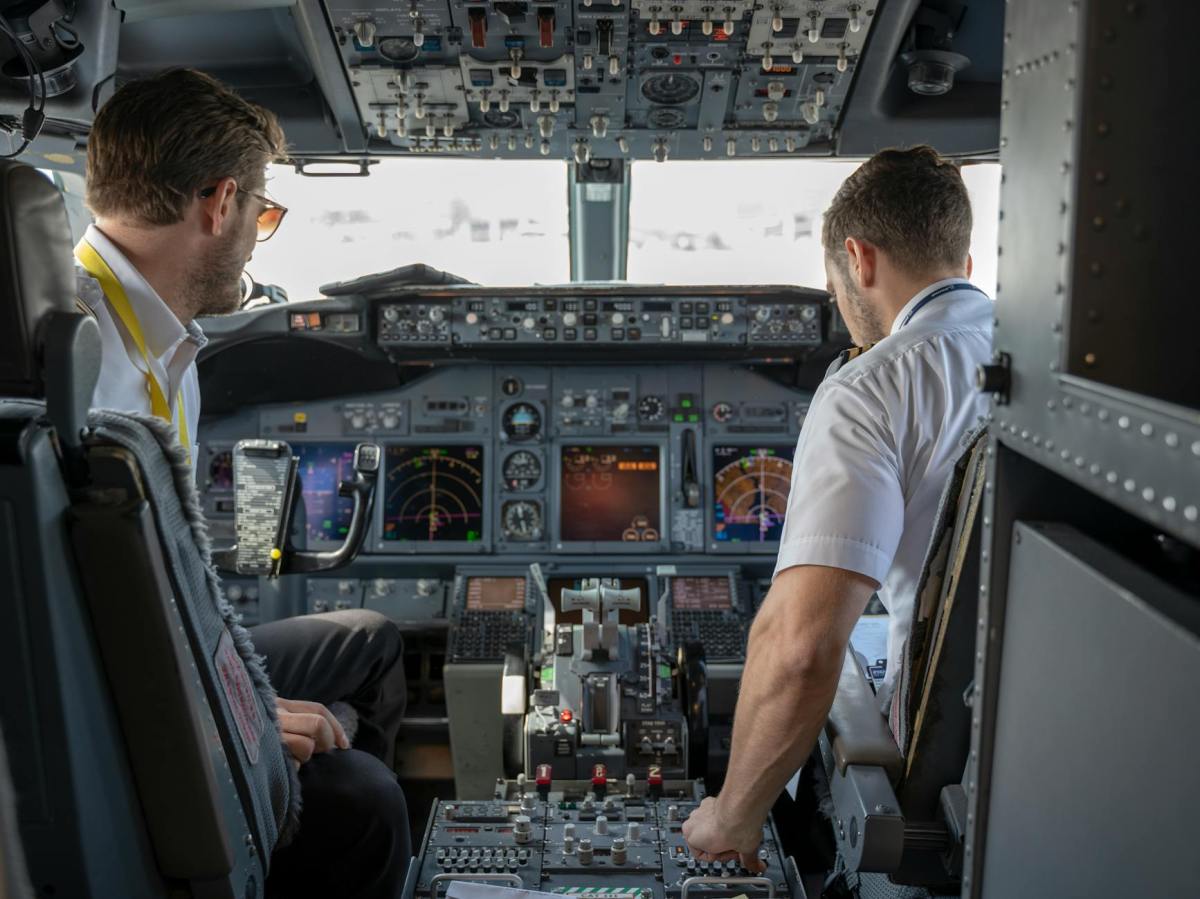
Flying embraces automation. Now, there’s a statement that didn’t ought to be controversial, but it can be. Even before we became engulfed by the modern digital age, analogue autopilots could assist in the task of flying. Some early ones were mechanical.

The need for full-time hands-on piloting of the physical controls that linked a human and an aircraft’s control surfaces is not fundamental. Large transport aircraft have stepped further, somewhat mimicking what their military counterparts did, and fly-by-wire systems have become commonplace.

As far as technological evolution is concerned, we remain in a transitionary phase. Commercial aircraft that fly overhead are a mixed community. Some, like the Boeing 737 series continue to have cables and pulleys that link aircraft systems and controls. Others, like the Airbus A320 series are the fly-by-wire digital aircraft types in regular service.

Between the pilots in the cockpit and the motion of an aircraft there is a computer. In fact, several computers arranged in a manner so that they continue to work even when subject to failures. A great deal of thought and effort has gone into designing aircraft systems that will be reliable in-service.

Looking at the safety numbers, starting in the 1980s when fly-by-wire was introduced, the overall service experience is extremely good. The practice of system safety assessment has delivered dependable and robust aircraft. Rigorous certification processes are applied. 

Through the technical developments that marched on from the 1980s one requirement has remained. That is that two pilots are needed in the aircraft cockpit. Granted there are exceptions to this rule for smaller transport aircraft. Single pilot operations are not new. For example, in many countries, the Cessna Caravan[1] is approved for a single pilot.

It’s 2025. It’s difficult not to notice the debate around Single Pilot Operations (SPO). That is to open large transport aircraft operations to a new rule. Lower operating costs may be achievable by making a change. It’s even said that this move is a way of continuing aviation’s growth as it becomes more and more difficult worldwide to increase the number of qualified pilots.

It’s good to see this subject being taken up in a forthcoming conference.

RAeS Flight Operations Conference 2025: Single Pilot Operations – Logical Progression or a Step Too Far?[2] 19 March 2025 – 20 March 2025. Royal Aeronautical Society Headquarters in London.

SPO may be enabled by use of complex systems to help make mission-critical decisions. The next step maybe with real-time “artificial” copilots and intelligent monitoring. Will this move the aviation industry toward safer and more efficient aircraft operations? That is the question.


[1] https://cessna.txtav.com/en/turboprop/caravan

[2] https://www.aerosociety.com/events-calendar/raes-flight-operations-conference-2025-single-pilot-operations-logical-progression-or-a-step-too-far

Advancements in Flight Recorder Technology and Regulations

My last posting addressed accident flight recorders and airworthiness requirements. That’s not enough. It’s important to note that aircraft equipage standards are addressed in operational rules. So, the airworthiness requirements define what an acceptable installation looks like but as to whether an operator needs to have specific equipage or not, that’s down to the operational rules in each country.

Internationally, the standards and recommended practices of ICAO Annex 6 are applicable. These cover the operation of aircraft. Flight recorders are addressed in para 6.3.1. and Appendix 8. Let’s note that ICAO is not a regulator. There are international standards but operational rules in each country apply to each country’s aircraft.

One of the major advances in accident flight recorders technology is the capability to record more data than was formerly practical. This has led to standards for Cockpit Voice Recorders (CVRs) advancing from 2-hour recording duration to 25-hours.

Proposed rule changes have been hampered by the impact of the global pandemic. Some new operational rules apply only to newly built aircraft. That means some existing aircraft can retain their 2-hour CVRs.

Another technology advance is what’s known as Recorder Independent Power Supply (RIPS). RIPS can provided power to the CVR for at least 10 minutes after aircraft electrical power is lost. The RIPS is often offered as a relatively straightforward aircraft modification.

I do not know if the South Korea Boeing 737-800 was required to have accident recorders with the capabilities listed above. If they were not, then there’s a good basis for recommending that changes be made to existing aircraft.

Spectacular Sighting

There’s steep hills. Some more interesting than others, you might say. In my youth this one was known for the road that climbed the hill. That’s the B3081, if you want the detail. It’s an opportunity to journey through wonderful English countryside. The area being Cranborne Chase, a protected landscape.

Zigzag hill was great fun for us as children. Probably not so much fun for my parents as our jet black Wolseley16/60 strained to get around the corners and climb to the top. The car packed with the six of us. This was a route we’d take to get from home to Bournemouth, and the seaside.

On the way, I remember the finger post signs to Compton Abbas Airfield[1]. My thought being what an interesting place for an airfield, right up here high on the chalk hills. Looking down on the surrounding Dorset countryside and the town of Shaftsbury.

Normally, I have to go to flying displays to see historic aircraft fly. This Sunday afternoon, I travelled no further than my back door. Sitting outback in the steaming 30C-degree summer weather all I had to do was look-up. Not that I’d planned to look skyward.

That doesn’t happen every day. First there was a distant rumbling sound. Then it developed into the hum of multiple piston engines. It’s only when the distinctive sight of a Lancaster bomber appeared over the roof of my house did all become clear what was happening.

As soon as I fixed my eyes on the aircraft it was already off over the garden and out across the neighbouring field. This was Avro Lancaster PA474 passing right overhead[2]. It was heading off in a north easterly direction at a notably low altitude. Quote a spectacular sight.

I had to do a little research once the aircraft had disappeared over the horizon. Looking at what was happening on Sunday, I assume it was flying back from Compton Abbas Airshow[3] to its home in Lincolnshire. Given the high summer weather, this was a great day for flying.

This Second World War heavy bomber first flew in 1941. It’s part of the Battle of Britain Memorial Flight (BBMF), based at RAF Coningsby. It’s the only Avro Lancaster that remains airworthy and flying in the UK. It’s only recently returned to the air after a tragic accident involving the BBMF.

Later in the day, off in the distance, looking north, three other historic aircraft trundled across the sky. After dark, with the heavens clear, I caught the Perseid meteor shower. So, for watchers of the skies, 11th August was a noteworthy day.


[1] https://www.comptonairfield.com/

[2] https://www.bbc.co.uk/news/articles/clyg7e7x319o

[3] https://comptonabbasairshow.co.uk/participants/

Objects falling from the sky

In so far as I know, no person on the ground has been killed by an object falling from a commercial aircraft in flight. I’m happy to be corrected if that situation has changed. Strangely, in contrast there are plenty of reports of people falling from aircraft and being killed as a result[1]. Additionally, there are cases of parts shed by aircraft that subsequently contribute to an aircraft accident[2].

The most frequent reports of falling objects, in and around airports are not parts of an aircraft but that which is in the atmosphere all the time. Namely, ice. When it hits the ground in the form of a hailstorm it can be damaging. In flight, it can be seriously damaging to an aircraft.

What I’m writing about here are the third-party risks. That’s when an innocent individual finds themselves the target of an improbable event, some might call an act of God. Ice falls are rare. However, given the volume of worldwide air traffic there’s enough of them to be alert to the problem. As soon as ice accretes to create lumps bigger than a kilo there’s a real danger.

Can ice falls be prevented? Here again there’s no doubt some are because of poor maintenance or other preventable factors, but others are just nature doing its thing. Regulators are always keen to collect data on the phenomena[3]. It’s something that goes on in the background and where the resources allow there can even be follow-up investigations.

Near misses do make the newspaper headlines. The dramatic nature of the events, however rare, can be like a line from a horror movie[4]. Other cases are more a human-interest story than representing a great risk to those on the ground[5].

It’s worth noting that falling objects can be quite different from what they are first reported to be. That can be said about rare events in general.

I remember being told of one case where a sharp metal object fell into a homeowner’s garden. Not nice at all. The immediate reaction was to conclude it came from an aircraft flying overhead. Speculation then started a new story, and the fear of objects falling from aircraft was intensified.

Subsequently, an investigation found that this metal object had more humble terrestrial origins. In a nearby industrial estate a grinding wheel had shattered at highspeed sending debris flying into the air. Parts of which landed in the garden of the unfortunate near-by resident.

One lesson from this tale is that things may not always be as they first seem. Certainly, with falling objects, it’s as well to do an investigation before blaming an aircraft.  

POST 1: There’s a threat outside the atmosphere too. The space industries are ever busier. That old saying about “what goes up, must come down” is true of rockets and space junk. More a hazard to those on the ground, there is still the extreamly unlikly chance of an in-flight aircraft getting hit Unnecessary risks created by uncontrolled rocket reentries | Nature Astronomy

POST 2: EASA Safety Information Bulletin Operations SIB No.: 2022-07 Issued: 28 July 2022, Subject: Re-Entry into Earth’s Atmosphere of Space Debris of Rocket Long March 5B (CZ-5B). This SIB is issued to raise awareness on the expected re-entry into Earth’s atmosphere of the large space object.


[1] https://nypost.com/2019/07/03/man-nearly-killed-by-frozen-body-that-fell-from-plane-is-too-traumatized-to-go-home/

[2] http://concordesst.com/accident/englishreport/12.html

[3] https://www.caa.co.uk/Our-work/Make-a-report-or-complaint/Ice-falls/

[4] https://metro.co.uk/2017/02/16/10kg-block-of-ice-falls-from-plane-and-smashes-through-mans-garage-roof-6453658/

[5] https://www.portsmouth.co.uk/news/national-ice-block-falls-aircraft-and-smashes-familys-garden-1078494