Electric Aviation: The Promise of Clean Flight

Electric aviation is not new. Not new at all. The engineers of the past struggled with two factors. Power and weight. A French electrically powered airship was the first aircraft to make a controlled circuit. On 9 August 1884, it flew a circular course of 8 km at a max speed of 14.5 mph. Its electric motor weighed 100 kilograms and its battery weighed 263 kilograms.

It’s not a problem to be able to distribute or use electrical power on-board an aircraft. The problem come in generating enough of it from a reliable source. Today’s “conventional” civil aircraft generate and use large amounts of electrical power. For example, the Boeing 787 has two starter/generators per engine[1]. Electrical power from the generators goes to four alternating current (AC) electrical distribution buses, where it is either sent for use as is (235 V AC) or converted for use by the aircraft systems that need it.

A revolution is taking place in electric aviation. It offers the opportunity to fly cleanly. That said, the traditional technical challenges remain the same. Power and weight. In 140-years battery technology has advanced considerably. But is that enough?

A difficulty that battery powered flying is stuck with is that at the start and at the end of a flight the batteries weigh, more or less, the same as they did from the day of their manufacture. Today’s “conventional” civil aircraft consume fuel. Thus, they are significantly lighter at the end of a flight than they are at the start. Airframes can be designed to take advantage of this fact.

One of the up sides is that a good electric motor can get to an efficiency of 80% whereas a turbo fan engine comes in at around 35%. That sound great until we look at the amount of energy we can store within a given volume. Jet fuel packs a punch. To get the same punch from an electrical battery it would likely be 15 times the size. That’s not good for a practical design. The low battery energy density coupled with the high weight of batteries means that this strategy for large aircraft needs to be put to one side for now.

A modern aircraft engine like the CFM International LEAP, can develop a max take-off thrust of over 30,000 lbf. Two of those engines can safely accelerate a Boeing 737 or Airbus A320 with ease and cruise with good economy. Thus, electrification of the propulsion of this class of aircraft is a long way off. The nearest possible future for propulsion of a B737 and A320 sized aircraft may be hydrogen based.

This explains why the drawing boards are full of small electric aircraft designs where performance demands are more modest. There’s a hope that the continuous development of battery technology will provide year on year gains. Much more than aviation alone demands that battery technology advances.

Developments in hydrogen-electric aviation are catching the headlines. Much of what has been achieved is experimental. I look forward to the day when hydrogen is not used to fill airship gas bags but becomes the life blood of transport aviation. It’s conceivable that will happen in my lifetime.


[1] http://787updates.newairplane.com/787-Electrical-Systems/787-Electrical-System

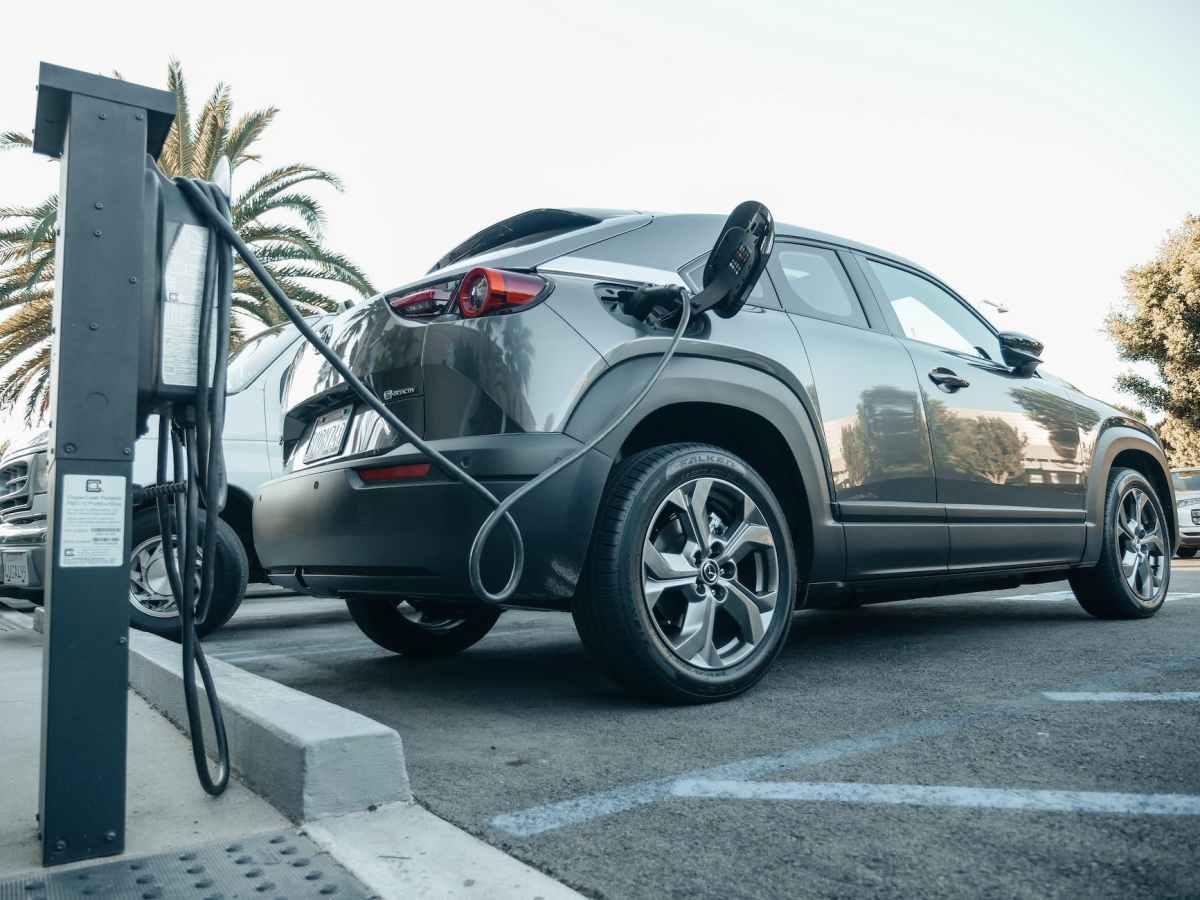
EVs

I do find the anti-EV campaigning on social media a bit peculiar. It’s a bit like the arguments for smoking that were made in the 1950s and 60s. Combustion engine vehicles are slowly but surely going to become history. The time for that change is the subject that should be discussed and not whether it’s a good idea or not[1].

One “argument” out there is that adding together all the elements that make-up an electric vehicle there’s a lot of environmental cost in their production. There’s no doubt that nothing is for free. For example, mining lithium and cobalt are not nice in every respect. There’s the concern that demand could quickly eat-up global supply too.

The “arguments” I’ve seen fall apart when considering not only the vehicle production environmental costs but the lifetime costs of an EV when compared with an internal combustion engine vehicle. 20-years of belching out toxic emissions stacks-up. 20-years of using renewable electricity is a far better solution. In theory the potential for recycling valuable materials is high with EVs too. However, we have yet to see if that works successfully in practice.

Other “arguments” look to demean the performance of EV’s when compared to conventional vehicles. Naturally, the time taken to recharge is one of the biggest gripes. For a conventional fuelling at a petrol station a tank can be filled with 500 miles worth of fuel in 15 minutes. For a current EV more preparation, planning and patience are needed to achieve a lesser range.

Some EV performance figures are far superior to conventional air breathing vehicles. Acceleration is one. Powerful electric motors unencumbered by complex mechanical transmission systems react immediately to demands[2]. EVs use power better.

There’s another gripe or moan and that’s about weight. Taking two comparable vehicles, in performance terms, the electric one will be heavier. That’s the technology we have now.

It’s a different kind of weight if that makes any sense. What I mean is that an EV is roughly the same weight whatever the state of the machine. Whereas a vehicle that uses liquid fuel varies in weight according the amount of fuel on-board. Of course, all vehicles vary in weight depending on the payload they carry (goods or passengers or both).

What’s a little difficult to take from the anti-EV lobby is that those who complain about EVs impacting roads, due to their weight, are rarely the same people who express concerns about heavy diesel delivery trucks or Chelsea tractors thundering down residential roads.

There’s one hazard that must be managed for all types of vehicles. A view of a serious fire involving either an EV or a conventional vehicle quickly shows what that threat can do. What we have now less experience dealing with EV fires. They can be severe and difficult to supress.

Regulation is often reactive. The fire threat is real. In this case maybe we do need fire suppression systems in integrated household garages. Multistorey car parks packed full of EVs are going to be a real challenge if a major fire sparks off. That said a fire started with a “diesel-powered vehicle” can be just as challenging[3].


[1] https://www.ft.com/video/95f86c5d-5a94-4e63-bbe8-6cc5ffb59a2b

[2] https://www.caranddriver.com/features/a38887851/why-are-evs-so-quick/

[3] https://www.bbc.co.uk/news/uk-england-beds-bucks-herts-67077996