
Way back

It’s easy to sound like a takeout from the four Yorkshire[1]. That emulated sketch where a group of drinking men on holiday try to upstage each other with tales of hardship. It’s beautifully comic because it ventures off into the absurd. Each man is determined to out do the other.

Back in my day. Any sentence that starts like that conjures up a man leaning on a bar in a rustic pub where time has stopped. There are people who make a speciality of reminiscence. A rambling epistle about hardship and struggle. Peppered with a contrast with the ease of contemporary living. Point being how weak and wishy-washy we are now. How enduring and mighty we were in the way back. Most of this is pure nostalgic babble. The Monty Python sketch is funny because it crosses a line. Please reprimand me severely if I cross that wobbly line. Beside it takes comic genius to write a good sketch and I’ve never claimed that ability.

However, telling stories that paint pictures of former times is a good way of setting this time in context. Change is a constant. The decades are ones of accelerating change. That can be unsettling.

This week, for inexplicable reasons my mind wandered off to my parent’s farmhouse kitchen in the mid-1960s. That’s boyhood memories. The back of house room was not quite square. At one end, two substantial painted wood doors faced each other. A draft blow under one when the outside door was open.

A standing stainless-steel sink sat between the two doors. Opposite, a thin steel framed window looked out on the farmyard. Stone walls were a couple of feet thick. That left space for a seat under the window. It was a farmer’s window. Being able to see the road and all business comings and goings from the kitchen table. Looking direct West, the evening sun would play across the yard.

On a weekday. Not a high day or a holiday. That would be a reason to light a fire in the front room. The kitchen was the warmest place in the house. A thumping great cast iron Aga[2] filled an alcove and filled the kitchen with a warmth all day and night. In winter, other parts of the house could be an ice box. Bedroom windows had as much ice on the inside as on the outside of the glass. There’s a good explanation of why the image of that kitchen is so rooted in my mind.

A large sturdy wooden kitchen table sat right in the centre of the room. It had a Formica top in a deep maroon colour. Four chunky turned legs at each corner. An eclectic mix of wheelback chairs permanently tucked in when not in use. If they weren’t, there was no squeezing around the table.

The habit of sitting in the same spot was deep-rooted in practicality. It’s as if we had assigned seating. Naturally the best place to sit was with the Aga at your back. Opposite the Aga, up against the wall was a fridge that must have come from Noah’s days. Next to that was a peculiar free-standing kitchen cabinet unit. They are sold on eBay as mid-century vintage now. Ghastly thing that today’s sellers describe as gorgeous.

One corner of the room had a beaten and battered two-seat sofa. That was a comfortable warm spot. Above it, in the wall was the remains of a bread oven. A hinged iron door was a curiosity covering nothing but cobwebs. It was an age when Linoleum remained a popular floor covering. It was a lot nicer underfoot than the flagstone floor. The flooring took such a bashing that it got replaced with more of the same when holes started to appear.

That room was the heartbeat of the farmhouse. The kitchen table played so many different parts in farm life. It could go from being a butchers block heavy with a side of pork to a desk for tidying up the paperwork. Even the kitchen cabinet unit had a draw full of Sturminster Newton market reports. Auctioneers Senior & Goodwin sent out blue printed reports listing cattle prices every week.

In the simplest way, that’s how I was first introduce to data analytics!

[1] https://en.wikipedia.org/wiki/Four_Yorkshiremen_sketch

[2] https://www.agaliving.com/

Batteries

We can talk about chemistry. It’s not a strong subject for me. The simple basics, I remember. As far as handling batteries, or at least knowing what they do, I was quite young on first encounter.  

At the back of the farmhouse where I grew up there were several working rooms that that were part of the building. A room we called “egg house” was indeed used to store eggs. That wasn’t its first purpose. In one corner was a copper vat with a small furnace underneath it. I was told this was for sterilising milking machine parts before chemicals took over that role.

On the opposite side of the wide back door corridor was “boot house.” The name was a giveaway as to one of its uses. Boots propped up against the wall. It had a stone mullioned window that looked out on another working room that was part of a later add on. That’s where a shiny stainless-steel milk bulk tank sat filling up most of the space.

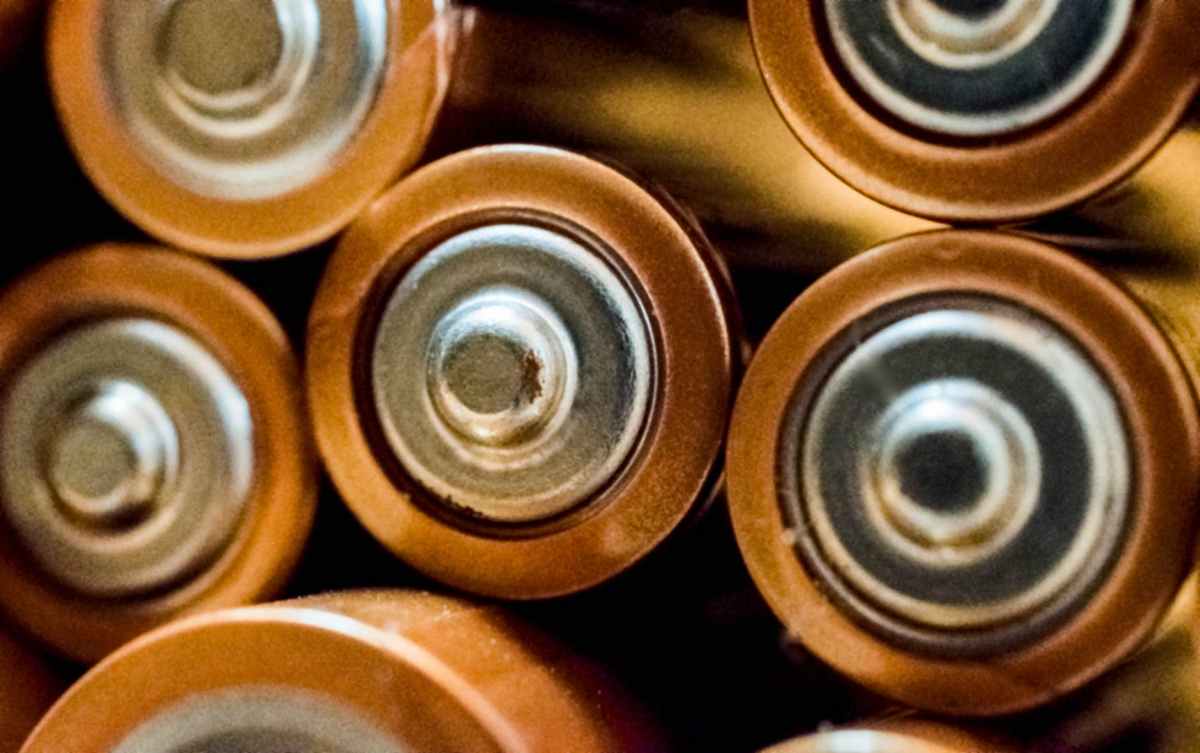
Like a lot of obsolete stuff stashed in a corner and then forgotten, eventually they were thrown out. As far as I know. What I speak of is several large round glass jars. They made of thick greenish glass and were about a couple of feet in diameter. Their original purpose was to store sulfuric acid. The acid was an electrolyte used in heavy batteries that were once the backbone of the electrical system of the farm.

My father moved to Goulds Farm in 1938. As I understand it mains electricity didn’t come to the farm until the 1950s. In one of the stone built buildings around the farmyard, there was a single cylinder stationary engine, generator, and DC electric distribution board on the wall. It was like something out of an early Frankenstein movie. Bare metal switches and a couple of round dials for volts and amps. All covered in dust and cobwebs. I never did see the “submarine” lead-acid batteries[1]. I guess they were parts of this early farm electrical system that had a reasonable scrap value and so got sold on.

There were lead-acid batteries in and out of the house in the winter. Heavy tractor batteries often sat in “egg house” charging overnight. Given their cost every little bit of life was squeezed out of them before they were replaced. Some batteries had a second life powering an electric fence.

Now, here we are in 2023. An electrical revolution is underway. It’s fascinating to note some of the objections to electrification. So, wedded to gas and oil that all sorts of spurious arguments get thrown up. Not that there aren’t hazards with each different technology.

Battery technology has advanced at great pace. Chemistry has provided batteries that have huge potential when compared with they predecessor. The race is on to go much further. I’m confident that we’ve a long way to go before every combination and permutation of materials has been exploited for electrical storage. Manufacturing techniques race ahead too.

Lead and acid presented hazards. Ironically, one of them was hydrogen gas emission. In such systems ventilation is a must so that there’s no danger of explosion. Now, hydrogen is heralded as a fuel of the future. Hazards remain but we do get better at managing each and every one.

My message is that electrical technology has both an upside and a downside. Ultimately the upside is much the bigger.


[1] https://uboat.net/articles/id/54

Past Earth

I wandered around the Natural History Museum[1] for an hour, or so this week. It’s one of the London Kensington museums that never loses its appeal. It’s a glorious place of assembled artifacts. At this time of year, it’s bubbling with children of all ages. Those ancient beasts that once strode the planet captivate and fascinate young minds. We can project all sorts of personalities upon them and know for sure we will never meet them wandering the streets.

I didn’t get to meet Titanosaur, one of the biggest animals to have walked the Earth but must go back and make sure I do. We share our planet with the remains of these giants. Luckily, we didn’t have to encounter them on the way to work in the mornings.

I like the reminder that human time and geological time are completely different spaces. We ponder the big news of the day over a tiny passage of history whilst the great expanse of life on earth sits quite in the background. Everything that made us, took billions of years to come to be.

Tracing the past, a couple of hundred million years isn’t much[2]. Yet, in one million we’ve come to dominate the planet as no other life has ever done before. We still have the choice as to our fate. Burning copious quantities of fossil fuel does seem foolish when seen in context. Will self-aware humans be a flash in the pan that comes can goes almost unnoticed by history?

Although, I don’t dismiss even remote possibilities when it comes to the unknown, the claims that non-human sightseers have been visiting us here on Earth does seem purely fictional[3]. There are several distinct arguments against such extraterrestrial alien holidaymakers.

Given the age of the universe, the coincidence of existence of multiple intelligent beings is possible, but they will certainly be separated by unfathomable distances. Even accepting the proposition that one day physics will provide a wizard transport system to cross those vast distances the needle in the haystack problem still means meetings may be extremely unlikely. Then there’s the arrogance that we presume such alien beings will have a shape, form and chemistry that has any meaning to us. Let’s face it, the abundance of life on Earth may be only a tiny range of what’s possible in the greater scheme of things.

No, I will continue to believe that there are rational explanations for lights on Salisbury Plain or deep in the Arizona desert. ET isn’t likely to be bothered with either. Unexplained aerial phenomena will continue to interest people, much as dinosaurs do but one is knowable today and the other may not be for generations, if ever.


[1] https://www.nhm.ac.uk/

[2] https://www.bbc.com/mediacentre/mediapacks/earth

[3] https://www.bbc.co.uk/news/world-us-canada-66320498?at_medium=RSS&at_campaign=KARANGA

Three Decades

There are a couple of events that have reverberated over the last three decades.

1993 started with Bill Clinton taking his place as the 42nd President of the United States. So, you might say change was in the wind in that year.

History doesn’t repeat but there are changes that give the impression of a pattern. In 30-years, our daily lives have transformed dramatically. Technology has accelerated to a point where there isn’t much that it doesn’t touch.

Subscribing to the notion that there are cycles that rise and fall over the decades there are similarities between now and then. There are plenty of opposites too.

Early in 1993, the Bank of England lowered interest rates to 6%. This was the lowest rate available since 1978. Now, we have bank interest rates heading in the other direction and heading for 6%. The biggest political issue in that year was unemployment. Today, the situation has flipped. There are recruiters who can’t find the people the British economy needs.  

What’s analogous is that the Conservative Government of the day was in deep trouble. There seemed to be a future Labour Government in the waiting room. The Conservative Prime Minister (PM) of the time, John Major was unpopular, and the polls showed the public mood was gloomy.

Strangely, there was slight indications that the economic situation was gradually improving. The end of the 1990s recession was becoming real. The conservatives must have felt heartened by the US Presidential election campaign theme declaring it’s “The economy, stupid[1].”

On the ground the daggers were out for John Major. Parliamentary byelections in Newbury and Christchurch were resoundingly won by the Liberal Democrats. The Conservative government did not benefit in popularity from the economy coming out of recession. Then inflation was coming down. It hit 1.3% in May 1993. Consider that with what is happening with the inflation rate that is hanging around now.

There are a couple of events that have reverberated over the last three decades.

One was the formation of the UK Independence Party (UKIP). Support for leaving the European Union (EU) was taking a shape and form that would lead to political change. It didn’t seem like it at the time. There was an element of the movement that was purely protest coming from cantankerous and disgruntled Conservatives.

The other was John Major’s disastrous “Back to Basics” campaign. If ever a British political campaign was misjudged that, was it. The campaign exposed an unpopular and split political party to ridicule and gave cartoonists and satirists a huge boost.

The current Conservative PM, Rishi Sunak hasn’t quite made that error – yet. However, his simple shopping list approach is creating a hostage to fortune. The direction of travel has similarities to 1993. Will Rishi Sunak survive the coming General Election?

The jury is out on that one. I’d like to say – no. The economy may soon slide into recession but it maybe underlying unpopularity that is the greater deciding factor.


[1] A phrase that was coined by James Carville in 1992.

Momentous Vote

Will a line be drawn under the shenanigans of the last few years?

Number 3 on the BBC News list? This was not a vote in the Conservative Party it was a vote in the mother of Parliaments. It was a vote that put the likelihood of Boris Johnson making a political comeback at extremely improbable. Yet, it was number 3 on BBC News. Well, I guess it was considered by the newsroom as a minority interests subject at 10 pm in the evening.  

A House of Commons (HoCs) vote took place on the findings of the Committee on Privileges[1]. Not a great title but that committee thoroughly undertook the job of addressing the vexed question of a Prime Minister lying to Parliament. That means lying to us all. 

19 June 2023 should go down in British history. There was no civil war. The statue of Cromwell outside parliament remained unmoved. Parliament deftly asserted its right to take a view on the behaviours of a former member. Not just any former member but a former Prime Minister (PM). A PM being held in contempt of Parliament is not an everyday event.

The current PM staying away was a show of poor pollical antenna. Images of a vacuum in leadership will haunt him here on in. While another former PM endorsed the report and thanked the committee for their work. Several cabinet members did the same. The leader of the house acted with a solemn certitude that she is becoming known for.

For Conservative Members of Parliament, it was a sad and difficult duty. Each member was given the chance to make up their own minds about the report.

Upholding the truth matters. Both the Parliament’s HoCs and the Committee on Privileges set themselves on the path to restore public confidence in democracy.

Questions as to why Boris Johnson was ever elevated to the position of PM in the first place were not answered. Some members spoke with anger in their voice. It’s the case that magnificent oratory was missing from many contributions, but the heartfelt reflection of constituents’ rage was sincere.

To succeed, in the British political system a PM must have an effective working relationship with Parliament. They don’t need to like each other but a degree of respect is essential.

Parliament may look weak in that there’s limited meaningful sanctions that it can impose on a past member. A member who jumps before they are pushed appears to get off. However, the impact of the events of 19 June 2023 means that Boris Johnson will practice only with a media bully pulpit.

What remains for us to find out over the next few years is how that will play out[2]. Will a line be drawn under the shenanigans of the last few years?


[1] https://www.bbc.co.uk/news/uk-politics-65953605

[2] https://news.sky.com/story/boris-johnson-vote-sunak-privileges-committee-report-on-lied-to-parliament-12593360

Time for Change

….people have been living, loving, and telling tales for thousands of years on this great European island.

The past is another country. So, it’s said. We now hear those who claimed Boris Johnson was the only man who could unite the Conservative Party eating their words. Eating them with a shovel. It wasn’t as if their support for the former Prime Minister was measured and rational, earlier it reached blind obedience as the troubles of the last decade accumulated. Lies, monstrous errors and blatant foolishness were defended by many who claim to be – working for you. 

I know loyalty is important. Any team, or institution needs a degree of unity to go forward with confidence that it can deliver. It’s the miss-appropriation of that loyalty and its twisting into unquestioning conformity that corrupts democratic processes. Politician minions will tramp along under any flag that will give them gongs.

It’s fascinating how flamboyant and raucous personalities can steamroller over convention and Pied Piper[1] like lead us into misfortunes. Hang about – we have a recuring problem here. This week, I was reminded of Itay’s challenges of a couple of decades ago. I remember Italian colleagues quietly apologising for Silvio Berlusconi[2].

A common feature of these personalities is an immense sense of self-importance. Whatever the story, it’s always about them. This is playing out with Boris Johnson’s departure from parliament. It’s playing out with Trump’s ambitions in the US. There are others but the mere act of using their names is distasteful.

Vulgar, scandal-ridden, and manipulative characters make good drama. On the pages of plays or the big or small screen we like to see rampage and for them get their just deserts. Classic stories of the rise and fall of demi-gods, showmen and tyrants are a literary staple. They are fictional warnings that can, and do, get copied into real life. We should, more often, heed those warnings.

There such a thing as a free lunch. Having your cake and eating it too, is a myth.

It’s coming up to Brexit’s 7th birthday and the annual pagan midsummer celebrations at Stonehenge[3]. Of the two, one reminds us of how foolish we can be. The other, reminds us of the enduring nature of our beautiful landscape and heritage. It comforts me every time I go up and down the A303. The reason being that whatever folly we encounter in our era, people have been living, loving, and telling tales for thousands of years on this great European island.

The people of Stonehenge were not isolationists. Artifacts found show that they traded widely. They communicated over large distances as part of a widespread prehistoric society. Brexit will be consigned to the dustbin of history in coming years. What counts about this wonderful land will endure for generations.


[1] https://www.bbc.com/travel/article/20200902-the-grim-truth-behind-the-pied-piper

[2] https://www.bbc.co.uk/news/world-europe-65877241

[3] https://www.english-heritage.org.uk/visit/places/stonehenge/things-to-do/solstice/