Public Broadcasting Value

It seems to be the season to have a downer on the BBC. As the gloomy light of winter gathers all around. The trees are shedding their leaves and that hunkering down mentality is invading my thoughts. Lawns no longer need mowing. Soden with moss and leaf fall.

I understand the dislike that partisan commercial broadcasters have for publicly funded broadcasters. The question of a “level playing field” and “bias” is always likely to come up.

Making a living from commercial advertising is highly competitive. Demands never stop. Seeking income from a marketplace that rises and falls with fashion and fad. That’s hard. Admittedly, there’s the compensating factor of wealthy benefactors or owners, prepared to make a loss, pumping funds into like minded companies. Shifting sands of political influence.

So, looking across the aisle at a major broadcaster that gets funds from the public, as a matter of law, must seem rather disconcerting. Certainly, it’s the sort of issue the wealthy benefactors or owners of media are going to kick at. Some to the extent of wanting to destroy chartered institutions with an ethos unlike their own.

What is a “level playing field” in the British media landscape? Can there ever be such a thing? That’s not an easy question to address. Shifting sands of public likes and dislikes shape the playing field (sorry about the metaphor overload). What might have been considered as independent, objective and neutral in the 1990s is way different from that now, 30-years on.

The British media landscape is not static, nor should it be so. In the period of three decades digital communication has advances at lightning speed. The sheer diversity of channels of communication has multiplied (even if they do repeat the same messages).

One sign of a healthy debate is the self-flagellation that the BBC often undergoes. As an institution, doesn’t it like to agonise about itself. With good reason considering some of the grave errors it’s made in the past. Supporting presenters whose behaviours have been found to be appallingly bad, and even criminal.

Let’s not tar everyone with the same brush. To be able to make mistakes and then correct them, with a good degree of learning in-between, is a strength. Some partisan commercial broadcasters seem unable to do this with any conviction. They just move on.

A publicly accountable broadcaster has no choice but to stand in the dock and take a reprimand, when appropriate. That’s no reason to shut it down. It’s a reason to make sure lessons are learned and not forgotten.

Doing a simple intuitive cost-benefit analysis. Taking the BBC as an example. What it offers, when it works well, far outweighs the costs. Listing three points, these have significant value: unifying impact of having a trusted national broadcaster, quality, broad base and originality of its output and editorial independence (not selling products or ideology).

Overseas critics may get upset, now and then, but that’s for them to get over. There’s no way such critics should shape the future of the broadcast media in Britain. That would be untenable.

Reinventing Debate

Once upon a time. A wise sage of great age, a not so bright mean-minded troll, a flighty light-headed dreamer and a jobsworth cog in a lumbering bureaucratic machine all met round a table. Bright lights shone on them so they could not see the masses assembled in ranks who had come to gawk at them in their deliberations.

What a strange tale can be told of their troublesome quarrels. To keep the peace, rarely with success, a queen of spades presided over their preordained disorder. Weekly viewers were invited to take a winding decent down the rabbit hole. Rarely was that rabbit hole decked with anything other than predicable hewn earth.

That’s how I think of the BBC’s Question Time in 2025.

Once upon a time. A programme of thoughtful debate, conducted by articulate men and women who wrestled over current affairs, each with a slice of insight however different their perspectives. Painting contrasting visions of the rights and wrongs of the day. Getting to the heart of the matter as their chairperson questioned and tested their opinions. Or so I thought.

Whereas I’d only hide behind the sofa when the Cybermen stomped around on Dr Who, now I desperately search for the TV remote control whenever Question Time is announced.

It’s not that I don’t enjoy debate. Far from it. It’s a wonderful thing to witness, if it’s done well. Honest debate is much needed given the complexities of our world’s trouble. The idea that everyday people question those who make a career of espousing their opinions is undoubtably a sound one. A little slice of accountability is a powerful medicine.

Sadly, a programme format, that was created for black and white TV, lingers on like the ghost of a smartly dressed long-gone presenter. The audience is treated as if they were merely brought in the shout and howl like citizens of Rome, as the lions’ devoir some poor sap. Playing the crowd both at home and in the theatre, the chosen names of the day become as predictable as cabbage butterflies seeking cabbages.

My fantasy would be to have a real-time on-line forum. A virtual and physical place where answers to questions and rational opinions could be sought. No lack of drama but where the focus was on discovery and inquiry. Another dimension that takes account of the new media landscape. That is, providing a civilised and respectful space where, by the end of the show advancing new ideas or changing minds becomes possible.

If regular topical debate just means reinforcing polarisation the rabbit hole will get deeper. Much deeper. All sense of common sense will be lost. A routine of gainsaying each other will thunder on as a pointless parade. Like an ever-darker version of The Prisoner. I’ll switch off.

#BBC

Last Night

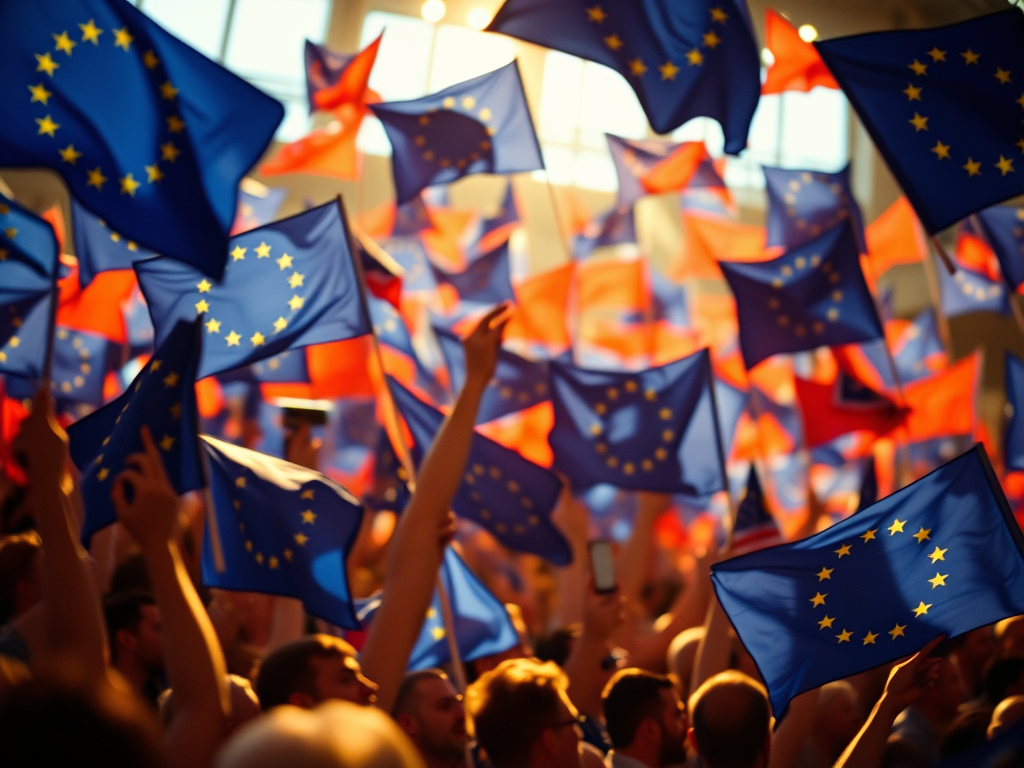
Nice to see a flood of blue at the BBC PROMS last night. I’m not just talking about the wonderful Angel Blue[1]. I was not there. Watched the whole performance at home on the TV this year.

It’s great to hear that GB News went apoplectic. To quote: “The Last Night of the Proms has been swamped in controversy yet again after a sea of EU flags were spotted being flown by event-goers – despite imposing a ban on “protest flags” ahead of time.”

For one, there’s no controversy. For two, there was no protest flags. For three, there’s always all sorts of flags. Making up stuff is the sad habit of bored journalists with space to fill. If I can call them journalist. Click bait writers – now that’s just off-the-shelf hype makers.

Look. In a free country and let’s face it, that’s what the singing in the Royal Albert Hall is about. Land of hope and glory. If the this year’s BBC Prom goers want to hold up EU flags, it’s entirely up to them. No one is forcing them to do so. It wasn’t a mandate from on high.

I was disappointed not to see more flags. My experience of having been at the Last Night twice is that one fun thing to do is to figure out what some of the more obscure flags mean or where they represent. A Caribbean country, Devon, Cornwall, Isle of Man, or a remote Scottish Island. And lots of friendly countries, like the US. Well, dependent on the current presidential race.

Right-wing commentators often push a line that is prescriptive with respect to their opponents but take the view that they should be able to do whatever they like in the name of freedom. I believe that there’s no part of the right of politics that doesn’t hold this self-serving view.

It’s like the often-quoted view of the Conservative Party elite. They take the line that their people are born to rule. It’s not a joke. This week, it’s mighty interesting to read the reflections on recent events coming from Lord Brady[2].

The country is so incredibly fortunate now it has shaken off the fading embers of 14 years of Conservative Party misrule. Who knows what dreadful havoc would have ensued if they had retained power. It’s a much better autumn that might have been.

This is the time to re-think Britain’s relationship with our near neighbours. For a start, all aspects of unnecessary negativity and the dogma of Brexit need to be put asunder. No more ridiculous caveats on every policy and speech just to appease a right-wing media. No more neurotic ducking and diving to keep the outer extremes on-side.

Brexit was a rubbish idea. It was heavily sold by charlatans. It has failed. Corrective action is long overdue. I do not know what shape that corrective action will take but it needs to be immediate and sincere. And with a long-term perspective in mind.

POST: The next generation have the right idea Gen Z leads drive to reverse Brexit in new poll on EU referendum | The Independent


[1] https://angeljoyblue.com/

[2] https://www.independent.co.uk/news/uk/politics/sunak-election-brady-confidence-letters-tory-b2612966.html

Uneasy

Commentating is a big industry. Every moment of every day something floats to the top of the News. To make sense of it, or to make no sense at all, talking heads sit on comfy sofas and talk. We soak it up from traditional media but increasingly from social media.

I’ve often wondered how much influence is exerted by those who commentate. They often set the context within which events are interpreted. They often act like a pack, magnifying what’s first said. They are at their best when they make something complex and messy reasonably understandable.

Could it be that Heisenberg’s uncertainty principle applies[1]? It’s impossible to measure anything without affecting it. Transformed those words that might read: It’s impossible to comment on anything without affecting it. I guess that depends on the nature of the commentary. Here, I’m hardly likely to affect anything at all but you never know.

What this all about? Well, last night I was sitting on my comfy sofa watching the BBC’s Newsnight. As it happens, the leader of the free world was being televised making a gaff that led to a sharp intake of breath. It’s human error. Nobody is gaff free. What was shocking is the choreography of the moment.

Standing next to the President of the US was Ukrainian President Volodymyr Zelensky, whose name is not all that easy to pronounce, who everyone had just committed to supporting. It makes me cringe to repeat what happened[2]. I won’t.

The commentators went into overdrive. That’s to be expected. Within minutes the follow-on illustrated the avalanche of social media piggy backing that’s on-going about Joe Biden. Let’s duck the subject of age. Regardless of that factor, errors that reverberate around the media echo chamber generate a political toxicity that sicks. It’s not fair. It’s just reality.

Age may bring wisdom, or I hope it does. What’s different now from the era during which Joe Biden accumulated his experience is the relentlessness, speed and volume of communications. Not only that but messages are distorted and twisted with great ease.

To thrive in top roles, new generation skills are essential. Being savvy to the nature of social media isn’t optional. When serious events are magnified by massive proportions and presented to a global audience there’s nowhere to hide.

With perception being pivotal in politics this is an uneasy new world we are entering. I wouldn’t be foolish enough to predict what might happen next. I’m reminded of that advice offered to tourist seeking directions ‘‘Well, if I were trying to get there, I wouldn’t start from here.’’


[1] https://www.scientificamerican.com/article/what-is-the-scientific-pr/

[2] https://www.bbc.co.uk/news/articles/cgl75kdm420o

Flying a kite

Political discussion is much as it often is. One side is an abomination the other is the only way. Reverse that theme and you can sing the song of either Conservative or Labour party. Test yourself and see if you can think of a positive, constructive, cross-party initiative that is making Britian a better place to live. And that it isn’t jam tomorrow.

We are in a particularly febrile season. Holding the front page is mostly for atrocities, resignations, scandals and promises broken. Future quizzes about early 2024 may feature the question – who was Prime Minister or why was the inevitable General Election delayed?

I stripped off the daily one-page calendar for the 15th and the saying presented was – Imagination is the highest kite you can fly. There is a sentence to end the week. In the face of grinding pragmatic reality and the predictability of the worn out adversarial political order what if there was some imagination?

Much daily News concerns conflict, war, crime, funding cuts, inflated claims, and disagreeable personalities. No wonder people are turning off serious News media. A diet of current events remains important in a healthy democracy. Sadly, lots of people are driven to News avoidance[1].

My recommendation is let’s have some daily News that stimulates the imagination. There’s a little tickle through on occasions. Sadly, again this is seen as a minority interest. The need for hope built on a positive vision for the future is great. The more people disengage with dependable, independent, and objective News, the more the spinners of misinformation and lies get a grip.

What is missing is imagination. It’s not so alien. To think we once had a prime-time show called – Tomorrows World[2]. It wasn’t a humours chat on a comfy sofa at teatime. Meandering about the lives of minor celebrities and entertainment plugs for coming shows.

For decades, the likes of Raymond Baxter, James Burke and Judith Hann took us on a weekly adventure. On reflection there’s an immense range in their presentations. From what now seems comical to what has turned out to be profoundly significant.

I propose a next generation version of Tomorrow’s World. It’s the Spirt of Imagination. Each week there would be an accessible, peak time, magazine style show that looks at what’s lighting up the world of science, technology, and engineering.

I’m not asking for a worthy educational STEM[3] fest. No. A show must be engaging. Not a bore fest. It must be led by talented communicators who have a passion and instinct for what people are talking about. It must look a generation ahead. Simultaneously ask grandparents to rediscover wonder.


[1] https://reutersinstitute.politics.ox.ac.uk/news/five-things-news-media-can-do-respond-consistent-news-avoidance

[2] https://en.wikipedia.org/wiki/Tomorrow%27s_World

[3] https://www.stem.org.uk/about-us

QT

Over the years the BBCs Question Time (QT) debate programme[1] has played an important part in political discussions. It was a must watch for political activists and students at all levels. In fact, anyone interested in understanding the political views that permeate the country.

Unfortunately, the programme has declined to become a dull backwater for viewing if there’s nothing else on. The format is locked in to an awkward seeking of balance at the expense of an inquiry into the reasons and justifications for widely different views. There’s little in the way of vigorous cross-examination or investigation into the core values of the speakers.

I don’t want to blame the person who chairs the debate or the BBC for hanging on to the QT heritage. The programme has played an important part in the life of the country, in the past.

I don’t want to be one of those social media complainers for whom any deviation from the age of Robin Day is a blasphemy. Those black and white days are a wonderful snapshot of a long-lost era. The relationship between the public and their politicians has changes beyond recognition.

There’s no doubt that we have all become somewhat more superficial than may have been the case in the past. Politics has become something that is marketed to us as a commodity. It shouldn’t be that paper thin.

At its best such a debate programme gets to the fundamentals. If it merely tracks yesterday’s headlines the results are predicably shallow. Audience and panel members simply echo what we already know. What we’ve already heard elsewhere throughout the day.

What I want to know is more of the why and less of the what.

Say, a social liberal politician objects strongly to a dilution of human rights and a hard right leaning conservative welcomes such a dilution. We may already know that’s the positions they have adopted and campaigned on but are those positions of convenience or core beliefs?

Exploring what panel members really think and what they might really do is surly more interesting than allowing them to play to the audience, at home or in the room. I want an objective chair to put the panel members under pressure to uncover any deceptions. Deference born of an obsession with balance is as bad that born of class or impoverishment.

One of the parts of the format that seems unquestionable is the requirement to answer questions posed by members of the public. The audience is supposed to represent the members of the public not in the room. They rarely do. I’d much rather see a town square type format. That’s where the members of the public engaged are not so pre-selected or self-selecting. Walk out into a typical high street and randomly ask what question do you want answered? Do it live.

QT needs a major shakeup. It’s not quite dead. Its revitalisation is possible, but it needs to get off its current path.


[1] https://www.bbc.co.uk/programmes/b006t1q9

Pod

Will podcasts overtake broadcast radio? It’s a question that it had not occurred to me to ask until yesterday. I’ve not been a first adopter as far as listening to podcasts. There’s a routine of turning the radio on at a particular time of day to listen to news and current affairs. That daily routine or habit is born of a long tradition. The morning starts with the Today programme on BBC Radio 4.

Yes, I’m way behind the curve. Go into any large electrical shop, one wall of the warehouse will be filled with earpieces and headphones of every size and shape. The variety of choices is staggering. Sit on bus, train, or aeroplane and more than half the people around will be turned into a source of audio entertainment. Music and talk fight for our attention.

This is great for the streamers and downloaders but lossy for conversation. Sitting next to an interesting person on a long flight is a wonderful way of occupying a couple of hours. That opportunity is diminishing as people become absorbed in digital media. Even the smallest of phones has become a multipurpose entertainment system.

I have long been converted to digital media. FM radio is great for its universality but with less DAB[1] blind spots its life expectancy must be diminishing. Broadcast digital radio based on DAB is a global standard even though coverage is not universal. The digital avalanche is pushing aside any remaining analogue system that populate our lives. Ironically, as far as physical media ownership is concerned, vinyl and even cassettes are resurgent. On the airwaves it’s less likely there will be a romance for analogue radio.

Why have I reassessed the virtues of podcasts? Yesterday, I listened to The Rest Is Politics[2]. This podcast has a conversational style. It’s Alastair Campbell and Rory Stewart talking about current affairs in the UK. Two people who have had their moment in the political sun but remain articulate and inquisitive. They have something to say and it’s engaging.

This is a bridge to podcasts from broadcast radio in that the material is up to date. The topics discussed are wrapped around the news. It’s refreshing too. The ability of the two to argue in a calm and collected manner is unusual in our time. So much of the presentation of news is calamitous and confrontational that this is shocking to say.

Maybe that’s the role of podcasts. Reflection and analysis can be better done in slow time. Broadcast radio news is crammed full of snippets of what’s happening. It would loose its edge if it drifted off into too much extended investigations or drawn-out interviews. So, what may seem like competition between two forms of readily accessible media should be viewed as complementary. Both can fulfil an appealing role in the digital media landscape.


[1] https://www.worlddab.org/

[2] https://podcasts.apple.com/gb/podcast/the-rest-is-politics/id1611374685

Half full

Winter Sunday mornings are a good time for mild depression. Awake to grey skies as the bedroom radio clicks into action. Well, that’s one way of looking at the words dribbling out of the airwaves. Bouncing off the bedroom walls and hitting my half awake ears.

It’s billed as a weekly reflections on topical issues from a range of contributors. That’s elementary well-crafted BBC wibble[1]. Range of contributors means radio chums who sit well with the semi-religious Sunday schedule.

If we go back a couple hundred years, a middle-class family would be huddled around a hulking great bible looking for insights and explanations of the world around. Technology, namely radio, gives us the opportunity to squeeze all that into a short morning sermon. Now, the internet means a keen listener can revisit an ephemeral broadcast, any time, and any place.

Sunday morning should, in my mind, mean an articulate 10-minute essay on anything. Yes, anything. Often, it’s a rush to be profound and tickle unwilling asleep brain cells. This can start with controversial words that are then diluted for the breakfast table. Rather than writing a best-selling self-help book that only sells at international airports, Radio 4 drags in a version of deep thought to churn over a subject that’s vaguely topical but not quite. Vaguely philosophical but not quite.

Strangely, I like listening to the laconic warbling of someone like Wil Self[2]. It’s true that I can only do that if the dosage is reasonably thin. An excessive exposure to early and intense thoughts about the human condition can get overwhelming. Especially when sentences are the length of a double decker bus.

Sunday’s awakening is a moment in the week when I can be assailed by adolescent optimism or gravelly pessimism. Bravura passages can run the gamut of the whole of history. Equally, they can dissect a microscopic moment of personal revelation.

I’m going to get Confucian. If I recollect correctly, he has something to say about NOT being obliged to accept gifts that are not given with the best of intentions. It’s a kind of allegory. It’s a good one for the social media age.

Let’s say Suella Braverman does a slot on the BBC’s Point of View. I might be included to turn the radio off. But that’s not a good reaction for me, a person who believes in freedom of speech within civilised and reasonable limits. There’s the rub.

The essence is that it’s one thing to be offered a gift of someone’s great “wisdom” but there’s no obligation on my part to accept it. I think, in this country there’s too much a tradition of not rocking the boat. That’s to accept a gift as a matter of politeness. Even if the gift is quite appalling or bound to be harmful. Some cultures and countries don’t have that problem. I’m a great fan of Dutch bluntness. It’s a classical Britishness that has unwanted repercussions whereby we tolerate that which should be given short shrift.

How did I get to this point? Don’t tell me pessimism is good for us on a damp gloomy Sunday morning. Human events are not mostly random. Agreed randomness is a big part of life but please drop the “mostly”. Understanding probability is a useful skill. Randomness isn’t so random. But don’t let such an understanding led you to think that choice is immaterial.

I will choose. Radio, on or off. Get up now, or slumber.


[1] https://www.bbc.co.uk/programmes/m001t34q

[2] https://www.theneweuropean.co.uk/out-of-their-minds/

Get Back

The big picture story is that Europe needs unity more and more to face the future.

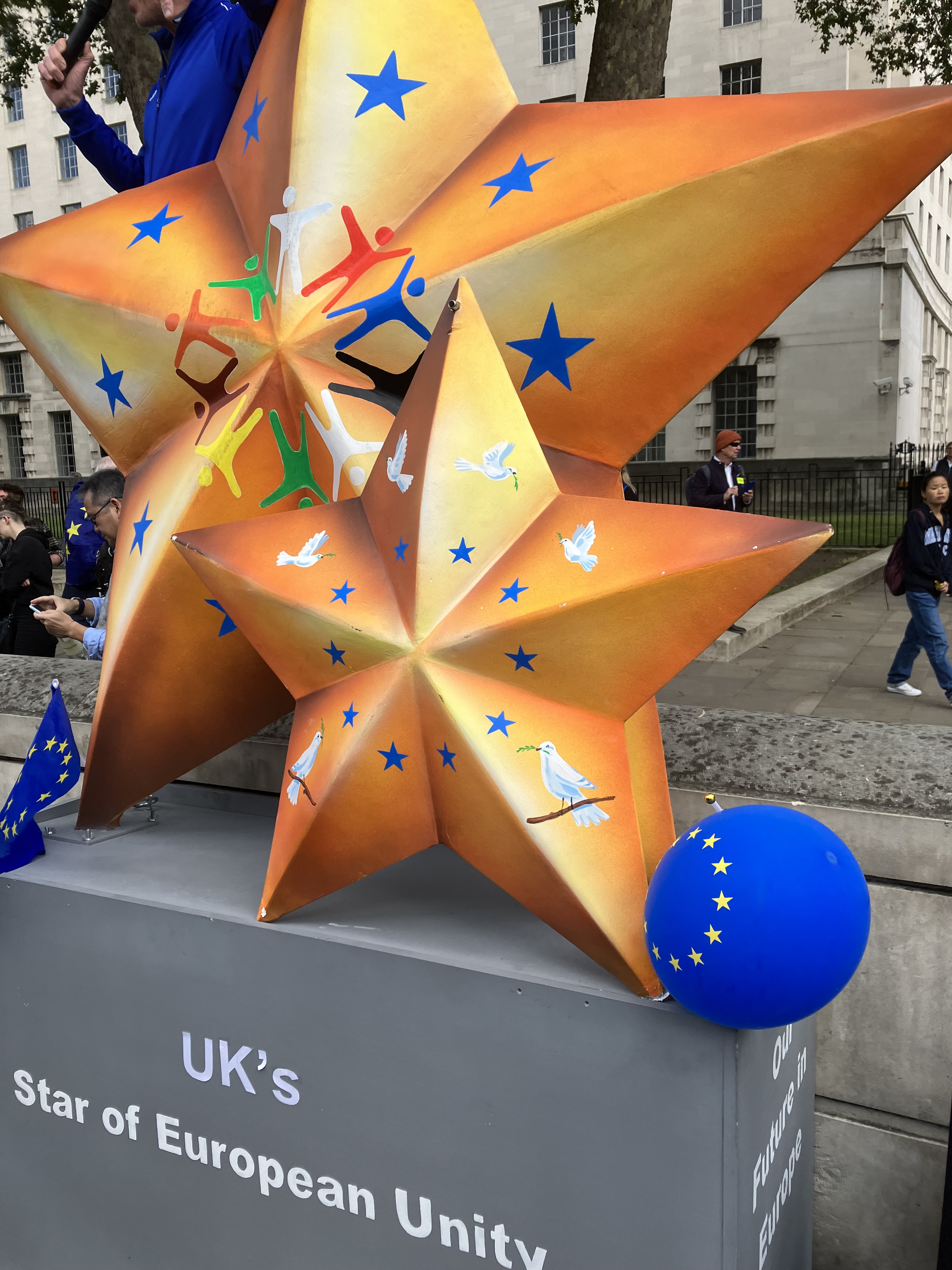
Today, a National Rejoin March takes place in London. This march takes place when it’s all to evident that Brexit has been an abject failure. Having the bravery to admit that Brexit is a failure remains challenging. UK political leaders are shying away from admitting the reality of our common situation.

Thousands of those who support the UK being a European Union (EU) member are gathering in the capital. It’s time to ensure a message gets sent that re-joining the EU is a popular and gaining momentum. Members of Parliament (MPs) may not be in Parliament on the weekend, but the message sent by those on the city’s streets is strong and clear.

It’s true that this is a frustrating experience. I’ve been on many organised London marches. They are characterised by their camaraderie, positivity, and great spirit. Marching makes a difference to the people who march and it’s also makes a wider impact. Media coverage may be sparce. What they do see and hear is a sense of solidarity and unity.

Sadly, there are no apparent results flowing from this national campaign, so far. The UK’s out of touch political parties are trying to look the other way. Today, the fearful nature of the bland mixture of our political leaders is immensely disappointing. They scurry around like little brown rats. Looking busy but terrified of stepping outside their comfort zone.

Tinkering with the Trade and Cooperation Agreement signed by former Prime Minister Boris Johnson will deliver only more disappointment. Papering over that public disappointment, we can rely on a part of the tabloid media spinning threatening stories. The artificial culture wars raging between the political right and left have little to do with reality. This noisy nonsense plunders the opportunity to make life better for the vast majority. It’s a side show.

The big picture story is that Europe needs unity more and more to face the future. If it’s climate change, war, immigration, or economic troubles sustainable solutions cannot be found in isolation. Our region of the world is so interconnected and interdependent that events in one part of Europe inevitably affect others. Brexit does not work.

Future generations will look back on this era as being a regressive one. Opportunities lost and difficulties increased by a lack of political bravery. A lack of direction. A lack of leadership. This will be overcome in time, but that change will not come soon enough.

POST: Reporting on the event Pro-EU supporters march for Britain to rejoin the European Union (france24.com)

Views

Journalists do a vital job. See, I’ve said it. It’s true. Now, I get on to the “but”. Afterall, what’s the point in writing unless there’s a point to make. I’m talking about the factual reporting rather than the more fanciful material.

I notice this frequently. It’s on the radio, its in the newspapers, it’s on TV. Basically, we have more and more journalists talking to journalists, particularly in the political domain. My purely subjective impression is not science, even if I’m sure it could be backed up by numbers.

Commentary is good and good commentary is even better. Understanding the complexities of our mixed-up multifaceted society needs some help. There’s always the difficulty of having so much information that none of us can see the wood for the trees. Careful and thoughtful analysis helps.

So, I’m not having a downer on journalists. It’s just, I get annoyed when there’s a parade of interviews that are nothing more than journalists asking other journalists questions. There’s that image of a snake eating its tail. The more that News comes from one place, to be analysed by one group of people and then to be scrutinised by the same, the more the mouth and the tail met.

When I’m in the car, soaking up time in a traffic jam on the M25, I listen to LBC[1]. Although this radio station has its interminable monologues from its presenters, at least the phone in format means that some of the public get aired. However, cranky, and unfathomable their views it’s always good to hear what people have to say.

I’ve been doing some doorstepping. Canvasing people. It’s a great way to get to know what people are thinking. Not everyone wants to talk. That aside, there’s always plenty that do. From that experience a fascinating range of opinions comes to the fore. A swirling range of views.

Don’t get the wrong impression. Not everyone is seething with anger about the state of the world. A few are that’s for sure. There’s still plenty of hopeful folk who are engaged in their communities constantly trying to make the best of things. Knowing a little of the good and bad of a community’s experiences is a great insight. It’s far more interesting than pitching one media columnist against another.

Perhaps the format of the BBC’s Question Time[2] ought to be completely changed. Have an audience full of journalists and politicians and a panel made up of the public. There could be a postcode lottery to pick members of the public to sit on the panel.

It’s might not be easy to put together. It’s said public speaking is a top fear of most people. Finding people who would take up the offer who would genuinely embrace it and not go too much off the wall, would be challenging. I’m not calling for a revival of what Jerry Springer was famed for.


[1] https://www.lbc.co.uk/

[2] https://www.bbc.co.uk/programmes/m001qxgz