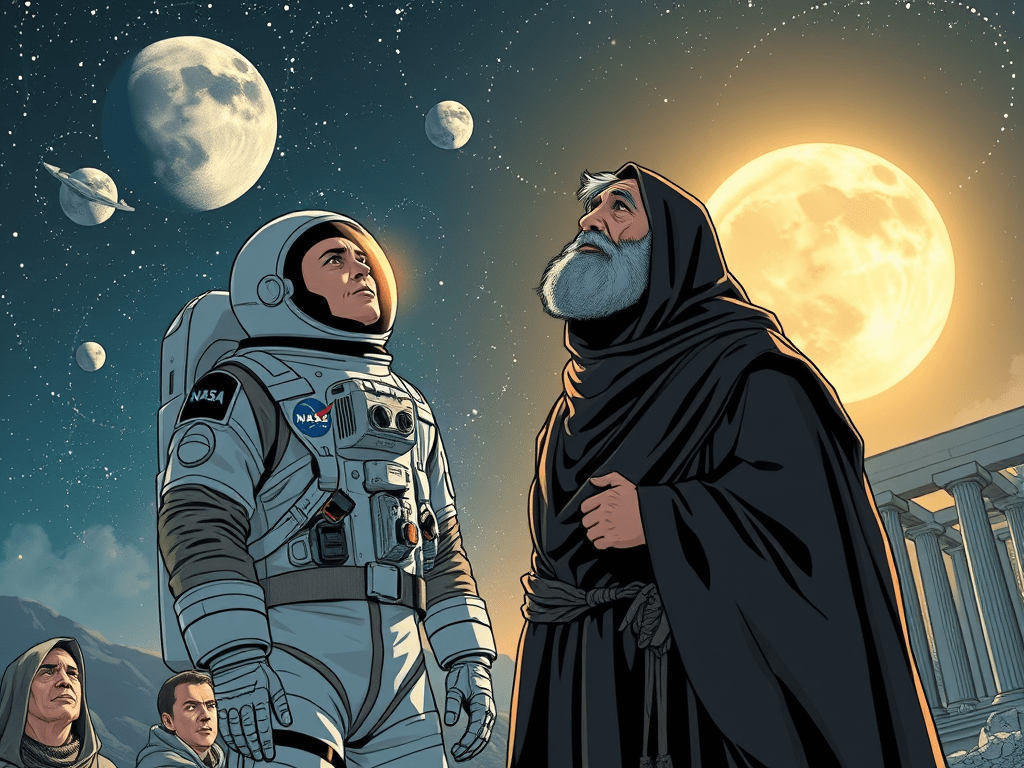
Music to Dance Under the Moon

Flicking through the vinyl albums that no one wants there’s one I should have rescued this week. In a corner, charity shops usually have a pile of gifted vinyl records. I like to look for a hidden gem. Unfortunately, what’s left is the tatty and practically valueless disks. Versions of musicals that have fallen out of fashion, scratched classical concerts and embarrassing compilations.

It’s harvest time. Autumn is undeniable. A colourful carpet of leaves litters the pavements. Remarkably warm. Monday’s blue skies set of the spectacle of the trees display. When the October weather is like this there’s not much to complain about. Crisp walks through the dappled light as the low sun’s rays shine through the branches. Good to be alive.

Looking out of the window in the early morning it was as if it was a spooky daytime. In a monochrome light the outline of the tree line was like a cutout silhouette. Nothing could move without being seen. Grass glittered. Hedges stood like army ranks. All because of the intensity of the moonlight. Constant in the cool air.

The pop tune that entered my head was there for the taking but I’d left it to one side. This is a song that resonated from my boyhood. Some might cringe a bit. Let’s suspend judgement and let the 1970s be the 1970s. “Under the moon of love” is about as catchy as it gets. Showaddywaddy[1] dressed up in their brightly coloured exaggerated 1950s garb. They were not the only ones to do that for Top of the Pops. What’s memorable is the danceability of their pop classics. It makes me want to move. Don’t tell anybody. Sadly, my long hair has long gone.

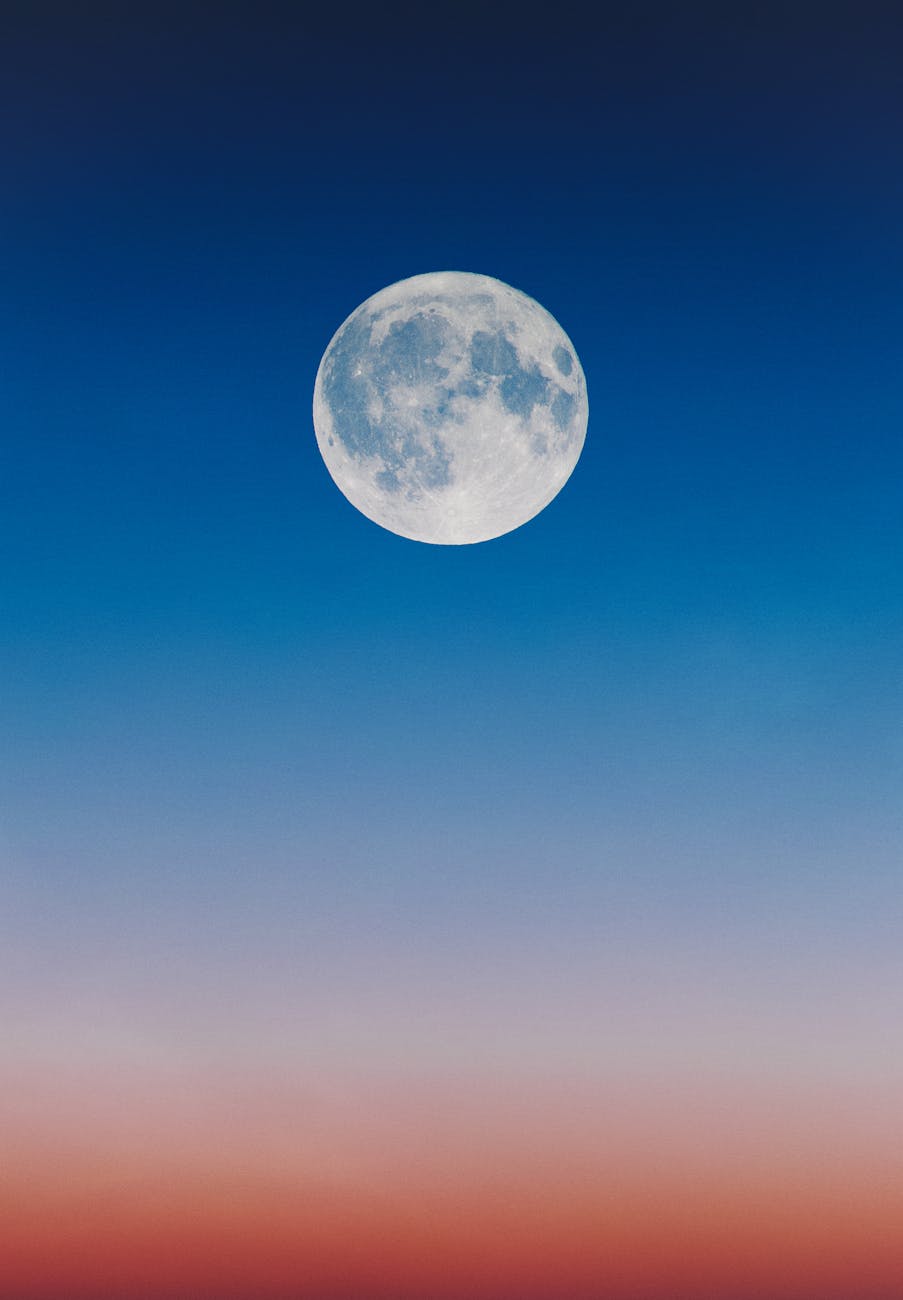
It’s the time of the harvest moon. So, it’s a time for moon tunes. Not just any moon but the first supermoon of the year will grace the sky tonight, Tuesday 7th October. This bright full moon of 2025 will light up the nighttime. It will not have a musical accompaniment in my garden even if there’s a lot to choose from. The neighbours wouldn’t like it.

The best of the pile is Neil Young and his Harvest Moon[2]. 180 degrees from the Showaddywaddy pop effort. Neil scores top rating. It’s melodic, melancholy and memorable. Fantastic. Just right for a quite evening gazing at the moon overhead.

On a melodic theme the next one I’d recommend is from Nick Drake[3]. Again, it’s the 1970s that provides the music. It was a decade of variety, to say the least. Song writers were pushing the boat out and coming up with magical results.

And here’s another. Another to dance to in the moonlight. Moondance in fact. Van Morrison[4] this time. Perfect for an October night.

And if anyone has ever doubted the genius of Beethoven there’s the Moonlight Sonata.

The coming night will mark the start of a run of 3 supermoons. November and December will be graced with magical moons. I hope that’s an omen for good. Love and happiness.

POST: For more information BBC Radio 4: In Our Time: The Moon

https://www.bbc.co.uk/sounds/play/p0m77cfm


[1] https://youtu.be/qigUdmLyMBs

[2] https://youtu.be/n2MtEsrcTTs

[3] https://youtu.be/xqe6TF2y8i4

[4] https://youtu.be/7kfYOGndVfU

International Collaboration in Space

It’s only taken 20,000 years for Homo sapiens to migrate to the American continent and then decided to industrialise the Moon. Just imagine what the next 20,000 years has in store.

Putting nuclear power on the Moon is a possible enabler for a future Moonbase. Considering the length of time it has taken since the last footsteps on the Moon, a Moonbase is long overdue. That said, going to a faraway place where there’s an abundance of solar energy potential it’s an interesting development that nuclear power is given a priority.

My view is that exploration beyond Earth is a matter for the whole of humanity. Going to the Moon should be an international endeavour. There’s good reason to cooperate when it comes to exploration. For a start space exploration is incredibly hard to do. Rockets explode with an unsettling degree of frequency.

Modern humans have gone from tens of thousands on one continent to what may top ten billion on Earth. It’s no wonder space, the final frontier, beckons. Trouble is we have evolved as specialist on this planet. Not well adapted to the space environment. If our wandering species is to venture into the void, we need to be mighty determined. This will be hard. The hardest effort ever made.

It would be absurd for individual nations to establish separate camps on the Moon. The space race is a concocted nonsense. More flag waving PR than serious sense. Why do I say this?

One: Demand on resources, to build, develop and maintain, a space presence is high. Sharing costs has benefits when planning for the long-term. Continuing costs can be volatile.

Two: In the event of the almost inevitable failures and setbacks, better to have partners to create different ways and means to recover or mount rescues in the worst-case scenarios.

Three: Partners can specialise. Not everyone has to do everything all the time. Afterall, that’s how our modern society came about in the first place.

Four: Cooperative planning means more gets done at the same time. Duplication and fragmentation of efforts don’t serve the great goal of exploration.

Five: Earth’s people are interconnected and interdependent. Even small Moon based colonies will inevitably be the same. Reliant on connections, locally as much as to a distant home.  

As a spin off, making exportation an international endeavour can bring us together on this divided planet too. 

Exploration and Innovation

Is there a human on the planet who has never seen the Moon? I guess, there must be a small number. The Earth’s satellite comes and goes from the night sky. Its constancy can’t be denied. Lighting the way when it’s full.

Accurate measurements say that the Moon is drifting away from us. The pace is nothing to be concerned about. It’s not going to become a free flying object careering across the universe. Space 1999[1] is pure fiction. Let’s face it we haven’t even got a working Moon Base here in 2025.

What motivated humans to go to the Moon in the 1960s? The simplest answer is the explorer’s quote: because it’s there. A quote that can be applied to any difficult journey that’s being taken for the first time. It implies a human longing to explore. An insatiable desire to go where no one has gone before. That’s nice, only it’s a partial story.

Technology accelerated in the post-war era as science and engineering built upon the discoveries and inventions that conflict drove. Then the promise of peace dissolved into the Cold War. Sides arranged in immoveable ideological opposition. The technological race was on. Intense competition drove the need to be display global superiority.

Potentially destructive forces were, for once, channeled into a civil project of enormous size. The Apollo missions. The aims and objectives of which were “civil” in nature, however the resulting innovations had universal applications. Companies that made fighter jets and missiles turned their hands to space vehicles. Early rockets were adaptations of intercontinental missiles.

1969’s moon landing put down a marker in history that will be talked of in a thousand years. Putting humans on the Moon for the first time is one of the ultimate firsts. That first “small step for man” may be as important as the first Homo sapiens stepping out of Africa. A signpost pointed to what was possible.

More than five decades have gone by. Instead of looking up to the heavens we now look down to our mobile phones. Rather than applying our intelligence to exploration we strive to make machines that can surpass us. Of course this is not a true characterisation. Exploration has merely taken a different a direction.

Will humans step into the final frontier again? Yes, but not as the number one priority. Plans to return to the Moon exist. It’s the intense competition that drove the Apollo missions that is missing. The advantage of being first to establish a working Moon Base is not so overwhelming. Even this base as a stepping stone to the planet Mars is viewed as a longer term ambition.

One advantage of this century over the last is the advances in automation and robotics that have become commonplace. Modern humans don’t need to do everything with our hands. Complex machines can do much of the work that needs to be done. Footsteps on another planet can wait a while.

Enough of us continue to be amazed and inspired by space exploration. The challenge is not to achieve one goal. It’s to achieve many.

POST: I watched Capricorn One, the 1970s movie about a fake Mars mission. It could do with a remake. In many ways it is easier to fake now than it was with film and colour televisions the size of washing machines.


[1] https://www.imdb.com/title/tt0072564/

Moon Mission

Wishing Artemis well in the plan to go back to the Moon

The universe is big, I mean really big, but our nearest neighbour is close by. Seeing our unique satellite orbit the Earth is as common an experience watching the weather. No need for a telescope.

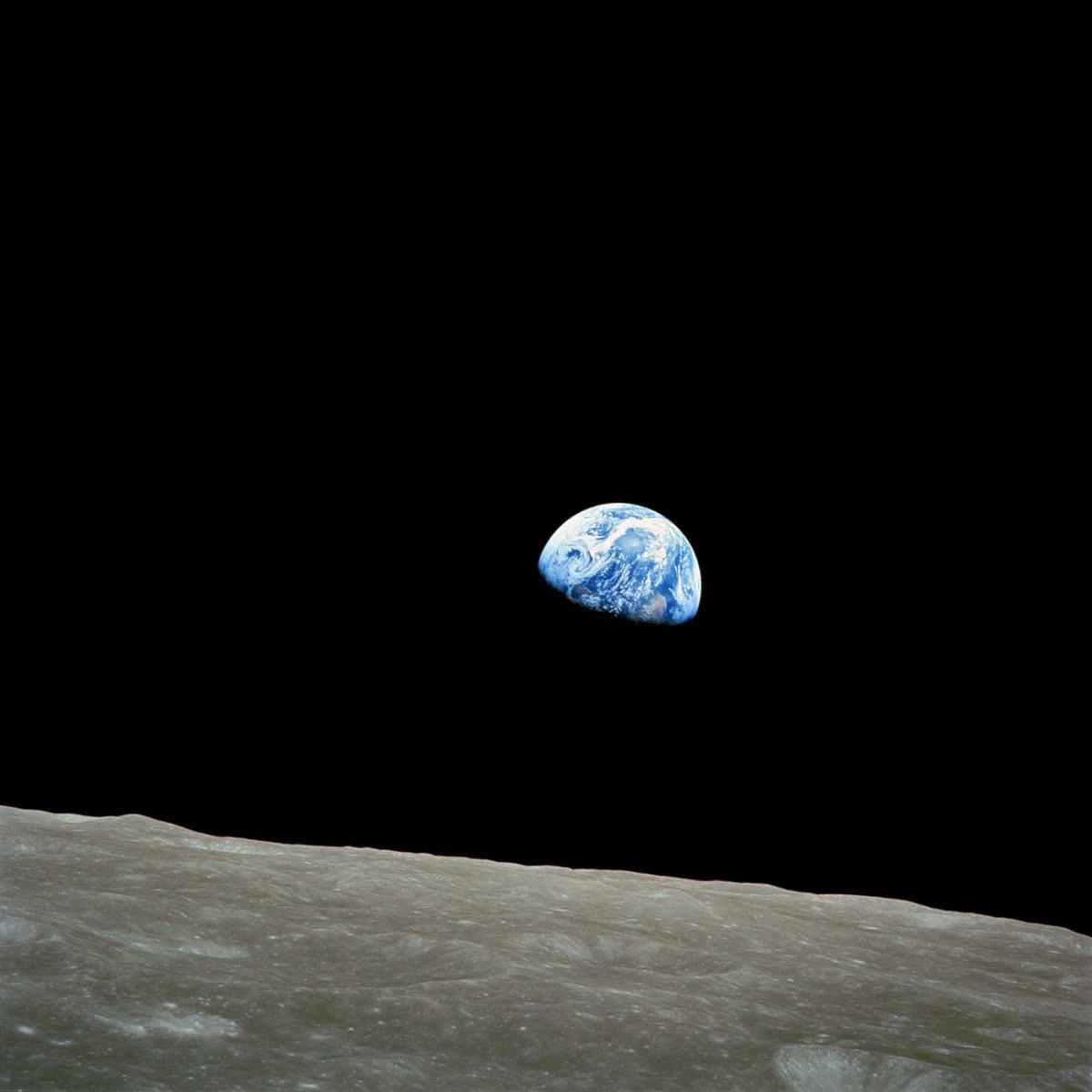
The circumference of Earth (distance around Earth at the equator) is roughly 40,000 kilometres (25,000 miles). The distance to the Moon is 10 times the circumference of the Earth, or roughly 400,000 kilometres (250,000 miles[1]). That sounds like a lot but compared with the dimensions of our solar system it’s nothing much.

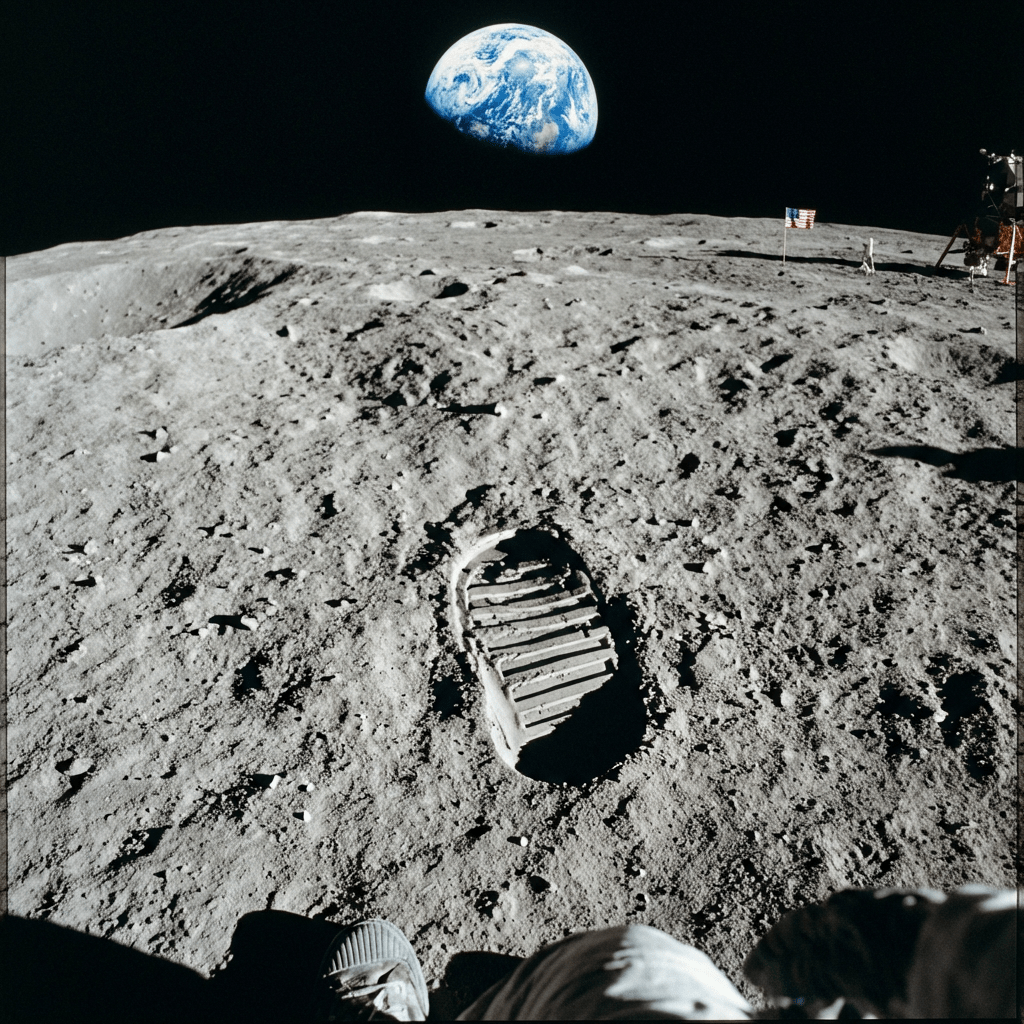
The first humans walked on the Moon on 20th July 1969. I was 9-years old. I watched the event in our living room on a small black and white TV. Around the globe, hundreds of millions of people watched as Armstrong stepped out on the surface of the Moon for the first time[2]. For good or ill, humanity changed on that day.

A plan for returning humans to the Moon is underway[3]. NASA’s new lunar mission is ready for launch. Called “Artemis” a mission is on the launch pad. In ancient Greek mythology, Artemis was heavily identified with Selene, the Moon.

This project will work with industry and international partners, like the European Space Agency (ESA)[4] to send astronauts to the surface of the Moon. The European Service Module (ESM) will provide for future astronauts’ basic needs, such as water, oxygen, nitrogen, temperature control, power, and propulsion.

It’s a big day. Exploration is a part of human DNA. These are the next steps. I wish the project every success.

POST: Well, we get to use that well used phrase – Space is hard. “Space is hard.” But why? — Elizabeth A. Frank (elizabethafrank.com)


[1] 225,623 miles away when it’s at its closest. The Moon’s orbit is not a perfect circle. When the Moon is furthest, it’s 252,088 miles away.

[2] https://en.wikipedia.org/wiki/Moon_landing

[3] https://www.nasa.gov/specials/artemis/

[4] https://www.esa.int/ESA_Multimedia/ESA_Web_TV