
Human Space Travel

It’s right to point out that space exploration is not solely a scientific endeavour. It’s odd to have to point that out. I do so because there are some purists who think that money should only be spent of space exploration if there’s a tangible scientific gain to be had. This thinking goes back to the agreement that public funds should only be spent of Earthy concerns. A glance at the extensive list of trouble that persist around the globe is one reason to focus on Terra firma rather than up at the heavens. That said, the choice is rarely simple.

Then there’s the accusation that exploration, of any kind, is intrinsically imperial. Powerful entities looking for sources of future dominance and wealth. This is not entirely wrong given humanity’s history of plundering resources from wherever they come. Minerals and trade routes being a couple of the primary sources of interest. A strong political will can be amassed to compete to be first to get a foothold on new territory. Despite all the above there’s something more complex going on.

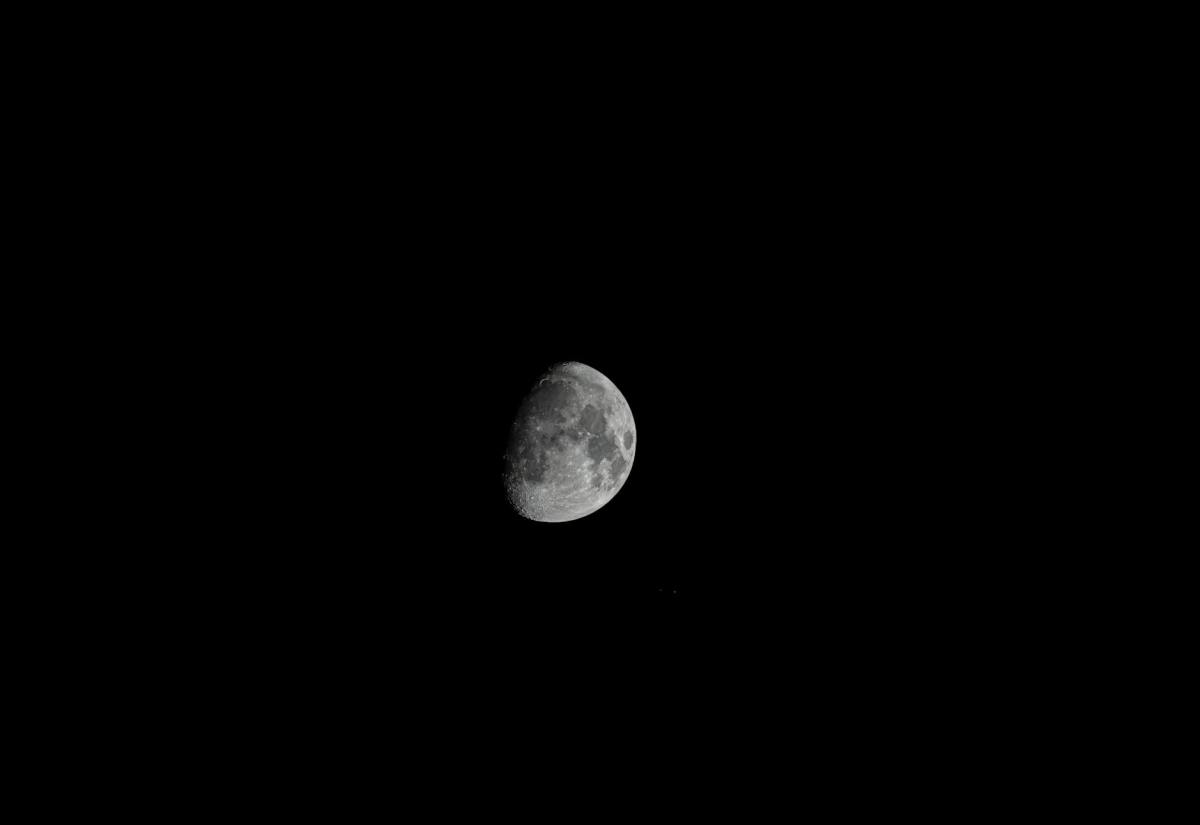
The recent Artemis II space mission may not have been a great boost to humanity’s scientific knowledge. This adventurous lunar fly-by mission was more about proving technology than gathering an abundance of discoveries. Afterall, the far-side of the Moon can quite adequately be surveyed by automated spacecraft. Much as is being done by robotic machines on Mars.

I think there’s little doubt that 1st to 11th April 2026 will be recorded in the history books. If for no other reason that the gap between the Apollo space missions and Artemis. Like so many schoolboys in the 1960s, I watched those black and white TV images of men on the Moon, as they happened. I became an engineer. Would that have happened anyway? Probably, but I’m not discounting the inspirational impact of the Apollo missions.

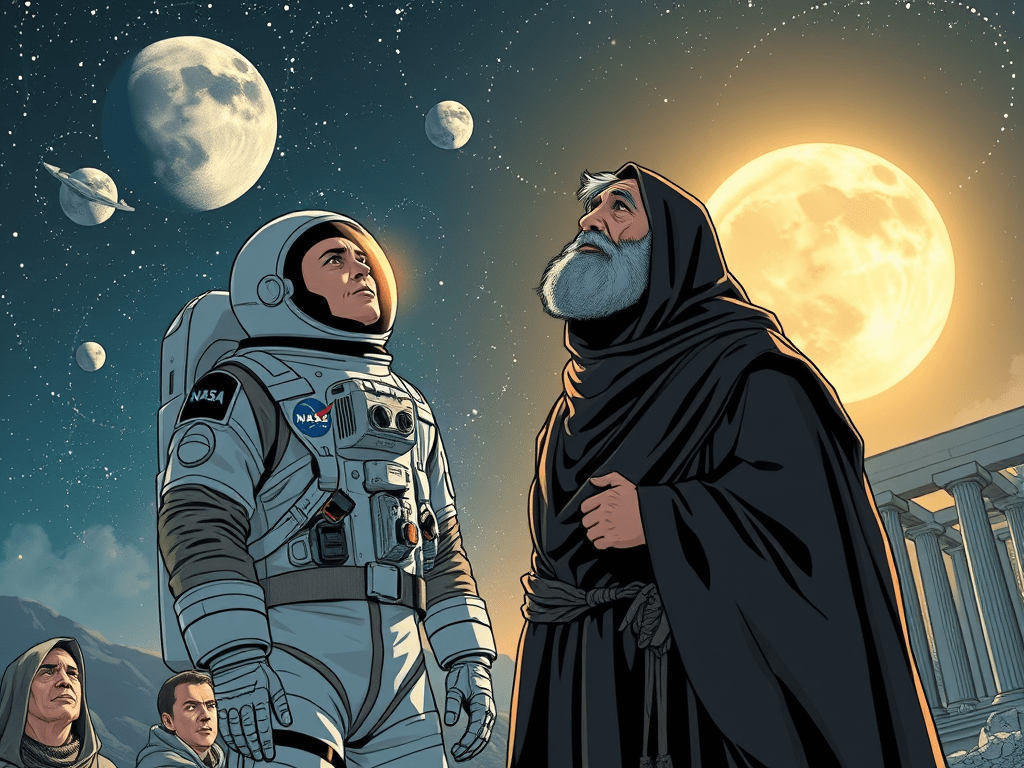
[What would we ever do without the writings of the ancient Greeks and Romans. Certainly, naming new space missions would be a lot harder.]

Do we need crewed missions in future? Given the advances in automation and autonomy that have taken place in the last 50-years, so much can be achieved without the need for humans on-board a spacecraft. However, this is not a binary argument. There are, and always will be, the need to take human experience to the absolute limits. President Kennedy cited George Mallory for a reason to explores space, “Because it’s there,” he said.

The simple notion that humans should be constrained and confined to Terra firma runs contrary to our intrinsic nature. Although societies do become more risk adverse as they acquire the comforts of economic success, there’s still an appetite for exploration even if it entails great safety risks. The allure of being the first does not diminish.

Ideally, the combination of adventure and discovery go hand in hand. Space exploration is not just indulging the most adventurous amongst us. Thus, I go back to my proposition that there something more complex going on.

The ancient Greeks and Romans could help. For what is humanity’s destiny? Ad Astra has a meaning. Far more than the movie of that name. Not one of my favourite movies either.

There’s an inevitability that humanity will go to the stars. That is, if in the meantime wars or environmental degradation do not consume us. Exploration is part of a natural progression of intelligent life. It maybe (likely to be) happened elsewhere in the universe too.
Journey to and from Space

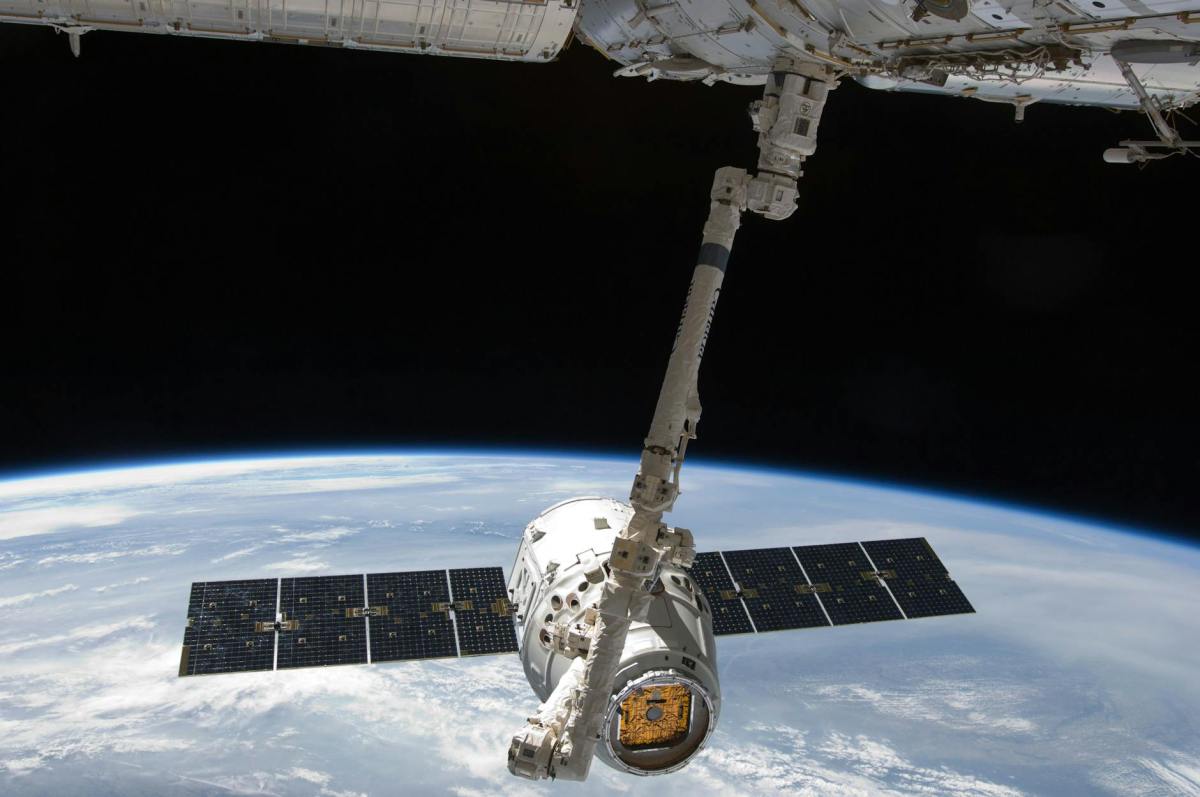
Words count. Even so, this is the age of the image. An almost infinite variety of pixels arranged to capture a moment in time. That’s what has come back from the Moon along with the safe return of the astronauts last night. When I switched the radio at around one in the morning the story was unfolding. Methodical commentary following s flight back to Earth step by step.

There’s nothing like live suspense. The Moon mission was not complete until the safety of everyone involved was assured. Along with launch, re-entry into the Earth’s atmosphere is still the biggest challenge in human space flight. As happened with the space shuttle tragedy, it feels doubly tragic to successfully undertake a mission and not make it home.

Outstanding design, meticulous planning, precision execution and good fortune all come together to make a transition from the void of space to the surface of Earth a success. It’s been said a lot of times; surely there’s a better way of getting home. Hurling a capsule along a path, to make a trajectory at incredible speed, heating like a furnace, is necessary but has an element of crudity about it.

The method used to re-enter the Earth’s atmosphere works. What’s unsettling is that it’s a million miles from the fanciful methods that are frequently depicted in science fiction. Almost as if nature is adverse to humans leaving the planet. Earth’s atmosphere is the greatest asset life has but it’s also a tough barrier. Transitioning it will never be simple.

Various imaginative ideas have been presented over the decades. Yet, they are picture perfect illustrations and little more. For example, the space elevator[1] is a viable concept. The downside is that humanity does not have the technology to make it work. If it did the problem would be marshalling the international cooperation needed to make it possible. Then sustaining that cooperation for generations.

Today we are stuck with methods that are one shot technologies. Costly and throw away. Huge rockets that are discarded. Spacecraft that become museum pieces, if the make it back.

It occurs to me that I have been born into the space age. An age when humanity is taking baby steps exploring the practically infinite. To go further a next step, maybe decades ahead, will open greater possibilities. For now, the sheer cost of coming and going from space will shape everything that is done.

The prospect of commercialisation is real. Depending solely on State entities to fund every mission has sever limitations. However, the commercial enterprises that can take on the challenge of space flight are few in number. What’s needed is a construction of regulatory frameworks that fairly and soundly distribute both costs and benefits for future projects.

I’d place emphasis on this work needing to be for all humanity. Not easy to do given the global history of commercial enterprises. Having a new East India Company[2] for space exploitation is not an attractive prospect.


[1] https://science.howstuffworks.com/space-elevator.htm

[2] https://en.wikipedia.org/wiki/East_India_Company

From Daedalus to Artemis

Being in good company is always nice. That spirit of experimentation doesn’t suite everyone. Now, I find myself in company of a NASA astronaut and an 12th Century English Monk. All in one week.

I stumbled across the NASA App[1] last evening. I hadn’t reckoned at that being available on my smart Sony TV. There it was. So, it only seemed right to download it and check up on what’s going on with the current Artemis mission. Other News told of delays and troubles with the launch vehicle that’s to send astronauts to circle the Moon. Setbacks are common in space flight so that’s not an issue to be alarmed about.

[Whatever would we do without the Ancient Greeks. Artemis, Apollo, Mercury, Gemini[2]].

This is a fundamentally important space mission given that it’s the first-time humans will have ventured so far since the days of the Apollo missions. Sending four astronauts around Earth’s satellite is a hard task to undertake. It’s aimed at establishing a means to get to the Moon on a regular basis.

Apollo spacecraft did this journey when computers were relatively primitive machines. Artemis has the advantage of a technical capability that is many fold greater. The problem is that sheer complexity and society’s tolerance for safety risk has moved on since the 1960s.

Anyway, the tale told, in interview of one of the Artemis astronauts is one of jumping off a barn roof as a young lad. Constructing a homemade parachute and trying it out. Having that freedom of a life growing-up on a farm and that appetite for experimentation. I was thinking, been there, done that and lived to tell the tale. In my previous scribblings I’ve mentioned the large red Dutch hay barn that was part of my youth.

Back to the Greeks. It’s myth but there may have been an element of truth in it. A map of modern Greece makes it clear that the islands of Ikaria and Crete are separated by a great distance. So, suggesting that a father and son in ancient time flew from one to the other can’t be true. However, that doesn’t dismiss the possibility that the Greeks experimented with the possibility of human flight.

So, the myth goes, Daedalus was the design authority for a method of flying which does not come recommended. Strapping on wings made of wax and feathers is a 100% risky venture. Daedalus was, if a real person, an imaginative ancient inventor. An inspiration to others. In this century it’s best to interpret the famous myth of flight as one of experimentation in a way that is fully respectful of the risks involved.

Coincidentally, this week, more by accident than intention. It’s a long story. I visited the town of Malmsbury. Inspired by the story of Daedalus, Monk Eilmer of Malmesbury[3] has solid claim to be the first European to fly. It wasn’t an entirely successful flight, but it was a flight. In the 12th Century he leapt from a church tower with wings of his own invention and survived.

Monk Eilmer of Malmesbury did end up with broken legs and a place in history. It would be unwise to repeat his early experiment as an example of human flight. That is unless a crude glider was replaced by four rotors, electric motors, some electronics and a powerful battery.

I share the hazards of a technical ability. Luckily my youthful attempts at flying with a parachute made of black polythene sheeting from a red barn roof didn’t result in any broken bones. Good luck to all who fly. Especially those who travel the furthest.


[1] https://www.nasa.gov/nasa-app/

[2] https://www.greeknewsagenda.gr/from-olympus-to-the-universe-where-greek-mythology-meets-nasa-missions/

[3] https://en.wikipedia.org/wiki/Eilmer_of_Malmesbury