
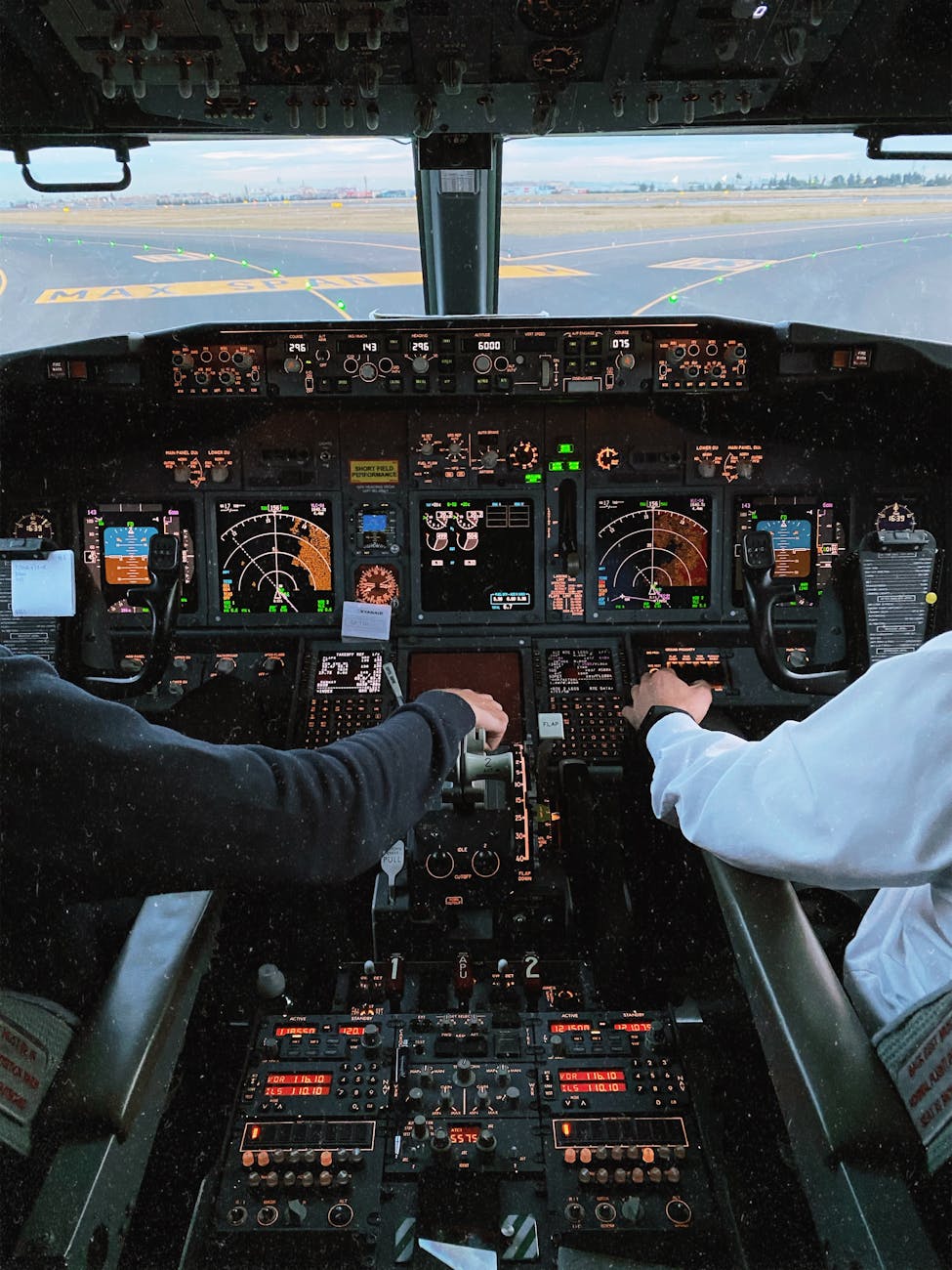
Unsafe. In common language it’s the opposite to being safe. So, take a definition of “safe” and reverse it. Let’s say to be safe is to be free from harm (not a good definition). That would lead to “unsafe” being subject to harm or potentially being subject to harm. The probabilistic element always creeps in since it’s the future that is of concern. Absolute safety is as mercurial or unreal as absolute certainty.
Let’s apply this to an aircraft. The ultimate harm is that of a catastrophic event from which there is no escape. Surprisingly, taking a high-level view, there are few of these situations that can occur.
Flying, and continuing to fly, involves four forces. Lift, Weight, Thrust and Drag. It’s that simple. An aircraft moves through the air with these in balance. Flying straight and level, lift opposes weight and thrust opposes drag.
Yes, there are other safety considerations. If there are people on-board. For example, it’s important to maintain a habitable environment. At higher altitudes that requirement can be demanding. Structural integrity is important too. Otherwise flying is a short-lived experience.
In the recent Air India fatal accident, the four forces of flight were not maintained so as to make a continued safe flight possible. The wings provided lift but the force that was deficient was thrust.
Two large powerful engines, either of which could have provided enough thrust, were unable to do so. The trouble being fuel starvation. Fuel starvation occurs when the fuel supply to the engine(s) is interrupted. This can happen even when there is useable fuel on board an aircraft[1].
Sadly, in the records there are numerous aircraft incidents and accidents where this has happened. Quite a few fuel starvation incidents and accidents occur because of fuel mismanagement. This can result from a pilot selecting an incorrect, or empty, fuel tank during a flight.
Now and then, it is the aircraft systems that are at fault. The pilot(s) can be misled by a faulty fuel indication system[2]. In one notable case, a major fuel leak drained the aircraft’s fuel supply[3].
When there is useable fuel on-board an aircraft, the imperative is to restart and recover. It is not uncommon or unreasonable for there to be a delay in restarting engine(s), especially when a fuel starvation event is entirely unexpected. Diagnosis takes time given the numerous potential causes of a starvation event.
In cruise flight there is time available to perform a diagnosis and take appropriate corrective action. Both take-off and landing have their hazards. Both are busy times in the cockpit. When looking at the worldwide safety numbers, less fatal accidents occur on take-off than landing. The numbers Boeing provide put take-off at 6% and landing at 24% of fatal accidents. Each one only occupies about 1% of the total flight time.
Although these are the numbers, my view is that, even though take-offs are optional and landings are mandatory, the requirements for adequate thrust are most critical during take-off. This is arguable and it reminds me that safety assessment is never simple.
[1] https://www.faa.gov/lessons_learned/transport_airplane/accidents/G-YMMM






 John Vincent