Space

Eutelsat OneWeb is a growing global connected community. That’s what the publicity says. Once upon a time I wrote about OneWeb. I wrote about it in the context of Brexit.

One of the touted benefits of Brexit was autonomy, in other words, British innovation leading the way to benefit Britain above all others. It’s that aggressive assertion of sovereignty that was at the core of Brexit. Remember, it wasn’t so long ago that this was part of Brexiters fantasies? 

In the Brexit turbulence the UK Government walked away from the EU’s Galileo programme. The UK no longer participates in the European Galileo or EGNOS programmes[1].

Then in 2020 the UK changed its original post-Brexit position and scraped building a national alternative to the Galileo satellite system[2]. At that time, Business Secretary Alok Sharma offered around $500 million of UK public money to acquire part of an organisation in trouble, called OneWeb.

OneWeb is a commercial Low Earth Orbit (LEO) satellite constellation now with an element of Government ownership. It’s network of satellites doesn’t have a global positioning capability, like Galileo.

To get its satellite network up and running, an expensive business, OneWeb merged with French company Eutelstat. Today, if we look at the 2020 investment made with public money the financial situation doesn’t look good. That doesn’t mean to say that things will not turn around in future years[3].

The Times newspaper has taken a nationalist view of the circumstance[4]. It’s a point that the intellectual property is not in the hands of the UK Government, but the investment could still turn out to be a useful long-term commercial bet. It’s gambling with public money.

As an aside, I’ve been looking at buying a new dishwasher for the kitchen. It’s made me aware of a capability that I had no idea had been developed. Namely, the connection of dishwashers via the web. I think this is what is called the Internet of Things (IoT). So, imagine that, British dishwashers connected by space as a Brexit potential benefit.

However, if there’s a change in the UK Government’s political direction after the next General Election there’s a strong possibility that the UK will return to the EU’s Galileo programme with some manner of partnership. When we get to 2026, we may look back on the decade behind as a vacuum, much like the vacuum of space. A time when an uncertain direction cost a great deal.


[1] https://www.gov.uk/guidance/uk-involvement-in-the-eu-space-programme

[2] https://www.politico.eu/article/uk-scraps-plan-to-build-global-satellite-navigation-system-to-replace-galileo/

[3] https://www.politicshome.com/thehouse/article/oneweb-uks-gamble-satellite-startup-pay-off

[4] https://www.thetimes.co.uk/article/656bd77c-c106-47c3-840b-674e9efc4f0e

Earthrise

24th December 1968 did change everything. What was achieved in that year hasn’t been matched. An unexpected event took place on an adventure to orbit our Moon. Now, 55-years have gone by. Enormous strides have changed lives. Technology has raced ahead. We reside on a beautiful and bountifully planet. Yet, we have continued to pump massive amounts of carbon into the Earth’s atmosphere. I wonder, does this tell us anything about human nature? If there is such a thing.

The photograph called “Earthrise” was taken while the Apollo 8 spacecraft was skimming over the surface of our Moon[1]. I don’t suppose there has ever been a more significant colour photograph in human history. As one of the astronaut’s said, he could hold his thumb up at a window and mask everything and everybody alive except for the three of them in the capsule.

The Earth appeared as a swirly blue marble set in the dark emptiness of space. The image is stark. Eyes are drawn to the lush colour and liveliness of the globe. Contrasted with the darkness and vastness of space. Clouds, oceans, and landmasses all scattered across this lonely planet. At the time of the Apolo mission there was about three and a half billion inhabitants. Today, there’s eight billion people spread across the surface of the Earth.

This image has become pivotal in our thinking. So much of our debates and discussions about the future are dominated by conflict and competition for resources. When there’s the opportunity to stand back and realise that our small homeland is shared, those tensions fade, at least a little.

Fragility and, almost irrelevance, when set against the vastness of space, is our daily reality. Illuminated by the Sun, a minor star, and in just the right place for life, so we fight and war as if humanity was at the centre of the universe. That animalistic behaviour could be the route of our downfall. Only, we are doing something else to top that persistent stupidity.

What sets Earth apart? That cultivated atmosphere. Such are the interactions going on in the first 100 kilometres above the surface of the planet that a sustained healthy atmosphere exists. It takes a quick look at the images coming back from the exploratory rovers on Mars to see how alive and miraculous Earth’s atmosphere has become.

The question is, are we the generations of humans who will permanently degrade it? Presently we are struggling with the needs and desires of the eight billons of us and the realising that a balance must be struck. For one pumping massive amounts of carbon into the Earth’s atmosphere is pure idiocy. It’s even greater idiocy when we have advanced and invented technologies that mean we don’t need to do it.

COP28 may be another step on the road to sanity but we continue to struggle with the realities of our situation. A human-made climate crisis and a dramatic increase in climate related catastrophes may wake us up. Perhaps every screen saver on the planet ought to be the Earthrise image.

POST: The first such image of the Earth seen from the Moon was taken by Lunar Orbiter 1 in 1966. It was in black and white and of poor quality.


[1] https://www.smithsonianmag.com/science-nature/who-took-legendary-earthrise-photo-apollo-8-180967505/

The Dr

There’s something wonderfully peculiar about a time traveller wandering around the universe in a British police box. Time and space are the stuff of an infinite number of story lines. But the ones who strike a cord with us most are the humancentric ones. Our home, Earth is under threat. Humanity is in peril. Nobody knows what to do. Then stepping out of street furniture from the 1960s comes a hero. Not a muscle bound, gun toting superhero with magical powers. No, an eccentric, cerebral alien who looks like a college professor who took too many happy pills in their hippy phase. Humanoid in appearance. Wherever The Doctor goes so enemies follow, set for a final showdown[1].

Iconic features of Dr Who’s[2] life echo down through our decades. The Doctor’s vehicle is nothing like H G Well imagined. With a nice trick of being bigger inside than out it dazzles all who hitch a ride. If only we could master that transformation. I for one, don’t think it’s entirely impossible. Afterall isn’t physics up to about 12 dimensions now?

No saviour of the human race is complete without uniquely bad adversaries. Strangely enough quite a few are machine-based baddies. How in the moment is that? With increasing neurosis about what machines may be capable of in the near future. Daleks look a bit crude with what we know now. Unlike the iPhone we haven’t yet seen an upgrade to a version of the Dalek 15 Pro. I dread to think what that might do. They may have a resistance to any means of destruction.

Some Science Fiction can bore with an intensely serious inspection of our planetary dilemmas. Dr Who steers clear of that trap. Injecting humour and simple everyday relationships into the stories, the level is more connectable. One person matters, as much as billions.

My Doctor is Tom Baker. As a Time Lord, he captured that frenetic, unpredictable, jumbo schoolboy who knew no bounds. Yet, he retained a masterly command of dangerous situations. He could look stern as well as overjoyed. Never did I think that he would turn to the darkside.

My favourite evil monsters are the Cybermen. The idea that machines should decide that humans would be better if they were transformed into machines is a true horror story. It a kind of malevolent evil that doesn’t know it’s evil. It’s possible to believe that could exist.

Pure fiction, mixed with a scary look at expanding technology and always a partnership between good folk to overcome despots like The Master and singularly driven uncharitable aliens. That blend makes for wonderful entertainment. Long may television, and its replacements celebrate this combination. Regeneration has no end.

Today, it’s Doctor Who’s 60th Anniversary[3]. Happy birthday.


[1] https://www.imdb.com/title/tt0056751/

[2] https://en.wikipedia.org/wiki/Doctor_Who

[3] https://www.doctorwhotv.co.uk/doctor-who-is-60-today-99309.htm

UAP

….none of us are familiar with the variety in shape and size of flying machines currently being designed and developed for general use

There was a time when anyone raising the issue of the potential for an asteroid to send humans back to the stone age was mocked and derided. Anyone bringing apparent sci-fi plots into Parliament was jeered. Now, the subject is studied with intensity and considerable resources. The probabilities of Near-Earth Object[1] (NEO) impact is calculated, and small asteroid and comet orbits are monitored in detail.

Really bad films, like the one starring Bruce Willis have a lot to answer for. That space between fiction and reality gets filled with more than a few eccentrics and conspiracy theories. Trouble is that gives you, and me licence to smirk anytime cosmic occurrences come into discussion.

I must admit I like the term Unidentified Anomalous Phenomena (UAP) better than UFO. They are airborne phenomena, they are unidentified until we know better, and they are anomalous. Although, most reports are attributed to things that are known, even if they are rare events. Some are pooly reported and only scant evidence is avialable.

Discovering all there is to know about such airborne phenomena is a matter of both safety and security. However remote it might seem, part of this is the safety of aircraft in flight. I know of no examples of extra-terrestrial objects colliding with aircraft but it’s not impossible. I’m reminded of that classic picture of a bullet hitting a bullet in-flight and fusing together. It’s from the Battle of Gallipoli.

We might be entering a new era of transparency in the scientific study of UAP. This is a wholly good thing and highly necessary given the coming expansion in the number of air vehicles in flight. If Advanced Air Mobility (AAM) is going to do anything, it’s going to led to an increase in aviators and public reports. For one, none of us are familiar with the variety in shape and size of flying machines currently being designed and developed for general use. It’s likly that red and green lights moving through the sky at night is going to prompt public reports of the “unknown”.

Perspective plays a part too. A small drone close can look like a large airship at distance. As environmental conditions change so the perception of airborne objects can change dramatically. So, what we might observe and confidently attribute to be a drone or helicopter or aircraft in-flight is not always definitive. Applying disciplined scientific analysis to the data that is available has benefits.

Given that our airspace is likely to become ever more crowded, NASA’s study[2] of UAP has much merit. Recognising that resources are needed for this work is a lesson most nations need to learn. We can sit on our hands or giggle at the more ridiculous interpretations of observations, but this kind of reporting and analysis will be advantageous to aviation safety and security. It’s part of giving the public confidence that nothing unknown, unmanaged or uncontrolled is going on abover their heads too.

POST: UFOs: Five revelations from Nasa’s public meeting – BBC News


[1] https://neo.ssa.esa.int/home

[2] https://www.youtube.com/watch?v=bQo08JRY0iM

Pulp

Eyes wide open in astonishment. I saw a supermarket newsstand. That’s not new. From time to time, I find it better to scan the daily headlines rather than buying a newspaper. Frankly, in the world of social media and search engines the sane and sober daily national newspapers are too expensive. They only make sense on a Sunday when there’s time to take in what they have to say.

It’s a moribund marketplace. British daily newspapers are in slow decline. Nevertheless, each title has a readership that remains loyal even if it’s declining in numbers. Before the mobile phone took so much of our attention time it was important to consider who reads the papers. As a sketch from the BBC comedy “Yes, Prime Minister” nicely put it[1].

I have an admiration for those who can transform difficult technical material into everyday language. That kind of communication skill is much needed and often undervalued. Taking simple words and sentences and telling a story that makes knowledge accessible, well that’s rare.

The newspaper headline that caught my eye was “It’s a space burp, Jim, but not as we know it.” Topped by “Earth facing solar blast as powerful as a billion nukes”.

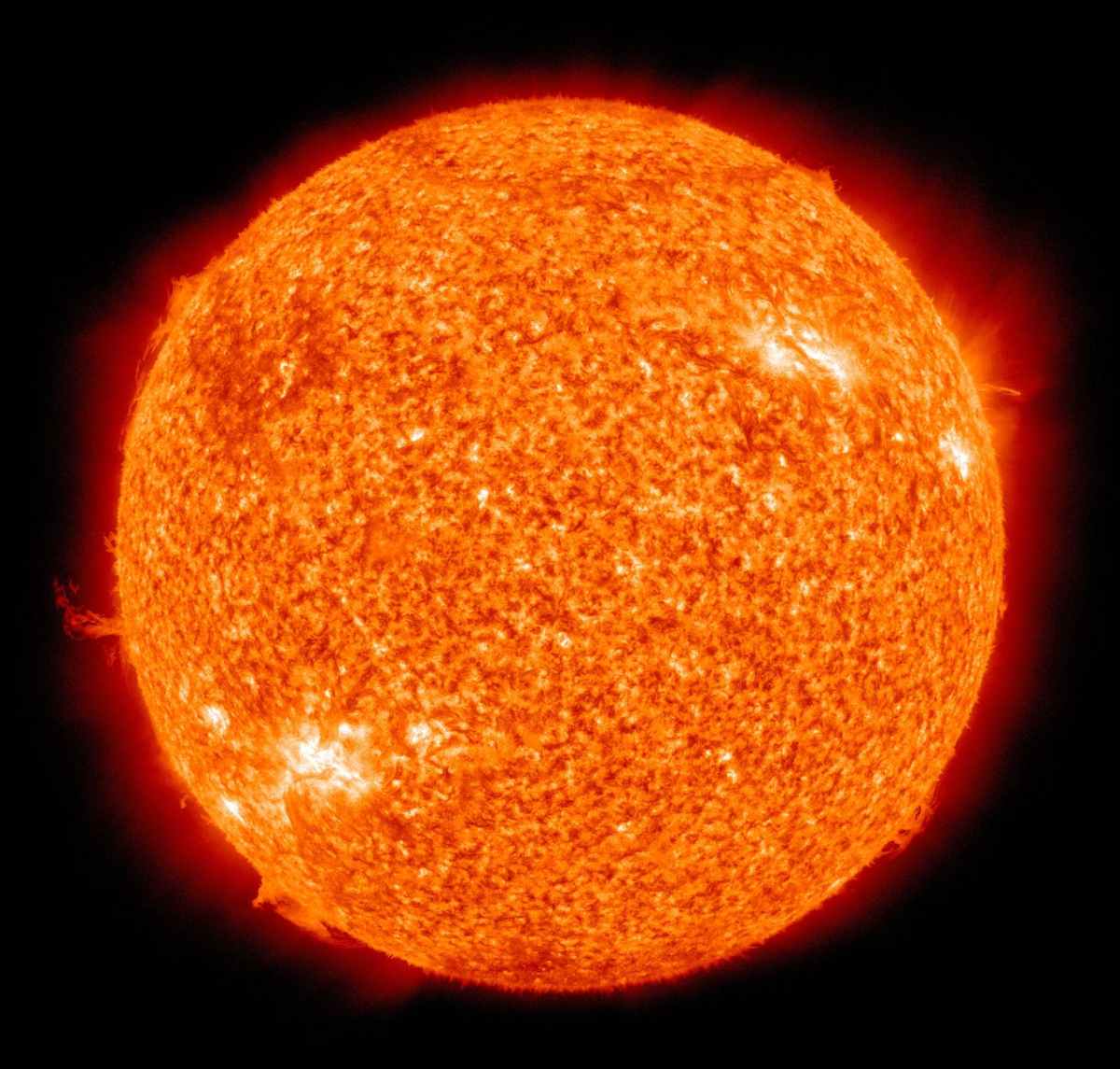
This is wonderful example of how to turn real science into pulp and mush. I might be the only one who picked up the Daily Star, some irony there I think, and thought this thought. What a way to highlight a story about the sun. No, not The Sun but the sun that’s 93 million miles away.

There are some great people in the National Oceanic and Atmospheric Administration in the US who run a space weather prediction centre[2]. Their website is a place to go if you want to know where to see the northern lights at a particular time and place. On Monday 9 January, there was a solar flare that may have affected radio transmissions in South America. That’s useful to know if you are on a ship using High Frequency (HF) radio communications in that part of the world.

“Earth could soon be in the firing line of a massive solar storm with the power of billion hydrogen bombs” is certainly an interesting and rather scary way of putting it. What the readership of The Star should do about this suggested calamity is not explained.

The Sun is restless, powerful, and essential to life on Earth. It’s prudent to keep a watchful eye on what it does. There’s no doubt that it can cause havoc on extremely rare occasions. We are now more vulnerable than past generations given our dependence on extensive electronic communications.

The Sun runs on an 11-year cycle. I don’t think anyone knows why that happens, but it does. We are coming out of the quiet part of the cycle so there’s likely to be more reports on this subject. Solar flares, like massive earthquakes and volcanic eruptions are difficult to predict. Our ability to warn of a once in a 5000-year event is fragile.

Perhaps this story is a hopeful wish of a newspaper editor. We will put down our broken mobile phones and pick-up newsprint once again. I wonder?


[1] https://youtu.be/DGscoaUWW2M

[2] https://www.swpc.noaa.gov/

Mars flight

The first time the immense challenges of controlled flight on another planet are overcome we are in a new era of aviation.

I was wondering – is there air on planet Mars? It’s one thing to say is there life on Mars? We’ve been asking that big question of generations. But can we use the word “air”? There’s a thin atmosphere on Mars but can you call it air? The rover that’s there will be listening for sounds in what is 95% carbon dioxide. That kind of atmosphere on Earth would be our worst nightmare.

Let’s look at the definition of that everyday word – air.  Air is the mixture of gases which forms the Earth’s atmosphere and which we breathe.  No way could we breath on Mars.  That gas we depend on, oxygen is down to about 0.1%. Taking that basic definition then Mars does not have “air” in the common sense.

I’m going down this rabbit hole because of the references to Ingenuity, the Mars Helicopter that is being prepared for flight. This innovative flying machine has been landed on Mars and is being referred to as a helicopter.  Now, a Helicopter is a heavier-than-air aircraft supported in flight chiefly by the reactions of the air on one or more power-driven rotors on substantially vertical axes[1].

Oh dear, there’s that reference to the air as per planet Earth.  I may be being an aviation pendant, but this could be the time to revisit the definition of helicopter and change the word “air” to “atmosphere”. Afterall, if there’s a gas of sufficent density then flight is possible with the right equipment.

Ingenuity could also be known as a Rotorcraft.  It undeniably has two rotors, so it must be a craft supported in flight chiefly by the reactions of an atmosphere. Since we are entering a new era of aviation as a human built extra-terrestrial vehicle makes a controlled flight for the first time, revisiting definition could be appropriate. 

Then Airworthiness is then better expressed as Flightworthiness. Maybe, Aircraft ought to be Flightcraft. There’s a history here given that a craft that hovers is called a Hovercraft. Which is more important? What it does or what it does it in?

Whatever the nuisances of these internationally used definitions in English, the wonder of this fantastic achievement is not lost on me.  This moment only happens once. The first time the immense challenges of controlled flight on another planet are overcome we are in a new era of aviation. 

Flying in a hostile cold, thin atmosphere will be amazing. Take-off and landing several times will be astonishing.  What magnificent engineering design. Rotors spining at 2400 rpm. This robotic rotorcraft will test the feasility of flying on another world. Imagine what that will open up. From me, all the best good fortune to the team who made this possible. Lift-off and come down in one piece. Looking foward to seeing the pictures.


[1] Annex 8 to the Convention on International Civil Aviation