Exploring a Riverside

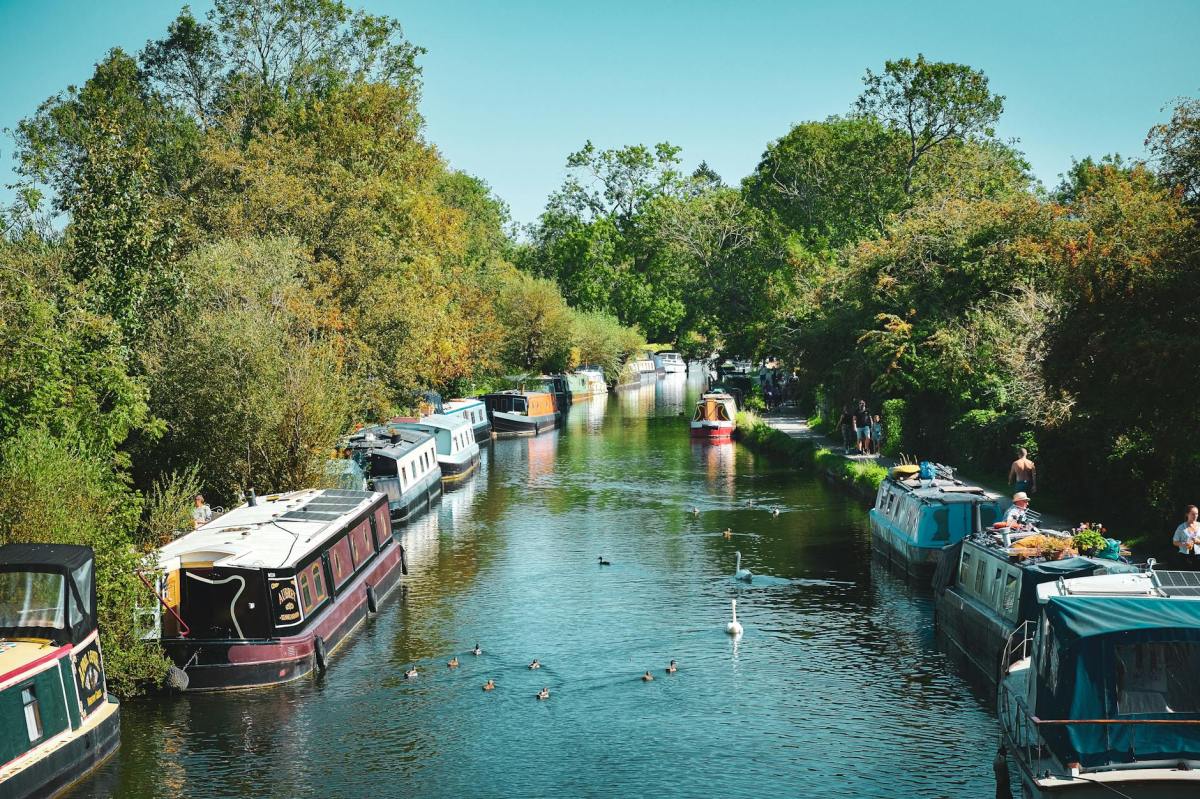
Riverside walks can be pleasant ways of spending a sunny spring evening. That’s what I did on Friday. Sun shining with a cool breeze sweeping through the trees. Underfoot even the unmade-up paths were dry, which is testament to the rainless weather of recent weeks. Even so, the riverbank showed signs of the flooding of the winter.

Reading is a town[1]. It’s England’s largest town. Now, I didn’t know that until I looked it up. The largest English town that I’ve been familiar with over the years is Crawley in Sussex. I think of that as a large town but it’s less than half the size of Reading. It’s the railway that makes Reading. Reading railway station was the last stop on the Great Western Railway (GWR)[2] when it was first opened in 1840. After that the railway forged west to be what we know now as the main thoroughfare across southern England.

Reading town has a long history. That’s no surprise given its position on the river Thames. It’s where the river Kennet, the canal and the river Thames meet. An obvious place for trading since Roman times. It’s a commercial town. Glass sided office blocks and Victorian brick work. For all that it doesn’t stand out as an architectural masterpiece.

Another surprise for me was leaning that town twinning is alive and well. That Reading in twined with Düsseldorf in Germany. A city more than twice the size of Reading. In fact, until this last year, I’ve been more familiar with Düsseldorf.

Our walk ended at The Fishermans Cottage[3]. I’m happy to recommend this small riverside pub.

From there, on the walk back to the railway station I did see the one of the more notable sites in Reading. That’s the Banksy’s Great Escape artwork[4] on Reading prison wall. Oscar Wilde spent time in that jail. The artwork has got a Perspex cover to keep the pigeons off. And anyone else who might think of spraying it.

That reminds me. It’s not unusual to have a phobia about dogs. Although dog owners mostly have a difficulty in getting their heads around the fact. On my riverside walk dogs were not the problem. Amongst our small group of walkers had a different phobia.

As we got to the confluence of the Thames and the Kennet, we discovered the phobia of one of our walkers. Alfred Hitchcock would approve. The Kennet’s tow path attracts Swans. These Swans are attracted by people with food. With no inclination to get out of the gently flowing river these lazy Swans wait for passers-by to pay attention to their needs. That’s no problem.

It’s called Ornithophobia. A fear of birds. Birds flock when free food is on offer. The worst of these can be thought of as flying rats. I talk of pigeons. That how I think of pigeons. Tom Lehrer[5] had the right idea about these annoying birdies. Frightening them away, at least for a moment, cleared our pathway. Like a flash they returned as we strolled into the pub.


[1] https://www.reading.gov.uk/

[2] https://www.gwr.com/stations-and-destinations/travel-inspiration/blogs/history-of-the-railways

[3] https://www.tripadvisor.co.uk/Restaurant_Review-g186363-d7363678-Reviews-The_Fishermans_Cottage-Reading_Berkshire_England.html
[4] https://banksyexplained.com/create-escape-march-2021/

[5] https://youtu.be/yhuMLpdnOjY

Europe Day Highlights the Need for Unity

Keeping the peace is never easy. There’s an irrational propensity to conflict in human nature. Keeping the peace is not a passive task. First, it requires communication and engagement. When those two go, trouble is not far behind. It’s by expressing concerns that each side knows where the other stands. Escalation can come when ignorance and propaganda take over.

After the second world war, institutions were established to ensure that communication and engagement became a non-stop affair. With only a small number of exceptions, the countries of the regions of the world engaged in these institutions. Those measure have contributed to making a more prosperous world.

“Never again” are two words that refer to the atrocities of war. The moto is to remind everyone that the worst can and does happen, and that perpetual effort is needed to ensure that history does not repeat itself. The concept of “lessons learned” is essential for safety and security. This is as much true for micro day to day activities as it is for the macro events that shape the path global ahead. Taking teaching not from narcissistic demigods and snake oil salesman but from the pages of history. Appeasing tyranny is not an option.

This week has been a reminder of the lessons learned from the world wars. For most people it’s been a continuing commitment to ensure such events never happen again in Europe. Sadly, let’s not be coy. Despite an overwhelming desire for peace, conflict in still Europe is a reality. But the lesson is there in black and white, appeasing tyranny never works.

Today, Friday 9th May is Europe Day. That’s because a speech by Robert Schuman[1] changed the course of European history on this day. Five years after the war in Europe had come to an end, he put forward a proposal that would make a future similar conflict impossible. The idea was to create an interdependence that would secure peace, unity and solidarity.

It worked. His proposal led to the creation of a European Coal and Steel Community. That measure lay solid foundation for what would later become the European Union (EU). Behind this is move is the echo of “Never again”. Europe has seen centuries of war. This was a moment in time to bring that to an end.

For now, 75-years on, this has been a success. It’s not a regional project with a defined end, even if it has a defined beginning. Where the EU chooses to go next is in the hands of its Member States and its citizens. Changing the course of European history doesn’t stop because the EU exists. Without the cooperation and dialogue, it provides there’s always a chance that ancient rivalries will be reignited. In fact, unscrupulous right-wing politicians[2] are trying to do that just now.

Sadly, in the UK, we stand on the sidelines, looking across the water at continental Europe. Brexit has done a great deal of damage. But as I have said, nothing is static, the world is entering an ever-uncertain phase. The opportunity for the UK to restore EU relations is open. I see the wisdom in the words of the Governor of the Bank of England. He has said the UK now needs to “rebuild” Britain’s relationship with the EU. Amen to that.


[1] www.europa.eu/!9JbCd9

[2] https://www.politico.eu/article/germany-spy-agency-walk-back-extremist-label-afd/

Finding Balance

Regulation can be a contentious issue. That’s an understatement. A spectrum of views extends from the complete libertarian to the past soviet model. Citizens shouldn’t be encumbered by any restrictions to the State has the right to dictate every aspect of life. Clearly, there are immense downsides to either of these extremes. Luckily, although not everyone will agree, the set of political choices available in the UK covers the wide range from the far-right to the far-left. These labels are deficient when it comes to the detail. Often these two camps are similar in their authoritarian ways and means.

Rejecting the extremes, being a liberal, means finding a balance. That means a minimal number of rules and regulations to achieve the prosperity, safety and security goals that most people happily support.

A pendulum swings in the British political cycle. Never quite sure what the cycle time is on this one. What’s for sure is that our society’s tendency is to go from urges to tighten-up rules and regulations to impulses to eliminate or relax them with gusto. Often, the aim is to tweak or protect economic stability or tweak or promote economic growth. After the banking crisis of 2008 it was the first of these, now it’s the second.

Brexit is a strange oddity. Although, great claims were made for the loosening of the ties that bind us, the reality has been much onshoring of past rules and regulation. The forces of continuity have some good arguments.

It’s reported that Prime Minister Starmer is considering dynamically aligning UK regulations with EU regulations, as if that’s not happening pragmatically and piecemeal already. OK, this is not consistent across every sector of the economy. It’s a mixed bag. Politicians banging the drum but not doing much.

Let’s say the financial services market goes a different way from the technology sector. One has a history as long as your arm the other is being made-up as we speak. Clearly, there are risks in both deregulation and overregulation. Thus, I get back to that notion of finding a balance.

To hardened Brexiters EU and UK rules constrain. To their supporters they enable, facilitate and transform.

Now, what’s difficult to discern is where do Starmer and Reeves stand?

A direction of travel, to encourage investment in the UK, has been touted. That implies alignment rules. Investors rightly seek the largest market on offer. Like it or not, the UK is not the US, or even the EU when it comes to the size of its economy. Maybe, it’s taken Brexit to realise that we align as a matter of common interest. Mutual benefit.

Most of our safety and security goals are not subjects of intense competition. If you fly internationally, why would it make sense to compete on safety or security? The general expectation is that common high levels of safety and security are desirable.

As the weather improves so we are heading towards a year of the Labour Party in power. There’s disappointment and concern about the timidity of their actions. The word “reset” is banded about. A ridiculous word. Press the reset button to restore a past condition. No, choices need to be made. Closer alignment and partnership with the EU are the rational choices.

Humanity and Tolerance

Who doesn’t know this short sentence? “A rose by any other name would smell as sweet”. It has a particular meaning in play Romeo and Juliet. It’s Juliet saying she doesn’t care about her loves’ family name. The source of their great troubles. Being elegant and fragrant it’s no surprise that Shakespeare chose to speak of a rose.

More broadly this phrase makes the point that calling something different doesn’t change its core characteristic. Roses might not be the best example since naming these flowers plays a big part in distinguishing between one and another. So many modern hybrids. Instead, let’s go for trees. “An Oak by any other name would be a noble tree”. Which remains appropriate despite the number of different types of Oak trees.

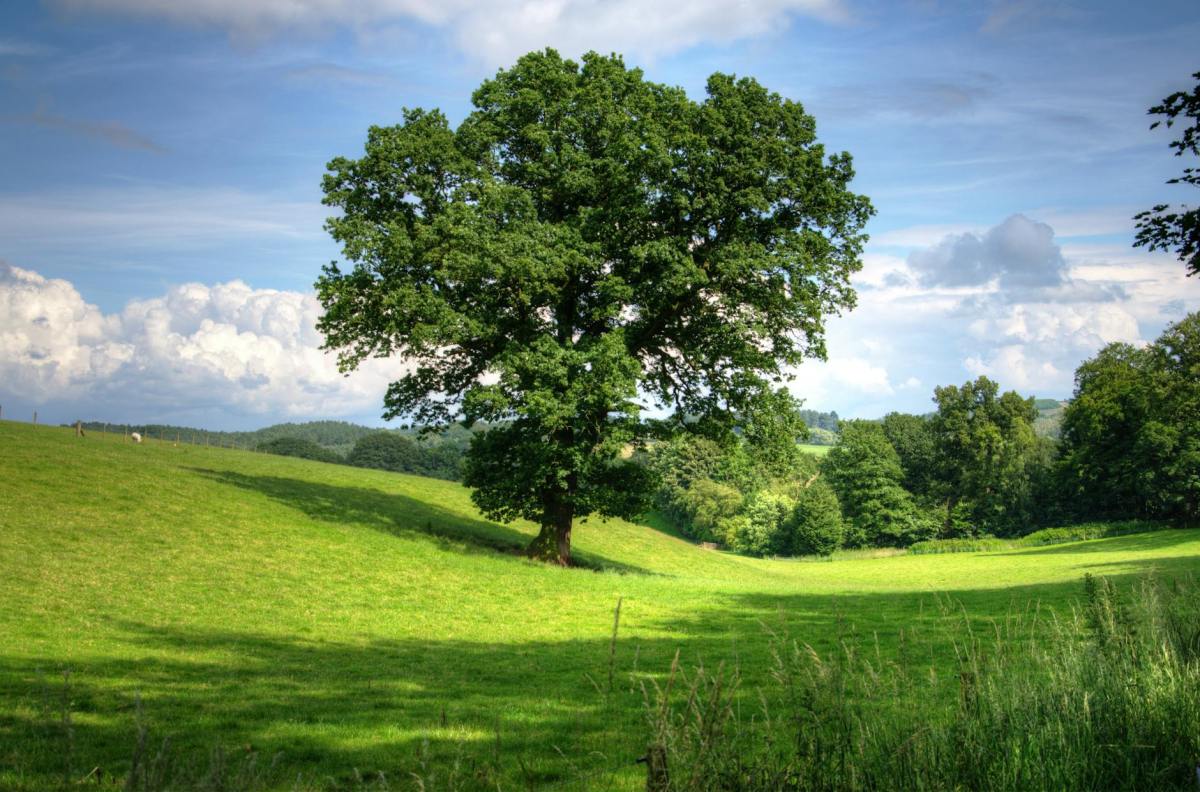
Over the weekend, I was standing under a large ancient Holm Oak[1]. It had to be pointed out to me that that this type of Oak tree is evergreen. Most Oaks are not. An aged, stately and weathered one is definitely a noble tree.

I’m finding the News reporting of the moment mixed-up and confused. The word “diversity” gets thrown around like a political football. Let’s be clear. Diversity is everywhere. It is not unusual. Names are labels that we use like a scatter gun. Often to try to pick-out, to differentiate one group of humans from another. Not always with good intentions in mind.

Let’s remember our essence and intrinsic quality is that we are human. We live on planet called Earth and we need to find ways to get on with each other.

Today, there’s rather a lot of us. Globally, over 8 billion. However, that’s not the key factor. Let’s face it, in Shakespeare’s time there was a fraction of that number[2]. All the great strife and troubles he wrote into his plays are here now, as much as they were in his time. Proportionally, the diverse range of people and their ways of living haven’t changed that much.

It would be wise to heed the lessons of history. As we segment, categorise and slot groups of people into specific camps. The digital age, social media has added a dimension to this process. Now, likes and dislikes pigeonhole people into “similar” groups.

Here, I’m trying to keep the topic generic. Recent judgements from eminent judges, although necessary, hasn’t added a much to social harmony. To say “the law is an ass” is no understatement. I certainly wouldn’t want to fly on an aeroplane designed by lawyers. Although, it would be safe since it would never get off the ground.

I believe, we should treat each other in a way that respects that we are human, and thus diverse. That means tolerance and mutual understanding are essential. Not optional. Creating the need for bathroom police is the dumbest thing venerable British judges have done in a while.


[1] https://www.woodlandtrust.org.uk/trees-woods-and-wildlife/british-trees/a-z-of-british-trees/holm-oak/

[2] In 1600, around William Shakespeare’s time, the estimated world population was around half a billion. London’s population was about 245,000.

Cartoons capturing us

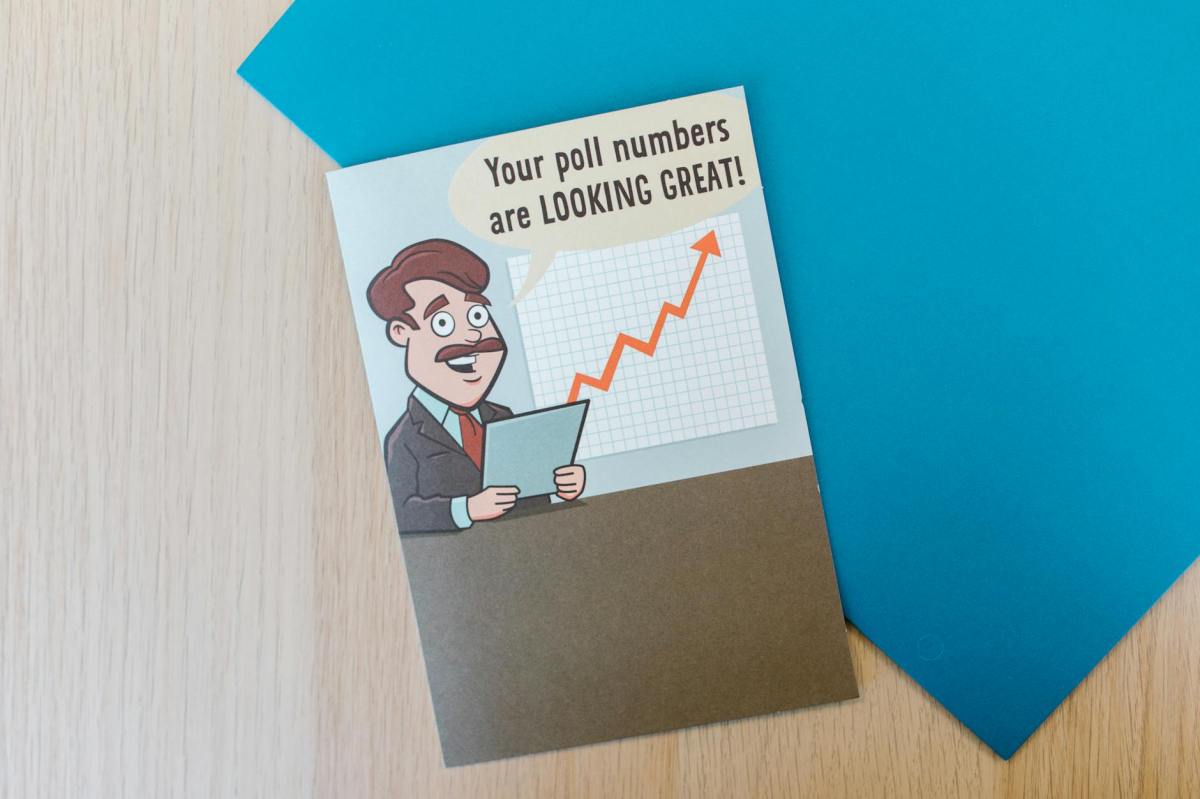
To me, it’s fascinating how a few lines of pen and ink can sum up so much. One of the great underestimated influences is the power of the cartoon. They speak of their times, they speak of social niceties, they speak of the ever-moving conveyer belt of humour.

Every day the cartoons of MATT[1] sum up, in a witty way, what the News has to say. A little composed abbreviation of an event, a thought, or an idea. Not the least bit easy to do unless that’s your talent. Believe me, I’ve had a go, and the results were not good.

A picture can tell a thousand stories. Substitute for page of words. Often this is said about photography and not so much drawing. Pictures have a language all their own. Their properties escape the communication difficulties that language can throw up.

Back to the few lines. A minimalist drawing in black and white with a sentence is the basic format. I wonder which comes first. The witty line or the image? I’ll bet that varies from person to person. An idea must spring from the mind first.

Let me say right away that not every cartoon hits the mark. I’ve got a daily tear-off New Yorker cartoon[2] calendar. It has a cartoon for the day. In the morning, I’ve torn off the last day and pondered at the worst of them, thinking what on earth were they on when they selected this one.

The reason I started writing these words is a reaction to the cartoons of H.M. Bateman[3]. He’s from another era. A world of English etiquette that has faded with time. Although, I expect if you go to the races at Royal Ascot[4] Bateman’s world lives on in its modern form.

What came to my mind is the link between social media and Bateman’s view of the world. A lot of his cartons depend on the notion that just below the surface the English are about to explode at any moment. Like the 1970’s sitcom character Basil Fawlty.

Under the social equilibrium that enables society to function there’s a seething mass of rage. A bubbling anger that can spill over at the least provocation. Then reason turns into unreason.

A sense that a minor faux pas reveals a sense of injustice that has simmered for years. One small social blunder and an avalanche descends on the poor victim. So, is social media behaviour merely an extension of a human characteristic that has aways been there? That we can easily take a violation of etiquette or social norms wholly out of proportion.

And my further thought. Have certain unscrupulous politicians learnt how to exploit this suppressed emotion. Have encouraged the volcano to explode on que. Prodded and poked it. Even having lifted the vail on the weaknesses of you and I, meant that they could get away with innumerable gaffes, and blunders. There’s an essay for a bored writer to take-up.


[1] https://www.chrisbeetles.com/

[2] https://www.newyorker.com/cartoons/daily-cartoon

[3] https://www.hmbateman.com/

[4] https://www.ascot.com/royal-ascot

Light in Dr Who

I’ve started so I will finish. There’s a good line. Don’t worry I’m not going to write about quiz shows but it’s time for another short review. I have seen the light. Well, switched on the TV.

Flashy clothes, 50s vibe and excruciating way of getting there. The second in this new series of Dr Who twisted and turned around an attempt to get home. There’s a theme. Adventures on the way home. Wonder where that idea came from? An odyssey of a flight in time, one might say.

In a digital age a flip back to an age of film was a nice touch. It’s kind of funny how animation is now so much easier done. Film is becoming a museum artefact. I don’t think it will get the popular revival that vinyl is getting.

Explaining a job like “projectionist” to newer viewers isn’t necessary. Wasn’t done. Takes me back to the small flee pit of my youth and the story of a living Volkswagen Beetle[1]. That’s quite freaky. Jumps in the film, munching crisps in the theatre and sitting in the dark when it was daylight outside.

The sinister and creepy monster turned out to be a being of light. Like a Twilight Zone moment, a menacing cartoon character came to life. Given the various realms through which the doctor travels, this is not unexpected. Good job there was only one of them to defeat.

Beings of light[2] are a popular science fiction theme. They crop up now and then on both good and bad sides. I like the ambiguity. That one entity can flip between good and bad. It wasn’t so much a tale of an evil moonbeam as one of light finding a path to becoming substantial and physical. The dark of night or, in this case, the cinema world turned the mischievous moonlight to the bad side. Only a release back into the bright light of day let it rejoin the sunlight and starlight of the universe.

Plonk in the middle of the show was a breaking of the fourth wall. That boundary between the fictional characters, the Doctor and companion, and the imagined audience at home. Suddenly one was real, and the other was fiction (even though they were both fiction).

After a good haunting the colourful cartoon menace was expelled. Given how easily it got into the cinema in the first place it’s a wonder this story isn’t repeated a million times.

Confusing at times, the suspenseful moments were jarringly technicolour. Sometimes less is more. This was a case of packing too much content into a rapid-fire story.

Having wrapped up a 1950s mystery, the Doctor is back to his time travelling.


[1] https://en.wikipedia.org/wiki/Herbie

[2] https://babylon5.fandom.com/wiki/Vorlon

Who 15

As per tradition there was a moment of running down corridors pursued by robots. Add to that the shock horror realisation that it’s bigger on the inside than the outside and the staple diet of BBC Science Fiction is playing again.

Dr Who is rolling[1]. As expected, Russell T Davies works magic with a super-fast story line. In fact, so fast that I’m going to have to watch it again to figure out exactly what the featured rift in space and time did to the plot. Thematically up to date as the main baddy in control of the evil robots was both misogynistic and AI. I’ll give something away if I reveal that the two letters AI were not what they seemed. Not only that but the robots were redeemed.

Although there was a smidgen of absurdity and an expectation that the audience would draw of decades of Dr Who mythology, the show hit the mark. Afterall it’s entertainment not a profound reflection on the state of the world. It’s colourful Saturday night drama that the whole family can watch. Although in this case there was no need to hide behind the sofa. Also, a lot of the 21stC social commentary would be lost on younger viewers.

Because the series has been running for such a long time there’s a bit of repetition that creeps in. This is not bad per-se. It’s a reminder that coming up with truly original scripts is incredibly hard. Imagination has no limits but when pen hits paper past references helps move stories along quickly.

Adventures in space and time could go on forever. All time, in fact. The subject has no limits. Each version of the Dr Who saga will be set in the context of the audience’s everyday reality. So, the Daleks were a product of nuclear war, and now humanities greatest threat comes from billions and billions of electrical ones and noughts.

Playing with humankinds’ curiosity about space and time is fruitful territory. Imagery can be fantastical and push the boundaries of video production. If anything, Dr Who is modest in pushing at those boundaries. Mustn’t forget that it’s prime time entertainment. Real space and time are far more than a headful.


[1] https://www.radiotimes.com/tv/sci-fi/doctor-who-times-release-schedule/

Exploring Sunday

To the rationalist everyday is the same. Earth turns on its axis. We all experience day and night. Day and night change as the season change. It’s all mechanical and predicable. Even the builders of Stonehenge knew that there was a rhythm to the year.

Last night, to mark that transition between the cold winter months and spring, the clocks went forward one hour. So, I’m already out of sync with my normal routine. Happy with it. Those extra hours of light in the evening are a great joy. Time to get the garden in shape.

This seventh and last day of the week, has a marker too. Christian communities see this day as a day to take stock, to rest. We don’t entirely observe that tradition anymore, but it is a different day. A day when life takes a slower pace.

If I go back to my youth, Sundays were distinct. The day was always a time set aside for visiting relatives. Now and then, a church or chapel service in the evening. West Country village life was one of compromises. We went backwards and forwards between the Church of England and a small Methodist chapel in an adjoining village.

Sunny spring and summer Sunday evenings could be unlike every other day. Until my parents gave up the dairy, and reliance on a cheque from the Milk Marketing Board[1], everything we did had to fit around milking time. Cows have internal clocks. They know when the time has come for milking.

Lighter spring evenings opened the opportunity to go visiting or, as we often did, going for a drive. All six of us would get packed into the family’s Wolseley 16/60. Dad would head off over the hills and vales of Somerset and Dorset to get some relief from the constant demands of the farm. Later on, the 16/60 was replaced by a newer bright white Wolseley 18/85[2]. A quite dreadful car to ride in. It was a time when the British car industry was desperately trying to modernise. The Japanese had started to produce cars that were starting to offer better value and reliability.

Cruising around the country lanes was not only an opportunity to get out and about, but this was also a way of looking over the hedges and surveying the landscape. Finding out what the neighbours were up to. Checking out some new farming venture that was being talked about at market. Criticising poor husbandry or the dereliction of what was once a “good” farm.

This childhood experience has left me with a curiosity. Could be inherited. That need to know what’s around the next corner or just over the brow of a hill. It’s imbedded. Naturally, that curiosity was stimulated by the unending variety of the topography. On my trips to America, it has always struck me that driving for miles and miles can be easy, but it takes a long way for the sights and sounds to change. Somerset and Dorset, and I mustn’t forget Wiltshire, have a world around every corner. Sundays were explorer days. Adventure days too.


[1] https://discovery.nationalarchives.gov.uk/details/r/C179

[2] https://www.wolseleyregister.co.uk/wolseley-history/blmc/1885-six/

The UK’s Path Back to the EU

It’s great to see a debate in the UK Parliament[1]. Monday, 24 March saw a debate on the UK joining the European Union (EU). A public electronic petition[2] called for this debate. UK MPs get the opportunity to speak openly of their experiences of the outcomes of Brexit. There’s little that is positive and an ocean of negative.

Lucky for them, at the end of the debate, MPs are not called to vote on the issues raised in this petition. Nevertheless, there’s enormous merit in putting the facts in the public domain.

The 2016 Brexit vote was an unpatriotic act of self-harm, but it is history. Gradually, bit by bit, every part of British society is coming to the realisation that we need to do differently in the future. One day, I have no doubt that the UK will join the EU. The “will of the people” is not static. It is incredibly arrogant of Brexit supporters to say that it is static.

Besides, the inevitability of change means that new ways of cooperating will be found because it is in the best interest of all the parties. The UK is a liberal free-trading country that believes in the rule of law.

In the debate, Government Ministers can take what is being said and rethink. It is no threat to democracy to consider a rethink. In fact, for democracy to be stuck in a deep rut – now, that would be dangerous.

Today, Brexit has been a wonderful generator of piles of meaningless paperwork. It’s destroyed businesses and ruined lives. The enormous damage that has been caused is clear. Sadly, the people who cause that damage are not inclined to take any accountability for the mess.

In the debate, a shadow minister digs-up the grumpy past. It is shameful that the Conservative Party has nothing useful to say on this important issue. It is like listening to a bad recording of an old set of lies and proven nonsense. In speaking, this politician displayed no interest what-so-ever in improving the position of the country.

With all the talk of “growth” being so important to our future, it is difficult to understand a reluctance to address the festering wound that has been caused by Brexit. We can only be more secure and prosperous if we work more closely with our nearest neighbours.

The Labour Party leans on its election manifesto of last July. It’s an awkward act of sitting on the fence and sticking their head in the sand. Now, that paints a picture.

So called, “ruthless pragmatism” is a peculiar Government policy position. It can mean 101 things to 101 different people in 101 different places. Citing “global headwinds” to excuse obvious failings is no excuse for sustaining a burnt-out Brexit winding on like a runaway train. It would be wiser to question everything as the wholly new circumstances dictate.

2025 is dramatically different from 2015. When I first returned to the UK from Germany. The tectonic plates of global affairs have shifted. The Atlantic is wider. The Channel is narrower.

Oceanus Britannicus should be no barrier to trade and cooperation.


[1] https://youtu.be/yJdFBSAvAhU

[2]  https://petition.parliament.uk/

Laughing Through Politics

Maybe it’s not a new seam to mine. That rock of British popular culture that puts up a mirror to entertain us or even shock us. There’s always a space for the public to be tickled by the absurd or hamming up of clichéd characters. It’s struck me, particularly on rewatching British TV comedy, how what we find humorous is an indicator of how we might think more generally. Or there’s a peculiar connection.

Obviously, it would be good to look at this subject in an objective way. To see what the evidence says. However, it’s almost impossible to separate personal experiences from any general observations. Afterall, I went to school where we endlessly repeated lines from Monty Python’s Flying Circus. This had our poor teachers totally bemused. Long forgotten is the “woody and tinny words” sketch. It only took a teacher to say a woody word and we’d have hysterics.

Not that Python didn’t offer one or two educational opportunities. In imagination, if nothing else. Try “The Man Who Speaks in Anagrams[1]” as an example.

When Mrs Brown’s Boys[2] became popular, I knew we were in serious trouble. I may be a real snob, but this kind of British “comedy” is a throwback to the worst of the 1970s (almost). To me the show has no merit whatsoever. It’s a sop to a grim set of stereotypes.

Jamilla Smith-Joseph’s short article[3] does point out that British culture is one of seeing the funny side of both us Brits and those strange foreigners. Problem is that in a simmering Brexity climate, we find it so much easier to lampoon our nearest neighbours, European foreigners.

I matured from Python to then enthusiastically embrace “The Young Ones” in my anarchic student days[4]. Now, I rewatch the series and the impacts are curious. In so many ways 21st Century Brits have become tame and unadventurous. The sheer destructive energy that let rip on TV screens delighted in upsetting established norms. Now, lots of people are embarrassed by what was called “alternative” comedy at the time.

Then we grew-up and got jobs. Tony Blair came onto the scene. Born out of that period of change was such masterpieces as “The Think of It”. Hope and optimism descended into spin and panic.

Popular culture and politics do connect. Is it a mirror like refection or is it a subconscious trend indicator? Or even a driving force that sustains a current way of thinking?

British popular culture is not going through a creative period. In 2025, there’s not a lot to recommend. Oddly it’s a series that started with a low budget movie from New Zealand that I find is the best comedy of the moment. “What We Do in the Shadow[5]” is variable in places but has horrendously funny moments.

So, come on British writers it’s time to better lampoon the toolmakers son who sits on the fence. One leg here, and one leg there. Labour’s latest adoption of conservative attire is surly worth funny lines. Something original. Maybe even out of this world.


[1] https://youtu.be/Q1sXeUHBHgk

[2] https://www.imdb.com/title/tt1819022/?ref_=ttep_ov

[3] https://ukandeu.ac.uk/a-very-british-euroscepticism-the-popular-culture-politics-nexus/

[4] Yes, I really did live in a rundown brick terrace, with a hole in the wall as space for a payphone, and a dodgy builder come landlord. Carpets with slug trails and an icebox as a shower.

[5] https://www.imdb.com/title/tt7908628/