
It’s right to point out that space exploration is not solely a scientific endeavour. It’s odd to have to point that out. I do so because there are some purists who think that money should only be spent of space exploration if there’s a tangible scientific gain to be had. This thinking goes back to the agreement that public funds should only be spent of Earthy concerns. A glance at the extensive list of trouble that persist around the globe is one reason to focus on Terra firma rather than up at the heavens. That said, the choice is rarely simple.
Then there’s the accusation that exploration, of any kind, is intrinsically imperial. Powerful entities looking for sources of future dominance and wealth. This is not entirely wrong given humanity’s history of plundering resources from wherever they come. Minerals and trade routes being a couple of the primary sources of interest. A strong political will can be amassed to compete to be first to get a foothold on new territory. Despite all the above there’s something more complex going on.
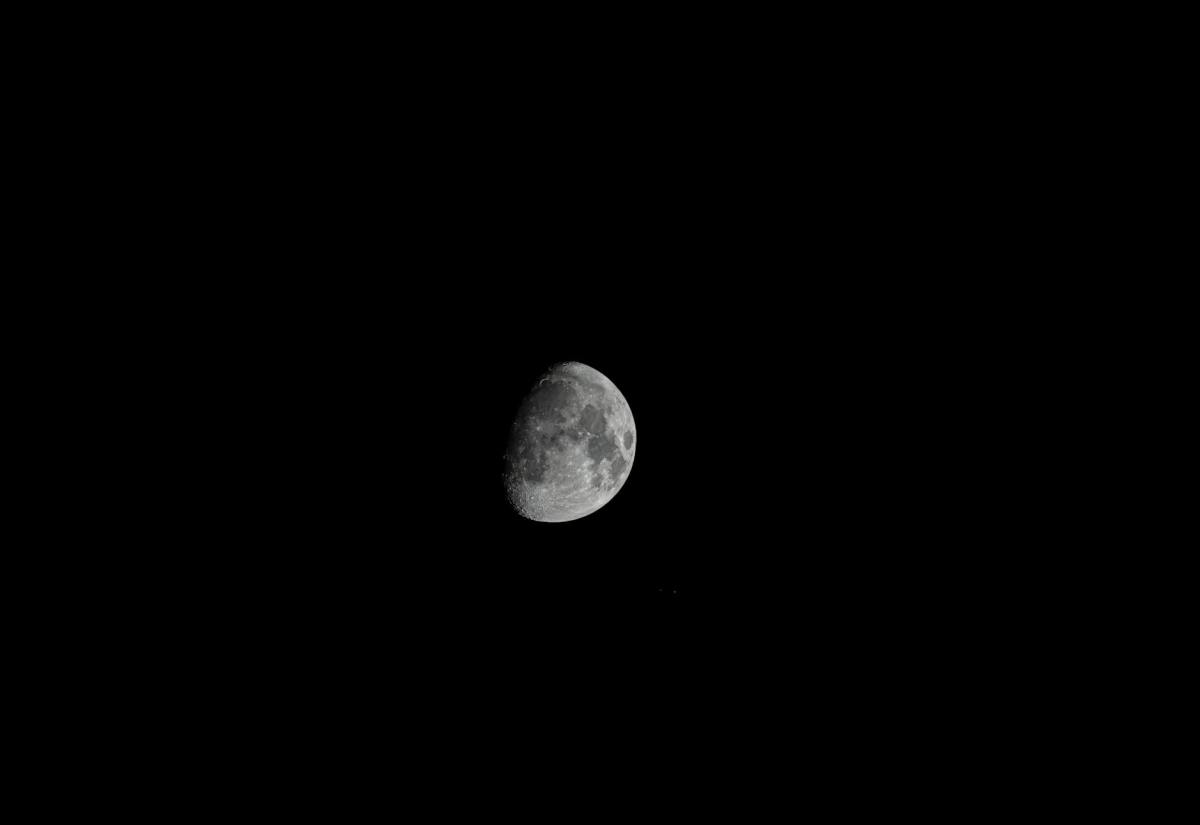
The recent Artemis II space mission may not have been a great boost to humanity’s scientific knowledge. This adventurous lunar fly-by mission was more about proving technology than gathering an abundance of discoveries. Afterall, the far-side of the Moon can quite adequately be surveyed by automated spacecraft. Much as is being done by robotic machines on Mars.
I think there’s little doubt that 1st to 11th April 2026 will be recorded in the history books. If for no other reason that the gap between the Apollo space missions and Artemis. Like so many schoolboys in the 1960s, I watched those black and white TV images of men on the Moon, as they happened. I became an engineer. Would that have happened anyway? Probably, but I’m not discounting the inspirational impact of the Apollo missions.
[What would we ever do without the writings of the ancient Greeks and Romans. Certainly, naming new space missions would be a lot harder.]
Do we need crewed missions in future? Given the advances in automation and autonomy that have taken place in the last 50-years, so much can be achieved without the need for humans on-board a spacecraft. However, this is not a binary argument. There are, and always will be, the need to take human experience to the absolute limits. President Kennedy cited George Mallory for a reason to explores space, “Because it’s there,” he said.
The simple notion that humans should be constrained and confined to Terra firma runs contrary to our intrinsic nature. Although societies do become more risk adverse as they acquire the comforts of economic success, there’s still an appetite for exploration even if it entails great safety risks. The allure of being the first does not diminish.
Ideally, the combination of adventure and discovery go hand in hand. Space exploration is not just indulging the most adventurous amongst us. Thus, I go back to my proposition that there something more complex going on.
The ancient Greeks and Romans could help. For what is humanity’s destiny? Ad Astra has a meaning. Far more than the movie of that name. Not one of my favourite movies either.
There’s an inevitability that humanity will go to the stars. That is, if in the meantime wars or environmental degradation do not consume us. Exploration is part of a natural progression of intelligent life. It maybe (likely to be) happened elsewhere in the universe too.


