To provoke

Social media provocateurs are on the rise. Say something that’s a bit on the edge and wait for the avalanche of responses. It’s a way of getting traffic to a site. The scientific and technical sphere has these digital provocateurs less than the glossy magazine brigade, but the phenomena is growing.

Take a method or technique that is commonly used, challenge people to say why it’s good while branding it rubbish. It’s not a bad way to get clicks. This approach to the on-line world stimulates several typical responses.

One: Jump on-board. I agree the method is rubbish. Two: I’m a believer. You’re wrong and here’s why. Three: So, what? I’m going to argue for the sake of arguing. Four: Classical fence sitting. On the one hand you maybe right on the other hand you may be wrong.

Here’s one I saw recently about safety management[1]. You know those five-by-five risk matrices we use – they’re rubbish. They are subjective and unscientific. They give consultants the opportunity to escalate risks to make new work or they give managers the opportunity to deescalate risk to avoid doing more work. Now, that’s not a bad provocation. 

If the author starts by alleging all consultants and managers of being manipulative bad actors that sure is going to provoke a response. In safety management there are four pillars and one of them is safety culture. So, if there are manipulative bad actors applying the process there’s surely a poor safety culture which makes everything else moot.

This plays into the discomfort some people have with the inevitable subjectivity of risk classification. It’s true that safety risk classification uses quantitative and qualitative methods. However, most typically quantitative methods are used to support qualitative decisions.

There’s an in-built complication with any risk classification scheme. It’s one reason why three-by-three risk matrices are often inadequate. When boundaries are set there’s always the cases to decide for items that are marginally one side or other side of a prescribed line.

An assessment of safety risk is just that – an assessment. When we use the word “analysis” it’s the supporting work that is being referenced. Even an analysis contains estimations of the risk. This is particularly the case in calculations involving any kind of human action.

To say that this approach is not “scientific” is again a provocation. Science is far more than measuring phenomena. Far more than crunching numbers. It includes the judgement of experts. Yes, that judgement must be open to question. Testing and challenging is a good way of giving increased the credibility of conclusions drawn from risk assessment.


[1] https://publicapps.caa.co.uk/docs/33/CAP795_SMS_guidance_to_organisations.pdf

Artificial intelligence (AI) transition

There’s much that has been written on this subject. In fact, for a non-specialist observer it’s not so easy to get to grips with the different predictions and views that are buzzing around.

There’s absolutely no doubt that Artificial intelligence (AI) will change every corner of society. Maybe a few living off-grid in remote areas will remain untouched but every other human on the planet will be impacted by AI. Where there’s digital data there will be AI. Some will say this brings the benefits of AI into our everyday and others herald a pending nightmare where we lose control.

Neither maybe totally on the money but what’s clear is that this is no ordinary technological transition. Up until now, the software we use has been a tool. Built for a purpose and shaped by those who programmed its code. AI is not like that at all. It’s a step beyond just a tool.

Imagine wheeling a hammer that changed shape to suite a job, but the user had no control over the shape it took. How will we take to something so useful but beyond our immediate control?

In civil aviation, AI opens the possibility of autonomous flight, preventive maintenance, and optimal air traffic management. It may work with human operators or replace them in its more advanced future implementations. Even the thought of this causes some professional people to recoil.

I’ve just finished reading the book[1] of a former Google chief officer, Mo Gawdat and he starts off being pessimistic about the dangers of widespread general AI. As he moves through his arguments, the book points to us as the problem and not the machines. It’s what we teach AI that matters rather than the threat being intrinsic to the machine.

To me, that makes perfect sense. The notion of GIGO[2] or “Garbage In, Garbage Out” has been around as long as the computer. It does, however, put a big responsibility on those who provide the training data for AI or how that data is acquired.

Today’s social media gives us a glimpse of what happens when algorithms slavishly give us what we want. Anarchic public training from millions of hand-held devices can produce some undesirable and unpleasant outcomes.

It maybe that we need to move from a traditional software centric view of how these systems work to a more data centric view. If AI starts with poor training data, the outcome will be assuredly poor.

Gawdat dismisses the idea that general AI can be explainable. Whatever graphics or equations that may be contrived they are not going to give a useful representation of what goes on inside the machine after a period of running. An inability to explain the inner working of the AI maybe fine for non-critical applications but it’s a problem in relation to safety systems.


[1] Mo Gawdat. Scary Smart, the future of artificial intelligence and how you can save our world. 2021. ISBN 978-1-5290-7765-0.

[2] https://techterms.com/definition/gigo

Every little helps

When drawing comparisons with parts of the UK, it’s responsible to say that the town I live in, Reigate[1] in Surrey is relatively affluent. However, much debt people may be carrying, the amount purchasers are prepared to pay for houses in this town is way above the national average.

Past associations between affluence and the habit of voting Conservative in local and national elections is well established. That said, for a good half of the population in Reigate there’s no love of what the Conservatives have done over the last 12 years. In fact, I would wager that a good number of former Conservative supporters are well and truly fed-up with the never-ending deception and incompetence of that political party.

Yesterday morning, just for a short while, in the chilly air a few local people gathered on a street corner to protest. Their concerns included polluted rivers, climate crisis, cost of living crisis, real incomes falling, idiotic Government rhetoric, corrupt politics, a damaging Brexit, and the suppression of the right to protest. The public response was overwhelmingly positive. Drivers tooted their horns in support, people waved and stopped to chat.

As is perfectly reasonable, there were a small number of passers-by who disagreed with the group’s banners and posters. Most often this was a shaking of the head or a traditional English gesticulation, but in addition one or two words were voiced. That’s the heart of the matter. It mystifies me how some people can be happy with the current predicament in Britain.

The most distressing words uttered were: “What’s the choice?”

There are several ways to interpret this negative shout-out. One: it could be a cry of genuine desperation.  Two: it could be a deep reticence accepting a bad situation and a loss of hope. Three: it could be a stubborn Conservative who’d be happy regardless of the situation.

This is what those who want to see change happen have got to get to grips with this year. To bring real change about there needs to be a big collection of people who openly welcome change. That does mean embracing those who are still sitting on the fence.

It means seriously building confidence that today’s troubles can be beaten. As can be seen from this small group’s posters the list of troubles is long, so this is no simple task. Hope for the future means overturning incompetent incumbents and giving a chance to competent fresh faces. It means having honest and practical solutions ready to go. It means having a vision. 

Rebuilding Britain’s liberal democracy is the vital and urgent mission.


[1] https://www.getsurrey.co.uk/whats-on/family-kids-news/surrey-commuter-town-surrounded-countryside-26293505

Turnip

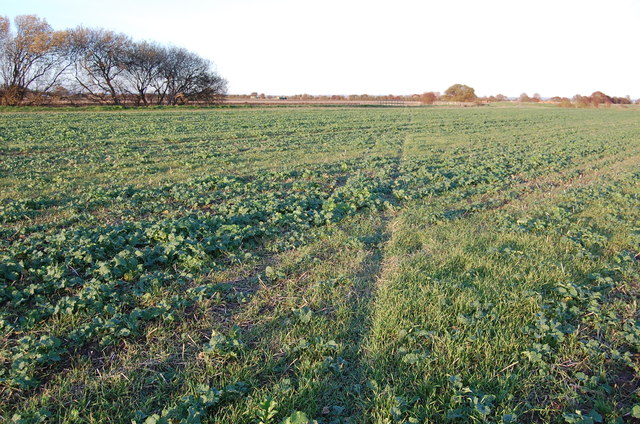
Root crops come in different shapes and forms. In Britain, most of our sugar comes from sugar beets[1]. It’s weaned the country off colonial sourced sugar cane of decades ago[2]. It’s a large home-grown industry that goes on under the radar. Given recent utterances, Government Ministers may not know that it exists.

There are deep cultural themes that are associated with root crops in Britan. Some of this imagery comes from a long history of growing root crops. Some of this comes from the British war time experience of ploughing up every available space for food production. In a time of food rationing the humble turnip played a key role. The turnip, Brassica rapa L., is one of the world’s oldest cultivated vegetables. Afterall they don’t require a lot of attention and can endure hostile weather quite well.

It’s a common myth that we (the British) all eat seasonally. It was mostly the poorer people in a community who had little choice.

My own recollection is of my father unsuccessfully growing a small field of turnips. They will grow in heavy Somerset clay soil but the mess of cultivating them on land that floods is beyond a joke. Machinery gets bogged down and the harvest is more dirt than turnips. I remember that the crop made good animal feed and little else. The field was quickly retuned to a new lay of grass.

This week, Conservative Secretary of State for the Environment, Food and Rural Affairs Therese Coffey told the UK Parliament: “lot of people would be eating turnips[3]…”. This was a government statement addressing empty British supermarket shelves.

Now, I’m not about to have a downer on the poor turnip. They are a bit of an acquire taste but have meritorious qualities and are inexpensive. It’s more the silliness of the Minister’s utterance in the House of Commons that is surprising. It’s a naive exposition that casts the vital subject of food security as a comic game. The Minister doesn’t seem to have a command of her brief.

We all know that crop production can be sensitive to weather conditions throughout the growing season and at harvest. Farmers know that and live that fact. Supermarkets know that and live that fact. Both food production and distribution adapt, accordingly.

The British problem is that the cost of production has rocketed. Brexit and high energy costs have hammered farmers. Former specialisms in agriculture, like tomato production under glass, are not sufficiently supported to remain viable in current condition. In fact, tomato production is not alone in this respect.

What’s clear is that the UK’s Minister needs to get a grip. She needs to understand the nature of British agriculture and stop making foolish excuses.


[1] https://en.wikipedia.org/wiki/Sugar_beet

[2] https://www.countrysideonline.co.uk/articles/british-sugar-all-you-need-to-know

[3] https://news.sky.com/story/eat-turnips-instead-of-tomatoes-suggests-minister-as-she-admits-food-shortages-could-last-a-month-12817794

High ALT

Normal commercial air traffic control doesn’t go beyond 60,000 ft in altitude. That makes sense since civil flying activities have been limited to lower altitudes. In fact, modern commercial airliners are not designed to fly above about 45,000 feet. This is a compromise based on what works commercially as much as what’s works best. Aircraft instruments are calibrated making standard assumption about the atmosphere.

For some of its flight, Concorde cruised at a height of 60,000 feet. More like a military jet, with its speed it had the capability to make use of higher altitudes.

It’s even possible to fly above 50,000 feet without an engine. The world record glider flight by AIRBUS shows it’s possible.

The Earth’s atmosphere is not uniform. It changes its characteristics with altitude. The atmosphere can be divided into five layers, as the temperature and density change. They are named: Troposphere, Stratosphere Mesosphere, Ionosphere and Exosphere. 

The Troposphere is a layer that goes from 8 kms (26,247 ft) on the poles to about 18 kms (59,055 ft) on the equator. This is the layer where weather is experienced.

On average, the Stratosphere goes up to about 40 kms (131,234 ft). The winds blows fast but they tend to be more consistent as they wrap around the globe. The lower portion of the Stratosphere is virtually isothermal (layer of constant temperature). 

A medieval English philosopher and Franciscan friar, Roger Bacon[1] figured out that the air might support a ship in the same way that water supports ships. In the 13th Century that was a nice academic conclusion but little more.

With all the current controversy surrounding high altitude balloons, that the road to flight started with balloons, could be said to be a bit ironic. It’s long been known about that balloons fly well at high altitudes but it’s a new frontier as far as commercial activity is concerned. For science, weather balloons may go up to 40 km to measure the high level winds.

Some experimental work has been done on trying to commercially use the airspace above normally civil flying. The Google Loon trials[2] are an example of an attempt to float a telecommunications platform high in the sky. These balloon trials were abandoned as difficulties proved greater than anticipated.

It’s not so easy to keep a high altitue balloon on-station.

Now, considering the news in North America, maybe high-altitude operations ought to be a matter of regulatory concern. This is not a subject that any one country can address alone.

There is some legal, regulatory and technical work[3] underway in Europe[4] but it needs to make progress. This is a subject for international collaboration. 


[1] https://en.wikipedia.org/wiki/Roger_Bacon

[2] https://blog.x.company/loons-final-flight-e9d699123a96

[3] https://www.eurocontrol.int/article/echo-making-space-new-high-altitude-entrants

[4] https://www.eurocontrol.int/events/european-higher-airspace-operations-symposium

UFO

It’s intriguing. Reports of unidentified flying objects being shot down over Alaska, Canada, and Michigan prompts a lot of questions.

The Earth’s atmosphere eventually becomes space at 100 km up. The Kármán line[1] is one way to define the boundary. All aeronautic activities are deemed to take place below that imaginary line. Theodore Karman[2] did his best to determine a height at which the Earth’s atmosphere is too thin to support flight. Now, there’s an international discussion about bringing that boundary down to 80 km. That is the hight above which a person in a space vehicle is said to become an astronaut.

I guess my point is that there’s a lot of the Earth’s atmosphere to continuously monitor, if the task is to know about everything that is flying everywhere. So, it’s perfectly reasonable that reports of unidentified flying objects will crop up, now and then.

It doesn’t mean that there are alien probes popping in to keep an eye on us earthlings. No, in so far as is commonly known there’s no evidence that stands up to scrutiny to definitively prove the existence of sustained airborne craft that are not of this Earth. However, extra-terrestrial objects fall to Earth all the time. Mostly ice and rocks. I wrote about objects falling from the sky in an earlier article.

It’s worth recalling the first article of the Chicago Convention on Sovereignty:  

The contracting States recognize that every State has complete and exclusive sovereignty over the airspace above its territory.

For those monitoring what’s in the air, the primary concern remains about flights over land and populated areas. This is the case where hazards can exist to those below.

All said and done, it’s no time to become alarmed. It may well be the case that these unidentified flying objects were previously ignored. Only now has the militaries in North America been galvanised into action and being more vigilant. The more people look, the more people see.

What do I know? Spy balloon, craft and drones may be much more common than has been generally reported.

Claims and counter claims that everyone is doing it shouldn’t be dismissed out of hand. The technology involved in flying above normal air traffic has a multitude of potential applications. A framework for higher altitude operations is now being written[1].

POST: Diplomatic tensions between the US and China continue to escalate as the US explains its shooting down of high altitude flying objects over North America. Much is still to be uncovered.


[1] https://www.eurocontrol.int/article/echo-making-space-new-high-altitude-entrants


[1] https://www.fai.org/news/statement-about-karman-line

[2] A Hungarian American physicist and engineer who was born 11 May 1881.

Over the Horizon

How often does the obvious comment need to be made? It’s Sunday 11th February and the new UK Secretary of State for Science, Innovation and Technology has only been in the job for a few days.

UK Ministers Michelle Donelan latest utterance is straight out of the failed Brexit playbook. The UK is “ready to go it alone”, she says[1]. Let’s puff up our chests, money is no object, the UK doesn’t need to be part of the €95.5 billion Horizon Europe[2] programme of the EU. Or at least that’s what she and her colleagues seem to be saying.

The rather silly argument is made that the UK will work with the US, Switzerland, and Japan instead. Now, hang about, call me a bit crazy but couldn’t the UK do both?

There’s no way the UK can become a global science powerhouse without working with both the EU and the rest of the world. Well, with a few possible exceptions. Afterall, it would not be wise to be forging research links with Russia at the moment.

Partnerships and collaborations matter so much because so many great ideas are based on the work done by others.

Already the UK is seeing a decline in research students coming from Europe and China. The Home Secretary’s struggles to control migration with all the subtlety of a sledgehammer doesn’t help.

Yes, the UK has a history as an inventor and can be capable in science even if we pull up all the drawbridges but that’s incredibly limiting, commercially crazy and like throwing a damp blanket over future pioneers. Remember young talent is mobile.

I do remember the exit of UK talent that occurred in my student days (1979-82). I’d meet some of them later in my career working in aerospace companies all over the world.

Putting aside all the above, big money matters, but what matters more is opportunity.  That is fertile ground for innovation.

Contrary to UK Government Minister’s thinking this has nothing to do with de-regulation either.

Across the Atlantic we have a highly regulated country that still seems to be able to produce innovators that go on to change the world. There are more lawyers per square mile in the US than just about anywhere on Earth but that doesn’t stop that country being an incubator for ground-breaking innovation. [Says me, on my Windows PC with my iPhone charging next to my iPad.]

Today, the US Inflation Reduction Act (IRA) is going to make funding available on a gigantic scale. The UK’s cash-strapped Government can’t match this US effort even if it wanted to do so.

Europe needs to work together. The UK needs to be one of the associated countries[3] to participate in Horizon Europe. The alternative is grim.


[1] https://www.independent.co.uk/news/uk/politics/brexit-eu-uk-science-horizon-b2280569.html

[2] https://research-and-innovation.ec.europa.eu/funding/funding-opportunities/funding-programmes-and-open-calls/horizon-europe_en

[3] https://sciencebusiness.net/news/Horizon-Europe/heres-what-first-two-years-horizon-europe-look-numbers

Fatal accident in Nepal 3

The air transport year started badly. A Yeti Airlines twin-engine ATR 72-500[1] aircraft plunged into a gorge as it was approaching Pokhara International Airport (PKR) in Nepal.

Singapore’s Ministry of Transport (MOT) is supporting Nepalese authorities.

The latest news is that the aircraft’s Flight Data Recorder (FDR) and Cockpit Voice Recorder (CVR) have been replayed. It is reported that the analysis of the FDR and CVR data shows that the propellers of both engines were feathered during approach.

It is not known if this was due to the actions of the crew or a technical fault.

The investigation continues.

The propellers on this aircraft type have pitch control of their blades. The pitch of the blades can be changed to the “feather” position (approximately 90 degrees). Feathered blades reduces the drag that would occur in the event of an engine shutdown.

This event occurring while the aircraft is slowing on approach will have an impact on the aircraft’s air speed. Monitoring air speed on approach is vital.

The suspicion that the aircraft may have stalled remains one theory.

The normal actions required on an approach are called up on a checklist. 

Example: Here is a video of an ATR 72-500 landing.

Notice the pilots’ hands at 4:57 minutes in.

An incident involving an aircraft of the ATR 72 type on the way from Stockholm to Visby[2] is interesting but may not be relevant in the Yeti Airlines case.


[1] https://skybrary.aero/aircraft/at75

[2] https://www.havkom.se/en/investigations/civil-luftfart/tillbud-med-ett-luftfartyg-av-typen-atr-72-pa-vaeg-fran-bromma-till-visby

Truss

Stating the obvious about former Prime Minister Truss, and an attempt at a political makeover[1] does merit effort. There are some people unwise enough to wish to cover up a colossal failure. The facts are clear. Absurdly irresponsible economic and political policies plunged the UK into a crisis. The corrective action taken to recover from that situation cost the UK greatly both in monetary and reputational terms.

The approach taken by the right-leaning Conservative Truss cohort destroyed growth rather than drove growth. The people who announced last year’s mini budget are not “blameless.”

Let’s acknowledge that there will aways be some reckless believers in the approach taken at the launch of the Truss premiership. It’s better that they be heard. It’s better that their foolishness is exposed before it can be acted upon. It’s better that they remain a minority.  

Britain’s shortest-serving Prime Minister can be used as a textbook example of how not to govern.

There’s a search going on to address long-standing economic issues. It requires cool heads and clam reflection. Diatribes rent with dogma are useless and dangerous. Borrowing huge amounts to cut taxes is the sort of act that would have Margret Thatcher turning in her grave[2].

Reputationally the Conservative Party is in the sink. Their party chairman is out. Their deputy PM is hanging on by a thread. Members of Parliament are agitated and flailing around. It’s like the last days of John Major’s premiership.

It must be said that much British economic and political pain could have been avoided. I objected strongly to Brexit. It happened but it did not need to have happened in such a way as to create a massive downside. The loss of trade and good relations with our nearest neighbours has set the country back decades. It’s like we dug a big hole and willingly jumped into it. Our neighbours looked on mystified as to why we choose to jump into such a deep dark hole.

The one thing this current incarnation of the Conservative Party is good at is shooting itself in the foot and taking us all to a place where we don’t want to go.

POST: From a purly poltical standpoint it maybe good that Truss features in the media on a regular basis. liz truss – Politics | JOE.co.uk


[1] https://www.bbc.co.uk/news/blogs-the-papers-64533422

[2] https://theconversation.com/why-liz-truss-is-no-margaret-thatcher-when-it-comes-to-the-economy-190816

Rules

Let’s be controversial. Principle Based Rules could be retitled Hypocrisy Based Rules.

Now, I’ve already caused confusion because most consumers, or users of services will not have a clue what I’m talking about. The way rules are put together is not an everyday topic for conversation. Even if, in our complex society, this subject is vitally important.

Listening to the daily news it’s clear there’s been a break down between British Gas and its regulator and some vulnerable customers. Practices undertaken by a British Gas sub-contractor have shocked people. Breaking into people’s homes should not be normal business practice.

Yet, these real-world actions happened, and they sharply go against the “principles” of the energy supplier[1] and its regulator. So, do the rules that exist produce behaviours that fit with public expectations? This is the “how long is a piece of string” question. In other word the perception of the rules, such as they are, can be favourable but when it comes to implementation it’s another story completely.

Sadly, the defensive reactions of both energy supplier and regulator are to frame the whole problem as one of first not knowing then discovery, investigation, and corrective action. This is not bad in of itself, but it’s the most basic kind of reactive response that can be expected. It says to the consumer, we will wait for an influential spokesperson[2] to highlight a failing and then respond to pressure.

Has British Gas captured its regulator? That is to convince them that everything is hunky-dory and maybe convinced themselves it’s hunky-dory too but at the same time not bother to look at customer facing bad practices?

Hence my coining the notion of Hypocrisy Based Rules. I’m not saying for one moment that regulatory rules can be written that have no gaps, inconsistencies, or avenues for “creative compliance”. It can be advantageous to the consumer that an energy suppler has a degree of freedom on how they comply with rules.

What was missing is that regard for the need for constant vigilance. Reports suggest that British Gas’s sub-contractor undertook behaviour that did not fulfil regulatory goals.

Although it’s long in the tooth, this quote from an Irish statesman has resonance:

The condition upon which God hath given liberty to man is eternal vigilance. John Philpot Curran[3]

In this simple sentence “liberty” can be replaced with safety, security, prosperity, and honesty. It’s often been reworked.


[1] https://www.centrica.com/about-us/people-culture/our-code

[2] https://www.thetimes.co.uk/article/british-gas-prepayment-meter-debt-energy-bills-investigation-wrgnzt6xs

[3] https://www.britannica.com/biography/John-Philpot-Curran