Build, but not here

Hearing Michael Gove on the radio this morning is almost a parody of reality. His warbling language doesn’t encourage listening. It wanders around with undulations and platitudes. He’s articulate in a way that’s like sugar dissolving in tea. I didn’t hear this, but I may as well have heard it:

Yes, we are going to feed your grandmother to crocodiles in the interests of the nation. I have great admiration for those who are stepping forward to be eaten.[1] It’s not just Labour grandmothers who will be affected but a whole range of different people. A government code of conduct will ensure they remain in Elysian fields, at least for the term of this administration. We are fully committed to our manifesto commitment (whatever). By the way: what was the question?

It’s strange that it has taken so long to recognise the virtues of another Michael, namely Michael Hesletine[2]. The idea that government intervention is needed to solve housing problems has resurfaced after a long hiatus. Lack of action over a decade, and more is one issue that may surface in next year’s General Election.

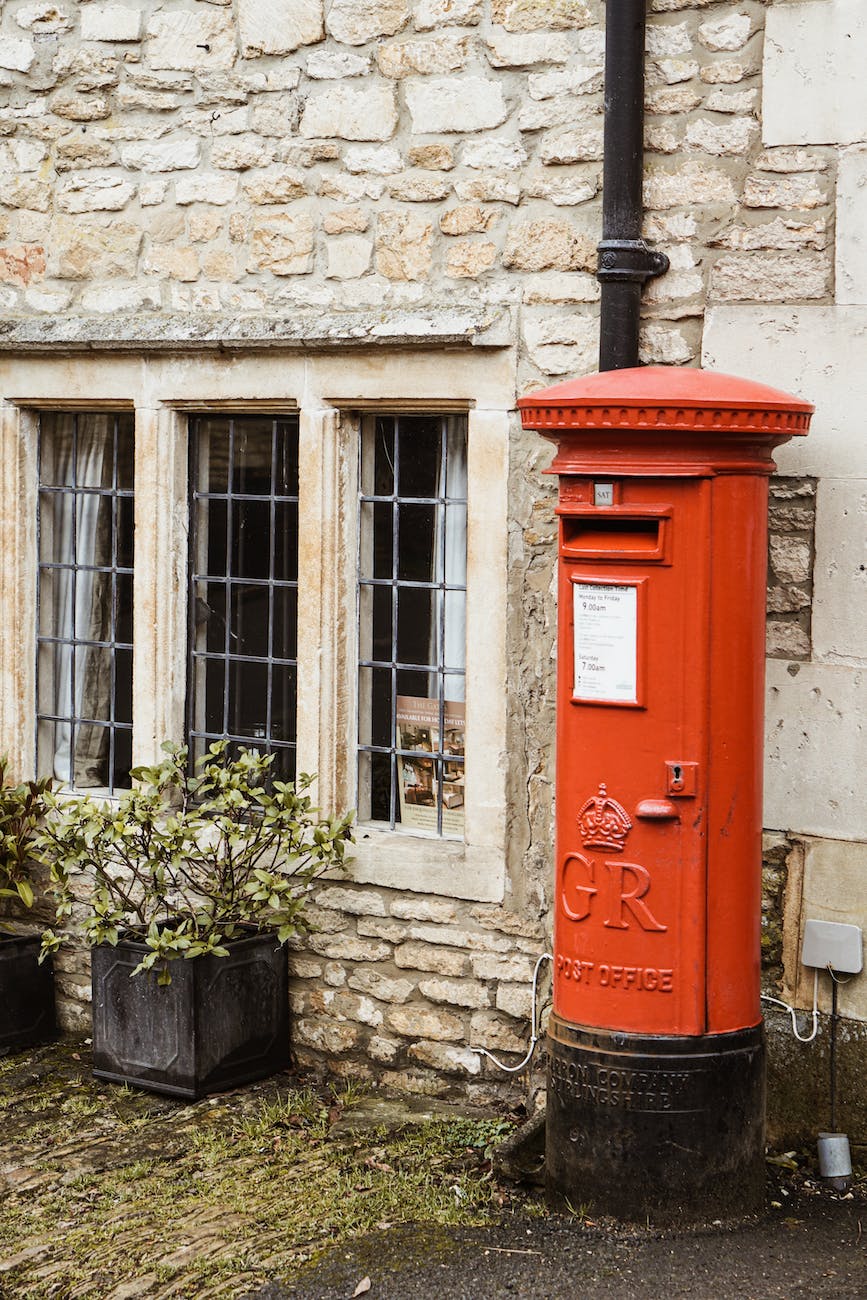
Over the weekend, I had a conversation with a parish councillor in a small village deep in the west country[3]. A landscape of great natural beauty. I said, I was all in favour of schemes to help local people buy property to enable them to build lives in rural communities. However, the prevailing view was that building is inevitably destructive and a not to be encouraged in an Idyllic village surrounded by rolling countryside. An urge to place responsibility for housing on towns and cities runs deep.

There’s a little terraced stone-built cottage in the village up for sale now. It’s priced well over £300,000. Yes, it makes sense for the owner to realises as big a receipt as possible for this property but it’s unlikely that anyone of modest means, who grew-up in the area will be the purchaser.

This small country village has a lively primary school, church, and village hall. Unfortunately, the pub is closed, and the village shop has long since gone. There’s now plans to lay fibre optic cable to better connect this rural community. So, with excellent communication one difference between rural and urban communities is eliminated.

Should such blessed places be reserved for those with deep pockets? The question is not a simple one since those incoming often restore and revive buildings and landscapes. My contention is that a balance should be struck. Rural communities that become isolated, museum like enclaves are not desirable or sustainable.

Minister Michael Gove has some workable ideas, but policy is focused on not upsetting the horses. Housing policy should be higher up the national political agenda, it shapes the fabric of our communities. It’s right at the core of determining who we are, not just now but for decades to come.


[1] Apologies to Monty Python.

[2] https://www.cityam.com/docklands-2-0-michael-gove-outlines-vision-for-new-higher-density-london/

[3] https://www.theblackmorevale.co.uk/2022/10/14/the-map-that-hardy-drew/

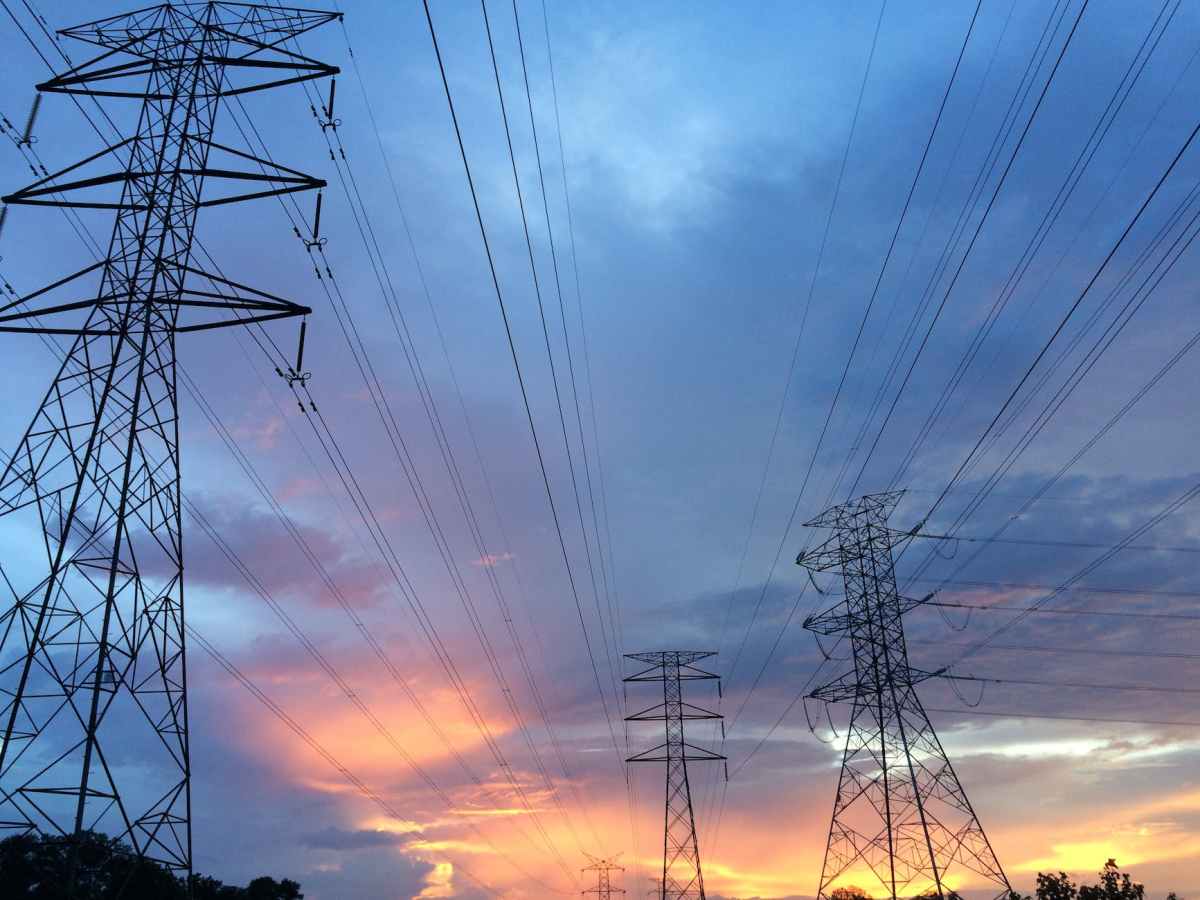
Energy Policy

Saint Augustine’s early life was not what we associate with a saint. As a young man he prayed “Lord, make me chaste (pure) – but not yet!” Just now that’s the way, I fear, we are thinking of the environment. Global, national, or local. It’s total human but it needs to be fully recognised for its downside. Yes, we would like to do more to restore our environment and fight climate change but we’d rather it happened tomorrow. Tomorrow, tomorrow.

The instinctive urge to put-off decisions for what appears to be an easier life now rattles down through history. The lesson we might learn is that this approach is generally a bad way of going about thing if long-term success is the aim. Civilizations have ended because they failed to change.

This blinkered approach could be called political expediency. It’s at the core of what has become political populism[1]. The drive to persuade an electorate by retreating from commitments and heralding jam today. This fits our social media saturated public debate to the tee. I want it, and I want it now. The future will look after itself.

It’s a sad philosophy. I say that because the premises is that we may as well live well today because we have no control over what happens next. In populist terms, that’s put down to an imaginary conspiring elite that will inevitably win regardless of what you do. Truly nonsense.

That might have been true in the stone age but its far from true in the 21st Century. In reality, and on average, individual citizens have more choice than they have ever had. I say “on average” because there’s a billion people in the world who still live on the breadline.

Anyway, my point is that putting-off environmental measure is foolish. I’m reacting to a Conservative Energy Minister, has said that the UK government will “max out” remaining reserves of North Sea oil and gas[2]. I’s almost as if the Minister thinks this has no impact. That’s other than short-term political gain amongst climate sceptics and right-wing newspaper owners.

If the target for Net Zero is – yes but not yet – there’s virtually no hope of achieving the goal. Events being what they are there will never be a perfect time to stop using fossil fuels. I’m in agreement that the rundown of fossil fuel use should be graduated. However, putting off real change doesn’t make change easier. In fact, it makes change harder.

In the run-up to a UK General Election the possibilities for policies of self-harm are all too evident. A Conservative Government desperate to cling on to power will wriggle and produce contorted justifications for delay. It’s a basic instinct.

I’m not saying that we should all become zealous exponent of hairshirt policies. What is desperate is that we don’t become side-tracked from practical measures that can be practically taken. Taken now.

Work as though everything depended on you, and the choices you make. That needs to be true of Government Ministers as much as every one of us[3].


[1] https://www.thoughtco.com/populism-definition-and-examples-4121051

[2] https://www.ft.com/content/407b834e-a503-4de9-acab-fcf88d76dbb3

[3] Pray as though everything depended on God. Work as though everything depended on you. Saint Augustine

Thumbs down to British Conservatives

It has been a morning when one thing is certain. Real votes, in real ballot boxes give an indication that British opinion polls are not so far off reality. Conservatives got a pounding when voters expressed their preferences. The only thing to hold back the tide was in Uxbridge and South Ruislip, where the local issue was squarely London’s plans to expand its Ultra Low Emission Zone (ULEZ)[1]

The Liberal Democrats won in Somerset and Frome by a huge majority. The Labour Party won Selby and Ainsty with a significant swing. Prime Minister (PM) Rishi Sunak’s Conservatives are soundly on the back foot.

These seats in the House of Commons (HoCs) became vacant as Members of Parliament (MPs) stood down. In these cases, these by-elections have taken place before a soon coming General Elections (GE). Traditionally, that means there’s an element of protest in by-election results that is often more locally focused than in a GE. However, as Tip O’Neill, a former Speaker of the US House of Representatives, was quoted as saying “all politics is local”[2].

The UK Parliament’s HoCs doesn’t sit again until September, but it will have 3 new MPs when it does.

The British economy is underperforming, its health service is struggling, and the cost of living is punishing a lot of people. So, there’s plenty of work for a government to do, even if they seem to have run out of ideas, momentum, and talent.

In terms of the bigger picture there’s a sign that green issues can present politicians with a double-edged sword. On the one hand voters genuinely want to see progress towards greater sustainability and on the other hand they don’t want measures forced on them that make them poorer. Here’s a challenge to all the political parties.

Now, former London Mayor and PM Boris Johnson has gone back to scribbling for the tabloid newspapers and his political style is heading for the dustbin. British Conservatives are floundering with a national identity crisis. Although the Labour Party should be pushing at an open door, there’re plenty of obstacles that remain in their way. For the Liberal Democrats the news is universally good. They have reestablished themselves in their West Country heartlands.

We are only halfway through 2023. It’s been more than a year since MP, and former Conservative Government Minister Nadine Dorries has spoken in the UK Parliament. She did say she would step down but, so far, when this will happen remains a complete mystery[3]. Being an MP should be a full-time job and not just a badge of status. The people of Mid-Bedfordshire deserve better. So, we await her next move on this subject.


[1] https://tfl.gov.uk/modes/driving/ultra-low-emission-zone

[2]https://en.wikipedia.org/wiki/All_politics_is_local#:~:text=The%20phrase%20%22all%20politics%20is,he%20did%20not%20originate%20it.

[3] https://www.bbc.co.uk/news/uk-england-beds-bucks-herts-65998062

Short-sighted

None of that comes cheap.

OK. Why are mini-nuclear power stations such an irrational idea? The industry is selling these untried, untested power station as completely unlike that which has gone before. A Conservative Minister has been echoing their marketing brochures.

Let me say, with power generation there are some basic realities that remain the same.

Fuel must be transported to power stations and waste must be removed from them on a regular basis. For coal, that was the reason for the sitting of large power stations in the past. For gas, there was more flexibility in location, but the costs of transportation still needed to be minimised. For such innovations as waste-to-energy plants, proximity to the source of waste presented a major problem. Neighbourhoods rarely invited these plants to be built close by.

Spreading the distribution of nuclear fuel and waste around the country doesn’t sound like a good idea to me. Cost of transportation are high. Safety is paramount. Security is always a grave concern.

Now, I understand the need for limited numbers large-scale nuclear power stations. They provide a reliable base load when the renewable sources of power are not available. The wind doesn’t blow.

Although, there are a variety of different international companies in the nuclear business the notion of a “free market” in the conventional sense is not a real prospect. The investments needed to be competent and meet regulatory requirements in the nuclear business are huge. Projects are there for the long-term. A whole working career of a nuclear engineer may be locked to one technology.

Experience has shown us that a goal of zero accidents rarely delivers a reality of zero accidents. These are complex engineered systems. It doesn’t matter if they are big or small the complexities remain. Yes, safety can be managed in a safety critical industry but there had better be preparedness for worst possible outcomes[1]. With these nuclear plants decommissioning and recovery from significant incidents of contamination must be accounted for in any design, implementation, and operation. None of that comes cheap.

Overall, in Britain there are much better paths to travel than the mini-nuclear one.

It absolutely astonishes me that, given the enormous tidal range of the Severn Estuary[2] we have never captured the energy of those waters. Equality in a nation, with a coast as large as ours, we have only ever dabbled in wave power[3]. Let’s have some genuine innovation. Let’s think like the Victorians and build for the long-term.

Why are we so incredibly short-sighted in Britain?


[1] https://www.bbc.co.uk/news/world-13047267

[2] https://en.wikipedia.org/wiki/Severn_Barrage

[3] https://en.wikipedia.org/wiki/Salter%27s_duck

Not again!

Why do we have so many inept and poorly qualified Government Ministers

To be a Government Minister you should have some kind of relevant qualification, or at least ability. Surely? Maybe you are competent in public administration or good at media presentation. In this case the man fronting a UK Conservative Government’s new policy looks, and sounds like a big floundering fish out of water.

Asked the simplest of questions. The very simplest of questions. Those that even the most elementary speaker would have practiced before exposing themselves, this Minister, of Education no less, performed like a partisan chump. Announcing a headline grabbing policy to stop ‘Rip-Off’ university degrees[1] this Member of Parliament went on Good Morning Britain totally ill-prepared[2]. The result was extremely embarrassing.

Why do we have so many inept and poorly qualified Government Ministers? What was totally obvious from the start was that this policy is being introduced without any idea of how it’s going to be implemented. No sense of real life.

Mr Halfron hadn’t given any thought what-so-ever to how to present his virgin education policy. Media interviewers are entitled to ask for illustrations and examples. The public watching, and listening will certainly what to know – what does this policy really mean? Who will be impacted?

Limiting the number of students that can go to university sounds like a profoundly unconservative policy to me. Surely, it’s for young people to make their own choices past the age of 18. If there are “poor” university courses in Britain, then that is a matter for a rigorous system of quality control. It should not be for dogmatically eliminating course subjects. Yet again, a weak Prime Minister and Education Secretary are pandering to a tabloid media agenda.

15 months after graduation there are likely to be many people who are going to be exceptionally successful in later life. To take an example, creative writing may not land a big job, but the spark of imagination and a deal of luck can produce authors who go on the have phenomenal global success.

The problem, Mr Halfron, in Britain is not what you study but the inequities of our society. What is the objective worth of a Philosophy, Politics and Economics (PPE) degree from a Russel group university[3]? Noting that the mistakes made by so qualified Ministers are rarely accounted. Billion are lost to the national economy every year by poor decisions, incompetence, and ideological nonsense. Dare I mention the saga of the other PPE, Personal Protective Equipment (PPE)

What a massive contrast to what’s just happened in the US. The Biden administration has announced a multibillion relief scheme for student loans. The US Education Department says their new plan will help more than 800,000 borrowers[4]. What an effective way of helping past students stand on their own two feet in tough economic times.

POST: And again today. Even when good news is posted the Minister sent on the media round performs no better than a rusty Austin Allegro with an empty tank.


[1] https://www.personneltoday.com/hr/rip-off-degrees/

[2] https://youtu.be/vHOwmZQa37s

[3] https://russellgroup.ac.uk/about/our-universities/

[4] https://www.washingtonpost.com/education/2023/07/14/biden-student-loan-forgiveness-income-driven/

Summer

The perpetual cycle of the seasons is what divides up our lives.

It’s a summer day. The shadows are shorter. Different parts of the garden are illuminated with bright sunlight. Early summer flowers are in decline. The next set of blooms are starting to sparkle. Gardening experiments are showing signs of maturity. Maybe there will be some marrows[1] this year. I don’t just grow them for their large yellow flowers.

February 2023 was the driest on record across the UK. Yet, we have had hard soakings that left the ground waterlogged. The overall impact on my garden’s sandy soil has not been good. The year has developed slowly. Some of the vegetation has thrived but others have been set back. My large bay tree is thriving but shedding lot of dead leaves. The cold snap we had, when the temperature dipped to minus ten degrees C took its toll.

I may be unusual but faced with this summer glory, I feel a little sad. It’s the peak of the season. It’s like getting to the top of the roller coaster and knowing there’s only one way to go from here. Surveying the wonderful greenery, its transience is all to evident. My mind flips to the middle of winter. That dramatic transformation where the trees are stripped of their leaves. It’s like my brain saying: “do we really have to go that way?” Off course we do. The perpetual cycle of the seasons is what divides up our lives. We have a finite number of summers. It’s not a time to waste in gloom rooms sitting at computer screens.

Yesterday, I moved an apple tree. It was looking poorly in an unhelpfully shaded spot. Fortunately, this move wasn’t back breaking. I’d planted the small tree in a large square pot. Am I bleary eyed? Already, early this morning, it looks better. If trees could talk, I’d expect a complement.

Luckly here, although we are in a town, we are surrounded by greenery. Out to the front of the house is a railway embankment. A place were urban foxes have their societal meetings. The fence and the railway make a large space of relative wilderness. Apart from an electricity substation and a one or two telegraph poles, the divide is a haven for wildlife.

Out the back of the house we’ve the benefit of the shade of chucky mature trees. A community of squirrels have a highway that takes them up and down the large oaks. They make weird noises, like the foxes do. At dusk and dawn, it’s a musical festival out in the back garden. A loud but tiny song thrush sits on a TV aerial and broadcasts to the whole neighbourhood.

Lavender is in full bloom[2]. It grows well here. The local bees are having a field day. I never fail to be impressed by their industriousness. There’s a variety too. Now and then, a massive bumble bee will do a fly past. They are not stumped for places to visit.

I’m ready for the “Big Butterfly Count[3]” as it starts later in the month. There’s been a few and far between out and about so far this year. I’ve seen some large white butterflies. This national survey is one small way to help to stop butterfly decline. 

It’s the best time of the year. Let’s enjoy it while it lasts.

POST: It did get up to 30 degrees C. A hot dry summer day.


[1] https://www.rhs.org.uk/vegetables/marrow/grow-your-own

[2] https://www.rhs.org.uk/plants/lavender/growing-guide

[3] https://bigbutterflycount.butterfly-conservation.org/

Church & Law

It’s always struck me as a bit strange. Yes, there’s a historic context to this situation. But that can be said of a myriad of legacy rules that we have long since put to one side. Today, there will be a general debate in the Westminster Hall[1]. The topic of the debate is: “Bishops in the House of Lords”. The question being should they be?

The way our system of governance is set up is that bishops have an automatic right to sit in the House of Lords. Now, you can do a double take, if you like. It means that the senior people, representing one religion, have an automatic right to legislate in the UK. There are few countries in the world where religious leaders sit in the legislature. One of them is Iran, for example.

It’s not just one or two representatives. 26 bishops of the Church of England, selected by the church, sit in the House of Lords as a matter of right.

For many democratic countries a separation of church and state is written into their constitutions. The reasons for this are again historic. Conflicts, disputes, and persecutions of the past drove the framers of “modern” constitutions to ensure that religious bodies did not have exclusive influence over national laws.

I believe that one religion, namely the Church of England shouldn’t be allowed to appoint bishops into the House of Lords. In a 21st century democratic country we should take account of the variety of faiths in the country[2]. Each member of the legislature will bring their own faith to their work. So, faith is represented. Giving significant privileges to one faith is unjust.

Putting religious leaders in situations of public conflict with directly elected politicians creates its own problems. You could say that would be the same inside or outside of the legislature but it’s not. The singular privileges afforded to one religion, above all others, to table amendments to legislation is powerful. It’s far more than to speak out in public.

The Church of England is known as “the established church” because of this place in the establishment. It can be argued that this position limits the courses of action it may take. It constrains people of faith to fit an establishment model of behaviour.

I’m expressing these views fully aware of the good that Church of England members can do. The objections to bishops in the House of Lords are based on discrimination, unjust privilege, and unfairness not objection to the good that they can do.

The Church of England should not appoint bishops into the House of Lords. 


[1] https://whatson.parliament.uk/event/cal44066

[2] https://www.churchtimes.co.uk/articles/2023/6-april/news/uk/bishops-should-not-sit-as-of-right-in-the-lords-commission-argues

Bad Smell

Where is the accountability?

My desk, that’s the one in the early 1990s, faced towards the London Gatwick airport approach. It was a good reminder of the business we were in at the time. Seeing aircraft land and take-off about 500 m from the sheet glass windows of our office block was the daily background. Being in a rugged hermetically sealed building aircraft noise wasn’t a great concern.

Little more than 300m from the building and looking in the same direction was, and still is, the Gatwick sewage works. Its structures were low rise, so it was often hidden behind the greenery. Every so often, a strong wind would blow from the northeast. When it did a distinct odor filled the air. Yes, you guessed it. The sweet smell of the sewerage works would permeate the air conditioning.

This odor was at its most notable in the metrological conditions called an inversion[1]. In fact, given the seasonal frequency of these weather conditions it could be said that Gatwick wasn’t the most sensible place to build a major airport. These occasional pongs were a bit of a joke. Along with the occasional smells of unburnt aviation fuel it was just life at the airport. Lingering odors didn’t stay for long. A day at most and the wind would change direction back to where it normally came from – the south west.

Airports and sewage works are not a good combination for the health of rivers and streams. Long ago, when Gatwick airport was built the tributaries of the River Mole[2] were diverted. The part of that river, the Gatwick stream going north to south, at the end of the runway, is an unattractive V-shaped gully. Not nice for nature at all. There was a track that ran parallel with the river. In the summer, I’d walk that track at a lunchtime as it was a way of getting to the airport’s south terminal.

In the news, Thames Water are being fined for dumping raw sewage in the River Mole[3]. The consequences of the UK’s water regulator[4] taking a relatively hands-off approach to managing water companies, since privatisation in the late 1980s, has come home to roost.

I must admit, I’m not the least bit surprised. So far, the dance of those who shrug their shoulders astonishing. Ministers, regulators, company chiefs are all pointing fingers at each other.

The sequence of events is mind blowing when looked at over several decades[5]. Chief executives attracting massive salaries. Companies being loaded up with debt. Generous payouts to shareholders. Investments in infrastructure not keeping pace.

Ofwat, the regulator talks with incredible complacency. Such weak regulators are no more than a piggy in the middle as the powerful forces of unethical commercial behaviour and disinterested government oversight combine. As millions of families struggle with the cost of living this kind of failure is intolerable. Where is the accountability?


[1] https://www.metoffice.gov.uk/weather/learn-about/weather/types-of-weather/temperature/temperature-inversion

[2] https://www.southeastriverstrust.org/river-mole/

[3] https://www.independent.co.uk/news/uk/crime/thames-water-sewage-spill-gatwick-airport-b2368707.html

[4] https://www.ofwat.gov.uk/

[5] https://www.bbc.com/news/business-66103356.amp

Dog Days

It’s only when I looked this up that I realised how apt it was. Summer is upon us. Today, it’s not so hot, in-fact it’s been raining. Welcome rain. My garden looks fresher for it. These are the days of summer heat in southern England. They are known as “dog days”. It’s the period between early July and early September. These summer days can be delightful, but they can be uncomfortable, a source of fatigue and a time of unexpected thunderstorms. What I learned was that the term “dog days” comes from the appearance in the sky of the dog star, known as Sirius[1]

We are getting into the dog days of summer in terms of parliamentary time too. The House of Commons recess dates for this session of the UK Parliament are that it rises on 20 July 2023 and returns on 4 Sept 2023. That would be a useful time for the current Conservative Government consider calling a General Election. I can hear their death rattle so I suspect they will not.

Last evening, I caught a debate on the Parliamentary TV channel. The main business was the second reading of the Economic Activity of Public Bodies (Overseas Matters) Bill. It’s a truly hopeless and appallingly badly drafted legislative proposal[2]. That’s when the thought of “dog days” came into my mind. The term has more than one meaning. My thought here was that we have truly entered a period of stagnation in common sense The current Conservative Government is tabling dreadfully ill thought-out and unsafe proposals that suppresses free-speech and will become a charter for lawyers to paw over for years.

The timing of this Parliamentary debate, given what is happening in Israeli-occupied West Bank, is terrible. A wise government minister would have pulled it.

It never has been ethical policy for a government minister, to supress democratic discussion. This bill would gag local government and other public bodies[3]. It’s poorly drafted text that will have a detrimental impact at domestic and international level.

The summer can bring drought. What we have here is a drought of political imagination, a cavalcade of populist babble that concentrates power and an unethical embarrassment. I remember the days when throughout the country people and democratically elected public bodies opposed apartheid. This bill, had it been in place at that time, would have outlawed such opposition.

A well drafted law that addresses the issues associated with the Boycott, Divestment and Sanctions (BDS) movement might have been welcomed. A political consensus should have been sought. What has been tabled by this fading Government is sweeping yet vague powers that go way beyond addressing the one issue of BDS and Israel. It’s a direct attack on free speech and democratic government. This tired and worn-out Conservative Government needs to stand down before it does more damage.

#unethical


[1] https://www.history.com/news/why-are-they-called-the-dog-days-of-summer

[2] https://www.bbc.co.uk/news/uk-politics-66086671

[3] https://www.local.gov.uk/parliament/briefings-and-responses/economic-activity-public-bodies-overseas-matters-second-reading

Why do politics?

One reason has a long history. It’s basically, sitting on your hands, complaining about others, and doing nothing means that you are likely to be managed or governed by people of poor ability. Stepping-up and trying to change a situation at least puts to bed that passive abdication. Now, you might fail but that failure is no disgrace, if your intent is honest. At least you have had a go.  

Another somewhat more appealing reason is to know someone who has done some good. Achieved something worthwhile. To have a mentor, or admiration for a person who has made the best of what they have and made a real difference to their community, it’s optimistic, it’s positive.

Let’s not be too cynical, there are good politicians. If there wasn’t we would be in an even bigger mess than we are now. Let’s face it, the people who become politicians, in a democracy, have the undesirable flaws and admirable qualities that most of society exhibits.

For me, this starts with reading “Penhaligon”, Annette Penhaligon book[1] about her husband, David Penhaligon. There’s a story to tell. A West Country MP who fought tirelessly for his constituents.

Then, naturally, there’s the Member of Parliament (MP) who is responsible for me first taking-up community political activism. He was newly elected and fresh faced at the time. The MP for Yeovil in Somerset from June 1983 to May 2001, namely Paddy Ashdown.

I was living in Cheltenham in Gloucestershire when Ashdown came to a public meeting at the Pittville Pump Room[2]. He spoke fluently about becoming an MP and some of the ridiculous idiosyncratic nonsense of Parliament. His message was that British politics is time-consuming and frustrating but if you want to bring about change – get involved.

So, in Cheltenham I first started stuffing leaflets through letterboxes and knocking on doors. About, 40-years have gone by since that encounter with the MP for Yeovil.

This weekend, I got my walking boots on. I visited parts of the Somerset town of Frome that I’d never seen before. A wide range of different streets, each with a different history. From restored historic buildings to new housing estates there’s a surprising variety of different lifestyles in a small town.

That’s one of the spinoffs of political activism. I get to visit and explore places that I’d otherwise never get to know. It’s a good way of broadening the mind. With social media’s influence it’s all too easy to get locked into simple stereotypes, artificial divisions, and primitive arguments. Forget that nonsense. Real streets with real people are much more interesting and much more varied.

Yes, you will meet people that are disagreeable but believe me, they are the minority. If you don’t want dumb politicians, and ideas thrusts upon us that don’t represent us then get out and be active. Every little can count.


[1] https://www.waterstones.com/book/penhaligon/annette-penhaligon/9780747506164

[2] https://cheltenhamtownhall.org.uk/visit-us/pittville-pump-room/