Fuel for Online Conflict

Professional defensiveness is just as damaging as arrogant assertion. I wonder if I can justify saying that sentence. I’m saying this as an observation of comments made on social media. Maybe that’s an unwise place to start. However, we might try to pretend that social media is full of outliers. In reality, it often puts up a wobbly mirror to society. Not every time. Just often enough. Our good and bad behaviours are magnified through the lens of a small mobile touch screen or the keyboard of a desktop.

Who would have thought that at the time of early INTERNET optimism in the 1990s. The information superhighway was going to be an awesome educator. A great liberator. Egalitarian and a universal force for good. Technology was going to free us from ignorance.

What’s going on? Often, I see a spasmodic reaction to an article or a comment that comes from the school of knee jerk reactions. Highly respected commentators are not immune.

If you see a man in an orange tee shirt, and you don’t like orange the last thing most people would do is scream across the road a sharp rebuke. On-line, it can be the case, when a perfectly rational and reasonable but challenging and unfamiliar view is put forward, instant defensiveness takes the stage.

Those invested in the status-quo go into overdrive. And I’m not talking about Status Quo the British rock band. I must admit, I have been guilty of this myself. In a moderate way. I’ve even seen them live on-stage. Oh no, I mean the first thing I am talking about.

Professional defensiveness has a fair root. If someone is highly invested in a point of view or has had experiences that embedded an opinion, it’s not so easy to stand aside and be objective.

Sir Humphrey Appleby[1] would, week after week, defend the indefensible. He’s a fictional character that pinches our consciousness and reminds us how smart people can get stuck on tramlines. I’ve still got a small cartoon from the 1970s. It is of a draftsman, pen in hand, with blinkers on. The caption says: “but we’ve always done it this way”.

All I can do here is to take note. It’s a note for me. Anytime an uncommon or intriguing view comes forward, do a double take. Count to ten. Don’t go by the first instinctive reaction that come into my head. It’s a question of not seeing a view that overthrows past thinking as instinctually wrong.

I posed a dichotomy at the start. Let me say that professional defensiveness combined with arrogant assertion, now that is dangerous.

POST: What about the AI generated picture? Spot the problem? Is the number six ringing any bells? This is a nice example why AI will not be taking over the world anytime soon. It’s great to have as a helper and that’s all.


[1] https://www.imdb.com/title/tt0080306/characters/nm0001329
Last Night

Nice to see a flood of blue at the BBC PROMS last night. I’m not just talking about the wonderful Angel Blue[1]. I was not there. Watched the whole performance at home on the TV this year.

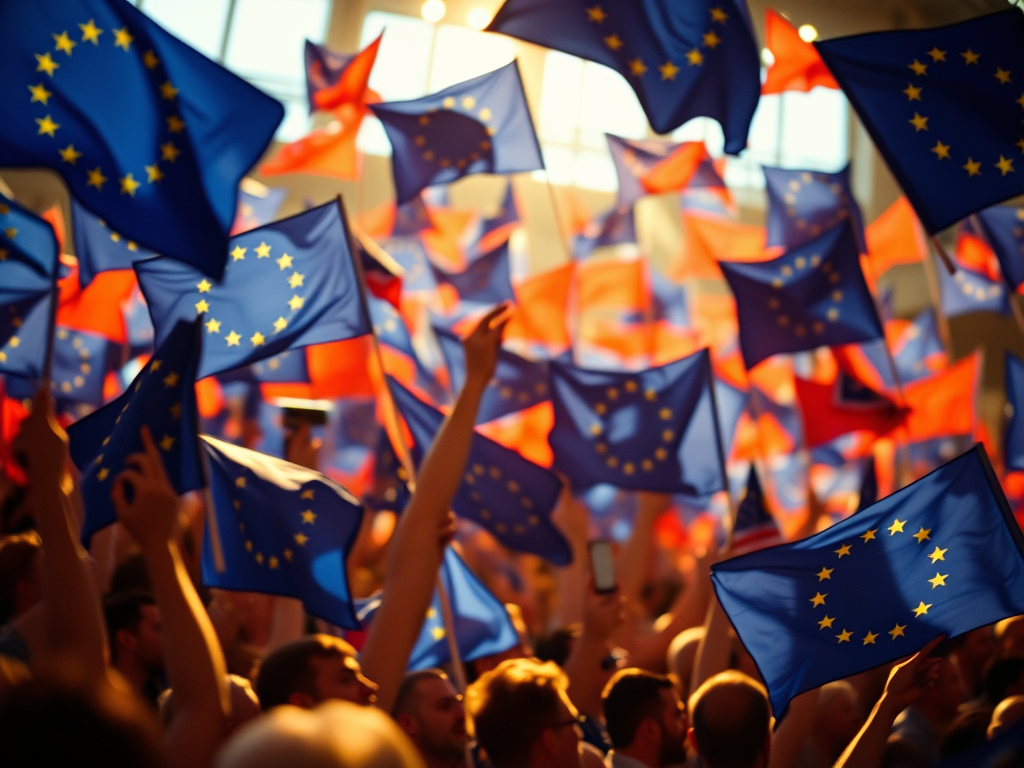
It’s great to hear that GB News went apoplectic. To quote: “The Last Night of the Proms has been swamped in controversy yet again after a sea of EU flags were spotted being flown by event-goers – despite imposing a ban on “protest flags” ahead of time.”

For one, there’s no controversy. For two, there was no protest flags. For three, there’s always all sorts of flags. Making up stuff is the sad habit of bored journalists with space to fill. If I can call them journalist. Click bait writers – now that’s just off-the-shelf hype makers.

Look. In a free country and let’s face it, that’s what the singing in the Royal Albert Hall is about. Land of hope and glory. If the this year’s BBC Prom goers want to hold up EU flags, it’s entirely up to them. No one is forcing them to do so. It wasn’t a mandate from on high.

I was disappointed not to see more flags. My experience of having been at the Last Night twice is that one fun thing to do is to figure out what some of the more obscure flags mean or where they represent. A Caribbean country, Devon, Cornwall, Isle of Man, or a remote Scottish Island. And lots of friendly countries, like the US. Well, dependent on the current presidential race.

Right-wing commentators often push a line that is prescriptive with respect to their opponents but take the view that they should be able to do whatever they like in the name of freedom. I believe that there’s no part of the right of politics that doesn’t hold this self-serving view.

It’s like the often-quoted view of the Conservative Party elite. They take the line that their people are born to rule. It’s not a joke. This week, it’s mighty interesting to read the reflections on recent events coming from Lord Brady[2].

The country is so incredibly fortunate now it has shaken off the fading embers of 14 years of Conservative Party misrule. Who knows what dreadful havoc would have ensued if they had retained power. It’s a much better autumn that might have been.

This is the time to re-think Britain’s relationship with our near neighbours. For a start, all aspects of unnecessary negativity and the dogma of Brexit need to be put asunder. No more ridiculous caveats on every policy and speech just to appease a right-wing media. No more neurotic ducking and diving to keep the outer extremes on-side.

Brexit was a rubbish idea. It was heavily sold by charlatans. It has failed. Corrective action is long overdue. I do not know what shape that corrective action will take but it needs to be immediate and sincere. And with a long-term perspective in mind.

POST: The next generation have the right idea Gen Z leads drive to reverse Brexit in new poll on EU referendum | The Independent


[1] https://angeljoyblue.com/

[2] https://www.independent.co.uk/news/uk/politics/sunak-election-brady-confidence-letters-tory-b2612966.html

New Government. New Political Landscape

Just imagine rating water companies or rail companies with four just simple categories. I think the term “Requires improvement” would star very often.

Imagine rating politicians with single epithets, or maybe we do. Good (oh dear, I’ve used one word) to see the indefensible is being deleted by the new UK Government. Measuring performance requires a subtly that was entirely lacking. Schools and teachers deserved better.

It doesn’t take much to find an Ofsted rating[1] of “Good” for a school. Then, reading on, it becomes evident that the school in question was last inspected four years ago. So, one word becomes either a loud advertising slogan or the sword of Damocles hanging over a school. The inspection measurement system was as subtle as some rants on social media. It’s wise that the Government has taken swift action to remove these simplistic flags.

What this tells me is that opposition Conservatives have learned nothing from their defeat in this year’s UK General Election. The fact that they’re standing-up to defend their earlier position on this subject is dumb.

Here we are in September. Time has moved quickly, or it has given that appearance. It’s a reminder that earlier in the year there was a high expectation that the General Election would be called about now. Just goes to show that predicting the future is a mighty difficult business.

Today, Parliament gets back to work. The summer recess comes to an end. The House of Commons will settle down in its new composition. Half of its members are new to the job. Lots of new names will pop-up in the media as spokespersons for this and that. New stories will be written.

We can have hope that a more rational and deliberative politics emerges. Ever the optimist, I think that we may, at least, have six months of positive hustle and bustle as new agendas develop. The new Government will be keen to get as much done as possible before any opposition forms into something effective.

It’s that season of seaside speeches and conference halls packed with activist either celebrating or commiserating. It’s likely to be an exceptional year for the traditional British party conference. Not that the occasions will change the political landscape. More that these gatherings of the faithful will reinforce the echoes and ripples coming from July’s election.

I don’t pity the Conservative Party. Their situation is entirely of their own making. To see a national political party lose 251 seats in one go is unusual, even with a FPTP electoral system. Stepping from holding the leavers of power in Government to relative oblivion is tough.

I wish the newly assembled 650 Members of Parliament well. I’m sure we all do. Let’s hope that the foolishness and turmoil of the past decade can be rapidly consigned to the history books.


[1] https://www.gov.uk/education/inspections-and-performance-of-education-providers

Free Speech or Unregulated Chaos?

Twitter grew to a global scale. It didn’t make money. It was a social media success but a commercial mess or, at least, that’s how a lot of people saw it. Its snappy short text became the playground for people pushing press releases and journalists seeking immediate printable lines. On top of the professional users were a mountain of commentators that ranged from the highly credible and reliable to the outlandish crazies promoting their every possible madness.

For whatever reason it caught the attention of Elon Musk. He has a numerous selection of descriptions ranging from wry businessman to futurist visionary. There’s no doubt he’s a risk taker who has an uncanny ability to come up smiling where others would likely have collapsed in bankruptcy or chaos.

Reports of “X”, as it is known now, are that Musk sees it as a platform for free speech. There’s an absolutism about this mandate. Although there’s legislative obligations in most countries that put some boundaries around what’s called “free speech” the platform X has become one that pushes at the boundaries.

Generally, moderate opinions don’t stir-up controversy. So called “mainstream” factual reporting can be boring and somewhat dry. What seems to trigger a lot of activity are opinions that are “extreme”. That is often extreme in the political sense from the left and the right. Tapping into the popularity of populism – if that makes any sense. Polarisation if it doesn’t.

As a platform for legitimate political views, however disagreeable, there’s not so much to complain about the openness of a lightly moderated space. Through history public spaces have been created for people to vent their views[1]. However, this is not done without regulation on conduct.

Where free spaces get extremely toxic is the riotous spread of misinformation. It’s one thing to have strong socialist or liberal views or hard conservative views but when views are presented as based on facts when they are not[2], and expressions are intended to create aggressive responses, there’s a line of unacceptability that has been crossed.

I am taking the view that today’s X is not a place for a reputable organisation or person. It’s not that social media platforms are intrinsically bad. No, it’s the way that they are managed. My observation is that there is a connection between the mindless riots of recent days in England and the lack of attention to civilised regulation of certain digital platforms. It’s a question of both written regulation and its consistent implementation.

This situation is recoverable. Putting digital social media back into a good shape for the public to conduct a dialogue about the issue of the day will require effort from its owners and governments across the globe. Is there a willingness to step up and act? Let’s see. Surely these subjects need urgent action. 


[1] https://www.royalparks.org.uk/visit/parks/hyde-park/speakers-corner

[2] https://www.vox.com/technology/2023/5/20/23730607/elon-musk-conspiracy-twitter-texas-shooting-bellingcat-taylor-lorenz-psyops

Navigating the Future

The Future’s So Bright, I Gotta Wear Shades. It’s a 1986 song title but a wonderful catchphrase. Am I going to be optimistic enough to use it on Monday 22nd July? Well, why not? Suddenly, the world looks different.

A dull and sullen presidential race in the US has flipped overnight. We’ve shed the heavy load of incompetence of the last UK government. And even France avoided a catastrophe, in the political sense. Maybe times are getting better. It’s been hard to believe the world of the 21st Century was one that was going to get better and better. With the climate crisis, pandemic, wars and narcissistic political mad people around we can be forgiven for thinking that all is not well.

As a sideline, watching the video of Timbuk 3[1] doing the song and it’s a great reminder of the leaps technology has made in four decades. Cool computer graphics of the 1980s now look ghastly. Lumpy and blocky primary colours bouncing around a cathode ray tube. A 5-year-old with cardboard cutouts could have matched the graphics.

Now, maybe some of the right-wing outliers of the political landscape will turn out to be one-hit wonders. Manufactured to rail with grievances and offering no workable solutions. Dug into a depressing victim culture. If there are cycles in politics, wouldn’t it be fantastic if we were starting an upswing in optimism. Sadly, so far the public attitudes of the first part of the 21st Century have been a chorus of gloom and doom.

The pop song is not simple one. I read it that there’s a healthy degree of irony in its words. A love of nuclear science at a time when the cold war was still raging around us may have been poking fun at optimism as much as optimism itself. Anyway, thank you P. Macdonald, wherever you are.

Square eyes looking through square glasses is an image, perhaps a warning, that one day we’d all be glued to handheld portable rectangular screens that would come to dominate our lives. Now, that prediction would have required a lot of imagination in 1986.

The future is bright. I’ll go with the contention that progressively we are turning a corner. Ok, fine it’s a more dangerous world than it ever has been but, in the spirt of the song, don’t let that get you down. We have it within our capacity to navigate through the dangers that are out there.

It would be dumbest to go with the notion that every problem has a simple fix. That at the wave of a hand wars would end. That they wouldn’t have even started if some demigod was in power. There are no modern day emperors with magical powers and a mountain of cost free answers.

A liberal future is one where positive change is possible, but we are not blind to the difficulties of making it happen. The future is bright, or it can be.


[1] https://youtu.be/nsRKleS-Ihk?list=RDEM3bP5Qf7ThmHO83SwcyDhbw

New Day

The UK’s recent elections saw a surge in candidates and new political forces, challenging voters to make informed choices.

We had a surfeit of manifestos that said, this is what we will do if you give us power. Today, we have a stronger commitment, in the form of a speech, saying this is what we will do now you have you given us power. You can’t say you haven’t been warned. Or more positively, at least someone is focusing on the issues that are of concern rather than the nonsense of the preceding administration.

Democracy is about choosing. For the next 5-years a choice has been made. OK, that’s assuming there’s no calamities that bring the new Labour Government to its knees.

At this moment, please give a thought to those who made that national democratic choice possible. I know, I was one of them. 4,515 candidates[1] stood for election to the UK’s Parliament in July 2024. In 2019, there were 3,327 candidates who stood in the General Election. So, this year the crop of candidates was much bigger and thus choice wider. No constituency in the UK had fewer than five candidates standing.

This crop of candidates is to fill 650 seats in the House of Commons (HoCs)[2]. That’s using the word “seat” to mean Parliamentary constituency. Which there are not on the green benches. The HoC chamber cannot accommodate all the Members of Parliament (MPs) that are elected. It’s rather a strange situation in modern times.

More candidates and more volatility. A lot of the strong political ties that people have exhibited in former generations have been broken. In future the UK’s electorate must put more effort into deciding who to vote for on polling day. We see a move in political forces that is new.

I salute you. All 3,865 candidates who have plenty of time to reflect on their experience. Yes, there were a small cohort of eccentrics, but they didn’t get the news coverage that they once did. The Official Monster Raving Loony Party raised twenty-two candidates.

Local identity did play a part. There was a Yorkshire Party, Lincolnshire Independents Lincolnshire First candidate, Portsmouth Independent Party South Devon Alliance, and a sprinkling of similar others.

Since 1985. the deposit in elections to the HoCs has been £500. This is only refunded if the election candidate gets more than 5% of the votes cast. I don’t yet know how many of the 3,865 candidates lost their deposits.

The loss of a deposit by a candidate maybe regarded as an embarrassment. I don’t think it is at all. It takes a certain kind of resolve to put yourself up in front of the electorate. Regardless of the outcome that commitment ought to be applauded. It’s certain; not free of costs in respect of the individual candidate. I’d defend having a deposit as one means of preventing abuse of the electoral system. That said, it should never be higher than it is now and maybe the threshold ought to be halved to 2.5%.


[1] https://commonslibrary.parliament.uk/who-stood-in-the-2024-general-election/

[2] https://members.parliament.uk/parties/commons

Solar farms

New Government signs off solar farms. Not everyone happy.

It would be good if we could all agree that the UK needs to recognise the importance of locally produced food and drink. There’re large environmental gains to be made by reducing the distance between production and consumption. Thousands of heavy trucks thunder up and down the inadequate road infrastructure in the UK. Colossal amounts of food waste get thrown away from supermarkets. Questionable preservatives enable supply chains to grow longer and longer. There’s are bad trends.

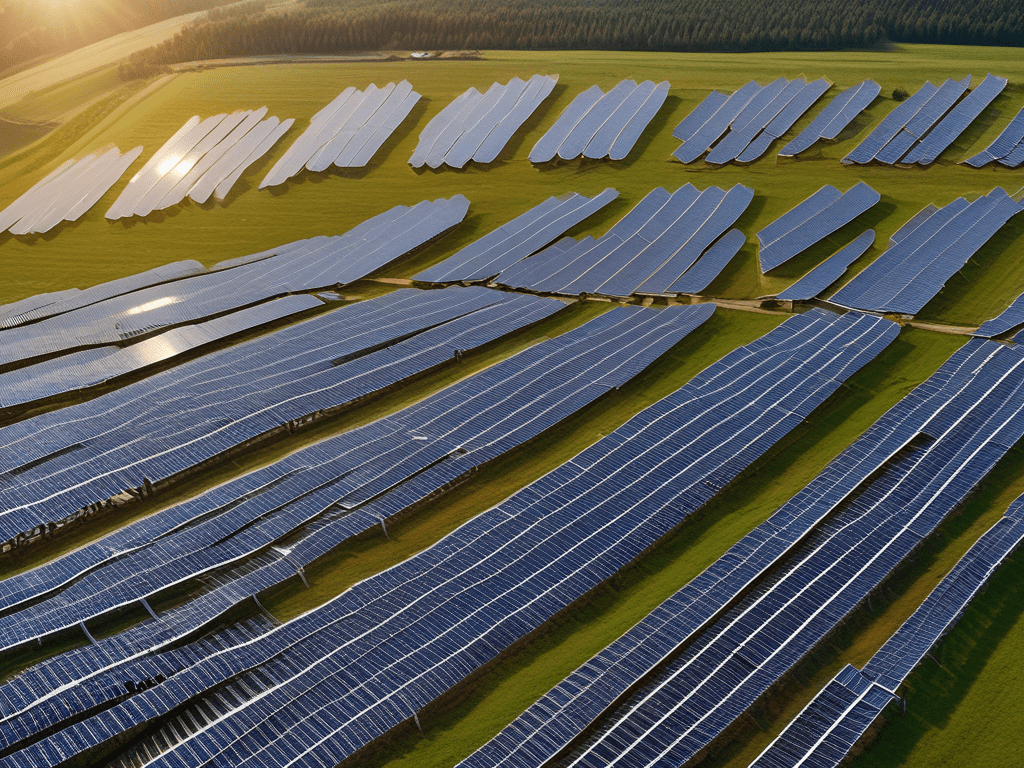
On a related subject, I do have a problem with proposals for large solar arrays that will take out productive farmland. However, that is by no means an objection to large solar arrays, or onshore wind farms for that matter.

It’s not as if we have always been so precious about what we do with our glorious countryside. One observation I’d make is that there has been a huge increase in the urbanisation of the countryside in my lifetime. Areas that were either wild or exclusively used for agriculture are now pony paddocks, car parks, golf courses, housing estates, out-of-town shopping warehouse, fulfillment centres[1], and bypasses. In 50-years, there’s little that remains untouched.

I’d sing “They paved paradise and put up a parking lot” if I could. We really do need to think carefully about what we industrialise and what we preserve and protect.

For me large solar arrays are in the same category as acres of poly tunnels. Both serve a fundamental purpose, and both are structure that can be relatively easily removed. Keeping the lights on and eating fresh food are both part of society’s basic needs.

So, I’m not going to raise an eyebrow at new Minister Ed Miliband approving 3 large solar arrays[2]:No shock but no blank cheque either. No jumping on a political bandwagon to condemn the immediate decision.  

It’s likely the decision was sitting on the former Conservative Minister’s desk. Is this a case of difficult decisions deliberately delayed because of an election? We may never know. It would be a bit disingenuous for such politicians to complain now. Wouldn’t it?

Let’s get it right. Failure to decarbonise our national energy system is a contribution to global warming we can’t afford to make. Long-term that global warming will impact food production.

In years to come it will be interesting to see what research flags up with respect to solar farms and biodiversity in an area. There’s some chance that the results will not be entirely negative. There’s all that sheltered and undisturbed soil under the array structures. A habitat for wildlife.

Choosing between what might seem as the lesser of two evils is often the situation a politician finds themselves in. Afterall, that’s the role they must play in a democracy. The outcome may not be popular in the short-term, but a balance must be struck.

Maybe we should reverse some of the urbanisation of the countryside. Return some little used roads to nature. Demolish unused industrial units. Put back the hedges that have been lost. Rewild one or two golf courses. It’s something to consider when building new infrastructure.


[1] Fulfillment centres enables outsourcing, warehousing and shipping. This is for online businesses to have the physical space to store stuff.  

[2] https://www.bbc.co.uk/news/articles/c4ng6036vgqo

Rethinking the House of Lords: Toward a Balanced and Democratic Approach

Good to hear that there’s a prospect of House of Lords reform in next week’s Kings speech. Change is on the agenda.

It’s astonishing that “hereditary” is a valid qualification for the job as a legislator. I’ve nothing against the individuals involved. Especially those who try to do the best they can. Put all that to one side, there’s a huge gulf between what’s normal in normal life and what’s normal in the Place of Westminster. It’s time to consider merit as more important than who your parents were.

The removal of hereditary peers should be just a first step. One of the most egregious unfairnesses is that way the HoL gets topped-up with political cronies a regular basis. We’ve institutionalised political tribalism in the second chamber. Ennobling people for dubious reasons has become a habit of Prime Ministers. Making contributions to political Party funds should not be a ticket to the HoLs.

There’s the religious element too. Whereas there’s a lot to be said for a level or moral guidance to be given to Peers there’s little justification for them to have votes in the HoL. I’m not denying the important part region plays in many people’s lives. What I am saying is that the laws that affect every citizen shouldn’t be shaped by a small cohort of clerics. Two countries have religious clerics in places of legislative power, and they are UK and Iran. That doesn’t sit well with me, and no doubt most people.

One change maybe controversial given that it smacks of discrimination and that is the setting of an age threshold. If Peers are given a compulsory retirement at the age of 80, it may meet an objective of getting the overall number of Peers down. What disconcerting is the implication that beyond the age of 80 a Peer’s potential contribution is less valuable.

I don’t agree that the compulsory retirement age for the HoL should be set at the state pension age. For some people age does mark a dimming of their intellect but for others they can be as sharp as a pin. The only easy option is a fixed threshold, but it should be a temporary measure.

Ideally, the size of the HoL should be fixed. Ideally, the size of both chambers should be similar. Not just because that number line-up but because the political weight should be set closer to a balance. I do assume in this formula that every Peer is a working Peer.

It’s been pointed out that in its current state the HoL makes it the second largest political chamber in the world. It’s reached ridiculous proportions for a country of our size.

Modest changes can only be a start. There’s the real need for permanent restructuring. Parliament’s second chamber must be replaced with a democratic upper house. One model would be an elected upper house with two members elected per UK region based on current/proposed metro mayoral regions or former regions used for electing MEPs.

Even the chamber’s name must go. It’s not good that we have legislators lording over us. Those sitting on the red benches are not superior beings. They are privileged. One would hope for them to be humble given that great privilege. Afterall they should be there to serve us. To serve the country.

No Sprint

The last couple of days have seen a new UK Parliament take shape. Beaming smiles from an intake of rearing to go new Members of Parliament (MPs). There’s lashings of energy and enthusiasm. Every problem is to be looked at afresh. No problem is too big to tackle, even if some problems may take while to cure. Horizons stretch ahead full of oceans of possibilities.

Back in May 1993, I was a freshly elected young County Councillor. It was such a magic moment. One evening, at County Hall for the first time sitting in a room with 29 colleagues. For the first time the Council being No Overall Control (NOC). One room full of a mix of battle-hardened pros and fresh faces. A manifesto in hand and magic in the air.

Today, there are 72 Liberal Democrat MPs. Yes, 72 MPs. I can imagine, without looking at the press pictures what that may feel like. A wonderful feeling of hope, ambition and warmth. A little trepidation. Thoughts like: what will be my role in this epic journey? Those with small electoral majorities might be focused not only on their role in the team but how they will secure more than one term of office.

Politics is a precarious way of life. Any electoral success is certainly never to be taken for granted. This UK General Election has shown that in spades. Volatility amongst the voting population is probably higher than it has ever been. That impulsiveness sits in the background of the overall wish to throw out the mediocre incumbents.

At least for the honeymoon period, often characterised as the first 100 days, the new government and new effective opposition will be given a period of grace. It’s a time when everyone wishes the nation to succeed and prosper in the direction that is set.

A modern UK Prime Minister has a great deal of power in the first period of their office. On this occasion, those that lost, Conservatives will be struggling to rebuild their shattered party. Whether they bury Thatcherism or reincarnate it, they will be in turmoil for a considerable while. They may even strike up an extreme ideology and march off into the political wilderness.

Liberalism is in rude health. The 72 Liberal Democrat MPs will surely work with conviction and proudly hold their principles aloft.

It’s not the first time that I’ve referenced the Stoics. I am reminded that despite the joys of the moment and the races that have been won, the battle of ideas never stops or starts. There are peaks and troughs of optimism and pessimism. There are opportunities taken and lost. There are times of progressive advance and there’s inevitable push backs. He’s no longer with us, in fact if he was still around, he’d be nearly 100 years old. Labour MP Tony Benn was wrong on Europe but often wise about the UK Parliament. I agree with his view of Parliament in this respect, however flawed it may be: “Through talk, we tamed kings, restrained tyrants, averted revolution.” Long may that continue. There’s no finality in politics; there is always another step to take.

His maxim for MPs to operate on two levels makes a lot of sense. One is to be an agent of practical action and the other is to operate in the realm of ideas. Not so easy to do. Nevertheless, democracy is healthier if both delivery and values are never strangers.

Rapid

Such a rapid change. In days we go from one governmental regium to another. The government of the UK has changed. It’s now dramatically different from what it was only a couple of days ago. It’s not overstating the case to say dramatic. On a relatively modest percentage of the overall national vote the Labour Party has been handed all the leavers of power.

The UK’s main electoral system is not proportional. It tends to exaggerate and distort performance. Lifting those who do well in the national vote numbers but suppressing those who are supported by smaller overall percentages. Interestingly, the Liberal Democrats, who have always been in favour of a proportional representation electoral system, have an approximate match between the number of seats won and the number of votes cast across the country.

Sticking with the positives, this rapid change does mean policy resets are possible. One significant example is the immediate scrapping of the policy mess that the previous government had got itself into over immigration.

Accepting a fresh start has a upside. However, the difficulty that can present itself is the challenge to continuity. Lots of new faces with new responsibilities. Lots of people learning the ropes. One answer to that challenge is to say that the civil service provides a seamless continuity. The mandarins in Whitehall guide the ship of State through the transition. Not only that but many of the people coming into power have been preparing for this opportunity for a long time.

The difficulty is that the mismatch between the national percentages of the General Election vote and the number of Westminster seats held is there for all to see. It’s a stark indicator of the reality of people’s wishes verses the outcome of a process.

I was a counting agent standing in a sports hall until the early morning totting-up an estimate of the vote for a political party. Pen in hand watching officers carefully unfold paper ballots. In a world of smart phones and tablets there’s something very retro about looking at piles of black and white paper for hours.

One aspect of First Past The Post (FPTP) is the theoretical simplicity of the counting process. Naturally, it’s far from simple. One cross, in one box is well within the capability of every kind of voter. However, it’s crude in terms of what it says about the voter’s views. It forces everyone to make stark choices. There’s no accommodation of preference. Say, you are a person who’s essentially conservative or socialist but can’t stand that Party in its current form, you are forced to leap to vote, if you vote at all, for a political candidate that may not be your natural choice.

So, society ought to ask itself, do we value the result of the electoral process most? Or do we value the expression of the individual preference the most? There’s an inevitability to the answer to that question, if the horizon set is a long one. Where so much of what we now do is addressed by algorithms designed to distil our individual preferences how can we stick with a paper based last century electoral system that ignores preference?

Change will come one day. The difficulty is that if the UK’s FPTP electoral system offers no incentive to the winning Party to change it, so we will be bound to stick with it. Well, at least for the next few years.