John Gray’s Critique

If a dose of despondency is your Sunday morning tipple, I recommend BBC Radio 4’s “A Point of View[1]”. I often catch it as an alternative to listening to the driving rain bashing against the window as I wake-up on a Sunday morning.

What I dislike the most about John Gray’s analysis is that it dismisses all the hard-working people who daily strive to make the world a better place. I know, you are asking who John Gray is and what does he know? Well, he’s a British philosopher and author of a pile of serious books. He dabbles in political thinking and doom mongering.

On Sundays in the past, I relied heavily on Will Self creating an air of depressed inevitability that all the bad things about humans will eventually overcome us. A dower British journalist and political commentator who always seems to see the dark cloud instead of the silver lining.

Despite the grim tales of these speakers, they often have, lost in their rhetoric, a smidgen of wisdom. This morning John Gray argues that we need a new response to the growth of the right-wing charlatans who are rapidly climbing the greasy pole of national political life.

Naturally, a lot of us thought that’s what the UK General Election last July was all about. A reoccupation of the centre ground of British politics by the Labour Party. A renewed liberal democratic political consensus would emerge and save us all. Strangely, it doesn’t seem to be working out that way. Although, it might be a bit harsh to judge after only a few months.

Last night, I watched the second episode of the BBC’s period drama Wolf Hall[2]. My God, it’s good entertainment. A little heavy in places. Sharp and brilliantly executed. That last word being the key one. Tudor history is a reminder of how vicious political manoeuvring can be. Having a master, a King, who is determined to make the world turn around him and no one else.

So, should I agree with the likes of John Gray? That a darkness slithers around in human hearts. That we’d better be prepared, shake-off the status-quo and look for new ways to head-off the marketing men’s populist politics. Voiced by bombastic demigods and radical twerps.

He’s right in the sense that today’s politics is behind the curve. British political parties were forged in a different age. Largely, baring the virtues they espouse, they are outdated. Sure, fairness, liberty, and equality have not fallen out of fashion. But maybe the language surrounding them belongs in the 19th and 20th centuries.

One thing is for sure, Willo the Wisps, like Kemi Badenoch offer nothing new. Reform is just a cover for the populist worst of human nature. Yes, we do need someone to break new ground in British politics.

Oh, for a more cheerful Sunday morning.


[1] https://www.bbc.co.uk/sounds/play/m00254hz

[2] https://www.bbc.co.uk/iplayer/episodes/m002473m/wolf-hall

Labour’s IHT Policy: A Threat to Family Farms?

Labour is driving down a road it’s driven before. It’s a shame when the two biggest political parties in Britain are so captured by their past that they can no more look forward than a duck can master arithmetic.

Post Second World War the country was broke. Rising taxes were inevitable to pay down debt. The British State was far more directly involved in everyday economic decisions than it is now.

Inheritance Tax (IHT) got its status as a loathed tax partially because of the necessary actions of the post-1945 Government. At that time, “estate duty” was increased to 80%. This generated increase tax revenue but led to the breakup of large country estates up and down Britain. Ironically, the breakup of country estates created an opportunity for some tenant farmers. As the estates were sold off in lots so tenants could become owners, if they could raise the finance.

So, you might say farmers paying IHT at 20% isn’t so bad by comparison. The amount of generated increase tax revenue isn’t much. With one hand the Government is subsidising farmers and with the other hand it’s taking a cut of their lifetime acquired assets.

Another side of the coin is the cost-of-living crisis. Certainly, winter heating costs have been a matter of great concern for a lot of people. Food too is an absolutely essential expense. Hence, the growth of food banks in every part of the country. This shouldn’t be accepted as the norm.

All of this is happening at a time when the nation’s supermarkets are making healthy profits. Keeping cheap food on the shelves with, in some cases, the philosophy of sell it cheap and pile it high. Industrialised and highly processed food coming in at the lowest prices to the customer. At the other end of the supply chain, forcing down farm gate prices.

You would think that getting national food production, the job done by farmers, right would be an imperative for Government. You would think that a regular dialogue with farmers might be quite important. Wouldn’t you?

The problem with Labour’s 20% IHT and the threshold of 1 million is that it’s not going to have much impact of those who own large country estates to avoid other taxes, like CGT. It’s not going to have much impact on large corporate agricultural enterprises. It may not even have much overall impact on land prices. Afterall, they don’t make it anymore.

But it’s going to clobber small and medium sized enterprises, very often family farms. It will clobber far more than the Treasury’s last-minute calculations say[1]. The reason is clear. The profitability of family farming has been dire over recent years. Add a new tax bill and selling-up will be the most attractive option for many potential next generation farmers.

Then the question must be asked what’s it all about? What are the values underpinning this policy? There I go back to the start. Does Labour perceive these working people as “rich”. Their logic may go, why shouldn’t the rich pay more after the Conservative Government that they supported has made such a mess of the country? One way of seeing where we are.

Trouble is that they have aimed at the wrong target.


[1] https://www.channel4.com/news/how-many-farmers-will-have-to-pay-inheritance-tax

UK Farmers’ Unrest: Budget Shock and Political Implications

Yesterday, central London was full of British farmers. Far more than was anticipated. It’s a countryside revolt. Or at least the seed corn of unrest. It needs to be addressed quickly.

The UK Government Budget sprung an unexpected shock on farmers. Newly elected, everyone expected them to try to correct the spending mess left by their predecessors. However, few expected them to make-up last minute figures to do something they said they wouldn’t do.

Lots of family farmers could be singing the classic Beatles song “Yesterday”. Troubles seemed so far away before the general election. Now, they seem here to stay.

Like androids, and the Tories before them, Labour Members of Parliament (MPs) are trotting out lines prepared for them by their masters. The political excuse trotted out robotically is that the theoretical threshold for taxation is £3 million and not £1 million as everyone is saying. Therefore, they say, fewer farm businesses will be impacted by their new death tax.

When something goes wrong in Government one of the best strategies is to address the facts immediately, apologies for any error, take the temporary hit and move on quickly. Stonewalling and wibbling is an extremely poor approach.

For a start, many farmers will not be able to take-up the tax reliefs Labour MPs are talking about. Farming is a hazardous profession. Sadly, unexpected deaths are not unusual. If such an event occurs this could then result in compounded tragedy, that is the death of a family business too.

Farmers are pointing out that significantly wealthy people will still use land purchase to avoid tax. They will have complex and detailed tax planning services at their fingertips.

Agricultural land values have increased dramatically in recent decades. Yes, there is an issue to be addressed with respect to land value. Housing development land is an astronomical price. It’s one of the drivers that is making house prices unaffordable for many people.

Labour needs to recognise that it’s not food producers who are driving these negative phenomena. It’s not small and medium sized family farms who are the problem makers.

Not only is this new inheritance tax very poor politics by Labour, but it’s also not going to crack the problem that they might wisely wish to crack. I’d say, think again. At least consult.

Ignoring Climate Change?

In a way, I’m not immune from a little hypocrisy. Petrol prices go up and I’m not going to jump for joy. Prices go down. I’m not suddenly thinking that’s just going to encourage more consumption. No, I’m looking at the pound in my pocket. It will cost me less to fill up the tank.

There was a whole swath of apocalyptic tales of the world in the 1970s. The “oil crisis” of 1973 should have been a warning. Humanity might have taken the opportunity to look at the trends related to oil and gas consumption. There might have been a more sustained reaction.

Instead, alternative lifestyles, renewable energy projects and energy conservation were thought of as quaint novelties or scientific curiosities that would never really catch on. The political addiction to short-termism overrode consideration of substantial change. Increased exploration led to new sources of oil and gas being found.

Today, we should know better. The fight against climate change has a decade of talk behind it. Humanity knows that the link exists between burning hydrocarbon and a changing global climate. We are ignorant no more. Now, I almost wish I hadn’t written that last sentence.

Across the pond there’s a powerful nation. One that influences the behaviour of 100s of other nations. The US is the largest producer of oil and gas in the world. However, until the last few weeks it had recognised that maybe that isn’t a good formula for the future.

Back to that dollar in the pocket. Despite the US being a powerful nation many its people didn’t feel that way. All politics is local. When filling up with gas gets more expensive people do not jump for joy. In fact, there’s that human tendance to romanticise the past and remember when everything was cheaper. Life was easier. Can’t we go back?

It’s being reported that US President elect Trump’s choice for energy secretary is going to be like turning the clocks back. Prospect is that the fight against climate change is going to get a back seat. At least for the next 4-years.

Does this spell global disaster? Well, it certainly is a great big lost opportunity. Just like here in the UK, Brexit ignited the tendance to romanticise the past. It looks as if the same phenomena have taken root in the US. Burning more and more hydrocarbons is like a sugar rush. A boom to begin then followed by exhaustion. I expect after this presidential term the results will be one of regret. Just like Brexit. A wonderment – why on earth did we do that?

Still, there’s an opportunity for other countries to race ahead with advanced and alternative technologies to reduce energy dependency. It’s hard to think and act long-term. I’m confident it can be done. If it’s done successfully the prize will be great.

New Form of Monarchy in 2024?

An observation. There’s something strange going on across the Atlantic. You see, I have found inspiration in the story of America’s revolutionary struggle. The writings of Thomas Paine stirring up a radical movement. The strong desire to be independent of the rule of Kings and Queens. There’s a lot to be said for freeing a nation from imperial tyranny.

The Declaration of Independence in 1776 is a bold statement. Rejecting the royal authority of George III to set a new nation on an independent path. It proved to be a dynamic and prosperous democratic path. One that people across the world looked on with admiration.

It’s true that the United States has had its own dynasties. Powerful families and influential individuals that have shaped its history. However, since its independence, none of them have ruled as a monarch. None have wheeled massive power without checks and balances.

Yet here we are in 2024, and a form of pseudo monarch stands ready to take the reigns of power. Sure, democracy has played its part in putting one man in control. That, in of itself, is not unknown in the history books. The question to ask is when does a Republic tip over and become something quite different from what it has been?

I hope my observations are an exaggeration. It’s all to easy to see the News that commentators want us to see. I’ve often found that it’s most difficult to see things as they actual are as opposed to how they are shaped by personal beliefs and fleeting desires. Objectivity isn’t so easy.

This much can be said, the next four years are going to be turbulent ones. There’s a certainty in that conclusion. Even with the Atlantic in the way, just as the Jetstream brings us changeable weather, so unsettling waves of transformation will hit our shores.

The latest commentary coming from supporters of the new Trump regium in the US is one of polarisation. It’s the traditional stick-up. Choose between us and them. Our populous island off the shore of continental Europe must be squeezed into a choice between the US and the EU.

This monosyllabic way of framing a debate gets swallowed by the media. Overall, it’s nonsense. There’s no way that both will not be important for as far over the horizon as anyone can see. Both are going through periods of disruption. For once, domestically, the UK seems relatively stable. That’s putting aside the past damage done by Brexit and a Conservative government that fell into total disrepair. Yes, the UK can plot its path knowing that some internal consistency can be expected.

Everything I’ve written here is overshadowed by issues of global concern. Overshadowed being the sad reality. Climate change will not wait for the dust to settle from ardent disruptors. The planet’s atmosphere knows nothing of the exploits of prominent personalities. We desperately need to rediscover common interests and act on common concerns.

Changing Political Landscapes

You can tell the type of person I am. I occasionally stop for a morning coffee in Gail’s[1]. Overall, I favour cafe Nero. Better coffee. An Italian vibe. That said, the expanding up-market bakery has a pleasant ambience. They are taking over and restoring the more regal old bank buildings of the High Street. Britain’s national banks have long since moved out.

In the last 9-months, I’ve moved from a town that had both, to a town that until recently had only one. It wasn’t my influence, but a Gail’s has opened a new shop in recent weeks. Post election, I might add. I’ve moved from a Conservative town to one that is no longer a Conservative town.

Anyway, there I was doing a bit of lunchtime shopping in Waitrose. It has a small cafe in one corner of the supermarket. Stopped for a ham, egg and chips and a flat white coffee. On a rack on the wall is a display of daily newspapers. I’m pleased to say that there’s a weekly local newspaper there too.

The Times and The Daily Mail are there for the delight of their customers. Two national newspapers that I am not going to spend my hard-earned cash on unless I’m desperate for something to read. Both tabloids aimed at a broadly conservative readership. 

The Mail is serialising the writings of former Prime Minister Boris Johnson. No doubt he’s getting an astonishing amount of money for his latest scribblings. Journalism was his calling.

To sell a book about political life the book certainly mustn’t be boring. Charity shops are littered with shelves of books from long forgotten personalities. My observation is that Johnson has taken aim at an audience that still thinks of him as a worthy premier.

I couldn’t resist. Had to speed read the parts that spilled the beans. The parts that dug the dirt. The revelations. Except that’s not what I read in speech bubble paragraphs. First off, I was remined of The Beano[2]. The world’s longest-running comic for children. Johnson’s language assumed my reading age to be about 12-years old. A jolly wizard wheeze ticking-off those fancy pants or misery guts who haunted his days in power. Apart from saving the known universe his anecdotes were mostly to the detriment of the people mentioned. One exception being his dad.

In a moment of reflection, it’s astonishing that Johnson once led this great country. He led London too. What on earth were we thinking? How did it happen? One or two more serious books have gone down that road. I was recommended to read “Johnson at 10 by Anthony Seldon[3].” By the way, you can tell the type of person I am. Earlier in the year, that book suggestion came from the person standing next to me, wating to go into the BBC Proms at the Royal Albert Hall.


[1] https://gails.com/

[2] https://shop.beano.com/

[3] https://www.theguardian.com/books/2023/may/24/johnson-at-10-by-anthony-seldon-and-raymond-newell-review-the-great-pretender

New Government. New Political Landscape

Just imagine rating water companies or rail companies with four just simple categories. I think the term “Requires improvement” would star very often.

Imagine rating politicians with single epithets, or maybe we do. Good (oh dear, I’ve used one word) to see the indefensible is being deleted by the new UK Government. Measuring performance requires a subtly that was entirely lacking. Schools and teachers deserved better.

It doesn’t take much to find an Ofsted rating[1] of “Good” for a school. Then, reading on, it becomes evident that the school in question was last inspected four years ago. So, one word becomes either a loud advertising slogan or the sword of Damocles hanging over a school. The inspection measurement system was as subtle as some rants on social media. It’s wise that the Government has taken swift action to remove these simplistic flags.

What this tells me is that opposition Conservatives have learned nothing from their defeat in this year’s UK General Election. The fact that they’re standing-up to defend their earlier position on this subject is dumb.

Here we are in September. Time has moved quickly, or it has given that appearance. It’s a reminder that earlier in the year there was a high expectation that the General Election would be called about now. Just goes to show that predicting the future is a mighty difficult business.

Today, Parliament gets back to work. The summer recess comes to an end. The House of Commons will settle down in its new composition. Half of its members are new to the job. Lots of new names will pop-up in the media as spokespersons for this and that. New stories will be written.

We can have hope that a more rational and deliberative politics emerges. Ever the optimist, I think that we may, at least, have six months of positive hustle and bustle as new agendas develop. The new Government will be keen to get as much done as possible before any opposition forms into something effective.

It’s that season of seaside speeches and conference halls packed with activist either celebrating or commiserating. It’s likely to be an exceptional year for the traditional British party conference. Not that the occasions will change the political landscape. More that these gatherings of the faithful will reinforce the echoes and ripples coming from July’s election.

I don’t pity the Conservative Party. Their situation is entirely of their own making. To see a national political party lose 251 seats in one go is unusual, even with a FPTP electoral system. Stepping from holding the leavers of power in Government to relative oblivion is tough.

I wish the newly assembled 650 Members of Parliament well. I’m sure we all do. Let’s hope that the foolishness and turmoil of the past decade can be rapidly consigned to the history books.


[1] https://www.gov.uk/education/inspections-and-performance-of-education-providers

New Day

The UK’s recent elections saw a surge in candidates and new political forces, challenging voters to make informed choices.

We had a surfeit of manifestos that said, this is what we will do if you give us power. Today, we have a stronger commitment, in the form of a speech, saying this is what we will do now you have you given us power. You can’t say you haven’t been warned. Or more positively, at least someone is focusing on the issues that are of concern rather than the nonsense of the preceding administration.

Democracy is about choosing. For the next 5-years a choice has been made. OK, that’s assuming there’s no calamities that bring the new Labour Government to its knees.

At this moment, please give a thought to those who made that national democratic choice possible. I know, I was one of them. 4,515 candidates[1] stood for election to the UK’s Parliament in July 2024. In 2019, there were 3,327 candidates who stood in the General Election. So, this year the crop of candidates was much bigger and thus choice wider. No constituency in the UK had fewer than five candidates standing.

This crop of candidates is to fill 650 seats in the House of Commons (HoCs)[2]. That’s using the word “seat” to mean Parliamentary constituency. Which there are not on the green benches. The HoC chamber cannot accommodate all the Members of Parliament (MPs) that are elected. It’s rather a strange situation in modern times.

More candidates and more volatility. A lot of the strong political ties that people have exhibited in former generations have been broken. In future the UK’s electorate must put more effort into deciding who to vote for on polling day. We see a move in political forces that is new.

I salute you. All 3,865 candidates who have plenty of time to reflect on their experience. Yes, there were a small cohort of eccentrics, but they didn’t get the news coverage that they once did. The Official Monster Raving Loony Party raised twenty-two candidates.

Local identity did play a part. There was a Yorkshire Party, Lincolnshire Independents Lincolnshire First candidate, Portsmouth Independent Party South Devon Alliance, and a sprinkling of similar others.

Since 1985. the deposit in elections to the HoCs has been £500. This is only refunded if the election candidate gets more than 5% of the votes cast. I don’t yet know how many of the 3,865 candidates lost their deposits.

The loss of a deposit by a candidate maybe regarded as an embarrassment. I don’t think it is at all. It takes a certain kind of resolve to put yourself up in front of the electorate. Regardless of the outcome that commitment ought to be applauded. It’s certain; not free of costs in respect of the individual candidate. I’d defend having a deposit as one means of preventing abuse of the electoral system. That said, it should never be higher than it is now and maybe the threshold ought to be halved to 2.5%.


[1] https://commonslibrary.parliament.uk/who-stood-in-the-2024-general-election/

[2] https://members.parliament.uk/parties/commons

Rethinking the House of Lords: Toward a Balanced and Democratic Approach

Good to hear that there’s a prospect of House of Lords reform in next week’s Kings speech. Change is on the agenda.

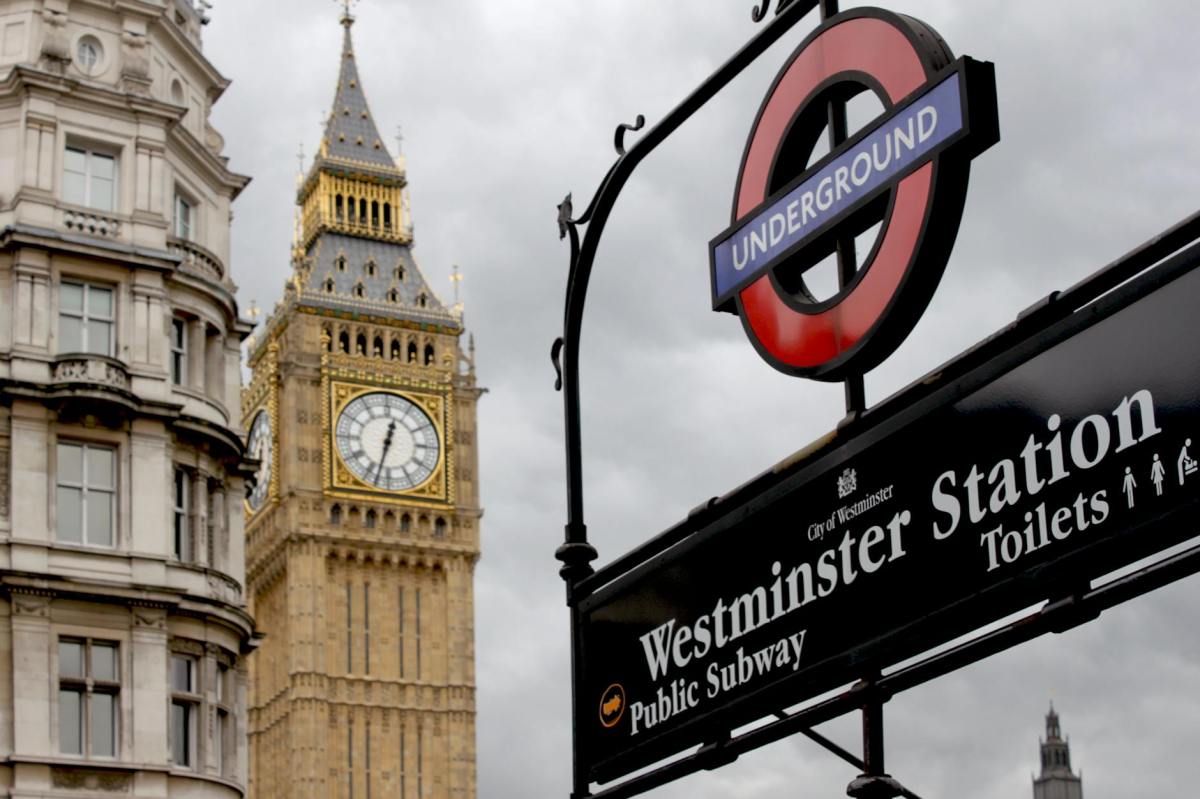
It’s astonishing that “hereditary” is a valid qualification for the job as a legislator. I’ve nothing against the individuals involved. Especially those who try to do the best they can. Put all that to one side, there’s a huge gulf between what’s normal in normal life and what’s normal in the Place of Westminster. It’s time to consider merit as more important than who your parents were.

The removal of hereditary peers should be just a first step. One of the most egregious unfairnesses is that way the HoL gets topped-up with political cronies a regular basis. We’ve institutionalised political tribalism in the second chamber. Ennobling people for dubious reasons has become a habit of Prime Ministers. Making contributions to political Party funds should not be a ticket to the HoLs.

There’s the religious element too. Whereas there’s a lot to be said for a level or moral guidance to be given to Peers there’s little justification for them to have votes in the HoL. I’m not denying the important part region plays in many people’s lives. What I am saying is that the laws that affect every citizen shouldn’t be shaped by a small cohort of clerics. Two countries have religious clerics in places of legislative power, and they are UK and Iran. That doesn’t sit well with me, and no doubt most people.

One change maybe controversial given that it smacks of discrimination and that is the setting of an age threshold. If Peers are given a compulsory retirement at the age of 80, it may meet an objective of getting the overall number of Peers down. What disconcerting is the implication that beyond the age of 80 a Peer’s potential contribution is less valuable.

I don’t agree that the compulsory retirement age for the HoL should be set at the state pension age. For some people age does mark a dimming of their intellect but for others they can be as sharp as a pin. The only easy option is a fixed threshold, but it should be a temporary measure.

Ideally, the size of the HoL should be fixed. Ideally, the size of both chambers should be similar. Not just because that number line-up but because the political weight should be set closer to a balance. I do assume in this formula that every Peer is a working Peer.

It’s been pointed out that in its current state the HoL makes it the second largest political chamber in the world. It’s reached ridiculous proportions for a country of our size.

Modest changes can only be a start. There’s the real need for permanent restructuring. Parliament’s second chamber must be replaced with a democratic upper house. One model would be an elected upper house with two members elected per UK region based on current/proposed metro mayoral regions or former regions used for electing MEPs.

Even the chamber’s name must go. It’s not good that we have legislators lording over us. Those sitting on the red benches are not superior beings. They are privileged. One would hope for them to be humble given that great privilege. Afterall they should be there to serve us. To serve the country.

No Sprint

The last couple of days have seen a new UK Parliament take shape. Beaming smiles from an intake of rearing to go new Members of Parliament (MPs). There’s lashings of energy and enthusiasm. Every problem is to be looked at afresh. No problem is too big to tackle, even if some problems may take while to cure. Horizons stretch ahead full of oceans of possibilities.

Back in May 1993, I was a freshly elected young County Councillor. It was such a magic moment. One evening, at County Hall for the first time sitting in a room with 29 colleagues. For the first time the Council being No Overall Control (NOC). One room full of a mix of battle-hardened pros and fresh faces. A manifesto in hand and magic in the air.

Today, there are 72 Liberal Democrat MPs. Yes, 72 MPs. I can imagine, without looking at the press pictures what that may feel like. A wonderful feeling of hope, ambition and warmth. A little trepidation. Thoughts like: what will be my role in this epic journey? Those with small electoral majorities might be focused not only on their role in the team but how they will secure more than one term of office.

Politics is a precarious way of life. Any electoral success is certainly never to be taken for granted. This UK General Election has shown that in spades. Volatility amongst the voting population is probably higher than it has ever been. That impulsiveness sits in the background of the overall wish to throw out the mediocre incumbents.

At least for the honeymoon period, often characterised as the first 100 days, the new government and new effective opposition will be given a period of grace. It’s a time when everyone wishes the nation to succeed and prosper in the direction that is set.

A modern UK Prime Minister has a great deal of power in the first period of their office. On this occasion, those that lost, Conservatives will be struggling to rebuild their shattered party. Whether they bury Thatcherism or reincarnate it, they will be in turmoil for a considerable while. They may even strike up an extreme ideology and march off into the political wilderness.

Liberalism is in rude health. The 72 Liberal Democrat MPs will surely work with conviction and proudly hold their principles aloft.

It’s not the first time that I’ve referenced the Stoics. I am reminded that despite the joys of the moment and the races that have been won, the battle of ideas never stops or starts. There are peaks and troughs of optimism and pessimism. There are opportunities taken and lost. There are times of progressive advance and there’s inevitable push backs. He’s no longer with us, in fact if he was still around, he’d be nearly 100 years old. Labour MP Tony Benn was wrong on Europe but often wise about the UK Parliament. I agree with his view of Parliament in this respect, however flawed it may be: “Through talk, we tamed kings, restrained tyrants, averted revolution.” Long may that continue. There’s no finality in politics; there is always another step to take.

His maxim for MPs to operate on two levels makes a lot of sense. One is to be an agent of practical action and the other is to operate in the realm of ideas. Not so easy to do. Nevertheless, democracy is healthier if both delivery and values are never strangers.