Rise of AI: A Double-Edged Sword

Spotting AI generated articles is a hobby that is designed to be a minority pursuit. There will, no doubt, come a time when the writings of a human and that of a machine will become indistinguishable. I don’t think we are there – yet. Headlines like “Aircraft flies through heavy rain” are either a bored human scribbler or a machine with time on its hands.

The early promoters of the INTERNET imagined a great library of existing material becoming easily and freely accessible to anyone and everyone. It was to be an enlightened development that drove the digitisation of massive amounts of information. Although, even now, it’s not too difficult to pick an obscure book or magazine off a charity shop shelf and find that there’s no reference to it on-line. True, it’s getting harder to do.

That which hasn’t made it to the digital world, like boxes of 35mm slides I inherited from my father-in-law, will sit quietly gathering dust in the attic. I hardly think this is a great loss to humanity. Although, random holiday snaps of Cornish landscapes from the 1970s might one day become fashionable. More likely they will gather another decade’s dust.

Making the INTERNET the modern equivalent of the great library of Alexandria[1] is a worthy ambition. Civilisation could be defined in a way that embraces a preservation of knowledge. What we find is that the 21st century version of the digital world has strayed from these high-minded ideas of its early promoters.

My desktop, tablet, and phone can access a universal store of fact and fiction, truth and lies. What is troubling is that the line between these is becoming increasingly blurred. The demand for instant and every changing material is insatiable. In the past, technology was the limiting factor. Now, it’s not.

Here’s a compilation of likely headlines from our machine friends. I can’t be sure and it remains possible that a human may have authored some of these eye-catching wonders.

“Astronauts face dangers during spacewalks.” “Most fascinating deserts on Earth.” “The beach that many consider to be the best on the entire planet.” “Study claims aliens may be hiding on Earth.” “They found a triangular UFO in the woods – then it vanished without a sound.”

I note from 5-minutes watching headlines change that the craft of catching our attention is the one that is most valued. The term – click-bait – was made to describe what’s going on. Whatever words can be framed to entice a potential reader/viewer to go here and not there, that has value.

Again, what’s concerning is that it will be algorithms that will master the art of catching our attention. They do. They will surpass smart thinkers and artful writers. Mainly because they instantly have a whole well of past successes to draw upon.

For sanity’s sake, I need to stop this line of thinking. The further I look the more we become destined to a dystopia that was portrayed in a movie that hit the screens before the mobile phone became ubiquitous. A 20th century fiction that made everyone sit up and think, as well as being highly entertaining, was The Matrix. Now, it called a classic.

A generation on and AI produced material is filling our screens. It’s not yet dominant. There’s a small amount of kick-back too. Not time for a rebellion. Question is – will those born now be the rebels or the captives of this digital revolution. 

[1] https://www.britannica.com/topic/Library-of-Alexandria

The Power of Words

Two hundred and fifty years.  It’s good to see and hear that we still have decent speech writers and a monarch able to deliver an address with immense style and a fair degree of humour. This week, King Charles III delivered an important address to a joint session of the United States Congress. It’s a wonderful reminder that the spoken word can be powerful.

Now, I’m not saying that these good efforts will change much in respect of world affairs. In fact, my view was that the King may have chosen a better time to make the trip across the Atlantic. Nevertheless, what is, is. If nothing else the perspective the King offered is one that looks over the whole of the experience of relations between the UK and US. Not focusing on the aggressively tribal and divided polices of the moment. Perspective is so important.

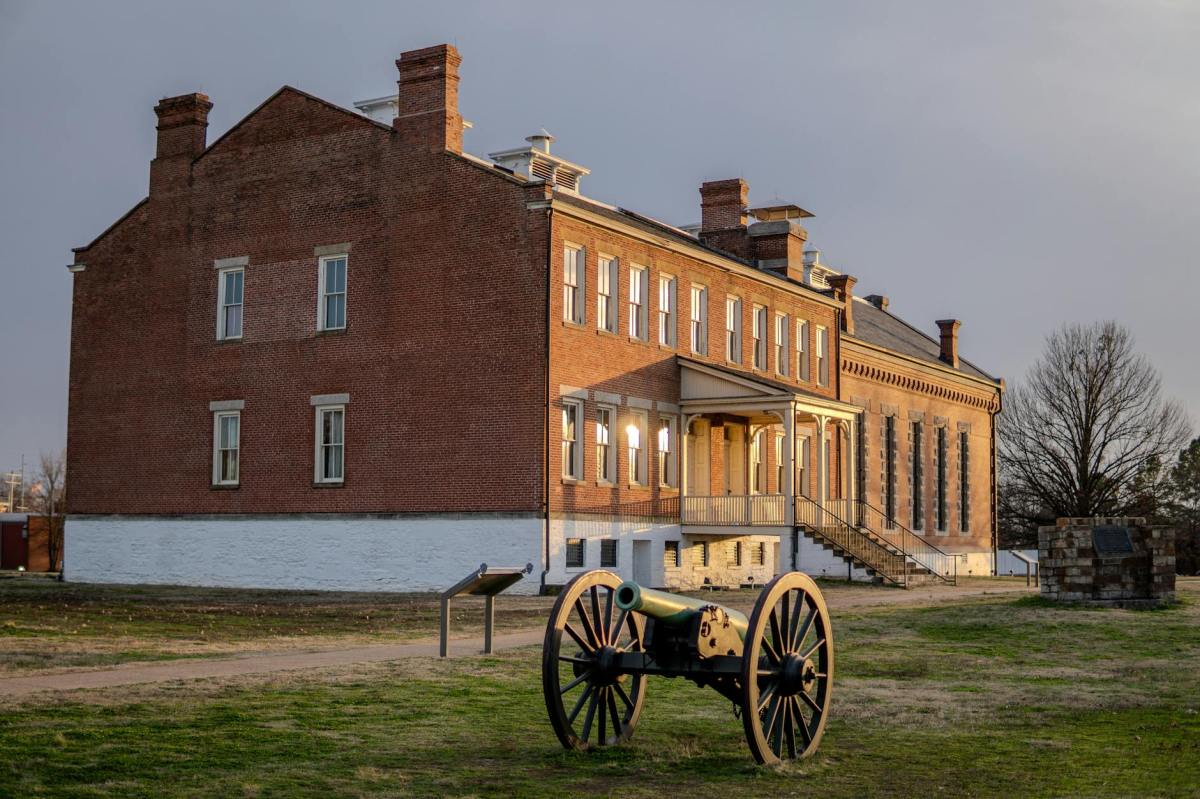
The reference to the history about the British burning down the White House, in a raid on Washington, was one I knew. It was part of a story I learned when visiting Baltimore years ago. Walking around Fort McHenry[1] and thinking what it must have been like when the battle raged. 1814 was a turbulent year.

The forging of independence was ferocious. It wasn’t actions that passed quickly or in one simple sweep. If I remember rightly, events were such that they could have gone either way. There were plenty of Americans who questioned the fight as much as there were those dedicated to it.

Here’s where I’m going. One of the factors that shifted the ground was not the cannon and the riffle. Although war did much to determine the outcome. In the end, it was too costly for the British to continue and the Americans were unrelenting and well organised. To fight and win, motivation is at the heart of the matter. There’s got to be compelling reason to commit all the energies needed. To take on all the inevitable risks and suffer the losses.

This is where the name Thomas Paine comes up. Described as an English-born American. He certainly was English, and thus British. He was a writer. Not a warrior or a politician or even a wealthy man. A simple object. A pamphlet stirred the emotions in a way that fired revolution.

He’s best described as a radical. What that means is a person with the ability to light a fire. To take people on a journey from one place to another. That’s frequently met with discomfort, prevarication and grudging reluctance. There’s every reason in the world not to upset the apple cart or to be content with the status-quo. A true radical will not accept this condition. They are not the easiest of people to live with and often come to a sticky end.

There are two things at play in this story of “modern” history. One is the power of the writer and the other is the medium itself, the pamphlet. Both are required for a storm to brew. Both need to be in tune with their times. This is not merely a story of history. Before and after, Paine there were writers and pamphlets but none that resonated so effectively at a critical moment. Thus, words gave momentum to change that stuck.

Today, there seems to be a surfeit of thinkers and writers. The problem is that none of them seem to be sufficiently in tune with the core of our society. The other problem is the medium for dissemination. New pamphlets exist in digital form. Social media is the river that carries the day’s espials, chronicles and visionary tracts.

In 2026, can someone capture what we want, write it down and draw a crowd around it? I think they can. Where are they?

[And it doesn’t have to be more than 90 pages long.]


[1] https://www.nps.gov/fomc/index.htm

More Than Just Fashion

This strikes me as being beyond the normal selection of freaky and nuts News stories.

Shoes are a part of life that we can’t do without. At least given the climatic conditions in our temperate region of the world. They are primarily put on to protect the feet from the cold and wet and any sharp objects that littler the ground. I found the BBC radio interview with the foot specialist Professor Anthony Redmond fascinating. Doctors Chris and Xand van Tulleken[1] make a point of finding interesting people to address the myths and realities of medical subjects.

Me being me, it’s impossible to mention the subject without reference to the HHGTTG[2]. Douglas Adams was attuned to people’s obsession with footwear. The Footwarriors, were robots specifically designed with poor fitting shoes so that they would limp. This meant that they couldn’t lay chase, much to the advantage of anyone who encountered them. The story of their makers the Dolmansaxlil Galactic Shoe Corporation is a classic.

[I guess Adams chose the name Dolman because it sounded right. it’s an ancient Anglo-Saxon name. Close to where I live, the Dolman’s were a wealthy English family who owned Shaw House[3] in the 17th Century. I’d recommend a visit.]

Improperly fitting footwear is a good a way of slowing down opponents. One sure way to hobble or cause discomfort to the wearer. The fictional purpose in the HHGTTG was as a marketing rouse. Bad shoes forced people to buy more shoes in the hope for better shoes, but they were always bad, by design.

Now, I don’t know if you can imagine it. Let’s say that Lucius Junius Brutus had poor fitting shoes, or sandals or whatever Romans wore. Would his approach to Julius Caesar have been thwarted and history have been written-up different? Would he have stumbled and failed to dispatch the dictator of the Roman empire? It’s a question.

Back to 21st century everyday tales. No fiction or intriguing historic figures. No wacky robots or corporate shenanigans. It’s reported that US President Trump likes shoes. Specific shiny shoes. So much so that he’s been giving them to colleagues[4]. Demanding that they wear them too.

I don’t think this is Fake News. Plenty of people in the world are obsessed with shoes. With her massive collection of pairs of shoes, this is the one thing people remember about Imelda Marcos[5]. Shoes can become the stuff of legend.

Corporate uniforms are not new either. The love of a conformal identity and the sense of unity that this superficially portrays. Having everyone in a team dress like robots is a way of stamping a leader’s authorly on a wayward group.

I started by writing that this development was freaky and nuts. I could be missing a vital part of a deep and detailed strategy here. It’s theorised by some management thinkers that the grit in the oyster is a key part of making change happen. So, why bother with grit. The same effect can be created by wearing shoes of the wrong size. An ill-fitting irritation. Could I be wrong?


[1] https://www.bbc.co.uk/sounds/play/p0ncgb9j

[2] “Hitchhiker’s Guide to the Galaxy,” a comedic science fiction series by Douglas Adams.

[3] https://www.westberkshireheritage.org/shaw-house

[4] https://www.wsj.com/style/fashion/trump-florsheim-shoes-tucker-carlson-jd-vance-bessent-448567ab

[5] First Lady of the Philippines for 21 years.

A Dark Legacy

Controversy is bubbling away like a broken pressure cooker suck on a high gas flame. I’m just writing about the words spoken in Parliament, yesterday. The case of the British “prince of darkness” is one for the textbooks. This man, who acquired the title “prince of darkness[1]” long ago, is Peter Mandelson. Now, formerly a Labour Party member, he’s slithered through political life, in the UK and Europe, dragging controversy everywhere he’s been.

Honestly, I don’t want to write about this politician. A casebook study of a follower of Niccolò Machiavelli’s brutal manual for would-be leaders. Being a “prince” in this century, and the last, seems to bring out the very worst in those who are given the title. It’s fine for fiction to be dotted with so called “evil genius” characters but in real life these are people best avoided.

At the heart of the recent News is not just a betrayal. It’s the habits and lives of powerful people acting in a way that assumes an immunity from any accountability. Evidence that greedy people collude behind closed doors to line their own pockets. That morals go out of the window.

I continue to believe that most politicians in the UK Parliament are motivated to make the world a better place. They go to Westminster to try to make a difference. To fulfil that adage to: “Try and leave this world a little better than you found it.”

I make this assertion not in a naive way. Afterall, I’ve stood for election more than a few times. Quite a lot, in fact. Over several decades. Sadly, never with any great amount of success. Often meeting people on the same journey. Most of those people I met are putting themselves forward to right some wrong or use their expertise for the public good and make a difference.

At the heart of the recent News is a moral vacuum too. This vulgar belief that ingratiating oneself with unethical wealthy individuals has no consequence. Instead of protecting the public interest and exposing corruption, a considerable number of influential men have chosen to either turn a blind eye or adopt disgraceful practices.

On first meeting, I admit that it’s not always possible to know of the evils that another person may have committed. What’s shocking now is the distinct lack of curiosity that seems to have been exhibited by many prominent people. That’s the generous (Christian) interpretation.

The exhibition of misogyny revealed in the information that has been released in the US is disgusting. It’s way beyond that simple expression. If we are to move forward as a society these behaviours must be eradicated. To leave this world a little better than we found it, change must not just be a word that’s sprinkled into public speeches. Behavioural change must materialise.

Yes, we all have a responsibility in this respect. No looking the other way or pretending that unacceptable behaviours are not happening. Call them out. Especially those with a public voice.


[1] https://www.politico.eu/article/prince-of-darkness/

Legacy of Dilbert’s Humour

Cartoonists capture reality. Or at least, a snapshot of an ephemeral or enduring moment. It’s not photography. A cartoon’s realism isn’t about fidelity in the capture of a scene. It’s more focused on our perception of reality. No need for representative images full of depth and detail.

Absurdities and peculiarities captured by ink and pen can be sharp and masteries of observation. The flash of “who said what to whom” is a moment that displays the strange assortment and madness of everyday life.

To me the creator of Dilbert nailed a decade. That’s the 1990s. A time when management styles favoured open plan offices littered with cubicles. A time when of the evolution of computer networks connected office workers in a new and unfamiliar way. “You’ve got mail” was a positive thing.

Scott Adams[1] has passed at a relatively young age. His reputation not entirely intact. Now, I must decide what to do with the books I have of his. Charity shop or not? Element of his humour don’t fit the world of the 2020s. In some ways an even more absurd world than past decades.

Where he hit the mark, in my mind, centres around 1995, or so, a time when I was travelling to America. Visting giant aerospace manufacturing companies. I can close my eyes and see a hangar like building of enormous proportions where every square inch was covered by naturally coloured cubicles. Neutral coloured partitions coming up to shoulder hight. Water coolers. Glass windowed offices. Notice boards with the latest dictate.

Of course, Dilbert was an engineer. An engineer shoehorned into a modern management world that challenged his sensibilities. A hierarchical place where systematic pseudo-science clashes with logic and rationality. Where human frailties and social pressures are turned into office management speak to justify unjustifiable actions. Pushing a rock uphill to meet unrealistic project plans.

It’s a tiny thing. Dilbert’s upturned tie smacks my experience of standing at a drawing board in the late 1970s. He’s a cartoon character that is inevitably dragging his heals as he’s being forced to come to terms with a maddening corporate culture. That’s an encounter that a lot of people can relate too. It compelled office workers to play games that seemed to work in the opposite direction to any that was intended. Later, TV comedy picked up on this with series like: The Office[2].

This work day phenomenon hasn’t passed. Modern managements’ more barmy methods and theories are so ingrained that it seems wrong to highlight. Somehow our reaction to this has changed.

For a while Dilbert’s humour put up a mirror to those of us in senior management roles. Here’s a model that, if you start behaving like the “classic” boss, it’s time to do a double take. When encountering that slippery slope, look far and wide for a cynical talking dog.


[1] https://www.bbc.co.uk/news/articles/c5y320k72vyo

[2] https://www.bbc.co.uk/programmes/b00jd68z

Why Embrace False Utopias?

Why do clever people often become dayglo prats? Not stupid by any means. More foolish and not embarrassed by their recklessness. It’s one thing to be incompetent or ineffectual but that’s not what I’m getting at here. It’s smart people who get carried away with delusional dreams.

How many vocal futurologists have said – “work is dead”? That one day we will be living in an age of leisure and ease because sophisticated machines will have taken all the drudgery out of existence. Intelligent machines doing all the things we once considered to be work.

In essence it’s a utopian vision that stands-up to be knocked down. In fact, the subject matter has been chewed over in science fiction ever since science has played a big part in our lives. Such popular fiction takes us from a dream world to a hideous dystopia that the original dreamers hadn’t envisioned.

The year is 2274. Almost 250-years ahead of where we are. Humanity is living in a bubble. That bit doesn’t change. Most people are unaware of how their society functions. Again, that bit doesn’t change. Rituals and customs dictate the path individuals take in life. Like today.

Strangely, even in the year 1775[1] those three aspects of life were evident. Maybe they are perpetual. However, there’s an exceptional point to make. That’s our rebellious nature.

The year is 2274. The movie is Logan’s Run[2], made at a time when society had ripple of anxiety about the so called “silicon revolution.[3]” That’s 1976. Before the elevated level of interconnection and communication that the INTERNET has afforded us.

It’s a sobering science fiction movie with a somewhat optimistic ending. Looking dated. I can get past the images and props that epitomised the seventies vibe. That’s become vintage.

To me, aspects of the theme of the story come from H. G. Wells. Nothing wrong with taking great ideas and reshaping them for the time. In the end the flawed utopia is defeated by our rebellious nature. Or at least of some people. The seeking of truth, at all costs, and to look behind the mask that everyday life paints.

You may ask – what the hell am I getting at? It’s a reaction to the recent headline[4]:

Musk says that in 20 years, work will be optional, and money will be irrelevant thanks to AI.

I like growing vegetables. Gardening is a superb way of doing something practical, staying grounded and in touch with nature. It’s good for one’s mental health too. However, the notion that work will be optional is far-fetched. The idea that money will disappear in a couple of decades is nuts. That’s not going to happen.

I know that the motivation to say such things maybe merely to provoke. That has its function. Nothing like stimulating a debate about the future. Surely, we are in for some dramatic changes in my later years on the planet. Surely, we need to equip the next generation to deal with these changes. Surely, we need to protect the public interest in turbulent times.

“Prat” is an often-applied British term. There are a lot worse terms than that one.


[1] https://www.clarkstown.gov/weekly-column/the-revolutionary-year-of-1775/

[2] https://www.imdb.com/title/tt0074812/

[3] Intel’s 4004, released in 1971, packed the core of a central processing unit (CPU) onto a single chip for the first time.

[4] https://fortune.com/2025/11/20/elon-musk-tesla-ai-work-optional-money-irrelevant/

Exploring Airworthiness Knowledge

How many good books are there on aircraft airworthiness? I don’t suppose a lot of people are going to ask that question. General introductions to airworthiness are not necessarily bedtime reading. This thought came to my mind, this week, because I had some time to kill in a library. A particularly technical library in London[1]. It’s at the Institute of Engineering and Technology (IET).

Sited in a grand building on the banks of the River Thames. Savoy Place, as the name suggests, is next door to the famous hotel of the same name. What marks it out is a large statue, not of some long-forgotten stage actor or army general, but that of Michael Faraday[2]. His contribution to the modern world is enduring and undeniable.

I’ve been a member of this august engineering institute since my student days in the early 1980s. Then it was known as the IEE. One “E” being for Electrical. Our lectures encouraged us students to join and once done so they have us for life. Members worldwide have access to their books, databases and standards.

I could draw a thread between Faraday’s work and 21st century aviation. It’s a mighty wide thread and one that’s growing all the time. There are so many aspects of electromagnetism embedded in aviation. For example, without electric motors and servos, we’d still be controlling aircraft with strings and wires. Fine, hydraulics play their part too.

Technology has moved on. It continues to move. Electrification is displacing hydromechanical systems. The age of electric propulsion is getting closer as developers experiment with a myriad of different configurations of motors for different new aircraft types. More and more electrical power is needed to make modern aircraft tick.

In the IET’s library there are a few books with the word “airworthiness” on the cover. It’s a distinct niche. More often technical references contain huge amounts of material that concern or impact airworthiness, but the word itself is reserved for the more discerning.

One I picked off the shelf was “Airworthiness: An Introduction to Aircraft Certification and Operations” by Filippo De Florio[3]”. For me it’s full of familiar material. I was surprised at the level of detail and range of coverage. In its latest version, it’s reasonably up-to-date too.

One book that was not on the IET’s shelf is “Initial Airworthiness: Determining the Acceptability of New Airborne Systems” by Professor Guy Gratton. I believe he’s updating this book now.

There was a copy of “Aircraft System Safety: Assessments for Initial Airworthiness Certification” by Duane Kritzinger. Again, for me it’s full of familiar material.

Another book that was not on the IET’s shelf is “Aircraft Continuing Airworthiness Management: A Practical Guide for Continuing Airworthiness Engineers” by Daniel Olufisan.

What I’m wondering now is how many other contemporary books are there on this subject. That is up-to-date references. Yes, I know I could do a quick search to turn up an easy answer but that tells me nothing of the quality of the publications. All four above are worth a read.

Help me out with some suggestions – please.


[1] https://www.theiet.org/membership/library-and-archives

[2] https://www.faraday.cam.ac.uk/about/michael-faraday/

[3] https://www.amazon.co.uk/Airworthiness-Introduction-Aircraft-Certification-Operations/dp/0081008880

Embracing Uncertainty

Imagine siting under a great wide spreading old oak tree. Acorns falling all around. The ground littered with whole ones, crashed ones and half eaten ones. It’s more the half-eaten hazelnuts that the squirrels leave behind that I’m thinking of. On one of those cool days, like this morning, when the rain has abated and the sun beams are streaming across the glistening fields. It was lower than 2 degrees, early this morning, so a heavy drew rests on the grass and leaves.

Think of title for a book or film that sums up the state of current affairs. I’m tempted to say “All the President’s Men” but that’s been well done in the 1970s. Not only that but the word “scandal” may have lost its meaning. Political fiction and reality are melding into one. Anyway, I don’t want to follow the crowd and obsess about America.

Was there ever an age when prosperity seemed assured and the population was happy. When men and women of honourable intentions and wisdom, judicially ruled the land? Maybe not. Or when it happened, to some limited extent it didn’t last beyond a generation.

Any title for a book or film would have to encompass the persistence of change. Nothing upon nothing ever stands still. In fact, that’s one of the few things I can write that is an absolute. A real natural absolute phenomenon. Everything we know of moves relative to something else and movements mean change. We never breath the same air.

In a storage box of my books there’s a title: “Thriving on chaos[1]“. That’s more to do with an attitude to change. It doesn’t sum up the moment although it does imply that chaos is normal. I’m not going there fully since not all change is chaotic. Life is punctuated with regularity. It’s the traditional saying about death and taxes. Those two are regular occurrences.

A financial crisis or stock market crash or bursting bubble seem to hit us as an unexpected instant of violent change. Unexpected that is until hindsight kicks in and we all wish we’d listed to siren voices. Analysis streams from the outcome of a crisis[2].

A title for a book or film would need to include the recurrent nature of both good and bad consequences. It would need to emphasis our inability to accurately predict what’s going to happen next. That is even if one or two of us may get it right.

All this leads me down the road of a manner of thinking that’s all too common to me. That’s the world of probabilities. Addressing that slippery ell called uncertainty. So, what could be better as a title than: “The Age of Uncertainty.” Oh look, that’s been taken back in the 1970s. What could be better than the title chosen by John Kenneth Galbraith[3]?

He looked at the chaotic but repetitious nature of our common history. Going way back. Unsurprisingly a little cynical and monosyllabic at times. I’ve been rewatching his BBC television series. It’s impressive.

Acorns are falling all around. An unusually large number, this year. Next year – who knows? If I could find some reliable data, I could do some probability calculations based on past seasons. But with certainty, I can say that we are in an age of uncertainty. Acorns will fall. How many – well that’s the question isn’t it.


[1] https://tompeters.com/thriving-on-chaos/

[2] “The Storm” by Vince Cable, the Liberal Democrat politician, looking at the 2008 global economic crisis.

[3] https://www.bbc.co.uk/iplayer/episodes/m002l6sc/the-age-of-uncertainty

Exploring Space: A Journey

I haven’t got many of my childhood Ladybird books. One I have kept in good condition is “Exploring Space.” It’s got the characteristic illustrations and simple stories that are made to captivate. This book is the revised edition that must date from sometime after 1971[1]. The front cover has an illustration of a moon lander floating above the moon. It’s a picture that says – look what we can do, this is the tip of the iceberg. Such an optimistic outlook.

Most of my career has been in the aerospace business. More specifically civil aviation. For short while, I did get involved in building ground test equipment for satellite systems. Some of the people I worked with built the Giotto spacecraft in the UK. The mission was to study Halley’s Comet. This spacecraft, launched in 1985, took close-up images of the comet. It discovered organic material within the comet and proved that a spacecraft could cope with the harsh conditions of such a flyby. 

My interest in space, and the complexities of getting there has been with me for a long time. It’s the ultimate adventure. It also shows what can be done by international cooperation. Giotto was the European Space Agency (ESA) first deep-space mission.

Mention the word interplanetary and what comes to mind? For people of my age. The Carpenters’ version of the song “Calling Occupants of Interplanetary Craft”. It’s an eccentric, but successful 1970s pop song about talking to aliens. It’s a cry for help that is as relevant now as it was then. “Please come in peace and help us in our earthly problems.” If ever we humans could do with help from a more advanced civilization, it’s right now.

A sense of wonder about the heavens is as old as our human story. What’s up there? Could we live there? Are there others living there already?

I like the idea of an English bishop[2] in the 1630s. An early science fiction writer he imagined a flight into space in a craft pulled by a flock of wild swans. Ten to be precise. Since there are plenty of swans here in the English town of Newbury, I thought about investigating that idea. Maybe not.

Last evening, for the first time, I visited the British Interplanetary Society (BIS)[3] at Arthur C. Clarke House in London. Their HQ is in Lambeth. Can’t say I like that part of London at all. It’s a peculiar mix of sterile skyscrapers and spaces waiting to be re-developed. Old London has been pushed aside.

The BIS has a long history. It’s no fly by night organisation. Not as far back as the English bishop mentioned above, but more than 90-years extant. They have promoted thoughts and ideas that go way beyond past achievements. Trying to imagine what a future may look like if our capabilities and drive for exploration continue to advance here on earth. I think there’s always a need for that creative imagination to push the boundaries of what’s possible.

This week has been Space Week[4]. A week to highlight all things space. Back in 1999, the United Nations (UN) declared that World Space Week would be every year from 4 to 11 October. For this celebration, this year, the BIS had put on an evening event called: Living in Space: A World Space Week Special Panel.

I won’t say too much only that it was a fascinating evening. We were a small gathering full of questions. BIS had assembled a prestigious panel of experienced individuals. There wasn’t much in terms of the practicalities of living and working in space that didn’t get discussed.

I’m reminded that despite the hostility of the space environment for our biology, what we know is that all the materials of which the earth is made are there waiting for us. Constructing habitats, with the robotics we now have, isn’t just science fiction anymore.


[1] https://www.royalmint.com/discover/decimalisation/

[2] Francis Godwin (1562–1633)

[3] https://www.bis-space.com/

[4] https://www.worldspaceweek.org/

Paper in a Digital Age

It’s oblong and made of paper. My phone is oblong and made of a long list of exotic elements. Paper on the other hand is relatively simple. I’m sure a paperologist will correct me and describe its subtleties and complexities. Regardless, paper has been around for a long time.

Both have an ephemeral quality. Paper decays. It burns and bugs eat it. Digital media gets lost, overwritten or deleted. Without wires and suitable equipment, it doesn’t exist.

I think that God forbid, that if Armageddon did come to place, we’d find more paper remaining useful than surviving digital help. Henry Bemis[1] loved to read. Strangely, that’s what saved him from ultimate destruction. Try writing an equivalent story with an iPhone in hand and we would be disappointed with the results. That would really see a sad Bemis doom scrolling empty nothingness.

Contuining the banking theme. What I’m refereeing to here is an envelope containing my latest bank statement. Yes, I haven’t ticked the go paperless box on-line. To me there’s something reassuring about having a tangible paper copy of what exists in the digital ether. Even though it’s only a printout, it somehow feels more real.

Holding a statement in my hand, whatever its errors or miscalculations it cannot be altered. Unlike an on-line digital reading that a capable cybercriminal can flip in a second. Both have an ephemeral quality. One exudes a greater feeling of permanence.

Above “ephemeral” is the right word to use. My banking App on my phone is a good service. However, it encourages a certain neurosis. Whereas a paper bank statement turns up, periodically as a personal balance sheet summing up the ins and outs of a month, my App is changeable hour by hour, a less meaningful snapshot.

The News is full of this phenomenon. Snap shots of the county’s GDP going up and down every month are newsworthy but don’t tell us much about where we are going. That doesn’t stop politicians treating them as if they were a sign from some mythical deity. A small number that changes within a range of error doesn’t mark a beginning or end of an era.

I like tangible things. A paper report or statement is a tangible thing. I can hold it in my hand. It doesn’t change from moment to moment. It’s a record of a direction set, not an hourly windvane. However unfashionable, as a crusty gentleman of a certain age, I will continue to ask for a printed record of where I am and where I’ve been.


[1] https://www.imdb.com/title/tt0734683/