Ineptitude

Yesterday’s announcement went like this: “The government will also increase the minimum income required for British citizens and those settled in the UK who want their family members to join them.” This Conservative view, that families are a burdening the State persists like a stubborn stain.

The Universal Declaration of Human Right says: The family is the natural and fundamental group unit of society and is entitled to protection by society and the State.

Clearly, by the measures announced, in the case of this UK Government the family is not a fundamental group unit of society. In fact, family members based overseas will be required to separate in the event of a person accepting a low income in the UK. That low income in the UK maybe relatively large when compared with what is available in their home country.

I guess this is fine for lawmakers when considering the level of a Minister or Member of Parliament’s salary and benefits. There’s no impediment that will impact their lives in this respect regardless of the nationality of their partner and children.

What I’m wondering is: what will be the case if a British pensioner, living in a European country, who wishes to return with a partner or children who don’t have British passports? If the increased threshold of £38,700 applies, then that will effectively ban them from returning unless they have a generous pension. It may be the case that they have worked on overseas and accumulated a non-UK pension, but this would be irrelevant if the deciding factors is a UK earnings threshold.

I don’t think there’s much disagreement that those who wish to move to the UK should be able to support themselves. The UK minimum wage is set at £21,673.60 for a 40-hour week. So, is the UK Government saying that no one can support themselves on the UK minimum wage?

Ministers have been quick to deny any responsibility for the chaotic state of the immigration system in the UK. Instead, they pretend that they are adapting to changing circumstances. The fact that they are 100% responsible for the current circumstances is brushed aside.

Having persisted for years with one set of flawed notions Ministers now announce another set of ill-thought-out proposals. The Brexit slogan of Take Back Control did not envisage giving control to a cabal of incompetence. In stark reality, that is what has happened.

The knee jerk reactions and ever shifting sand of the last decade need to come to an end. The British people should not be denied a General Election. More months of more chaos and ineptitude are incredibly damaging.

POST: U-turn. Minimum income requirement will not be increased as much as originally announced. A new threshold will be applied from the spring. A policy designed to exclude people from entry to the UK has been watered down for practical reasons.

Divided

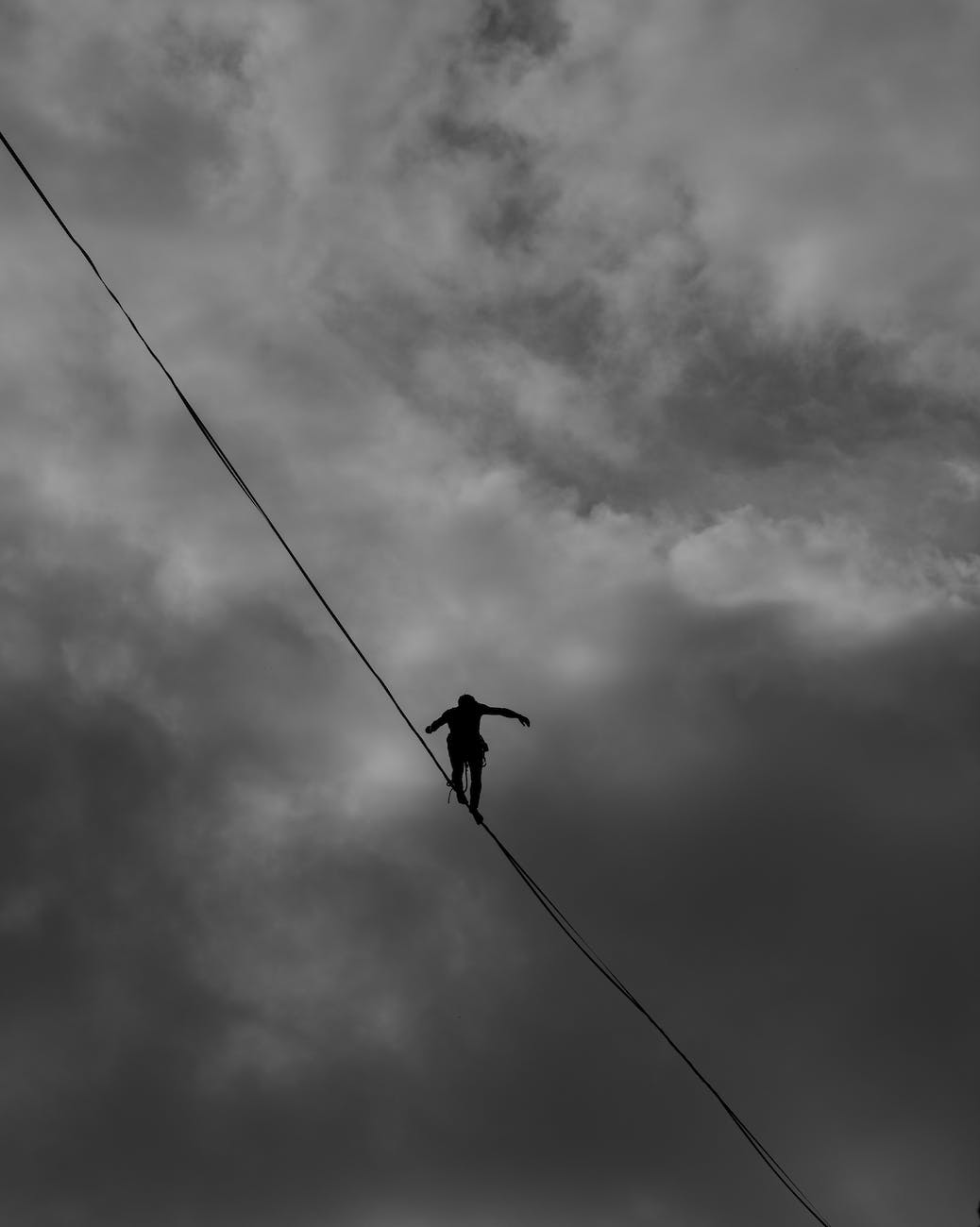
Away for a week. I’ve been in Canada. In Montreal. On return to the UK, I see the next step in the convolutions of the Conservative Party have littered newspaper column inches. If ever there was a thin man on tight rope balancing a can of worms on one arm and a broken bicycle on the other, then it’s the current Prime Minister.

I’m sure he never trained for the Cirque du Soleil. Maybe Rishi Sunak should take up traditional circus disciplines like the swinging trapeze and flying hand to hand. Certainly, he could make a living that way even if he doesn’t need the money. Circus or pantomime would be a good opening for a great number of pending unemployed politicians.

Suella Braverman’s second sacking as Home Secretary opens the opportunity for her to take to the stage. In her case the audience would know when to boo without any prompting. The world of the pantomime villain[1] might revive a flagging political career.

Nigel Farage, former leader of the UK Independence Party is off the jungle[2]. Most suitably he’ll be featured alongside comedians anxious to keep themselves in the public eye. The cartoonists are having a field day with this oddity.

Boris Johnson’s trying his hand with comedy too. His new position as a GB News broadcaster will be pandering to a small but loyal right-wing audience. That will not put him off, I’m sure. I wonder what kind of studio wallpaper will be his backing?

Others have gone to ground or are typing WhatsApp messages to a 101 groups all fighting to be the next star of the right. The Brexit brigade of the past is finding a natural home in entertainment. It’s one way of jumping ship before the poltical Rapid Unscheduled Disassembly (RUD) to come. This is a wonderfully inventive acronym for a complete disaster.

If I was to make a guess as to what Rishi Sunak might be attempting, it’s a rebranding the likes of which we haven’t seen since the chocolate bar Marathon changed to Snickers. I seem to remember that name change was a marketing curiosity. The British public didn’t understand it. After decades past the rebrand, the name Marathon was brought back. Is the Conservative Party that chocolate bar fallen out of favour and looking desperately for a retro-look?

Sweeping a decade of chaos under the carpet is a tall order. Even with the maxim that a week is a long time in politics. I don’t think the British public are so forgiving or forgetful. The roots of our problems are the results of poor political judgement and poor actions over a long trem of office.

No doubt the Conservatives will try to jerrymander, as much as slight of hand will allow them to get away with in the media spotlight. Voter ID rules will keep some potential voters at home come the next general election. Shifting the boundaries of some constituencies has benefits too. A pre-election bag of goodies is being put together to stiffen the resolve of wavering traditional conservatives. Expect Springtime give aways.

My overall sense is that major change is coming. Abraham Lincoln said, “a house divided against itself cannot stand,” and that applies more broadly than the reason it was said in the 1850s. The strands of conservatism that have been so politically successful in Britain are divided amongst themselves. Not just a few small gaps. Hulking great chasms exist between entrenched groups. That situation never goes well. Not for anyone.


[1] http://celebratepanto.co.uk/toptipsforvillainy/

[2] https://www.entertainmentdaily.com/tv/im-a-celebrity-nigel-farage-backlaash-from-celebrities/

Watch it

Today, the same hubris that plagued the Brexit referendum in 2016 is in the air. That’s when people become dangerous overconfident that they know what’s going to happen next. All the signs in the stars, almanac’s predictions and emotional forces point one way but hard cold reality respects none of these pointers.

It goes like this. Every day there’s a story about how dreadful the Conservative Government has been in recent years. Like tales of manic cartoon characters, the retelling of events is almost unbelievable. At the same time, the opinion polls and the commonly held media assumption is that, come the next General Election, next year the Labour Party will romp home with a workable parliamentary majority.

A great number of people may think that politicians have let them down and public figures that brim with arrogant self-confidence and bluster should not be trusted. However, that may not translate into a simple selection of an alternative. The primitive assumption that voters act in a binary way, dislike candidate A means like candidate B, belongs in a prior century.

This decade is different. The speed with which events happen and then are glossed over or suddenly uncovered is astonishing. It’s frantic. Watching a replay of last year’s “Have I Got News For You[1]” and it’s like visiting a distant land. Even some of the jokes no longer land. Names of people in the daily news rise and fade like waves hitting a rocky shore.

If we, me, and you were entirely rational then I’m sure there would be a strong wish for a period of consistent dull normality. A decade when competent people worked hard to make the world a better place. When the news was more about cats getting caught up trees and puppies chasing balls. When the economy gradually got rebuilt and a feeling of prosperity and security started to spread far and wide across the country. Ultimately, at the end of a term of office the whole country should be happier, healthier, and wealthier.

We are not rational. So, as a life-long liberal I warn my Labour Party colleagues of the dangers of excessive pride and over-confidence. Yes, lots of traditional indicators may suggest that change is coming. I’ve written about the great need for change, but we can soon be shocked or shaken by cold reality. Afterall that’s what happened at the 2016 referendum.

Reasons to vote can come from multiple directions. Personalities can sway the climate of opinion. We may hope for a coming decade of progress and sanity. It’s by no means guaranteed. Hubris is frequently the cause of upsets and surprises. That’s where we are at the end of 2023.


[1] https://www.bbc.co.uk/programmes/b006mkw3

Looking back

Yesterday, was a day for reflection. Sue and I attended the celebration of the life a former colleague and a friend who passed away recently.

Mostly, I was reflecting on the events of the 1990s. To me, that’s not so long ago. To the calendar that’s 30-years ago. Not an original thought but it was a moment when I was reminded that time passes remarkably quickly. Those years have raced by. In that time the country’s fortunes has gone backwards as much as forwards.

Baroness Thomas of Walliswood, to me Susan Thomas, was a Surrey County Councillor at the time that I also held that position in Reigate. I had one term of office from May 1993 to May 1997. Those years were special, and I don’t mean just to me. For one, the County Council was No Overall Control (NOC)[1] for the first, and only time in its history. During that 4-year period there was two Conservative budgets and two Liberal Democrat budgets. Susan was Chair of the full Council during the Liberal Democrat led period.

Susan was a parliamentary candidate in Mole Valley in the 1983 and 1987 General Elections. That’s when one of Thatcher’s Ministers Kenneth Baker held the seat for the Conservatives. A decade before I had my first outing as a parliamentary candidate in Surrey.

In the years up to 1997, the Liberal Democrats underwent a period of growth under the leadership of Paddy Ashdown. It was a time when change was happening. There was a strong wish to sweep away the stale remains of Thatcher’s legacy.

Lots of memories flooded back of sitting in meeting rooms in Kingston-on-Thames playing my part as a junior councillor. Although, that was before the executive system created a gulf between local government councillors. There may have been a mixture of long-standing and new members but each had an equal voice when it came to voting.

I sat in meetings were Susan put her experience to good use. As a large political group of 29 members it wasn’t a given that we would all go in the same direction. As has often been said, getting agreement could be like herding cats.

Susan was a strong supporter of our role in Europe. On that subject we agreed without question.

After the ceremony at the crematorium in Chichester there was a gathering at a pavilion in a park in the city. It was an opportunity to chat about those decades’ past reflections. One or two local campaign leaflets from the were displayed on a table with photos from the 1980s and 90s. This was before the internet dominated every aspect of campaigning. Simple printed paper with a message was the main way people with something to say said it. Party style and branding has moved on but the method remains.

A conversation with a lad who wasn’t born at the time that I’m recalling brought me back to 2023. Over sandwiches and nibbles we both discovered an affection for the city of Bristol. The city where Sue and I first met. It was good to hear that down the generations our political concerns of the moment were not so different. We agreed that change was in the wind and about time too.

There’s hope that the next generation that ventures into political activism will be driven by the same liberal instincts that united Susan and me. Just as in the years running up to 1997, the sense that change is on the way is growing. The failures of a long list of Conservative Prime Ministers, Brexit and the current air of sleeze can not be glossed over and forgotten. Change is on the way. Let’s hope that proves to be true.


[1] https://en.wikipedia.org/wiki/Surrey_County_Council

Scandals

Political scandals are as much part of British life as bread and butter pudding. Yet, we, you, me and the cat and the dog always seem shocked when the next one arrives. As if standing at a isolated bus stop never expecting a bus to turn-up and to our great surprise it does.

It might be failing to disclose or declare large sums of money changing hands. It might a succession of sex scandals. It might be misleading statements, or down-right lies. It might be cover-ups and blatant hypocrisy. It might be abuse or bulling. It might be leaking secrets or dirty tricks to undermine colleagues. It might be …………and the list goes on.

There seems to be no limit to the inventiveness of Members of Parliament (MPs). Is there a defence? It’s true that leading a public life does expose a person to more scrutiny than you or me. There are occasions when unprincipled adversaries can take advantage of this exposed situation.

Reputational damage spreads like wildfire even if the source of the damage is untrue. A bad news story gets media headline that are never retracted. However, you would think that, knowing all the above, that a person in the public spotlight would not entertain thoughtlessness or foolishness, in so much as they can avoid it.

Ever since the Watergate scandal in the US, nearly every occurrence now has the appendage “gate” shoved on the front of it. We’ve become a bit German in making-up new composite words. A pub quiz master could ask; can you identify this gate or that gate? Now, there’s a set of specialist question for a Mastermind contestant.

I can imagine a Monopoly board especially made for Conservative MPs. Although, Labour, Scottish Nationalists and Liberal Democrat MPs star in the lists too but less often. They even play the Get out of Jail Free card, now and then. Some MPs have almost got away with major misdemeanours but at the last moment party support collapses or the winds of fate turn sharply against them.

That leads me to wonder how many get away by the seat of their paints. Or they live with the knowledge that their party Whips office has a file marked – open only is X misbehaves.

It’s time to clean-up politics. Trouble is that I’ve heard that slogan before. It plays well for a while and then harsh reality breaks through, and the house of cards starts to fall. I remember the Back-to-Basics campaign announced in 1993 by British Prime Minister John Major at the Conservative Party conference. I’ll be he wishes he’d not gone down that road so ardently.

Like it or not, this is in our hands. The electorate. Time and time again we have General Elections where we, me included, vote in people who are not best suited to protecting the public interests, representing us or advancing our crumbling constitution.

The ballot is a powerful thing. Sadly, all too often it’s the political commotion in the few weeks before a ballot that determines the outcome. If only it was possible to take a more considered long-term perspective and stick with it. Granted, not a new phenomenon. The Greeks and Romans knew about the fragility of the public mood. Our inclination to make a choice for this day rather than the months and years ahead, or even decades ahead.

Maybe, 2024 will be different. My glass is half full outlook.

Swing

The results are in. They are exceptional in the true sense of the word. The Labour Party pushed aside two large Conservative Party majorities[1]. The momentum for change is gathering pace. It’s not slowing. Those motivated to go out and vote on Thursday sent a strong message.

The Labour Party candidate was victorious in Mid Bedfordshire despite all three major British political parties putting up a fight. Only a tiny minority are going to miss the former Conservative MP Nadine Dorries. At least for the next year, or so the constituents of Mid Bedfordshire will have some form of representation in Parliament.

Overturning massive electoral majorities doesn’t happen every day. The Conservatives were sitting on a majority of more than 24,000 and now it’s all gone. It’s true that the voter turnout in a byelection doesn’t match that of a UK General Election but in the face of such a massive swing this is immaterial. Even making the case that defending parties are often on the back foot doesn’t make much difference.

Having been on the doorstep in Mid Bedfordshire my impression is that the mood was for change. Immediate change. The electorate is smart when it comes to making choices. In this case they have chosen those they perceive as most likely to deliver what they want.

Commentators have described this as a “political earthquake” for the Conservatives. The references to May 1997 are flooding out of media outlets. How can they not? Similar percussors were evident in the years leading up to Tony Blair’s victory over the then Conservative Prime Minister John Major. 

Are we heading for a UK General Election in 2024 that mimics the results of May 1997? A simple reading of public opinion does point in that direction, at the moment.

With a year to go, and all that may bring, it would be hubris to assume that a General Election result can be predicted. In 1964, Labour politician Harold Wilson famously said: a week is a long time in politics. That’s as true now as it ever was. In fact, volatility is a mark of our age.

Despite the wisdom of caution, with the legacy that the Conservatives have accumulated, it would be remarkable in the absolute extreme if they did engineer a sustained recovery in the next year.  

It’s an American saying, and with some argument over its attribution – politicians, like diapers, should be changed regularly. The meaning is clear. There are times when change is the imperative. The exact nature of the change is not as important as the fact that change takes place.

That’s where we are. There’s a hunger to put the dreadful political mess of the last decade behind us. To aim for higher goals. To look ahead with ambition and optimism.


[1] https://www.bbc.co.uk/news/live/uk-politics-67126173

Voting

We could call them Thursday boxes. In the UK byelections take place on a Thursday. Ballot boxes and polling stations are open for the full day. This Thursday there are two important parliamentary byelections taking place in England. Both seats have been occupied by Conservative politicians and by the end of the day that may no longer be the case.

Named after the Norse god of Thunder, Thor, our Thursday is a good day to make changes. There’s the next working day to absorb the implications of any change. Then there’s the coming Monday to make a new start. The UK has stuck with Thursday as election day, with few exceptions.

One theory is that Thursday was often a market day in the towns of England. Thus, people would be gathered in town squares where polling stations could be located. This gave election candidates an opportunity to meet and treat the electorate on their way to cast their votes. Remember the voting franchise was for land and property owners over much of British history.

Fridays have been paydays. So, the voter may have been more absorbed in shopping, socialising and winding-up the working week than listening to campaigning politicians. Making a Friday visit to a polling booth a low priority. This is more the case after the passing of the Great Reform Act[1].

Now, it may be advantageous to move voting day to weekends to maximise the number of people who would be free to vote in-person. However, you could say that we have a 24-hour society and postal voting is popular, so the day of the week is no longer a big deal. It maybe the case that on-line voting will eventually take the place of the traditional in-person marking a cross on a paper ballot. That would open-up the opportunity to have a similar scheme to postal voting and open-up the ballot to more than one day.

Going back to the past, Sundays would have been reserved for religious services. That’s more political than one might first imagine. The Church of England vicar imploring parishioners to be good might also look down at the landed gentry in the front row and recommends voting in a particular way. Naturally, in a Methodist chapel, or other non-conformist chapel, down the road another congregation might be given different heavenly advice.

Has Thursday been adopted to minimise the influence of the Church or the public house? The reason for the choice of Thursday has been lost in the mists of time. That doesn’t matter so much given that there’s still some good reasons to continue the tradition.

Personally, I hope that in-person voting at a polling station will always be part of the British electoral system. However much the world around us is being digitised so that we interface with colourful Apps and websites there’s nothing quite like putting a cross in a box with a pencil.

The trail of evidence it provides and the pure satisfaction of the physical act of marking a paper must be preserved. It a ritual that emphasises the importance of voting. Even for those who choose to deface their voting papers this is an important democratic process.


[1] https://www.parliament.uk/about/living-heritage/evolutionofparliament/houseofcommons/reformacts/overview/reformact1832/

Get Back

The big picture story is that Europe needs unity more and more to face the future.

Today, a National Rejoin March takes place in London. This march takes place when it’s all to evident that Brexit has been an abject failure. Having the bravery to admit that Brexit is a failure remains challenging. UK political leaders are shying away from admitting the reality of our common situation.

Thousands of those who support the UK being a European Union (EU) member are gathering in the capital. It’s time to ensure a message gets sent that re-joining the EU is a popular and gaining momentum. Members of Parliament (MPs) may not be in Parliament on the weekend, but the message sent by those on the city’s streets is strong and clear.

It’s true that this is a frustrating experience. I’ve been on many organised London marches. They are characterised by their camaraderie, positivity, and great spirit. Marching makes a difference to the people who march and it’s also makes a wider impact. Media coverage may be sparce. What they do see and hear is a sense of solidarity and unity.

Sadly, there are no apparent results flowing from this national campaign, so far. The UK’s out of touch political parties are trying to look the other way. Today, the fearful nature of the bland mixture of our political leaders is immensely disappointing. They scurry around like little brown rats. Looking busy but terrified of stepping outside their comfort zone.

Tinkering with the Trade and Cooperation Agreement signed by former Prime Minister Boris Johnson will deliver only more disappointment. Papering over that public disappointment, we can rely on a part of the tabloid media spinning threatening stories. The artificial culture wars raging between the political right and left have little to do with reality. This noisy nonsense plunders the opportunity to make life better for the vast majority. It’s a side show.

The big picture story is that Europe needs unity more and more to face the future. If it’s climate change, war, immigration, or economic troubles sustainable solutions cannot be found in isolation. Our region of the world is so interconnected and interdependent that events in one part of Europe inevitably affect others. Brexit does not work.

Future generations will look back on this era as being a regressive one. Opportunities lost and difficulties increased by a lack of political bravery. A lack of direction. A lack of leadership. This will be overcome in time, but that change will not come soon enough.

POST: Reporting on the event Pro-EU supporters march for Britain to rejoin the European Union (france24.com)

Views

Journalists do a vital job. See, I’ve said it. It’s true. Now, I get on to the “but”. Afterall, what’s the point in writing unless there’s a point to make. I’m talking about the factual reporting rather than the more fanciful material.

I notice this frequently. It’s on the radio, its in the newspapers, it’s on TV. Basically, we have more and more journalists talking to journalists, particularly in the political domain. My purely subjective impression is not science, even if I’m sure it could be backed up by numbers.

Commentary is good and good commentary is even better. Understanding the complexities of our mixed-up multifaceted society needs some help. There’s always the difficulty of having so much information that none of us can see the wood for the trees. Careful and thoughtful analysis helps.

So, I’m not having a downer on journalists. It’s just, I get annoyed when there’s a parade of interviews that are nothing more than journalists asking other journalists questions. There’s that image of a snake eating its tail. The more that News comes from one place, to be analysed by one group of people and then to be scrutinised by the same, the more the mouth and the tail met.

When I’m in the car, soaking up time in a traffic jam on the M25, I listen to LBC[1]. Although this radio station has its interminable monologues from its presenters, at least the phone in format means that some of the public get aired. However, cranky, and unfathomable their views it’s always good to hear what people have to say.

I’ve been doing some doorstepping. Canvasing people. It’s a great way to get to know what people are thinking. Not everyone wants to talk. That aside, there’s always plenty that do. From that experience a fascinating range of opinions comes to the fore. A swirling range of views.

Don’t get the wrong impression. Not everyone is seething with anger about the state of the world. A few are that’s for sure. There’s still plenty of hopeful folk who are engaged in their communities constantly trying to make the best of things. Knowing a little of the good and bad of a community’s experiences is a great insight. It’s far more interesting than pitching one media columnist against another.

Perhaps the format of the BBC’s Question Time[2] ought to be completely changed. Have an audience full of journalists and politicians and a panel made up of the public. There could be a postcode lottery to pick members of the public to sit on the panel.

It’s might not be easy to put together. It’s said public speaking is a top fear of most people. Finding people who would take up the offer who would genuinely embrace it and not go too much off the wall, would be challenging. I’m not calling for a revival of what Jerry Springer was famed for.


[1] https://www.lbc.co.uk/

[2] https://www.bbc.co.uk/programmes/m001qxgz

Get Back

It’s painful to watch. Frightening. Seeing them take over London. Yes, I did hide behind the sofa when the Cybermen[1] came on. But then again, I was only around 6 or 7-years old. They converted humans to their kind by removing emotions and personalities. Scary stuff. The sort of evil creatures that nightmares are made of. With bodies made of cybernetic parts they seemed undefeatable but like so many great science fiction stories they had weaknesses, and the Doctor knew them. My early Dr Who knew exactly what to do.

In this case it’s not fiction that I’m writing about. Just the same it was painful to watch. Frightening. Seeing them take over London and the whole country. We had years of this scary drama. In fact, its still going on around us now. Laura Kuenssberg’s State of Chaos[2] has been a true horror story. This week I caught the Part 2. I don’t think I can take another Part.

History is being penned quickly in our media age. Watching the story of how our political system was smashed-up by a bunch of marauding, well, I don’t know what to call them. Is there a collective term for careless, egotistic, idiotic, manic, obsessive, power-hungry politicians? A term one can use in polite company, that is.

Since 2016, and to a lesser degree just before, the march of Conservative politicians has been to the tune with a dangerous beat. Smash-up the norms, disregard sound advice and steam ahead with blind arrogance. Much of this is epitomised by the character of Boris Johnson, but there are so many other in the cast strange and obsessive people.

Kuenssberg must tread a fine line because getting caught up in the finger pointing polarisation of the politicians is perilous. In her time as BBC Political Editor, it must have been like walking across Niagara on a tightrope every day.

The State of Chaos is giving us a new perspective on the Conservative Party’s on-going civil war. It seems the situation was even worse than we had been led to believe. This documentary is a treasure-trove of extraordinary material that is only a sample of what happened.

I’d say we all agree. It doesn’t matter which side of the Brexit argument that you stand or stood. Utter chaos has transpired in the reign of the last 5 Conservative Prime Ministers. Interviewees can point fingers at each other, all the same the word chaos applies.

In the coming months the lessons from this fearful period need to be learned. A new normal need to be established. We need to get back[3] what we have lost. Get back a sense of responsibility. Get back a reputation for competence. Get back ambition for the future.


[1] Dr Who. The Cybermen first appear in the serial The Tenth Planet in 1966, set in 1986.

[2] https://www.bbc.co.uk/iplayer/episodes/m001qgww/laura-kuenssberg-state-of-chaos

[3] I must be channelling The Beatles.