Unsustainable

One Minister say we want more immigration. Another Minister says we want less immigration. One Minister say we want to tax less. Another Minister says we want to keep taxes. One Minister say we want shale gas. Another Minister says we do not want shale gas. One Minister say we want more building everywhere. Another Minister says we want less building everywhere. One Minister say we can put tackling climate change on hold. Another Minister says we must act on the climate. One Minister wants to privatise the NHS. Another Minister supports public health provision. And, so on and so on.

What we have is an unsustainable UK Government without a mandate. No wonder the financial markets have been spooked. The more Ministers zigzag, U-turn, and twist and turn the more damage they do. In Truss and Kwarteng’s first month of Government chaos, it is reported that around £300 billion has been wiped off value of UK assets.

The UK is facing its biggest crisis since the Second World War. The threat is the Conservative Party. Their abject inability to set-out what they stand for has left the Conservative Party vulnerable to volatile knee jerk reactions and being led by the nose by fringe interests.

Poltical parties contain people with different interests and views. When there’s no alignment and common purpose holding those people togther then the fabric of a party fails. Trying to head this off, leaderships often get louder, more irrational and clutch at straws. Prime Minister Truss received Conservative Party conference applauds to her “anti-growth coalition” slogan but this is crazy in the context of recent Government preformance.

What is observable across the globe is that right-wing populist politicians love confrontation. They enjoy shouting down opponents. They like controversies of their own making that they can then attribute to others. The Conservative Party is broken.

Our immediate concern needs to be that this Government is sleep-walking into a mass of avoidable catastrophes as we move into the winter of 2022. Sadly, now, they are practicing the cartoon pose of an ostrich with its head in the sand.

Decaying Fantasy

I never thought that I’d read a political conference speech that referenced Jethro Tull[1]. Not the long-lived British rock band. Personally, I doubt if Minister Jacob Rees Mogg has ever heard of that group.

Like a cake baker who knows they have baked a poor cupcake his conference speech is sprinkled with 100s and 1000s. The bitterness of the sniping that interleaves every other sentence is an unsteady grumpy excess.

True that references to Adam Smith might be expected given the Minister’s known inclinations. However, reference to the Navigation Acts[2] is beyond the pale. The Navigation Acts, while profitable for Britain, caused anger in the colonies and contributed to the American Revolution.

The so called “Brexit Freedoms Bill”, a fantasy island piece of legislation, that is exactly the opposite of what is needed. We need to collaborate with others to increase the size of markets and not create even more barriers to trade.

On one major point on energy, fusion reactors remain as expensive experiments. Yes, they are expensive experiments that should be continued as global collaborative research, but they are a million miles away from being operational power systems.

Even the companies that have explored the possibilities of shale gas have concluded that it doesn’t have a future in this country. Our countryside, geology and ground water should not be put at great risk by a headlong rush into such folly.

The highlight of the Conservative party conference could be attributed bullnosed stubborn buffoonish fantasising. Meaningless slogans like: “We are the only party with the determination to deliver.” Have nothing to offer. Especially when the premise has already been shown to be a con.

The speech indicates a political party void of ideas and in terminal decline.


[1] https://www.ukpol.co.uk/jacob-rees-mogg-2022-speech-to-conservative-party-conference/

[2] https://en.wikipedia.org/wiki/Navigation_Acts

Motorway

I can’t say the word motorway without the Tom Robinson Band[1] “2-4-6-8 Motorway” number going off in my head. In 1977, the whole experience of jumping on a British motorway was a million miles from where it is now. I guess, the song is a late-night drive from gig to gig. Last night, I saw – That same old motorway sun going down with the evening light. On my way home from a busy day.

COVID, cost of fuel, being environmentally aware, there’s no doubt I’m driving a lot less now than in the past. Yesterday, I had good reason to take a road trip of about 158 miles. Most of the daytrip was taken on packed motorways. That was the M25, that runs around London, and the M1 that heads north. The M1 being the first in its line. Opened in 1959. It’s a little older than me.

Here’s an observation. Logistics is big business. It’s not just the huge trucks that perpetually run up and down the motorways, but the massive steel-clad warehouse that line the route. Distribution centres as vast as many football fields. That seems to be the measure of these monoliths.

What was originally intended to speed a journey from A to B, isn’t living up to the road builders’ intentions. Motorways are a series of stop-go, stop-go encounters where nothing is smooth. In some places not even the road surface. In fact, that was one of the hold ups on the M1. Temporary repairs being done to fill a hole in the carriage way. I thought the guy with the pot of tarmac was particularly brave as he stood behind a few dayglow bollards to do emergency maintenance work.

Back to being environmentally aware. Left and right, being surrounded by heavy trucks, each one sported a slogan. Usually, a marketing company’s best attempt at three words to make a dull business look whizzy. Many of the slogans are now green. Not in colour but in what they are trying to say. There is a distinct overuse of the word “sustainable.” Sitting low down in my car and looking up at a big HGV guzzling diesel and I felt so much better thinking that these transport operators were concerned about the planet. Like hell I was. Maybe this fits the description of greenwashing. One exception was the bright red lorries of the Post Office. There are more concerned to let you know they shift a billion items every year.

So, where does all this activity sit in the world of Net Zero? It’s clear that the logistics trade isn’t entirely on-board with saving the planet. Do we blame them? Or do we look closer home? The ease with which a parcel can get from any part of the country to our doorsteps is a development we’ve grown to take for granted. I’d question that such conveniences are sustainable. Or a lot more must be done before they become sustainable.


[1] https://youtu.be/kGrnEc_3mYo

Next Please

There’s no celebration. No fanfare. Today, the UK get a new PM. The 4th in 6-years. We have seen Cameron, May, come and go. Now Johnson is going in favour of Truss. If there’s a celebration, it’s that Johnson is going out of Number 10 Downing Street. The removal van is, no doubt, fully laden.

This is a transition that needs to be made as quickly as possible. For too long the Johnson cabal has been lingering and doing little of any use to the nation. However, the jobs are distributed it’s a time when decisions must be made fast, but with a degree of smart flexibility.

Truss has none of Johnson’s ability to bluff and shtick. The new PM has a delivery that’s wooden and gaff prone. Nevertheless, Tuss has beaten others who would dearly love to be in the hot seat. Although, there’s good reason to question why anyone sane would want to be PM in September 2022, given the vast size of the in-tray that is waiting.

Smaller taxes and smaller Government may have been Truss’s shop window to Tory members but that’s not what’s necessary to dig the country out of the doldrums. This is a time for intervention. We have markets that are actively working against the interests of the British people.

Denying the aftereffects of Brexit also needs to go in the dustbin. It’s only by recognising a problem that a better path can be taken.

The last thing we need is a laissez-faire leadership. The textbooks of the Reagan era do not contain the solutions to the problems of the 2020s. Immediate changes to the energy market are needed. Regulation is a major part of those changes. Not micromanagement but structural change. The accumulation of huge profits because of our peculiar regulatory structure can’t continue.

On this momentous day, change must happen. However, as a word of caution, that transformation must not disregard the real and urgent nature of climate change. If our hot summer wasn’t an indicator sufficient to catch the attention of the new PM, and whoever is appointed as energy secretary, then look at what’s happening in Pakistan[1].

Winter is coming. Short-term measures must prepare us for winter, but the long-term perspective is vital. Not only do we need to decarbonise but reducing demand for energy for heating is achievable. For too long the benefits of improving Britain’s housing stock have been neglected. We don’t need more spiel and the hands-off approach should be for the dustbin.


[1] https://www.msn.com/en-gb/news/world/pakistan-floods-more-than-450-children-killed-in-e2-80-98horror-show-e2-80-99-with-death-toll-feared-to-rise-further/ar-AA11uXnL

Sun & Wind

My morning routine includes switching on the radio. That already marks me down as being of a certain age. News and current affairs isn’t always a cheerful way to start the day but, at least, as a result I feel a bit better informed about the world and its ways.

Listening to Vince Cable[1], at the end of the BBC’s Today programme this morning[2] I agree. [At run time 2:37]. Sir John Vincent Cable, yes that makes me even more inclined to listen to him, has a wealth of knowledge and experience and puts his case well.

Yes, we have had four major shocks to the British economy. The banking crisis, Brexit, COVID pandemic, and war in Europe. Amongst these Brexit was self-inflicted and has cost the UK a great deal. To lump on top of all that we have had incompetence in Government the like of which hasn’t been seen for decades.

The blatant idiocy of suggesting that the answer is fracking to produce more gas and more exploratory drilling is needed are the ultimate in short-term planning. The UK is not the US. Believe it or not, there is a global climate crisis and burning more fossil fuels makes it worse. Short-term planning is one of the reasons that the UK economy is underperforming. Proposing more of that approach is to further embed reckless incompetence.

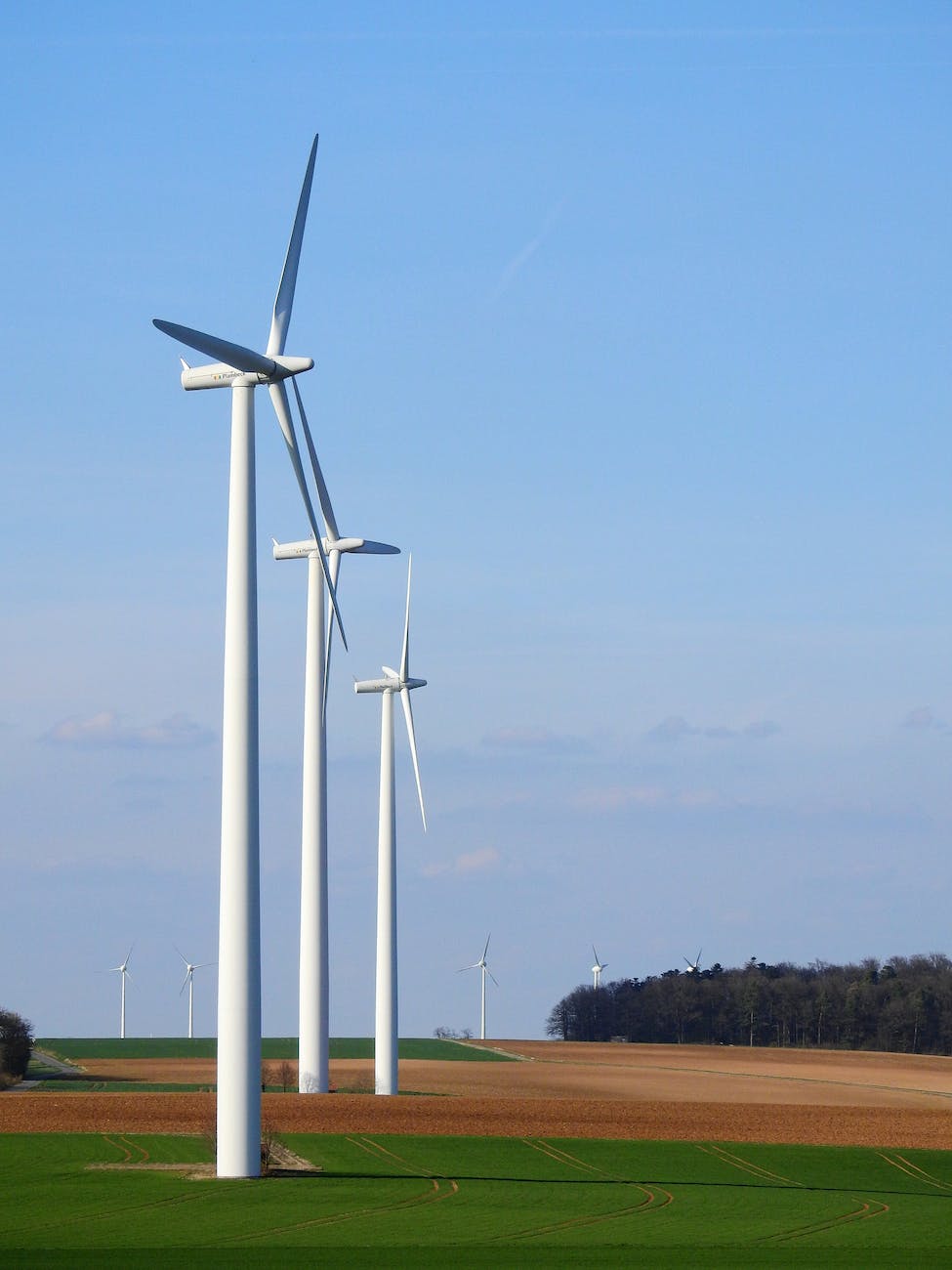
Vince is right. We should make it easier to build onshore wind turbines in the UK. I’m not saying completely deregulate the planning systems. That would be entirely foolish. However, in local development plans we have ridiculous absurdities that name wind turbines and solar farms as a particular danger to the character of the landscape. So, any proposal that is brave enough to come forward gets slapped down immediately. Local politicians run for the hills.

Like all such regulatory issues, there needs to be a balance struck. There are numerous places in the UK were wind turbines and solar farms have a great deal more positive impact than negative. Proposals for renewable energy developments should be given a leg up. The UK is blessed with renewable energy assets in wind, seas, rain, and enough sun to make a difference.

I am first in-line to defend the beauty of our countryside but not everywhere is equal in that respect. Not only that but compared to nuclear power stations of any size, wind turbines and solar farms can be removed after a life of service with little sign of their former presence.


[1] https://en.wikipedia.org/wiki/Vince_Cable

[2] https://www.bbc.co.uk/sounds/play/m001bbsv

Energy cap

The letters “Of” have been used as shorthand for “Office of” in the names of several regulators in the UK. There are at least two of them that are gaining an unparalleled reputation for incompetence[1]. Maybe, I’m being unfair. Afterall, a regulator can only do what the legislation that created it will permit it to do. They are not lawmakers. They can only interpret the law in respect of their own responsibilities. That law, however amended, is relatively stationary in the face of events.

One way of explaining what has happened is to admit that the ethos and rules in place were devised to serve past times. In the world of services provided by industry, the environment has changed dramatically, in more ways than one. A cacophony of events, Brexit, recuring political ineptitude, war, and climate change have made the framework created for British regulation obsolete.

It’s like trying to use a Thatcher / Blair era computer in the world of today’s internet and mobiles.

Now, what’s clear is that we have a bunch of Ministers who haven’t a clue what to do when faced with this problem. Conservatives keep a picture of Sid[2] on their bedroom walls.

The call has come from the Greens to nationalise everything[3]. This too is an inept solution to current problems. This was the dogma that Labour once held dear. How the political landscape changes.

Despite the calamities befalling us, we must get off fossil fuels. Again, Conservative politicians are on the wrong page. Britons needs encouragement to switch and insulate[4] not to stoop to fossil fuels industry lobbyists. The notion that the solution to a painful recession is to burn the future is absurd.

Let’s get out of the rut. Defending, and being constrained by a framework of organisation that’s out of date is no use to anyone. That is why the Liberal Democrat proposal to freeze the energy price cap is a good start. We desperately need to buy time, with escalating inflation, to come up with a new regulatory scheme. One that works for customers. One that works for the environment. One that works for you and me.


[1] Ofgem – the Office of the Gas and Electricity Markets and Ofwat – the Water Services Regulation Authority

[2] To encourage individuals to become shareholders, the gas privatisation offer was advertised with the “If you see Sid…Tell him!” campaign.

[3] https://www.bbc.co.uk/news/uk-politics-62577830

[4] Home insulation has been slashed by the current Government

Safety in numbers, Part 3

The wind blows, the sun shines, a storm brews, and rain falls. Weather is the ultimate everyday talking point. Stand at a bus stop, start a conversation and it’ll likely be about the weather. Snow, sleet, ice or hail the atmosphere can be hostile to our best laid plans. It’s important to us because it affects us all. It has a common effect.

We started a discussion of common-mode failures in earlier paragraphs. We’ll follow it up here. Aircraft systems employ an array of strategies to address combinations and permutations of failure conditions. That said, we should not forget that these can be swamped by common-mode effects.

Environmental effects are at the top of the list of effects to consider. It’s a basic part of flying that the atmosphere changes with altitude. So, aircraft systems and equipment that work well on the ground may have vulnerabilities when exposed to large variations in temperatures, atmospheric pressure, and humidity.

Then there’s a series of effects that are inherent with rotating machinery and moving components. Vibration, shock impacts and heat all need to be addressed in design and testing.

It is possible to apply statistical methods to calculate levels of typical exposure to environmental effects, but it is more often the case that conservative limits are set as design targets.

Then there are particular risks. These are threats that, maybe don’t happen everyday but have the potential to be destructive and overcome design safety strategies. Electromagnetic interference and atmospheric disturbances, like lightning and electrostatic discharge can be dramatic. The defences against these phenomena can be to protect systems and limit impacts. Additionally, the separation or segregation of parts of systems can take advantage of any built-in redundancies.

Some common-mode effects can occur due to operational failures. The classic case is that of running out of fuel or electrical power. This is where there’s a role for dedicated back-up systems. It could be a hydraulic accumulator, a back-up battery, or a drop-out ram air turbine, for example.

Some common-mode effects are reversable and tolerable in that they don’t destroy systems and equipment but do produce forms of performance degradation. We get into the habit of talking about failure as if they are absolute, almost digital, but it’s an analogue world. There’s a range of cases where adjustments to operations can mitigate effects on aircraft performance. In fact, an aircraft’s operational envelope can be adjusted to ensure that it remains in a zone where safe flight and landing are possible, however much systems are degraded.

Probabilities can play a role in such considerations. Getting reliable data on which to base sound conclusions is often the biggest challenge. Focusing on maintaining a controllable aircraft with a minimum of propulsion, in the face of multiple hazards takes a lot of clear thought.

Caught in the crossfire?

There’s no doubt the relative calm of the beginning of this century, yes, it seems extraordinary to say that has gone and a series of international events confront civil aviation’s way of working. It’s dramatic. In Europe, most countries, and their industries are shifting the way they operate.

Unfortunately, any reasonable observation shows that the situation for aviation is worse in the UK. Well, that is worse than the UK’s former partner States in the European Union (EU).

In times of difficulty partnerships, between counties and in industry help make the absolute most of economies of scale. It’s difficult to plan when constantly firefighting. It’s like that comic story about crocodiles and draining the swam. It’s difficult to think ahead when surrounded by crocodiles.

I agree with the article posted by David Learmount[1]. The massive efforts to achieve international harmonization in aviation regulation, over decades is of incalculable value. I have been lucky enough to work with exceptional people across the globe and played a small part in helping that move along.

In fact, I’d go further than David. I remember, quite a while ago, attending a lecture at the Brooklands Museum[2]. It was about the history of post-war UK Government involvement in aerospace manufacturing[3]. It wasn’t a happy story. It went a bit like a soap opera with technical excellence mixed with commercial incompetence and political interference. The overall lesson was that going it alone, piling on the world beating rhetoric and an inability to forge working alliances spells disaster. Whereas coming together, working cooperatively, and building multinational partnership pays dividends. Airbus being a prime example.

I joined the European Union Aviation Safety Organisation (EASA) as the start of its operation. It was a huge privilege. It was a rare opportunity. I mean, how many people get to set-up a new aviation authority, let alone one that works for so many States in Europe? I was proud that the UK took a leading role in making this venture happen. It was a progression that had been careful and thoughtfully developed and steered over decades.

What we built was a uniquely European solution. It isn’t a federal construction as we see in the United States (US). In Europe, National Aviation Authorities (NAAs) remain a key part of the system. The part that was new in September 2003 was to overcome a major deficiency of earlier cooperative working. That was the unfortunate habit nation States have for saying that’ll do the same thing but then not doing the same thing in practice.

David mentions the tricky subject of UK Additional Requirements for import. This is when the UK demanded a special difference between its aircraft and those of other countries. Often expensive and making it difficult to move aircraft around. I remember some UK Additional Requirements found their way into new European requirements and others were removed. That was a painful transition period. In aviation, technical requirements are often born of experience of accidents and incidents.

Today, the UK Civil Aviation Authority (CAA) works with a set of technical requirements that have been rolled over from the UK’s time as an EASA Member State (2003 – 2021). This presents opportunities to take a new path. Sounds tempting, if only you look at the subject superficially.

International technical standards never stand still. Big players invest resources influencing the direction that they take. Two of the biggest international players in respect of aerospace design and production are EASA and the Federal Aviation Administration (FAA).

So, UK CAA is caught on the horns of a dilemma. Unless it can significantly influence the big players the only practical way forward is to adopt what they produce (rules, regulations, standards, guidance material). Now, the UK CAA has considerable technical experience and maintains a high reputation, but it does not sit at all the tables where the major decisions are made.

This is the concern that David mentions in his article. The unnecessary ideological exit from EASA membership, that came with Brexit places the UK in a third-party arrangement. Not good.

It’s not like the world has suddenly become dull. Frantic development efforts and huge sums of money are being pumped into greening aviation. Part of this is the new Advanced Air Mobility (AAM). Part of this is known as Urban Air Mobility (UAM). Aviation folk love acronyms. It’s almost as if we are back at the beginning of the jet-age[4]. We know how that went.

Not surprisingly, the UK wants to achieve successes in this new field of “green” aviation.

Flying is a heavily regulated industry. So, national, regional, and international rulemaking processes matter. They matter a lot. Harmonisation matters a lot. That’s having common rules and regulations to maximise the size of the marketplace while ensuring levels of safety and security are high.

The bureaucratic burden of Brexit costs. It’s not free. The UK duplicates rulemaking activities because it must independently update its laws, all the secondary legislation and guidance material that comes with aviation. When there’s a significant difference between UK, Europe, US, and the rest of the world it makes business more complex. Often that added complexity comes with no discernible benefits (economic, social, safety, security, or environmental).

The UK should become an EASA Member State once again. Why not? Norway, Switzerland, Iceland, and Lichtenstein are not in the EU but are EASA Member States. Across the globe countries follow EASA rules as they are known to deliver the best results.


[1] https://davidlearmount.com/2022/06/17/uk-aviation-caught-in-the-crossfire/

[2] https://www.brooklandsmuseum.com/

[3] https://www.aerosociety.com/media/8257/government-and-british-civil-aerospace-1945-64.pdf

[4] https://www.smithsonianmag.com/history/comets-tale-63573615/

Flight, Risk & Reflections 14.

The end of the transitional period of the process of UK withdrawal from the European Union (EU) is just days away. I believe most people are looking for some light at the end of the tunnel. A tunnel that we have been in since mid-2016. Now, that light looks dim. Dim as a dull cold winter’s day.     

The EU has triggered Brexit No-Deal contingency plans[1].  These plans are to ensure basic services between the UK and the EU for 6 months in 2021. Then it’s anybody’s guess what will happen.

Flying is down to levels last seen in the 1970s. This maybe joy for those who protest at aviation’s environmental footprint. But, given that aviation will be vital to power the world out of the economic crisis brought on by the COVID-19 virus, this is not good news. 

Said it before but I’ll say it again, the triple blow of a Brexit No-Deal and COVID-19 and urgent need for action on Climate Change are going to mean hair shirts years ahead. There’s a great deal of bluff from politicians but the bills keep mounting up. We cannot ignore the oncoming trains. 

Worldwide COVID-19 deaths have now topped 1.6 million[2]

In this crisis, there’s no doubt that the UK has a superbly capable science community. Within that specialist community there are world renowned experts[3]. They work in a global context.  So, the persistent echo of nationalism in politicians COVID-19 response is saddening.  Recently politicians have spoken as if the task of public safety regulation was a competition.  This is sheer folly. It undermines trust.  Ensuring either vaccines or transport systems are safe is NOT a matter for national competition.  We all have vulnerabilities and safety is only assured when we are all safe. 

The triple whammy means the UK aerospace industry is under pressure and needs strategic support from the UK Government to sustain its high value jobs. So far, a deaf ear is all they offer businesses that create prosperity across the country. 

Also, on the horizon is that the UK will be under pressure to scrap European tariffs applied to Boeing imports imposed as a result of the international dispute between Boeing and AIRBUS. The subsidy dispute was between the EU and US and so lawyers are saying the UK should step aside. Sadly, this is the sort of situation that will make Europeans seriously question future aerospace investments in the UK. 


[1] https://www.consilium.europa.eu/en/press/press-releases/2020/12/16/council-endorses-transport-contingency-measures-in-case-of-no-deal-brexit/#

[2] https://www.statnews.com/feature/coronavirus/covid-19-tracker/?utm_campaign=cv_landing

[3] https://www.bbc.co.uk/iplayer/episode/m000qdzd/panorama-the-race-for-a-vaccine

Flight, Risk & Reflections 11.

Next year, whatever happens with COVID-19 there will be a focus on limiting greenhouse gas emissions from aviation.  In a way, the virus has already had a positive environmental impact. Less efficient aircraft are being pensioned off earlier than would otherwise be.

The European Union (EU) has said it will take part in the Carbon Offsetting and Reduction Scheme for International Aviation (CORSIA) scheme from the start of its voluntary phase on 1 January 2021[1].

The COP26 United Nations (UN) climate conference will take place in a years’ time, between 1 and 12 November 2021 in Scotland[2]. All eyes will be on climate change

On the political climate, Downing Street dramas rival the most notable soap operas. That said, White House dramas still get top billing[3].  Some people raise the question: will the UK Government be more “collaborative and cooperative” after Dominic Cummings’ departure[4]?  Will UK Prime Minister (PM) Johnson now be exposed? I’m remined of the saying about being indispensable. If you think you are indispensable, get a glass of water and place your finger in it. Then remove the finger and observe the hole.

The Brexit trade talks enter another weekend with few signs of progress visible. Deadlines loom large in the volumes of commentary built on scant knowledge of what’s really going on. A crunch moment will come in the last week of November.

Some people say this PM is indecisive and will “cave in” on the UK’s relationship with the EU. I don’t think a radical change of direction is on the cards. The fundamental asks of a Tory Brexit haven’t changed. It’s a demand for privileges without the accompanying obligations. A Free Trade Area with a bigger neighbour with no constraints. Every time a constraint is mentioned the echo of sovereignty resounds around the room. It gets ridiculous as hard core Brexiters puff up their chests and say: you don’t show me no respect. 

Reality is reality. The EU would be unwise to let a powerful non-member have unfettered access to its market without contributing to the whole.  A problem with Dominic Cummings’ departure is that we are likely to see the Vote Leave people taking no responsibility what-so-ever for the world in 2021.  Instead when difficulties arise, they will apply their formidable campaigning skills to high power finger pointing. 

On the basis that the PM is an unscrupulous carpetbagger there will be a thin deal with the EU.  It will be presented as a great British success and the rest will be – work it out as you go along.   


[1] https://www.consilium.europa.eu/en/press/press-releases/2020/06/25/aviation-emissions-eu-confirms-its-participation-in-the-corsia-voluntary-phase-from-2021-and-chooses-more-ambitious-option-to-calculate-its-offsetting-requirements/

[2] https://www.gov.uk/government/news/new-dates-agreed-for-cop26-united-nations-climate-change-conference

[3] https://twitter.com/CBSNews/status/1327461255762817026?s=20

[4] https://twitter.com/standardnews/status/1327577348959514625?s=20