Tip

You may think it was a bit of a joke. Certainly, some of the holiday makers around me thought the cabin crew were joking. I was at the back of the aeroplane and so one of the last passengers off.

We arrived at London Gatwick’s North Terminal at about 9:30 pm on a Sunday. Passengers were keen to get off and get home. That said, the amount of sizable luggage in the aircraft cabin overhead bins and maybe the sleepiness of one or two people meant the long line down the aisle was moving slowly and intermittently. The process was civilised but at a snail’s pace as it seemed from the back.

When you hear a request to hurry-up otherwise the plane will tip up it does instil some urgency. That and one or two questions. It also made me think; could that really happen in this situation? I was standing next to the cabin crew at the back, and I can attest to their concern being real. Being at the terminal gate there was only the front door open to exist the aircraft. When we got on-board the aircraft both the front and rear doors were available.

The Boeing 737 MAX-8 is a not an overly long aircraft. That said, under certain unfavourable conditions it can tip. In fact, there are longer versions of both the Boeing and Airbus single aisle aircraft that pose more of a challenge in this respect. There is much stretching of popular aircraft types to increase passenger capacity.

At the same time as we were deplaning[1] (ghastly word), the ground crew were unloading our luggage. As a result of all this movement of passengers and luggage it is possible to have too much weight at the back of the aircraft. Yes, you could blame it on masses of carry-on bags obstructing the aisle on a full aircraft, but it also takes the front passengers to have got off quickly. There are more passenger seats behind the aircraft wings than there are in front. On a cool Sunday evening when the airport’s public transport options are limited there’s an incentive to rush-off from the front. As the deplaning continued there was a sense that something was happening underfoot.

Does it happen? Do aircraft tip up? Yes, they do[2]. It’s not an attractive sight. I have no idea what the procedures are if it does happen. It certainly would be a shock for those on-board. Anyone in the vicinity of the aircraft would have to watch out too. In these unplanned events, there is a hazard to ground crew that can result in injury.

This sort of event happens more often in the air cargo world[3]. While these events maybe comical to witness, they are no joke for airlines. The possibility of damage and the disruption to aircraft operations can be significant. Nose wheels coming off the ground don’t always result in an aircraft tip, but this is not somewhere any crew responsible would want to go.

Weight and balance issues are real. Each aircraft will have weight and centre of gravity limits established at the time of aircraft certification. Aircraft operators will have procedures[4] that fully consider loading and unloading. That said, as we can see, miscalculations do get made.


[1] https://grammarist.com/spelling/deplane-or-disembark/

[2] https://youtu.be/JTDSS8unwQM

[3] https://www.independent.co.uk/news/world/middle-east/747-plane-tips-backward-airport-cargo-doha-qatar-fars-air-qeshm-a8829896.html

[4] https://www.faa.gov/documentLibrary/media/Advisory_Circular/AC_120-27F.pdf

Bad Seat

There’re bus trips, I can recount where people were packed in like sardines in hot sweaty environments. Never a pleasant situation but, in such circumstances, a way of getting from A to B. Maybe the only way of taking an essential journey. Life’s necessities.

I could rattle off the mantra “any safe flight is a good flight” and that remains true. It’s top of our normal priorities. Getting from A to B in one piece. No harm done. It’s the homing pigeon in all of us. I’ll put up with this unpleasantness because it gets me home.

Last night, I had that experience. It was my first flight on a Boeing 737 MAX. I’m not going to recount the saga of that aircraft type over the last couple of years. Much as to say, I reassured a nervous flyer with me that she was quite safe and nothing bad would happen. That is bar a small amount of turbulence in our three and a half hours in-flight.

I was returning from Preveza-Lefkas [PVK] to London Gatwick [LGW] on a TUi package flight. We got into Gatwick at about 9:30 pm with a full aircraft. The temperature change of having gone from a day of sunshine and about 28 degrees C in Greece to 6 degrees C and darkness on the ground at Gatwick was quite a shock. I must admit I was prepared with three layers to keep me warm.

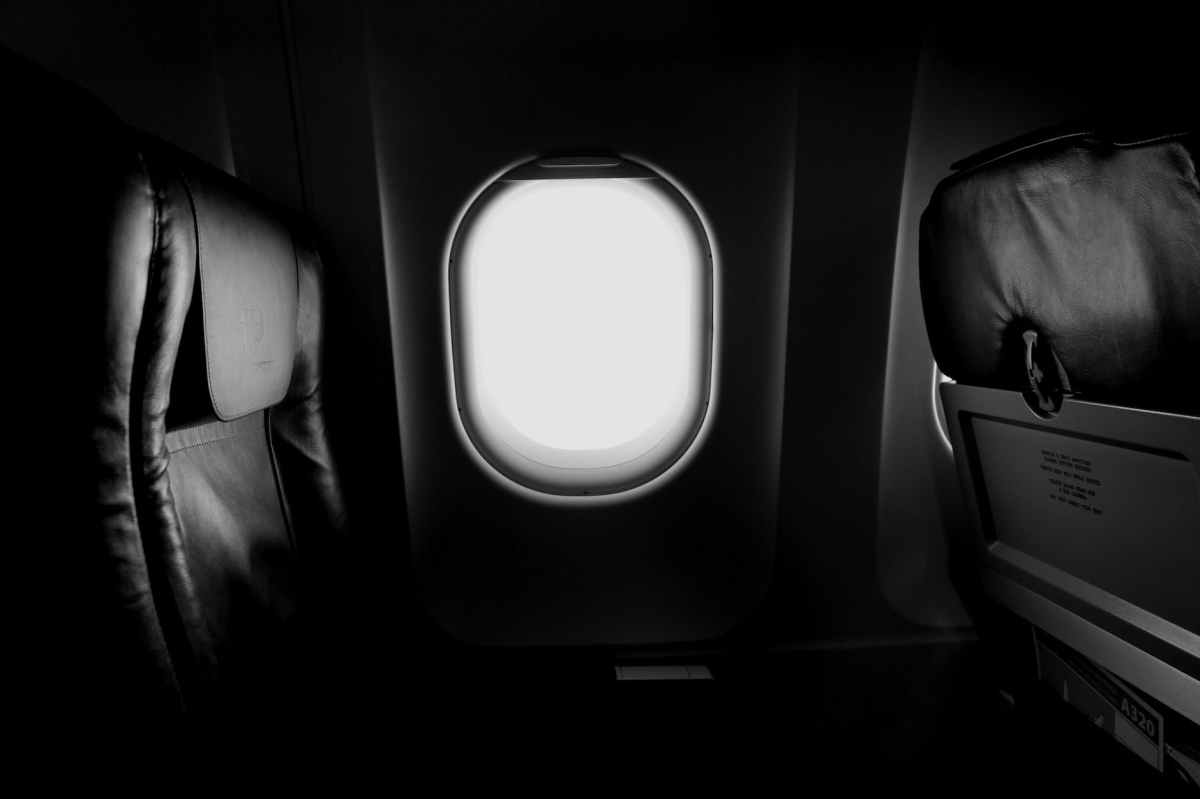
What I want to recount is the gross unpleasantness of seat 32D. Row 32 is the last row of passenger seats in the aircraft cabin, with two toilets behind. By the way seat 32E is just as bad.

The aircraft was chock full of holiday makers returning home. Bags full and overhead bins stuffed. This shiny new Boeing 737 was fuller than anticipated. Left on the tarmac was an EasyJet aircraft that had been expected to depart earlier in the day. It had “gone technical” – as they say. So, to get home, many passengers had transferred to the later TUi flight ensuing that every aircraft seat was full.

Now, given that I’d checked-in for my return home flight in good time and I have no idea why TUi decided to punish me. I should have spotted that 32D meant the last row of seats. But you know how it is, it was enough to get that bit of administration behind me and carry on enjoying the day.

My intention was to do what I do well, at least in the past and that’s to get some sleep on an uneventful evening flight. I was ready to sit back and wander off to dreamland hoping to wake as the aircraft wheels hit the ground back at Gatwick airport. Unfortunately, I wasn’t to be given that opportunity last night.

Toilet flush motors are not silent. With a full aircraft, and three and a half hours the toilet traffic was almost continuous. The sequence of noises had a horrible rhythm. Door open. Clack of the door latch or fumbling around as a passenger worked out how to close the toilet door. Maybe even a few words with another passenger who block the aisle. Then the clank of the toilet seat. Maybe the walls get bumped as awkward manoeuvrings took place. There was no stop to this soundscape of lavatorial processes, ablutions, and choreographies.

It’s so British to que. When the trollies were not being pushed up and down the aisle, the aisle filled up with passengers waiting for the loos. Then those returning to their seats had to squeeze past the assembled que. Naturally, the 32nd row aisle seats got to see every kind of human shape and form. Trying to ignore a rear end sliding past your face gets tedious when it happens a lot.

That’s not all. When the toilet doors swing wide open, they bump against the back of seats 32D or 32E. What a mad design or stupid afterthought.

Then there’s the issue of well used aircraft toilet facilities, even on a new aircraft. They may start off as sweat smelling as the air freshener applied. After a few hours of constant use, they are nothing like sweat smelling.

My overall message is – when flying on a Boeing 737 MAX, do not accept passenger seats 32D or 32E unless you have been a very bad person and deserve punishment. Ideally, a good airline would remove these two seats altogether but to make such a suggestion is to p*** in the wind.

Climate

It’s an odd day that I write in agreement with The Pope in Rome. He says: “People are not responding at the level of urgency that is needed” on global climate change. The Pope has a go at a commonly held blind faith in transformative ways out of our troubles by technical innovation alone. He seems to say that we ignore reality in the hope of technological magical thinking popping-up just-in-time. His references are to the need for lifestyle changes rather than carrying on regardless.

Now, quite a number on the right of political debate will see this as a lefty intervention. Anytime religious people step over the boundaries from the ethereal into everyday life the standard conservative response is to shout – get back to the pulpit. The same response, but more polite, occurs when English bishops speak up in the UK House of Lords. I’m no advocate of them being an intrinsic part of our national political systems but they do, at least, speak from an ethical grounding[1]. If we are to talk of political long-term thinking this is very much it. There’s nothing more that prompts short-term thinking than a looming election.

Combating climate change and pushing for environmental justice are not fringe activities. It requires dialogue across the main political parties. Saddly, we are going through a phase of squandering opportunities to change. 

I agree that taking a puritan line and making “hairshirt” rules will not deliver the results that are needed. Most often such a sturdy approach just fuels luddite opposition and media outcry. Continuous graduated change and a robust commitment are needed. Unfortunately, these two are an anathema to the populist newspaper headline seekers.

Economic interests are often quoted as a reason to shelve changes. Yet, everyone knows that the costs ahead of us will be far bigger if change is not driven consistently – now. Resilient long-term policy isn’t a lefty luxury. Or liberal daydreaming. Or unafordable. It’s vital.

What’s interesting about active in-action is that there can be no such thing. Climate change will bite back. Action will have to be taken under presure. In civil aviation, for example the climate has an impact on aircraft operations. So, not only does aviation impact the environment but increasingly hazardous weather impacts aviation, with severe results in some cases. Turbulence experienced in-flight is increasing as the world is warming[2]

Approaching risks there are, at least, 3 positive actions to be taken. Eliminate it, reduce it, or mitigate it. With the climate emergency we’d better be committed to the first two because by the time we get to mitigation there’s likely to be few more unpalatable opportunities left.


[1] https://www.churchofengland.org/news-and-media/news-and-statements/bishops-warn-environmental-racism

[2] https://www.reading.ac.uk/news/2023/Research-News/Aviation-turbulence-strengthened-as-the-world-warmed

Upfront

Years of looking at the reliability of aircraft components and structure have given engineers a good understanding of the natural decay of mechanical workings. To that extent even electronic components are mechanical. Materials oxidise (rust), random shocks and vibration take their toll, temperatures cycles from cold to hot and back again a whole range of impacts are relentless. You can say – nothing lasts forever.

Occasionally a discovery adds to the knowledge of how materials behave under high stress. Sadly, that’s what hit the early years of civil jet aviation. The de Havilland DH106 “Comet” was the world’s first passenger carrying jet airliner. It first took to the air in 1949, which I find remarkable.

Catastrophic metal fatigue failure of the aircraft fuselage put paid to this British aviation project but only after several tragic fatal accidents. In 1954, the Comet aircraft were all grounded during an extensive accident investigation. The jets were redesigned and re-entered commercial service in 1958. However, by then the aircraft had a damaged reputation and others were doing far better. Now, those Comet aircraft that remain are museum exhibits[1].

Last week, I walked through the fuselage of a Comet 1A built in 1953 at Hatfield for Air France. It’s fascinating to see what advanced aviation technology was 70-years ago. What was surprising to me was the read across from that first version of a jet aircraft and what we have in-service now.

Automation has removed the place of the navigator and the flight engineer, but the stations of the pilot and co-pilot are familiar. The fuselage is cramped but the seating is generous and spacious. This aircraft must have been a dramatic revolution in flying at the time.

As we look to advance aviation in the coming years, with new ways of flying and new ways of powering flight so the warning of the Comet project should be heeded. We are at a time of extraordinary changes in the aviation industry. Advanced technology can deliver great benefits to society. It’s up to us to make sure we cover all the possible disbenefits as far upfront as we can. If we don’t, they will come back to bite us.


[1] https://www.dehavillandmuseum.co.uk/aircraft/de-havilland-dh106-comet-1a/

Society & Innovation

Yesterday, I drove up the main A303[1] in the stifling last summer heat. It was a windless sticky 30C. I drove past the road sign that says Micheldever Station[2]. By the way, “up” meaning heading towards London. Going “up” to London isn’t an unusual West County way of expressing that trip.

On that busy highway there are few, if any noticeable road signs that point towards a railway station. I’ve often wondered why that one was deemed so necessary. It’s not a tourist attraction, like the Watercress line[3] is in that part of the world. It’s an ordinary everyday railway station.

The small English hamlet known as Micheldever Station is a bit of an oddity. It’s the sort of place that could have been the location for The Avengers or The Saint, the popular British TV series of the 1960s. It’s in the green and pleasant countryside of Hampshire and about 10 miles north of Winchester city. An area that’s as conservative as can be.

Micheldever Station has a curious technological history. In 1895, it was the starting point for the first automobile journey in Britain. At that time a British Act of Parliament required that all self-propelled vehicles on public roads must travel at no more than 4 miles per hour and to be preceded by a man waving a red flag. In 1805, highly sensible. There’s no way that those infernal new machines should be allowed to scare the horses.

Not everyone thinks such thoughts while thundering along the A303 at 70 miles per hour. However, to me, ever since I got my first driving license at the age of 16, it’s been my most familiar of arterial roads. So, much traffic passes that way there’s never a time when it can’t be heard.

Well, we have come a long way in 138 years. Now, we are getting nervous about the safety of driverless cars, and no one even questions having a self-propelled vehicle on public owned roads. If they do, the likelihood of transforming that formula into something else is astronomically small. I can’t think of a bad time to write on the subject of: “Innovation and Its Enemies[4].” In fact, what may have graced a Victorian bookshelf can have some resonance today.

Next year, we will see commercial flights taken in electrically powered air-taxies. Without a shadow of a doubt these flights will arouse some vocal public resistance. We can take that from the history of technology. The airborne version of the man waving a red flag could raise its ugly head. I don’t say throw caution to the wind, but we need to be mindful of the natural propensity to object.

Striking a societal balance will not be easy. It would be a fool who says it will be. Slowly but surely, we will need to become accustomed to advanced new forms of mobility. Sticking a fair balance between the utility of these new machines and any burden they may place upon us will be a mighty tricky job.

I wake-up to the noise of the residential road outside. People commuting to work. The local trains send a rumble through the air. I don’t want to wake-up to the sound of an air-taxi hovering outside my window. Given the research[5] and technology under development, none of us should have to tolerate an increase in noise. Mobility and quality of life shouldn’t always be in conflict.


[1] https://youtu.be/C0sL3_NKPao

[2] https://www.southwesternrailway.com/travelling-with-us/at-the-station/micheldever

[3] https://watercressline.co.uk/

[4] https://global.oup.com/academic/product/innovation-and-its-enemies-9780190467036?cc=us&lang=en&

[5] https://ntrs.nasa.gov/citations/20210014173

Horizon

There’s been a couple of false dawns. Now, the morning’s News is that the UK will rejoin the European Horizon programme. The EU’s Horizon Europe Framework Programme (HORIZON) provides grant funding for research priority topics for the years 2021-2027.

The recognition that there’s a common interest in research across Europe is welcome. There are important areas of investigation that go well beyond the resources available to any one country. Benefiting from collaboration is a win-win.

Access to Horizon Europe will be a great opportunity for UK aerospace[1]. It has been in the past and surly will be in the future. Of the billions available there’s a good chunk for funding opportunities for aerospace research and technology. This funding is particularly focused on greening aviation.

Such subjects as the competitiveness and digital transformation in aviation are addressed too. Advancing the regions capabilities in a digital approach to aerospace design, development and manufacturing will be invaluable to UK industry. Artificial Intelligence (AI) used for Machine Learning (ML) and complex modelling are the tools that will be deployed throughout the global industrial environment.

Europe can pioneer the first hydrogen-powered commercial aircraft. The major role the UK can play in advancing this aim is self-evident. Ambition, capabilities, and expertise reside here. The magnification of this to tackle what are enormous challenges can only be a good move.

Projects like ENABLEH2[2] provide a pathway to the introduction of liquid H2 for civil aviation. These projects are not easy, but they do provide a long-term environmental and sustainability advantages. Access to these projects can minimise duplication and the dangers of spending valuable resources on pursuing blind alleys.

Research is not just a matter of hard technology. Without the new skills that are required to meet the targets for a green transition it will fail. Investments in upskilling and reskilling opportunities are equally important to enabling change.

The principles of propulsion of hydrogen and electric systems need to be taught at every level. It’s not academics in lab coats that will keep civil aviation flying on a day-by-day basis. Training programmes for a new generation of manufacturing and maintenance engineers will need to be put in place. Research will underpin that work. 


[1] https://www.ati.org.uk/news/access-to-horizon-europe/

[2] https://www.enableh2.eu/

Learn by testing

Back in the mid-1980s, aircraft system integration was part of my stock-in-trade. Project managing the integration of a safety critical system into a large new helicopter. It was a challenging but rewarding job. Rewarding in that there was a successful new aircraft at the end of the day.

For big and expensive development projects there are a great number of risks. The technical ones focus on functionality, performance, and safety. The commercial ones focus on getting the job done on-time and at a reasonable price. Project managers are in the middle of that sandwich.

Naturally, the expectations of corporate managers in the companies that take on these big challenges is that systems and equipment integration can be done to the book. Quickly and without unexpected outcomes. The practical reality is that people must be well prepared and extremely lucky not to encounter setbacks and resets. It’s not just test failures and anomalies that must be investigated and addressed. Systems integrators are working on shifting sand. The more that is known about overall aircraft flight test performance and customers preferences so technical specifications change.

With cockpit display systems, in the early days, that was often feedback from customer pilots who called for changes to the colour, size or shape of the symbology that was displayed on their screens. What can seem a simple post-flight debriefing remark could then turn into a huge change programme.

That was particularly true of safety critical software-based systems. Equipment suppliers may have advanced their design to a state where much of the expensive design validation and verification was complete. Then a system integrator comes up with a whole set of change that need to be done without additional costs and delivered super-fast. Once a flight test programme gets going it can’t be stopped without serious implications. It’s a highly dynamic situation[1].

I’m writing this blog in reaction to the news coming from Vertical Aerospace. Their VX4 prototype aircraft was involved in an flight test incident that did a lot of damage[2]. There’s no doubt this incident can provide data to feedback into the design, performance, and safety of future versions of their aircraft[3]. Integrating complex hardware and software is hard but the rewards are great.

“Excellence is never an accident. It is always the result of high intention, sincere effort, and intelligent execution.” – Aristotle


[1] https://youtu.be/Gb_eta4mZkc

[2] https://evtolinsights.com/2023/08/vertical-aerospace-identifies-propeller-as-root-cause-of-august-9-vx4-incident/

[3] https://investor.vertical-aerospace.com/news/news-details/2023/Vertical-Aerospaces-VX4-Programme-Moves-to-the-Next-Phase/default.aspx

NATS

A “technical issue” has caused UK National Air Traffic Services, NATS to impose air traffic flow restrictions[1]. They did not close UK airspace. This was not a repeat of the volcanic ash events of early 2010. Going from a fully automated system to a fully manual system had the dramatic impact that might be expected. The consequences, on one of the busiest weekends in the holiday calendar were extremely significant. Huge numbers of people have had their travel disrupted. Restricting the air traffic system ensured that aviation safety was maintained. The costs came to the UK’s air traffic handling capacity and that meant delays and cancelled flights.

Although the failures that caused the air traffic restriction were quickly resolved the time to recover from this incident meant it had a long tail. Lots of spoilt holidays and messed up travel plans.

It is normal for an Air Traffic Service (ATS) provider to undertake a common cause failure analysis. This is to identify multiple failures that may result from one event. So, the early public explanations coming from NATS of the causes of this major incident are surprising. Across the globe, contingency planning is a requirement for ATS. The requirement for the development, promulgation and application of contingency plans is called up in international standards, namely ICAO Annex 11.

So, the story that a single piece of flight data brought down the traffic handling capacity of a safety related system, to such a low level, is difficult to accept. It’s evident that there is redundancy in the systems of NATS, but it seems to be woefully inadequate when faced with reality. ATS comprise of people, procedures, and systems. Each has a role to play. Safety of operations comes first in priority and then air traffic handling capacity. What we know about even highly trained people and data entry is that human error is an everyday issue. System design and implementation needs to be robust enough to accommodate this fact. So, again attributing such a highly disruptive event to one set of incorrect data inputs does not chime with good practice or basic aviation safety management. It is concerning that one action can bring down a major network in this way.

EUROCONTROL would have had been sent a “rogue” flight plan in the same way as UK NATS. Brussels does not seem to have had the problems of the UK.

It is early days in respect of any detailed technical investigation. Drawing conclusions, whatever is said in public by senior officials may not be the best thing to do.

Calls for compensation have a good basis for proceeding. The holiday flight chaos across Europe comes down to one single failure, if initial reports are correct. That can not be acceptable. The incident left thousands stranded abroad with high costs to pay to get home.

Before privatisation, there was a time when the UK Civil Aviation Authority (CAA), ran the nation’s air traffic services[2]. It had a poor reputation at the time. I remember a popular newspaper cartoon saying – and now for some clowns from the CAA. They were entertaining delayed passengers.

UK NATS has done much good work to manage a safe expansion in air traffic and address many changes in technology, it would be a shame if this sad incident marks a decline in overall network performance.

NOTE 1: And this topical cartoon from the Daily Mail in April 2002: https://www.pinterest.es/pin/497577458805993023/

NOTE 2: A report on the incident is to be sent to the regulator, UK CAA on Monday, 6th September. Transport secretary to see Nats’ ATC meltdown report next week | Travel Weekly

NOTE 3: The likelihood of one in 15 million sounds like a low number but it’s not “incredibly rare” by any definition. Certainty when there are around 6000 flights a day in the UK. A duplicate error occurring is a basic error that could be anticipated.


[1] https://www.bbc.co.uk/news/live/uk-66644343

[2] https://commonslibrary.parliament.uk/research-briefings/sn01309/

New Walk

It’s a step to the left and then a step to the right. It’s not quite the “Time Warp” that featured in the 1970s rock musical: The Rocky Horror Show.

It’s a little mini dance that people do every day in the streets of Britain. I found myself doing it over the weekend. It’s that moment when you realise that you have lost a sense of what’s around you. A tiny drift away from where you intended to go. Then a step to correct, and look-up and set-off again towards your destination. A wiggle on the pavement.

Maybe this walk didn’t exist before 2006. Well, that is all but in the most exceptional situations. Hand-held devices are not entirely new. What’s much more frequent now is the compulsion to look at the small screen.

The colours, the constant demand for attention, the tickling of our curiosity, the mobile phone has it all. In fact, its dam silly to continue to call our devices “phones.” The primary purpose of these handy devices has long since passed from being able to make telephone calls from any location.

We call them a “mobile”, but the Germans call them a “handy”. An American will call them a cell phone. Given the way we use these ubiquitous hand-held devices, I think the Germans have got it right. The whole essence of the thing is its utility.

Now, if we are fixated with heads down there’s a lot that can go wrong. This has been the source of numerous aviation accidents. Looking up and checking visual references remains a fundamental part of flying. The basics of “see and avoid” are drummed into every new flyer.

On the pavement us poor humans are evolving in a world of every more connected technology. In our heads we have a perception of the world around us as we walk the urban streets. That’s made up of sights, sounds, and even smells. Our brains gather information and then do some spatial and temporal filtering before making sense of where we are and what we need to do to get where we want to go. The eyes, and image processing in the brain are on the top of the list of our normal priorities.

Heads-down attention is drawn to the small screen and away from our surroundings. Staring at the small screen draws us into the content of an e-mail, or a text message, or a cuddly cat picture running around social media. Luckily our other senses are keeping track of the world around us.

The textbook case is where we start to drift in our three-dimensional environment. Not much. It’s a step to the left and not a step to the right. Suddenly there’s a need to correct. Our ever-active brains pick up on the misstep. That’s where our tiny dance comes in and nobody but us may notice.

I’m talking about something that’s almost trivial. Hardly noticeable. However, there are far too many cases where fatalities have resulted from missteps[1]. There’s some evidence that bumping into people and objects is most likely. Slips and falls follow those incidents.

I’ll bet not much is known about the vast number of micro-events like my tiny mobile phone dance. Now, there’s a topic of study for a student of visual perception. 


[1] https://www.ncbi.nlm.nih.gov/pmc/articles/PMC6034962/

Even more H2

There’s a couple of Hydrogen related topics that are worth a moment. One is super conductors and the other is fire.

Heavy complex equipment like the magnets for particle accelerators use superconductors[1]. When there’s space and a need for powerful magnetics, materials with special physical properties, at extreme cold temperatures find a good use.

Talk of room-temperature superconductors is far from what it seems. Such a wonderful innovation is a million miles from any practical applications, if it exists at all. There’s no theory of high-temperature superconductivity, but there’s quite a few physicists who would like to find one[2].

Aviation researchers search for high temperature superconductors for electrical propulsion with extraordinary performance is on. The likelihood of success is low, and the timeframes are very long.

When an aircraft is flying at high altitude, the cabin altitude is maintained for the safety and comfort of passengers and crew. Air compressors, valves, sensors, and controllers make sure that cabin pressure remains at equivalent to an altitude of about 8,000 feet, and lower in some cases. So, any kind of simply flammable gasses or materials inside an aircraft cabin are a definite no no. It’s a big hazard.

In flight, the positive pressure should keep leaking gas out of the cabin. That is as long as the sources of fresh air for the cabin are keep well away from potential leaks.

That’s where Hydrogen gas can present trouble. Leaks can be common in dynamic Hydrogen systems. Storage tanks must be very strong to resist pressures and insulated to keep cold, at around –250°C. Escaping H2 gas is tiny. If that’s vented overboard then the risk of explosion or fire is significantly lowered. Knowing the exact flows of liquid or gas is a must.

However, if the gas finds its way into a pressurise cabin that basic option is limited. Not only that but detecting low concentrations of the gas in the first place is mighty difficult. Its odourless but at least Hydrogen isn’t poisonous.

The big safety issue is that the gas has a very wide flammability range (4 – 70% H2 in air mixture)[3]. Yes, H2 needs a spark to ignite. A typical aircraft cabin environment will easily provide that event. Dry air and static electricity will do it even if other sources will not.

To compound difficulties, if H2 does ignite, and not explode, then its flame may not be visible to the human eye. The flame is almost colourless. Certainly, not what most people think of as a gas flame. Gas and flame detectors could be installed in aircraft cabins and baggage compartments. Audible and visual alarms could be generated but what would be the associated crew actions?

All the above requires detailed consideration in aircraft safety assessments. The move away from prescriptive regulatory requirements means each specific aircraft configuration must be addressed. There are no generic lessons to learn from past aviation accidents and incidents.

Although, I think these puzzles can be solved it’s a huge leap from here to there.

POST: Yes, Hydrogen is not for every application. Small scale aviation is better served by electrification Five Hydrogen Myths – Busted. – RMI


[1] https://home.cern/science/engineering/superconductivity

[2] https://www.science.org/doi/epdf/10.1126/science.adk2105

[3] https://h2tools.org/bestpractices/hydrogen-flames