Working hard for the money

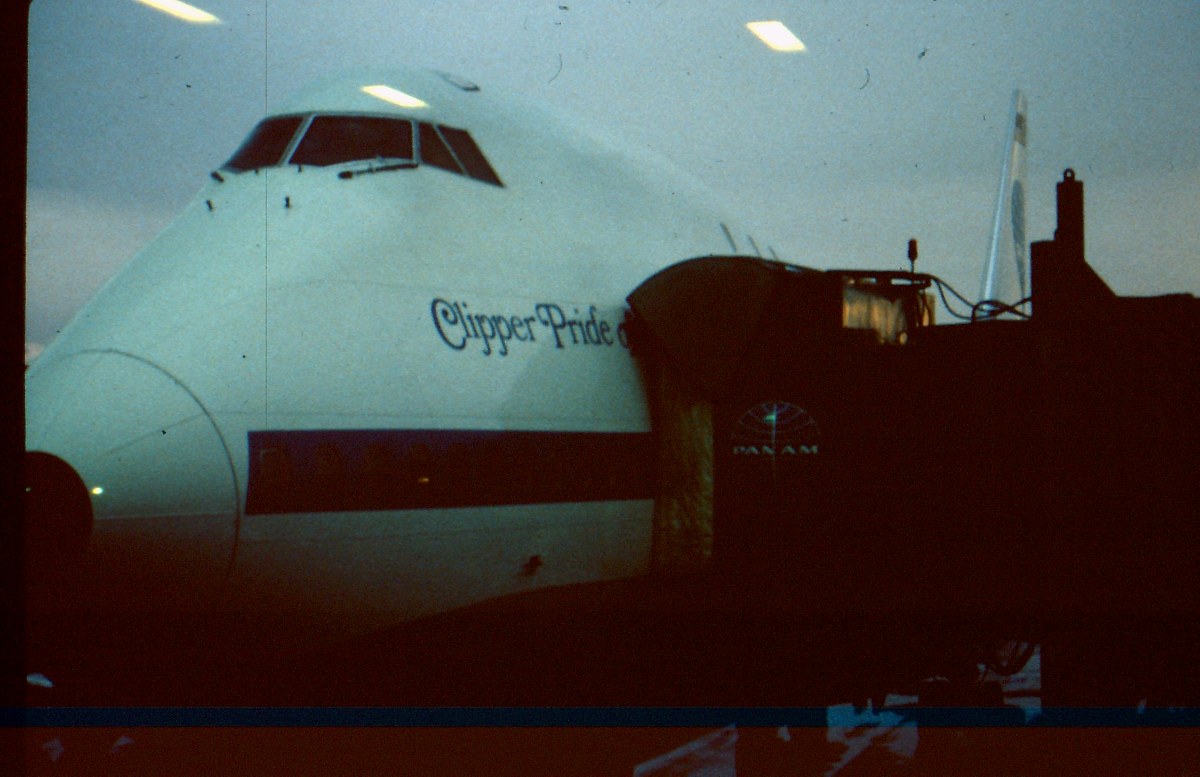
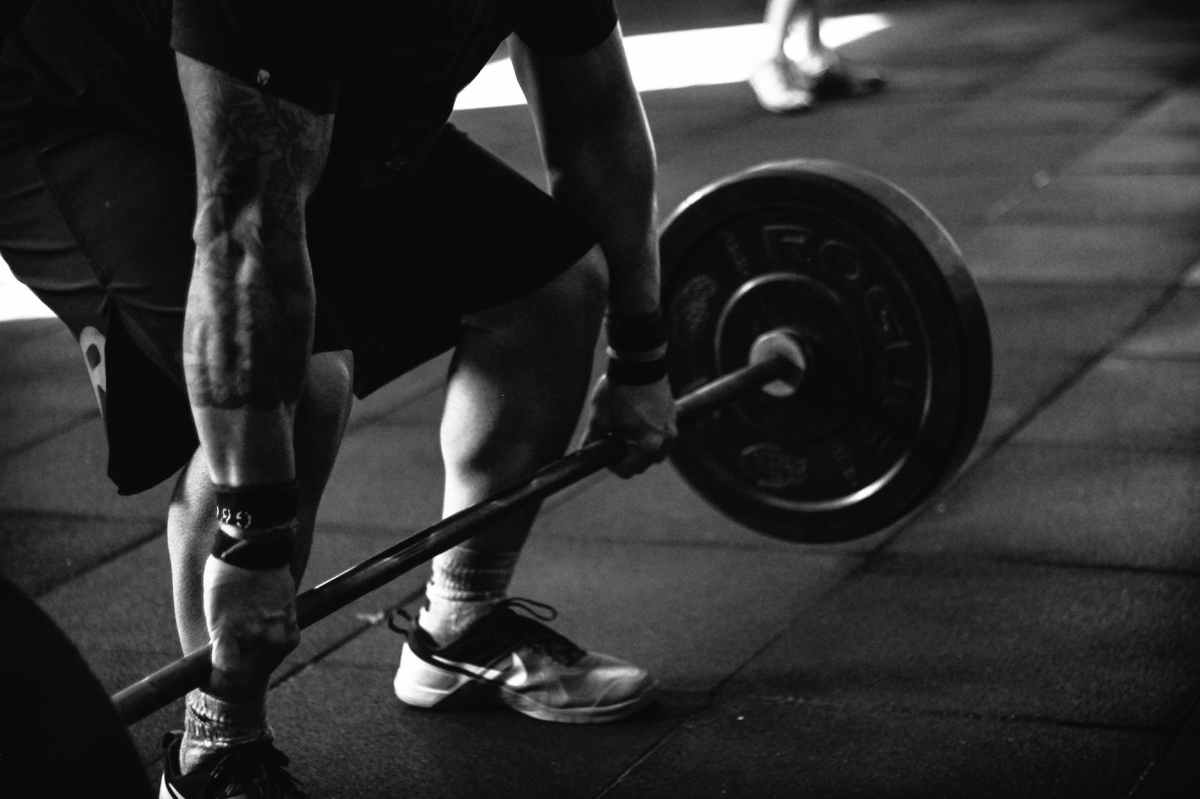
What goes wrong with research spending? It’s a good question to ask. In some ways research spending is like advertising spending. “Half the money I spend on advertising is wasted; the trouble is I don’t know which half.[1]” Globally billions are spent on advertising so you might say – it must be working. In fact, far more is spent on advertising than is ever available for research in the aviation and aerospace world.

Research spending is a precious asset because of its bounds. Even so, a great deal of research spending is lost on activities that deliver no or little benefit. It’s true Governments, institutions and industry don’t often put-up funds for vague and imprecise aspirations or outlandish predictions but nevertheless money goes down a sink hole on far too many occasions.

A reluctance to take tough decisions or at the other extreme of the spectrum a relish in disruption plagues research funding decision making. Bad projects can live long lives and good projects get shut down before their time. My observations are that these are some of the cases that crop-up all too often across the world.

Continuing to service infrastructure that cost a great deal to set-up. It’s the classic problem of having spent large sums of money on something and thereby the desperation to see a benefit encourages more spending. Nobody likes to admit defeat or that their original predictions were way off the mark.

Circles of virtue are difficult to address. For example, everyone wants to see a more efficient and sustainable use of valuable airspace therefore critics of spending towards that objective are not heard. That is even if substantial spending is misdirected or hopelessly optimistic.

Glamourous and sexy subjects, often in the public limelight, get a leg-up when it come to the evaluation of potential research projects. Politicians love press photographs that associate them with something that looks like a solution in the public mind. Academics are no different in that respect.

Behold unto the gurus! There’s conferences and symposiums where ideas are hammered home by persuasive speakers and charismatic thinkers. Amongst these forums there are innovative ideas but also those that get more consideration than they warrant.

Narrow focused recommendations can distort funding decision making. With the best of intent an investigation or study group might highlight a deficiency that needs work, but it sits in a distinct niche of interest. It can be a push in direction the opposite of a Pareto analysis[2].

Highlighting these points is easier than fixing the underlying problems. It’s a good start to be aware of them before pen and ink meets, and a contract is signed.


[1] statement on advertising, credited to both John Wanamaker (1838-1922) and Lord Leverhulme (1851-1925).

[2] https://asq.org/quality-resources/pareto

Who’s in control?

The subject of artificial intelligence (AI) in an aircraft cockpit stirs-up reactions that are both passionate and pragmatic. Maybe, it’s a Marmite issue[1]. Mention of the subject triggers an instant judgement. 

Large passenger transport civil aircraft are flown by two human operators. Decisions are made by those two human operators. They are trained and acquire experience doing the job of flying. A word that has its origins in the marine world is used to describe their role – pilot.

One of my roles, early on in my career, was to lead the integration of a cockpit display system into a large new helicopter[2]. New, at the time. The design team, I was part of comprised of people with two different professional backgrounds. One had an engineering background, like me, and the other had qualification associated with psychology. The recognition that an aircraft cockpit is where the human and machine meet is not new. A lot of work was done in simulation with flight crews. 

The first generation of jet aircraft put the pilot in full-time command. It’s as we moved from purely mechanical interactions with aircraft, the balance of flight control has been shared between pilot and aircraft systems. There’s no doubt, in the numbers, that this has improved aviation safety.

Nobody is calling for the removal of aircraft autopilot systems. Much of the role of the formerly required flight engineer has been integrated into the aircraft systems. Information is compressed and summarised on flat screen displays in the aircraft cockpit.

Today, AI is not just one thing. There’s a myriad of different types and configurations, some of which are frozen and some of which are constantly changing as they learn and grow. That said, a flawless machine is a myth. Now, that’s a brave statement. We are generations away from a world where sentient machines produce ever better machines. It’s the stuff of SiFi.

As we have tried to make ever more capable machines, failures are a normal part of evolution. Those cycles of attempts and failures will need to lead into the billions and billions before human capabilities are fully matched. Yes, I know that’s an assertion, but it has taken humans more than a million years to get to have this discussion. That’s with our incredible brains.

What AI can do well is to enhance human capabilities[3]. Let’s say, of all the billions of combinations and permutations, an aircraft in flight can experience, a failure that is not expected, not trained, and not easily understood occurs. This is where the benefits and speed of AI can add a lot. Aircraft system using AI should be able to consider a massive number of potential scenarios and provide a selection of viable options to a flight crew. In time critical events AI can help.

The road where AI replaces a pilot in the cockpit is a dead end. The road where AI helps a pilot in managing a flight is well worth pursuing. Don’t set the goal at replacing humans. Set the goal at maximising the unique qualities of human capabilities.


[1] https://www.macmillandictionary.com/dictionary/british/marmite_2

[2] https://en.wikipedia.org/wiki/AgustaWestland_AW101

[3] https://hbr.org/2021/03/ai-should-augment-human-intelligence-not-replace-it

First Encounter

My first encounter with what could be classed as early Artificial Intelligence (AI) was a Dutch research project. It was around 2007. Let’s first note, a mathematical model isn’t pure AI, but it’s an example of a system that is trained on data.

It almost goes without saying that learning from accidents and incidents is a core part of the process to improve aviation safety. A key industry and regulatory goal is to understand what happened when things go wrong and to prevent a repetition of events.

Civil aviation is an extremely safe mode of transport. That said, because of the size of the global industry there are enough accidents and incidents worldwide to provide useful data on the historic safety record. Despite significant pre-COVID pandemic growth of civil aviation, the number of accidents is so low that further reduction in numbers is providing hard to win.

What if a system was developed that could look at all the historic aviation safety data and make a prediction as to what accidents might happen next?

The first challenge is the word “all” in that compiling such a comprehensive record of global aviation safety is a demanding task. It’s true that comprehensive databases do exist but even within these extremely valuable records there are errors, omissions, and summary information. 

There’s also the kick back that is often associated with record keeping. A system that demands detailed record keeping, of even the most minor incident can be burdensome. Yes, such record keeping has admirable objectives, but the “red tape” wrapped around its objectives can have negative effects.

Looking at past events has only one aim. That’s to now do things to prevent aviation accidents in the future. Once a significant comprehensive database exists then analysis can provide simple indicators that can provide clues as to what might happen next. Even basic mathematics can give us a trend line drawn through a set of key data points[1]. It’s effective but crude.

What if a prediction could take on-board all the global aviation safety data available, with the knowledge of how civil aviation works and mix it in such a way as to provide reliable predictions? This is prognostics. It’s a bit like the Delphi oracle[2]. The aviation “oracle” could be consulted about the state of affairs in respect of aviation safety. Dream? – maybe not.

The acronym CAT normally refers to large commercial air transport (CAT) aeroplanes. What this article is about is a Causal model for Air Transport Safety (CATS)[3]. This research project could be called an early use of “Big Data” in aviation safety work. However, as I understand it, the original aim was to make prognostics a reality.

Using Bayesian network-based causal models it was theorised that a map of aviation safety could be produced. Then it could be possible to predict the direction of travel for the future.

This type of quantification has a lot of merit. It has weaknesses, in that the Human Factor (HF) often defies prediction. However, as AI advances maybe causal modelling ought to be revised. New off-the-shelf tools could be used to look again at the craft of prediction.


[1] https://ec.europa.eu/eurostat/statistics-explained/index.php?title=Air_safety_statistics_in_the_EU

[2] https://www.history.com/topics/ancient-greece/delphi

[3] https://open.overheid.nl/documenten/ronl-archief-d5cd2dc7-c53f-4105-83c8-c1785dcb98c0/pdf

Comms

The long history of data communications between air and ground has had numerous stops and starts. It’s not new to use digital communications while flying around the globe. That said, it has not been cheap, and traditional systems have evolved only slowly. If we think Controller Pilot Data Link Communications (CPDLC)[1] is quite whizzy. It’s not. It belongs to a Windows 95 generation. Clunky messages and limited applications.

The sluggishness of adoption of digital communications in commercial aviation has been for several reasons. For one, standardised, certified, and maintainable systems and equipment have been expensive. It’s not just the purchase and installation but the connection charges that mount-up.

Unsurprisingly, aircraft operators have moved cautiously unless they can identify an income stream to be developed from airborne communication. That’s one reason why the passengers accessing the internet from their seats can have better connections than the two-crew in the cockpit.

Larger nations’ military flyers don’t have a problem spending money on airborne networking. For them it’s an integral part of being able to operate effectively. In the civil world, each part of the aviation system must make an economic contribution or be essential to safety to make the cut.

The regulatory material applicable to Airborne Communications, Navigation and Surveillance (CS-ACNS)[2] can be found in publications coming from the aviation authorities. This material has the purpose of ensuring a high level of safety and aircraft interoperability. Much of this generally applicable material has evolved slowly over the last 30-years.

Now, it’s good to ask – is this collection of legacy aviation system going to be changed by the new technologies that are rapidly coming on-stream this year? Or are the current mandatory equipage requirements likely to stay the same but be greatly enhanced by cheaper, faster, and lower latency digital connections?

This year, Starlink[3] is offering high-speed, in-flight internet connections with global connectivity. This company is not the only one developing Low Earth Orbit (LEO)[4] satellite communications. There are technical questions to be asked in respect of safety, performance, and interoperability but it’s a good bet that these new services will very capable and what’s more, not so expensive[5].

It’s time for airborne communications to step into the internet age.

NOTE: The author was a part of the EUROCAE/RTCA Special Committee 169 that created Minimum Operational Performance Standards for ATC Two-Way Data Link Communications back in the 1990s.

POST 1: Elon Musk’s Starlink Internet Service Coming to US Airlines; Free WiFi (businessinsider.com)

POST 2: With the mandate of VDLM2 we evolve at the pace of a snail. Internet Protocol (IP) Data Link may not be suitable for all uses but there’s a lot more that can be done.


[1] https://skybrary.aero/articles/controller-pilot-data-link-communications-cpdlc

[2] https://www.easa.europa.eu/en/document-library/easy-access-rules/easy-access-rules-airborne-communications-navigation-and

[3] https://www.starlink.com/

[4] https://www.esa.int/ESA_Multimedia/Images/2020/03/Low_Earth_orbit

[5] https://arstechnica.com/information-technology/2022/10/starlink-unveils-airplane-service-musk-says-its-like-using-internet-at-home/

Just H

What is the future of Hydrogen in Aviation? Good question. Every futurologist has a place for Hydrogen (H) in their predictions. However, the range of optimistic projections is almost matched by the number of pessimistic ones.

There’s no doubt that aircraft propulsion generated using H as a fuel can be done. There’s a variety of way of doing it but, the fact is, that it can be done. What’s less clear is a whole mass of factors related to economics, safety and security and desirability of having a hydrogen-based society.

H can be a clean form of energy[1], as in its purest form the process of combustion produces only water. We need to note that combustion processes are rarely completely pure.

It’s an abundant element but it prefers to be in company of other elements. Afterall, the planet is awash with H2O. When H is on its own it has no colour, odour, or taste. In low concentrations, we humans could be oblivious to it even though there’s a lot of it in the compounds that make us up.

Number one on the periodic table, it’s a tiny lightweight element that can find all sorts of ways of migrating from A to B. Ironically, that makes it an expensive element to move around in commercially useable quantities. H is often produced far away from where it’s used. For users like aviation, this makes the subject of distribution a fundamental one.

Part of the challenge of moving H around is finding ways of increasing its energy density. So, making it liquid or pumping it as a high-pressure gas are the most economic ways of using it. If this is to be done with a high level of safety and security, then this is not going to come cheap.

There are a lot of pictures of what happens when this goes wrong.  Looking back at the airships of the past there are numerous catastrophic events to reference. More relevantly, there’s the space industry to look at for spectacular failures[2]. A flammable hydrogen–air mixture doesn’t take much to set it off[3]. The upside is that H doesn’t hang around. Compared to other fuels H is likely to disperse quickly. It will not pool on the ground like Kerosene does.

In aviation super strict control procedure and maintenance requirements will certainly be needed. Every joint and connectors will need scrupulous attention. Every physical space where gas can accumulate will need a detection system and/or a fail proof vent.

This is a big new challenge to aircraft airworthiness. The trick is to learn from other industries.

NOTE: The picture. At 13:45 on 1 December 1783, Professor Jacques Charles and the Robert brothers launched a manned balloon in Paris. First manned hydrogen balloon flight was 240 years ago.


[1] https://knowledge.energyinst.org/collections/hydrogen

[2] https://appel.nasa.gov/2011/02/02/explosive-lessons-in-hydrogen-safety/


To provoke

Social media provocateurs are on the rise. Say something that’s a bit on the edge and wait for the avalanche of responses. It’s a way of getting traffic to a site. The scientific and technical sphere has these digital provocateurs less than the glossy magazine brigade, but the phenomena is growing.

Take a method or technique that is commonly used, challenge people to say why it’s good while branding it rubbish. It’s not a bad way to get clicks. This approach to the on-line world stimulates several typical responses.

One: Jump on-board. I agree the method is rubbish. Two: I’m a believer. You’re wrong and here’s why. Three: So, what? I’m going to argue for the sake of arguing. Four: Classical fence sitting. On the one hand you maybe right on the other hand you may be wrong.

Here’s one I saw recently about safety management[1]. You know those five-by-five risk matrices we use – they’re rubbish. They are subjective and unscientific. They give consultants the opportunity to escalate risks to make new work or they give managers the opportunity to deescalate risk to avoid doing more work. Now, that’s not a bad provocation. 

If the author starts by alleging all consultants and managers of being manipulative bad actors that sure is going to provoke a response. In safety management there are four pillars and one of them is safety culture. So, if there are manipulative bad actors applying the process there’s surely a poor safety culture which makes everything else moot.

This plays into the discomfort some people have with the inevitable subjectivity of risk classification. It’s true that safety risk classification uses quantitative and qualitative methods. However, most typically quantitative methods are used to support qualitative decisions.

There’s an in-built complication with any risk classification scheme. It’s one reason why three-by-three risk matrices are often inadequate. When boundaries are set there’s always the cases to decide for items that are marginally one side or other side of a prescribed line.

An assessment of safety risk is just that – an assessment. When we use the word “analysis” it’s the supporting work that is being referenced. Even an analysis contains estimations of the risk. This is particularly the case in calculations involving any kind of human action.

To say that this approach is not “scientific” is again a provocation. Science is far more than measuring phenomena. Far more than crunching numbers. It includes the judgement of experts. Yes, that judgement must be open to question. Testing and challenging is a good way of giving increased the credibility of conclusions drawn from risk assessment.


[1] https://publicapps.caa.co.uk/docs/33/CAP795_SMS_guidance_to_organisations.pdf

High ALT

Normal commercial air traffic control doesn’t go beyond 60,000 ft in altitude. That makes sense since civil flying activities have been limited to lower altitudes. In fact, modern commercial airliners are not designed to fly above about 45,000 feet. This is a compromise based on what works commercially as much as what’s works best. Aircraft instruments are calibrated making standard assumption about the atmosphere.

For some of its flight, Concorde cruised at a height of 60,000 feet. More like a military jet, with its speed it had the capability to make use of higher altitudes.

It’s even possible to fly above 50,000 feet without an engine. The world record glider flight by AIRBUS shows it’s possible.

The Earth’s atmosphere is not uniform. It changes its characteristics with altitude. The atmosphere can be divided into five layers, as the temperature and density change. They are named: Troposphere, Stratosphere Mesosphere, Ionosphere and Exosphere. 

The Troposphere is a layer that goes from 8 kms (26,247 ft) on the poles to about 18 kms (59,055 ft) on the equator. This is the layer where weather is experienced.

On average, the Stratosphere goes up to about 40 kms (131,234 ft). The winds blows fast but they tend to be more consistent as they wrap around the globe. The lower portion of the Stratosphere is virtually isothermal (layer of constant temperature). 

A medieval English philosopher and Franciscan friar, Roger Bacon[1] figured out that the air might support a ship in the same way that water supports ships. In the 13th Century that was a nice academic conclusion but little more.

With all the current controversy surrounding high altitude balloons, that the road to flight started with balloons, could be said to be a bit ironic. It’s long been known about that balloons fly well at high altitudes but it’s a new frontier as far as commercial activity is concerned. For science, weather balloons may go up to 40 km to measure the high level winds.

Some experimental work has been done on trying to commercially use the airspace above normally civil flying. The Google Loon trials[2] are an example of an attempt to float a telecommunications platform high in the sky. These balloon trials were abandoned as difficulties proved greater than anticipated.

It’s not so easy to keep a high altitue balloon on-station.

Now, considering the news in North America, maybe high-altitude operations ought to be a matter of regulatory concern. This is not a subject that any one country can address alone.

There is some legal, regulatory and technical work[3] underway in Europe[4] but it needs to make progress. This is a subject for international collaboration. 


[1] https://en.wikipedia.org/wiki/Roger_Bacon

[2] https://blog.x.company/loons-final-flight-e9d699123a96

[3] https://www.eurocontrol.int/article/echo-making-space-new-high-altitude-entrants

[4] https://www.eurocontrol.int/events/european-higher-airspace-operations-symposium

UFO

It’s intriguing. Reports of unidentified flying objects being shot down over Alaska, Canada, and Michigan prompts a lot of questions.

The Earth’s atmosphere eventually becomes space at 100 km up. The Kármán line[1] is one way to define the boundary. All aeronautic activities are deemed to take place below that imaginary line. Theodore Karman[2] did his best to determine a height at which the Earth’s atmosphere is too thin to support flight. Now, there’s an international discussion about bringing that boundary down to 80 km. That is the hight above which a person in a space vehicle is said to become an astronaut.

I guess my point is that there’s a lot of the Earth’s atmosphere to continuously monitor, if the task is to know about everything that is flying everywhere. So, it’s perfectly reasonable that reports of unidentified flying objects will crop up, now and then.

It doesn’t mean that there are alien probes popping in to keep an eye on us earthlings. No, in so far as is commonly known there’s no evidence that stands up to scrutiny to definitively prove the existence of sustained airborne craft that are not of this Earth. However, extra-terrestrial objects fall to Earth all the time. Mostly ice and rocks. I wrote about objects falling from the sky in an earlier article.

It’s worth recalling the first article of the Chicago Convention on Sovereignty:  

The contracting States recognize that every State has complete and exclusive sovereignty over the airspace above its territory.

For those monitoring what’s in the air, the primary concern remains about flights over land and populated areas. This is the case where hazards can exist to those below.

All said and done, it’s no time to become alarmed. It may well be the case that these unidentified flying objects were previously ignored. Only now has the militaries in North America been galvanised into action and being more vigilant. The more people look, the more people see.

What do I know? Spy balloon, craft and drones may be much more common than has been generally reported.

Claims and counter claims that everyone is doing it shouldn’t be dismissed out of hand. The technology involved in flying above normal air traffic has a multitude of potential applications. A framework for higher altitude operations is now being written[1].

POST: Diplomatic tensions between the US and China continue to escalate as the US explains its shooting down of high altitude flying objects over North America. Much is still to be uncovered.


[1] https://www.eurocontrol.int/article/echo-making-space-new-high-altitude-entrants


[1] https://www.fai.org/news/statement-about-karman-line

[2] A Hungarian American physicist and engineer who was born 11 May 1881.

Fatal accident in Nepal 3

The air transport year started badly. A Yeti Airlines twin-engine ATR 72-500[1] aircraft plunged into a gorge as it was approaching Pokhara International Airport (PKR) in Nepal.

Singapore’s Ministry of Transport (MOT) is supporting Nepalese authorities.

The latest news is that the aircraft’s Flight Data Recorder (FDR) and Cockpit Voice Recorder (CVR) have been replayed. It is reported that the analysis of the FDR and CVR data shows that the propellers of both engines were feathered during approach.

It is not known if this was due to the actions of the crew or a technical fault.

The investigation continues.

The propellers on this aircraft type have pitch control of their blades. The pitch of the blades can be changed to the “feather” position (approximately 90 degrees). Feathered blades reduces the drag that would occur in the event of an engine shutdown.

This event occurring while the aircraft is slowing on approach will have an impact on the aircraft’s air speed. Monitoring air speed on approach is vital.

The suspicion that the aircraft may have stalled remains one theory.

The normal actions required on an approach are called up on a checklist. 

Example: Here is a video of an ATR 72-500 landing.

Notice the pilots’ hands at 4:57 minutes in.

An incident involving an aircraft of the ATR 72 type on the way from Stockholm to Visby[2] is interesting but may not be relevant in the Yeti Airlines case.


[1] https://skybrary.aero/aircraft/at75

[2] https://www.havkom.se/en/investigations/civil-luftfart/tillbud-med-ett-luftfartyg-av-typen-atr-72-pa-vaeg-fran-bromma-till-visby

Apprenticeships

What do you think are the reasons behind the overall decline in engineering apprenticeship starts in recent years? We are particularly interested in understanding more about supply and demand.

What do you think are the reasons behind the overall decline in engineering apprenticeship starts in recent years? We are particularly interested in understanding more about supply and demand.

Image. It persists even now. In fact, the paper[1] that asks these questions has images of spanner turning. It’s so easy to pick royalty free pictures that pop-up from search engines searches. These images show mechanics in blue overalls. Don’t get me wrong, this is not the least bit disrespectful of spanner turning.

A deep cultural memory persists. It has multiple elements. You could say, in part, industrialisation, still conjures up images of dark satanic mills contrasted with grand country homes of a class of business owners. Basically, dirty, and clean as two key words.

The Victorians did a great deal to both elevate engineering personalities, like Brunel[2], but to hold them as different or apart from the upper middle-class society that the fortunate aspired to join. Those who forged the prosperity of the age had to work hard to be accepted in “society”.

Today, it makes no difference that’s it’s American, popular comedies like “The Big Bang Theory[3]” entertain us immensely but pocket the “nerd” as eccentric, peculiar and unfathomable. I admit this is attractive to a proportion of young people but maybe such shows create exclusivity rather than opening people’s eyes to possibilities.

Having Government Ministers standing=up can calling for Britan to become a version of Silicon Valley doesn’t help. Immediately, that signal is heard from those in authority, young people switch “off”. To boot, the image conquered up is a whole generation out of date. We have the Windows 95 generation telling the iPhone generation what’s the best direction to get to the 2030s.

Here’s a proposition – you must see yourself as an “engineer” to become an engineer. That can be said of a whole myriad of different professions. Each with a common stereotype. Look at it the other way. If you cant’t see yourself as a person who can shape the future, it isn’t likely you will choose engineering.

My observation is that we need to get away from too many images of activities. In other words, this is an engineer at work. This is what they do. This is what they look like. What we need to address is the touchy-feely stuff. Let’s consider how young people feel about the world they have inherited from my generation.

A high level of motivation comes from the wish to make changes and the feeling that it’s possible to make changes. That the skills picked-up as an apprentice will help you shape the future. Engineering is part of making a better world.

[My history is that of an Engineering Industry Training Board (EITB) apprentice who started work in 1976.]


[1] https://www.engineeringuk.com/media/318763/fit_for_the_future_knight_and_willetts_apprenticeship_inquiry_euk_call_for_evidence.pdf

[2] https://en.wikipedia.org/wiki/Isambard_Kingdom_Brunel

[3] https://www.imdb.com/title/tt0898266/