Social media is changing aviation safety

You may ask, how do I sustain that statement? Well, it’s not so difficult. My perspective that of one who spent years, decades in-fact, digging through accident, incident, and occurrence reports, following them up and trying to make sense of the direction aviation safety was taking.

In the 1990s, the growth of digital technology was seen as a huge boon that would help safety professionals in every way. It was difficult to see a downside. Really comprehensive databases, search capabilities and computational tools made generating safety analysis reports much faster and simpler. Getting better information to key decision-makers surely contributed to an improvement in global aviation safety. It started the ball rolling on a move to a more performance-based form of safety regulation. That ball continues to roll slowly forward but the subject has proved to be not without difficulties.

Digging through paper-based reports, that overfilled in-trays, no longer stresses-out technical specialist quite the same as it did. Answers are more accessible and can reflect the real world of daily aircraft operations. Well, that is the theory, at least. As is often the case with an expansion of a technical capability, this can lead to more questions and higher demands for accuracy, coverage, and veracity. It’s a dynamic situation.

Where data becomes public, media attention is always drawn to passenger aircraft accidents and incidents. The first questions are always about what and where it happened. A descriptive narrative. Not long after those questions comes: how and why it happened. The speed at which questions arise often depends on the severity of the event. Unlike road traffic accidents, fatal aviation accidents always command newsprint column inches, airtime, and internet flurries.

Anyone trying to answer such urgent public questions will look for context. Even in the heat of the hottest moments, perspective matters. This is because, thankfully, fatal aviation accidents remain rare. When rare events occur, there can be a reasonable unfamiliarity with their characteristic and implications. We know that knee-jerk reactions can create havoc and often not address real causes.

In the past, access to the safety data needed to construct a context was not immediately available to all commers. Yes, the media often has its “go-to” people that can provide a quick but reliable analysis, but they were few and far between.

This puts the finger on one of the biggest changes in aviation safety in the 2020s. Now, everyone is an expert. The immediacy and speed at which information flows is entirely new. That can be photography and video content from a live event. Because of the compelling nature of pictures, this fuels speculation and theorising. A lot of this is purely ephemeral but it does catch the eye of news makers, politicians, and decision-makers.

So, has anyone studied the impact of social media on developments in aviation safety? Now, there’s a good topic for a thesis.

Safety in numbers. Part 4

In the last 3 parts, we have covered just 2 basic types about failures that can be encountered in any flight. Now, that’s those that effect single systems, and their subsystems and those that impact a whole aircraft as a common effect.

The single failure cases were considered assuming that failures were independent. That is something fails but the effects are contained within one system.

There’s a whole range of other failures where dependencies exist between different systems as they fail. We did mention the relationship between a fuel system and a propulsion system. Their coexistence is obvious. What we need to do is to go beyond the obvious and look for relationships that can be characterised and studied.

At the top of my list is a condition where a cascade of failures ripple through aviation systems. This is when a trigger event starts a set of interconnected responses. Videos of falling dominoes pepper social media and there’s something satisfying about watching them fall one by one.

Aircraft systems cascade failures can start with a relatively minor event. When one failure has the potential to precipitate another it’s important to understand the nature of the dependency that can be hardwired into systems, procedures, or training.

It’s as well to note that a cascade, or avalanche breakdown may not be straightforward as it is with a line of carefully arranged dominos. The classical linear way of representing causal chains is useful. The limitation is that dominant, or hidden interdependencies can exist with multiple potential paths and different sequences of activation.

The next category of failure is a variation on the common-mode theme. This has more to do with the physical positions of systems and equipment on an aircraft. For example, a localised fire, flood, or explosion can defeat built-in redundancies or hardened components.

Earlier we mentioned particular risks. Now, we need to add to the list; bird strike, rotor burst, tyre burst and battery fires. The physical segregation of sub-systems can help address this problem.

Yes, probabilistic methods can be used to calculate likelihood of these failure conditions occurring.

The next category of failure is more a feature of failure rather than a type of failure. Everything we have talked about, so far, may be evident at the moment of occurrence. There can then be opportunities to take mitigating actions to overcome the impact of failure.

What about those aircraft systems failures that are dormant? That is that they remain passive and undetected until a moment when systems activation is needed or there’s demand for a back-up. One example could be just that, an emergency back-up battery that has discharged. It’s then unavailable when it’s needed the most. Design strategies like, pre-flight checks, built-in-test and continuous monitoring can overcome some of these conditions.

Safety in numbers, Part 3

The wind blows, the sun shines, a storm brews, and rain falls. Weather is the ultimate everyday talking point. Stand at a bus stop, start a conversation and it’ll likely be about the weather. Snow, sleet, ice or hail the atmosphere can be hostile to our best laid plans. It’s important to us because it affects us all. It has a common effect.

We started a discussion of common-mode failures in earlier paragraphs. We’ll follow it up here. Aircraft systems employ an array of strategies to address combinations and permutations of failure conditions. That said, we should not forget that these can be swamped by common-mode effects.

Environmental effects are at the top of the list of effects to consider. It’s a basic part of flying that the atmosphere changes with altitude. So, aircraft systems and equipment that work well on the ground may have vulnerabilities when exposed to large variations in temperatures, atmospheric pressure, and humidity.

Then there’s a series of effects that are inherent with rotating machinery and moving components. Vibration, shock impacts and heat all need to be addressed in design and testing.

It is possible to apply statistical methods to calculate levels of typical exposure to environmental effects, but it is more often the case that conservative limits are set as design targets.

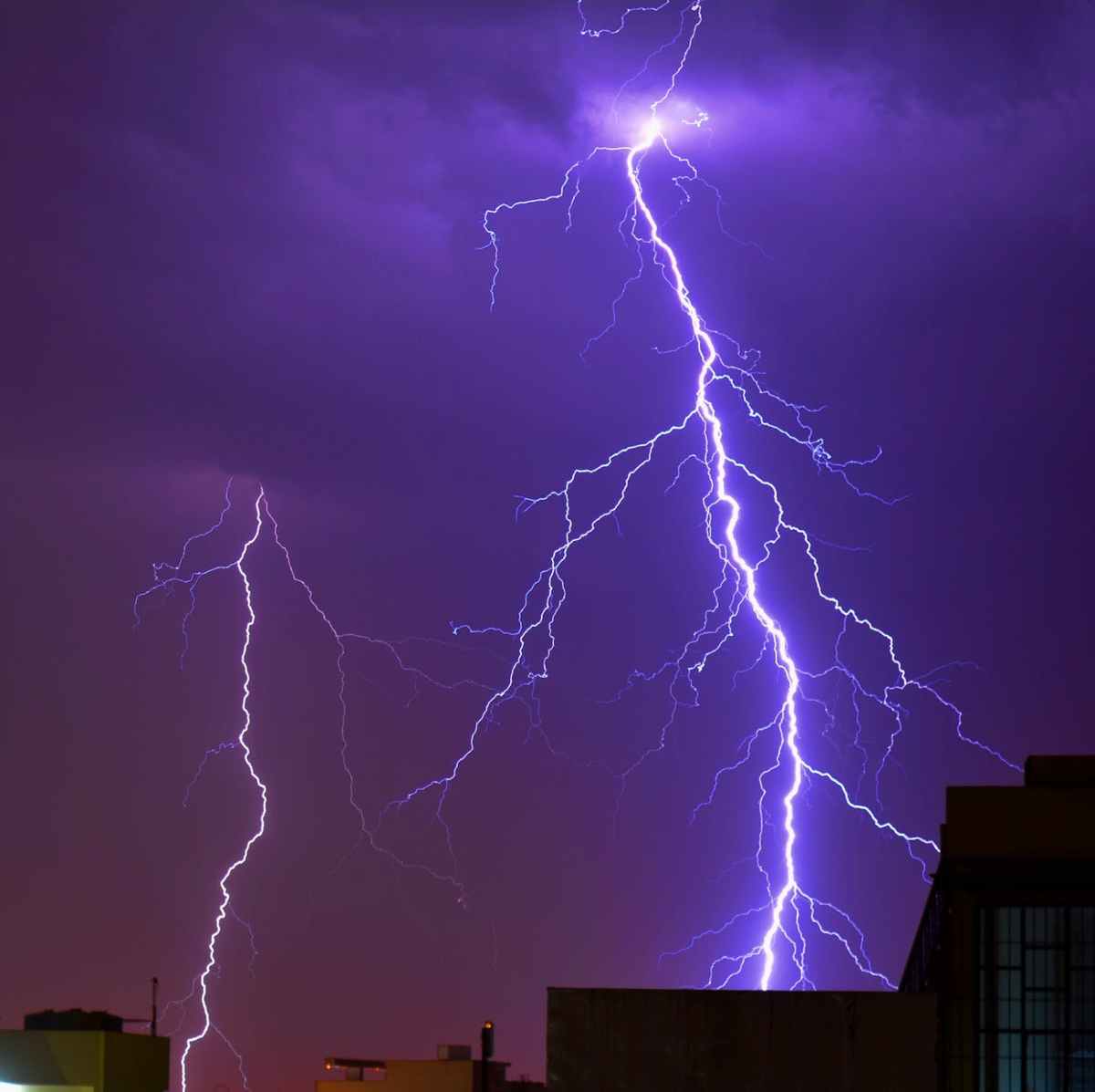
Then there are particular risks. These are threats that, maybe don’t happen everyday but have the potential to be destructive and overcome design safety strategies. Electromagnetic interference and atmospheric disturbances, like lightning and electrostatic discharge can be dramatic. The defences against these phenomena can be to protect systems and limit impacts. Additionally, the separation or segregation of parts of systems can take advantage of any built-in redundancies.

Some common-mode effects can occur due to operational failures. The classic case is that of running out of fuel or electrical power. This is where there’s a role for dedicated back-up systems. It could be a hydraulic accumulator, a back-up battery, or a drop-out ram air turbine, for example.

Some common-mode effects are reversable and tolerable in that they don’t destroy systems and equipment but do produce forms of performance degradation. We get into the habit of talking about failure as if they are absolute, almost digital, but it’s an analogue world. There’s a range of cases where adjustments to operations can mitigate effects on aircraft performance. In fact, an aircraft’s operational envelope can be adjusted to ensure that it remains in a zone where safe flight and landing are possible, however much systems are degraded.

Probabilities can play a role in such considerations. Getting reliable data on which to base sound conclusions is often the biggest challenge. Focusing on maintaining a controllable aircraft with a minimum of propulsion, in the face of multiple hazards takes a lot of clear thought.

Identity

Britan was never part of the Schengen Agreement[1]. I get that. In the days when I was commuting backwards and forwards between the UK and Cologne, Germany, I always had to show my British passport. So, although we once had freedom of movement in the European Union (EU) that document was essential to prove identity. Afterall, we do not have Identity cards (ID) in the UK. Even inside the Schengen Area[2] it’s necessary to carry personal identification. I remember being told off by a policeman for not having ID, other than a UK driver’s licence, on a high-speed train on the trip between Cologne and Brussels. He was fine about it, but it was a friendly – don’t do it again.

Generally, British people do travel overseas. Many of us travel for holidays and business, and in Europe, Spain is one of the most popular destinations.

The number of British people holding a British passport could be well over 80%. This is way ahead of Americans, for example[3]. This doesn’t take account of British passports that may have expired or been lost or destroyed. However, the remarkably large number of British people with passports does underline our love of travel.

I came back from a week’s sunshine in Grand Canary on Monday evening. It’s the second time I’ve been through the airport on that island. Entering the spacious modern airport, the first part of the process is relatively easy. Check-in and drop bags were shared with a great number of tired travellers. Even the hand baggage security check was straightforward.

It’s not until the gate number came up, and the long walk to the far end of the terminal was needed did it appear that the British experience was different. The departure gates were in a glass box wrapped around the end of the terminal. To get into the glass box it was necessary to go through passport control.

For those, like me there were electronic passport barriers. The ques there were shorter than the manual checks. The electronic passport barriers worked. However, on the other side of the glass wall was another que and a uniformed official checking passport. After that there was a desk where each passport had to be stamped. So, that’s 3 checks and an official exit stamp.

So, what’s the value of this added bureaucracy post-Brexit? I have no idea. What’s more upon boarding the aircraft for the flight home, the gate staff check passports again. So, that’s 4 inspections of passenger identity. 5 if the check-in desk procedure is included. British passports may have thick cardboard covers, and secure bindings but their strength as an international travel document has diminished since Brexit.


[1] a treaty which led to the creation of Europe’s Schengen Area, in which internal border checks have largely been abolished.

[2] https://ec.europa.eu/home-affairs/pages/glossary/schengen-agreement_en

[3] https://www.newsweek.com/record-number-americans-traveling-abroad-1377787

Caught in the crossfire?

There’s no doubt the relative calm of the beginning of this century, yes, it seems extraordinary to say that has gone and a series of international events confront civil aviation’s way of working. It’s dramatic. In Europe, most countries, and their industries are shifting the way they operate.

Unfortunately, any reasonable observation shows that the situation for aviation is worse in the UK. Well, that is worse than the UK’s former partner States in the European Union (EU).

In times of difficulty partnerships, between counties and in industry help make the absolute most of economies of scale. It’s difficult to plan when constantly firefighting. It’s like that comic story about crocodiles and draining the swam. It’s difficult to think ahead when surrounded by crocodiles.

I agree with the article posted by David Learmount[1]. The massive efforts to achieve international harmonization in aviation regulation, over decades is of incalculable value. I have been lucky enough to work with exceptional people across the globe and played a small part in helping that move along.

In fact, I’d go further than David. I remember, quite a while ago, attending a lecture at the Brooklands Museum[2]. It was about the history of post-war UK Government involvement in aerospace manufacturing[3]. It wasn’t a happy story. It went a bit like a soap opera with technical excellence mixed with commercial incompetence and political interference. The overall lesson was that going it alone, piling on the world beating rhetoric and an inability to forge working alliances spells disaster. Whereas coming together, working cooperatively, and building multinational partnership pays dividends. Airbus being a prime example.

I joined the European Union Aviation Safety Organisation (EASA) as the start of its operation. It was a huge privilege. It was a rare opportunity. I mean, how many people get to set-up a new aviation authority, let alone one that works for so many States in Europe? I was proud that the UK took a leading role in making this venture happen. It was a progression that had been careful and thoughtfully developed and steered over decades.

What we built was a uniquely European solution. It isn’t a federal construction as we see in the United States (US). In Europe, National Aviation Authorities (NAAs) remain a key part of the system. The part that was new in September 2003 was to overcome a major deficiency of earlier cooperative working. That was the unfortunate habit nation States have for saying that’ll do the same thing but then not doing the same thing in practice.

David mentions the tricky subject of UK Additional Requirements for import. This is when the UK demanded a special difference between its aircraft and those of other countries. Often expensive and making it difficult to move aircraft around. I remember some UK Additional Requirements found their way into new European requirements and others were removed. That was a painful transition period. In aviation, technical requirements are often born of experience of accidents and incidents.

Today, the UK Civil Aviation Authority (CAA) works with a set of technical requirements that have been rolled over from the UK’s time as an EASA Member State (2003 – 2021). This presents opportunities to take a new path. Sounds tempting, if only you look at the subject superficially.

International technical standards never stand still. Big players invest resources influencing the direction that they take. Two of the biggest international players in respect of aerospace design and production are EASA and the Federal Aviation Administration (FAA).

So, UK CAA is caught on the horns of a dilemma. Unless it can significantly influence the big players the only practical way forward is to adopt what they produce (rules, regulations, standards, guidance material). Now, the UK CAA has considerable technical experience and maintains a high reputation, but it does not sit at all the tables where the major decisions are made.

This is the concern that David mentions in his article. The unnecessary ideological exit from EASA membership, that came with Brexit places the UK in a third-party arrangement. Not good.

It’s not like the world has suddenly become dull. Frantic development efforts and huge sums of money are being pumped into greening aviation. Part of this is the new Advanced Air Mobility (AAM). Part of this is known as Urban Air Mobility (UAM). Aviation folk love acronyms. It’s almost as if we are back at the beginning of the jet-age[4]. We know how that went.

Not surprisingly, the UK wants to achieve successes in this new field of “green” aviation.

Flying is a heavily regulated industry. So, national, regional, and international rulemaking processes matter. They matter a lot. Harmonisation matters a lot. That’s having common rules and regulations to maximise the size of the marketplace while ensuring levels of safety and security are high.

The bureaucratic burden of Brexit costs. It’s not free. The UK duplicates rulemaking activities because it must independently update its laws, all the secondary legislation and guidance material that comes with aviation. When there’s a significant difference between UK, Europe, US, and the rest of the world it makes business more complex. Often that added complexity comes with no discernible benefits (economic, social, safety, security, or environmental).

The UK should become an EASA Member State once again. Why not? Norway, Switzerland, Iceland, and Lichtenstein are not in the EU but are EASA Member States. Across the globe countries follow EASA rules as they are known to deliver the best results.


[1] https://davidlearmount.com/2022/06/17/uk-aviation-caught-in-the-crossfire/

[2] https://www.brooklandsmuseum.com/

[3] https://www.aerosociety.com/media/8257/government-and-british-civil-aerospace-1945-64.pdf

[4] https://www.smithsonianmag.com/history/comets-tale-63573615/

Ash Legacy

12-years have elapsed since an Icelandic volcano’s eruption led to the shutting down of airspace in Europe. Travel chaos resulted, large sums of money were lost, and confidence was shaken. Many, like me, in the aviation world, quickly learnt more about volcanic ash than we ever dreamed possible.

Strangely enough the question: can commercial airline travel disruption be fixed for the summer? Is now doing the rounds. Again, the reason for this question is the consequence of an event that goes way beyond the boundaries of any one country, namely the COVID-19 pandemic. After the troublesome events of early 2010 there was a lot of talk about increasing the resilience of aviation. Now, the subject has come around again. The hot topic is how do we bring people together in this interconnected globe after a major shock to the travel industry?

The UK’s TV Channel 5 has a strong track record of screening documentaries about volcanos. Its audience must really like the drama and scariness of these earthly monsters. Channel 5’s latest offering is the story of the volcanic ash cloud that dominated European skies in 2010[1].

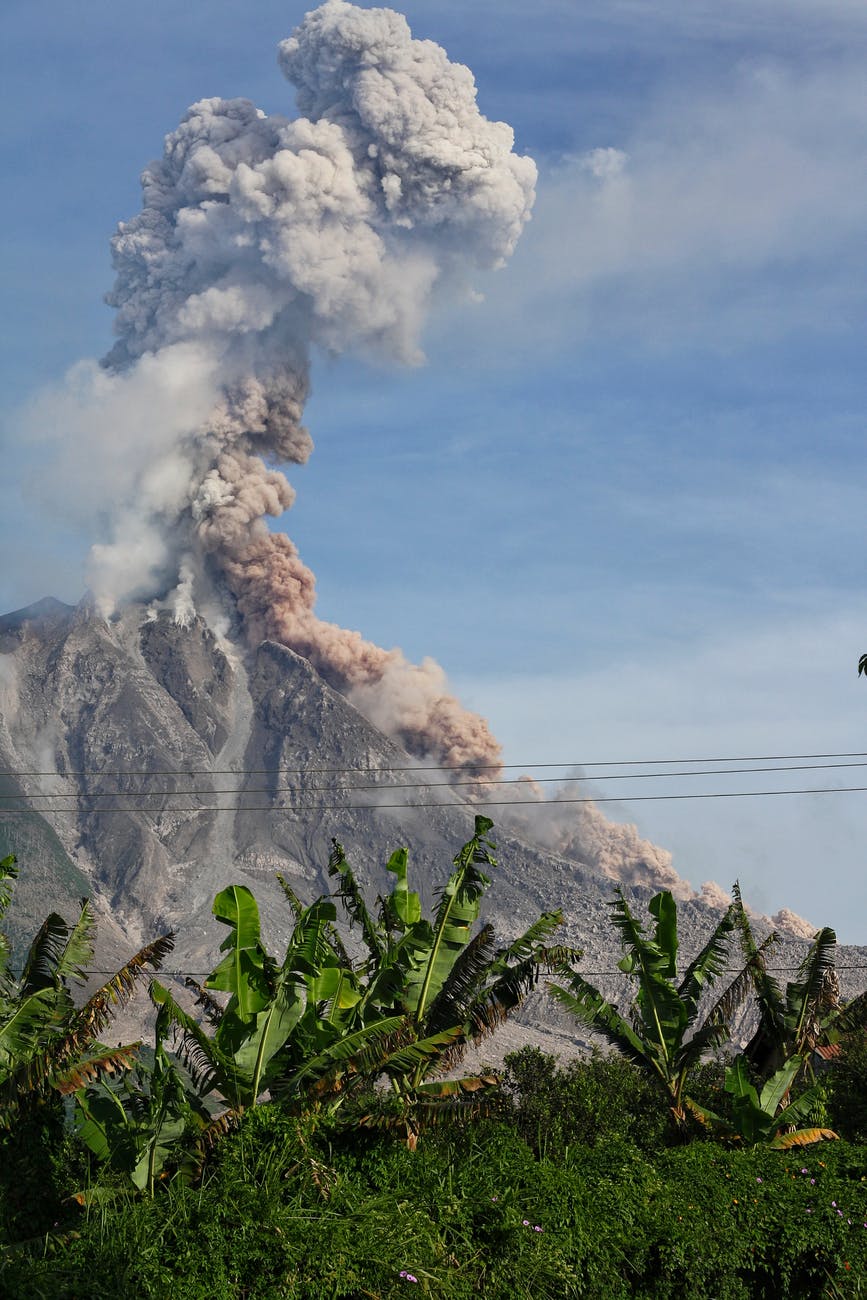
Explosive volcanic eruptions eject pyroclastic fragmented materials, and this case was one of those cases. The lightest material, the volcanic ash, can be carried great distances as we all found out. Volcanic ash has the potential to impact just about every aspect of flying. Close in it’s the aerodromes that get hit. Up in the air there can be effects on aircraft structure, systems, and aircraft engines. Melting ash in the hot section of a jet engine is something to be avoided. It’s not just aircraft engines since ash can abrades and damages parts of aircraft structure, such as cockpit windows, leading edges, paint, antennas, probes and, angle of attack vanes.

Channel 5’s documentary assumed ash was bad. It didn’t explain. It focused more on the experience of travellers and those managing the airspace over the UK. However, it did go into the 1982 incident when a Boeing 747’s engines all stopped after it flew through a dense volcanic ash cloud.

The documentary was right in that Europe was unprepared for volcanic ash clouds of the scale generated by Iceland’s volcanos. One of the problems during the April/May 2010 eruption was that the London Volcanic Ash Advisory Centre (VAAC)[2] computer model was a single source of flight planning data. There was found to be an urgent need for ground and airborne measurement of the actual densities of volcanic ash. Also, the greater use and interpretation of satellite images came into play.

Overall, the 85-minute documentary was enjoyable viewing showing some of what happened. It gave a snapshot from the point of views of both travellers and a few of those trying to resolve the crisis.

I remember that this event was a genuinely high-pressure multidisciplinary problem to solve. It isn’t every day that volcanologists, meteorologists, regulators, researchers, pilots, controllers, and engineers all get around a table. Especially when politicians, industry leaders and the media are all vying for the public spotlight. The outcome, if heeded, should be a much better response to a future airspace crisis.


[1] https://www.channel5.com/show/ash-cloud-the-week-the-world-stopped

[2] https://www.metoffice.gov.uk/services/transport/aviation/regulated/vaac/index

Island chaos

Aviation is an international industry. Britain has been “No longer an Island”[1] for over 120 years. As the Wright Brothers demonstrated practical powered flight, so the importance of sea travel began a decline. Nothing in history has shaped the British more than our island status. Living on an island has moulded attitudes, character, and politics.

The illusion of absolute national autonomy and sovereignty is shattered by the interconnection and interdependencies established by flight. Aviation’s growth encouraged a lowering of impediments between nations and geographic regions. In some respects, this has been a two-edged sword. On the one hand, there’s more cooperative working across the globe than there has ever been. On the other hand, conflict crosses natural barriers with much greater ease.

Affordable rapid air travel and growing freedom of movement have been a great boom in my lifetime – the jet age. At the same time, it’s not new that nationalist politicians continue to fear the erosion of difference between the British and the nations of continental Europe, brought about by commercial aviation. Ironically, it’s now the newer digital industries that pose the greatest threat to the illusion of complete independence.

In this context the failure to tackle the critical understaffing at British airports is deep rooted. Lots of finger pointing and experts blaming each other with a catalogue of reasons misses the damage that’s being done by nationalist “conservative” politicians.

Staffing shortages, poor planning and the volume of people looking to travel have led to huge queues and many flight cancellations across UK airports.

Yes, today’s travellers have learnt to take a great deal for granted. They are no longer impressed with the ability to check their emails and watch a movie at 30,000 feet above the sea. So, when the basics go wrong, and flights are seemingly arbitrarily cancelled, queues are long and delays are frequent, the backlash is real.

A UK Minister’s[2] reluctance to restore some freedom of movement to European aviation workers to alleviate the current chaos is an example of blindness to reality. Looking at the historic context, I guess, we should not be surprised that this dogmatic UK Government is so blinkered. Any acknowledgement that the imposition of Brexit is a big factor in airport chaos is far more than their arrogant pride can take. Sadly, expect more problems.


[1] https://www.goodreads.com/book/show/4254465-no-longer-an-island

[2] https://www.independent.co.uk/news/uk/government-transport-secretary-bbc-gatwick-covid-b2092887.html

Weights and measures

Contrary to the twisted rhetoric coming from the Conservative Government, the European Union (EU) never forced UK to abandon imperial measurements. The cheap politics played with this subject is designed to create a false narrative. Sadly, one that got an extensive outing during the Brexit referendum debates in 2016. The UK adopted metric measurements in the mid-1960s, with historic imperial measures continuing beside metric. Miles, pints, yards, and alike are part of everyday British life. There’s no public demand to change the status quo. That is, except for die-hard campaigners and jingoistic journalists. Conservative propaganda on imperial measurements is a distraction from the real and dramatic increases in the cost of living.

Consumers and industry benefit from international standardisation. It eases and enables economies of scale, price transparency, movement of goods and education and training. Major UK retailers have commented that returning to solely imperial weights and measures is complete and utter nonsense. It’s a romanisation of lost era when the map was coloured pink with the British Empire. Modern Britain needs the best set of measures available.

Calling proposals to bring back imperial units a Brexit “opportunity” prompts genuine despair amongst many people. Today, the UK pragmatically works between some remaining imperial units and the universal metric system, as used almost everywhere else in the world.

The decimal system for currency was introduced in 1971. Factors of ten are now ingrained in the education and training of everyone in the UK. I’m sure, noone sane wants to reverse decimalisation. If they, do it’s probably a tiny cohort of people who prefer Roman numerals and Latin to be used in all public documents. Living in the past, and returning to shillings and pence will just make people poorer.

Bringing back imperial measurements, as primary weights and measures would signal to the world that the UK prefers to be seen as a living museum rather than a progressive nation.

Even those politicians promoting such ridiculous proposals haven’t thought it through. Just imagine filling up a British car with petrol listed in gallons rather than litres. It took a long time to make that transition. When petrol was last listed in gallons the price was under £2 per gallon. Now, the pumps would show over £8! Whatever the logic, the public reaction to that sharp change would be vocal. Demands for an immediate cut in fuel duty would likely follow.

The Conservative Government’s consultation maybe heavily loaded but it’s important that people respond. There’s no good reason to issue a blank check for a foolish policy.

Choice on units of measurement: markings and sales – GOV.UK (www.gov.uk)

Make your views known. Let’s not go backwards. The past should enlighten, not suffocate.

Post Note: As inflation rages on, so it has been reported that a full tank of petrol, for the average car, now costs over £100 in the UK. Media reports chose not to use imperial or metric units to describe this price hike in their headlines. The new unit is: One Tank. When comparing petrol cars with electric cars, I suppose it can usefully to use this to equate to One Charge. Our lexicon of common units continues to evolve.

Inter-

Come on, one software control system is much like another. We don’t want to know what’s inside the box. We just want to know what it does. Well, that’s one point of view. Slowly, year by year, as what’s in the box has becomes more and more complex, or at least difficult to understand, so the opinion expressed above gets more airtime. There’s no doubt, I don’t give a lot of thought to how my iPhone does what it does in the palm of my hand. Whereas 30-years ago, I was intrigued to understand how a symbol generator created characters on an aircraft electronic display.

Levels of interconnection, integration and interoperation create independencies that become harder and harder to see and understand. I suppose we ought to coin a new “inter” word to sum up the high density of functions ticking away behind the curtain of everyday acceptance. The hidden workings of machines that we cannot live without. It’s much more than lines of software code that are transforming our lives. And transforming flying. Today, oceans of algorithmic go on data crunching with a high degree of autonomy. Some of it is transparent to a smart set of specialist technical gurus but most of us, even expert us, sit outside the advancing wave of change.

What I find intriguing is discussion about how society will react when super complex systems go badly wrong. We know something of what happens when conventional systems go wrong. A few minutes studying the recent Boeing 737 MAX saga is a good illustration of what can happen.

It’s a rule in my mind that whatever autonomy a system is given, someone somewhere cannot escape accountability for its actions. Yes, dystopia SiFi stories are full of rouge machines running amok. Society will surely not allow that to happen – will we?

Industry and regulators both have an immensely important role to work together to mange risks. Politicians have a basic responsibility to listen to the conclusions of expert findings. When the amalgam of workings inside the box has such features as machine learning we go way beyond the conversional approach to systems. Beyond what we have been doing successfully to assure safety for the last 30-years.

Demands for greater performance means that we cannot be luddite about the use of non-deterministic systems in safety related control systems. Their adaptability, agility and flexibility can help us meet many environmental and societal aims. But the classical questions of – what if? Still need to be addressed in detail to assure resilience, robustness, and basic levels of safety.

And we must do all this at the same time as updating airborne software of some flying aircraft using floppy disks.

Emerging Safety Issues 2/

There’s no stark dividing line between the criteria that I flashed up in the last few paragraphs. In fact, there will be major aviation projects that bring these all together in a new way. With the gathering pressure to address aviation’s climate impact there’s a strong desire to fly but in radically different ways. Take the blended wing body (BWB) concept[1]. It’s not new to aerodynamics but until recently the concept has remained on drawing boards[2] and in marketing brochures.

It’s likely that the next big adventure in aircraft design will be a shape that has no distinct separation between the fuselage and wings. Such blended structures may have properties that make them much more environmentally friendly. Yet, they will still be able to be operated from relatively conventional airports. If we combine a BWB with high levels of automation and systems integration and throw in hydrogen propulsion for good measure, there are going to be a myriad of emerging safety issues to consider. That’s one for the list.

Electrification is a snowball that’s rolling gathering ever greater speed. Industry has its eyes on high-power fuel cells. Hydrogen-powered fuel cells are a green alternative to combustion engines. They may have few moving parts, but exotic materials and high temperatures present a bucket load of technical challenges it they are to be used at altitude in all weathers. Promising technology may tick many boxes, but can it be made safe? That’s another one for the list.

To fly, and to do it efficiently watch the birds. They have mastered the art of formation flying to harness its advantages. Formation flying may reduce fuel use by minimizing drag. Experimentation with drones flying in formation are being done. However, the use of this way of flying for large transport aircraft is still a research subject[3]. Procedures exits for formation flying for military and general aviation aircraft (aerobatics). What safety issues need attention to make this work for passenger aircraft?

It’s possible to go further for each aircraft in-flight too. The extensive use of artificial intelligence to optimise flight paths has much potential. Since the introduction of Wi-Fi in the cabin, there’s occasions when passengers have better real-time weather information than flight crew. The ability to meet all the collision risk objectives and pick up the most advantageous winds is achievable. Aircraft innovations like tactical trajectory optimisation are great at lowering fuel consumption. Any safety issues emerging from the use of such systems will likely be linked to their level of autonomy.

Integrating autonomous aircraft into controlled airspace is a challenge of today. As we move forward the variety of autonomous aircraft will grow. An application where the commercial marketplace may drive rapid adoption is that of large autonomous cargo freighters. Emphais on the word “large” is appropriate given that it’s 3rd parties that will be at risk in the event of accidents and incidents. The loss of cargo can be insured but how will society react to accidents that may cause fatalities on the ground, if these operations proliferate?


[1] https://www.airbus.com/en/newsroom/press-releases/2020-02-airbus-reveals-its-blended-wing-aircraft-demonstrator

[2] https://www.nasa.gov/topics/aeronautics/features/bwb_main.html

[3] https://www.flightglobal.com/safety/a350s-operate-transatlantic-formation-flight-to-test-potential-for-cutting-fuel-burn/146301.article