Brexit, Aviation and the Withdrawal 7

imgid153119926One of the popular illusions that Brexit supporters carried off during the campaigning of the last few years was to persuade people that the European Union (EU) was atypically bureaucratic.  A false comparison often suggested that the UK should be more like the US and therefore less bureaucratic.  This nonsense did seem to get into the public consciousness.  Tabloid newspapers peddled the mirage of complete free trade.  Even though it’s, as I say, complete and utter nonsense.

Just a few second of reading the US Federal Register[1], as I often did in my past roles, quickly shows the complexity of the legal and regulatory processes and structures in the US.  Docket No. USTR–2019–0003 a “Review of Action: Enforcement of U.S. WTO Rights in Large Civil Aircraft Dispute” doesn’t make pleasant reading for the EU or the UK[2].   In fact, there’s nothing to choose between how hard these measures hit EU Member States or the UK.  Brexit doesn’t exist in this dispute.

The outcome of the review is that there will be an increase in the additional duty rate imposed on aircraft and parts imported from the EU and UK, effective from Wednesday, 18 March 2020.  Rightly, the UK’s International Trade Secretary has expressed concern and disappointment[3].   It’s interesting to speculate what this will do to future trade negotiations.  This isn’t the zero-tariff world that Brexit supporters promised.  In the real world, President Trump’s tariffs are popular amongst his supporter base and it’s an election year in the US.

European manufactures are also concerned and disappointed[4].  The sad aspect of this escalation is retaliation and that it’s likely that the EU will impose tariffs on new large US aircraft later in the year.

My view is that, imposing tariffs on aircraft parts is in no one’s interest and harmful to not just the commercial health of the aviation industry but flight safety and security too.

By the way, on a lighter note US fedearal administrative language is a gem: For purposes of the subheading listed below, the informal product description defines and limits the scope of the proposed action and is intended to cover only a subsection of the subheading.

[1]https://ustr.gov/sites/default/files/enforcement/301Investigations/Review_of_Action_Enforcement_of_U.S._WTO_Rights_in_Large_Civil_Aircraft_Dispute.pdf

[2] https://www.latimes.com/business/story/2020-02-14/trump-tariffs-europe-aircraft

[3] https://www.gov.uk/government/news/update-on-airbus-dispute?utm_source=1e391616-b697-49ed-bb9a-bc178465499b&utm_medium=email&utm_campaign=govuk-notifications&utm_content=immediate

[4] https://www.airbus.com/newsroom/press-releases/en/2020/02/airbus-statement-on-ustr-decision–15-feb-2020.html

Brexit, Aviation and the Withdrawal 2

Watching UK Prime Minister Johnson’s speech[1], made in Old Royal Naval College at Greenwich yesterday, there’s no doubt the setting was impressive.  The words were not so impressive.  In fact, they were downright confusing. Phrases like: “Free trade is the only certain way of uniting people in the bonds of peace” are peculiar given that the UK has just left one of the world’s most successful projects for free trade and peace.

There were jaunty references to being like Canada, or Australia or something akin to these two Commonwealth States.  The vision painted by Johnson had none of the precision or artistry of the walls in the recently restored Painted Hall[2].   Even so, there was an echoing theme that the UK wouldn’t follow any rules other than its own.

The reference to a country that’s bigger in physical size but smaller in population and that has a larger neighbour to the south, is interesting from an aviation perspective.  It’s true that Canada has its own aviation regulatory structure.  It hosts the international organisation that is responsible for aviation standards, namely ICAO.  In addition, it has major aerospace design, manufacturing and maintenance companies as well as international operators.

However, Canada’s free trade agreement (CETA) with the European Union (EU) doesn’t eliminate all tariffs and quotas.  Built over many years, for aviation there is a level of mutual recognition between Canada and the EU.

In 2011, an agreement on civil aviation safety between the EU and Canada entered into force[3].  Part of this agreement includes detailed working arrangements.  This international cooperation was agreed when both sides demonstrated to the other that they had the regulatory competence and capacity to satisfy each other’s needs.  The work is by no means finished.

So, yes perhaps it is the case that carbon copy rules, or complete harmonisation between parties is not the only route to mutual recognition.  Usually, regulatory differences exist not because parties want them to exist for their own sake but that each party has a different set of experiences.  In design certification, the reason for a great number of rules and standards can be traced back to accidents and incidents.  Not everyone has had the same history or operates in the same environment (social, political, economic and so on).  Regulatory maturity is only established over decades.  Then regulators can assess each other’s systems and decide that arrangements, like accepting each other’s certificates can be done safely.  What I’ve described doesn’t happen overnight.  A conservative, with a small “c”, approach is taken to aviation safety because the consequences of getting it wrong can be tragic.

[1] https://twitter.com/10DowningStreet/status/1224435858985472000?s=20

[2] https://ornc.org/our-story/royal-hospital/painted-hall/

[3] https://www.easa.europa.eu/document-library/bilateral-agreements/eu-canada

Brexit & Aviation 118

For the British politician the 31st January 2020 is a big event.  For most people in employment, the Brexit confusion and uncertainty continues at least for another 11 months.  Social Media is a good indication of the conversations people in aviation employment are having.  One question raised yesterday has been raised many times: After Brexit will the EASA licences that were obtained in the UK still be valid? 

Despite the name, these mandatory licences are not issued by EASA in Cologne but issued by European Union (EU) Member States applying European rules.  National Aviation Authorities (NAAs) have this responsibility.  The European system requires EASA and the NAAs to work together.   In order to get an EASA Part-66 AML (Aircraft Maintenance License), an applicant needs to show a basic knowledge in relevant aviation subjects.

Having common rules throughout EASA Member States means that they accept an EASA licence that is granted by one of those States.   In addition, States across the globe, who have a relationship with the EU can choose to accept an EASA licence.   That’s what happens in the United Arab Emirates (UAE) where most of the world’s Airbus A380 aircraft are based, for example.

So, the EU and the UK are entering a transition period during which UK aviation will continue to participate in the EASA systems.  That means compliance with EU regulations while the longer-term EU-UK aviation relationship is worked out.   Currently the UK Civil Aviation Authority (CAA) website has a statement[1]:

Engineers transferring their Part-66 licence to other Member States: While the CAA will continue to accept and process Part 66 transfer applications under existing EASA transfer arrangements until the UK leaves the EU, the procedures adopted by the receiving NAA and recognised validity of the licence during the transfer process may vary amongst EU member states. Applicants who require continuity of validity throughout the transfer process are therefore advised to apply at least 3 months prior to Exit Day and should also consider engaging with their intended receiving NAA to identify any potential issues.

Clearly, there are numerous combinations and permutations of situations that can arise for engineers working on aircraft.   Given the history of licencing it’s highly likely that an arrangement will be worked out for next year, 2021.  For now, each individual aircraft engineer needs to check their situation dependent on where they are working and on what aircraft they are working on, at what time.

This will put extra stress on global regulatory oversight activities too.

[1] https://info.caa.co.uk/brexit/licensed-engineers/

Brexit & Aviation 117

2020 is the year of the Rat. The Chinese New Year in starts on Saturday, 25th January.  This is going to be a pivotal year for those born in 1960, like myself.  I hope that all the Rats out there are going to be as ambitious, creative and intelligent as astrologically predicted.  Certainly, that would help with Brexit just days away.

Brexit Day is Friday, 31st January.  It’s like passing through a one-way valve and not so much a bell ringers paradise.  Or even a reason for fanfares.  It’s the date of entry into force of the EU-UK Withdrawal Agreement (WA), or at least it should be.  Thus, the UK will leave the EU in a fully legal way.  Nevertheless, EU law will continue to apply in the UK for the period of the WA.   That is, that the UK will remain bound by EU treaties.  Also, the EU will ask its partners to treat the UK as if it were still a Member State for all those existing treaties[1].

The biggest impact of the end of the month is that there will no longer be the possibility of revoking the Article 50 TEU[2].   From then on, the way back for the UK to re-join the EU is provided for in Article 49 TEU.  In that foreseeable but unlikely case the UK would be viewed as an applicant State.

In addition to the above, from the 31st the UK loses its institutional representation in the EU.  So, no more British members of the European Parliament, or European Commissioners or European Council members.  Interestingly, at the time of the signing of the Lisbon Treaty the EU had 27 Member States and now it’s returning to that number.

Outside the EU, will the UK be better placed to tackle the major challenges that all States face, including globalisation, climate change, energy security, terrorism and organised crime[3]?  That’s the big open question.  The UK will leave the EU on 31st, but there remains a lot of complex negotiations to come.  This is the start of the UK’s future relationship with the EU.

So, is there general happiness and contentment?  No.  In fact, businesses continue to be cautious and concerned.  In particular, the aerospace industry has been alarmed by talk of major regulatory upsets[4].  What will the institutional framework be for the future?   How will it be staffed and funded?  Businesses would like to know where the UK Government intends to go next[5].   It remains difficult to plan if there’s only a scant idea of the intended destination.  That said, Brexit is not bad for everyone.  Germany has seen an increase in interest from British businesses.

[1] https://www.instituteforgovernment.org.uk/explainers/brexit-transition-period

[2] https://www.europarl.europa.eu/RegData/etudes/BRIE/2016/577971/EPRS_BRI(2016)577971_EN.pdf

[3] https://twitter.com/wef/status/1218937427936583681?s=20

[4] https://www.ft.com/content/a89dfdea-3d07-11ea-a01a-bae547046735

[5] https://www.iod.com/news-campaigns/news/articles/IoD-calls-on-Government-to-publish-Brexit-negotiating-objectives

Brexit & Aviation 116

On your marks, get set and go.  The starting pistol hasn’t been fired yet, but the players are on their marks.  It’s a 100-meter sprint.  Or should I say a 109.361-yard sprint to the end of the year.

The EU27 Member States are having their preparatory discussions on their future relationship with the UK[1].  At the same time statements are drifting out of British Minister’s offices containing rhetoric more suited to an election campaign.

Croatia’s presidency of the Council of the EU[2] is up and running until 30 June 2020 when Germany takes over.  The EU’s “Internal EU27 Task Force for Relations with the United Kingdom” has published slides that illustrate the likely situation after the 31st January.   They recognise that transport, including aviation will be a fundamental component of the EU-UK relationship.  It’s clear that UK aviation operators will no longer have the same access rights as EU Member State operators.

Now, according to The Financial Times the British Chancellor is saying[3]: “There will not be alignment, we will not be a rule taker, we will not be in the Single Market and we will not be in the Customs Union — and we will do this by the end of the year.”

These words maybe for public consumption because to an extent they speak the obvious.  One exception is the notion that the UK will not be a “rule taker”.  Naturally, this can be interpreted in many ways, even in this year, when the existing Withdrawal Agreement becomes law.  Because that agreement has the affect of taking European rules and making them UK rules.

In trading with large markets, like the EU and US there’s going to be the obligation to meet their standards.  It seems obvious to say but that means having rules that are either taken from those parties or that are acceptable to those parties.  Call that what you like but it is taking rules.  Never in the past did the UK Parliament approve every single new or modified rule that the was part of compliance with an international agreement and it’s likely that will continue.

EU aviation rules are designed to be compliant with international standards and recommended practices.  There is scope for the UK to deviate from the existing arrangements.  The question should be asked, as to; why and what are the benefits in doing so?

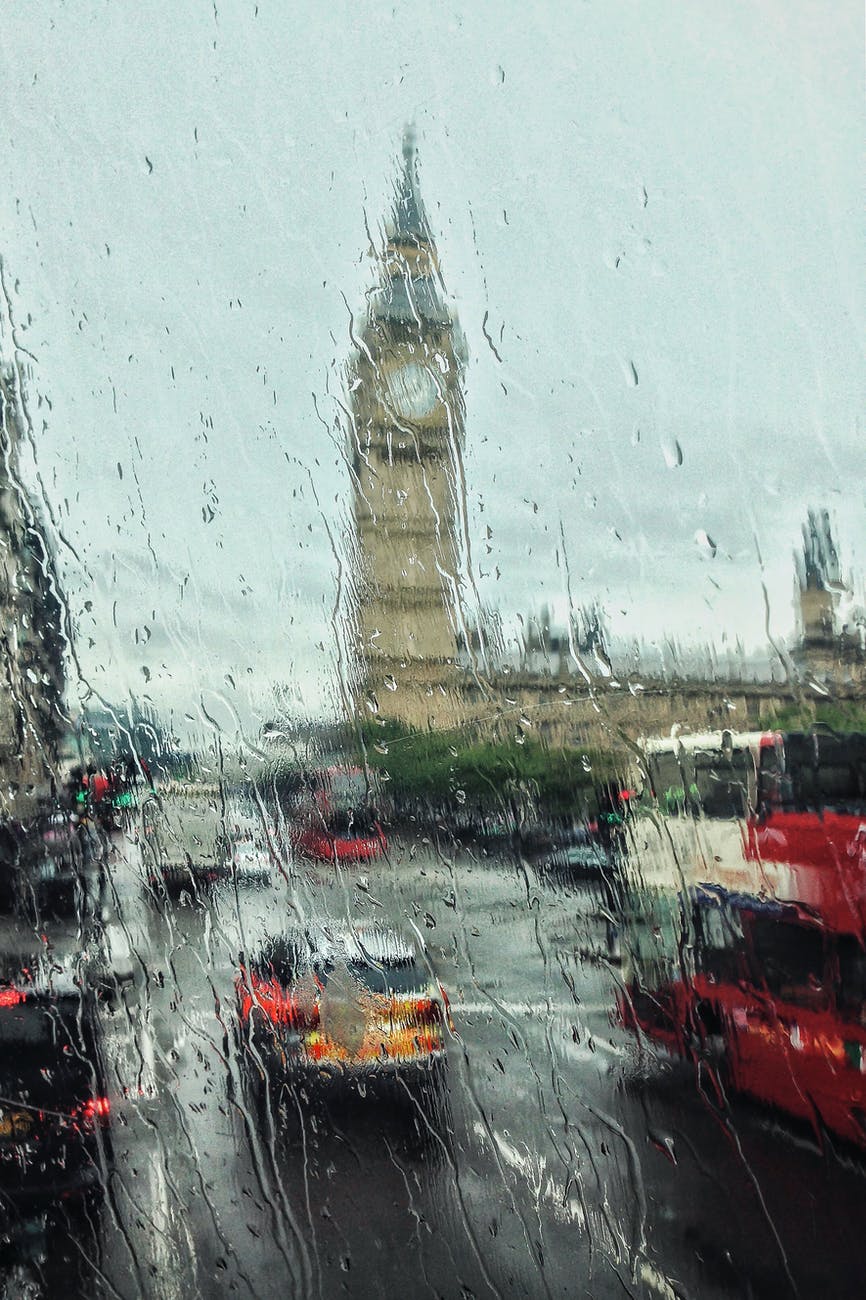
Meanwhile, as the scene is set for the next step in these vital international negotiations, the daily news in the UK is far more trivial; a £500,000 crowd funding exercise for some big bongs in London is filling the airwaves and newspapers.

[1] https://ec.europa.eu/commission/sites/beta-political/files/seminar-20200115-transport_en.pdf

[2] https://eu2020.hr/

[3] https://www.ft.com/content/18ddc610-3940-11ea-a6d3-9a26f8c3cba4

Brexit & Aviation 109

Preposterous isn’t a big enough word to sum up what’s going on in respect of the UK Government’s approach to the UK Parliament.   Having entirely messed-up during the special session on Saturday last, the UK Prime Minister (PM) has tried to ask the same question again of the House of Commons (HoC) and been sent packing.  Therefore, it stands that the HoC has not approved the Withdrawal Agreement (WA) and has called for the PM to secure an extension under Article 50(3) of the Treaty on European Union until at least 31 January 2020 for the purpose of holding an early General Election (GE) before the end of the extension period.   Will this happen?  We have yet to see.

In conversation, I find that even amongst those who avidly follow the progress of Brexit there’s an incorrect notion.   It’s that the WA represents a deal between the EU and UK that defines their future relationship.  That’s not so.  The WA can be described as a divorce settlement and thus needs to be binding.  That said, the accompanying document, titled Political Declaration (PD), setting out the framework for the future relationship between the EU and the UK is not binding.  The PD is essentially a starting point for the next even more complex and difficult negotiation.

Rushing these historic and complex texts through the legislative process is causing concern.  There has been more than 3-years of ups and downs and backwards and forwards, but the final legal text has only just been put in front of Members of Parliament.  The European Union (Withdrawal Agreement) Bill is not an easy read.

Industry continues to highlight the importance of avoiding a No Deal Brexit, but there’s some relief that the text on regulatory cooperation on aviation safety is positive[1].  The text is vague about close cooperation between the EU’s EASA and the UK’s Civil Aviation Authority (CAA) but at least they are both explicitly mentioned.

Today, high standards of aviation safety are achieved by having common standards and sharing technical expertise and experience.  As the two parties separate there’s a considerable need to keep a close eye on new arrangements and any tendency to diverge for political reasons and not technical ones.  Cooperation doesn’t just happen ad-hoc.  It requires a dedicated effort and active mechanisms to make it work.  Confidence building initiatives take time when different means are used to get to the same outcome.

[1] https://ec.europa.eu/commission/publications/revised-political-declaration_en

Brexit & Aviation 108

After a day of drama, Britain awakes this Sunday with no clear view of what happens next.  The clock keeps ticking and, if deadlines mean anything, then the next one is 11 days away.

It’s true that under no circumstances was disentangling the UK from a 40 years relationship with the European Union (EU) going to be easy.  Are we heading towards a new postponement?  It seems highly likely regardless of the UK Prime Minister’s (PM) latest letter[1].  It seems that PM Johnson is taking advice from P G Wodehouse: “It is a good rule in life never to apologise. The right sort of people do not want apologies, and the wrong sort take a mean advantage of them.”  We could argue about who’s right and who’s wrong but let’s look at what’s on the table instead.

One of the biggest changes that is evident in the new Withdrawal Agreement (WA) concerns the “level playing field”.  That is that the binding commitments for the UK to maintain minimum standards in the areas of social and environmental policy, tax, competition and State aid have been removed from the WA.  The detailed discussion has been put off to the post-Brexit EU-UK negotiating phases.  A closer future relationship means more obligations and a looser relationship means less and this will be linked to the level of market access.   A framework for the future relationship is set out in a new Political Declaration[2].

Looking at the House of Common (HoC) business for Monday, 21 October 2019, several motions for approval of Statutory Instruments (SIs) are to be agreed.  The reality for Brexit is that much existing European regulation is being incorporated in UK law[3].  Many of the proposed changes are to align the text with the appropriate UK institutions as opposed to the European ones.

Therefore, whatever future changes there may be to the “level playing field” and this applies to aviation as much as anything, at least initially both EU and UK will be pretty much aligned.  The political direction post-Brexit will greatly depend on the outcome of a pending UK General Election (GE).  That must come given that the UK Government trying to do all this has no majority in the UK Parliament and a record of loosing votes.

We are in a fast-moving and unpredictable environment.  It’s a good idea not to make too many knee-jerk reactions or draw too many conclusions.  PM Johnson has, in a half-hearted manner applied for an extension to the Thursday, 31 October 2019 end date.  We will soon see if this is granted by all the parties involved.  Ongoing political and economic uncertainty may yet signal the end of the Brexit project.  The genuine technical reality of the benefits of working together for the common good in Europe remains.

[1]https://assets.publishing.service.gov.uk/government/uploads/system/uploads/attachment_data/file/840660/PM_to_Donald_Tusk_19_October_2019.pdf

[2] Political Declaration setting out the framework for the future relationship between the European Union and the United Kingdom;

[3] https://publications.parliament.uk/pa/cm201920/cmagenda/ob191021.htm#_idTextAnchor005

Brexit & Aviation 105

The title of this Government’s Brexit proposals could be called: I’m Sorry I Haven’t A Clue.  But that title has been taken by a long-running BBC Radio comedy series.  And I do mean long-running.  The last series was number 71.  If you listen to this clip of “The Uxbridge Dictionary[1]” it might mask the Brexit murk for a minute or two.  By the way, Uxbridge is the Parliamentary Constituency of the Prime Minister.

Here’s a point to clarify.  I keep seeing references to the global aviation regulator ICAO.

Now, as I have mentioned before, ICAO is the International Civil Aviation Organisation.  It’s the organisations 75th birthday this year and that’s good reason to celebrate.  It brings together 193 of the world’s States.  However, ICAO is not a “regulator”.  It does not issue approvals, licences or certificates.  It does not have enforcement powers, like a CAA.  I was going to say that it does not investigate aviation accidents but, I believe it has in one or two special cases.

A key technical role of ICAO is to set Standards and Recommended Practices.  From that the States develop their own framework of legislation that empowers their organisations, sometimes called Agencies or Authorities or Administrations or Directorates to do the regulatory work.

It must be like this given that there’s a great range of different legal systems across the globe.  In fact, those who created ICAO recognised this reality from day one and it’s enshrined in the Convention on International Civil Aviation, also known as the Chicago Convention[2].   The Convention is explicit about the complete and exclusive sovereignty of contracting States.  Although as I learned last week there’s one or two exceptions to this exclusivity.

The European Union (EU) is recognised as a regional organisation at ICAO.  Nevertheless, each European State has, or shares a delegation at ICAO’s HQ in Montreal.   When it comes to making policy for international civil aviation the EU Member States work together.  Coordination is vital to make an impact inside a multinational and multicultural organisation like ICAO.

Yet, its unclear how Brexit will change this arrangement, or if it will change at all.  The opportunity to work together on common interests is always possible.  On issues, like climate change it’s highly likely that Europe and the US will have more in common than say; China, India and Russia.

Where difficulties are more likely are when technical standards in Europe and the US differ.  Then the possibility of competition to set international standards might present awkward choices.

[1] https://www.bbc.co.uk/sounds/play/p00vm9vk

[2] https://www.icao.int/publications/pages/doc7300.aspx


Brexit & Aviation 102

UK Prime Minister (PM) Johnson’s Brexit meeting with the European Union’s Juncker was said to be “constructive” and contact between the two sides will now be stepped up.  I must wonder with amassment at this summary given that there are only 44 days left on the clock.  Whatever has been said, there’s been no change over the few days on the likelihood of the UK leaving the EU with or without a deal on 31 October.  In probability terms it looks highly likely.

Meanwhile the PM insists he did not mislead the Queen over suspending Parliament.  As of today, that questionable matter is in front of the highest Court in the land.

We are facing a situation where all the existing Agreements and Regulations derived from EU Treaties will fall on 31 October.  Yes, a new Regulation does address basic contingency measure that will be available for a short period[1] after Brexit day but then it’s the land of the completely unknown.

The implications of Brexit for Britain’s aerospace and aviation sector are looked at by the Royal Aeronautical Society and it doesn’t make for happy reading[2].  Yet, Brexit supporters will continue to talk loudly of scaremongering and so called “project fear”.

Let me not paint a picture that everything in the UK is chaos and everything in the EU is fine and dandy.  The hard facts are that we all have the same problems to confront.  A recent exchange between the European Parliament (EP) and the Executive Director of the European Aviation Safety Agency (EASA) on aviation safety showed serious challenges for us all[3].  At least in Brussels, MEPs get to ask questions on aviation safety.  Currently, with a suspended UK Parliament that’s not possible for UK MPs in the UK.

On another subject, commercially Brexit is looking like a bad dream.  Thomas Cook has blamed Brexit uncertainty and the weather for lower bookings and people are now on alert over the airlines possible collapse[4].

If you are a Licensed Engineer and have an EASA Part-66 Licence issued by the UK Civil Aviation Authority (CAA), be sure to check the guidance on whether you will be eligible to work on EU Member State registered aircraft in the event of a No Deal Brexit.

Wouldn’t it be nice to have some good aviation news for a change?  With the Brexit clock ticking to the point of 40 days and 40 nights maybe a change of biblical proportions is coming[5].

[1] Commission considers that this Regulation does not prejudge the nature of the future relationship with the United Kingdom in the area of aviation and that the exercise of competence in the Regulation is temporary and strictly limited to its period of validity.

[2] https://www.aerosociety.com/news/at-brexits-cliff-edge/

[3] http://www.europarl.europa.eu/committees/en/tran/home.html

[4] https://www.thetimes.co.uk/article/42d537c0-d719-11e9-b098-ed106f659f8a

[5] Jesus fasted for 40 days and nights in the Judaean Desert. During this time, Satan came to him and tried to tempt him.

Aviation & Brexit 94

Preparations for the UK’s Brexit continue but these times cannot be “normal”. New Conservative UK Prime Minister Johnson insists that the UK will leave the EU on the 31 October 2019 “do or die”.  Bellicose politicians can be inclined to use outspoken language but in this case it’s more than even the House of Commons is accustomed too.

A sharp divergence for all to see.  There’s the pragmatic and rational approach where judicious arrangements are made around an overall deal between the UK and EU.  This is not exactly a win-win but it’s to get as close to it as possible in the current climate.  At the same time, there’s the reckless push to sever relationships with only the minimum of temporary provisions at the lowest possible default conditions.   This really is the lose-lose for both UK and EU[1].

Sitting in the South East of England, as I do, I see there’s a myopic element to this foolish “do or die” attitude.  It’s a political approach that’s taken to satisfy a domestic audience as if the rest of the world doesn’t exist.  However, the rest of the world can see what is going on between UK and EU and most reports aren’t complementary.

The next European Council[2] summit is 14 days before the UK is due to leave the EU.  The agenda for that meeting in Brussels has yet to be published but Brexit is surely going to be on the list.  On 19 October there’s to be big protest march through the streets of London.  Organised by the European Movement and the People’s Vote[3] campaign this is expected to be a major historic event.   So, a full 3-years after the 2016 UK referendum the final half of 2019 is going to be a rough ride for all involved and beyond.

Aviation companies, licenced people and regulators have been preparing for Brexit from the moment the UK Prime Minister’s letter kicked-off the Article 50 process.  The stated assumption was that a UK-EU deal would be struck, and a reasonable degree of continuity would be maintained.  In an inconsistent fashion UK Prime Minister Johnson has recently said that the chances of a No Deal Brexit are a million to one.   This doesn’t seem credible given that no negotiations are on-going.

What does anyone believe in such a strange situation?  With days to go, I believe it’s wise to plan for the worst-case scenario, of a No Deal Brexit with animosity on both sides.  Services will be vulnerable to interruption. Transactions will be more complex. The regulatory framework will be uncertain.  It’s highly likely some civil aircraft will be grounded because they can’t get the right parts with the right paperwork at the right time.

Post Brexit the UK will be viewed as a “Third Country” in respect of European legislation.  A huge amount of work will be needed to re-build relationships.

[1] https://adage.com/article/digitalnext/lose-lose-beats-win-win/310805

[2] https://www.consilium.europa.eu/en/meetings/european-council/2019/10/17-18/

[3] https://www.peoples-vote.uk/