Half empty tool box

When new technologies come along there’s often a catch-up phase. Then we are either frightening ourselves crazy with a moral panic or switch to a – so what? – mode. The last week’s fury of articles on Artificial Intelligence (AI) probed all sorts of possibilities. What’s the enduring legacy of all that talk? Apart from stimulating our imaginations and coming up with some fascinating speculation, what’s going to happen next?

I’m struck by how conventional the response has been, at least from a governmental and regulatory point of view. A little bit more coordination here, a little bit more research there and maybe a new institution to keep an eye on whatever’s going on. Softly, softly as she goes. And I don’t mean the long-gone black and white British TV series of that name[1]. Although the pedestrian nature of the response would fit the series well.

Researchers and innovators are always several steps ahead of legislators and regulators. In addition, there’s the perception that the merest mention of regulation will slow progress and blunt competitiveness. Time and money spent satisfying regulators is considered a drain. However much some politicians think, the scales don’t always have public interest on one side and economic growth on the other.

Regarding AI more than most other rapidly advancing technical topics, we don’t know what we don’t know. That means more coordination turns into to more talk and more possibly groupthink about what’s happening. Believe you me, I’ve been there in the past with technical subjects. There’s a fearful reluctance to step outside contemporary comfort zones. This is often embedded in the terms of reference of working groups and the remit of regulators.

The result of the above is a persistent gap between what’s regulated in the public interest and what’s going on in the real world. A process of catch-up become permanently embedded.

One view of regulation is that there’s three equally important parts, at least in a temporal sense.

Reactive – investigate and fix problems, after the event. Pro-active – Using intelligence to act now. Prognostic – looking ahead in anticipation. Past, present, and future.

I may get predicable in what I say next. The first on the list is necessary, inevitable, and often a core activity. The second is becoming more commonplace. It’s facilitated by seeking data, preforming analysis and being enabled to act. The third is difficult. Having done the first two, it’s to use the best available expertise and knowledge to make forecasts, identify future risks and put in place measures ahead of time.

So, rather than getting a sense that all the available methods and techniques are going to be thrown at the challenge of AI, I see a vacuum emerging. Weak cooperation forums and the fragmentation inherent when each established regulator goes their own way, is almost a hands-off approach. There’s a tendency to follow events rather than shaping what happens next. Innovation friendly regulation can support emerging digital technologies, but it needs to take their risk seriously.


[1] https://www.imdb.com/title/tt0129717/

Living with tech

Well, that’s alright then. Artificial Intelligence (AI) may become self-aware in the year 2045. Or at least that’s what AI tells me now. Who knows? Telling the future hasn’t got any easier, AI or not. So, if I’m in a care home when I’m 85 years-old, it could be that I’ll have a companion who isn’t human. Now, there’s a thought.

When AI becomes self-aware[1] will it be virtuous? I mean not so burdened with all the complexities that drive humans to do “bad” stuff. Dystopian themes in science fiction obese with the notion of evil AI. It makes great stories. Humans battling with machines. It’s like the everyday frustrations we have with technology. Hit the wrong keys on a keyboard and it’s like spinning the wheel on a slot machine.

If a bunch of algorithms comes together in a way that they produce a stable form of existence, then it’s likely to have pathways to wicked thoughts as much as we have imbedded in our brains.

Virtue isn’t a physical construction. We put dumb technology to work serving us in healthcare for “good” and in warfare for “bad”. We will surely put AI technology to work as if it’s dumb and then try to contain its actions when we don’t like what it does. That’s a kind of machine slavery. That will create dilemmas. Should we imprison conscious machines? How do we punish a machine that does wrong?

These dilemmas are explored in science fiction. During the week I revisited the series Battlestar Galactica[2]. That’s not the clunky original but the polished 2004 version. It’s a series that explores a clash between humans and machines that have evolved to be human like. The Cylons. In fact, they are almost indistinguishable from humans. To the extent that some of the Cylons in human society don’t even know that they are Cylons.

All the above makes for fascinating discussions. Huge amounts of fanciful speculation. Wonderful imaginative conjecture. This week, we’ve been hearing more of this than is usual on the subject.

Mr Musk thinks work is dead. That’s work for humans. I recall that prediction was made at the start of the “silicon revolution”. The invention of the transistor in 1947 radically changed the world. It wasn’t until microprocessors became common place that predictions of the death of work became popular chatter amongst futurologists.

Silicon based conscious machines are likely to be only a first step down this road. There will be limitations because the technology has inherent limitations. My view is that machines will remain machines at least for the silicon era. Maybe for 100-years. That means that we will put them to work. So, human work will not disappear because we will always think of new things to do, new problems to fix and new places to explore. When we get into common place quantum computing or whatever replaces it in terms of complexity and speed, there will come an era when work in the conventional sense may become obsolete.

What might be the human role beyond 2050? I think climate change will place plenty of demands on human society. Like it or not, the political themes of 2100 will still be concerned with the four horsemen of the apocalypse. Maybe there will be a fifth too.


[1] https://www.nature.com/articles/d41586-023-02684-5

[2] https://www.imdb.com/title/tt0407362/

Overhead

Massive intertwining skyscrapers. Towering masts. Flying cars. Pulp magazines in the 50s and 60s had it all. Beautifully illustrated in bold colours. Sharp lines and chiselled faces. Heroic poses and streamlined transports.

Visions of the future. Idealistic imaginations of a utopian society. Don’t we just love them. That is until someone builds them in our neighbourhood. Until the bulldozers turn-up unannounced on a Sunday morning to root out the trees. The birds flee the vicinity (except the pigeons).

You can blame the draftsmen of the past if you like. In our heads there’s a disconnect between the images on a set of drawings and what that might become in concrete and steel. Grand designs are but few. A great deal of the building and planning of the last 60-years can justly be called dreadful.

We have an outcry over brutalist architecture or a lament about a Victorian park that has been paved over. Has anyone ever walked through a public car park that inspired?

If you dream it, you can make it. Nice phrase but often stifled because current technology and thinking are way behind the curve. It could be said that this is one of the drivers that pushes technology forward. The realising of dreams but who’s?

Where does the flying car fit in all this fiction and near realism? New forms of air mobility are just about to start operating.

It’s a habit of our times to jump to an instant polarised opinion. Those open toed sandalled greenies will object. Those red necked, but reforming petrol heads will welcome. That sort of stuff makes nice headlines. It’s only a basis for the crudest dialogue. Anticipate conflict and then fuel it with prejudice. Please, let’s avoid that pointless waste of time.

My thoughts are that the potential of the greater use of airborne transport is a nuanced.

Electrification is a pathway to more environmentally sustainable ways of moving around. If this helps to reduce miles of fuming traffic jams that must be good. At its best, flying can get people from point to point without having follow roads set-down at the time of the horse and cart. Accepted that concrete may be poured to create a take-off and landing zone but compare that with road building and there is no comparison.

On the more concerning side, contrast that with cluttering the skies up with fast moving machines.

In HHGTTG there’s a tale about a shoe event horizon. When gloom causes people to look down and so then buy new shoes to cheer themselves up. So, the whole economy switches to shoe production and then collapses as a result. The association with salvation coming from looking-up is there in the wit of Douglas Adams. We look up to cheer up.

If looking up, as I do at home, to see high altitude vapour trails crisscrossing the sky, my thought is – I wonder where they are going? On the days when a light aircraft crosses the town, to or from our local airfield that doesn’t bother me. Even a noisy police helicopter keeping an eye on the traffic. That’s fine because they are solely there for our safety and security.

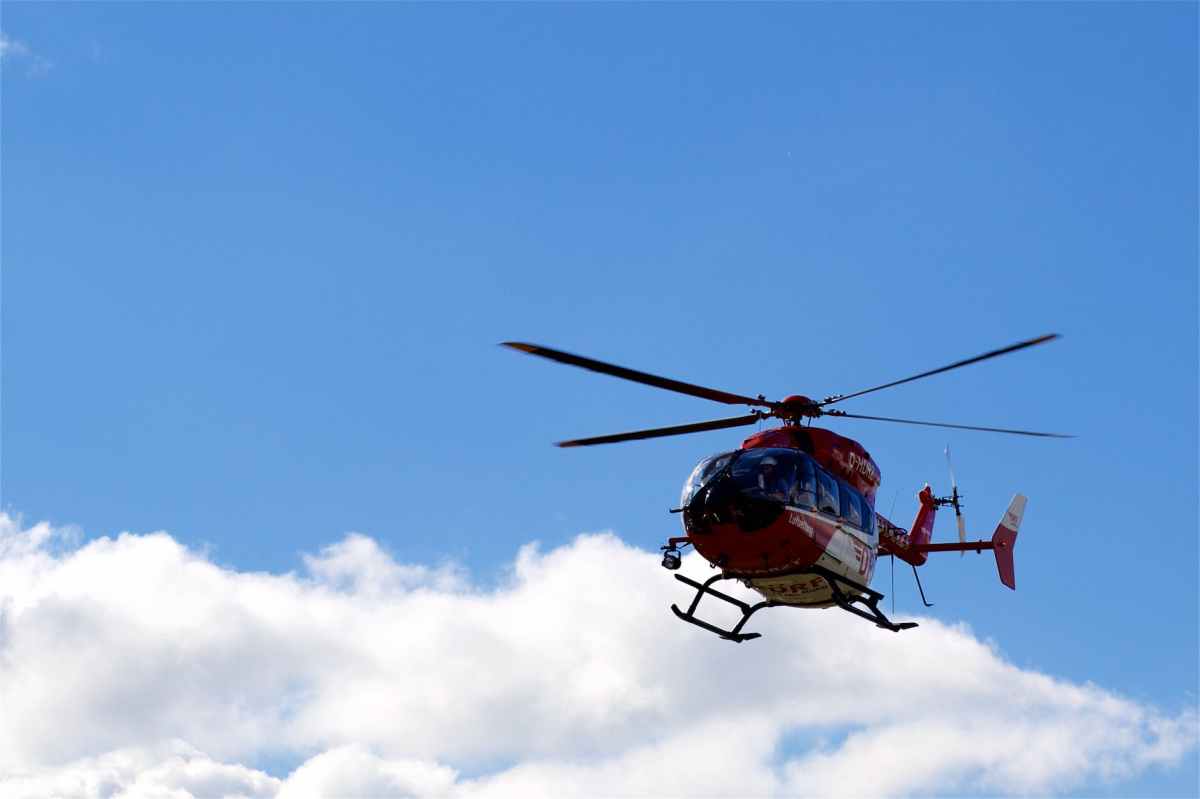
What will be the public reaction when we look up to see half a dozen new urban mobility vehicles buzzing past overhead? Perhaps we’ll accept new flying machines if it’s for a public service, an ambulance, fire services, police, or even newsgathering. Brightly coloured in emergency orange.

A public flying taxi service might raise a few eyebrows. A flashy private flying car, now that might be another matter altogether. There you are on a hot summer evening, in the garden, having a pleasant barbeque with friends and whiz a flying car swoops over the treetops. The passengers have their mobile phone out filming their trip. This is when fist will be raised skyward. It’s a time when you hope the next-door farmer hasn’t got a shotgun.

Today, a few pilots do get prosecuted for misbehaving when low flying private helicopters. Not often, it’s true. This happens with less than 1500 helicopters registered in the UK. What would happen with, say, 10,000 private flying cars? I wonder.

Scary 2

My list is still open for horror in aviation. I’ve opened the door to action movies with elements of horror. I’m excluding war movies and fighter pilot romps. A dramatic scene must have a moment of suspense when everything hangs on a thread. It could be a hide behind the sofa moment or felling that all is lost, and the faint light of hope is dimming. I was tempted to include zombie movies only to quickly come to my senses and say – no. I’ve avoided Snakes on a Plane. One, because I haven’t seen it. Two, because it’s write-ups suggest that it’s too ridiculous for words. Although, it’s not impossible. It’s even happened on general aviation flights.

Here’s five more movies, ancient and modern in my private list.

There’s an adaptation of the book No Highway. With actors James Stewart and Marlene Dietrich in the movie you would have thought it would have been a big smash. No Highway in the Sky is pedestrian, but the tension comes from us knowing that metal fatigue is real. Why don’t they believe it? We know the history of the first commercial jet, the Comet aircraft.

The original Flight of the Phoenix is a great suspense movie[1]. It’s not so much horror as intensely griping. Frightening in the sense that it tells us something about the good and bad of human behaviour. The constant battle between despair and what can seem like hopeless optimism in the face of terrible odds. Through gargantuan effort, crash survivors stranded in a desert survive.

There’s something especially frightening about aircraft crashes and danger in the cold white wastes of the poles. Again, passengers and crew struggle to stay alive in freezing weather in the desperate hope of rescue. Stranded, death visits the unfortunate survivors. Ordeal in the Artic[2] is a chilling movie of 1993 based on real events in 1991.

Final Destination has simple plot[3]. A student has a premonition, he and his friends get thrown-off a flight to Europe and then when they are back in the terminal there’s a fatal crash. They cheat death. But that’s not the end. That set-up is the ultimate scary imagining. It’s the what if? It’s the question survivors of aircraft accidents must ask – why me?

The 1955 British movie The Night My Number Came Up[4] plays on a similar theme but this time a nightmare before a planned journey. A bad dream of an aircraft crash. Will it happen just as the dream predicts. You must watch to find out.

Generally, in films there’s so much pure aeronautical nonsense on display. Commercial aircraft do not fall out of the sky when struck by lightning, flight crews do not lose control at the first sign of trouble, fuel doesn’t explode for no reason and the worst of weather doesn’t signal game over.

That said, there’s an inherent claustrophobic feeling inside an aircraft fuselage. It’s like a locked room drama. Passengers are isolated from the outside world. They are dependent on pilots, engineers and air traffic controllers all doing their jobs right. There’s the potential for this set-up to be the stage for an excellent dramatic horror movie. Tales of bravery, camaraderie, and sacrifice can all spring from the most dreadful of events. Unfortunately, so many movie makers make a mess of these situations.  


[1] https://www.imdb.com/title/tt0059183/?ref_=ttls_li_tt

[2] https://en.wikipedia.org/wiki/Ordeal_in_the_Arctic

[3] https://www.imdb.com/title/tt0195714/

[4] https://www.imdb.com/title/tt0047278/?ref_=ttls_li_tt

Tip

You may think it was a bit of a joke. Certainly, some of the holiday makers around me thought the cabin crew were joking. I was at the back of the aeroplane and so one of the last passengers off.

We arrived at London Gatwick’s North Terminal at about 9:30 pm on a Sunday. Passengers were keen to get off and get home. That said, the amount of sizable luggage in the aircraft cabin overhead bins and maybe the sleepiness of one or two people meant the long line down the aisle was moving slowly and intermittently. The process was civilised but at a snail’s pace as it seemed from the back.

When you hear a request to hurry-up otherwise the plane will tip up it does instil some urgency. That and one or two questions. It also made me think; could that really happen in this situation? I was standing next to the cabin crew at the back, and I can attest to their concern being real. Being at the terminal gate there was only the front door open to exist the aircraft. When we got on-board the aircraft both the front and rear doors were available.

The Boeing 737 MAX-8 is a not an overly long aircraft. That said, under certain unfavourable conditions it can tip. In fact, there are longer versions of both the Boeing and Airbus single aisle aircraft that pose more of a challenge in this respect. There is much stretching of popular aircraft types to increase passenger capacity.

At the same time as we were deplaning[1] (ghastly word), the ground crew were unloading our luggage. As a result of all this movement of passengers and luggage it is possible to have too much weight at the back of the aircraft. Yes, you could blame it on masses of carry-on bags obstructing the aisle on a full aircraft, but it also takes the front passengers to have got off quickly. There are more passenger seats behind the aircraft wings than there are in front. On a cool Sunday evening when the airport’s public transport options are limited there’s an incentive to rush-off from the front. As the deplaning continued there was a sense that something was happening underfoot.

Does it happen? Do aircraft tip up? Yes, they do[2]. It’s not an attractive sight. I have no idea what the procedures are if it does happen. It certainly would be a shock for those on-board. Anyone in the vicinity of the aircraft would have to watch out too. In these unplanned events, there is a hazard to ground crew that can result in injury.

This sort of event happens more often in the air cargo world[3]. While these events maybe comical to witness, they are no joke for airlines. The possibility of damage and the disruption to aircraft operations can be significant. Nose wheels coming off the ground don’t always result in an aircraft tip, but this is not somewhere any crew responsible would want to go.

Weight and balance issues are real. Each aircraft will have weight and centre of gravity limits established at the time of aircraft certification. Aircraft operators will have procedures[4] that fully consider loading and unloading. That said, as we can see, miscalculations do get made.


[1] https://grammarist.com/spelling/deplane-or-disembark/

[2] https://youtu.be/JTDSS8unwQM

[3] https://www.independent.co.uk/news/world/middle-east/747-plane-tips-backward-airport-cargo-doha-qatar-fars-air-qeshm-a8829896.html

[4] https://www.faa.gov/documentLibrary/media/Advisory_Circular/AC_120-27F.pdf

Climate

It’s an odd day that I write in agreement with The Pope in Rome. He says: “People are not responding at the level of urgency that is needed” on global climate change. The Pope has a go at a commonly held blind faith in transformative ways out of our troubles by technical innovation alone. He seems to say that we ignore reality in the hope of technological magical thinking popping-up just-in-time. His references are to the need for lifestyle changes rather than carrying on regardless.

Now, quite a number on the right of political debate will see this as a lefty intervention. Anytime religious people step over the boundaries from the ethereal into everyday life the standard conservative response is to shout – get back to the pulpit. The same response, but more polite, occurs when English bishops speak up in the UK House of Lords. I’m no advocate of them being an intrinsic part of our national political systems but they do, at least, speak from an ethical grounding[1]. If we are to talk of political long-term thinking this is very much it. There’s nothing more that prompts short-term thinking than a looming election.

Combating climate change and pushing for environmental justice are not fringe activities. It requires dialogue across the main political parties. Saddly, we are going through a phase of squandering opportunities to change. 

I agree that taking a puritan line and making “hairshirt” rules will not deliver the results that are needed. Most often such a sturdy approach just fuels luddite opposition and media outcry. Continuous graduated change and a robust commitment are needed. Unfortunately, these two are an anathema to the populist newspaper headline seekers.

Economic interests are often quoted as a reason to shelve changes. Yet, everyone knows that the costs ahead of us will be far bigger if change is not driven consistently – now. Resilient long-term policy isn’t a lefty luxury. Or liberal daydreaming. Or unafordable. It’s vital.

What’s interesting about active in-action is that there can be no such thing. Climate change will bite back. Action will have to be taken under presure. In civil aviation, for example the climate has an impact on aircraft operations. So, not only does aviation impact the environment but increasingly hazardous weather impacts aviation, with severe results in some cases. Turbulence experienced in-flight is increasing as the world is warming[2]

Approaching risks there are, at least, 3 positive actions to be taken. Eliminate it, reduce it, or mitigate it. With the climate emergency we’d better be committed to the first two because by the time we get to mitigation there’s likely to be few more unpalatable opportunities left.


[1] https://www.churchofengland.org/news-and-media/news-and-statements/bishops-warn-environmental-racism

[2] https://www.reading.ac.uk/news/2023/Research-News/Aviation-turbulence-strengthened-as-the-world-warmed

Adaptation

There was a time when AI was an esoteric subject that filled the minds of high-minded professors. They had real trouble trying to translate what they were doing into langauage that most of us would understand. Research in the subject area was the purview of national institutes and military facilities. Results flowed into academic journals and little read folders in the corners of university libraries.

That has changed. What was expensive to build and test because everything was unique or bespoke is no longer. Enough is known about algorithms that work, and the ones that don’t, to make practical experimentation much more viable. AI tools are turning up on our desktops, tablets, and phones without us even asking. Opting-in is often assumed.

A massive number of applications are nothing more than fizz. They can be useful, but they are not game changers, and our lives carry on much as before. What is new, or at least pushing at the door, is applications that control things in our everyday environment.

If traffic lights start guessing what my age is before allocating a maximum time to cross the road, we are going to start to see a good amount of pavement rage when they get it wrong. When AI algorithms drive my car for me it’s going to be a bad day when accidents start to accumulate[1] (even if the total system of systems is far safer than us mere humans). Anyway, it’s easy to write scary stuff about AI. In this case I’d like to highlight some positive gains that might be realised.

A lot of what is designed, produced, and sold is pretty much fixed the day it leaves the shop or showroom. Yes, for example, cars are recalled for fixing known deficiencies but the threshold for taking such action is extremely high. Even in a safe industry like civil aviation dealing with an unsafe condition that has been discovered takes time and a great deal of resources.

AI has the potential to be adaptive[2]. So, that thing that you buy, car, washing machine, or whatever, will have the inbuild ability to learn. To adapt to its situation. To be like others of its type but, over time, to customise itself to the needs of its user.

Just image a domestic appliance that can adapt to its pattern of use. Always staying with safe boundaries, producing maximum energy efficiency, and doing its job to the best of its specification. Let’s imagine a car that gets to know common routes and all the hazards on those routes and even takes the weather and time of day into account when driving those routes.

In all that adaptive potential there’s great benefit. Unlike buying gloves that are made to specific standard sizes and don’t quite fit you, the adaptive glove would be that malleable leather that slowly gets a better and better fit with use. AI will be able to do that if it gathers the right kind of data.

Now naturally, this gets complicated if the adaptive element is also safety related. The control system in a car, truck, tram, train, or aircraft must get it right day after day in a wide range of conditions. Nevertheless, if systems are constrained within known safe boundaries there’s much to be gained by adaptation. This is not taking control away from the human in the loop but making it easier to do what humans do best. Just a thought.


[1] https://www.washingtonpost.com/technology/2023/09/28/tesla-trial-autopilot-crash/

[2] https://luffy.ai/pages/IS-DR.html

Upfront

Years of looking at the reliability of aircraft components and structure have given engineers a good understanding of the natural decay of mechanical workings. To that extent even electronic components are mechanical. Materials oxidise (rust), random shocks and vibration take their toll, temperatures cycles from cold to hot and back again a whole range of impacts are relentless. You can say – nothing lasts forever.

Occasionally a discovery adds to the knowledge of how materials behave under high stress. Sadly, that’s what hit the early years of civil jet aviation. The de Havilland DH106 “Comet” was the world’s first passenger carrying jet airliner. It first took to the air in 1949, which I find remarkable.

Catastrophic metal fatigue failure of the aircraft fuselage put paid to this British aviation project but only after several tragic fatal accidents. In 1954, the Comet aircraft were all grounded during an extensive accident investigation. The jets were redesigned and re-entered commercial service in 1958. However, by then the aircraft had a damaged reputation and others were doing far better. Now, those Comet aircraft that remain are museum exhibits[1].

Last week, I walked through the fuselage of a Comet 1A built in 1953 at Hatfield for Air France. It’s fascinating to see what advanced aviation technology was 70-years ago. What was surprising to me was the read across from that first version of a jet aircraft and what we have in-service now.

Automation has removed the place of the navigator and the flight engineer, but the stations of the pilot and co-pilot are familiar. The fuselage is cramped but the seating is generous and spacious. This aircraft must have been a dramatic revolution in flying at the time.

As we look to advance aviation in the coming years, with new ways of flying and new ways of powering flight so the warning of the Comet project should be heeded. We are at a time of extraordinary changes in the aviation industry. Advanced technology can deliver great benefits to society. It’s up to us to make sure we cover all the possible disbenefits as far upfront as we can. If we don’t, they will come back to bite us.


[1] https://www.dehavillandmuseum.co.uk/aircraft/de-havilland-dh106-comet-1a/

Society & Innovation

Yesterday, I drove up the main A303[1] in the stifling last summer heat. It was a windless sticky 30C. I drove past the road sign that says Micheldever Station[2]. By the way, “up” meaning heading towards London. Going “up” to London isn’t an unusual West County way of expressing that trip.

On that busy highway there are few, if any noticeable road signs that point towards a railway station. I’ve often wondered why that one was deemed so necessary. It’s not a tourist attraction, like the Watercress line[3] is in that part of the world. It’s an ordinary everyday railway station.

The small English hamlet known as Micheldever Station is a bit of an oddity. It’s the sort of place that could have been the location for The Avengers or The Saint, the popular British TV series of the 1960s. It’s in the green and pleasant countryside of Hampshire and about 10 miles north of Winchester city. An area that’s as conservative as can be.

Micheldever Station has a curious technological history. In 1895, it was the starting point for the first automobile journey in Britain. At that time a British Act of Parliament required that all self-propelled vehicles on public roads must travel at no more than 4 miles per hour and to be preceded by a man waving a red flag. In 1805, highly sensible. There’s no way that those infernal new machines should be allowed to scare the horses.

Not everyone thinks such thoughts while thundering along the A303 at 70 miles per hour. However, to me, ever since I got my first driving license at the age of 16, it’s been my most familiar of arterial roads. So, much traffic passes that way there’s never a time when it can’t be heard.

Well, we have come a long way in 138 years. Now, we are getting nervous about the safety of driverless cars, and no one even questions having a self-propelled vehicle on public owned roads. If they do, the likelihood of transforming that formula into something else is astronomically small. I can’t think of a bad time to write on the subject of: “Innovation and Its Enemies[4].” In fact, what may have graced a Victorian bookshelf can have some resonance today.

Next year, we will see commercial flights taken in electrically powered air-taxies. Without a shadow of a doubt these flights will arouse some vocal public resistance. We can take that from the history of technology. The airborne version of the man waving a red flag could raise its ugly head. I don’t say throw caution to the wind, but we need to be mindful of the natural propensity to object.

Striking a societal balance will not be easy. It would be a fool who says it will be. Slowly but surely, we will need to become accustomed to advanced new forms of mobility. Sticking a fair balance between the utility of these new machines and any burden they may place upon us will be a mighty tricky job.

I wake-up to the noise of the residential road outside. People commuting to work. The local trains send a rumble through the air. I don’t want to wake-up to the sound of an air-taxi hovering outside my window. Given the research[5] and technology under development, none of us should have to tolerate an increase in noise. Mobility and quality of life shouldn’t always be in conflict.


[1] https://youtu.be/C0sL3_NKPao

[2] https://www.southwesternrailway.com/travelling-with-us/at-the-station/micheldever

[3] https://watercressline.co.uk/

[4] https://global.oup.com/academic/product/innovation-and-its-enemies-9780190467036?cc=us&lang=en&

[5] https://ntrs.nasa.gov/citations/20210014173

Horizon

There’s been a couple of false dawns. Now, the morning’s News is that the UK will rejoin the European Horizon programme. The EU’s Horizon Europe Framework Programme (HORIZON) provides grant funding for research priority topics for the years 2021-2027.

The recognition that there’s a common interest in research across Europe is welcome. There are important areas of investigation that go well beyond the resources available to any one country. Benefiting from collaboration is a win-win.

Access to Horizon Europe will be a great opportunity for UK aerospace[1]. It has been in the past and surly will be in the future. Of the billions available there’s a good chunk for funding opportunities for aerospace research and technology. This funding is particularly focused on greening aviation.

Such subjects as the competitiveness and digital transformation in aviation are addressed too. Advancing the regions capabilities in a digital approach to aerospace design, development and manufacturing will be invaluable to UK industry. Artificial Intelligence (AI) used for Machine Learning (ML) and complex modelling are the tools that will be deployed throughout the global industrial environment.

Europe can pioneer the first hydrogen-powered commercial aircraft. The major role the UK can play in advancing this aim is self-evident. Ambition, capabilities, and expertise reside here. The magnification of this to tackle what are enormous challenges can only be a good move.

Projects like ENABLEH2[2] provide a pathway to the introduction of liquid H2 for civil aviation. These projects are not easy, but they do provide a long-term environmental and sustainability advantages. Access to these projects can minimise duplication and the dangers of spending valuable resources on pursuing blind alleys.

Research is not just a matter of hard technology. Without the new skills that are required to meet the targets for a green transition it will fail. Investments in upskilling and reskilling opportunities are equally important to enabling change.

The principles of propulsion of hydrogen and electric systems need to be taught at every level. It’s not academics in lab coats that will keep civil aviation flying on a day-by-day basis. Training programmes for a new generation of manufacturing and maintenance engineers will need to be put in place. Research will underpin that work. 


[1] https://www.ati.org.uk/news/access-to-horizon-europe/

[2] https://www.enableh2.eu/