SONAR in Ocean Wreckage Recovery

Finding aircraft wreckage in the deep ocean is possible. However, it requires a degree of good fortune. Most of all, it requires the searcher to look in the right places. Lots of other factors come into play, particularly if the ocean floor is uneven or mountainous.

The primary tool for imaging the ocean floor is SONAR. That’s using the propagation of sound in water. SONAR can be of two types. One is called “passive” and the other called “active”.

The first case is like using a microphone to listen to what’s going on around. Of course, the device used is named appropriately: a hydrophone. It’s a device tuned to work in water and not air. Afterall, sound travels much faster in a liquid than it does in air.

Passive SONAR depends on the object of interest making a noise. Just like we have directional microphones so we can have directional hydrophones.

Passive SONAR is only useful if the aircraft wreckage is making a noise. Since in the case of Flight MH370, the battery powered underwater location beacons attached to the accident flight recorders have long since stopped working this kind of SONAR isn’t going to be much use.

Active SONAR is analogous to RADAR. That is where a pulse of high frequency sound is sent out through a body of water. Then sensitive hydrophones pick up a reflection of that pulse. It is detected and all sorts of miraculous digital signal processing is done with the acoustic signal, and an image is then formed. From that displayed image the human eye or sophisticated algorithms can make sense of what they are looking at on the sea floor.

Active SONAR can give both range and bearing (direction). Timing the sound pluses from their transmission to reception can give a way of calculating range. Or distance from the object providing a reflection. Bats know how to do this as they navigate the dark.

In sea water, there are complications. Sound does not always travel in a straight line in sea water. The speed of sound in water depends on salinity, temperature and pressure. All three of these factors can be measured and compensated for in the SONAR signal processing that I mentioned above. Helpfully at ocean depths beyond a kilometre the calculations become easier.

The average depth of the Indian Ocean is over 3 kilometres. It’s mountainous underwater too. So, what are the chances of finding flight MH370 on the ocean floor after 10-years[1]? This prospect goes back to my earlier comment. It requires the searcher to look in the right places.

Just imagine encountering the Grand Canyon for the first time. It’s nighttime. An important object is lost in the canyon. You only have the vaguest theories as to where the object has come to rest. With a handheld touch you go out to search. What are the chances of finding the object?

There are several factors that are in your favour. One, you know what the object might look like or, at least, in part. Two, the easy search locations (flat/smooth) may be covered relatively quickly. Three, certain areas of the rocky canyon have already been searched. Still the odds are against finding the lost object without a high degree of good fortune. 

I wish the new planned searchers much good future[2].

NOTE 1: one of my student apprentice projects was to design and build a Sing-Around Velocimeter for use in relatively shallow sea water[3]. It worked but was cumbersome in comparison with the simple throw away devices used for temperature depth profiling.

NOTE 2: To get down to the ocean depths required it’s a side-scan sonar that may be used. This active sonar system consists of a towed transducer array that can be set to work at different depths. Imaging objects on the seafloor and underwater terrain is done as a towed array moves slowly forward through the water. The scanning part is the acoustic beam sweeps left and right. Each scan builds up part of an image.

In operation, as the frequency of the sound in water goes up so does the resolution of a potential image but, at the same time, the range of the sonar system goes down. Thus, a sonar system used for surveying may have low and high frequency settings. Unlike sound in air, here high frequency means above 500kHz.

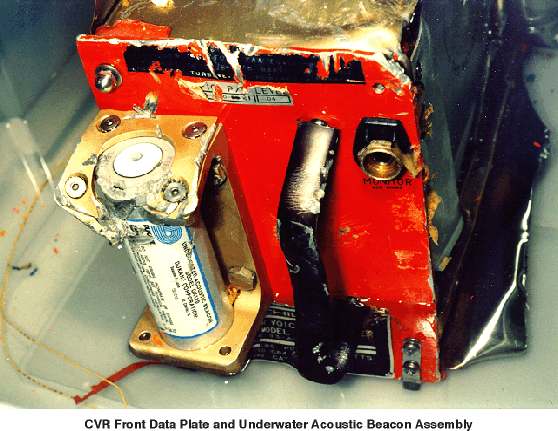
NOTE 3: What will an aircraft accident recorder look like after a decade in the deep ocean? It might have survived well given the nature of the dark cold pressured environment. This picture is of an accident recorder recovered from relatively shallow sea water (Swiss Air Flight 111).

POST: Nice view of what SONAR can do, at least in shallow water Bristol Beaufort wreckage found


[1] https://www.cbsnews.com/news/mh370-plane-malaysia-new-search/

[2] https://www.bbc.co.uk/news/articles/cewxnwe5d11o

[3] https://apps.dtic.mil/sti/tr/pdf/AD0805095.pdf

Risks of Pruning Government

Everybody likes a good analogy. I don’t know if this one qualifies. We communicate by saying this thing is like this other thing. The first one being easier to understand than the one second. It’s a basic part of storytelling.

Who understands how government and its institutions grow? I’ve no doubt there are huge textbooks full of detailed analysis and complicated theories. Sitting on dusty library shelves. Written by knowledgeable and venerable academics.

I’m coming from a background that’s more practical. One of having mixed with and worked in bureaucratic structures built to serve a public good. Bureaucracies that have both traditional administrative and technical elements.

Here goes. Government, or rather the administrations, institutions and services are like a large oak tree. It’s kind of human pyramid in the sense that there’s a top and bottom. An upside-down tree minus the roots.

Oak trees are long lived. They have branches that are substantial so that they can carry a heavy load and suffer the battering of the wind and rain. Out on the furthest limbs they are young, spindly and vulnerable.

Today’s media is full of stories of what might come. There’s a new year in prospect. Across the Atlantic a new President is about to take-up office. Speculation is rife. One part of that speculation concerns the future of the large administration that is the federal state.

The Presidents favourite billionaire has ideas to take a chainsaw to the tree of administration. Generally speaking, a chainsaw isn’t the best tool for the job, but it certainly is scary. Maybe that’s the point. Keeping a huge, embedded administration on its toes.

My point, and I have one, which is more than I can say for Rory Stewart, a former minister, talking on the BBC this morning. My point is that pruning a tree requires the pruner to be competent. That’s having the attitude, skill and experience needed to make a good job of it.

Lopping off limbs of a working administration with the sole aim of saving money isn’t such a sound idea. Each branch has a purpose. It’s as well to have a comprehensive understanding of what that purpose is before the pruning starts. From that understanding can come a sound reason to prune.

Ideally, pruning should be good for the tree and good for everyone who depends upon it. Weak branches that suck-up energy even though their days are numbered should become firewood. Fledgling young branches that are heading out to explore new territory may need encouragement and support.

So, it is with government. There’s a lot of truth in Parkinson’s Law[1]. He knew a thing or two about bureaucracies. The clever bit is finding out where this phenomenon has taken off. Where the tree has grown way out of balance.

Will Musk be competent in pruning? Who knows. One thing is for sure. The potential for loping off a branch that is vital to health, wealth and happiness is all too real. Let’s watch and see.


[1] the law – “Work expands to fill the available time”

What If Semiconductors Didn’t Exist?

There are moments when it’s dark and grey outside. Moments to ponder a what-if. That’s a what-if something hadn’t happened or physical laws aren’t what they have been found to be.

In my youth I do remember making a “crystal” radio receiver[1]. A relatively fragile germanium diode and a couple of other components scraped from junk radios, record players and TV sets. It worked quite well. It was a good introduction to the theory of amplitude modulation (AM). The diode detector demodulates the radio signal and provides a faint signal to listen to. The whole arrangement is crude but cheap and simple. It depends on that useful device – a semiconductor diode.

My what-if is right there in plain sight. Let’s put aside the physical laws that give certain materials their properties. What-if the whole world of semiconductors didn’t exist?

The most immediate repercussion is that this keyboard, screen and computer would look entirely different, if it existed at all. What I’m doing now is dependent upon millions of semiconductors all doing exactly what they’ve been designed to do. Easy to take for granted – isn’t it. Our modern world is enabled by semiconductors.

Electronics would still exist. Before semiconductors were understood thermionic valves provided the ways and means to control electrical signals. Don’t think that valves[2] have disappeared in the 21st century. There’re enthusiasts who prefer them for amplification. The sound is better (different) – so they say.

Unlike semiconductors, thermionic valves don’t lend themselves to miniaturisation. A world without semiconductors would be populated by machines that are considerably larger and heavier than those of today. But it wouldn’t be a world without sophistication. Just look at the English Electric Canberra[3]. An incredibly capable aircraft for its day. It lived a long life. Without a semiconductor in sight.

It’s difficult to imagine e-mail without semiconductors. It’s difficult to imagine the INTERNET or the mobile phone. Not that such key markets wouldn’t be satisfied by some other means. The transition to a global dependency on digital systems would probably have been considerably slowed. Maybe the pace of life wouldn’t have accelerated so much.

I don’t think we would have been trapped in a 1950s like society. Only that patterns of work would have taken a different developmental path. Would it have been the one painted in the grim tale of 1984? No. Even that takes a position of a freezing of the state of human progress.

A non-semiconductor existence would have meant less proliferation of electronic devices. It might have led to a less wasteful society where repairing equipment was given more weight.

I suspect that large global corporations would inevitably have a hold over whatever technology was most popular. That side of human behaviour is technology agnostic.


[1] https://www.nutsvolts.com/magazine/article/remembering-the-crystal-radio

[2] https://brimaruk.com/valves/

[3] https://www.baesystems.com/en-uk/english-electric-canberra

H2 Aircraft Design

Cards on the table. I’m a believer. Despite the immense technical challenges, Hydrogen is a viable fuel for future large civil aircraft. That said, operational service of such revolutionary aircraft isn’t going to happen in a hurry.

Reading the history, Concorde was an incredible test of the boundaries of what was possible and that was met, but it didn’t come easy. Breaking new ground is never easy. [A common saying that’s maybe open to challenge]. In aviation making step-changes happens every decade. What’s nearly always required is exceptional determination, almost beyond reason, large sums of money and special people.

Control systems – no big deal. Mechanical components – evolution possible. Turning a gaseous fuel into high-levels of propulsive thrust – can be done. Building a one-off technology proving research vehicle. It’s happening. At least for the light and commuter class of aircraft.

None of this is enough. Because the gap between an aircraft that can fly and an aircraft that can be produced in the thousands and go on to make an operational living and build an impressive safety and reliability reputation, that’s still a million miles off.

Today, there’s artist impressions of all sorts of different H2 aircraft configurations. It’s like people painted pictures of Mars with imaginary canals, long before anyone knew what the planet looked like in reality. Innovation starts with ideas and not all of them are sound.

As I expressed in my last article, crashworthiness must be given much consideration when speculating about future designs. It’s not always explicit in aircraft certification, cabin safety being the exception, but studying the history of accidents and incidents is essential. One of the successes of the authorities and industry working together is to take lessons learned seriously.

I remember looking at the pictures of the wreckage of Air France Flight 358, which crashed on landing in Toronto, Canada[1]. The fact that there were no fatalities from that accident is a testament to good operations and good design practices. The Airbus aircraft burned out but there was enough time for passengers and crew to get away.

My thought is what kind of H2 aircraft configurations would permit the same opportunity?

Considering this large aircraft accident, and others like it, then there’s a message as to where fuel tanks might best be placed. There’re some aircraft configurations that would have little hope of providing the opportunity for rapid evacuation of hundreds of people.

So, in my mind, don’t attached large pressurised cryogenic fuel tanks to the underbody structure of an aircraft fuselage. However robust the design and build of such fuel tanks they would be unlikely to survive as well as the cabin passenger seats, namely 9g[2]. That would not provide a good outcome post-accident.

Maybe, like aircraft engines sitting on pylons off the wings, that too is a good place for fuel tanks.


[1] https://asn.flightsafety.org/asndb/322361

[2] https://www.easa.europa.eu/sites/default/files/dfu/NPA%202013-20.pdf

Challenges of Hydrogen Fuel in Civil Aviation

This week has been a Hydrogen week. It’s great to learn more of the projects that are out there and the ambitions of those developing systems. Hydrogen is a live subject. Looking at the possible pathways for civil aviation to take there’s a myriad of choices. However, when it comes to the fuel for propulsion there are not so many potentials.

It’s surely the case that at some time in the future the use of fossil fuels to propel us across the skies will no longer be acceptable. Even if I’m talking to climate change sceptics the point must be made that fossil fuels are a limited resource. Not only that but the air quality around airports is a matter of concern.

It’s there in our basic education. Water is H2O. It’s that combination of Hydrogen and Oxygen that is essential to life on Earth. So, if we have a process that provides aircraft propulsion by using Hydrogen it should be a whole lot better for the environment than using Jet A1.

The problem is, and there’s always a problem, to carry enough Hydrogen it will need to be pressurised and in liquid form. That means extremely low temperatures, robust storage containers and extensive leak free plumbing.

Today, we have cars on the road that run on liquefied petroleum gas (LPG). It’s a novelty. It’s less harmful to the environment and can cost less. However, LPG systems need regular servicing. The point of mentioning this pressured gas in a transport system is that it has been integrated into regular everyday usage. That’s knowing that escape of even small quantities of the liquefied gas can give rise to large volumes of gas / air mixture and thus a considerable hazard[1].

Any analogy between the car and the aircraft can be forgotten. That said, one or two of the issues are similar. Yes, what happens when an escaped volume of gas / air mixture is ignited?

What scenarios would bring about conditions whereby a destructive explosion is possible?

Let’s start with the situations where aircraft accidents most often occur. Take-off and landing are those phases of flight. A surprising number of accident scenarios are survivable. The important part being to get an aircraft in trouble on the ground in such a way that an evacuation is possible. That can mean hitting the ground with a great deal of force[2].

Here’s the matter of concern. An aircraft with large cryogenic tanks and associated complex plumbing hits the ground at a force of many “g”. What then happens? Certainly, pressurised liquefied gas would escape. Being a very light gas, the uncontained Hydrogen would rise rapidly. However, trapped amounts of gas / air mixture would remain a hazard. Would that be ignited?

There are a lot of unknowns in my questions. Although there are unknowns, any post impact situation is likely to be very different from a situation with a conventionally fuelled aircraft.

Today’s, burn through requirements ensure that an external fuel fire is held back. Thereby ensuring enough time to evacuate. For a hydrogen aircraft ventilation may be essential to stop build-up of a gas / air mixture inside a fuselage. That means a whole different approach.


[1] https://youtu.be/AG4JwbK3-q0

[2] https://skybrary.aero/accidents-and-incidents/b772-london-heathrow-uk-2008

Societal Change and AI

Societal change is inevitable. It seems hack to analogise with reference to the printing press. Look what happened, an explosion of communication. Dominance of the book for centuries. Expanding literacy. Progressive shaping of society resulting in this era.

We are only where we are because we stand on the shoulders of the giants who went before[1]. Not just the giants. There is massive amount of human contribution that is never accounted. The unseen heroes and the occasionally rediscovered thinkers and doers.

Along the way of history those who battle the battle of glass half full or glass half empty chatter away. We are either in a glorious age or a minute away from Armageddon. Polar ends of our future, both stories have merit. Who has a crystal ball that works?

I’ve been aware of neural-networks and joked about Bayesian Belief Networks for at least two decades. Having been involved in the business of data analysis that’s no surprise. Even so the rapid advance of a multitude of different forms of artificial intelligence (AI) is a surprise.

Talking generally, we have this foolish mental picture of the world that everything is linear. Progression from one state to another takes proportionate steps forward. It’s a hangover from the analogue world which is where we were until the 1960s/70s.

This fetish for straight lines and normal curves is deeply embedded. It’s odd. Although a lot of rules in nature do have a linear form, one that Sir Isaac Newton would recognise, there’s far more that follows other rules.

In the last few weeks this fetish played out at a global scale. We are all treating climate change as if it’s a water clock. Drip, drip by drip the climate changes. A reaction to a progressive degradation. Yet, environmental reality might have a step change in degradation ahead.

In my view it’s right to try to vision ahead about the path AI technology might take. It’s right to consider more than progressive development and evolutionary change. Information systems have a habit of either falling into disuse or marching on at the pace of Moore’s law[2].

Another example. The math of Fourier transforms has been around a long time. Doing Fast Fourier Transform (FFT) in the 1970s required a couple of chunky cabinet full of power-hungry electronics. For the few, not the many. Today, every smart phone[3] in the world can crunch FFT algorithms. For the many, not the few.

Can we use a simple graphical representation to say where AI is going[4]? Will “intelligence” double every year or two? Well, I suspect that developments will go faster than a doubling. Like Moore’s law these conditions tend to become self-fulfilling. It’s a technological race.

[Why? To a machine there’s no sleep. To a machine there’s 86,400 seconds in a day. Everyone is meaningful and useful. To a complete and successful electronic machine only a tiny fraction of its operating time needs to be spent fixing itself. Or that might be one job left to us.]

POST: The impact of this high speed race makes interesting study U.S. Should Build Capacity to Rapidly Detect and Respond to AI Developments – New Report Identifies Workforce Challenges and Opportunities | National Academies


[1] Sir Isaac Newton, English scientist, “If I have seen further, it is by standing on the shoulders of giants.”

[2] https://www.asml.com/en/technology/all-about-microchips/moores-law

[3] https://www.bbc.co.uk/news/business-38320198

[4] https://www.nature.com/articles/d41586-024-03679-6

Next Generation with Practical Experience

Backwards and forwards the discussion goes on platforms like LinkedIn. Everyone recognises the expected demand for engineers. This century will be as much an engineering century as any century that has gone before. Science advances rapidly. New materials are available. Computation power is shooting off the charts. It’s now possible to design, build and test more systems to do more tasks than ever before.

The question is where’s the next generation of engineers going to come from?

Here’s one aspect of the debate that I find mildly irritating. Despite that discomfort, I’m prepared to be a hypocrite on this point. It’s to discuss future education and training with an almost blinkered reference to one’s own experience. For me, that’s to look back 45-years and then project forward. This is a natural tendency that should be handled with extreme care. However much it’s good to cherish past successes they do not guarantee future ones.

My first paid job involved Rotring[1] ink pens and pencils. Drawing film and large dyeline printers. Ammonia vapour filled the print room. It’s the sort of place the term “blueprint[2]” emerged. Drawing a myriad of small mechanical components used to make-up cabinets of electronics. I’d follow them through to the workshop where they would be turned into hardware.

That world has gone almost entirely. At that time, an infant was growing. A chunky electronic pen that could be used to move straight lines around on a bulky computer screen. That infant was computer aided design. Methodically and slowly computer digitisation was taking over. Soon the whole job description; engineering draftsman, disappeared into the history books.

Today’s infant is Artificial Intelligence (AI) or at least, if we discard the hype, massive infinitely flexible computing power. As a result, we have no idea how many jobs will next disappear into the history books. So, if I have a point to make it’s along the lines of being mighty cautious about what could inspire the next generation of engineers.

Moving to the next step in my early career path. Given that I made solid progress and having an exceptionally progressive employer[3], I moved through departments each time having a go at something new. My pathway to electronic design (analogue) was step by step.

I’ve pictured an oscilloscope because that’s one of those key steps. What it provides is a way of seeing what can’t normally be seen. Sitting in a classroom learning about frequency modulation, or such like, is necessary. Doing the sums to pass exams is essential. But nothing beats hooking-up a few bits of equipment on a workbench and seeing it for yourself.

So, that’s my recipe for inspiring the next generation of engineers. Create opportunities for them to see it for themselves. Even in the massively complex digital soup that we all swim in.

Theory is fine. Being able to visualise is the best tool. Or is that just me?


[1] https://www.rotring.com/

[2] https://youtu.be/7vnGY9vXgsQ

[3] https://en.wikipedia.org/wiki/Plessey

Brazilian Air Crash

Two weeks have elapsed since the tragic loss of VoePass Linhas Aéreas flight PTB2283[1].

Reports are that the Brazilian air accident investigators[2] have successfully downloaded recordings from the aircraft Cockpit Voice Recorder (CVR) and Flight Data Recorder (FDR).

A detailed analysis of both recordings should provide a replay of the flight events on the fateful day. This means that any flight anomalies can be interpreted. Both actions of the crew and the response of the aircraft can be used to understand the sequence of events.

Those conducting the analysis will need to verify the past serviceability[3] of both recorders. It’s easy to assume that what’s presented in the recovered replay is what happened. However, that depends on the calibration of sensors and the correct functioning of the aircraft’s audio system.

CVRs and FDRs are primarily tools for the investigation of accidents and serious incidents by investigating authorities. Accident recordings can be a rich source of information. It’s not just the obvious contribution technical records make to an investigation. The CVR, via a cockpit area microphone picks up much more than just the speech of the crew and their communications with air traffic. Engines, propellers, aircraft warning systems, aerodynamic noise and the impact of structural failures all produce audio signatures.

I assume that the aircraft operator has a Flight Data Monitoring Program. Such a program can support continuing airworthiness and operational safety of an aircraft. It can be a vital part of a Safety Management System (SMS). Also, the regular analysis of flight data is one way of ensuring that the serviceability of the data acquisition system for an FDR is known.

A preliminary report on this fatal accident is expected in early September. It is up to CENIPA if the publish any transcript of the accident recordings.

VoePass, the airline in question, operates a regional network in Brazil. Not surprisingly it has now come under greater scrutiny by the Brazilian aviation regulator, Agência Nacional de Aviação Civil (ANAC).

It’s worth noting that the Brazilian civil aircraft fleet is one of the largest in the world. It’s a sizable country. Both ANAC and CENIPA are well experienced in addressing the aftermath of a major aviation accident. Expectations are high that the causes of this fatal accident will be fully understood. Appropriately then corrective action will be taken.


[1] https://asn.flightsafety.org/wikibase/409335

[2] Brazilian Aeronautical Accidents Investigation and Prevention Center (CENIPA)

[3] https://www.caa.co.uk/publication/download/12811

Navigating Speculation in the Age of Abundant Information

Speculation is a natural human response. When faced with a paucity of information we often put together what we know and then make a best guess as to what happened or what might happen. However, wise or unwise it’s not possible to stop speculation. Well, that is assuming that autocratic power doesn’t use force to crush the free exchange of ideas.

Since the rise of the INTERNET, with a proliferation of all kinds of material, it becomes less and less possible to quell speculation. A sprinkling of information can grow into a monstrous conspiracy but equally it can grow into a stepping stone to greater understanding. Living with this two-edged sword is our modern dilemma.

In a more deferential society, that we may have been immediately post WWII, officialdom was accustomed to restricting information. The principal of “need to know” and statements like – wait for the official report – were enough to quell Press intrusion and intense public curiosity. On occasions this deference turned out to be tragic and been an enabler for authorities to cover up dreadful errors and failings. My mind goes to the Hillsborough disaster[1] when I think of tragedies made worse by the manipulation of information.

What’s all this about – you might say. I’m giving a thought to the post- accident scenarios that become more common. When major fatal transport accidents happen to planes, boats and trains there’s an instant demand for detailed information.

This is happening in relation to the recent Brazilian ATR aircraft accident and, this morning, to the sinking of a large modern yacht off the coast of Sicily. Both tragedies seem astonishing in their own way. So much of our technological world works so perfectly, a great deal of the time, that we get accustomed to reliability, safety and security. Almost taking it for granted.

Basic technical information, like registration numbers, type and age of the vehicle all surface quickly after an event. Even numbers of fatalities are verified within a couple of days. What gets the speculators going is the answers to the question – why?

A list of circumstantial factors can soon emerge. The time, the weather, the location and the organisations involved. All of this creates a mix that feeds both intelligent and unintelligent speculation. I’m not saying this is de-facto bad. It’s reality.

What’s all this about? There are reports across the media of the “last words of Brazil plane crash pilots.” This speculation surrounds the words spoken in the cockpit and seem to come from someone’s knowledge of a transcript. How can that be? Through international agreement the independent aviation investigation organisations across the globe are committed to a protection of this type of recorded information (Cockpit Voice Reporter (CVR)[2]). Accident flight recorders are there for the purposes of the investigation of an accident or incident.

Back to our modern dilemma. Is it good or bad that sensitive protected information leaks into the public domain before it’s been thoroughly analysed and properly understood? There is a cost to a dilution of the protection of information. For one, it may discourage the voluntary application of safety enhancements, like fitting a recorder to a plane, boat or train.


[1] https://www.bbc.co.uk/news/topics/c8m8v3p0yygt

[2] https://skybrary.aero/articles/cockpit-voice-recorder-cvr

Free Speech or Unregulated Chaos?

Twitter grew to a global scale. It didn’t make money. It was a social media success but a commercial mess or, at least, that’s how a lot of people saw it. Its snappy short text became the playground for people pushing press releases and journalists seeking immediate printable lines. On top of the professional users were a mountain of commentators that ranged from the highly credible and reliable to the outlandish crazies promoting their every possible madness.

For whatever reason it caught the attention of Elon Musk. He has a numerous selection of descriptions ranging from wry businessman to futurist visionary. There’s no doubt he’s a risk taker who has an uncanny ability to come up smiling where others would likely have collapsed in bankruptcy or chaos.

Reports of “X”, as it is known now, are that Musk sees it as a platform for free speech. There’s an absolutism about this mandate. Although there’s legislative obligations in most countries that put some boundaries around what’s called “free speech” the platform X has become one that pushes at the boundaries.

Generally, moderate opinions don’t stir-up controversy. So called “mainstream” factual reporting can be boring and somewhat dry. What seems to trigger a lot of activity are opinions that are “extreme”. That is often extreme in the political sense from the left and the right. Tapping into the popularity of populism – if that makes any sense. Polarisation if it doesn’t.

As a platform for legitimate political views, however disagreeable, there’s not so much to complain about the openness of a lightly moderated space. Through history public spaces have been created for people to vent their views[1]. However, this is not done without regulation on conduct.

Where free spaces get extremely toxic is the riotous spread of misinformation. It’s one thing to have strong socialist or liberal views or hard conservative views but when views are presented as based on facts when they are not[2], and expressions are intended to create aggressive responses, there’s a line of unacceptability that has been crossed.

I am taking the view that today’s X is not a place for a reputable organisation or person. It’s not that social media platforms are intrinsically bad. No, it’s the way that they are managed. My observation is that there is a connection between the mindless riots of recent days in England and the lack of attention to civilised regulation of certain digital platforms. It’s a question of both written regulation and its consistent implementation.

This situation is recoverable. Putting digital social media back into a good shape for the public to conduct a dialogue about the issue of the day will require effort from its owners and governments across the globe. Is there a willingness to step up and act? Let’s see. Surely these subjects need urgent action. 


[1] https://www.royalparks.org.uk/visit/parks/hyde-park/speakers-corner

[2] https://www.vox.com/technology/2023/5/20/23730607/elon-musk-conspiracy-twitter-texas-shooting-bellingcat-taylor-lorenz-psyops