Air Taxi 3

Urban mobility by air, had a flurry of success in the 1970s. However, it did not end well.

Canadian Joni Mitchell is one of the most celebrated singer-songwriters and my favourite. She has tapped into the social and environmental issues that have concerned a lot of us for decades. Of her large catalogue, I can’t tell you how much I love this song[1]. The shear beauty of the lyric.

Anyway, it’s another track on the album called “Hejira” that I want to refer. When I looked it up, I found out, I was wrong. The song I want to refer to is on the 1975 album “The Hissing of Summer Lawns”. The song “Harry’s House[2]” contains the line “a helicopter lands on the Pan Am roof like a dragon fly on a tomb.” Without going into what it’s all about, the lyrical image is that flying from a city skyscraper roof was seen as glamorous and the pinnacle of success.

In 1970, prominent aviation authorities were talking about the regulatory criteria needed for the city-centre VTOL[3] aircraft of the future. Then on the afternoon of 16 May 1977, New York Airways Flight 971, a Sikorsky S-61 helicopter, crashed[4] on Pan Am’s building rooftop heliport[5]. That ghastly fatal accident reset thinking about city centre operations air transport operations.

So, what’s different 50-year on? Proposals for city centre eVTOL operations are much in the News. City planners are imagining how they integrate an airborne dimension into public transport operations. Cars, busses, trains and eVTOL aircraft may all be connected in new multimodal terminals. That’s the city transport planners’ vision for less than a decade ahead.

For one, the vehicles are radically different. Yes, the physics of flight will not change but getting airborne is quite different between a conventional large helicopter and the plethora of different eVTOL developments that are underway across the world.

Another point, and that’s why I’m writing this piece, is the shear amount of safety data that can be made available to aircraft operators. Whereas in the 1970s, a 5-parameter flight recorder was thought to be neat, now the number of digital parameters that could be collected weighs in over thousands. In the 1970s, large helicopters didn’t even have the basic recording of minimal flight data as a consideration. The complexity in the future of eVTOL will be, not how or where to get data but what to do with all the data that is streamed off the new aircraft.

Interestingly, this changes the shape of the Heinrich and Bird “safety pyramid” model[6]. Even knowing about such a safety model is a bit nerdy. That said, it’s cited by specialist in countless aviation safety presentations.

Top level events, that’s the peak of the pyramid, remain the same, but the base of the pyramid becomes much larger. The amount of safety data that could be available on operational occurrences grows dramatically. Or at least it should.

POST: Growing consideration is being given to the eVTOL ecosystem. This will mean a growing need to share data Advanced Air Mobility Portal (nasa.gov)


[1] https://youtu.be/nyj5Be5ovas

[2] A nice cover https://youtu.be/bjvYgpm–tY

[3] VTOL = Vertical Take Off and Landing.

[4] https://www.nytimes.com/1977/05/17/archives/5-killed-as-copter-on-pan-am-building-throws-rotor-blade-one-victim.html

[5] https://www.thisdayinaviation.com/16-may-1977/

[6] https://skybrary.aero/articles/heinrich-pyramid

Air Taxi 2

As a quick effort at simple research, I looked at several local government websites searching for Air Taxi or Urban Air Mobility (UAM) or Advanced Air Mobility (AAM). The result was lots of blanks with one or two exceptions[1][2]

There’s numerous articles about e-scooters and how they might be integrated into cityscapes.

Addressing local governments, much of what has been published to date concerns the use of drones. Yes, the use of drones is happening here and now, so this is not such a surprise. However, to me, this was a reminder that the frenetic world of aviation often discussed the future in rooms full of like-minded people. Embracing a wider audience is overdue.

In the case of UAM/AAM, innovations in civil aviation are move beyond airports, upper airspace, and specialist technical interest. If the electrification of flight is to take hold it will touch the lives of many more people than conventional commercial aviation.

These new aviation developments will generate new business models and offer new services. This is challenging stuff. It’s clear to me that, without the agreement of local authorities such enterprises will be dead before they start.

National governments may take a regulatory approach that imposes on local governments. That would be ill advised and ultimately unsustainable. A cooperative partnership would open a smooth transition from transport novelty to accepted everyday part of mobility.

Local authorities will need to adapt their formal local plans to include planning considerations of zoning, land-use, multi-modal matters, environmental impact, construction, utilities/support infrastructure, public privacy and much more.

Local government is a partner in risk management too. Just as highway authorities wrestle with improving road safety so, no doubt, UAM/AAM accidents and incidents will be on their agenda.

Fostering public-private partnerships is talked about but few examples have moved beyond theory and into practice.

POST 1: These issues have been highlighted at ICAO this year Urban Air Mobility and the Role of Air Transport – ICAO 2022 Innovation Fair – ICAO TV

POST 2: The organisation is looking at possible future operations https://varon.aero/

POST 3: People taking a holistic view http://www.supernal.aero


[1] https://www.civataglobal.org/

[2] https://www.urbanairmobilitynews.com/global-map/

Air Taxi

My daily routine once comprised of walking across a bridge over the Rhine to an office in Ottoplatz in Köln-Deutz[1]. That’s in Cologne, Germany on the eastern side of the river.

In the square outside the railway station is a small monument to a man called Otto. A small monument marking a massive transformation that took place in the way transport has been powered for well over than a century. This monument honours Nicolaus August Otto who created the world’s first viable four-stroke engine in 1876.

Today, the internal combustion engine hasn’t been banished. At least, not yet and Otto could never have known the contribution his invention would make to our current climate crisis. But now, rapid change is underway in all aspect of transport. It’s just as radical as the impact of Otto’s engine.

As the electrification of road transport gathers apace so does the electrification of flying. That transformation opens new opportunities. Ideas that have been much explored in SiFi movies now become practically achievable[2]. This is not the 23rd Century. This is the 21st Century. Fascinating as it is that in The Fifth Element the flying taxi that is a key part of the story, has a driver. So, will all flying cars of the future have drivers?

I think we know the answer to that already. No, they will not. Well, initially most of the electric vehicles that are under design and development propose that a pilot (driver) will be present. Some have been adventurous enough to suggest skipping that part of the transition into operational service. Certainly, the computing capability exists to make fully autonomous vehicles.

The bigger question is: will the travelling public accept to fly on a pilotless vehicle? Two concerns come up in recent studies[3][4]. Neither should be a surprise. One concerns passengers and the other concerns the communities that will see flying taxies every day of the week.

Public and passenger safety is the number one concern. I know that’s easy to say and seems so obvious, but studies have show that people tend to take safety for granted. As if this will happen de-facto because people assume the authorities will not let air taxies fly if they are unsafe.

The other major factor is noise. This historically has prevented commercial public transport helicopter businesses taking-off. Strong objections come from neighbourhoods effected by aircraft constantly flying overhead. Occasional noise maybe acceptable but everyday operations, unless below strict thresholds, can provoke strong objections.

So, would you step into an air taxi with no pilot? People I have asked this question often react quickly with a firm – No. Then, after a conversation the answer softens to a – Maybe.


[1] https://www.ksta.de/koeln/innenstadt/ottoplatz-in-koeln-deutz-eroeffnet–das-muss-nicht-gruen-sein–2253900?cb=1665388649599&

[2] https://www.imdb.com/title/tt0119116/

[3] https://www.easa.europa.eu/en/newsroom-and-events/press-releases/easa-publishes-results-first-eu-study-citizens-acceptance-urban

[4] https://verticalmag.com/news/nasa-public-awareness-acceptance-of-aam-is-a-big-challenge/

Eurovision

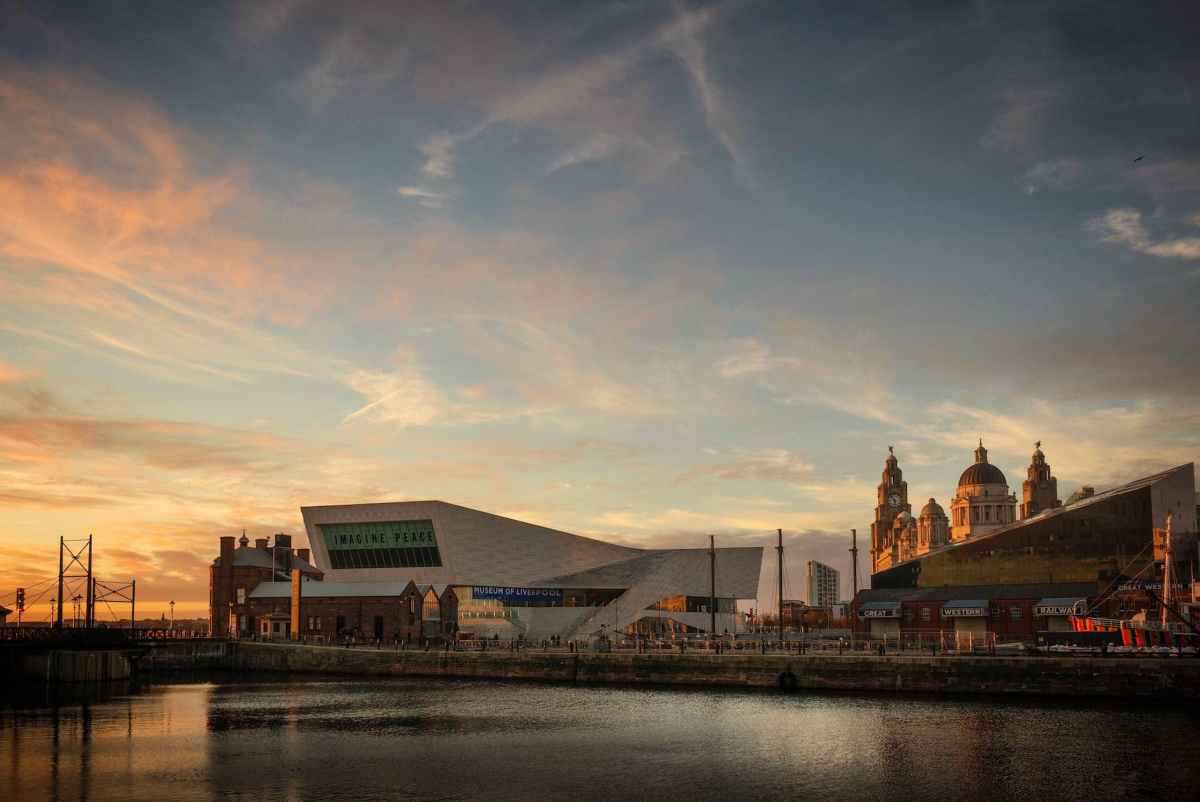
The right choice. Liverpool will make the best of best hosts for the 67th Eurovision Song Contest[1]. Last night, Liverpool was chosen as the location of the 2023 Eurovision Song Contest.

Don’t get me wrong. Glasgow would have done an excellent job too. It was a difficult choice to make between the two front runners. On balance, Liverpool can offer the excitement Europe needs after what will be a gloomy winter.

In 2008, Liverpool woke everyone up with its year as European Capital of Culture[2].

Being a long-standing political activist, I’ve participated in party conferences up and down the country. It’s a fantastic way of getting to know the heart of a city. Yes, I know it’s a superficial exposure in terms of seeing conference venues, hotels, and shopping centres but even so, the sense of a place comes across.

Party conferences are held in locations across the UK, at conference and convention centres that offer big enough venues, in fact the whole package, hotels, public transport and a good atmosphere. I’ve conferenced: Blackpool, Birmingham, Bournemouth, Brighton, Cardiff, Eastbourne, Gateshead, Glasgow, Harrogate, Liverpool, Southport, Torquay and York in springtime and autumn.

One of the most enjoyable conferences in my back catalogue is Liverpool. It’s a city that surprises. It has cultural and historic depth. It’s that mix of the city’s strong sense of identity and the pivotal role it has played in our collective history.

I had a, not all too uncommon, southerners’ ignorance of Liverpool. That was quickly dispelled by being there and enjoying its welcoming invitation, even when it’s raining.

What could be better? Liverpool has been twinned with Odessa in Ukraine since 1957. Fittingly, the 2023 Eurovision Song Contest is to be a Ukrainian celebration in the UK.

Also, Liverpool has been twinned with the German city of Cologne for more than 50-years. That’s a European city that feels like a second home to me.

Congratulations Liverpool. It’s a massive #Eurovision to look forward too.


[1] https://eurovision.tv/story/liverpool-will-host-eurovision-2023

[2] https://www.cultureliverpool.co.uk/

Foot shooting

In the 1970s and 80s, Europe’s aviation industry strove to create common airworthiness codes. In 1983, a Memorandum of Understanding (MoU) was signed that bring together 11 national authorities, including the UK. These countries agreed to improve European safety regulation; develop common codes and common interpretation of those codes and extend cooperation.

Given the immense efforts the UK applied to creating the Joint Aviation Authorities (JAA) and subsequently the European Aviation Safety Agency (EASA) it is unsurprising the hope of continuing involvement remained until the EU-UK Trade and Cooperation Agreement (TCA) was signed.

Leaving the European system of aviation safety regulation is a consequence of the political choice of a hard Brexit. Exiting EASA membership was not accompanied by leaving other European institutions. However, the implications of no longer being an EU Member State have rippled through out the whole aviation system. As the UK becomes less Eurocentric so the rest of Europe becomes more Eurocentric. Yet, the UK will surely wish to continue to exercise influence within regional bodies. This is incongruous but it is a political choice, and such choices have consequences.

Another case of immense efforts, the UK applied, was to collaborative working in aerospace research. UK organisations and academic institutions benefited significantly from participation in the Horizon Europe project and its predecessors. This is being run down despite assurances given in the TCA. An impasse has arisen over the political shenanigans related to the Irish border.

Now, the lawyers have got involved there is surely nothing good that will come if it[1]. The overall message is negative. With Conservative leadership candidates stirring up anti-EU sentiment just to get votes, it’s hardly likely there will be a reconciliation any time soon.

Yet again, the UK is perfecting the art of shooting itself in the foot. A sad situation. By the way, I do think this situation will be resolved in the fullness of time. The EU published a Pact for Research and Innovation in Europe in November 2021. To quote:

(g) Global engagement: Develop a coherent global engagement strategy and common tools, promoting shared European values and principles for R&I in terms of international cooperation and capitalising on the attractiveness of research in the Union; ensure the Union’s scientific and innovation strategic autonomy while preserving an open economy; promote a level playing field and reciprocity based on fundamental values; enhance R&I partnerships and strengthen, broaden and deepen collaboration with third countries and regional organisations.

The last line ties in nicely with the TCA and creates a need to solve the issue of UK engagement. That would be wise for both parties in the end.

POST 1: The consequences are real Thanks to Brexit, I lost a €2.5m research grant. I fear for the future of UK science | José R Penadés | The Guardian

POST 2: Grants lost At least 115 UK researchers to lose their ERC grants – Research Professional News


[1] https://sciencebusiness.net/news/uk-launches-legal-case-against-eu-over-horizon-europe-association

In praise of the BBC Proms

I’ve only done three, so far this year. That’s two in the arena and one in the gallery. The Royal Albert Hall is the place to go for the BBC Proms[1]. I’m an amateur. I stand at the Proms. This is my 4th year.

I say, I’m an amateur because the guy I was standing next to, a couple of evenings ago, has been Promming since 1967. It seems to be a bug that once it’s bitten you escape becomes impossible. Promming tickets are released on-line on the morning of the day of a concert.

Music has a power that transforms this Victorian citadel of culture into a centre of magical experience. It’s as if the world ceases to exits and all there is becomes engulfed in that wraparound auditorium. As if it were the centre of the universe. It’s the impact of the soundscape, the people, and the building that produces a mysterious combination. It’s a unique mix.

Live performance has a transformative effect. Post-COVID it’s one of those experiences that was most missed during the pandemic. It’s so evident how dull and grey the world becomes without it.

Acoustically the hall is flawed. Nevertheless, wherever I’m standing, or occasionally seated, there’s a special feeling as oceans of sound flood over the audience. Yes, there are superior concert halls. I was lucky to live within walking distance of the Koelner Philharmonie[2] when in Germany.

The Royal Albert Hall is in a league of its own. It has a heritage and creates an atmosphere that is unmatched both for the things that work and those that don’t. Yes, you need a bank loan to buy a beer and the wiring looks as if its 150 years old.

I’m not musically knowledgeable, or did my education point me in that direction. Our dishevelled music teacher desperately tried to interest my cohort of 1970s kids, but he was pushing a rock uphill the whole way. He knew his unfashionable message, dusty texts and scent of smoke and alcohol were way out of sync with his students. Discipline wasn’t his speciality either.

In fact, I discovered a lot in the school music room by it was nothing to do with music, or its history. Ironically, at the time, music was a huge part of our lives as T-Rex, Bowie, The Who, Slade, glam rock, and disco hit their peak. If I could advise my younger self, it would be to say; learn an instrument. Anyone would do. It really doesn’t matter which one. It really doesn’t matter how well. A skill acquired as a teenager carries throughout life.

By the way, I’d recommend the tour of the hall[3].


[1] https://www.royalalberthall.com/tickets/proms/bbc-proms-2022/

[2] https://www.koelner-philharmonie.de/en/

[3] https://www.royalalberthall.com/tickets/tours-and-exhibitions/royal-albert-hall-tour/

Objects falling from the sky

In so far as I know, no person on the ground has been killed by an object falling from a commercial aircraft in flight. I’m happy to be corrected if that situation has changed. Strangely, in contrast there are plenty of reports of people falling from aircraft and being killed as a result[1]. Additionally, there are cases of parts shed by aircraft that subsequently contribute to an aircraft accident[2].

The most frequent reports of falling objects, in and around airports are not parts of an aircraft but that which is in the atmosphere all the time. Namely, ice. When it hits the ground in the form of a hailstorm it can be damaging. In flight, it can be seriously damaging to an aircraft.

What I’m writing about here are the third-party risks. That’s when an innocent individual finds themselves the target of an improbable event, some might call an act of God. Ice falls are rare. However, given the volume of worldwide air traffic there’s enough of them to be alert to the problem. As soon as ice accretes to create lumps bigger than a kilo there’s a real danger.

Can ice falls be prevented? Here again there’s no doubt some are because of poor maintenance or other preventable factors, but others are just nature doing its thing. Regulators are always keen to collect data on the phenomena[3]. It’s something that goes on in the background and where the resources allow there can even be follow-up investigations.

Near misses do make the newspaper headlines. The dramatic nature of the events, however rare, can be like a line from a horror movie[4]. Other cases are more a human-interest story than representing a great risk to those on the ground[5].

It’s worth noting that falling objects can be quite different from what they are first reported to be. That can be said about rare events in general.

I remember being told of one case where a sharp metal object fell into a homeowner’s garden. Not nice at all. The immediate reaction was to conclude it came from an aircraft flying overhead. Speculation then started a new story, and the fear of objects falling from aircraft was intensified.

Subsequently, an investigation found that this metal object had more humble terrestrial origins. In a nearby industrial estate a grinding wheel had shattered at highspeed sending debris flying into the air. Parts of which landed in the garden of the unfortunate near-by resident.

One lesson from this tale is that things may not always be as they first seem. Certainly, with falling objects, it’s as well to do an investigation before blaming an aircraft.  

POST 1: There’s a threat outside the atmosphere too. The space industries are ever busier. That old saying about “what goes up, must come down” is true of rockets and space junk. More a hazard to those on the ground, there is still the extreamly unlikly chance of an in-flight aircraft getting hit Unnecessary risks created by uncontrolled rocket reentries | Nature Astronomy

POST 2: EASA Safety Information Bulletin Operations SIB No.: 2022-07 Issued: 28 July 2022, Subject: Re-Entry into Earth’s Atmosphere of Space Debris of Rocket Long March 5B (CZ-5B). This SIB is issued to raise awareness on the expected re-entry into Earth’s atmosphere of the large space object.


[1] https://nypost.com/2019/07/03/man-nearly-killed-by-frozen-body-that-fell-from-plane-is-too-traumatized-to-go-home/

[2] http://concordesst.com/accident/englishreport/12.html

[3] https://www.caa.co.uk/Our-work/Make-a-report-or-complaint/Ice-falls/

[4] https://metro.co.uk/2017/02/16/10kg-block-of-ice-falls-from-plane-and-smashes-through-mans-garage-roof-6453658/

[5] https://www.portsmouth.co.uk/news/national-ice-block-falls-aircraft-and-smashes-familys-garden-1078494

Social media is changing aviation safety

You may ask, how do I sustain that statement? Well, it’s not so difficult. My perspective that of one who spent years, decades in-fact, digging through accident, incident, and occurrence reports, following them up and trying to make sense of the direction aviation safety was taking.

In the 1990s, the growth of digital technology was seen as a huge boon that would help safety professionals in every way. It was difficult to see a downside. Really comprehensive databases, search capabilities and computational tools made generating safety analysis reports much faster and simpler. Getting better information to key decision-makers surely contributed to an improvement in global aviation safety. It started the ball rolling on a move to a more performance-based form of safety regulation. That ball continues to roll slowly forward but the subject has proved to be not without difficulties.

Digging through paper-based reports, that overfilled in-trays, no longer stresses-out technical specialist quite the same as it did. Answers are more accessible and can reflect the real world of daily aircraft operations. Well, that is the theory, at least. As is often the case with an expansion of a technical capability, this can lead to more questions and higher demands for accuracy, coverage, and veracity. It’s a dynamic situation.

Where data becomes public, media attention is always drawn to passenger aircraft accidents and incidents. The first questions are always about what and where it happened. A descriptive narrative. Not long after those questions comes: how and why it happened. The speed at which questions arise often depends on the severity of the event. Unlike road traffic accidents, fatal aviation accidents always command newsprint column inches, airtime, and internet flurries.

Anyone trying to answer such urgent public questions will look for context. Even in the heat of the hottest moments, perspective matters. This is because, thankfully, fatal aviation accidents remain rare. When rare events occur, there can be a reasonable unfamiliarity with their characteristic and implications. We know that knee-jerk reactions can create havoc and often not address real causes.

In the past, access to the safety data needed to construct a context was not immediately available to all commers. Yes, the media often has its “go-to” people that can provide a quick but reliable analysis, but they were few and far between.

This puts the finger on one of the biggest changes in aviation safety in the 2020s. Now, everyone is an expert. The immediacy and speed at which information flows is entirely new. That can be photography and video content from a live event. Because of the compelling nature of pictures, this fuels speculation and theorising. A lot of this is purely ephemeral but it does catch the eye of news makers, politicians, and decision-makers.

So, has anyone studied the impact of social media on developments in aviation safety? Now, there’s a good topic for a thesis.

Identity

Britan was never part of the Schengen Agreement[1]. I get that. In the days when I was commuting backwards and forwards between the UK and Cologne, Germany, I always had to show my British passport. So, although we once had freedom of movement in the European Union (EU) that document was essential to prove identity. Afterall, we do not have Identity cards (ID) in the UK. Even inside the Schengen Area[2] it’s necessary to carry personal identification. I remember being told off by a policeman for not having ID, other than a UK driver’s licence, on a high-speed train on the trip between Cologne and Brussels. He was fine about it, but it was a friendly – don’t do it again.

Generally, British people do travel overseas. Many of us travel for holidays and business, and in Europe, Spain is one of the most popular destinations.

The number of British people holding a British passport could be well over 80%. This is way ahead of Americans, for example[3]. This doesn’t take account of British passports that may have expired or been lost or destroyed. However, the remarkably large number of British people with passports does underline our love of travel.

I came back from a week’s sunshine in Grand Canary on Monday evening. It’s the second time I’ve been through the airport on that island. Entering the spacious modern airport, the first part of the process is relatively easy. Check-in and drop bags were shared with a great number of tired travellers. Even the hand baggage security check was straightforward.

It’s not until the gate number came up, and the long walk to the far end of the terminal was needed did it appear that the British experience was different. The departure gates were in a glass box wrapped around the end of the terminal. To get into the glass box it was necessary to go through passport control.

For those, like me there were electronic passport barriers. The ques there were shorter than the manual checks. The electronic passport barriers worked. However, on the other side of the glass wall was another que and a uniformed official checking passport. After that there was a desk where each passport had to be stamped. So, that’s 3 checks and an official exit stamp.

So, what’s the value of this added bureaucracy post-Brexit? I have no idea. What’s more upon boarding the aircraft for the flight home, the gate staff check passports again. So, that’s 4 inspections of passenger identity. 5 if the check-in desk procedure is included. British passports may have thick cardboard covers, and secure bindings but their strength as an international travel document has diminished since Brexit.


[1] a treaty which led to the creation of Europe’s Schengen Area, in which internal border checks have largely been abolished.

[2] https://ec.europa.eu/home-affairs/pages/glossary/schengen-agreement_en

[3] https://www.newsweek.com/record-number-americans-traveling-abroad-1377787

Caught in the crossfire?

There’s no doubt the relative calm of the beginning of this century, yes, it seems extraordinary to say that has gone and a series of international events confront civil aviation’s way of working. It’s dramatic. In Europe, most countries, and their industries are shifting the way they operate.

Unfortunately, any reasonable observation shows that the situation for aviation is worse in the UK. Well, that is worse than the UK’s former partner States in the European Union (EU).

In times of difficulty partnerships, between counties and in industry help make the absolute most of economies of scale. It’s difficult to plan when constantly firefighting. It’s like that comic story about crocodiles and draining the swam. It’s difficult to think ahead when surrounded by crocodiles.

I agree with the article posted by David Learmount[1]. The massive efforts to achieve international harmonization in aviation regulation, over decades is of incalculable value. I have been lucky enough to work with exceptional people across the globe and played a small part in helping that move along.

In fact, I’d go further than David. I remember, quite a while ago, attending a lecture at the Brooklands Museum[2]. It was about the history of post-war UK Government involvement in aerospace manufacturing[3]. It wasn’t a happy story. It went a bit like a soap opera with technical excellence mixed with commercial incompetence and political interference. The overall lesson was that going it alone, piling on the world beating rhetoric and an inability to forge working alliances spells disaster. Whereas coming together, working cooperatively, and building multinational partnership pays dividends. Airbus being a prime example.

I joined the European Union Aviation Safety Organisation (EASA) as the start of its operation. It was a huge privilege. It was a rare opportunity. I mean, how many people get to set-up a new aviation authority, let alone one that works for so many States in Europe? I was proud that the UK took a leading role in making this venture happen. It was a progression that had been careful and thoughtfully developed and steered over decades.

What we built was a uniquely European solution. It isn’t a federal construction as we see in the United States (US). In Europe, National Aviation Authorities (NAAs) remain a key part of the system. The part that was new in September 2003 was to overcome a major deficiency of earlier cooperative working. That was the unfortunate habit nation States have for saying that’ll do the same thing but then not doing the same thing in practice.

David mentions the tricky subject of UK Additional Requirements for import. This is when the UK demanded a special difference between its aircraft and those of other countries. Often expensive and making it difficult to move aircraft around. I remember some UK Additional Requirements found their way into new European requirements and others were removed. That was a painful transition period. In aviation, technical requirements are often born of experience of accidents and incidents.

Today, the UK Civil Aviation Authority (CAA) works with a set of technical requirements that have been rolled over from the UK’s time as an EASA Member State (2003 – 2021). This presents opportunities to take a new path. Sounds tempting, if only you look at the subject superficially.

International technical standards never stand still. Big players invest resources influencing the direction that they take. Two of the biggest international players in respect of aerospace design and production are EASA and the Federal Aviation Administration (FAA).

So, UK CAA is caught on the horns of a dilemma. Unless it can significantly influence the big players the only practical way forward is to adopt what they produce (rules, regulations, standards, guidance material). Now, the UK CAA has considerable technical experience and maintains a high reputation, but it does not sit at all the tables where the major decisions are made.

This is the concern that David mentions in his article. The unnecessary ideological exit from EASA membership, that came with Brexit places the UK in a third-party arrangement. Not good.

It’s not like the world has suddenly become dull. Frantic development efforts and huge sums of money are being pumped into greening aviation. Part of this is the new Advanced Air Mobility (AAM). Part of this is known as Urban Air Mobility (UAM). Aviation folk love acronyms. It’s almost as if we are back at the beginning of the jet-age[4]. We know how that went.

Not surprisingly, the UK wants to achieve successes in this new field of “green” aviation.

Flying is a heavily regulated industry. So, national, regional, and international rulemaking processes matter. They matter a lot. Harmonisation matters a lot. That’s having common rules and regulations to maximise the size of the marketplace while ensuring levels of safety and security are high.

The bureaucratic burden of Brexit costs. It’s not free. The UK duplicates rulemaking activities because it must independently update its laws, all the secondary legislation and guidance material that comes with aviation. When there’s a significant difference between UK, Europe, US, and the rest of the world it makes business more complex. Often that added complexity comes with no discernible benefits (economic, social, safety, security, or environmental).

The UK should become an EASA Member State once again. Why not? Norway, Switzerland, Iceland, and Lichtenstein are not in the EU but are EASA Member States. Across the globe countries follow EASA rules as they are known to deliver the best results.


[1] https://davidlearmount.com/2022/06/17/uk-aviation-caught-in-the-crossfire/

[2] https://www.brooklandsmuseum.com/

[3] https://www.aerosociety.com/media/8257/government-and-british-civil-aerospace-1945-64.pdf

[4] https://www.smithsonianmag.com/history/comets-tale-63573615/