Travelling Post-Brexit

Ever since Brexit, I’ve had to have my passport stamped in and out of European countries. It’s like a reversion to the days when I got my first British passport. That was back in the late 70s.  It has a frighteningly youthful picture. Occupation – student.

I’m not so phased by the coming changes to European Union (EU) border controls. Naturally, it’s worth asking if Britian has become a more dangerous nation since the time before Brexit when we enjoyed freedom of movement. It’s a pity we didn’t value that freedom a lot more. It was thrown away far too easily.

Today, the electronic border controls expect us to stare at a camera. A securely held, I hope, database is used to check a list of biometric numbers against my image. I guess that’s a sure-fire way of saying that Mr Blogs is indeed someone who looks very much like Mr Blogs. Facial recognition technology has come a long way.

The next steps in tightening-up controls will be fingerprinting[1]. Not in the manner of Sherlock Holmes, with an ink pad. No, in the digital age an ominous machine will scan our fingers and check its records to see that not only does Mr Blogs look as he should but that he’s got the essential characteristics of Mr Blogs.

Certainly, in this new regime British citizens will not be able to overstay in European countries. Ones travel records will be a lot more quantifiable and precise than stamping a piece of paper. That is assuming such digital border control machines will be relatively error free.

One of the benefits of Brexit is that it will be easier to track the movements of British criminals in and out of the EU. The reciprocal will not be true. It will not be easier for British authorities to track continental European criminals in an out of the UK.

Ah the luxury of being a Third Country. Longer ques. More uncertainty. Less privileges.

What’s more is the introduction of the new EU border control systems will be “phased[2]”. This change will not be one big bang. So, different ports and airports will be doing different things at different times. Now, it doesn’t take a genius to see that confusion is most likely.

Travelling in 2025 is going to be more than the usual adventure.


[1] https://commonslibrary.parliament.uk/the-eu-entry-exit-system-and-eu-travel-authorisation-system/

[2] https://www.independent.co.uk/travel/news-and-advice/eu-biometric-border-fingerprint-entry-delay-b2627645.html

Navigating Heights

If I were to explain, the reasoning would go like this. It’s good to have a vivid imagination. As an engineer, it’s essential to be able to create a mental picture of what’s happening. But there’s a downside. Looking at a situation and seeing more than is there, opens the door to imagining all sorts of scenarios that are unlikely.

I’m talking about that experience of peering over a cliff edge to see what’s there. Curiosity being a strong urge. Then pulling back in fright of falling. Often when the ground is solid and safe. Often when nothing more than a spark in the imagination creates an unreasonable fear of falling. The fleeting image I have in mind is looking down at Beachy Head Lighthouse[1].

I have a curious relationship with hights. No, I’m not terrified of heights. It’s just that now and then that fear of falling does kick in. This feeling could be embedded or learnt from an early age. My mother tells a story of me as a toddler being halfway up a ladder. Sacring her. Me being oblivious to any danger and coming to no harm. Growing up on a family farm there was innumerable hazards around every corner.

One of the riskier things was to climb up the haybarn roof. This was an open steel framed structure spanning several bays. Corrugated sheets made up its roof. In the UK, we call these buildings a Dutch barn. This mostly refers to the curved shape of the roof. From the top of the barn, it was possible to see the whole farmyard.

Last week, I hiked around the Caldera de Taburiente on La Palma. I learnt that the term caldera has Spanish origins. So, I was in the right place to assess any fear of hights that might linger in my psyche. The Caldera de Taburiente is more than 2000 m deep.

Even the roughly hewn paths, some restored from local landslides, didn’t phase me. It’s as if, because I was one of thousands who have passed the same way, the dangers where contained. In fact, there were not. Some of the well-worn slippery stones underfoot had to be approached with a great deal of caution. Loose rocks and sheer drops had to be navigated with care.

The Caldera de Taburiente National Park is a magical place. It has a Jurassic Park feel about the place. Given that it’s not much more than a few million years old the place is far to youthful for dinosaurs. It has its own special natural beauty.

My aging but persisting vivid imagination had plenty to occupy itself as we climbed and descended in and out of the park. The whole hike was about 16 km. This was the second time I’d taken this circular route. What surprised me was the hard parts of the climb and decent following a riverbed on the way out. That part I’d conveniently forgotten.

No, I’m not terrified of heights when there’s solid ground underfoot. They do however have the capacity to scare or at least summon up a lot of extra care. I hope that inbuild sense of self-preservation never fails me.


[1] https://www.beachyheadlighthouse.co.uk/

I’m Mandy

It’s something to ague about. My view is that pop songs don’t have to have “official” meanings. If you listen to a song and it means something to you then there’s no point in arguing with someone else about what it means. Well, not much point other than the pure fun of it.

That doesn’t stop an argument. It’s like answers to quiz questions. There’s that strong desire to be the one with the right answer. With a song it’s not so easy to be literally right or wrong. There may be clues left by the song writers or a generally excepted interpretation. It’s not a subject to place major bets on. There’s likely to be no definitive answer.

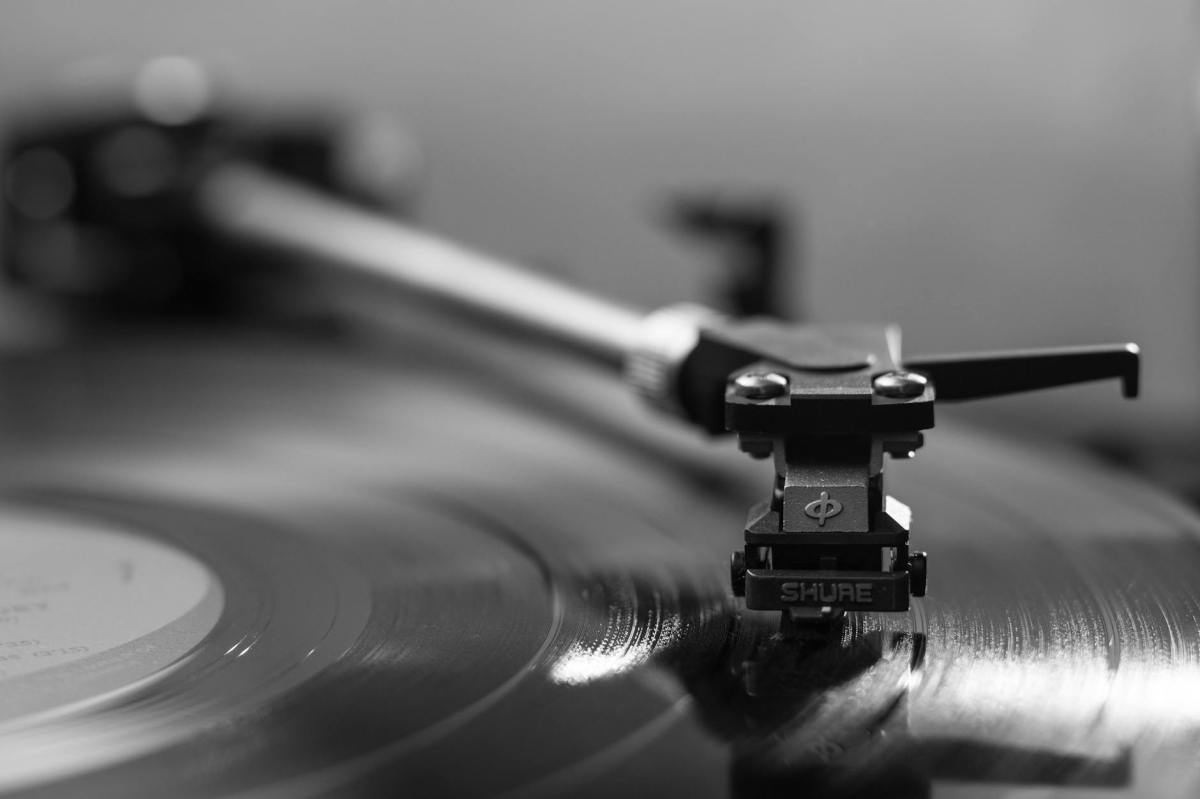
This week, I popped into a small shop that is full of retro bric-a-brac. In one corner there’s a display of second-hand vinyl records. 45s and LPs nicely arranged in alphabetic order. I find it fascinating what’s fashionable, and thus pricy, and what’s not. This trendy little shop aims at a student market. What caught my eye is an album from the band 10cc[1] from 1976. It has a colourful fold-out album cover which is a story in of itself. It’s a real photographic artwork. And strangely profound in the age of the mobile phone. Lots of people holding telephone handsets.

“How Dare You![2]” is an immensely creative but almost incoherent jumble of wandering songs. It’s a kind of progressive rock music exposé but much more popular, in the sense of pop. And in its time, it did well for the band, giving them two charting singles from the album. It’s a 70s vinyl masterpiece that will not be entirely lost and forgotten.

10cc is part of my student history. From what I could see from the price, it’s not so fashionable with today’s students. In good condition, for £5, I was more than happy to spend my hard-earned cash. At the till, the young lad who was minding the shop took one look at the album cover and asked: do you mind if I take a photo of that? We both agreed that streaming music is fine but there’s something more satisfying about handing physical artwork like this album cover. It’s tangible. It’s real. It’s an artifact.

The most notable song on the album is “I’m Mandy, fly me”. What is known about 10cc and their song “I’m Mandy, fly me” is that it was kicked off by a National Airlines poster. Like so many American airlines, National got swallowed-up and those who swallowed them up suffered the same fate. But in the 70s they were going strong. What they will be remembered for is that one of their publicity stunts caused controversy. It’s the sort of situation that kicked-off protests and rightly so.

In the early 70s, to sell their long-haul seats National’s posters ran a slogan saying: “I’m (flight attendant’s name). Fly me.”. The sexist nature of the advertising slogan got heavily criticised. These airline posters must have been up in Manchester, UK. Enough for seeing them to inspire 10cc to write the song “I’m Mandy, fly me”[3].

What’s it about? I think it’s pure imagination. Wandering a street, seeing the poster and going off on a fanciful muse. In my view it’s not literal. There is no plane crash. The fantasy is that the flight attendant in the poster rescues the singer from the dullness of everyday Manchester. After a few moments he snaps out of it, realises that he’s been daydreaming, and life carries on.


[1] https://www.10cc.world/

[2] https://en.wikipedia.org/wiki/How_Dare_You!_(album)

[3] https://genius.com/10cc-im-mandy-fly-me-lyrics

Illusion of Sovereignty

Desperate for something to say because their arguments have been shot down in flames, those who continue to support Brexit raise the subject of sovereignty. It’s as big a red herring as you are likely to find. That said, the notion of complete autonomy does have a resonance with one part of the political class.

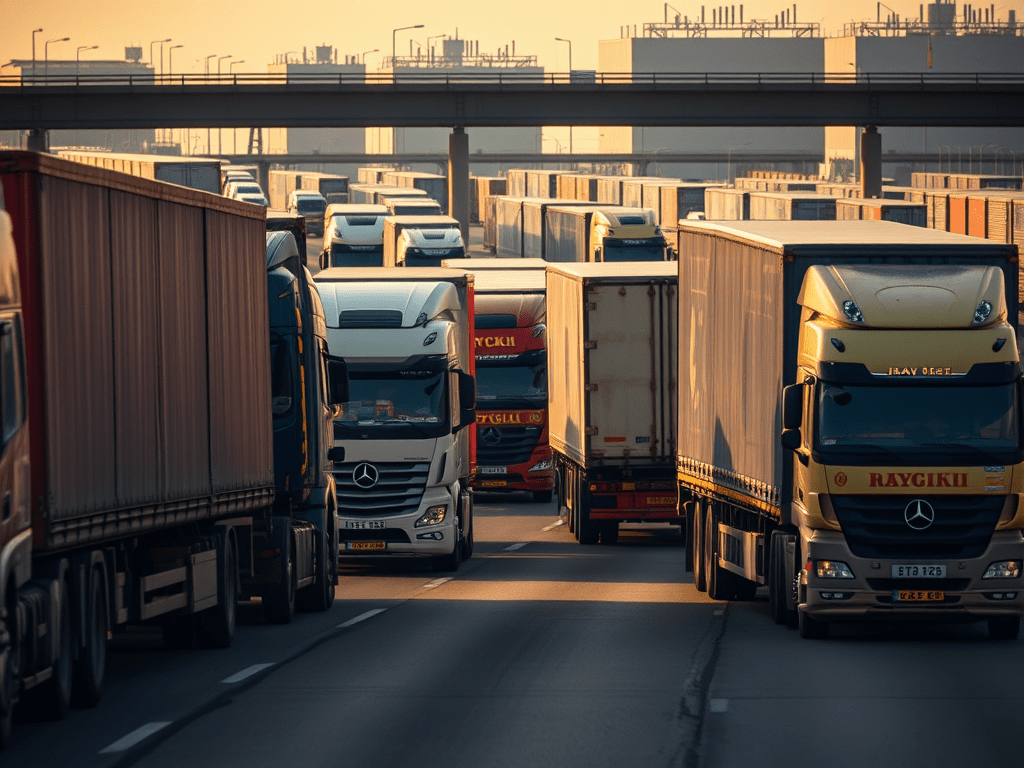
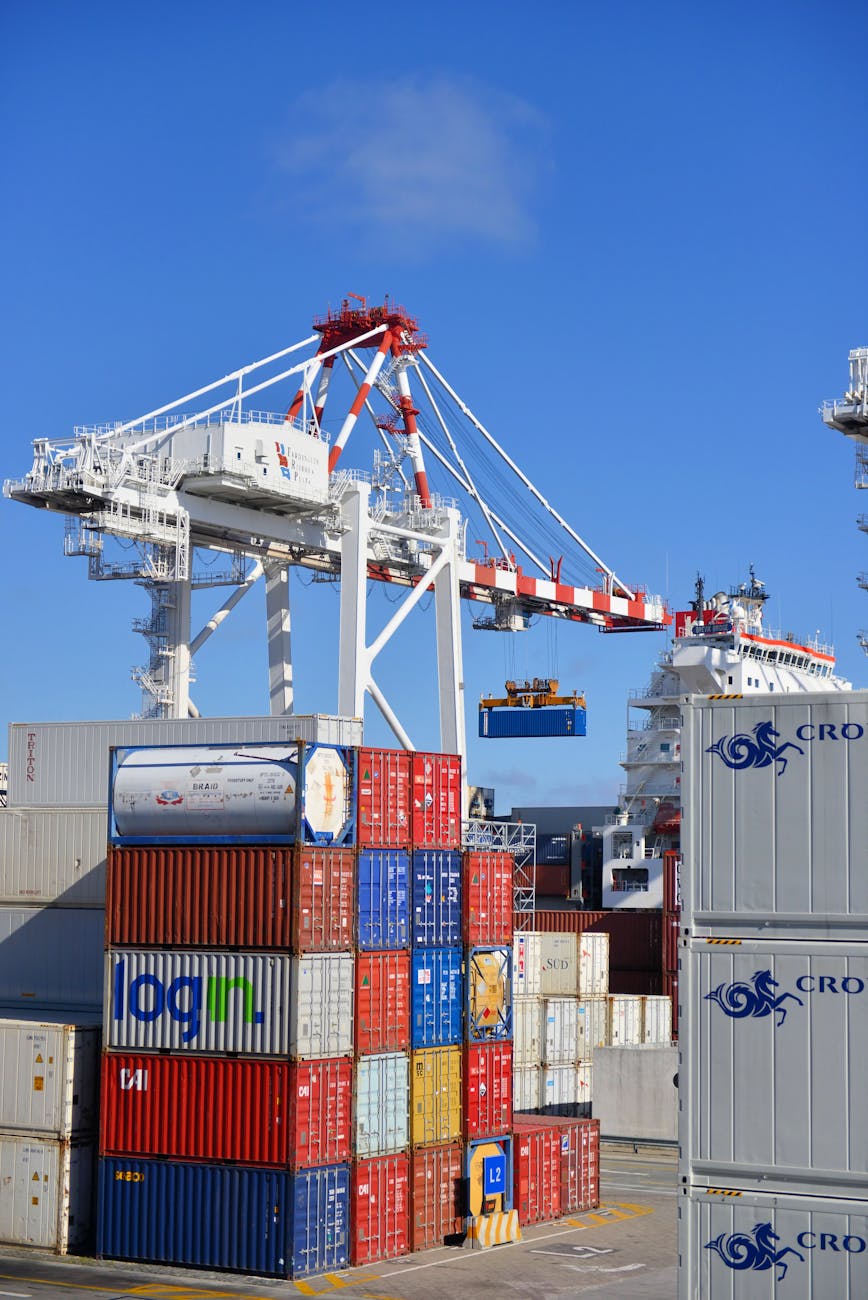
One example of reality being different from political rhetoric is one I regularly see. I’m driving more than I have done in a while. Mostly, on the M4, M3 and M25 motorways. In this country some freight goes by rail, but the overwhelming amount of freight goes by road.

A sign of our times has been the construction of massive warehouses close to motorway junctions. Strategic non-motorway routes too. I do mean massive steel sheds. Counting the number of football fields covered by these structures doesn’t help. I’ll bet some of them can been seen from space.

Back to the British roads. 6-wheelers, 8-wheelers, 12-wheelers, big heavy trucks often showing the wear and tear from journeying great distances depend on the motorway system. A constant flow of heavy goods moves day and night.

Looking at the trucks, some have UK registration plates, some have UK registration plates thrown over their original plates. Most drive under the registration plates of a country of origin or wherever their commercial operations are based. Each plate tells a story. LT is Lithuania. PL is Poland. H is Hungary. NL is Netherlands. D is Germany.

So, every day we have tens of thousands of trucks maintained and operated to standards set by the European Union (EU) on our roads. They are left-hand-drive. Their speedometers are in kilometres per hour.

It occurs to me – what does “sovereignty” mean when everyday looks like a day driving?

For sure, no British inspector checks the condition of each one of these trucks on a regular basis. For sure, truck driver’s hours are only occasionally checked. For sure, maintenance records are locked away in a filing cabinet.

In the world of absolute sovereignty none of this should be allowed. In fact, much of the above-described transport operations are continuing as they did before Brexit but with extra paperwork attached. Extra costs.

It’s an observation. It’s easily made when stuck between a couple of heavy goods vehicles on the motorway. Pragmatism may have led to a blind eye being turned to reality. We shouldn’t delude ourselves that Brexit has delivered anything useful in this respect.

Why the UK Should Rejoin

Fine, I’m happy to admit that my march, with thousands of others, through the streets of London on Saturday was not everyone’s cup of tea. There are a lot of people who support the idea of a return to European Union (EU) membership but are reluctant to raise the issue just now.

Often cited is the wave of right-wing politicians who are gaining ground in Europe’s larger countries. It’s as if they are going through their own Brexit like political moment but without anyone of any consequence advocating throwing away their EU membership.

Maybe the UK is ahead in this respect. We’ve been through the confusion and turbulence of the political right-wing eccentrics moment in the sun. They were never mainstream. However, they did hold the reins of power for some disastrous years. Thank God they are now behind us.

I have marched year-after-year because it’s the right thing to do. Tens of thousands from all over the UK have done the same as me. Millions if the numbers added-up from 2016 onward. Our future can be based on cooperation and mutual interests. Ideologically driven conflict and disruption have brought nothing but a lose – lose outcome.

So, what are the arguments for the rejoin movement? It’s all very well to shout at the thing we don’t like. Now, is the time to make the sound solid arguments for the thing we favour.

Let’s take trade for a start. The last UK Government wallowed in gushes of self-praise every time they signed an agreement with any country that was not European. Conservative Members of Parliament wanted to tower over the world like imperial overseers. It was an illusion.

Most of the so called “new” deals that were signed were simply a rollover that meant no change. In fact, more was given away than was gained. All in a desperate attempt to show progress. British farming was effectively shafted by Ministers.

One of the most touted possible “streets paved with gold[1]” was the prospect of a super new trade deal with the United States (US). Under President Trump, the prospect of an advantageous UK-US trade deal was an illusion.

Ironically, a claimed success was the joining of a regional trade block. I know it’s crazy that leaving a gigantic trade block on the UK’s doorstep was followed by joining one covering the Pacific. Yes, the other side of the world. Not only that but the projected gains are minuscule.

EU membership offers, as it did before, access to enormous trade benefits by comparison with what has been achieved since 2016. The numbers speak for themselves.

If the new Labour Government continues with a form of the fibs told during the “Get Brexit Done” phase, then trouble lies ahead. Next door, the UK has the world’s largest trading block. The value to the British economy of Single Market membership exceeds a mishmash of remote and small deals. There’s a positive way forward and it’s staring us in the face.

POST: It’s worth noting that the 1960 European Free Trade Association (EFTA ) was created, to promote free trade and economic integration included: Austria, Denmark, Norway, Portugal, Sweden, Switzerland and the United Kingdom.


[1] https://dictionary.cambridge.org/dictionary/english/streets-are-paved-with-gold

National Rejoin March: Unity for a European Future

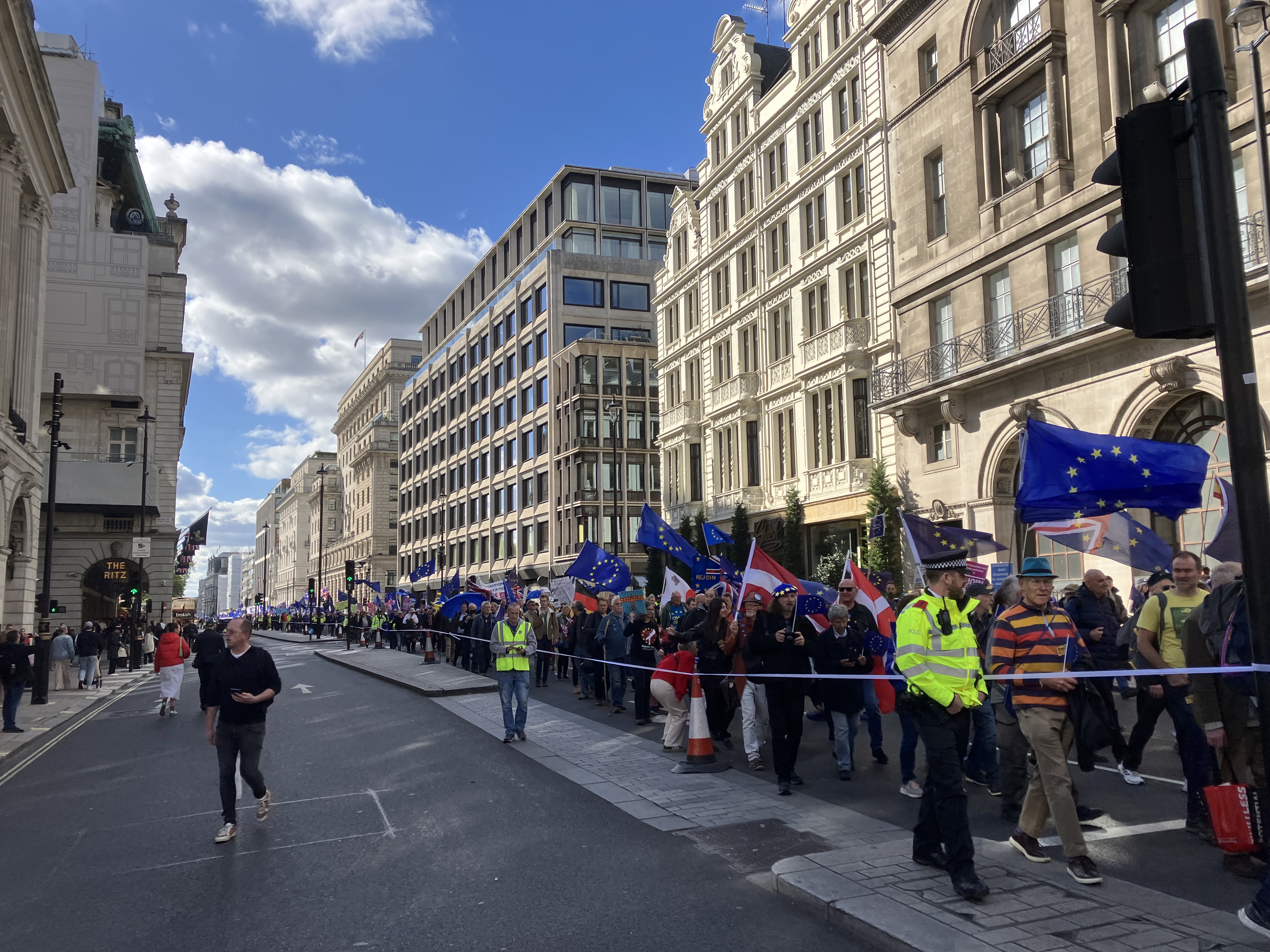
The European Movement[1] has been around for 75-years. Yesterday, I was surrounded by a good number of their membership. That, and many Liberal Democrats. People, young and old, from communities up and down Britain. There were lots of people from the creative industries, so badly hit by Brexit. In fact, there were people of every political background marching through the streets of central London.

Everybody had gathered in central London with the aim of reversing the tragedy that is Brexit. I say “is” and not “was” because the disaster continues to have marked repercussions on everyday life. Reclaiming the freedoms that we once had has brought people together in large numbers.

On Saturday, pro-European campaigners made their way from Park Lane to Parliament Square for the third annual National Rejoin March (NRM)[2]. The weather smiled on the gathering. It couldn’t have been better in the light of torrential rain and the endless storms of past days. The sunshine and blue skies warmed my sprit.

The occasional chant of “Boll*cks to Brexit” has been replaced by Reset, Repair, Rejoin. As is the tradition of these events, posters ranged from the more obvious slogans, like #BinBrexit to the imaginative and sometimes bizarre. The group dressed in eye catching elephant costumes had a point to make. The elephant in the room being the protesters theme.

Standing next to me, one young lad asked his mate why he had decided to be on this rejoin march. I thought his response most was appt: “Because I want to be on the right side of history”. To me that just about sums it up. Brexit is an aberration. Eventually, after a great deal of to-and-fro the strong likelihood is that the UK will rejoin the European Union (EU), or its successor. Everything we know points in that direction. It may take a decade. It may take more.

The Labour Party won the 4th July UK General Election, and while it pledged not to reopen the main parts of Britain’s deal to leave the EU, does claim to want a significant reset. So far, the indications are that this policy line is typical political rhetoric, and little more. But it must be said that this is the early days of a new British government. If their claim to want growth in the economy to fuel spending on public services is honest, they would be mighty foolish to discount rejoining the European Single Market.

Thousands gathered in London. This will go on year after year. The diminishing number of objectors, who chant from the sidelines, remind me of the “Dead Parrot Sketch”[3]. For all intents and purposes all the arguments for Brexit have perished, much like the poor parrot. Even when that’s an obvious fact there are still those few people who will defend it to the hilt. As we walked down St James’s Street a well dressed bloke in a side street seemed most agitated. Shouted abuses and ran off. I looked around. We all shrugged our shoulders. I certainly thought – what a sad man.

I’m sure Britain can reclaim its place in Europe. It will take resolve and continuous effort but, as has been pointed out, this campaign is on the right side of history.


[1] www.europeanmovement.co.uk

[2] https://uk.news.yahoo.com/protesters-call-uk-rejoin-european-154046221.html?

[3] https://youtu.be/vZw35VUBdzo

Travel Educator

Travel is the great educator. Fundamentally – yes. My ordinary every day is extraordinary to someone. Just as their ordinary every day is extraordinary to me. There’s so much we take for granted, and we must, that we forget how strange our customs and practice can be.

Even if it’s so simple as bumping into people when they walk on the right and I walk on the left. Or I sneeze and the obligatory and automatic “bless you” takes me by surprise. Greetings can come as a shock too. Whereas if someone says, “are you going the same way?” might be taken as the introductory line of a serial killer in London, in a small country town it’s just a polite inquiry by a genuinely interested fellow traveller.

Does travel teach social skills? I’m not so on-side with that view. There’s no doubt that it can be a way to meet like minded people. That can often, on the downside, be a local bubble. Ending up chatting to likable people who are going through similar experiences. Identifying not with the people around but those who are similarly placed.

What’s a more regular encounter is the tall guy with the sharp elbows who doesn’t acknowledge that the person in the middle seat, namely me, is annoyed by how little care he’s taking with his lanky arms and legs. I suppose, if such occasions teach me anything it’s to not do what is being done to me. Especially when a homeward bound aircraft is on hold, going round and round, in bad weather trying to get into Heathrow. Time stands still.

One of the best realisations that flows from travel is that there’s a common humanity lurking everywhere on the planet. On the other hand, it’s not always obvious or the first encounter. I think, most people sit in the camp of being indifferent or helpful. Yes, a small percentage are out to do no good. Thankfully, they are a small percentage and best avoided at all costs.

Another realisation is that uncomfortable situations, like being lost after having misread the map App on my phone, are all part of life’s colourful pageant. There maybe moments of concern. I don’t like to use the word – fear. There’s generally a pathway back to the more familiar.

I’m not for one moment advocating taking unnecessary risks. Before wandering around any major city, it’s as well to do some research. To get a rough appreciation of the geography and what goes where. Like a layout of the metro map. It’s nice to have tall landmarks that sit of the skyline. The sun and a wristwatch always offer the most rudimentary navigation aides. Knowing that a river crosses the city or tourist congregate in a certain place works at nighttime.

If I probe my decades of memories of travel, a lot of vivid recollections come from unexpected discoveries. Afterall, part of travel is returning home and having stories to tell.

Reinventing Breakfast

Public service broadcasting is fine with me. It ought to be funded. We are all better for it being funded. In the UK, the BBC does a tremendous number of good works in a wide spectrum of spaces. I’m a supporter of public funded TV but now and then it drops the ball.

Switching the TV on in the morning is not something I do at home. There’s something bedsit kitchenette about having a TV blazing while the toaster is popping up. It’s what’s better placed in a gritty drama of the mid-1970’s. Gawdy wallpaper and service hatches.

I get to view breakfast morning TV when I’m in a hotel room. It’s so much easier to switch on a wall mounted TV than mess with an iPad App or flick around the long list of channels trying to find a radio station. Press the button number 1 on the remote and up comes BBC1.

So, what’s with the morning News? Is it a magazine show with snippets of life outside the studio or is it hard hitting political journalism? To me, it’s a mishmash that’s trying to be everything to everyone. A male presenter who looks half asleep and would be totally lost without an autocue. A female presenter who’s doom laden petulant style reminds me of Chicken Licken[1].

An artificial backdrop, that has become commonplace on such shows, doesn’t help. Look the morning sun is shining. One look outside the window and it’s not. I’d been tempted to suggest going back to a few of those shelving units that once adorned the set of Blue Peter.

The BBC props department must have ordered a job lot of curvy sofas about ten years ago. They turn-up on the BBC’s One Show too. Now that evening programme is a mystery to me. Although, that said, it isn’t trying to be anything other than a magazine.

Thank the heavens that I don’t have to watch breakfast TV every day. I would be ready for the men in white coats if I did. Banality mixed with artificial seriousness would do my brain in. Surely, there’s a format that can be engaging and inform in a way that wasn’t so mighty odd.

If the BBC needs a transition to something new. A format that works for the second decade in the 21st C, then I suggest they bring back a certain popular rat. Roland[2] was a professional. Now, I’m sure he could both talk about endangered water voles or interview tricky politicians with great style and panache. 


[1] https://usborne.com/media/usborne/files/quicklinks-library/englishlearnerseditions/chicken-licken-teachers-notes.pdf

[2] https://fb.watch/uHOGZqLQ_J/

Last Night

Nice to see a flood of blue at the BBC PROMS last night. I’m not just talking about the wonderful Angel Blue[1]. I was not there. Watched the whole performance at home on the TV this year.

It’s great to hear that GB News went apoplectic. To quote: “The Last Night of the Proms has been swamped in controversy yet again after a sea of EU flags were spotted being flown by event-goers – despite imposing a ban on “protest flags” ahead of time.”

For one, there’s no controversy. For two, there was no protest flags. For three, there’s always all sorts of flags. Making up stuff is the sad habit of bored journalists with space to fill. If I can call them journalist. Click bait writers – now that’s just off-the-shelf hype makers.

Look. In a free country and let’s face it, that’s what the singing in the Royal Albert Hall is about. Land of hope and glory. If the this year’s BBC Prom goers want to hold up EU flags, it’s entirely up to them. No one is forcing them to do so. It wasn’t a mandate from on high.

I was disappointed not to see more flags. My experience of having been at the Last Night twice is that one fun thing to do is to figure out what some of the more obscure flags mean or where they represent. A Caribbean country, Devon, Cornwall, Isle of Man, or a remote Scottish Island. And lots of friendly countries, like the US. Well, dependent on the current presidential race.

Right-wing commentators often push a line that is prescriptive with respect to their opponents but take the view that they should be able to do whatever they like in the name of freedom. I believe that there’s no part of the right of politics that doesn’t hold this self-serving view.

It’s like the often-quoted view of the Conservative Party elite. They take the line that their people are born to rule. It’s not a joke. This week, it’s mighty interesting to read the reflections on recent events coming from Lord Brady[2].

The country is so incredibly fortunate now it has shaken off the fading embers of 14 years of Conservative Party misrule. Who knows what dreadful havoc would have ensued if they had retained power. It’s a much better autumn that might have been.

This is the time to re-think Britain’s relationship with our near neighbours. For a start, all aspects of unnecessary negativity and the dogma of Brexit need to be put asunder. No more ridiculous caveats on every policy and speech just to appease a right-wing media. No more neurotic ducking and diving to keep the outer extremes on-side.

Brexit was a rubbish idea. It was heavily sold by charlatans. It has failed. Corrective action is long overdue. I do not know what shape that corrective action will take but it needs to be immediate and sincere. And with a long-term perspective in mind.

POST: The next generation have the right idea Gen Z leads drive to reverse Brexit in new poll on EU referendum | The Independent


[1] https://angeljoyblue.com/

[2] https://www.independent.co.uk/news/uk/politics/sunak-election-brady-confidence-letters-tory-b2612966.html

Dr Who?

I’m having to get to know Paddington. For such a long time my route into London was via Victoria station. Every nook and cranny of that enormous railway station was etched into my brain. I could go from A to B with the speed of a swift. Southern trains trundle backwards and forwards, in and out of London. For the last 8 years, I’ve been able to navigate from my doorstep to the Royal Albert Hall (RAH) in about an hour. Only occasionally being marooned in Croydon.

Once I’d discovered the BBC proms it became a regular part of my annual schedule. That knocked off August and part of September. Promming[1] is a wonderful tradition that opens access to great music of all kinds for a token sum. Standing for me is no big deal.

Last night, I travelled through space and time. A different space and time from my normal one. Now, I’m having to get to know the ins and outs of a different railway company. To some extent they have “proper” trains that go somewhere. I mean, cities in Wales and the West of England.

This was only my second BBC prom of the year. This one was going to be different. For a start it was Bank Holiday Monday. It was the main day of the Notting Hill Carnival[2]. For those who don’t know that sat on my route into Paddington and round the Central Line to the RAH.

Busy, busy, busy. I don’t know if the National Orchestra of Wales to the same route as me. They were on stage for prom 48[3]. Thankfully, GWR speedily and safely got us into London.

The buzz was infectious. Whovian community folk like to dress-up. Standing in-line outside before 6pm, conversations were about favourite monsters and the authenticity of other prommers costumes. Fantastic handmade scarfs. Elaborate purchases from e-bay. Eccentric illusions to long lost baddies. I felt grossly underdressed. That said, I shouldn’t have been surprised but the audience was about as intergenerational as is imaginable. Maybe, I should have said intergalactic. I was standing next to a would-be William Hartnell in his 20s. Further along the que there were 2 Sylvester McCoys in their late 50s, at least.

What can I say about the evening? Hat’s off to all concerned. It was a dam good show. I don’t count myself as a Whovian even if this small screen fiction has populated most of my life. I was struck, not just by the obvious theatrics but how important the music had become to the whole drama. It really does pull on the emotional strings. Story telling needs that magical music.

Standing in a crowded arena, I wasn’t for one moment frightened. Which I would have been as a young boy with a cyberman walking straight toward me. An authoritarian Dalek called for the interval. Ordering the orchestra off the stage. The revered Russell T Davies was in the audience. They played out with the Doctor Who theme.

For an evening learning a new route in and out of London, all my effort was more than rewarded. Time and space well spent. I shall now turn my hand to inventing a working TARDIS. Then I could go back and do it all again. Well, that is except for the cool breezy late-night hanging about at Reading station platform 3.


[1] https://www.bbc.co.uk/programmes/articles/3598F306c3KnN6t3x6ThKpN/what-is-promming

[2] https://nhcarnival.org/

[3] https://www.bbc.co.uk/programmes/m00224zh