
AAM

This week, I watched an FAAs Advanced Air Mobility (AAM) webinar[1]. The subject was community engagement. AAM could be air taxies but it’s many uses of the new electric aircraft that are becoming a reality. The term eVTOL is used for those aircraft that have the capability of vertical flight. My reflection is that there are several aspects of AAM that need much more attention. Naturally, I’m taking the discussion of what’s going on in the US and thinking about it in relation to the UK.

  • Land Use Planning

Generally, National Aviation Authorities (NAAs) are consultees when it comes to land use planning. They do not determine planning applications. NAAs may well have set out policies and guidance on the subject but they will not be determining the site of vertiports.

It seems to me that there’s little chance that eVTOL aircraft routes will be established without sufficient community consent.  Community engagement has been appropriately recognised as essential. The aspects in play are like those for existing aerodromes. Often for AAM applications proposals are for the use of new locations, hence a concern. Anytime there’s a serious proposal for a new aerodrome the opposition is up and running long before the proposers have got their act together.

The subject is complicated by the mix of public and private ownership of infrastructure. If the intention is to interconnect AAM with other transport services (bus/train/boat/road), then complicated agreements are going to be inevitable. It’s not just about buildings and tarmac but having a trained workforce available is a location dependent issue too.

  • Business Models

I’m about to sound as if I’m securitising the plans of a contestant on The Apprentice[2]. There are plenty of way of losing money in commercial aviation. It’s been a well-practiced art over the years. Great ideas fall by the wayside after huge amounts of money have been expended. Customers are key. People must want to fly the routes available, time and time again. And like London Black Cabs be prepared to pay the fare. Given the relatively small cabin sizes that are on offer these people are likely to be moderately prosperous groups or individuals.

Regular schedules air services can produce a reliable income. Airport-to-airport connections seem like a good bet. Problem there is the conveyancing of weighty luggage. Busy airspace could be a challenge too. That said, with tens of thousands of people at both ends of a route, no doubt some people will choose a comfortable, speedy direct connection.

There are good possibilities for major event driven transport services. Getting to and from a motor race or horse race event or a concert or festival can be hell when tens of thousands of people are all trying to get to and from a location or venue. The numbers may well stack-up to make eVTOL a premium way of dodging the crowds in an environmentally sound way.

  • Batteries, Batteries, Batteries

Everything in respect of aircraft performance depends on power density. How much oomph can you get out of a small, light weigh physical space. Recharge and go. Do it, again and again. It’s as simple as that. Not only that but aircraft battery packs must be affordable and available. Whizzy technology that cost a mountain of cash and can only be use for a few hundred cycles is no use at all.

Power distribution infrastructure must be up to the job too. Who will pay for this is up for grabs. There’s a good case for public funding given that there are multiple uses of enhanced electrical supply. Given the monopolistic nature of power generation and distribution this will not be easy or quick.

That’s only three issues that require a great deal of attention. Not the attention of researchers. Not the attention of academics, Not the attention of political policy wonks. Connecting entrepreneurs and public bodies needs practical stimulus. The possibilities are exciting.


[1] https://youtu.be/1sfVuJlPQoY

[2] https://www.independent.co.uk/arts-entertainment/tv/news/the-apprentice-2024-winner-pies-b2531331.html
Overhead

Massive intertwining skyscrapers. Towering masts. Flying cars. Pulp magazines in the 50s and 60s had it all. Beautifully illustrated in bold colours. Sharp lines and chiselled faces. Heroic poses and streamlined transports.

Visions of the future. Idealistic imaginations of a utopian society. Don’t we just love them. That is until someone builds them in our neighbourhood. Until the bulldozers turn-up unannounced on a Sunday morning to root out the trees. The birds flee the vicinity (except the pigeons).

You can blame the draftsmen of the past if you like. In our heads there’s a disconnect between the images on a set of drawings and what that might become in concrete and steel. Grand designs are but few. A great deal of the building and planning of the last 60-years can justly be called dreadful.

We have an outcry over brutalist architecture or a lament about a Victorian park that has been paved over. Has anyone ever walked through a public car park that inspired?

If you dream it, you can make it. Nice phrase but often stifled because current technology and thinking are way behind the curve. It could be said that this is one of the drivers that pushes technology forward. The realising of dreams but who’s?

Where does the flying car fit in all this fiction and near realism? New forms of air mobility are just about to start operating.

It’s a habit of our times to jump to an instant polarised opinion. Those open toed sandalled greenies will object. Those red necked, but reforming petrol heads will welcome. That sort of stuff makes nice headlines. It’s only a basis for the crudest dialogue. Anticipate conflict and then fuel it with prejudice. Please, let’s avoid that pointless waste of time.

My thoughts are that the potential of the greater use of airborne transport is a nuanced.

Electrification is a pathway to more environmentally sustainable ways of moving around. If this helps to reduce miles of fuming traffic jams that must be good. At its best, flying can get people from point to point without having follow roads set-down at the time of the horse and cart. Accepted that concrete may be poured to create a take-off and landing zone but compare that with road building and there is no comparison.

On the more concerning side, contrast that with cluttering the skies up with fast moving machines.

In HHGTTG there’s a tale about a shoe event horizon. When gloom causes people to look down and so then buy new shoes to cheer themselves up. So, the whole economy switches to shoe production and then collapses as a result. The association with salvation coming from looking-up is there in the wit of Douglas Adams. We look up to cheer up.

If looking up, as I do at home, to see high altitude vapour trails crisscrossing the sky, my thought is – I wonder where they are going? On the days when a light aircraft crosses the town, to or from our local airfield that doesn’t bother me. Even a noisy police helicopter keeping an eye on the traffic. That’s fine because they are solely there for our safety and security.

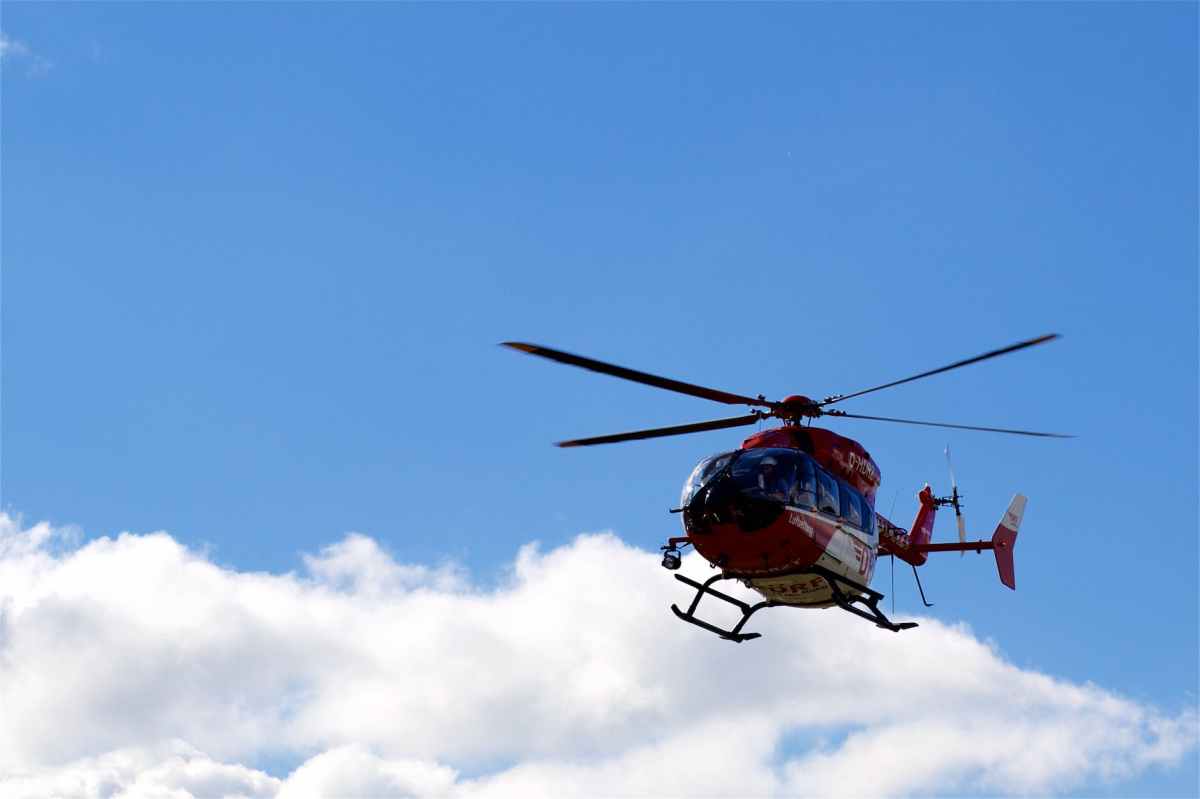
What will be the public reaction when we look up to see half a dozen new urban mobility vehicles buzzing past overhead? Perhaps we’ll accept new flying machines if it’s for a public service, an ambulance, fire services, police, or even newsgathering. Brightly coloured in emergency orange.

A public flying taxi service might raise a few eyebrows. A flashy private flying car, now that might be another matter altogether. There you are on a hot summer evening, in the garden, having a pleasant barbeque with friends and whiz a flying car swoops over the treetops. The passengers have their mobile phone out filming their trip. This is when fist will be raised skyward. It’s a time when you hope the next-door farmer hasn’t got a shotgun.

Today, a few pilots do get prosecuted for misbehaving when low flying private helicopters. Not often, it’s true. This happens with less than 1500 helicopters registered in the UK. What would happen with, say, 10,000 private flying cars? I wonder.

A wing and a prayer

Gaps

Fascination with the new. Who can resist? Advanced Air Mobility (AAM) provides just that. Often visualised in Science Fiction, plans for flying cars, taxies and autonomous machines buzzing around our heads are as popular as ever. A long-held dream of taking the imagination and making it real is the business of a lot of new entrants in aviation. The proliferation of projects is astonishing. Even with all the hype aside, there’s a strong chance that some organisations will suceeed in changing our skies forever.

This is great. It’s a way of decarbonising but continuing to fly. It opens new ways of undertaking vital tasks, like getting drugs and vaccinees to remote regions of the world. Emergency services can benifit in getting people from A to B faster and less expensivly. It may help get internal combustion engines off our congested roads in major cities. Air quailty may then improve for densly populated areas.

Nothing is for free. The shear complexity of the problems that need to be solved are taxing some smart people all over the globe. Not only that but the accommodation of aviation’s hundred-year legacy must be factored in too. That’s one reason why research and technical programmes are swallowing up the funds with a voracious appetite. Academics, consultants, and engineers are tapping into the pool of funds that Governments are making available.

Aviation has a pitfall that in that it is very unforgiving when errors and failures occur. It’s why the refrain that fits into every safety advocate’s lexicon is – safety is our number one priority. I will not argue as to how sincere those words are spoken. In the vast majority of cases, people mean what they say.

The awareness that in-service aircraft accidents can sink businesses is not lost on most protagonists. Health and Safety practitioners often say: “If you think safety is too expensive, try an accident”.

This note is more about the gaps that are evidence. Reading several publications on advanced air mobility safety and operations, I’m struck by the vagueness and wooliness of the material available. Or at least that’s how the material often starts. Then there’s a rush into infinitesimal detail to crack problems that seem more tangible. There are two problem spaces. There’s the part where uncertainty prevails. Then there’s the part where the nicely bounded nutty, gritty technical problems exist.

There are often far more questions than answers. Documents that proport to have answers are littered with questions. I’m reminded of the HHGTTG[1]. Talking about the invention of the wheel and a group considering what to do with it: “Well, if you’re so smart – what colour should it be?”

Asking the right questions is a must but there’s a lack of clarity too. Before going into painstaking detail on a set of scenarios a sound report should states its underlying assumptions first. It’s not a good idea to bypass the fundamentals. For AAM to go beyond a novelty, real world difficulties need to be faced head on. Context matters. Sharing the airspace with existing users must be considered[2]. Safety assessment must take account of interactions with General Aviation, ballons, recreational activities, aerial work, emergency services and military operations[3].

It wouldn’t be a bad idea to consider how accident investigation will be conducted, even at this early stage. No doubt lots of data will flow from AAM but will it be what’s needed when things go wrong?


[1] https://www.bbc.co.uk/programmes/b03v379k

[2] UK CAA CAP2272, October 2021

[3] https://www.mitre.org/sites/default/files/publications/pr-19-00667-9-urban-air-mobility-airspace-integration.pdf