Artificial Intelligence

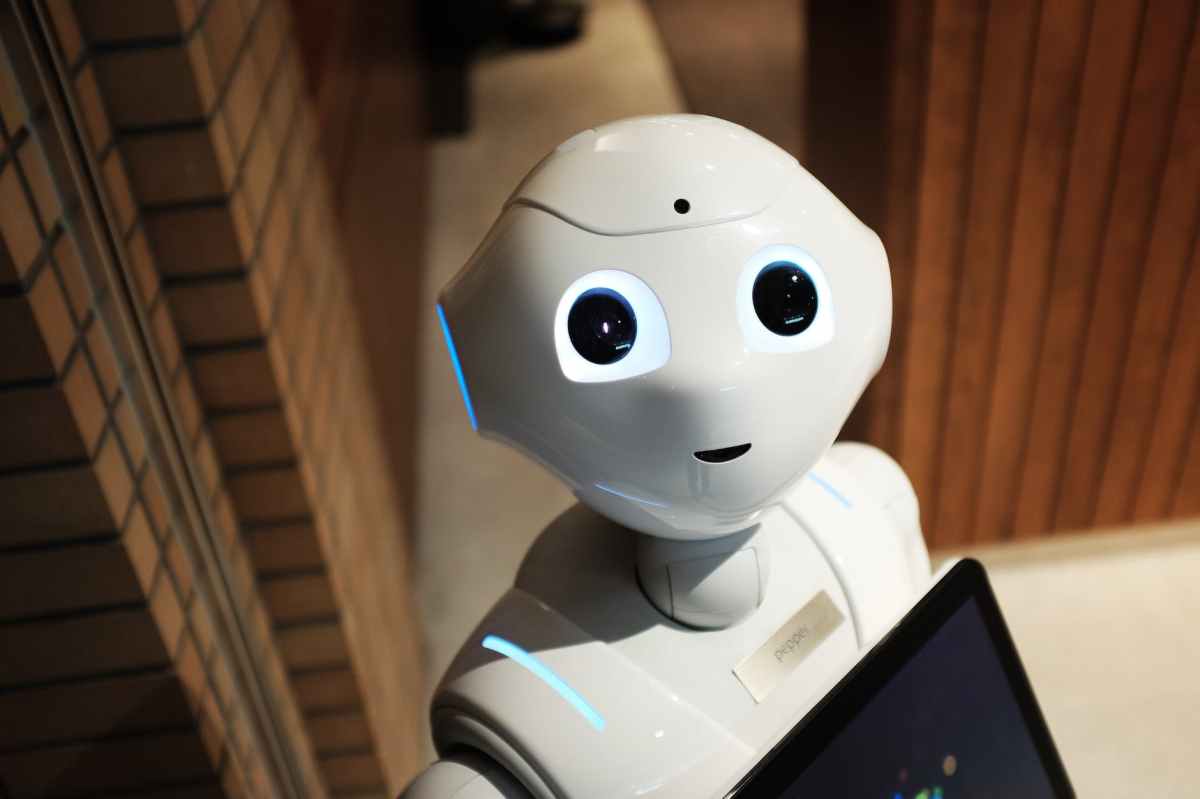
In an on-line event, I listened to Professor Dr. Saskia Nagel of Aachen University[1] speak on Artificial Intelligence (AI) and Ethics last evening. It’s a topic that arouses a lot of interest amongst engineers and just about every other profession.

The talk was a round robin of the subject touching on points of debate that are far from resolved. Her talk provided an overview of key present ethical questions spanning the development and uses of “AI” technologies. It’s interesting that even the title of the talk was questionable. The debate rages as to what is encompassed in the commonly used term “AI”.

Scientific and technological advances have consequences that are best anticipated, in so much as we can. Far too often, as in the case of mobile phones, a capability has been launched onto humanity because of its great utility without much thinking through of potential impacts.

In a way, our collective mindset remains stone age. We do things because we can rather than asking the question as to whether we should or not. The Australian movie and musical Muriel’s Wedding captures this nicely[2]. “You Can’t Stop Progress” was the election billboard slogan of politician Bill Heslop in the story. The same theme might be posted as “Growth, growth, growth” in the current economic climate.

To an extent that’s what’s happening in the more audacious parts of aviation innovation. Different ways in which AI technologies can be used to facilitate autonomous flight are being explored and promoted. There’s no doubt such technology can process massive amounts of information in no time at all when compared with you or me. That advantage is only one side of the story.

Investigating questions of autonomy quickly leads to discussions on accountability and responsibility. In flight, there’s inevitably complex interactions between people and machines. On the normally rare occasions when this results in harm it’s essential to be able to say what or who was responsible.

It goes further than that too. Even to persuade a passenger to ride on an autonomous vehicle a good deal of confidence must be built-up. A fear of flying is often counteracted by arguments based on the long history of safe flight and the trustworthiness of those operating a transport system.

A question is: how do we trust something we don’t understand? Not a new question. Few members of the flying public may understand how a modern transport aircraft works. We put our faith in independent knowledgeable professionals asking difficult questions of the designers and builders of aircraft. We put our faith in rigorous controls and processes. If the internal workings of a complex machine are not explainable to those independent professionals, we have a problem. Thus, another key topic of explainability.

This is a fascinating research area. I’ve no doubt there are workable solutions, but we are some ways from having them to hand at the moment. Applied ethics are part of the toolbox needed.


[1] https://www.ethics.rwth-aachen.de/cms/ETHICS/Das-Lehr-und-Forschungsgebiet/Team/~fcnwz/Saskia-Nagel/

[2] https://fb.watch/h-uoLokeaY/

Poor law making

If you thought the Truss era was an aberration, and that the UK’s Conservative Party had learned a lesson, then please think again. Wheels set in motion by the ideologue Jacob Rees-Mogg MP are still spinning.

The Retained European Union Law (Revocation and Reform) Bill is trundling its way through the UK Parliament. The Government Bill will next be prepared for its 3rd reading in the House of Commons[1]. The Conservative Government has brought forward this Bill to revoke, reform or revise all the remaining law in the UK that was formerly derived from the UK’s membership of the EU. This turns on its head the normal approach to changing UK legislation. Revocation is automatic unless there’s an intervention by a Minister.

UK civil aviation depends on several thousand pages of legislation derived from EU law[2]. Much of this law was created with considerable contributions from the UK. There’s hardly any if any advocates for automatic revocation of current aviation legislation. Even the thought of this action sends a shiver down the spin of aviation professionals. Generations of them have worked to harmonise rules and regulations to ensure that this most international of industries works efficiently.

Unless amended, the Government’s EU Retained Law (Revocation and Reform) Bill[3] could turn out to be an absolute disaster. Even those who have an irrational wish to eliminate any and every past, present, or future link to Europe must come up with a practical alternative and do this in an incredibly short time. Without a consistent, stable, and effective framework civil aviation in the UK will grind to a halt. Again, even those who have an unsound need to change for change’s sake will be hitting a vital industry hard, as it is only just getting back on its feet after the COVID pandemic and now setting out to meet tough environmental standards.

It’s going to be interesting to see what happens when this poor Bill reaches the House of Lords. Once again, the country will be relying on the upper house to add some common sense to this draft law.  

POST 1: The 3rd reading debate makes it clear that the Government is unsure which laws are covered by the Bill. If the Ministers responsible for this legislation do not themselves know its extent, how can anyone expect civil servants working on this legislation to know the full extent of change? A most strange state of affairs Retained EU Law (Revocation and Reform) Bill (Third si – Hansard – UK Parliament

POST 2: Retained EU law lays down rules for the airworthiness and environmental certification of aircraft and related products, parts and appliances, as well as for the certification of design and production organisations in the UK Commission Regulation (EU) No 748/2012 of 3 August 2012 laying down implementing rules for the airworthiness and environmental certification of aircraft and related products, parts and appliances, as well as for the certification of design and production organisations (recast) (Text with EEA relevance) (legislation.gov.uk)

POST 3: Retained EU Law Bill is being debated in the House of Lords on Monday, 6 February.


[1] https://bills.parliament.uk/bills/3340

[2] https://www.eiag.org.uk/paper/future-retained-eu-law/

[3] https://www.gov.uk/government/news/the-retained-eu-law-revocation-and-reform-bill-2022

Snobbery

It hadn’t occurred to me at all. We’ll not as far as this person’s abilities to communicate a topic that clearly fascinates her. Yes, I know that part of that work is to promote a book just before Christmas.

I enjoyed Dr Lucy Worsley exploration of the life of the author Agatha Christie[1][2]. She looked, not just at the chronological facts but tried to piece together Christie’s motivations and the forces that were acting on her at different stages of her life. A well-crafted story was presented that was far more interesting than may have been commonly understood.

Now, I’m told that the reaction of some people is as “marmite”, that is you either love it or hate it, with little room in-between. It seems Worsley’s dramatisation of the incidents of Christie’s life are considered frivolous and superficial by some pedantry types.

As a presenter, Worsley loves to dress up and is not shy of debunking long-standing historical myths. It’s a style that leads viewers and listeners into the feeling that things were not as simple as our school textbooks had us think. That there’s a twist and tail in every story of the past.

The snobbery that can be directed towards those who step outside the box and challenge, even with great care, embedded assumptions, and folklore is not nice to see. It’s not limited to academic historians who have a fondness for telling stories. There is a little too much of this trend in the aviation world too. Ten minutes on Twitter and you’ll be convinced.

I remember one of Quino’s cartoons[3] showing a university professor sitting in the middle of a room. In true cartoon abstract his head was a big arrow that pointed towards the roof. Sitting around him was a group of smiling acolytes. Their heads were extended too. They each wrapped around the professor’s head like a vine. The message being that it’s all too easy to give up independent thinking and follow a classical or standard line. An illustration of “group-think”. That tendency for people to cling to an ideology regardless of its sensibility.

Here’s a Christmas message. If tempted to be a pedant or a snob, even with the best intentions in mind, count to ten before launching reactions to the creative and more demanding thoughts of others. Especially, when thoughts and ideas step on your own cherished field of expertise.

It’s worth a try.


[1] https://www.bbc.co.uk/programmes/m001g91r

[2] https://www.bbc.co.uk/programmes/p0d9cd6n

[3] https://www.quino.com.ar/homequino

SPO 3

Now, there’s an activity with two humans in the loop. Given the physics involved the goalkeeper should be beaten every time. Well, I’m saying that assuming a high level of expected performance on the part of the footballer taking the penalty. I guess that’s why we are often critical when they miss. In the last few weeks there have been more than a few examples to watch.

What we know is that football penalties are much more than mechanical actions and reactions. However, there’s a degree of mythology about the inevitability of human factors taking control of the outcome: goal or no goal. I’d like to think that there’s an ever-shifting blend of what physics does to the ball and what the human does. Is it always possible to predict the slipperiness of a spinning ball traveling at speed that is then touched by the fingertip of a goalkeeper?

What if the footballer taking the penalty, was an “intelligent” machine. That is a machine with a sensor array and computational capability that far exceeded normal human performance. Such advance automation could calculate the most probable reaction of a goalkeeper based on history and the immediate movements they make right up to the last millisecond before the ball is struck.

Assuming the machine was limited in term of the force it can apply to the ball, it could still adjust its actions as soon as any new information was available. I’m not saying the outcome will always be better for the machine football striker. However, it could reduce the scope for error and randomness to dictate what finally happens.

So, with that argument, in aviation, I’m saying it’s not right to say that Single Pilot Operation will always be worse than two crew operations. Don’t get me wrong, those people aggressively advancing the idea that the intelligent machine will always be better than a human are missing something too.

One thing that highly capable automation could have to bring to the party is not only early detection and diagnosis of problems but a massive library of stored experience. How we embed and constantly update that flight experience is an almighty challenge.

Afterall, the dread in aviation is knowledge with hindsight. It takes the form: “You should have known. Why did you let this incident happen?”

I’m now tempted to think of a Star Trek analogy. Every second an aircraft of a type is flying, experience of its operation is being accumulated. If there are hundreds of a type flying at any moment across the globe, that’s a lot of data to collect and absorb and think about before acting. 

The fictional and scarry Borg are cybernetic creatures linked by a hive mind and they know a thing or two about assimilation. Granted that’s farfetched as analogies go but my point is that I believe we are generations away from that kind of capability. Not only that, just as humans fail so any such “intelligence” designed by humans will fail to.

SPO 2

An instant reaction to Single Pilot Operations (SPO) is like the instant reaction to completely autonomous flight. “I’m not getting on an aircraft without a pilot!” Then to justify that reaction fatal accidents of the past are cited. Typically, this is to remind everyone of the tragic Germanwings accident[1]. It was 24 March 2015, that an Airbus A320 was crashed deliberately killing all onboard.  

However, it’s wise to remember that the likelihood of incapacitation[2] is much greater than that of the malicious behaviour of the pilot in command. Cases of malicious behaviour leading to a catastrophic outcome are truly shocking but extremely rare.

One fatal accident, that is still disputed is EgyptAir Flight 990[3] that killed 217 people in 1999. The possibility of inflight pilot suicide is unnerving, since on the face of it there is little any of the aircraft’s cabin crew or passengers can do to stop it.

This could be a future opportunity to use automation to prevent these scenarios occurring. Afterall the aircraft knows where it is and that a sustained high-speed dive towards the ground is not normally intended. A safety system exists to do this[4], but its outputs are not connected to the aircraft’s flight controls.

Humans being adaptable, extremely creative and capable of highly irrational actions, it’s unlikely that malicious behaviour resulting in aviation accidents will ever be reduced to zero. This is said regardless of the procedures or technology involved. The fate of flight MH 370 remains a mystery.

Thus, the prominent safety issue in respect of SPO is pilot incapacitation. Where the pilot in command is no longer able to perform as expected. That is, if the aircraft flown is not capable of safely landing itself. The objective always being safe continued flight and landing.

I’ve had the “1% Rule” rule explained to me by a notable aviation doctor, but I must admit I didn’t fully take it in. So far, the rule has stood the test of time. When the pilot in command of a Czech Airlines aircraft collapsed and died on route from Warsaw to Prague in 2012, the co-pilot took over and everyone got home safely.

Any automated co-pilot must be at least as capable as a human co-pilot in all aspects of operation of an aircraft. The key word here being “all”. It’s not enough to have the functions necessary to undertake safe continued flight and landing. Task such as communicating with the cabin crew and passengers must also be considered. Including preparation for an emergency landing.


[1] https://www.bbc.co.uk/news/world-europe-32072218

[2] http://www.avmed.in/2012/02/pilot-incapacitation-debate-on-assessment-1-rule-etc/

[3] https://www.theguardian.com/world/2002/mar/16/duncancampbell

[4] https://skybrary.aero/articles/terrain-avoidance-and-warning-system-taws

Single Pilot Operations

Single Pilot Operations is not new. What’s new is considering this way of working for everyday public transport operations of large aircraft

Research is of fundamental importance. It seems obvious to say so given the benefits it has given us. When proposals come forward to exploit new technologies there needs to be that moment when everyone steps back and takes a long hard look at the implications of its use.

In basic technical research it’s not the most important consideration is to focus on the drivers for change. They can be multifarious: economic, environmental, social, safety, security, political, and maybe just a matter of preference. Policy directions are taken by the industry and governments not constrained by what is happening now as much as what might happen tomorrow.

Research has delivered incredible safety improvements in aviation. This is not only in the basic design and construction of aircraft but all aspects of their operation. So, to see that the European Union Aviation Safety Agency (EASA) sponsoring research to study the implications of aircraft Single Pilot Operations[1] is a wholly good measure.

My history goes back to the early days of fly-by-wire aircraft systems. This is where the mechanical and physical connection between an aircraft pilot’s actions and the control surfaces that determine flight are replaced by digital computers. Back in the 1980s, a great deal of research and experimental flying proved the technology to make fly-by-wire work. It first found favour with the military. One reason being that an aircraft’s capability could be extended well beyond what was formerly reached. This change was introduced with caution, analysis, testing and much detailed risk assessment.

At the time, there was a significant body of professional pessimists who predicted a diminishment of aviation safety. Today, four decades on, studies show that even as air traffic has increased so civil aviation safety has improved. A momentous achievement. An achievement that has, in part, been because of the well-regulated adoption of advanced technologies. 

It is important to look at potential changes with an open mind. It’s easy to come to an instant opinion and dismiss proposals before a detailed study has been conducted. The detailed technical research can then be part of the challenge and response that is necessary to before approval of any major change. First difficult questions need to be tabled and thoroughly investigated.


[1] https://www.easa.europa.eu/en/research-projects/emco-sipo-extended-minimum-crew-operations-single-pilot-operations-safety-risk

Air Safety List 2

It may seem obvious that there should be an Air Safety List that bans airlines that do not sufficiently met international standards. It’s a right that exists within the Chicago Convention[1]. The first words of the convention concern sovereignty. Every State has complete and exclusive sovereignty over their airspace. From the first days of flight the potential use of aircraft to wage war was recognised. Thus, it could be said that the first article of the Chicago Convention existed even before it was written down and agreed.

However, it’s similarly recognised that the future development of international civil aviation has always depended upon agreements between States. Without over-flight and permission to land in another country there is no international civil aviation.

I do remember some agonising over having an explicit list of banned countries and airlines. In a liberal democracy choice is greatly valued. Here the choice concerns passengers being permitted to board aircraft from another country where there is knowledge of safety deficiencies related to the operation of the aircraft of that country. Should the law make that choice for the air traveller, or should the air traveller be free to make an informed choice?

There lies the crux of the matter. How do ordinary citizens, without aviation safety expertise make judgements concerning complex technical information? Understanding the implications of failing to meet the International Civil Aviation Organization’s Standards and Recommended Practices (SARPs)[2] is not so easy even for aviation experts.

Additionally, there is the issue of third-party risks. It would not be wise to permit foreign aircraft, whose safety is not sufficiently assured, to fly over a nation’s towns and cities.

Regulatory legislation was framed not only to put airlines on the Air Safety List but to take them off the list too. In fact, sometimes this is harder law to frame. In this case the decisions must be made in a fair, transparent, and technically rigorous manner otherwise the politics of such choices could overwhelm the whole process.

There’s been much success in this endeavour. It’s clear that this is a valuable aviation safety measure. It may have driven some contracting States to improve the performance of their airlines.


[1] https://www.icao.int/publications/Pages/doc7300.aspx

[2] https://www.icao.int/safety/CMAForum/Pages/default.aspx

Air Safety List

A long time ago in a far away place. Well, that’s how it seems, and it was more than 17 years ago.

A flight ban was placed on Turkish airline Onur Air back in 2005. At that time, I was in my first full year in Cologne, Germany building up the European Aviation Safety Agency (EASA). We were well on the road managing the handover of responsibilities from activities of the Joint Aviation Authorities (JAA) to EASA. However, the European legislation that empowered EASA was in a first and most basic version. This was planned to be so because taking on aircraft certification work was a big enough task to start the new Agency.

The JAA had coordinated an aircraft ramp inspection programme and maintained a centralised database for its members. This was where a member state would inspect an aircraft arriving from a third country to ensure that international rules were fully met. The SAFA programme was launched by the European Civil Aviation Conference (ECAC) in 1996. SAFA standing for Safety Assessment of Foreign Aircraft.

Onur Air failed such inspections, and the Dutch government imposed a flight ban[1]. Similar bans were imposed by Germany, Switzerland, and France. However, if my reflections are correct the airline moved operations to Beligum where there was no ban. As you might imagine this caused concern amongst EU Member States. Where everyone had agreed to cooperate on aviation safety matters there seemed to be a degree of incoherence.

Long before the first EASA Basic Regulation, which by the way, didn’t address this subject, there was Regulation 3922/91[2]. I remember a hastily convened committee composed of representatives of the Member States and chaired by the European Commission (EC). The “3922[3]” committee hadn’t sat for years but then it sprung into action in response to the lack of a consistent approach to airline safety bans across Europe. I was there representing EASA.

So, the EU Air Safety List was born and the associated legislation[4] to support it. Even though the UK has left the EU, and left EASA this safety list remains the basis of the UK’s own Air Safety List[5]. Adding and removing air carriers and States that fail to meet internationally agreed safety standards is work that no one State should do alone.

[For safety’s sake, this should not be one of the parts of adopted EU legislation the UK Parliament wants to sweep away with its planned new Brexit law].

POST: Current list The EU Air Safety List (europa.eu)


[1] https://www.expatica.com/nl/general/dutch-lift-ban-on-onur-air-38258/

[2] Council Regulation (EEC) No 3922/91 of 16 December 1991 on the harmonization of technical requirements and administrative procedures in the field of civil aviation.

[3] https://eur-lex.europa.eu/LexUriServ/LexUriServ.do?uri=OJ%3AL%3A1991%3A373%3A0004%3A0008%3AEN%3APDF

[4] https://eur-lex.europa.eu/legal-content/EN/TXT/PDF/?uri=CELEX:32005R2111&rid=6

[5] https://www.caa.co.uk/commercial-industry/airlines/licensing/requirements-and-guidance/third-country-operator-certificates/

Bird Strike 2

What makes a bird strike different is that it’s an unpredictable collision. If we talk about aircraft collisions with terrain the outcome is predicable bad. All that kinetic energy must go somewhere. So, a high-speed vehicle hitting something that is immovable is not going to end well.

Now, it must be said that some hunting birds can dive at incredible speeds. More typically, a large bird in flight between feeding sites isn’t going to be traveling fast. In fact, it may as well be viewed as a static object relative to an aircraft in flight. A bird in-flight is unlikely to be able to take avoiding action. For a pilot the action of “see and avoid” may work in respect of other aircraft but a bird ahead is no more than a pinprick in the sky.

These factors make aircraft bird strikes inevitable. That said, the range of outcome because of impacts are rarely at the severe end of the scale. One reason for this is the effort made at design certification to ensure an aircraft is sufficiently robust. Damage can occur but if the aircraft design and test processes have been rigorous everyone should get home safely.

I remember paying particular attention to the zonal analysis done by several major manufacturers. In my experience the most difficult designs are for those of business jets and large helicopters. One of the design challenges in both cases is the limited physical real estate within the aircraft structure. Weight is another big consideration. This leads to cramming essential avionics and electrical systems and their interconnections into confined spaces.

Zonal analysis is about ensuring there’s segregation between different systems. Afterall what’s the point of having two Attitude & Heading Reference Systems (AHRSs)[1] and putting them next to each other in the nose cone of an aircraft. That’s not a good design strategy. One damaging impact must not take out two essential independent aircraft systems.

It’s just as important to ensure an aircraft’s wiring isn’t all bundled togther and taken through one connector. That may save money on electrical parts but it’s not going to work after being hit hard by a 5kg goose.

These issues will need particular care in the new electric vertical take-off and landing (eVTOL) aircraft that are on the drawing boards. Choosing a safe architecture, manufacturers must balance the use of creative design solutions, to produce a competitive product, with limited physical space.

A couple of key words in the certification requirements concern hazards that are anticipated. Bird Strike is hazardous and aircraft systems and equipment must “perform their intended function” should it occur. See EASA Special Condition for small-category VTOL aircraft, Subpart F[2].

POST: Good to see the bird strike criteria Joby’s airworthiness criteria: A blueprint for the nascent eVTOL industry – Vertical Mag


[1] https://helicoptermaintenancemagazine.com/article/layman%E2%80%99s-guide-attitude-heading-reference-systems-ahrs

[2] https://www.easa.europa.eu/sites/default/files/dfu/SC-VTOL-01.pdf

Bird Strikes

Birds and aircraft share the same airspace. This is not a beneficial relationship for either.

I watched two rather aloof Branta canadensis in our local park the other day. They seemed oblivious to all the other birds on the priory pond. I’d certainly describe these two birds as being well fed. Given their stature and size, they looked formidable. These resident North American visitors are not to be messed with and are only eclipsed by the Swans on Reigate’s pond.

This species of bird has adapted well to living in urban and suburban areas and are frequently found on lakes, ponds, and rivers. I used to see large flocks of them gather on the river Thames. That was only a couple of miles from London Heathrow.

Even though they are numerous in the UK these birds are protected by law (Wildlife and Countryside Act 1981[1]). Today, the population numbers may be as high as 62,000 breeding pairs[2]. Although these birds have the capability to fly great distances they tend to hang around where there’s a reliable source of food. Bird populations are changing their behaviours as a result of climate change.

Geese fly in the typical V-formation which is called a “wedge” or skein. From time to time, I see them fly over my house at a few hundred feet as they move between local lakes and ponds. They are easy to spot and often noisy as they elegantly traverse the sky.

Birds and aircraft share the same airspace. This is not a beneficial relationship for either. Strikes occur around the world every day. In the history of aviation, there have been hundreds of aircraft accidents and more than 47 fatal aircraft accidents caused by bird strikes[3].

It must be said that most bird strikes cause little damage to aircraft but that is highly dependent upon the size of the unfortunate bird and their habits. The story can be very different when an impact is with a Canada goose. Their large size and tendency to fly in flocks can have a devastating impact. On 15 January 2009, a US Airways Airbus A320 aircraft[4] ended up in Hudson River as the result of an encounter with such birds.

The risk of collision between birds and aircraft have always been part of aircraft operations. As a result, measures are taken to certify aircraft to be robust in the event of such collisions. Additionally, there’s a great deal of effort made at major airports to keep birds away from active runways.

Most of the bird threat to aviation safety exists when travelling at speed at relatively low altitudes. Bird strikes happen most often during take-off or landing. This makes me think that bird strikes are going to be a regular feature of the operations of Urban Air Mobility (UAM) / Advanced Air Mobility (AAM). The use of use highly automated aircraft may offer the opportunity to provide sophisticated bird avoidance features. However, so far, I’ve detected no talk of such features.

POST 1: A useful safety booklet Large Flocking Birds (skybrary.aero)

POST 2: A recent Boeing 737-800 serious incident LinkedIn

POST 3: An example of what can happen from 2019 Ural Airlines Flight 178 – Wikipedia

POST 4: Another useful safety booklet Bird strike, a European risk with local specificities, Edition 1 – Germany | SKYbrary Aviation Safety


[1] https://www.legislation.gov.uk/ukpga/1981/69

[2] https://www.wildlifetrusts.org/wildlife-explorer/birds/waterfowl/canada-goose

[3] https://www.skybrary.aero/sites/default/files/bookshelf/615.pdf

[4] https://en.wikipedia.org/wiki/US_Airways_Flight_1549