Electrics & Mechanics

Yesterday, I wrote on LH2. The potential fuel for electric aircraft of any size. Yes, I’m not just talking about smaller commuter class transport aircraft.

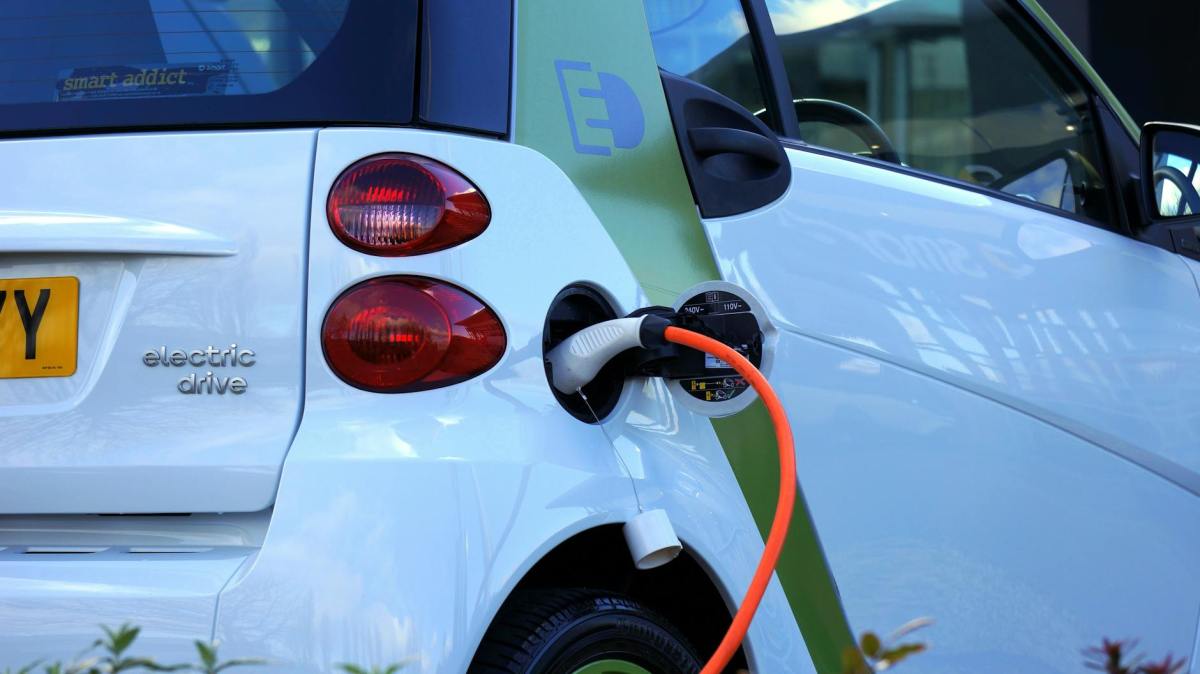
Let me take some anecdotal evidence from the transition that is going on in road transport. Repairer turns up to fix an electric car that will not start. It’s a simple matter given that the car has been standing unused for a long time. The battery had discharged. A quick charge from another battery pack and all is well. Meantime in conversation it’s clear that the repairer hates working on electric cars. I could say, no surprise, they were trained on combustion engines and have been forced to make a transition in technology.

What’s evident here is the apprehension of a person who likely has a mechanical bias towards their work and the necessity to take on fixing powerful electrics. Mechanics, those who love working with moving parts, often have a dislike of electrics and electronics. It’s an engineer’s “feeling” expressed to me casually over the last 40-years.

In fact, it can be the reason that a design or maintenance engineer took the career path that they did. There is a dividing line between mechanical engineers and electrical engineers that is embedded in our institutional, educational, and training systems.

So, there’s two practical human issues to grapple with in a transition:

  1. Propensity of one branch of technically capable people to find mechanical work less fearsome and more satisfying than electrics or electronics, and
  2. Streaming that is embedded in our institutional, educational, and training systems. Qualifications and recognition are often not so multi-disciplinary focused.

I’m not for one single moment making a luddite argument that mechanical engineers[1] and electrical engineers[2] are two tribes that must be kept apart. Far from it. What’s more important is to recognise that transitions are hard.

New electric aircraft are going to demand technical people with a multiplicity of both mechanical and electrical knowledge. The way the engineering world has been divided up in the past doesn’t cut it. Some of our most cherished niches will need to be challenged.

Transitions of this nature always take much longer than is originally anticipated. In a way, that should be such a surprise. It’s a generational change for a community that can be conservative with a small “c”.

This is NOT business as usual. For example, handling powerful 1000-volt electric technology is not for everyone. Removing and replacing cryogenic plumbing is, again, not for everyone. The hazards are clear. The skills needed are clear.

Reorienting the aircraft maintenance engineering world is going to need new plans and programmes. Better start by enthusing people about the change rather than just forcing it.


[1] https://www.imeche.org/

[2] https://www.theiet.org/

Hydrogen in Aviation

The potential for LH2 (liquid hydrogen) is enormous. That’s matched by the logistical and technical difficulties in exploiting this gas’s great potential. It offers energy for a means of propulsion that is nowhere near as environmentally damaging as existing means.

Society already integrates hazardous liquids and gases into everyday life. Each one has been through several iterations. It has been a rollercoaster. Each one has been at the root of disasters, at one time or another.

  • We use gas for cooking and heating in domestic settings. Periodically explosions demolish buildings. Leaks cannot be ignored. Harm can be done.
  • We use light and heavy oils widely in transport systems. Periodically intense fires burn vehicles. Care in handling is essential. Harm can be done.

Without having to say it, both above harm the environment. The search for non-CO2 emitting ways of flying is urgent. Here, I’m writing about harm to people. Physical harm. The business of aviation safety.

Often the physical harm is not associated with the design of the systems used but to the maintenance of those systems. Naturally, there was a learning curve. If we look at early versions of those systems, fatal accidents and incidents were far more regular. So, here’s the challenge for aviation. How do we skip the dangers of the early learning phase? How do we embed rigorous maintenance practices from day one? Big questions.

On the first one of these, lots of fine minds are engaged in putting together standards and practices that will address good design. If this works, and it will be tested extensively, the chance opens for introduction to service with a great deal of confidence that the main risks will be managed.

On the second of these, there’s not much happening. You might say there’s an element of chicken and egg. The shape and form of future LH2 systems needs much more work before we can think deeply about how they will be maintained.

I think that’s wrong. It’s old-fashioned thinking. As the industry has often practiced, making the systems first and then devising ways of maintaining them while in-service. That’s yesterday’s reasoning.

Making aviation system maintenance the Cinderella in the LH2 world is to invite failure. This is a situation where advancing the consideration of how the in-service realm could work, day by day, is necessary. It’s advantageous.

Here’s my reasons.

  1. There are generic approaches that can be tested without knowing the detailed design. That can take existing learning from other industries, like chemical and space industries, and consider their application in aviation.
  2. Emerging technologies, like machine learning, coupled with large scale modelling can provide ways of simulating the operational environment before it exists. Thereby rapidly testing maintenance practices in a safe way.
  3. It’s imperative to start early given the mountain that needs to be climbed. This is particularly true when it comes to education and training of engineers, flight crew, airport and logistics staff and even administrators.

Everyone wants to accelerate environmentally sustainable solutions. When they do get to be in-service, they will be there for decades. Thus, an investment, now, in study of maintenance systems will pay dividends in the longer term. Remember, early fatal accidents and incidents can kill otherwise sound projects or at least put them back on the drawing board for a long time.

NOTE 1: I didn’t mention Liquefied Petroleum Gas (LPG). It’s in the mix. Another CO2 contributor. LPG containers have pressure relief valves. LH2 containers will likely have pressure relief valves too. That said, venting LPG is a lot more environmentally damaging than LH2. From a safety perspective they can both create explosive conditions in confined spaces. Maintenance staff may not need to carry a canary in a cage, but they will certainly need to carry gas detectors when working on LH2 powered aircraft. Our noses will not do the job.

NOTE 2: Events on the subject: https://www.iata.org/en/events/all/iata-aviation-energy-forum/

https://events.farnboroughinternational.org/aerospace/sustainable-skies-world-summit-2024

2024 ICAO Symposium on Non-CO₂ Aviation Emissions

Culture

Yet again, Boeing is in the news. The events of recent times, I feel are immensely sad. Now, it is reported that the FAA has opened an investigation into a possible manufacturing quality lapse on the Boeing 787 aircraft[1]. Concern is that inspection records may have been falsified.

A company that once had a massive professional engineering reputation has sunk to a place where expectations are low. It’s not so much that the company is having a Gerald Ratner moment. Unfortunately, the constant stream of bad news indicates something deeper.

It’s interesting to note that Frank Shrontz[2] passed away last Friday at the grand age of 92. He was the CEO and Chairman of Boeing, who led the company during development of the Boeing 737NG and Boeing 777 aircraft. In the 1990s, I worked on both large aircraft types.

A commonly held view is that, after his time and the merger with McDonnell Douglas the culture of the organisation changed. There’s a view that business schools graduates took over and the mighty engineering ethos that Boeing was known for then went into decline. Some of this maybe anecdotal. Afterall, the whole world has changed in the last 30-years. However, it’s undoubtably true that a lot of people lament the passing of an engineering culture that aimed to be the best.

A famous quote comes to mind: “Culture eats strategy for breakfast.” Those sharp 5 words get discussed time and time again. Having been involved in a lot of strategic planning in my time it’s not nice to read. How wonderful intent, and well described policies can be diluted or ignored is often an indicator of decline. It’s that cartoon of two cavemen pushing a cart with a square wheel. One says to the other: “I’ve been so busy. Working my socks off”. Ignored, on the ground is an unused round wheel. If an organisation’s culture is aggressively centred on short-term gain, then many of the opportunities to fix stuff gets blown out of the window.

We keep talking about “performance” as if it’s a magic pill. Performance based rules, performance-based oversight, and a long list of performance indicators. That, in of itself is not a bad thing. Let’s face it we all want to get better at something. The problem lies with performance only being tagged to commercial performance. Or where commercial performance trumps every other value an engineering company affirms.

To make it clear that all the above is not just a one company problem, it’s useful to look at what confidential reporting schemes have to say. UK CHIRP is a long standing one. Many recent CHIRP reports cite management as a predominant issue[3]. Leadership skills are an issue.


[1] https://aviationweek.com/air-transport/some-787-production-test-records-were-falsified-boeing-says

[2] https://www.seattletimes.com/business/boeing-aerospace/frank-shrontz-former-ceo-and-chairman-of-boeing-dies-at-92/

[3] https://chirp.co.uk/newsletter/trust-in-management-and-cultures-is-the-key-to-promoting-confidence-in-safety-reporting/

AAM

This week, I watched an FAAs Advanced Air Mobility (AAM) webinar[1]. The subject was community engagement. AAM could be air taxies but it’s many uses of the new electric aircraft that are becoming a reality. The term eVTOL is used for those aircraft that have the capability of vertical flight. My reflection is that there are several aspects of AAM that need much more attention. Naturally, I’m taking the discussion of what’s going on in the US and thinking about it in relation to the UK.

  • Land Use Planning

Generally, National Aviation Authorities (NAAs) are consultees when it comes to land use planning. They do not determine planning applications. NAAs may well have set out policies and guidance on the subject but they will not be determining the site of vertiports.

It seems to me that there’s little chance that eVTOL aircraft routes will be established without sufficient community consent.  Community engagement has been appropriately recognised as essential. The aspects in play are like those for existing aerodromes. Often for AAM applications proposals are for the use of new locations, hence a concern. Anytime there’s a serious proposal for a new aerodrome the opposition is up and running long before the proposers have got their act together.

The subject is complicated by the mix of public and private ownership of infrastructure. If the intention is to interconnect AAM with other transport services (bus/train/boat/road), then complicated agreements are going to be inevitable. It’s not just about buildings and tarmac but having a trained workforce available is a location dependent issue too.

  • Business Models

I’m about to sound as if I’m securitising the plans of a contestant on The Apprentice[2]. There are plenty of way of losing money in commercial aviation. It’s been a well-practiced art over the years. Great ideas fall by the wayside after huge amounts of money have been expended. Customers are key. People must want to fly the routes available, time and time again. And like London Black Cabs be prepared to pay the fare. Given the relatively small cabin sizes that are on offer these people are likely to be moderately prosperous groups or individuals.

Regular schedules air services can produce a reliable income. Airport-to-airport connections seem like a good bet. Problem there is the conveyancing of weighty luggage. Busy airspace could be a challenge too. That said, with tens of thousands of people at both ends of a route, no doubt some people will choose a comfortable, speedy direct connection.

There are good possibilities for major event driven transport services. Getting to and from a motor race or horse race event or a concert or festival can be hell when tens of thousands of people are all trying to get to and from a location or venue. The numbers may well stack-up to make eVTOL a premium way of dodging the crowds in an environmentally sound way.

  • Batteries, Batteries, Batteries

Everything in respect of aircraft performance depends on power density. How much oomph can you get out of a small, light weigh physical space. Recharge and go. Do it, again and again. It’s as simple as that. Not only that but aircraft battery packs must be affordable and available. Whizzy technology that cost a mountain of cash and can only be use for a few hundred cycles is no use at all.

Power distribution infrastructure must be up to the job too. Who will pay for this is up for grabs. There’s a good case for public funding given that there are multiple uses of enhanced electrical supply. Given the monopolistic nature of power generation and distribution this will not be easy or quick.

That’s only three issues that require a great deal of attention. Not the attention of researchers. Not the attention of academics, Not the attention of political policy wonks. Connecting entrepreneurs and public bodies needs practical stimulus. The possibilities are exciting.


[1] https://youtu.be/1sfVuJlPQoY

[2] https://www.independent.co.uk/arts-entertainment/tv/news/the-apprentice-2024-winner-pies-b2531331.html

Highways

The last time I visited the city of Baltimore was in 2012. It was the location of the annual seminar of the International Society of Air Safety Investigators (ISASI)[1]. That was when I was representing the European Aviation Safety Agency (EASA) at such international events.

The relationship between aviation accident investigators and regulators are generally cordial. There’s a great deal of work that requires cooperation and good communication. That’s not to say that the relationships between these two vital parts of national and international aviation safety systems is easy. It’s not. My reflection on that fact is that a degree of constructive tension is inevitable and not always a bad thing.

One way of seeing that relationship is that the primary role of an investigator is to make findings to prevent the repeat of a given accident. For a regulator the primary role is to ensure the complete aviation system runs safely on a day-to-day basis. Both organisations have the public interest at their heart. However, their operational context and perspective are different.

Firstly, my condolence to the families and friends of those who perished because of the Francis Scott Key Bridge accident[2]. The collapse victims and survivors had no way of knowing what was to happen on the night of the accident. I use the word “accident”. This was not an act of God, as some commentators would have it. The safety risks involved in the operation of the port in Baltimore could be anticipated.

In the US there’s an independent federal agency that is tasked with such major investigations. Interestingly, it’s the same one as that investigates aviation accidents and incidents. The National Transportation Safety Board (NTSB) is a multi-modal organisation. That is something we don’t have in the UK. Also, we don’t have a divide between federal and state organisations. Since in the UK we have separate independent national Air, Marine and Rail investigation agencies that cover the country (England, Scotland, Wales, and Northern Ireland).

I will not comment on the accident sequence or causes. It’s the job of an independent investigation to arrive at the technical facts. Recommendations will flow from that investigation.

Where a comment may be in order is that there are many locations across the globe where a vital piece of infrastructure, like a bridge being struck by a large container ship is a possibility. I’d generalise that further. When infrastructure that was designed a built 50 years ago meets modern day operational stress there’s going to be vulnerabilities. Yes, the aviation system is not immune from this fact too. It wasn’t so long ago when I read of PDP-11 computer hardware used for air traffic control (now, historic artifacts[3]). I’m sure there are still Boeing 747s, and alike that need floppy disks to update their hardware.

So, the wider subject is operational legacy systems working with modern systems. This is the interface that requires particular care. The safety risk appetite and exposure in the 1970s/80s was quite different from that which we expect upheld today.

Unfortunately, society is often reluctant to revisit this subject. Additionally, there’s the incentive to go for quick fixes and sweating assets. The example I have in mind the so-called “smart motorways” in the UK[4]. I don’t know how many fatalities can be linked to “smart motorways” but I’m sure, sadly, it’s too many.

POST: In time-off I enjoyed a trip out to Fort McHenry and a walk around the places where The Wire was filmed. The Fort McHenry story is interesting given its role in times of war. The British burnt the White House but the navy didn’t get past Fort McHenry in 1812.


[1] https://www.isasi.org/

[2] https://www.bbc.co.uk/news/av/world-us-canada-68661318

[3] https://www.tnmoc.org/air-traffic-control

[4] https://www.gov.uk/government/speeches/plans-for-new-smart-motorways-cancelled

Safety Culture 2

This may sound at variance with my last blog. I hope it’s not. I hope it’s complementary. What I’m highlighting here has been observed over decades of contact with a wide variety of organisations.

The term safety culture is fused into the pillars of ICAO Annex 19. The essence of building a good safety culture that fosters sound practices and encourages communications, in a non-punitive environment is at the heart of standards and recommended practices. With all those decades behind us the reader might assume that there’s unambiguous and well aligned attitudes and ways of working throughout the aviation industry. That’s not so.

On a spectrum of what could be called hard to soft the manner of application of know best practices can take different forms. By the way, please disassociate those two words with both easy and difficult. That’s not what I mean.

In my interpretation “hard” means like pages of Niccolo Machiavelli’s The Prince[1]. Aggressive, persistent, mandatory, uncompromising and all encompassing.

In my interpretation “soft” means like pages of The Little Book of Calm by Paul Wilson[2]. Harmonious, enlightened, progressive, sympathetic, and understanding.

As with extremes on any scale, going to the ends of that scale are not the best way to operate. I say “best” in terms of getting to ways of working to endure with engagement and effectiveness. I observe much of this depends on how power is disseminated through an organisational structure. Highly hierarchical organisations will approach culture differently from organisations with a relatively flat management system.

It may not be surprising to suggest that aviation Authorities can veer towards the “hard” approach and staff Unions towards the “soft” approach. Even when both are trying to reach the same goal. Where people come from a military background, command and control can be an instinctive reaction. Where people come from an advanced technology company background, collaboration and communication can be an instinctive reaction. In my observation there are advantages in both a hard and soft safety cultural approaches.

One advantage of a hard safety culture is that the time between discovery of a safety problem, taking corrective action and resolving that operational problem can be short. Clearly, that has distinct safety advantages. Certain airlines come to mind.

One advantage of a soft safety culture is that there can be the discovery of safety problems that would otherwise remain hidden. Where collective ownership of the problem is not in question. Again, clearly, that has distinct safety advantages too. Certain manufacturers come to mind.

I guess my message is as per much ancient thinking. All things in moderation. Try to reap the benefits of both ends of the scale. Balance.


[1] https://www.londonreviewbookshop.co.uk/stock/the-prince-niccolo-machiavelli

[2] https://www.waterstones.com/book/the-little-book-of-calm/paul-wilson/9780241257449

Safety Culture

Civil aviation remains an extremely safe means of transport. That said, any form of complacency must be addressed. It’s reassuring to say the past has been great but what passengers are most concerned about is their next flight. To have the confidence, to think it irrational to be afraid of flying, to look forward to the next journey, we must have a safe aviation system everywhere and all the time.

For any widespread system that has complex interactions between people and technology there’s never a moment when it can be taken for granted. We count the numbers, but safety is not purely an absence of accidents and incidents. Numbers counted are always past events. They have no direct causal influence on what happens next. True, there are factors in past accidents and incidents that will pop up again and again, but every flight is a unique event.

One of my colleagues who was a senior captain in a major international airline always remined me of the fact that, for all that has gone before, flight risk begins the moment an aircraft sets off down the runway with the intention getting to a destination. When the wheels lift off the ground there’s no stopping time. Reliant on the diligence, vigilance, and integrity of everyone who made a flight possible, flight risk is then in the hands of the crew.

The above is perhaps why we talk a lot about safety culture. The whole aviation family has a role to play. The care, professionalism, and watchfulness of every person makes a difference.

This can extend from the drafting of a new component for a new design, that a decade down the line. ends up as a part of an aircraft just about to leave the gate. This can go back to a flight instructors’ message that emphasised a key point back in a pilot’s initial training, years ago. This can encompass the extra care a couple of air traffic controllers took as they changed shifts.

Safety culture comes from caring. It’s that heightened awareness of the consequence of actions. Being alert to possibilities. Both the good kind, and the bad.

Safety culture is a matter for both individuals and organisations. One without the other doesn’t work. Placing a vigilant person in an organisation that doesn’t care is much like placing a reckless person in an organisation that does care. Although this is what I’ve written, systemic problems are likely the ones that are most likely to cause negative outcomes. This is where the role of management has the most impact.

Culture exists in context. When the ways people interact are determined by practices, processes, and procedures there’s an obligation on management to ensure they fit the bill. Drivers are often economic. In a commercial operation that’s no surprise. It’s when that driver displaces the safety imperative then safety suffers. There’s been several occurrences of this negative phenomena in the last year.

Comment

Custom and practice are as important as the rules and regulations that are part of our lives. Now and then, someone is criticized for applying the letter of the law without care for the spirit of the law. The same is true for custom and practice. Whereby, acting outside past norms can trigger a backlash.

Because, in free countries we believe in a free press, the rules and regulations that imping on what should and should not be said about events are always hard fought over. The banner of the “public interest” is touted as overriding. It may or may not be, but there’s an argument to be had.

In the aviation safety profession, I’ve grown up with an instinctively “need to know” disposition. I’ve shaken it off, mostly but there are signs that the attitude persists. This instinct can run counter to the transparency and openness that most people expect to see.

Why talk about the way major events are talked about?

A case in point is the recent runway collision in Tokyo. There’s much already written about the newsworthy aspects of the event, so I’ll desist from adding much more. There’s a lot of speculation too.

Graphs can be drawn of the media attention given to such tragic events against time. It’s typical that from moments after a major aviation accident until a few days after most initial facts are known there’s a huge surge in activity. This used to be described as newspaper column inches.

Today, wide ranging speculation is inevitable. It can be highly literate, and, on the other side of the coin, it can be badly informed, and now and then damaging.

In over three decades, I’ve been dealing with aviation accidents and incidents there has been notable changes in media and communications. For one, the universality of the INTERNET is now unquestionable. For another, the deference offered to authorities has diminished markedly. For yet another, the speed of with which images can travel around the globe is astonishing.

Most aviation professionals are tempered by caution. Aware of the techical complexities that can arise in aviation accident scenarios. What can seem in the heat of the moment to be an obvious cause and effect, after detailed analysis turns out to be wrong, or only a partial picture.

So, should aviation professionals be scathing about the enormous growth in commentary and public speculation? Especially when some of it is wild and or even outrageous on social media. No. I don’t think so. Like it or not this is our digital world. The freedom it affords to throw-up any opinion or theory can only be tempered a bit. The hope is always that the pure dross fades away when a reputable authority challenges it.

That then puts a responsibility on someone, with professional knowledge to challenge ill-founded speculation. Or, at least, to ensure that the major media outlets have reliable sources of trustworthy information. I don’t think aviation professionals should remain silent concerning speculation. That may have been the strategy decades ago. It no longer works. The greatest degree of transparency and openness, based on verifiable facts, should be the aim.

Comment?

Next Decade Aviation

Here, I thought I’d speculate on what’s coming our way. That’s looking at the next ten-years.

Although this maybe contradictory to my earlier writings the subject is by no means all or nothing. Aviation is a technology-based means of mobility. Without the technology component there is no flight. Aviation a youthful industry when compared with ships, roads, and rail.

On the other hand, people are at the heart of the aviation system. That’s particularly true in assuring its stability, safety, and security. People create, innovate and fix systems when they fail. People make go-no go decisions. People protect systems from attack.

Commercial aviation maybe a youthful industry but it has an inbuilt conservatism. It’s the characteristic of not wishing to change when systems are working well. This has both and upside and downside.

A maturity of rules, regulations, processes, and procedures comes about by continuous improvement. By people learning. However, it’s often the case that industry does not reflect the society that it serves. People are excluded or walk away when expectations are dashed.

Across the globe, the future of the aviation workforce depends upon change. There again is a rub. People operating in a successful system rarely welcome change. Especially, if the drivers for that change come from outside the tight knit community of aviation professionals.

The first decades of the jet-age were characterised by a sense of adventure, glamour, and pride. As commercial aviation became available to a wider traveling public there was a gradual opening to professional entrants from most sections of society, even if that was predominantly male.

Now, big company traditional career paths are more an exception rather than the norm. Aviation competes with other industries at a time of rapid digital transformation. This has the impact of opening a wide range of options to potential professional entrants. In the coming decade the trend is going to advance.

A successful aviation industry organisation looks for skills and behaviours as much as it looks for raw technical talent. Assuring stability, safety, and security means having a responsible attitude, an instinct to challenge and question.

Today in the post-pandemic world, the industry is going through a period some people have called the “great resignation”. A generation have walked away from the pressure and stresses of the crisis. Industry behaviour, in a rush to cut costs, exasperated this by treating people exceptionally poorly.

For a sustainable future, commercial aviation needs to work to eliminate the hire and fire cycle. The global aviation industry needs to think and act differently. Aviation needs to get off the trap of the “similar-to-me” effect found in hiring. When a selection bias dominates potential professional entrants are put off. Talented young people are likely to choose meritocratic employment where rewards are there for achievement and commitment regardless of non-relevant factors.

Some work will be replaced by automation. However, retaining aviation people with people skills, regardless of background, will be invaluable in the next decade.

Two upfront

One of the fundamentals that remains a part of civil aviation is having two pilots in the cockpit. It’s an indication of the safety related activities of the crew of a civil aircraft. Today, we have a mixture of human control and management. Pilots still fly hands-on when the need arises. The expectation is that throughout their working lives pilots have the competence to do so, at any stage in a flight.

Progressively, since the establishment of aviation’s international order in the 1940s the required crewing of aircraft has changed. Back in September, I visited the de Havilland Aircraft Museum in Hertfordshire. There I walked through the fuselage of a de Havilland DH106 Comet[1]. This was the first turbojet-powered airliner to go into service and it changed the experience of flying forever and a day.

That passenger aircraft, like aircraft of the time, had four crew stations in the cockpit. Two pilots, a navigator and flight engineer. It was the era when electronics consisted of valves in large radio sets and such long since forgotten devices as magnetic amplifiers. The story from the 1940s of IBM saying, “I think there is a world market for maybe five computers” is often repeated.

For modern airliners the navigator and flight engineer have gone. Their functions have not gone. It’s that having a crew member dedicated to the tasks they performed is no longer required. As the world of vacuum-tube electronics gave way to transistors and then to integrated circuits so computing got more powerful, cheaper, and abundant.

With a few significant failures along the way, commercial flying got safer and safer. The wave of change in a human lifetime has affected every mode of transport. More people travel to more places, more safely than ever could have been imagined 80-years ago. Does that mean the path ahead will take a similar shape? Excitable futurologists may paint a colourful picture based on this history.

Let’s get away from the attractive notion of straight lines on graph paper. That idea that progress is assumed to be linear. Tomorrow will be progressively “better” by an incremental advance. That’s not happening now. What we have is differential advances. Some big and some small. 

The aviation safety curve is almost flat. The air traffic curve, with a big hole made by COVID, is climbing again. The technology curve is rapidly accelerating. The environmental impact curve is troubling. The air passenger experience curve may even be at a turning point.

Touchscreen tablets already help flight preparation and management[2]. Flight plan changes can be uploaded and changed with a button press[3]. The squeezing of massive computing power into small spaces is being taken for granted. What does this leave a crew to do?

Back to the start. Two pilots in the cockpit, with executive responsibilities, remains the model that maintains public confidence in civil aviation. The golden rules still apply. Fly, navigate and communicate in that order. Crews, however much technology surrounds them, still need to act when things do not go as expected. Does this mean two cockpit crew forever? I don’t know.


[1] https://www.dehavillandmuseum.co.uk/aircraft/de-havilland-dh106-comet-1a/

[2] https://aircraft.airbus.com/en/newsroom/news/2021-02-electronic-flight-bag-the-new-standard

[3] https://simpleflying.com/datalink-communications-aviation-guide/