Flight Ahead

Although, I’m an advocate of having people in control of machines it isn’t people that are opening new opportunities in transport. Technology is racing ahead and making the past illustrations of popular science magazines become a reality. I can do without the hype in the headlines of flying cars. Building expectations of one in every garage remains a 1950s dream or nightmare, dependent upon your point of view. Aside from that hot air viable new electric vehicles are in the works.

Heavier-than-air machine that do more than buzz around our heads are going to proliferate. The inevitability of this is open to question but if I was to assign a probability to it, the number would be close to one. If we stretch our minds back to an unobserved small corner of the planet in late 1903, a couple of diligent brothers flew a machine that hopped a short distance into the air under its own power. Many newspapers of the time didn’t bother to print this breakthrough story because wise and eminent scientists had told them that it was impossible for people to fly.

It’s clear, getting into the prediction business should be done with humility.

We have a dilemma. It’s so rare of us to turn away from advancing technology when we know it can be made. It’s even more irresistible when the economics scream out buy me. So, a ticket to ride in the realm of Urban Air Mobility (UAM) will need to be no more than a typical taxi ride. Given that a taxi ride from my home to Gatwick Airport is about £20 then that’s the mark to hit. True that short journey may not be commonplace by air at that price until around 2033, a decade away, but it will be irresistible when it comes.

This chapter in air transport, that is being written is as significant as that in late 1903. I know that’s a mega statement, but the signs do point that way.

Eventually, UAM will become a network of piloted and autonomous electric air vehicles operating between cities and major destinations like airports.

Now, a couple of solvable challenges stand in the way. One is the endurance and portability of the energy storage devices. The other is complexity and mastering the science and art of functional safety. There’s plenty of confident hyperbole to suggest that these two are short-term barriers to progress. I say they are not.

Weight is one of aviation’s biggest enemies particularly on small vehicles. Batteries are expensive, heavy and require tailored control. Autonomy or the semi autonomy, needed to make the economics click is challenging systems engineering orthodoxy. Both tasks require the meticulous diligence of the Wright brothers to get past. No fanfare or flashy investor can push them aside.

Making the absolute most of energy storage technology is essential. Finding the optimal configuration of batteries, transmission and control electrics means iteration and the tolerance of a good handful of failures. The engineering of what’s becoming a system of systems, with the complexity of vehicles and the complexity of traffic management, interacting at great speed demands extensive analysis and testing.

These tasks can be accomplished. Rushing them would be foolish. That’s difficult to resist when everyone wants to be first.

Overhead

Massive intertwining skyscrapers. Towering masts. Flying cars. Pulp magazines in the 50s and 60s had it all. Beautifully illustrated in bold colours. Sharp lines and chiselled faces. Heroic poses and streamlined transports.

Visions of the future. Idealistic imaginations of a utopian society. Don’t we just love them. That is until someone builds them in our neighbourhood. Until the bulldozers turn-up unannounced on a Sunday morning to root out the trees. The birds flee the vicinity (except the pigeons).

You can blame the draftsmen of the past if you like. In our heads there’s a disconnect between the images on a set of drawings and what that might become in concrete and steel. Grand designs are but few. A great deal of the building and planning of the last 60-years can justly be called dreadful.

We have an outcry over brutalist architecture or a lament about a Victorian park that has been paved over. Has anyone ever walked through a public car park that inspired?

If you dream it, you can make it. Nice phrase but often stifled because current technology and thinking are way behind the curve. It could be said that this is one of the drivers that pushes technology forward. The realising of dreams but who’s?

Where does the flying car fit in all this fiction and near realism? New forms of air mobility are just about to start operating.

It’s a habit of our times to jump to an instant polarised opinion. Those open toed sandalled greenies will object. Those red necked, but reforming petrol heads will welcome. That sort of stuff makes nice headlines. It’s only a basis for the crudest dialogue. Anticipate conflict and then fuel it with prejudice. Please, let’s avoid that pointless waste of time.

My thoughts are that the potential of the greater use of airborne transport is a nuanced.

Electrification is a pathway to more environmentally sustainable ways of moving around. If this helps to reduce miles of fuming traffic jams that must be good. At its best, flying can get people from point to point without having follow roads set-down at the time of the horse and cart. Accepted that concrete may be poured to create a take-off and landing zone but compare that with road building and there is no comparison.

On the more concerning side, contrast that with cluttering the skies up with fast moving machines.

In HHGTTG there’s a tale about a shoe event horizon. When gloom causes people to look down and so then buy new shoes to cheer themselves up. So, the whole economy switches to shoe production and then collapses as a result. The association with salvation coming from looking-up is there in the wit of Douglas Adams. We look up to cheer up.

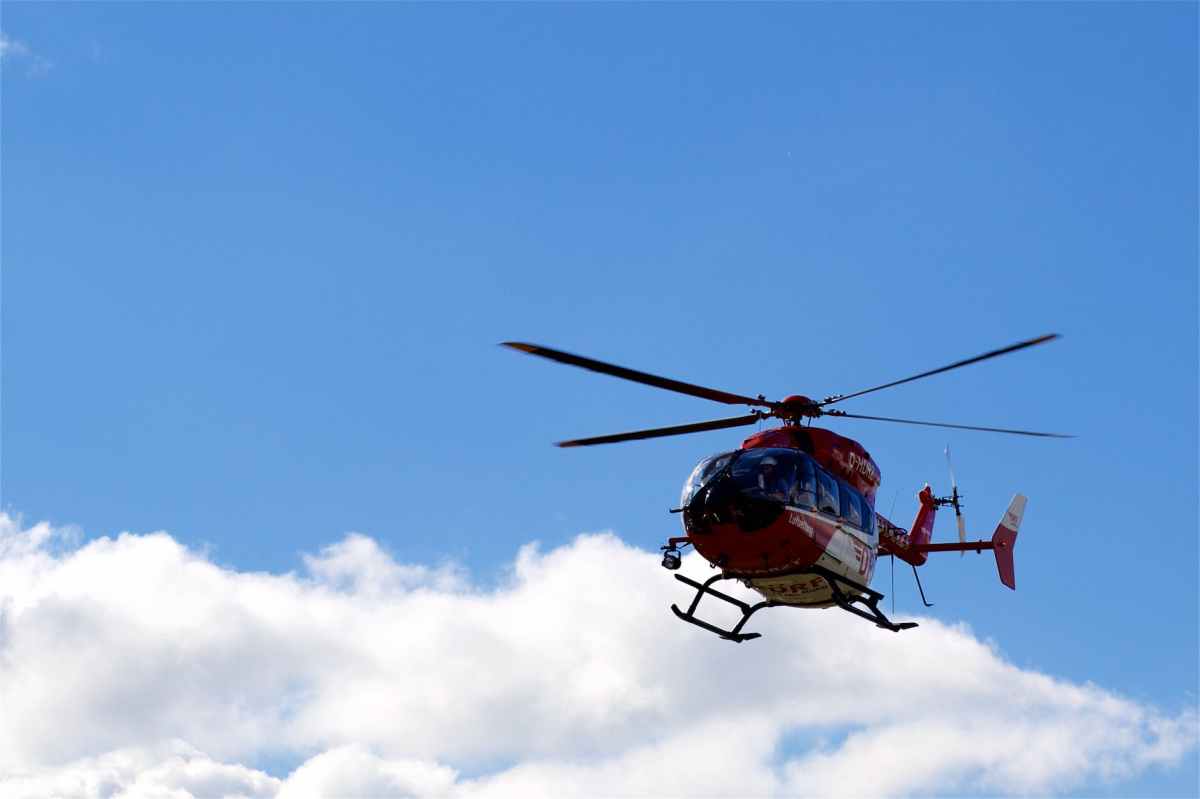
If looking up, as I do at home, to see high altitude vapour trails crisscrossing the sky, my thought is – I wonder where they are going? On the days when a light aircraft crosses the town, to or from our local airfield that doesn’t bother me. Even a noisy police helicopter keeping an eye on the traffic. That’s fine because they are solely there for our safety and security.

What will be the public reaction when we look up to see half a dozen new urban mobility vehicles buzzing past overhead? Perhaps we’ll accept new flying machines if it’s for a public service, an ambulance, fire services, police, or even newsgathering. Brightly coloured in emergency orange.

A public flying taxi service might raise a few eyebrows. A flashy private flying car, now that might be another matter altogether. There you are on a hot summer evening, in the garden, having a pleasant barbeque with friends and whiz a flying car swoops over the treetops. The passengers have their mobile phone out filming their trip. This is when fist will be raised skyward. It’s a time when you hope the next-door farmer hasn’t got a shotgun.

Today, a few pilots do get prosecuted for misbehaving when low flying private helicopters. Not often, it’s true. This happens with less than 1500 helicopters registered in the UK. What would happen with, say, 10,000 private flying cars? I wonder.

Scary 2

My list is still open for horror in aviation. I’ve opened the door to action movies with elements of horror. I’m excluding war movies and fighter pilot romps. A dramatic scene must have a moment of suspense when everything hangs on a thread. It could be a hide behind the sofa moment or felling that all is lost, and the faint light of hope is dimming. I was tempted to include zombie movies only to quickly come to my senses and say – no. I’ve avoided Snakes on a Plane. One, because I haven’t seen it. Two, because it’s write-ups suggest that it’s too ridiculous for words. Although, it’s not impossible. It’s even happened on general aviation flights.

Here’s five more movies, ancient and modern in my private list.

There’s an adaptation of the book No Highway. With actors James Stewart and Marlene Dietrich in the movie you would have thought it would have been a big smash. No Highway in the Sky is pedestrian, but the tension comes from us knowing that metal fatigue is real. Why don’t they believe it? We know the history of the first commercial jet, the Comet aircraft.

The original Flight of the Phoenix is a great suspense movie[1]. It’s not so much horror as intensely griping. Frightening in the sense that it tells us something about the good and bad of human behaviour. The constant battle between despair and what can seem like hopeless optimism in the face of terrible odds. Through gargantuan effort, crash survivors stranded in a desert survive.

There’s something especially frightening about aircraft crashes and danger in the cold white wastes of the poles. Again, passengers and crew struggle to stay alive in freezing weather in the desperate hope of rescue. Stranded, death visits the unfortunate survivors. Ordeal in the Artic[2] is a chilling movie of 1993 based on real events in 1991.

Final Destination has simple plot[3]. A student has a premonition, he and his friends get thrown-off a flight to Europe and then when they are back in the terminal there’s a fatal crash. They cheat death. But that’s not the end. That set-up is the ultimate scary imagining. It’s the what if? It’s the question survivors of aircraft accidents must ask – why me?

The 1955 British movie The Night My Number Came Up[4] plays on a similar theme but this time a nightmare before a planned journey. A bad dream of an aircraft crash. Will it happen just as the dream predicts. You must watch to find out.

Generally, in films there’s so much pure aeronautical nonsense on display. Commercial aircraft do not fall out of the sky when struck by lightning, flight crews do not lose control at the first sign of trouble, fuel doesn’t explode for no reason and the worst of weather doesn’t signal game over.

That said, there’s an inherent claustrophobic feeling inside an aircraft fuselage. It’s like a locked room drama. Passengers are isolated from the outside world. They are dependent on pilots, engineers and air traffic controllers all doing their jobs right. There’s the potential for this set-up to be the stage for an excellent dramatic horror movie. Tales of bravery, camaraderie, and sacrifice can all spring from the most dreadful of events. Unfortunately, so many movie makers make a mess of these situations.  


[1] https://www.imdb.com/title/tt0059183/?ref_=ttls_li_tt

[2] https://en.wikipedia.org/wiki/Ordeal_in_the_Arctic

[3] https://www.imdb.com/title/tt0195714/

[4] https://www.imdb.com/title/tt0047278/?ref_=ttls_li_tt

Scary

Let’s stick with fiction. In the run-up to Halloween there’s several stories where aviation and horror overlap. Not real-life dramas but concoctions of the imagination. Even with the coolest, most experienced passengers there’s moments of apprehension when encountering strong turbulence or unexpected diversions. We know that the risks are well managed but there’s the unforgiving nature of flying. Too many things going wrong at the same time and fate takes a hand.

There are far more action movies with aviation scenes than there are horror movies. So, forgive me if I step over the boundary between the two for a couple of this collections.

Who can forget the expression of a young William Shatner as he looks out of a window to see a large gremlin on the wing of his aircraft[1]. Panic sets in but no one sees what he sees. He becomes a hysterical. Grabs a gun. Opens a window and starts shooting at the gremlin. Everyone thinks he’s gone mad. Carried off in a straitjacket. Then in the last shot there is a view of the aircraft’s damaged engine cowling. Shatner had saved the day, only no one will ever believe him.

Again, in the category of iconic is Cray Grant being chased by a low flying aircraft in a cornfield. Running from machine gun fire he hides. Then in a spectacular explosion the aircraft crashes into a petrol tanker. Hitchcock pulls out all the stops. The film “North by Northwest[2]” will always be recalled for the crop duster scene. Grant’s character, Roger Thornhill gets away with his life.

There’s the in-flight abduction scene in the X-Files[3]. Aliens attempt to abduct character called Max Fenig from a commercial flight. He’s then found dead following a fatal crash. Agent Mulder theorises that the aircraft was forced down by aliens. The NTSB accident investigator is not buying it. Then there’s the mystery of the nine lost minutes between the aircraft crash and the time on the victims’ wristwatches. Yes, it gets a bit ridiculous. All in the vein of a good X-Files story.

Scary realism in science fiction qualifies. In this case 21st century technology as imagined in 1997. First to come to mind is the cab driver Bruce Willis driving his flying taxi. The Fifth Element[4] is a polished English-language French science fiction action movie. The flying taxicabs are terrifying. Weaving chaotically through the cityscape. Not something we will see with the current plans for urban air mobility – I hope.

The telling of the drama is a frightening fiction, but the events were real. This survival film is based on a crash in the Andes mountains on October 13, 1972[5]. A Uruguayan rugby team is faced with a terrible situation. Starving passengers debate how to stay alive. Pushed to the limit they eat the flesh of their dead relatives and friends. 29 died but 16 survived. More than one movie has been made of this awful tragedy. It speaks of the human instinct to survive as much as the catastrophe.

That’s five scary movies scenes with a commercial aviation theme. I’m sure there are more – what’s your favourite? 


[1] 1963 episode of “The Twilight Zone” called “Nightmare at 20,000 Feet.”

[2] https://www.imdb.com/title/tt0053125/plotsummary/

[3] https://en.wikipedia.org/wiki/Tempus_Fugit_%28The_X-Files%29

[4] https://en.wikipedia.org/wiki/The_Fifth_Element

[5] https://www.imdb.com/title/tt0106246/

Tip

You may think it was a bit of a joke. Certainly, some of the holiday makers around me thought the cabin crew were joking. I was at the back of the aeroplane and so one of the last passengers off.

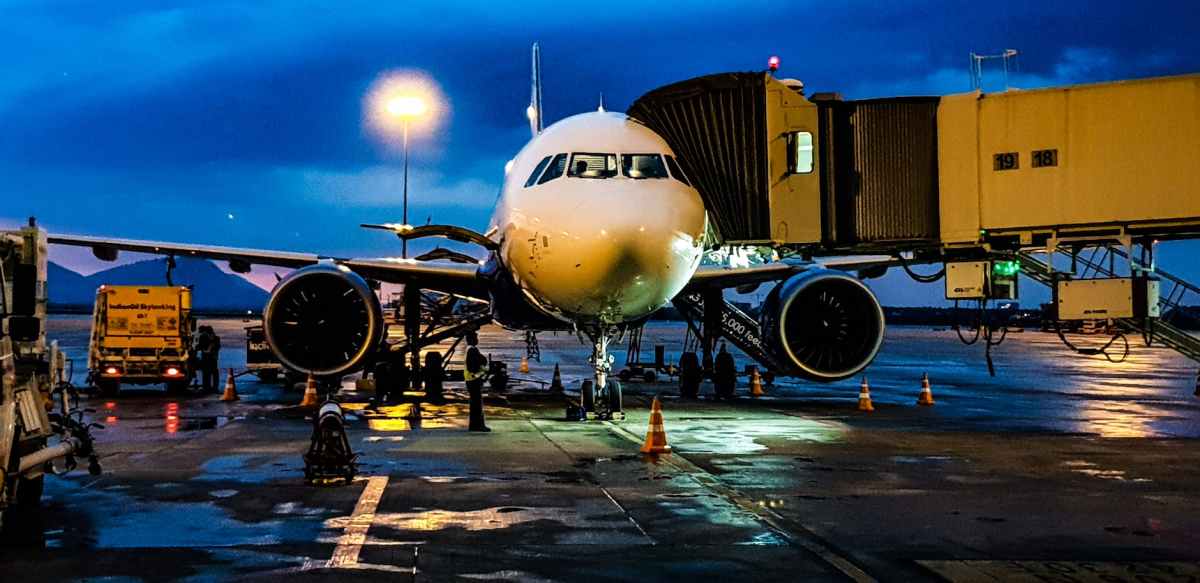
We arrived at London Gatwick’s North Terminal at about 9:30 pm on a Sunday. Passengers were keen to get off and get home. That said, the amount of sizable luggage in the aircraft cabin overhead bins and maybe the sleepiness of one or two people meant the long line down the aisle was moving slowly and intermittently. The process was civilised but at a snail’s pace as it seemed from the back.

When you hear a request to hurry-up otherwise the plane will tip up it does instil some urgency. That and one or two questions. It also made me think; could that really happen in this situation? I was standing next to the cabin crew at the back, and I can attest to their concern being real. Being at the terminal gate there was only the front door open to exist the aircraft. When we got on-board the aircraft both the front and rear doors were available.

The Boeing 737 MAX-8 is a not an overly long aircraft. That said, under certain unfavourable conditions it can tip. In fact, there are longer versions of both the Boeing and Airbus single aisle aircraft that pose more of a challenge in this respect. There is much stretching of popular aircraft types to increase passenger capacity.

At the same time as we were deplaning[1] (ghastly word), the ground crew were unloading our luggage. As a result of all this movement of passengers and luggage it is possible to have too much weight at the back of the aircraft. Yes, you could blame it on masses of carry-on bags obstructing the aisle on a full aircraft, but it also takes the front passengers to have got off quickly. There are more passenger seats behind the aircraft wings than there are in front. On a cool Sunday evening when the airport’s public transport options are limited there’s an incentive to rush-off from the front. As the deplaning continued there was a sense that something was happening underfoot.

Does it happen? Do aircraft tip up? Yes, they do[2]. It’s not an attractive sight. I have no idea what the procedures are if it does happen. It certainly would be a shock for those on-board. Anyone in the vicinity of the aircraft would have to watch out too. In these unplanned events, there is a hazard to ground crew that can result in injury.

This sort of event happens more often in the air cargo world[3]. While these events maybe comical to witness, they are no joke for airlines. The possibility of damage and the disruption to aircraft operations can be significant. Nose wheels coming off the ground don’t always result in an aircraft tip, but this is not somewhere any crew responsible would want to go.

Weight and balance issues are real. Each aircraft will have weight and centre of gravity limits established at the time of aircraft certification. Aircraft operators will have procedures[4] that fully consider loading and unloading. That said, as we can see, miscalculations do get made.


[1] https://grammarist.com/spelling/deplane-or-disembark/

[2] https://youtu.be/JTDSS8unwQM

[3] https://www.independent.co.uk/news/world/middle-east/747-plane-tips-backward-airport-cargo-doha-qatar-fars-air-qeshm-a8829896.html

[4] https://www.faa.gov/documentLibrary/media/Advisory_Circular/AC_120-27F.pdf

Climate

It’s an odd day that I write in agreement with The Pope in Rome. He says: “People are not responding at the level of urgency that is needed” on global climate change. The Pope has a go at a commonly held blind faith in transformative ways out of our troubles by technical innovation alone. He seems to say that we ignore reality in the hope of technological magical thinking popping-up just-in-time. His references are to the need for lifestyle changes rather than carrying on regardless.

Now, quite a number on the right of political debate will see this as a lefty intervention. Anytime religious people step over the boundaries from the ethereal into everyday life the standard conservative response is to shout – get back to the pulpit. The same response, but more polite, occurs when English bishops speak up in the UK House of Lords. I’m no advocate of them being an intrinsic part of our national political systems but they do, at least, speak from an ethical grounding[1]. If we are to talk of political long-term thinking this is very much it. There’s nothing more that prompts short-term thinking than a looming election.

Combating climate change and pushing for environmental justice are not fringe activities. It requires dialogue across the main political parties. Saddly, we are going through a phase of squandering opportunities to change. 

I agree that taking a puritan line and making “hairshirt” rules will not deliver the results that are needed. Most often such a sturdy approach just fuels luddite opposition and media outcry. Continuous graduated change and a robust commitment are needed. Unfortunately, these two are an anathema to the populist newspaper headline seekers.

Economic interests are often quoted as a reason to shelve changes. Yet, everyone knows that the costs ahead of us will be far bigger if change is not driven consistently – now. Resilient long-term policy isn’t a lefty luxury. Or liberal daydreaming. Or unafordable. It’s vital.

What’s interesting about active in-action is that there can be no such thing. Climate change will bite back. Action will have to be taken under presure. In civil aviation, for example the climate has an impact on aircraft operations. So, not only does aviation impact the environment but increasingly hazardous weather impacts aviation, with severe results in some cases. Turbulence experienced in-flight is increasing as the world is warming[2]

Approaching risks there are, at least, 3 positive actions to be taken. Eliminate it, reduce it, or mitigate it. With the climate emergency we’d better be committed to the first two because by the time we get to mitigation there’s likely to be few more unpalatable opportunities left.


[1] https://www.churchofengland.org/news-and-media/news-and-statements/bishops-warn-environmental-racism

[2] https://www.reading.ac.uk/news/2023/Research-News/Aviation-turbulence-strengthened-as-the-world-warmed

Upfront

Years of looking at the reliability of aircraft components and structure have given engineers a good understanding of the natural decay of mechanical workings. To that extent even electronic components are mechanical. Materials oxidise (rust), random shocks and vibration take their toll, temperatures cycles from cold to hot and back again a whole range of impacts are relentless. You can say – nothing lasts forever.

Occasionally a discovery adds to the knowledge of how materials behave under high stress. Sadly, that’s what hit the early years of civil jet aviation. The de Havilland DH106 “Comet” was the world’s first passenger carrying jet airliner. It first took to the air in 1949, which I find remarkable.

Catastrophic metal fatigue failure of the aircraft fuselage put paid to this British aviation project but only after several tragic fatal accidents. In 1954, the Comet aircraft were all grounded during an extensive accident investigation. The jets were redesigned and re-entered commercial service in 1958. However, by then the aircraft had a damaged reputation and others were doing far better. Now, those Comet aircraft that remain are museum exhibits[1].

Last week, I walked through the fuselage of a Comet 1A built in 1953 at Hatfield for Air France. It’s fascinating to see what advanced aviation technology was 70-years ago. What was surprising to me was the read across from that first version of a jet aircraft and what we have in-service now.

Automation has removed the place of the navigator and the flight engineer, but the stations of the pilot and co-pilot are familiar. The fuselage is cramped but the seating is generous and spacious. This aircraft must have been a dramatic revolution in flying at the time.

As we look to advance aviation in the coming years, with new ways of flying and new ways of powering flight so the warning of the Comet project should be heeded. We are at a time of extraordinary changes in the aviation industry. Advanced technology can deliver great benefits to society. It’s up to us to make sure we cover all the possible disbenefits as far upfront as we can. If we don’t, they will come back to bite us.


[1] https://www.dehavillandmuseum.co.uk/aircraft/de-havilland-dh106-comet-1a/

Learn by testing

Back in the mid-1980s, aircraft system integration was part of my stock-in-trade. Project managing the integration of a safety critical system into a large new helicopter. It was a challenging but rewarding job. Rewarding in that there was a successful new aircraft at the end of the day.

For big and expensive development projects there are a great number of risks. The technical ones focus on functionality, performance, and safety. The commercial ones focus on getting the job done on-time and at a reasonable price. Project managers are in the middle of that sandwich.

Naturally, the expectations of corporate managers in the companies that take on these big challenges is that systems and equipment integration can be done to the book. Quickly and without unexpected outcomes. The practical reality is that people must be well prepared and extremely lucky not to encounter setbacks and resets. It’s not just test failures and anomalies that must be investigated and addressed. Systems integrators are working on shifting sand. The more that is known about overall aircraft flight test performance and customers preferences so technical specifications change.

With cockpit display systems, in the early days, that was often feedback from customer pilots who called for changes to the colour, size or shape of the symbology that was displayed on their screens. What can seem a simple post-flight debriefing remark could then turn into a huge change programme.

That was particularly true of safety critical software-based systems. Equipment suppliers may have advanced their design to a state where much of the expensive design validation and verification was complete. Then a system integrator comes up with a whole set of change that need to be done without additional costs and delivered super-fast. Once a flight test programme gets going it can’t be stopped without serious implications. It’s a highly dynamic situation[1].

I’m writing this blog in reaction to the news coming from Vertical Aerospace. Their VX4 prototype aircraft was involved in an flight test incident that did a lot of damage[2]. There’s no doubt this incident can provide data to feedback into the design, performance, and safety of future versions of their aircraft[3]. Integrating complex hardware and software is hard but the rewards are great.

“Excellence is never an accident. It is always the result of high intention, sincere effort, and intelligent execution.” – Aristotle


[1] https://youtu.be/Gb_eta4mZkc

[2] https://evtolinsights.com/2023/08/vertical-aerospace-identifies-propeller-as-root-cause-of-august-9-vx4-incident/

[3] https://investor.vertical-aerospace.com/news/news-details/2023/Vertical-Aerospaces-VX4-Programme-Moves-to-the-Next-Phase/default.aspx

NATS

A “technical issue” has caused UK National Air Traffic Services, NATS to impose air traffic flow restrictions[1]. They did not close UK airspace. This was not a repeat of the volcanic ash events of early 2010. Going from a fully automated system to a fully manual system had the dramatic impact that might be expected. The consequences, on one of the busiest weekends in the holiday calendar were extremely significant. Huge numbers of people have had their travel disrupted. Restricting the air traffic system ensured that aviation safety was maintained. The costs came to the UK’s air traffic handling capacity and that meant delays and cancelled flights.

Although the failures that caused the air traffic restriction were quickly resolved the time to recover from this incident meant it had a long tail. Lots of spoilt holidays and messed up travel plans.

It is normal for an Air Traffic Service (ATS) provider to undertake a common cause failure analysis. This is to identify multiple failures that may result from one event. So, the early public explanations coming from NATS of the causes of this major incident are surprising. Across the globe, contingency planning is a requirement for ATS. The requirement for the development, promulgation and application of contingency plans is called up in international standards, namely ICAO Annex 11.

So, the story that a single piece of flight data brought down the traffic handling capacity of a safety related system, to such a low level, is difficult to accept. It’s evident that there is redundancy in the systems of NATS, but it seems to be woefully inadequate when faced with reality. ATS comprise of people, procedures, and systems. Each has a role to play. Safety of operations comes first in priority and then air traffic handling capacity. What we know about even highly trained people and data entry is that human error is an everyday issue. System design and implementation needs to be robust enough to accommodate this fact. So, again attributing such a highly disruptive event to one set of incorrect data inputs does not chime with good practice or basic aviation safety management. It is concerning that one action can bring down a major network in this way.

EUROCONTROL would have had been sent a “rogue” flight plan in the same way as UK NATS. Brussels does not seem to have had the problems of the UK.

It is early days in respect of any detailed technical investigation. Drawing conclusions, whatever is said in public by senior officials may not be the best thing to do.

Calls for compensation have a good basis for proceeding. The holiday flight chaos across Europe comes down to one single failure, if initial reports are correct. That can not be acceptable. The incident left thousands stranded abroad with high costs to pay to get home.

Before privatisation, there was a time when the UK Civil Aviation Authority (CAA), ran the nation’s air traffic services[2]. It had a poor reputation at the time. I remember a popular newspaper cartoon saying – and now for some clowns from the CAA. They were entertaining delayed passengers.

UK NATS has done much good work to manage a safe expansion in air traffic and address many changes in technology, it would be a shame if this sad incident marks a decline in overall network performance.

NOTE 1: And this topical cartoon from the Daily Mail in April 2002: https://www.pinterest.es/pin/497577458805993023/

NOTE 2: A report on the incident is to be sent to the regulator, UK CAA on Monday, 6th September. Transport secretary to see Nats’ ATC meltdown report next week | Travel Weekly

NOTE 3: The likelihood of one in 15 million sounds like a low number but it’s not “incredibly rare” by any definition. Certainty when there are around 6000 flights a day in the UK. A duplicate error occurring is a basic error that could be anticipated.


[1] https://www.bbc.co.uk/news/live/uk-66644343

[2] https://commonslibrary.parliament.uk/research-briefings/sn01309/

Even more H2

There’s a couple of Hydrogen related topics that are worth a moment. One is super conductors and the other is fire.

Heavy complex equipment like the magnets for particle accelerators use superconductors[1]. When there’s space and a need for powerful magnetics, materials with special physical properties, at extreme cold temperatures find a good use.

Talk of room-temperature superconductors is far from what it seems. Such a wonderful innovation is a million miles from any practical applications, if it exists at all. There’s no theory of high-temperature superconductivity, but there’s quite a few physicists who would like to find one[2].

Aviation researchers search for high temperature superconductors for electrical propulsion with extraordinary performance is on. The likelihood of success is low, and the timeframes are very long.

When an aircraft is flying at high altitude, the cabin altitude is maintained for the safety and comfort of passengers and crew. Air compressors, valves, sensors, and controllers make sure that cabin pressure remains at equivalent to an altitude of about 8,000 feet, and lower in some cases. So, any kind of simply flammable gasses or materials inside an aircraft cabin are a definite no no. It’s a big hazard.

In flight, the positive pressure should keep leaking gas out of the cabin. That is as long as the sources of fresh air for the cabin are keep well away from potential leaks.

That’s where Hydrogen gas can present trouble. Leaks can be common in dynamic Hydrogen systems. Storage tanks must be very strong to resist pressures and insulated to keep cold, at around –250°C. Escaping H2 gas is tiny. If that’s vented overboard then the risk of explosion or fire is significantly lowered. Knowing the exact flows of liquid or gas is a must.

However, if the gas finds its way into a pressurise cabin that basic option is limited. Not only that but detecting low concentrations of the gas in the first place is mighty difficult. Its odourless but at least Hydrogen isn’t poisonous.

The big safety issue is that the gas has a very wide flammability range (4 – 70% H2 in air mixture)[3]. Yes, H2 needs a spark to ignite. A typical aircraft cabin environment will easily provide that event. Dry air and static electricity will do it even if other sources will not.

To compound difficulties, if H2 does ignite, and not explode, then its flame may not be visible to the human eye. The flame is almost colourless. Certainly, not what most people think of as a gas flame. Gas and flame detectors could be installed in aircraft cabins and baggage compartments. Audible and visual alarms could be generated but what would be the associated crew actions?

All the above requires detailed consideration in aircraft safety assessments. The move away from prescriptive regulatory requirements means each specific aircraft configuration must be addressed. There are no generic lessons to learn from past aviation accidents and incidents.

Although, I think these puzzles can be solved it’s a huge leap from here to there.

POST: Yes, Hydrogen is not for every application. Small scale aviation is better served by electrification Five Hydrogen Myths – Busted. – RMI


[1] https://home.cern/science/engineering/superconductivity

[2] https://www.science.org/doi/epdf/10.1126/science.adk2105

[3] https://h2tools.org/bestpractices/hydrogen-flames