The Revolutionary Role of Hydrogen

Hydrogen has a history with aviation. What could be better. A gas that is so light. So easily produced and with no need heat it up. With a lightweight gas-tight bag and a fair amount of rope, balloon construction took-off. Literally. The proof that hydrogen gas could lift a balloon goes back to the 1780s in France.

Sadly, the downside of this gaseous element is its propensity to combine with other elements. In fact, where would we be without liquid water. On this planet, that most basic and prolific combination of hydrogen and oxygen. Not so much sadly but more luckily.

Step forward about 250 years and we have a different vision for hydrogen in aviation. If it’s combined with the oxygen in the air that we breath, we get nothing more noxious than water. Since, the other forms of combustion, that populate our everyday lives, is distinctly noxious, surely hydrogen has a lot to offer. Talk about downsides. Burning fossil fuels is distinctly unsustainable. Polluting the atmosphere.

This week, I was looking out to sea. At the English Channel (No name changes there, I see). Standing on the pebble beach at Budleigh Salterton. They ought to have an award just for that name. It’s a small seaside town in Devon. The towns cliffs are part of a World Heritage Site, namely The Jurassic Coast[1]

Forget the 250 years of humans flying, cited above. About 185 million years of the Earth’s history is for all to see on the Devon and Dorset coast. When we say “fossil fuels” what we mean is that we are living off the back of Earth’s history. Society powers modern life on dinosaur juice. Well, not exactly but plant and animal life from hundreds of millions of years ago. How crazy is that?

Hydrogen, on the other hand, is one of the most abundant elements. It’s everywhere.

Modern day dinosaurs (politicians and pundits) insist that we continue to exploit dinosaur juice until it’s all gone. That’s putting aside any concerns about returning all that carbon to the Earth’s atmosphere. Carbon accumulated over millions of years.

Hydrogen can be a clean fuel. The problem is that saying that and then doing it are two different things. There are complexities that come with using Hydrogen as a fuel. It might be reasonably easy to produce, in multiple different ways, but it’s not so easy to transport.

Producing leak proof systems for transport and storage requires innovative thinking. We can’t just treat it with the familiarity of conventional fuels. Whole new regimes are going to be needed to get Hydrogen from where it’s produced to where it’s needed.

Producing leak proof systems for aircraft is a challenge. Given the odourless and invisible nature of this light gas, accurate and extensive detection systems are going to be needed. If the gas is to be consumed by fuel cells to produce electricity, then there’s going to be a constant struggle against complexity and significant expenditures.

What is reassuring is that none of the above is insolvable. At this time in history, we have the materials technology and control systems that make Hydrogen a viable clean fuel.


[1] https://jurassiccoast.org/

Ignoring Climate Change?

In a way, I’m not immune from a little hypocrisy. Petrol prices go up and I’m not going to jump for joy. Prices go down. I’m not suddenly thinking that’s just going to encourage more consumption. No, I’m looking at the pound in my pocket. It will cost me less to fill up the tank.

There was a whole swath of apocalyptic tales of the world in the 1970s. The “oil crisis” of 1973 should have been a warning. Humanity might have taken the opportunity to look at the trends related to oil and gas consumption. There might have been a more sustained reaction.

Instead, alternative lifestyles, renewable energy projects and energy conservation were thought of as quaint novelties or scientific curiosities that would never really catch on. The political addiction to short-termism overrode consideration of substantial change. Increased exploration led to new sources of oil and gas being found.

Today, we should know better. The fight against climate change has a decade of talk behind it. Humanity knows that the link exists between burning hydrocarbon and a changing global climate. We are ignorant no more. Now, I almost wish I hadn’t written that last sentence.

Across the pond there’s a powerful nation. One that influences the behaviour of 100s of other nations. The US is the largest producer of oil and gas in the world. However, until the last few weeks it had recognised that maybe that isn’t a good formula for the future.

Back to that dollar in the pocket. Despite the US being a powerful nation many its people didn’t feel that way. All politics is local. When filling up with gas gets more expensive people do not jump for joy. In fact, there’s that human tendance to romanticise the past and remember when everything was cheaper. Life was easier. Can’t we go back?

It’s being reported that US President elect Trump’s choice for energy secretary is going to be like turning the clocks back. Prospect is that the fight against climate change is going to get a back seat. At least for the next 4-years.

Does this spell global disaster? Well, it certainly is a great big lost opportunity. Just like here in the UK, Brexit ignited the tendance to romanticise the past. It looks as if the same phenomena have taken root in the US. Burning more and more hydrocarbons is like a sugar rush. A boom to begin then followed by exhaustion. I expect after this presidential term the results will be one of regret. Just like Brexit. A wonderment – why on earth did we do that?

Still, there’s an opportunity for other countries to race ahead with advanced and alternative technologies to reduce energy dependency. It’s hard to think and act long-term. I’m confident it can be done. If it’s done successfully the prize will be great.

Solar farms

New Government signs off solar farms. Not everyone happy.

It would be good if we could all agree that the UK needs to recognise the importance of locally produced food and drink. There’re large environmental gains to be made by reducing the distance between production and consumption. Thousands of heavy trucks thunder up and down the inadequate road infrastructure in the UK. Colossal amounts of food waste get thrown away from supermarkets. Questionable preservatives enable supply chains to grow longer and longer. There’s are bad trends.

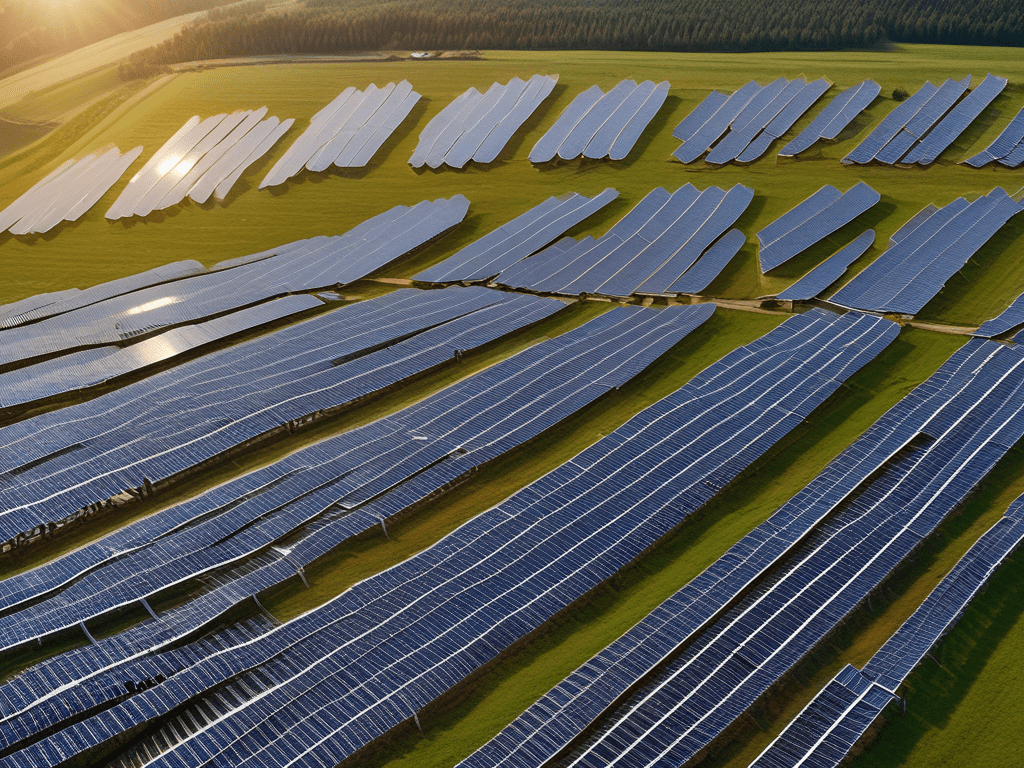
On a related subject, I do have a problem with proposals for large solar arrays that will take out productive farmland. However, that is by no means an objection to large solar arrays, or onshore wind farms for that matter.

It’s not as if we have always been so precious about what we do with our glorious countryside. One observation I’d make is that there has been a huge increase in the urbanisation of the countryside in my lifetime. Areas that were either wild or exclusively used for agriculture are now pony paddocks, car parks, golf courses, housing estates, out-of-town shopping warehouse, fulfillment centres[1], and bypasses. In 50-years, there’s little that remains untouched.

I’d sing “They paved paradise and put up a parking lot” if I could. We really do need to think carefully about what we industrialise and what we preserve and protect.

For me large solar arrays are in the same category as acres of poly tunnels. Both serve a fundamental purpose, and both are structure that can be relatively easily removed. Keeping the lights on and eating fresh food are both part of society’s basic needs.

So, I’m not going to raise an eyebrow at new Minister Ed Miliband approving 3 large solar arrays[2]:No shock but no blank cheque either. No jumping on a political bandwagon to condemn the immediate decision.  

It’s likely the decision was sitting on the former Conservative Minister’s desk. Is this a case of difficult decisions deliberately delayed because of an election? We may never know. It would be a bit disingenuous for such politicians to complain now. Wouldn’t it?

Let’s get it right. Failure to decarbonise our national energy system is a contribution to global warming we can’t afford to make. Long-term that global warming will impact food production.

In years to come it will be interesting to see what research flags up with respect to solar farms and biodiversity in an area. There’s some chance that the results will not be entirely negative. There’s all that sheltered and undisturbed soil under the array structures. A habitat for wildlife.

Choosing between what might seem as the lesser of two evils is often the situation a politician finds themselves in. Afterall, that’s the role they must play in a democracy. The outcome may not be popular in the short-term, but a balance must be struck.

Maybe we should reverse some of the urbanisation of the countryside. Return some little used roads to nature. Demolish unused industrial units. Put back the hedges that have been lost. Rewild one or two golf courses. It’s something to consider when building new infrastructure.


[1] Fulfillment centres enables outsourcing, warehousing and shipping. This is for online businesses to have the physical space to store stuff.  

[2] https://www.bbc.co.uk/news/articles/c4ng6036vgqo

Choice

Desperate British Prime Minister (PM) comes out with the line that the future will be troubled and fast paced change will outstrip past progress. Ok, so what’s new? Hasn’t that been the path of the world since the invention of the computer? Acceleration of change is now locked into humanities destiny.

The audacity of the man is astonishing. Having been intimately associated with calamitous failures of the past decade he espouses his unique abilities to keep us safe and secure.

Hell, I thought former PM Boris Johnson had a big ego. Monday’s speech goes beyond ridiculous[1]. When he says: “People are abusing our liberal democratic values” what comes to my mind is the right-wing government he leads.

We all know, it’s reported continuously, how dangerous the world has become. Noone in any major political party would dismiss that reality. That is bar the eccentric, downright crazy and maybe the fringes of the Greens party.

Interestingly, as far as I know, PM Rishi Sunak isn’t a climate change denier, but he doesn’t have much to say on this monumental global issue. When he says: “And in this world of greater conflict and danger, 100 million people are now displaced globally.” It should occur to him that competition for resources in a world where the climate is changing is at the root of this movement. By the way, there are 8 billion people in the world[2]. So, let’s get our reality in proportion. True, the 0.1 billion people now displaced globally is a figure likely to grow in the next decade. But they are not the enemy.

I had to laugh when I came to the mention in the speech of “robust plans”. The thing that has been characteristic of this Conservative period of government is the distinct lack of planning.

The country’s whole relationship with its neighbours was changed without any plan (Brexit). The ups and downs of the COVID epidemic were endured without a plan, other than that which was made up day-to-day. Year-on-year cuts in defence spending have only been reversed in the wake of global events not a plan of any kind. Surely the Conservatives can only offer a – make it up as we go along – way of governing? It’s what they’ve always done. Hence, the slow decline that has afflicted the country.

The PM lapses into a lazy “needs must” argument that sprinkled with Brexit bull****. Shakespeare would have approved. One example, in All’s Well That Ends Well:

Countess: Tell me thy reason why thou wilt marry.

Clown: My poor body, madam, requires it: I am driven on by the flesh; and he must needs go that the devil drives.

Nothing wrong with being positive about the future. As a country we can do great things. What the PM claims is to have a plan. What he hasn’t got is a plan. And if he did have a plan the likelihood of his own side following that plan is absolutely minimal. He only goes where the devil drives. 


[1] https://www.gov.uk/government/speeches/pm-speech-on-security-13-may-2024

[2] https://www.census.gov/popclock/world