Memorable Encounters

Daily writing prompt
Who is the most famous or infamous person you have ever met?

This simple question is open to interpretation. When I say I’ve met someone, it’s that of being in the same place as that person and not necessarily having a long in-depth conversation with them over lunch. I’ll not mention any politicians, notable or otherwise.

I did sit next to Tom Selleck, the actor, on an internal flight in the US. I think it might have been a connection with Delta airlines. It was back in the mid-1990s. I do think I remember that we both said “yes” to the bag of nuts the cabin crew were offering. It was basic rations.

In 2010, I did meet Captain Eric Moody. Following the eruption of Eyjafjallajökull volcano in Iceland. Now, I wonder if you know his story. “All Four Engines Have Failed” is probably one of the most compelling descriptions of surviving imminent peril that modern civil aviation has to offer. The title eludes to the most serious of incidents. Flying through volcanic ash that’s exactly what happened to the engines of a Boeing 747 in 1982. Through calm and diligent actions Captain Moody and his crew got everyone home safely. It’s quite a story.

To the Moon

Daily writing prompt
How much would you pay to go to the moon?

About £10. If it was good enough for the Apollo astronauts, it’s good enough for me.

“Fly me to the moon. Let me play among the stars”. Just imagine what that song, ringing out in the empty space between Earth and its satellite, would feel like.

Recorded in 1964 it was timed so well. The “We Choose to Go to the Moon” speech happened in 1962. The song is older than that, but I wonder if that was a reason for Frank Sinatra[1] taking it up? If this song doesn’t put a smile on your face – what will on Earth.


[1] https://youtu.be/Y2rDb4Ur2dw

Shifting Perspectives

Daily writing prompt
What’s a topic or issue about which you’ve changed your mind?

If you write the perfect rule, you will get the desired outcome. Authoring a specification that is robust and watertight will assure success. Having the best possible plan will deliver the best possible results. All sounds reasonable – doesn’t it? It’s not surprising that someone like me, having been schooled in project management, and working in engineering, would have a rational and systematic approach to problem solving. A proven highly successful way of implementing complex technical projects and delivering successful outcomes.

As an analogy I’ll start with mathematics. Nature is a curious beast. What we lean about complex systems is that what happens is highly dependent upon a start point. The initial conditions. Graduate level mathematics about control systems with feedback show that their behaviour changes a lot with a change of initial conditions. So, it’s reasonable to extend that to a systematic approach to just about anything. It’s often true.

Fail to plan – plan to fail. That idiom is a simple few words to sum up this cause and effect. Used by famous names and often quoted. Management training books are littered with this notion.

20-years ago, my team introduced the first European Aviation Safety Plan[1]. This initiative was built around the idea that to achieve a common objective a plan is the best and quickest way to get there. A roadmap, a pathway, a strategy, call it what you will.

Start by identifying problems and then propose a fix for each one. Not all problems but the ones that fit that awkward Americanism – the low hanging fruit. Namely, the biggest problems (fruit) that can be solved with the least effort (easily picked).

Here’s where I’ve changed your mind. Maybe not changed in a dramatic sense but shifted perspective. It’s essential to have a plan, even if it’s just in my head, but it can be overstated as the most important part of a process of change.

The Plan, Do, Check, and Act (PDCA) cycle, starts with a plan. It must start that way. However, each of the four steps is equally important. Seems obvious to say. Even so, it’s often the case that a press release, or alike, will state – we have a plan, roadmap, pathway, strategy, as if that’s the job done.

Management teams will smile with a sense of achievement and show off their plans. A decade down the line that celebration might seem less momentous as the “do” part of the process turns out to be harder than anticipated.

This basic model for systematic change is a good one. Where I’ve changed my emphasis is in the distribution of effort. Don’t put all available energies into constructing the perfect plan. Yes, the initial conditions are important but they are not everything. The key part of the process is the cycle. Going around it with regularity is a way of delivering continuous improvement. Afterall, when it comes to a subject like aviation safety, that’s what’s needed.


[1] 2005 – DECISION OF THE MANAGEMENT BOARD ADOPTING THE 2006 WORK PROGRAMME OF THE EUROPEAN AVIATION SAFETY AGENCY

Nostalgic Reflection

Daily writing prompt
Your life without a computer: what does it look like?

Try telling the kids of today. They’ll never believe you. This is the punchline of the “Four Yorkshiremen” sketch. It’s a comic sketch of four retirees, enjoying a cocktail, or two, on a sunshine holiday. They tell stories and try to outdo each other with reminiscence of hardship and their humble beginnings. Naturally, it gets silly.

Here’s my go. My childhood was tough. My brothers and I had to entertain ourselves with board games, toy cars, Lego and Meccano. Kicking a ball around, building camps out of hay bales and fighting wars with cider apples as ammunition. Building a tank out of egg crates and a milk churn trolly. Trying to make kites out of scraps of polythene sheeting. Spending hours on a riverbank waiting for a lone dace, minnow or roach to take the line.

We used to dream of having a computer (not true). Massive arrays of flashing lights, panels of buttons and dials and deafening teletype machines. None of us would have known what to do with one if we had one. Any appeal would have been for roleplaying futuristic stories. The small screen gave us so many visons of the future to feed our imaginations. My image of computers was shaped by Voyage to the Bottom of the Sea, Space 1999. Blake’s 7, Captain Scarlet And The Mysterons and Thunderbirds, to name a few.

It’s nice to be nostalgic, occasionally. There was life without computers. It wasn’t so bad.

Back to the question. What would my life look like in 2025 without computers? Let’s just say – I wouldn’t be writing this answer.

Sun up to sun down

Daily writing prompt
What’s your #1 priority tomorrow?

It’s to the author of a question like this one I’d ask – did you give this more than a second’s thought? A picosecond maybe. The priority tomorrow is the same as the priority today. That’s simply to get from today to tomorrow. Tomorrow it will be to get to the day after tomorrow. Long may that daily sequence continue. Inevitable this will come to an end one day. My hope is that I’ve got at least seven thousand more days to go. Seven thousand more sunsets. Seven thousand more sunrises. Free to write a lot more nonsense.

Imagine the Future

Daily writing prompt
How would you design the city of the future?

Already did it. Breakfast cereal packets were so much more interesting in the days before mobile phones. Tony the tiger’s smiling face on packets of Kellogg’s FROSTIES were part of my life as a 12-year-old. Then that morning sugar rush wasn’t seen as a bad thing.

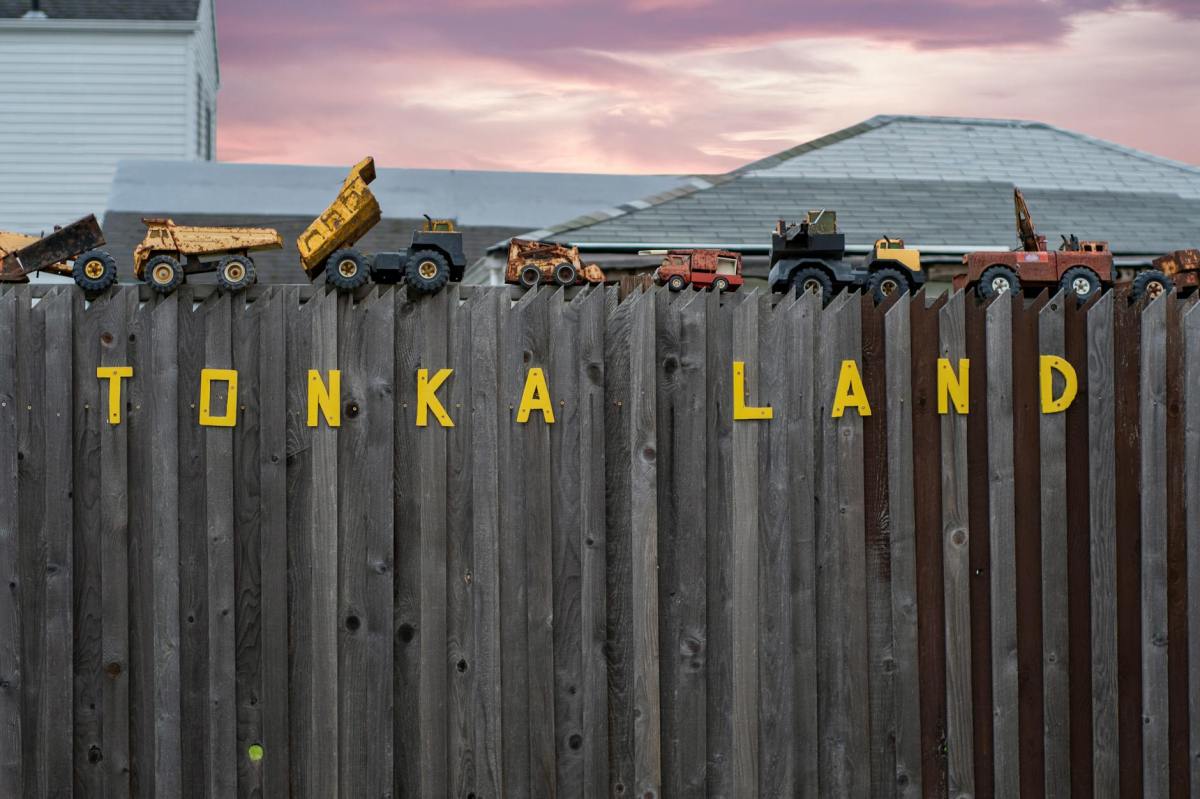
In late 1972, Kellogg’s ran a “Paint the city of the future” competition. I entered and won. Along with several hundred other children. The prize being a Tonka toy set.

Their toy models of construction trucks and machinery were made of heavy gauge steel. None of the plastic nonsense that children get fobbed-off with now. Would you be surprised to know that, at least a couple of the toys, I still have today. Somewhere in a box.

My picture of the city of the future is long lost. Or perhaps it’s sitting in some dusty dark Kellogg’s depository. Never to be see the light of day again.

Blogging for Change

Daily writing prompt
What change, big or small, would you like your blog to make in the world?

That’s a dippy question. I know our interconnected age is supposed to offer access to the world at each and every keyboard or touch screen but seriously. Sitting in a sea of content, bashed out with increasing frequency, only a fraction will bubble to the surface.

If you think you are indispensable, dip your finger into a glass of water and then remove it. Observe the hole. That sarcastic little saying deflates the ego. On a positive side it lowers expectations, so success then comes as a wonderful surprise.

The vast percentage of what’s written is forgotten. There’s more that is ephemeral in heaven and Earth than I might care to think about. That’s a good situation to be in. Time plays a part.

Recounting the number of artists or writers who were ignored in their lifetime but celebrated after a couple of generations down the line, that’s a big list. I suppose it’s not possible to know when a person’s words will be a catalyst of change. It would be nice to be as astute as say, Carl Sagan, and quoted endlessly. A league of thoughtful communicators that are memorable.

Striking that public resonance is within the bounds of a few. Personally, my scribblings are for me. If others like them then that’s great, it’s not the reason to scribble.

Wobbles

Daily writing prompt
Describe your life in an alternate universe.

Imagine an alternate universe were gravity wobbles a tiny bit like the weather fluctuates. One day the bathroom scales say 140kg the next day they say 35kg. One day I can skip to work in record time then next day I’m like a lumbering elephant.

I guess if that variations were too rapid life as we know it could not exist. If the wobbles were gentle and predicable then it would be a massively different world, an alternative world.

Our week would be divided up differently. Heavy manual tasks would be saved for specific days. What would they be called? Motag – short for motion days. On the other part of the gravity cycle, it’s time to sit at desk or stay in bed. Call them Statag – short for static days.

Building cars, aeroplanes and trains would be might tricky. Over engineered for Statag’s. Super speedy on Motag’s.

Plants and animals would have habits that are as different as the human ones. Evolution would have shaped us to produce a form that we wouldn’t recognise. Like a short, rounded superman able to leap tall structures but only once a week.

A bigger question is what would the atmosphere be like? Buy a bigger barometer, I’d say. Would all the rain come down when the clouds got heavy? So many questions.

Embrace Curiosity

Daily writing prompt
What are you curious about?

Curiosity killed the cat. So, it’s said. Fortunately, regardless of my appreciation of cats, I am not one to forgo curiosity. That’s a rotten phrase. Much like “children should be seen and not heard.” An irritating idiom. True, the idea of suppressing curiosity was fashionable at one time. Society was organised that way. Authoritarian regimes love this dictum. It’s there in most stories of dystopia.

I’d say, be open to the world. Why not be curious about everything? Fine, that can be irritating too. As the classic scene of a child in the back seat of a car on a long journey piping-up every five minutes – are we there yet?

I like travel. I like looking around the next corner to see what’s there. I’ve annoyed my partner a hundred times in this way. Maybe there’s something interesting just around the corner. How can we know unless we look?

What If We Brought Back a Dinosaur?

Daily writing prompt
If you could bring back one dinosaur, which one would it be?

Let’s just say that the dino that I’d bring back, time machine permitting, would be the biggest vegetarian that ever existed. It would be downright irresponsible to bring back a meat-eater. Haven’t we seen enough excitable movies on the theme of what can go wrong? The last genetic recreation humanity needs is one that would like to eat us.

If reptilian brains had advanced as fast as homo sapiens maybe the world would be dramatically different. Still, they had several hundred million years, and they wasted the lot. Thus, there’s not much to fear when faced with a large slow-moving vegetarian.

As the planet warms, so there will be more habitable regions where big plodding 40-ton dinos can do some good. A spectacle for sure. And a way to reshape landscapes. Driving evolution in the wilderness.

Here’s a crazy thought. The permafrost in Siberia is melting. Carbon is being released into the atmosphere. That’s not good. Let loose a lot of ultra-heavy dinos across such a wilderness. Feeding on the forests. Fertilising the forests. Equally compressing and churning up the soil. That might keep some of the carbon locked up.

Lusotitan monsters[1] wouldn’t threaten humanity. They might be an asset as well as being fascinating. Large herbivores exist today. We might value them more in the sight of a large dino lumbering across the terrain.


[1] https://www.bbc.co.uk/programmes/p0ll5jcv