EVs

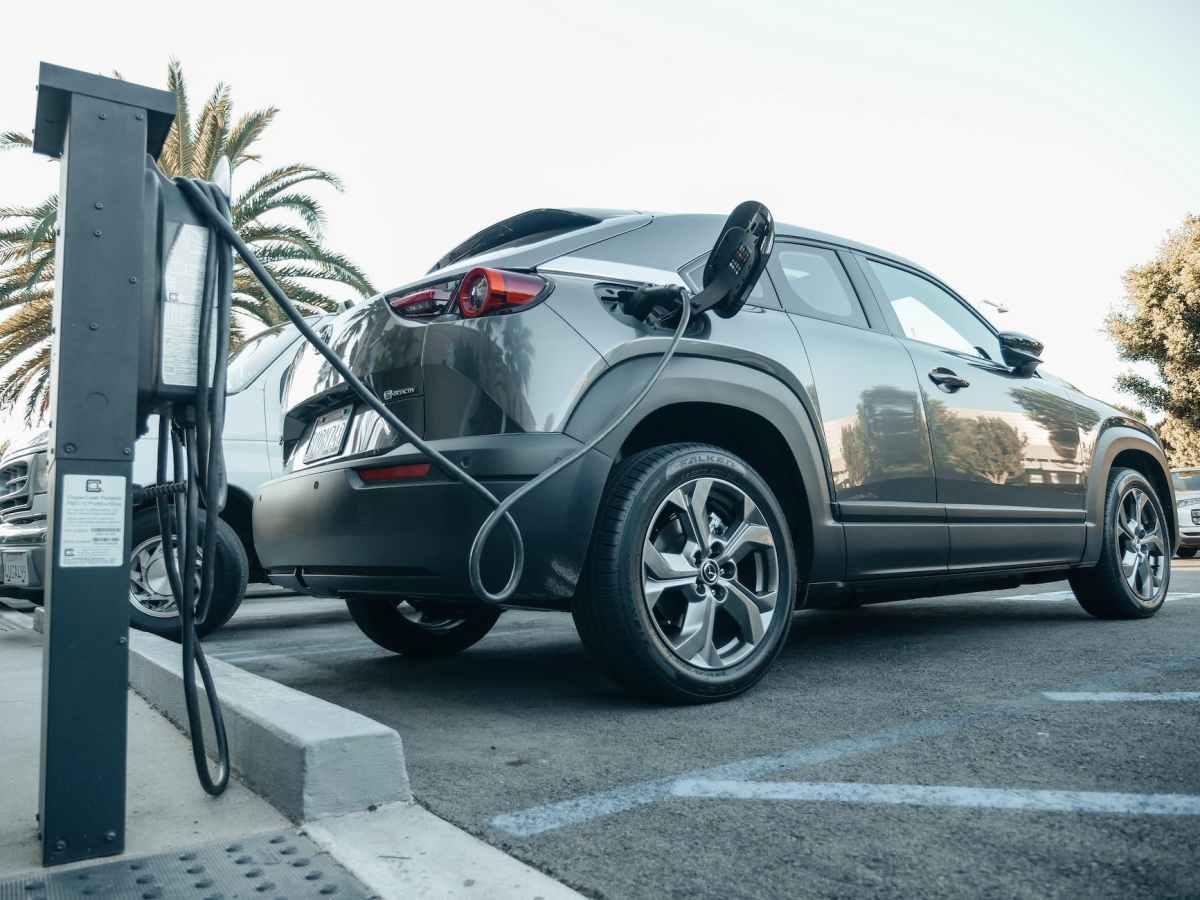
I do find the anti-EV campaigning on social media a bit peculiar. It’s a bit like the arguments for smoking that were made in the 1950s and 60s. Combustion engine vehicles are slowly but surely going to become history. The time for that change is the subject that should be discussed and not whether it’s a good idea or not[1].

One “argument” out there is that adding together all the elements that make-up an electric vehicle there’s a lot of environmental cost in their production. There’s no doubt that nothing is for free. For example, mining lithium and cobalt are not nice in every respect. There’s the concern that demand could quickly eat-up global supply too.

The “arguments” I’ve seen fall apart when considering not only the vehicle production environmental costs but the lifetime costs of an EV when compared with an internal combustion engine vehicle. 20-years of belching out toxic emissions stacks-up. 20-years of using renewable electricity is a far better solution. In theory the potential for recycling valuable materials is high with EVs too. However, we have yet to see if that works successfully in practice.

Other “arguments” look to demean the performance of EV’s when compared to conventional vehicles. Naturally, the time taken to recharge is one of the biggest gripes. For a conventional fuelling at a petrol station a tank can be filled with 500 miles worth of fuel in 15 minutes. For a current EV more preparation, planning and patience are needed to achieve a lesser range.

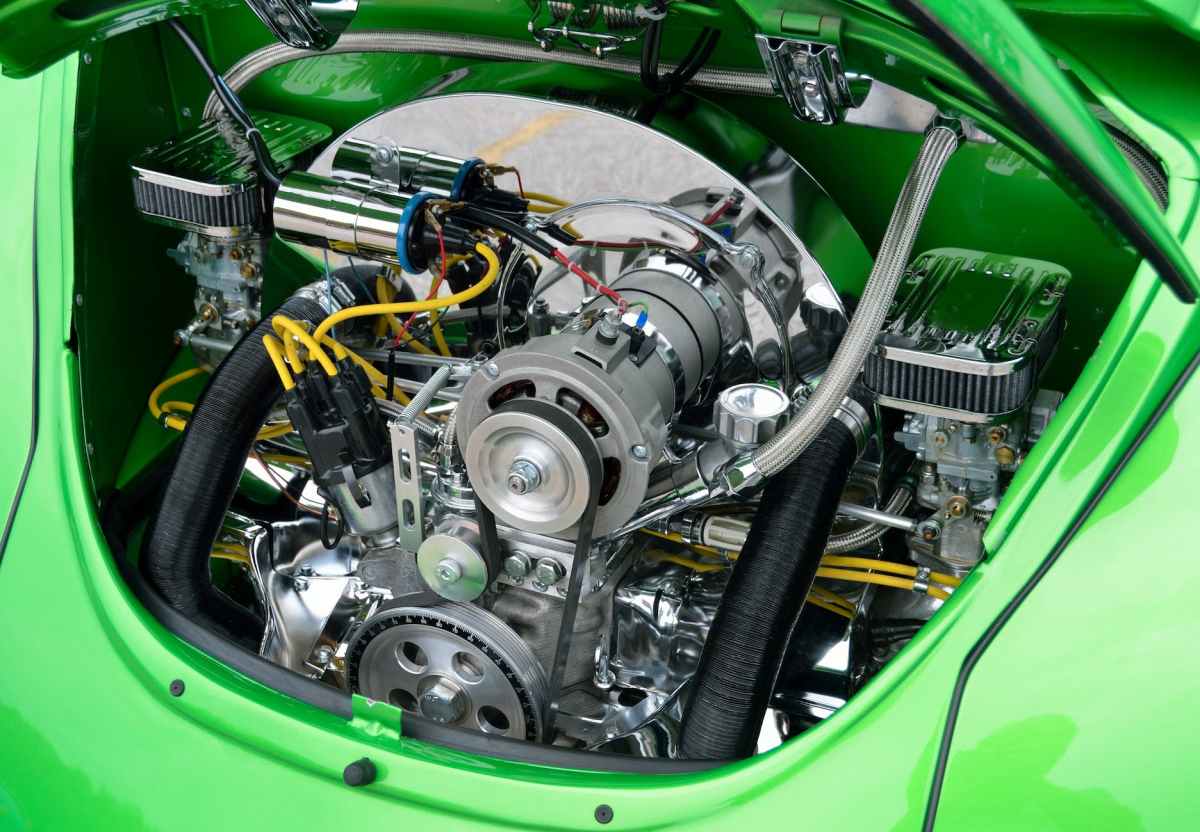
Some EV performance figures are far superior to conventional air breathing vehicles. Acceleration is one. Powerful electric motors unencumbered by complex mechanical transmission systems react immediately to demands[2]. EVs use power better.

There’s another gripe or moan and that’s about weight. Taking two comparable vehicles, in performance terms, the electric one will be heavier. That’s the technology we have now.

It’s a different kind of weight if that makes any sense. What I mean is that an EV is roughly the same weight whatever the state of the machine. Whereas a vehicle that uses liquid fuel varies in weight according the amount of fuel on-board. Of course, all vehicles vary in weight depending on the payload they carry (goods or passengers or both).

What’s a little difficult to take from the anti-EV lobby is that those who complain about EVs impacting roads, due to their weight, are rarely the same people who express concerns about heavy diesel delivery trucks or Chelsea tractors thundering down residential roads.

There’s one hazard that must be managed for all types of vehicles. A view of a serious fire involving either an EV or a conventional vehicle quickly shows what that threat can do. What we have now less experience dealing with EV fires. They can be severe and difficult to supress.

Regulation is often reactive. The fire threat is real. In this case maybe we do need fire suppression systems in integrated household garages. Multistorey car parks packed full of EVs are going to be a real challenge if a major fire sparks off. That said a fire started with a “diesel-powered vehicle” can be just as challenging[3].


[1] https://www.ft.com/video/95f86c5d-5a94-4e63-bbe8-6cc5ffb59a2b

[2] https://www.caranddriver.com/features/a38887851/why-are-evs-so-quick/

[3] https://www.bbc.co.uk/news/uk-england-beds-bucks-herts-67077996

Earthrise

24th December 1968 did change everything. What was achieved in that year hasn’t been matched. An unexpected event took place on an adventure to orbit our Moon. Now, 55-years have gone by. Enormous strides have changed lives. Technology has raced ahead. We reside on a beautiful and bountifully planet. Yet, we have continued to pump massive amounts of carbon into the Earth’s atmosphere. I wonder, does this tell us anything about human nature? If there is such a thing.

The photograph called “Earthrise” was taken while the Apollo 8 spacecraft was skimming over the surface of our Moon[1]. I don’t suppose there has ever been a more significant colour photograph in human history. As one of the astronaut’s said, he could hold his thumb up at a window and mask everything and everybody alive except for the three of them in the capsule.

The Earth appeared as a swirly blue marble set in the dark emptiness of space. The image is stark. Eyes are drawn to the lush colour and liveliness of the globe. Contrasted with the darkness and vastness of space. Clouds, oceans, and landmasses all scattered across this lonely planet. At the time of the Apolo mission there was about three and a half billion inhabitants. Today, there’s eight billion people spread across the surface of the Earth.

This image has become pivotal in our thinking. So much of our debates and discussions about the future are dominated by conflict and competition for resources. When there’s the opportunity to stand back and realise that our small homeland is shared, those tensions fade, at least a little.

Fragility and, almost irrelevance, when set against the vastness of space, is our daily reality. Illuminated by the Sun, a minor star, and in just the right place for life, so we fight and war as if humanity was at the centre of the universe. That animalistic behaviour could be the route of our downfall. Only, we are doing something else to top that persistent stupidity.

What sets Earth apart? That cultivated atmosphere. Such are the interactions going on in the first 100 kilometres above the surface of the planet that a sustained healthy atmosphere exists. It takes a quick look at the images coming back from the exploratory rovers on Mars to see how alive and miraculous Earth’s atmosphere has become.

The question is, are we the generations of humans who will permanently degrade it? Presently we are struggling with the needs and desires of the eight billons of us and the realising that a balance must be struck. For one pumping massive amounts of carbon into the Earth’s atmosphere is pure idiocy. It’s even greater idiocy when we have advanced and invented technologies that mean we don’t need to do it.

COP28 may be another step on the road to sanity but we continue to struggle with the realities of our situation. A human-made climate crisis and a dramatic increase in climate related catastrophes may wake us up. Perhaps every screen saver on the planet ought to be the Earthrise image.

POST: The first such image of the Earth seen from the Moon was taken by Lunar Orbiter 1 in 1966. It was in black and white and of poor quality.


[1] https://www.smithsonianmag.com/science-nature/who-took-legendary-earthrise-photo-apollo-8-180967505/

Climate

It’s an odd day that I write in agreement with The Pope in Rome. He says: “People are not responding at the level of urgency that is needed” on global climate change. The Pope has a go at a commonly held blind faith in transformative ways out of our troubles by technical innovation alone. He seems to say that we ignore reality in the hope of technological magical thinking popping-up just-in-time. His references are to the need for lifestyle changes rather than carrying on regardless.

Now, quite a number on the right of political debate will see this as a lefty intervention. Anytime religious people step over the boundaries from the ethereal into everyday life the standard conservative response is to shout – get back to the pulpit. The same response, but more polite, occurs when English bishops speak up in the UK House of Lords. I’m no advocate of them being an intrinsic part of our national political systems but they do, at least, speak from an ethical grounding[1]. If we are to talk of political long-term thinking this is very much it. There’s nothing more that prompts short-term thinking than a looming election.

Combating climate change and pushing for environmental justice are not fringe activities. It requires dialogue across the main political parties. Saddly, we are going through a phase of squandering opportunities to change. 

I agree that taking a puritan line and making “hairshirt” rules will not deliver the results that are needed. Most often such a sturdy approach just fuels luddite opposition and media outcry. Continuous graduated change and a robust commitment are needed. Unfortunately, these two are an anathema to the populist newspaper headline seekers.

Economic interests are often quoted as a reason to shelve changes. Yet, everyone knows that the costs ahead of us will be far bigger if change is not driven consistently – now. Resilient long-term policy isn’t a lefty luxury. Or liberal daydreaming. Or unafordable. It’s vital.

What’s interesting about active in-action is that there can be no such thing. Climate change will bite back. Action will have to be taken under presure. In civil aviation, for example the climate has an impact on aircraft operations. So, not only does aviation impact the environment but increasingly hazardous weather impacts aviation, with severe results in some cases. Turbulence experienced in-flight is increasing as the world is warming[2]

Approaching risks there are, at least, 3 positive actions to be taken. Eliminate it, reduce it, or mitigate it. With the climate emergency we’d better be committed to the first two because by the time we get to mitigation there’s likely to be few more unpalatable opportunities left.


[1] https://www.churchofengland.org/news-and-media/news-and-statements/bishops-warn-environmental-racism

[2] https://www.reading.ac.uk/news/2023/Research-News/Aviation-turbulence-strengthened-as-the-world-warmed

Trees 2

The story of a Sycamore has captured the imagination of a wide range of people this week.

To be frank, I’m much more a fan of the venerable Oak tree than the humble Sycamore. It’s the quintessential English tree. The Oak is the most Shakespearean of trees[1]. Even my pathetic education in English literature means I know the role played by Birnam Wood.

Again, maybe it’s my childhood. Certainly, Somerset’s farmland is peppered with old Oaks. Not as many as in the 1960s and 70s but they are still the most longstanding living organisms in the open western countryside. As far as I’m aware. Happy to be corrected on that one.

Yesterday, I wandered around under the canopy of the trees in our local park. The park has a random selection of tree species. It may have been planted with a logic. No logic is evident when wandering around. Most prolific are the Beech and Birch trees that tower, straining to reach the sunlight.

Yesterday was the last day of September. The woodland canopy’s colour is slowly changing. Leaf fall is testing the air. A few rustles underfoot and one or two falling Chestnut leaves bounce off me. Colours are mellowing. The intense green of springtime has long since faded.

I’m no wild man of the woods. To me they are more places of contemplation. It’s a contrasting atmosphere we have in our local park. I can be totally alone, except with a nod to an occasional dog walker, but only a couple hundred feet away all the noise of Saturday morning football pitches fills the air. It’s the peacefulness of a woodland cathedral with the business of life just outside its walls.

Time runs differently in woods. The rhythm of the seasons is underscored by a longer timescale. Tens of years, if not hundreds, tick away oblivious to human concerns. If left alone, a wood would make its own story of struggle, tree on tree, as the younger ones fight with their mature colleagues for space.

I did find a healthy Sycamore sapling. I felt compelled to apologies for the goings on of the week’s news. That sounds a little crazy. For a tree in the sandy soil of Surrey the fate of a distant cousin up North isn’t going to mean a lot. The point is that it made me feel better. It’s the cycle of life.

A mystical element occupies a wood[2]. There’s never a moment when our eyes and ears, sensitive to movement, are not alerted to a disturbance. However small. In our park it’s likely a squirrel. That’s no threat at all. But because our senses, however acute, can’t penetrate the depths of a wood there’s always a sense of mystery as to what’s ahead or behind.


[1] https://www.cam.ac.uk/research/features/into-the-woods-with-shakespeare

[2] https://www.thedavidhockneyfoundation.org/chronology/2008

Trees

Out of the window of my boyhood bedroom there was a line of huge Elms. So much did they dominate the landscape that what was beyond was thrown into the shadows. They were more part of the skyscape as they raised their branches to touch the clouds.

I wondered at the massive trunks of these trees. They were the Californian Redwoods of my childhood Somerset. Tall and straight, their bark was grey and smooth. These towering Elms stood bolt upright against any weather. Season after season they were the predominant landmark. Sadly, it’s a disease that brought an end to these tall living monoliths. Now, they exist only in a few black and white pictures and the memories of people like me.

Trees play a bigger part in our lives than we ever acknowledge. It’s often when they have gone that we miss them the most. As the words of the song goes: “you don’t know what you’ve got ’til it’s gone.” Capturing the melancholy remorse of loss, words can’t replace the impact of these living leviathans. Visually stunning their image is lost but not forgotten.

Today, on the same country road where these Elms grew directions are often given to “turn right at the bendy tree”. In this case referring to an out of place Fir tree on a marshy riverbank. What’s common is its success in shooting towards the sun. Looking dishevelled and leaning one way, this lone Fir tree is a perfect navigation aid.

This week’s story about the Sycamore Gap[1] has resonance for me. I’m not alone in that feeling. One tree has captured the national news. The words I have for those who brought a chainsaw to this beauty are not repeatable[2]. More mildly I’d say: moronic vandals who must have brains the size of tiny walnuts, if they have any brains at all.

Sane people can’t for one single moment understand why a prat, or prats did this cruel act. Sadly, vandalism is all around us, but this takes the biscuit. Surely even amongst complete and utter idiots there remains some sense of what’s beyond the pale[3].

Village stocks were made of wood[4]. They still are, where they still stand. A good punishment for the perpetrators of this crime would be that stocks are erected on the site. The villains must spend a winter in the gap. I’ll be kind and suggest that they not be held there for 300-years. Naturally, the stocks should be made of sycamore wood.


[1] https://news.sky.com/story/sycamore-gap-tree-second-person-arrested-in-connection-with-felling-of-iconic-landmark-12972772

[2] https://www.chroniclelive.co.uk/news/north-east-news/sycamore-gap-tree-northumberland-live-27801497

[3] https://dictionary.cambridge.org/dictionary/english/beyond-the-pale

[4] https://www.propfactory.co.uk/listing/item/GGG009.html

Even more H2

There’s a couple of Hydrogen related topics that are worth a moment. One is super conductors and the other is fire.

Heavy complex equipment like the magnets for particle accelerators use superconductors[1]. When there’s space and a need for powerful magnetics, materials with special physical properties, at extreme cold temperatures find a good use.

Talk of room-temperature superconductors is far from what it seems. Such a wonderful innovation is a million miles from any practical applications, if it exists at all. There’s no theory of high-temperature superconductivity, but there’s quite a few physicists who would like to find one[2].

Aviation researchers search for high temperature superconductors for electrical propulsion with extraordinary performance is on. The likelihood of success is low, and the timeframes are very long.

When an aircraft is flying at high altitude, the cabin altitude is maintained for the safety and comfort of passengers and crew. Air compressors, valves, sensors, and controllers make sure that cabin pressure remains at equivalent to an altitude of about 8,000 feet, and lower in some cases. So, any kind of simply flammable gasses or materials inside an aircraft cabin are a definite no no. It’s a big hazard.

In flight, the positive pressure should keep leaking gas out of the cabin. That is as long as the sources of fresh air for the cabin are keep well away from potential leaks.

That’s where Hydrogen gas can present trouble. Leaks can be common in dynamic Hydrogen systems. Storage tanks must be very strong to resist pressures and insulated to keep cold, at around –250°C. Escaping H2 gas is tiny. If that’s vented overboard then the risk of explosion or fire is significantly lowered. Knowing the exact flows of liquid or gas is a must.

However, if the gas finds its way into a pressurise cabin that basic option is limited. Not only that but detecting low concentrations of the gas in the first place is mighty difficult. Its odourless but at least Hydrogen isn’t poisonous.

The big safety issue is that the gas has a very wide flammability range (4 – 70% H2 in air mixture)[3]. Yes, H2 needs a spark to ignite. A typical aircraft cabin environment will easily provide that event. Dry air and static electricity will do it even if other sources will not.

To compound difficulties, if H2 does ignite, and not explode, then its flame may not be visible to the human eye. The flame is almost colourless. Certainly, not what most people think of as a gas flame. Gas and flame detectors could be installed in aircraft cabins and baggage compartments. Audible and visual alarms could be generated but what would be the associated crew actions?

All the above requires detailed consideration in aircraft safety assessments. The move away from prescriptive regulatory requirements means each specific aircraft configuration must be addressed. There are no generic lessons to learn from past aviation accidents and incidents.

Although, I think these puzzles can be solved it’s a huge leap from here to there.

POST: Yes, Hydrogen is not for every application. Small scale aviation is better served by electrification Five Hydrogen Myths – Busted. – RMI


[1] https://home.cern/science/engineering/superconductivity

[2] https://www.science.org/doi/epdf/10.1126/science.adk2105

[3] https://h2tools.org/bestpractices/hydrogen-flames

More H2

I think this came at me both ways as a schoolboy. Both from chemistry and physics. In our 1960s chemistry lab, Bunsen burners, flasks and array of hazardous substances were the norm. Physics seemed more cerebral. Still, the hands-on side of teaching still meant some practical experimentation. That’s the part that most engrossed me.

Electrolysis starred in two mostly harmless experiments. The colourful one was about copper sulfate[1] and the other was about splitting water into its component parts. Getting Oxygen (O2) and Hydrogen (H2) gas by electrolysis[2] is mighty simple and one of those wonders of nature.

Electrolysis is a way of producing carbon-free Hydrogen from renewable and nuclear resources. Despite the apparent straightforwardness of the process, it’s quite tricky to industrialise on a large scale. One key factor to the future use of Hydrogen is getting the cost per Kg down[3].

Let’s presume that this is a solvable problem and cheap and plentiful gas supplies will be up and running by 2030. That’s not so far off given its 2023. There will surely be a market for ample supplies given the multitude of applications for Hydrogen. Will it be a global market? It needs to be.

It’s a talking point. Hydrogen fuel is one of the viable fuels for aviation. Generating power and returning it to water in the atmosphere is an attractive idea. The process meets carbon-free ambitions even if it does have lots of complications.

On average, a Boeing 737-800 uses about 5,000 lbs (2268 kg) of conventional fuel per flight hour[4]. Cryogenic Hydrogen has lower energy density. That means much more on-board fuel storage will be needed to go as far or fly as long as a current day common commercial jet aircraft.

Designing an aircraft configuration that can accommodate these facts can be done but what of the space that remains for the payload? As it does today, on-board fuel storage will need to meet stringent safety requirements.

Adding this up, it may not be the technical issues that make this difficult. Although they are difficult the technical issues can be addressed. However, will the overall package that results be economically viable? If costs are increased by a factor of, say 5, will this provide for a commercial air transport system that is like the current one?

We may have to accept that carbon-free flying reverts to the 1960s[5]. What I mean is that, instead of low-cost flights hopping here, there, and everywhere for £100, the future maybe one where long-haul flying is a relative luxury or an expensive business need.


[1] https://www.bbc.co.uk/bitesize/guides/zgn8b82/revision/3

[2] https://www.bbc.co.uk/bitesize/guides/zv2yb82/revision/1

[3] https://www.statista.com/statistics/1220812/global-hydrogen-production-cost-forecast-by-scenario/

[4] http://www.b737.org.uk/fuel.htm

[5] https://www.skyscanner.com.au/news/airlines/the-golden-age-of-plane-travel-what-flying-was-like-in-the-1950s-and-1960s-compared-to-now

ULEZ 2

It’s not the first time I’ve experienced poor air quality. It’s a wonderful city but, on certain days of the year, the air in the German city Cologne is unpleasant. It can be stagnated, stale and dirty when the weather’s hot and there’s no wind blowing.

It was compulsory. You get a fine if you don’t have one. I remember getting a green environmental badge for my car[1]. This is a scheme by which the most polluting vehicles are banned from the central city. Introduced in 2008, initially vehicles were not banned but everyone had to have a coloured badge. These were red, yellow, or green depending upon the type of vehicle. Now, only green environmental badged vehicles are permitted to enter a prescribed city zone.

Yesterday, I drove from Reigate in Surrey to Croydon. Purley Way in fact. That’s a part of the main A23 road in the London Borough of Croydon. I now wonder at my sanity in doing so. The traffic was abominable. Purley Way is a mass of shopping warehouses, tarmac, and suburban sprawl.

What’s visible is the provisions for the introduction of the Ultra Low Emission Zone (ULEZ)[2] at the end of the month. Cameras and signs. This doesn’t ban dirty vehicles from London, but it does charge them a £12.50 daily to drive into or within the ULEZ zone. 

So, here are two different approaches to addressing poor air quality. The German one doesn’t require extensive infrastructure, but it does mean additional policing. The London one is more permissive but at a price. Collecting money from polluting vehicle owners to pay for cameras, enforcement, and publicity. Both require signage to warn drivers of the zone boundaries. Both have their detractors who object to any kind of restrictions.

To me, the problem of poor air quality can not be put on the back burner. You don’t need sensors and precision measurement to know that the problem is huge, real, and persistent. Even in my small Surrey town, the marked difference between days of traffic jams and empty roads is so evident. In the middle of COVID, I walked the High Street of Reigate, and the air was as clear and fresh as a Cornish village in winter. This week, with road works underway the town has been one big traffic jam and breathing the steamy air walking the pavement is not nice. Health suffers and it’s not just the environmental damage.

The utility of the internal combustion engine has seduced our communities. Now, the balance between the benefits of driving and the freedom it once symbolised has tipped. The sheer mass of vehicles in urban environments and their daily impact is so damaging that restrictions must be mandatory. There’s no turning back.

In Cologne, these changes are particularly pertinent. It could be said that the whole ball started rolling in that city. In the district of Deutz there’s a monument to Nicolaus August Otto[3]. He was a German engineer who successfully developed the internal combustion engine.


[1] https://www.stadt-koeln.de/leben-in-koeln/klima-umwelt-tiere/luft-umweltzone/die-koelner-umweltzone

[2] https://tfl.gov.uk/modes/driving/ultra-low-emission-zone

[3] https://www.deutz.com/en/media/press-releases/125th-anniversary-of-the-death-of-nicolaus-august-otto

H2 is difficult

I mentioned Hydrogen as an option for aviation. The use of Hydrogen to either power jet engines or to power fuel cells to provide electricity is a real technical option. Although the person I was talking to was engaged in environmental work, they shrugged their shoulders when I mentioned Hydrogen. They were certainly not impressed by these possibilities despite our agreement on the urgent need for de-carbonisation.

I can understand why there’s a level of cynicisms. On my part, it’s like the X-Files[1]. Fox Mulder was the believer and Dana Scully the sceptic. Broadly, I want to believe.

Today’s, liquid fuels can be explosive in certain conditions. However, it takes a considerable effort to create the conditions whereby a devastating explosion can occur. The Boeing 747-100 that was Trans World Airlines Flight 800 (TWA 800)[2] exploded, broke up in the air and fell into the Atlantic Ocean in 1996. This was an example of a worst-case scenario. 230 people were lost in that fatal accident. Now, the ignition of a flammable fuel/air mixture in aircraft tanks is better prevented by design and operational procedures.

If Hydrogen is to be viable in civil aviation such hazardous conditions will be harder to prevent. A flammable hydrogen/air mixture can be ignited much more easily than conventional liquid fuels. Such dangerous situations can be prevented but the measure to do so will require robust design and stringent operational procedures.

Several development programmes are underway, making practical Hydrogen powered aircraft viable. A range of aircraft configurations are possible. From hybrid generator and electric motor set-ups to combustion-based propulsion. This work is moving from academic research into commercial possibilities.

There little read across between the behaviour of conventional hydrocarbon liquid fuels and liquid Hydrogen. This would be evident in any serious incident or accident scenario. Let us imagine the case of British Airways Flight 38, in 2006, a Boeing 777-236 that came down at the end of a runway at London Heathrow[3]. A significant amount of fuel leaked from the aircraft after it came to rest, but there was no fire. There were no fatalities.

The breakup of liquid Hydrogen tanks or plumbing in such a scenario would almost certainly result in a significant fire. The mitigating impact of that fire is the lightness of the gas. Instead of liquid fuel pooling on the ground, Hydrogen would burn upward. However, any explosion could be devastating.

So, for large aircraft design the provisions to protect liquid Hydrogen tanks and plumbing must be extensive and extremely robust. This would have to be maintained, as such throughout the whole operational life of the aircraft. These requirements would be onerous.

Keeping crew and passengers well away from Hydrogen infrastructure will be a must.

POST 1: Crashworthiness doesn’t get much of a look-in. Without it there’s going to be a problem over the horizon. https://www.ati.org.uk/flyzero-reports/

POST 2: At least for eVTOL aircraft some work is being done. https://ieeexplore.ieee.org/document/10011735


[1] https://www.imdb.com/title/tt0106179/

[2] https://www.history.com/news/twa-flight-800-crash-investigation

[3] https://assets.publishing.service.gov.uk/media/5422ec32e5274a13170000ed/S1-2008_G-YMMM.pdf

2053, not so far off

Language is marvellous. We have all sorts of ways of expressing ups and downs, goods and bads, dreams and realities. This week this slogan caught my eye: “Our third decade of climate action”. I didn’t know whether to be impressed or to think that’s a long time given how little we have achieved. I suppose both responses are off the mark. Neither should I be impressed or dismissive of what has been done in the last 30-years.

Now, “sustainability” is a word[1] that gets banded around like confetti. That certainly wasn’t the case in 1990. That’s not to say there wasn’t a green movement. Public awareness of the need to change was triggered in the 1970s. It’s only that what was a minority interest is now a mass interest.

If the multiple crises of the 1970s had motivated sustained change, then there’s no doubt we would be in a hugely better place than we are now. A great number of projects would have matured and alleviated the globes environmental burdens. New markets would have developed.

The observation I have is that rather than adopting the tough route of positive change, instead we took the easier path of going for the low-cost option. Oil and gas were as alluring as chocolate and sunny summer beaches. Does this tell us anything useful about human nature? Loads of memes scattered around social media would like us to think so. They are hardly profound. Mostly bland.

Language is marvellous. There’s a catalogue of famous speeches that mark moments in history when change happened. Or at least, times when many people pivoted from one position to another. Powerful words can transform.

Our problem in 2023 is that we are saturated with noise. Endless reassurances that big organisations pump out tell us how well we are doing. Brave politicians implore us to move in a different direction. Campaign groups thrust “in-your-face” activist at us. Sadly, the collective effort is culminating in many people switching off. There’s the real danger that the next 30-years will experience a sluggish movement and even a dumb reversion to past practices[2]. It’s a prospect that hovering in plain sight.

Language is marvellous. What we need, at this moment in history, is not more words but some truly meaningful words that motivate real change. Future generations, and it’s unlikely that I’ll be here after the next three decades, but not impossible, must not be left with an enormous mess brought on by our reluctance to change. Oil and gas are not the future. We must not put off the day we wean ourselves off these two.


[1] https://www.un.org/en/academic-impact/sustainability

[2] https://www.gov.uk/government/news/hundreds-of-new-north-sea-oil-and-gas-licences-to-boost-british-energy-independence-and-grow-the-economy-31-july-2023