
Air Taxies are becoming a reality. It’s not Science Fiction anymore.
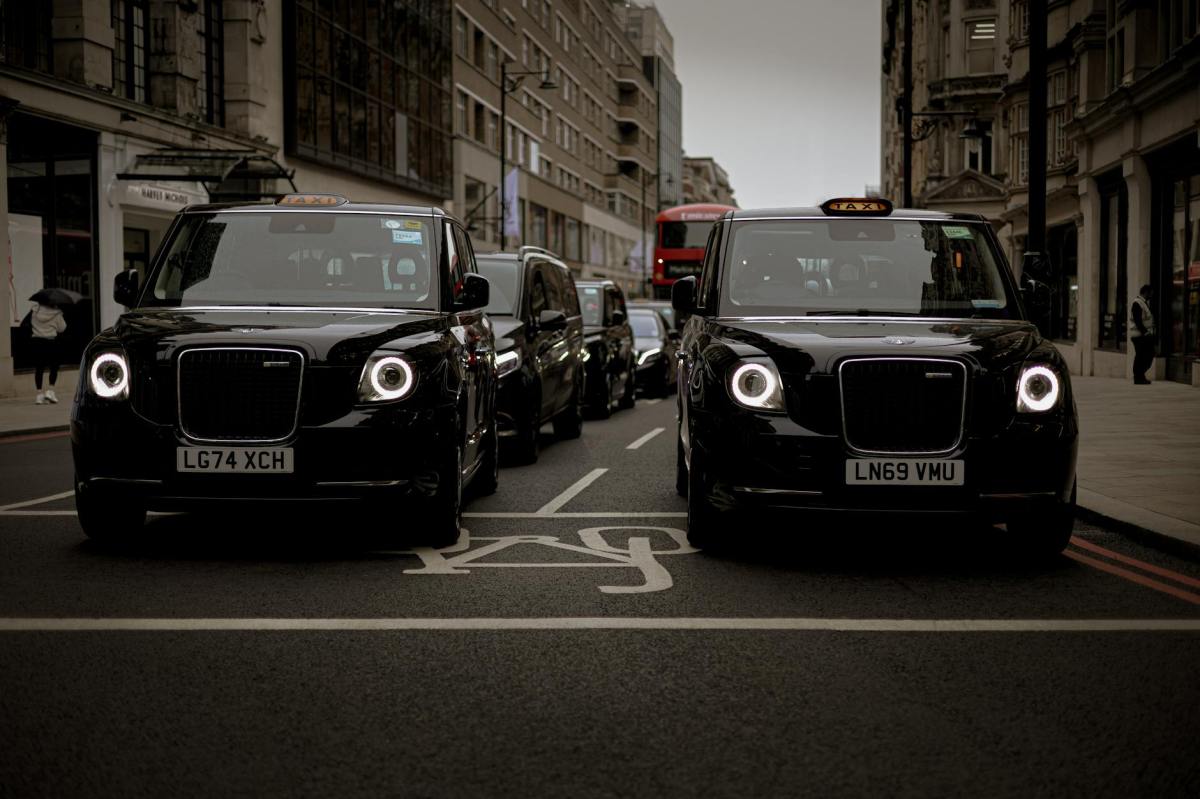
The history of the “hackney carriage” is along and illustrious one. They remain firmly attached to the road. They do move with the times. From horses to combustion engines to electrified cabs[1], I wonder if London back cabs will adopt Hydrogen fuel next?
Providing safe and reliable public transport for about 8-passengers, in reasonable comfort, with a limited amount of luggage, they are a vital part of the city landscape. Ferrying people from place to place and even going south of the river (a popular saying from the people who live north of the River Thames).
In New York, “Yellow schools of taxi fishes” in a song by Joni Mitchell. Schools or sholes of taxies swimming in a sea of traffic. Frantic and colourful as they are shown in a lot of 1970s movies. A chaotic scene where the protagonist runs out into the middle of dense, barely moving traffic.
What happens when these modern convinces take to the air? If they were still with us, I’m sure Flanders and Swann[2] would have written a song about this new marvel. The distain of London buses towards black cabs is there in the lyrics. So, as air taxies take-off, as it were, will the cab drivers of the city protest or join the ranks of new flyers?
Please don’t answer that question. I’ve in mind more serious issues. The whole history of aviation safety data analysis shows us an immutable fact. Take-offs and landings are riskier than flying in at altitude. It really matters not if flying horizontally or vertically.
How does this come to be? A simple answer would be to say that the results of aviation accidents eventually end-up on the ground. Gravity does its work. Put that aside for a moment. Take-offs are optional but landings are mandatory. That’s a traditional saying that amuses non-flyers but is all too real to pilots and alike.
The act of taking a flying machine from the freedom of movement in 4-dimensions to a preselected stationary point on the ground. Those policies and plans that are published refer to Vertiports being established much as Heliports have been in the past. Some may double up. The theory is good. A pre-defined clear space that can accommodate a typical eVTOL aircraft used as an Air Taxi, with all the necessary operational and safety provisions. Surrounding areas protected from the down wash of the Air Taxi. Care to remove any foreign objects from the vertiport surface. A mini terminal to add to the cityscape.
One of the biggest variables in this brave new world of public transport is as old as the hills. It’s the local weather. Dubai can roast an aircraft with clear skies and 50C while Aberdeen can soak them in rain and impenetrable mist. Dust and wind can blow through Marseilles while deep snow and ice covers Montreal. Whilst in Lahore the air itself can be hazardous.
Terrestrial vehicles do cope. Often this means that there are different rules and regulation that take account of the local conditions and priorities. The impatience that some advocates have for a rapidly formulated globally set of harmonised rules and regulations might be misplaced. In fact, it may even impede the introduction to service of Air Taxi services.
Since I’m discussing the busy urban environment, I can presume that any accidents and incidents will be the focus of a great deal of public attention. Ultimate safety is a nice aspiration, but then reality takes hold. There will be occurrences. When they happen, city councillors are going to have their say.
Post 1: Air taxis are an exciting development in air mobility, but to get off the ground. SESAR Joint Undertaking | EUREKA- European Key solutions for vertiports and UAM
POST 3: The Air Taxi topic has become newsworthy this last week. US lawmakers push FAA certification reforms for eVTOLs:
https://www.flyingmag.com/congress-faa-electric-air-taxi-certification/
[2] https://youtu.be/7yHrpPRYgYM
FLANDERS & SWANN – ‘A Transport of Delight’ – 1957.


 John Vincent