Responsibility

What do I have in common with former Prime Minister Liz Truss. Well, not much, I hope. Only I will stop myself from jumping on the band waggon and rubbishing the entirety of what she has to say. It’s astonishing to think that she was once a fully paid-up Liberal Democrat member. Her exit to the dark side is the stuff of decades past pulp fiction.

Truss’s published plans are clearly as mad a bag of frogs. Damming and disbanding anything and everything that you personally don’t like is a page out of the Trump playbook. Oh yes, there’s a community of enraged folks who will not read the detail and pied piper like follow the music. That will sell a tiny number of books before they pile-up in the high street charity shops of the country. Even they might flinch at stocking her castoffs in print. 10p would be too much.

Now, comes the; ah but. If I go back to the mid-1990s, I was writing about the proliferation of QANGOS[1]. Being a local Councillor at the time I felt a great deal of irritation in finding that so much government policy was focused on taking power away from elected local government and giving it to appointed bodies with no local accountability.

The Liberal Democrat approach has long been that power should be decentralised from central to regional and local government. A great deal of what we have seen in the last three decades has been exactly the opposite. Devolution in Scotland and Wales being the exception. Although, that didn’t make much difference when Brexit came along.

Giving specific powers to executive agencies is not the problem. You might think I’d say it was. No, the problem is the relationships between elected bodies and those who act as its agents. Once a democratically elected body has determined a course of action there’s benefit in having expert agencies, given clear terms of reference and a job to implement specific policies.

Politicians, generally make lossy managers. This is where the Truss / Trump doctrine, that politicians should control or manage everything as being extremely foolish. Centralisation does help when unified action is needed but for the most part keeping all decision making in-house degrades administration and enables it to become detached from reality.

Politicians are great critics. Their skills are best used to scrutinises activities at a high level. To exercise oversight and provide feedback derived from real life experiences (The Post Office scandal being an exception to this general assertion).

The former Prime Minister who holds the record for being the shortest in office had to take responsibility for her actions. In that most peculiar way, UK democracy worked. No well, but at least corrective action was taken in reaction to a calamitous situation.

Take back control in my mind means returning powers to regional and local government. Where QANGOS are necessarily then make sure they are kept under effective scrutiny. A lot of what I have said here is better said in a policy paper from 2007[2]. We know what to do but rarely do we do it.


[1] In the UK, the term QUANGO addresses “arm’s-length” government bodies, including “non-departmental public bodies” (NDPBs), non-ministerial government departments, and some executive agencies.

[2] https://www.libdemnewswire.com/files/2016/02/77.-Green-and-Prosperous-Communities-Local-Regeneration-for-the-21st-Century.pdf

Reform

It’s not a name that represents their reality. Although, a couple of the political polices they have on their books do mean significant restructuring. Proportional representation being one of those policies. They are a British political party that wants to continue the destructive arguments that brought about Brexit. Created in 2021 the Reform Party are the rump of the Brexit Party.

For poll watchers they are stripping voters away from the Conservative Party. In fact, their aim is to replace the mainstream Conservative Party. Unashamidly populist and right-wing, Reform is sending shivers down the spine of the centrist Conservatives. More libertarian than liberal, abolishing and leaving institutions is more their meat and potato pie.

It’s not at all unusual for such populist political parties to point at everyone else as a problem and assert that simple solutions can be magicked up in an instant. Reform is going for those issues that greatly trouble unhappy “conservative” voters. Taxes, immigration, green initiatives, mainstream media, and that nebulous topic “woke”. Failures in Parliament, at the Home Office and in the NHS are targets too. It’s the sort of stuff that gives a type of British voter a sugar rush.

There’s a deliberate attempt to follow in the footsteps of Donald Trump in the US. The dynamics of politics are different in the UK but there’s an appetite for harking back to a mythical era when Great Britain was great and how that could be recreated.

If the Reform Party does nothing else, it’s tipping the existing Conservative Party to go ever more to the right of politics. This, to some extent, explains the ridiculous obsession with current Rwanda legislation that’s as likely to work as a square wheel.

One prediction can be made with confidence is that the coming Geneal Election is not going to be much like the one in 2019. What on earth would happen if well-known personalities like Boris Johnson backed the Reform Party who knows where we would go next. To me this is horribly like Germany in the 1930s. Taking a hard line on immigration is one thing but calling for the UK to leave the European Convention on Human Rights is a slippery slope.

Politics with a noisy and truculent style has its place. Jam tomorrow and promoting “easy” solutions to complex problems are not new. Red-faced shouting and finger pointing has been around since Roman times. It’s the way a lot of people feel when things do not go well. Trouble is that putting people in power who tout this style always ends in bad consequences and disillusionment. It’s guaranteed.

Reform is polling in double digits. However, with the UK’s traditional First Past the Post (FPTP) electoral system this means very little. Reform may influence the conservative climate of opinion only. Revolution is not in the air – yet. What niggles me a bit is that Brexit caught many people on the hop when it happened. Its legacy has been wholly negative. The question arises, are we in for another round of shooting ourselves in the foot? I hope not.

Transform

Watching the BBC’s Sort Your Life Out[1] is cathartic. Stacey Solomon and her team are bubbling with enthusiasm. They get in there, and in one big swoop change the lives of a family that has become trapped in their own clutter. Everyday surrounded by way too much stuff.

This is so relatable. I’m in denial. I am not a hoarder. The truth is that there’s no place on a TV programme for me but that doesn’t mean I don’t have one or two “challenges”. Even in that double negative there’s the shifting sand of denial. Just don’t look in the garage.

To transform our lives, we have just moved house. Now, over a month in the new place. That has left the job of clearing out our former house and tidying it up. One thing with clearing out the accumulation of ages is the need for a deadline. Solomon’s show has that built in. Our deadline is a floating one that can’t float for long.

This week, I got temporarily mesmerised by a pile of old newspapers. Yes, it’s down to me. For the strangest of reasons or no reason at all, I’d kept a pile of curious newspapers that went back to 2010. Events like General Elections, Budget days, disasters, the local MP’s misdemeans and the rise and fall of people in public life. A real mix of general interest.

Like Sort Your Life Out, politics in the UK is full of stories of notable names that have come and gone. One or two have been upcycled (Nick Clegg), others were recycled (Lord Cameron[2]), and some previously prominent names disappeared altogether. Acknowledging the obituaries too.

What struck me was not only the names that come and go but the rollercoaster that has been the last 14-years. Underlying that is a cycle that goes bust, boom, bust as that rollercoaster thunders along on rails that disappear into the mists.

Regarding government budgets, we have regularly been promised transformations. Chancellors who don’t promise more for less are rare. Those who deliver it are even rarer. For the most part, in aggregate, our wealth per capita is going in an unhealthy direction. I’d say government budgets are an expression of political priorities, but they are far less important than events.

What do we learn from the whirlpool of public life? One thing is that history is constantly being rewritten. In the longer term what’s said about Johnson, Farage, May, Brown, Blair, Major, Clegg, and Cameron is going to be rewritten time and time again.

Back to my comparison of Sort Your Life Out and General Elections. To quote a quote[3] that is not by Mark Twain but is commonly attributed to him: Politicians are like nappies (diapers), they should be changed regularly.

If we genuinely want transformation, we need to vote for it. In my mind, voting either Conservative or Labour amounts to more of the same.


[1] https://www.bbc.co.uk/programmes/m00116n4

[2] https://en.wikipedia.org/wiki/David_Cameron

[3] https://quoteinvestigator.com/2018/10/17/diaper/

Friday evening

I listened. Well, it was unusual. On a Friday night, the country’s Prime Minister (PM) addresses the nation. Not much prior indication it was going to happen. What’s afoot, I thought. Could this be the moment a General Election is called? In the end it wasn’t an earth-shaking moment or likely to change the direction of the course of world events. The intention was good. There’s a strong need to step back. To condemn violent extremism in all its forms. Whether it’s ideological, from a political stance or religious in motivation.

Yes, people have a right to be passionate in pursuit of their beliefs. The limit comes in a liberal democracy when action steps over into aggression, intimidation, hate and violence.

Yes, it’s a sad day when a Westminster byelection results in the election of a maverick who as a disturbing track record of associating himself with alarming people and beliefs.

We (UK) are sure not in a good place, now. That does call for political leadership to step-up and face down those who would corrupt, divide, and wreak havoc. To do that across the board whether it be from the extreme left or extreme right. Wreckers are not new. They pop-up through history. Often using a false narrative to antagonise and stir-up insurrection. The results are always to the detriment of most people and to the advantage of a very few.

Is the PM facing down the those who’d happily wreck our liberal democracy? Friday evening was one attempt.

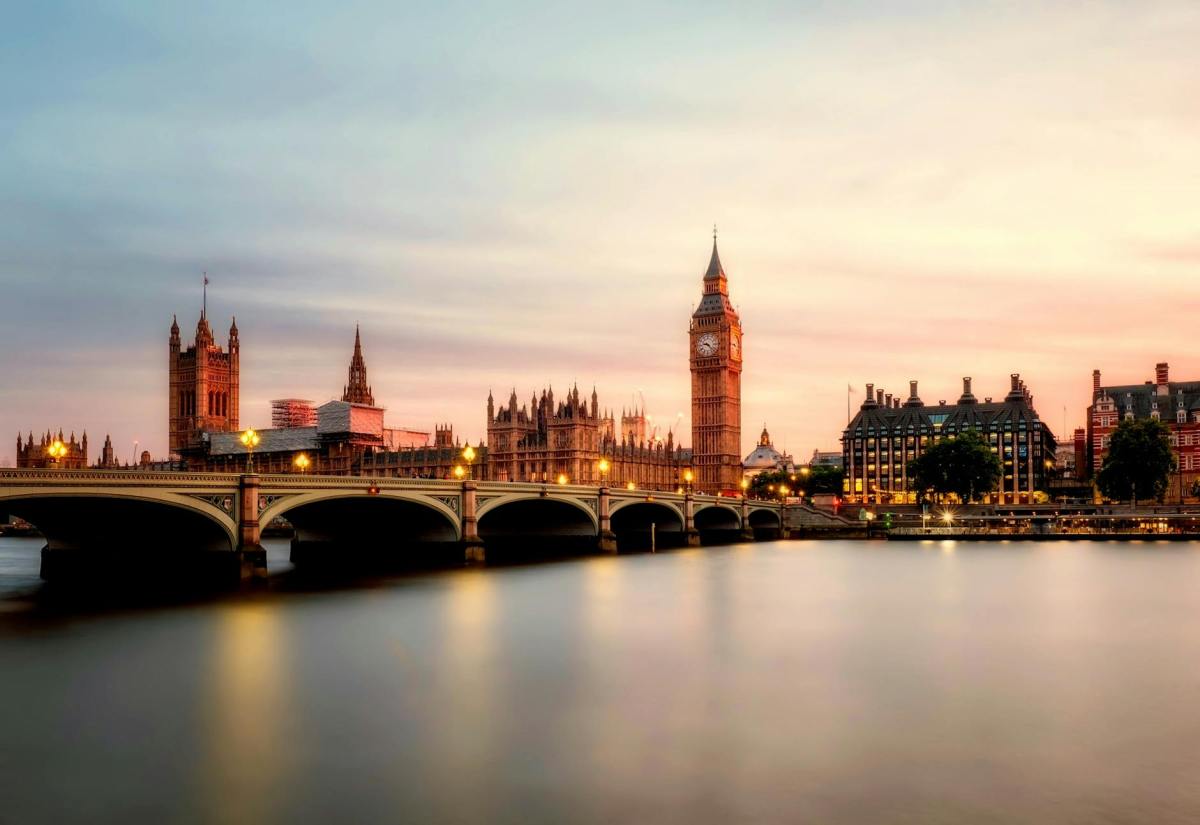
I agree with some commentators. If a speech is to be made outside the front door of Number 10, such an iconic setting, then there ought to be something of great substance in that speech. Afterall this is the place where PMs come and go, elections are called, and major crises are addressed. In this case there wasn’t much of great substance and vague messages were scattered throughout the PM’s rambling speech.

One problem is the misguided mixing of multiple different concerns in a mishmash. For example, protest is not de-facto bad. Illegal actions during a protest must be addressed much as illegal action any other time. If extra resources are needed to address those illegal actions surely it is for the government of the day to provision them appropriate to the task.

Perception matters. Condemning those who are clearly in opposition to the PMs political stance but turning a blind eye to those in the PMs camp who are just as bad, just smells bad.

Let’s be positive. It’s a good start. Leaders should come out an defend and preserve the liberty we all enjoy. They should craft langauage that unites. They should engage in robust debate on the side of truth. I wonder where we go from here. Will electioneering polticans stop the slurs and cheep remarks – unlikely.

POST 1: The PMs words on extremists and democracy have slipped off the on-line headlines rather quickly. Maybe his aim was for the weekend media to pick-up the debate in a thoughtful manner. Good luck with that one.

POST 2: Now, the PM is facing both ways. Paul Scully’s[1] utterances follow those of former Conservative Lee Anderson. When the majority of his party’s members think Islam is “A Threat To British Way Of Life[2]” and they would prefer a different leader from him no wonder the PM is calling for unity.


[1] https://www.telegraph.co.uk/politics/2024/02/26/paul-scully-no-go-areas-birmingham-london-islamophobia/

[2] https://www.huffingtonpost.co.uk/entry/majority-of-tory-members-believe-islam-is-a-threat-to-british-way-of-life_uk_65df4fd4e4b0e4346d54a740

14-years

All political parties have factions.  If the aim is to corral all liberals, social democrats, conservatives, or socialists and keep them under one roof it’s always going to be a hard job. Even as we speculate about the shelf-life of the traditional political ideologies, they remain powerful.

Liberals can be particularly difficult in this respect. It has been said that getting liberals to go in one direction is like trying to herd cats.  However, that picture is a dubious one in times when great injustices must be addressed, or a good cause strongly fires campaigning spirits.

What’s fascinating is the decline and fall of “normal” conservatism. That mild mannered compromise between self-interest, traditional values and deference has slowly fallen apart. It could be because of its poor fit with modern society but it’s more likely to be because it has ripped itself apart from within. Factions have strengthened and the core beliefs that formerly bonded people together have fractured. Brexit may have been both symptom and cause.

There’s the case that populism has been radically amplified by modern media. A crescendo of views and all we hear and see is the peaks and troughs. Anything in the middle is drowned out.

So, the current Prime Minister’s (PM), let’s remember we’ve had a few, calls for unity. It’s a trumpet sounding in an anechoic chamber. Not likely to be heard, except by himself and those standing next to him. Their smiles are professional smiles. Their hopes are forlorn.

Analogies are fun. Another one came up this week as the Parliamentary byelection results appeared. The British electorate could be compared to a sea going super tanker. That is, being big and having so much momentum, changing direction takes a long time. Once that direction has set there’s not much that can be done in the short-term. That national super tanker maybe going slightly left of centre whatever happens. Of course, a crude analogy isn’t necessarily true. It’s more of a prediction of what might happen if pivotal events do not intervene. That’s easy to say. It’s less easy to anticipate such dramatic earthshaking events.

One thing I can feel confident about is that this is not a re-run of 2019. No way. Nor is it a re-run of 1997. A vital ingredient is missing. We have no charismatic political leaders. Vision is in short supply.

Facebook has a habit of throwing up pictures from the past. One it threw my way this week was of me standing in Crawley town looking every bit a parliamentary candidate. That was 2010. I looked at the image and thought – if only I’d had some inclining of what was to come in the next 14-years.

If only I’d anticipated how badly the coalition would turn out for liberalism. If only I’d anticipated what foolish gamblers Cameron and Clegg were in thinking a national referendum would silence the Europhobic hordes. If only the Labour Party hadn’t gone on a doomed left-wing romp. If only the reality of Johnson’s unfitness for office had sunk in earlier.

Looking back provides lessons. It doesn’t predict what will happen next. We all to often get hooked on linear projections based on where we stand now. Forecasting is as much a mystery as ever it has been. That said, I think doing the maths is better than looking at the tea leaves or seaweed. A narrative for the future could read – don’t think “that’ll never happen,” think change is natures way of keeping us on our toes.

Here’s a prophecy. This one has good and bad. Long talked about and feared by those who milk the status quo, Proportional Representation (PR) will be implemented for national elections in the UK in the next 14-years. The dated model of big tent political parties will crumble. Ballot papers in years to come will have something for everyone. So, what’s bad about that transformation? Populism will not die. It will just eke out an existence in many new forms.

QT

Over the years the BBCs Question Time (QT) debate programme[1] has played an important part in political discussions. It was a must watch for political activists and students at all levels. In fact, anyone interested in understanding the political views that permeate the country.

Unfortunately, the programme has declined to become a dull backwater for viewing if there’s nothing else on. The format is locked in to an awkward seeking of balance at the expense of an inquiry into the reasons and justifications for widely different views. There’s little in the way of vigorous cross-examination or investigation into the core values of the speakers.

I don’t want to blame the person who chairs the debate or the BBC for hanging on to the QT heritage. The programme has played an important part in the life of the country, in the past.

I don’t want to be one of those social media complainers for whom any deviation from the age of Robin Day is a blasphemy. Those black and white days are a wonderful snapshot of a long-lost era. The relationship between the public and their politicians has changes beyond recognition.

There’s no doubt that we have all become somewhat more superficial than may have been the case in the past. Politics has become something that is marketed to us as a commodity. It shouldn’t be that paper thin.

At its best such a debate programme gets to the fundamentals. If it merely tracks yesterday’s headlines the results are predicably shallow. Audience and panel members simply echo what we already know. What we’ve already heard elsewhere throughout the day.

What I want to know is more of the why and less of the what.

Say, a social liberal politician objects strongly to a dilution of human rights and a hard right leaning conservative welcomes such a dilution. We may already know that’s the positions they have adopted and campaigned on but are those positions of convenience or core beliefs?

Exploring what panel members really think and what they might really do is surly more interesting than allowing them to play to the audience, at home or in the room. I want an objective chair to put the panel members under pressure to uncover any deceptions. Deference born of an obsession with balance is as bad that born of class or impoverishment.

One of the parts of the format that seems unquestionable is the requirement to answer questions posed by members of the public. The audience is supposed to represent the members of the public not in the room. They rarely do. I’d much rather see a town square type format. That’s where the members of the public engaged are not so pre-selected or self-selecting. Walk out into a typical high street and randomly ask what question do you want answered? Do it live.

QT needs a major shakeup. It’s not quite dead. Its revitalisation is possible, but it needs to get off its current path.


[1] https://www.bbc.co.uk/programmes/b006t1q9

Housing

It was astonishing to listen to a Conservative Minister this morning. My diet of News and current affairs always starts with the Today programme on BBC Radio 4. Lee Rowley MP was everything you would expect from a former management consultant turned poltico.

Basically, the man is in denial. Everything is fine and all we need is one or two tweaks. Housing problems, only happen in Labour run areas. Everything is peaches and cream. Converting offices and shops into dwellings is perfectly fine. High prices for small cubes without windows – what’s the problem?

Then Mr Rowley wiggled around in his seat when asked outright: what’s the aim? How many houses will the latest proposal delivery? The answer was evasive. It’s not about numbers so the Minister said. Policies without a measure of success or failure are like sentences without meaning. This Minister couldn’t stand on the record of Ministers gone by, so he waffled.

The Minister for Housing is the person in the UK Government responsible for national housing policy. So, after 14 years in power we might expect us, the public, to be reaping the benefits of the seeds sown at the start of a term of Government. Nothing like that is remotely true. Initiative launched now are framed as if a unique and radical new approach is being taken to improve a dire record. Ignoring that the record is that of the current Government.

I don’t want to forgive the Minister, but he has only been in the job since November last. Chopping and changing Ministers is a habit of this Conservative Government. It’s almost like they hot desk, a few weeks here and then a few weeks there. Never enough to get much done.

UK housing, planning, and building is in a poor state. The demand far outstrips supply. Prices are ridiculous. Typically, the percentage of a young person’s income spent on accommodation is horrendous. Rents are high and first-time house buyers are finding it harder and harder. Tenancies are insecure and landlords are giving up.

Although, I remember having to endure high interest rates, at least housing was affordable in the mid-1980s. On a moderate income a mortgage could be secured for about 2 to 3 times annual income. My first brick built two up, two down, was a big step but it was affordable.

I believe this is going to be a General Election issue. Or it should be. It’s time for young people to come out and vote. It’s time for their voice to be heard. It’s time for a major shake-up in the way housing is provided in the UK. Policies enacted in recent years have punished those at the bottom of the ladder.

That’s my thought for the day. Change is vital.

POST: In his BBC radio programme, Tim Harford explains the statistics used in political debate and the News. The Minister above was comparing apples and pears, as is so often the case, when talking about the social housing that has been built[1]. Comparing the period before the Conservatives came to power with the period afterwards, using different metrics is a deception.


[1] https://www.bbc.co.uk/sounds/play/m001w86h

Drive

Listening to talk radio passes the miles of spray as I thundered down the motorway in the heavy rain. Oddly, going West to East seems somehow to be “down” although that makes no sense at all. Today, the M4 looked at its least attractive.

Inherently, those who take the time to phone in to radio stations are a self-selecting group of people who have been themselves been selected by the station’s editors. Afterall, who wants a dull silence or an abusive incoherent rant? That’s what social media is for (smile).

I’m guilty as a listener of quick stereotyping. I’m human. Radio voices do give a hint of education and personality. Unfortunately, my irrational biases are not too different from a lot of people. That association of a middle English accent-less voice as being “intelligent” is so easy to make. Contrasted that person with a broad regional accent, God forbid, West Country, then it’s all to easy to think smock and pitchfork.

What I’m recalling is a man speaking in the poshest London accent one can imagine. The subject was flip flops (flippy floppy[1]) that opposition politicians are doing as they change their policies. Is it national News that circumstances change and policies change accordingly? Apparently, it is.

He was saying that he had intended to vote Labour in the forthcoming UK General Election because he wanted change. It’s time for a change. Now, recent announcements had put him off. The radio host asked him who he was going to vote for when the election finally came. His answer was not inspiring; the devil you know, he said. My reaction was one of destain. I wanted to shout at the radio; you mean after all the screw-ups this lot have made you would still want them back in power!

I thought how can an intelligent person, maybe that was a leap too far, stick with the devil you know, when you know that devil is so grossly incompetent? Their overall performance has been poor. It’s a mystery but is that’s a common view? Is the taste for change so weak?

That sort of spur of the minute instinctive reaction is quite legitimate. Afterall, it’s a secret ballot. So, if that’s the way a person feels then that’s the way they will go. Comfort blanket politics.

My problem is that the whole notion of accountability goes out of the window if people constantly stick with the “devil you know” regardless of what they have done. If choosing differently is always considered to be too risky then no one will ever know if things can get better (to paraphrase a slogan from a past election[2]).

There’s some political mendacity here too. If we go back to the 2016 referendum, it was decidedly risky to vote for Brexit. That didn’t stop tub thumping right-wing politicians from pushing the risky option. Now, those same right-wing politicians want to cling to power so they are advocating exactly the opposite. That’s to encourage the electorate to think that change is far too risky. I can image a new political slogan saying – Yes, we are awful but we say we are not so awful as all the others. Dick Emery[3] would be proud.


[1] https://youtu.be/CFNML_MGq-M

[2] https://youtu.be/V6QhAZckY8w

[3] https://www.theguardian.com/tv-and-radio/2020/jan/03/dick-emery-dies-archive-1983

Space

Eutelsat OneWeb is a growing global connected community. That’s what the publicity says. Once upon a time I wrote about OneWeb. I wrote about it in the context of Brexit.

One of the touted benefits of Brexit was autonomy, in other words, British innovation leading the way to benefit Britain above all others. It’s that aggressive assertion of sovereignty that was at the core of Brexit. Remember, it wasn’t so long ago that this was part of Brexiters fantasies? 

In the Brexit turbulence the UK Government walked away from the EU’s Galileo programme. The UK no longer participates in the European Galileo or EGNOS programmes[1].

Then in 2020 the UK changed its original post-Brexit position and scraped building a national alternative to the Galileo satellite system[2]. At that time, Business Secretary Alok Sharma offered around $500 million of UK public money to acquire part of an organisation in trouble, called OneWeb.

OneWeb is a commercial Low Earth Orbit (LEO) satellite constellation now with an element of Government ownership. It’s network of satellites doesn’t have a global positioning capability, like Galileo.

To get its satellite network up and running, an expensive business, OneWeb merged with French company Eutelstat. Today, if we look at the 2020 investment made with public money the financial situation doesn’t look good. That doesn’t mean to say that things will not turn around in future years[3].

The Times newspaper has taken a nationalist view of the circumstance[4]. It’s a point that the intellectual property is not in the hands of the UK Government, but the investment could still turn out to be a useful long-term commercial bet. It’s gambling with public money.

As an aside, I’ve been looking at buying a new dishwasher for the kitchen. It’s made me aware of a capability that I had no idea had been developed. Namely, the connection of dishwashers via the web. I think this is what is called the Internet of Things (IoT). So, imagine that, British dishwashers connected by space as a Brexit potential benefit.

However, if there’s a change in the UK Government’s political direction after the next General Election there’s a strong possibility that the UK will return to the EU’s Galileo programme with some manner of partnership. When we get to 2026, we may look back on the decade behind as a vacuum, much like the vacuum of space. A time when an uncertain direction cost a great deal.


[1] https://www.gov.uk/guidance/uk-involvement-in-the-eu-space-programme

[2] https://www.politico.eu/article/uk-scraps-plan-to-build-global-satellite-navigation-system-to-replace-galileo/

[3] https://www.politicshome.com/thehouse/article/oneweb-uks-gamble-satellite-startup-pay-off

[4] https://www.thetimes.co.uk/article/656bd77c-c106-47c3-840b-674e9efc4f0e

Food

Food security matters. Much like energy security matters. Much like access to basic commodities. There are fundamental matters of supply that must not be ignored. International trade is a two-way street. But it must be a two-way street on the level. It’s possible to imagine a set of scales where there’s a balance between both sides. Maintaining that balance is a dynamic business.

It’s easy to understand how aggrieved farmers in Europe feel if they are subject to unfair competition. It’s the same in the UK. If say, meat comes into the UK, produced at a lower standard than domestic produced meat, and that undercuts farmers prices, that’s unfair and unwise.

News doesn’t just concern agriculture. Over the last weeks discussion about the UK’s ability to produce basic commodities, like steel, has occupied minds. Imports maybe cheaper. The trouble is that countries jeopardise domestic security and merely offload environmental concerns by increasing dependency on others beyond certain points. A sensible balance must be struck.

Political, marked trade imbalances are a nightmare. British farmers may not be so overtly militant as some on continental Europe, but they have a strong interest in influencing what laws say. Bandwagon jumping politicians from the far-right and far-left are taking advantage of the discontent that exists. None of these empty barrels have answers. That doesn’t stop them making a lot of noise.

Post-COVID, in all sorts of industries, there’s been, and still is, significant supply chain problems. For example, the price of farm machinery has gone through the roof. Although general inflation appears to be slowly coming down the hike that has happened, has happened. It’s bedded in.

Looking at the gap between input prices and outputs shows an unhealthy situation[1]. Producers have been squeezed. Their margins have been squeezed. It’s certainly not a good time to be a milk producer[2]. Even with optimism for the longer-term, today’s bills still need to be paid.

In the UK, there’s an often written about concern surrounding the power of the established major supermarkets[3]. These are almost monopolistic in their position in the marketplace. On the walls of their food warehouses pictures of smiling farmers and clean, shiny tractors are all the rage.

Because so much food goes through the doors of the supermarkets, if farmers want to protest, they are probably a better target than the UK Government. Alternatively, British farmers may need to work to reduce the influence of the middlemen. Going direct to the customer may not be for everyone but more could be done.

In a General Election year, it unlikely that politicians will pick a fight with British farmers. Their ears may prick-up for a short while. That’s a good time to make the case for domestic production.


[1] https://www.gov.uk/government/statistics/agricultural-price-indices/agricultural-price-indices-united-kingdom-november-2023

[2] https://www.nfuonline.com/updates-and-information/dairy-producers-braced-for-an-uncertain-future-nfu-survey-reveals/

[3] https://www.statista.com/statistics/280208/grocery-market-share-in-the-united-kingdom-uk/