Why Embrace False Utopias?

Why do clever people often become dayglo prats? Not stupid by any means. More foolish and not embarrassed by their recklessness. It’s one thing to be incompetent or ineffectual but that’s not what I’m getting at here. It’s smart people who get carried away with delusional dreams.

How many vocal futurologists have said – “work is dead”? That one day we will be living in an age of leisure and ease because sophisticated machines will have taken all the drudgery out of existence. Intelligent machines doing all the things we once considered to be work.

In essence it’s a utopian vision that stands-up to be knocked down. In fact, the subject matter has been chewed over in science fiction ever since science has played a big part in our lives. Such popular fiction takes us from a dream world to a hideous dystopia that the original dreamers hadn’t envisioned.

The year is 2274. Almost 250-years ahead of where we are. Humanity is living in a bubble. That bit doesn’t change. Most people are unaware of how their society functions. Again, that bit doesn’t change. Rituals and customs dictate the path individuals take in life. Like today.

Strangely, even in the year 1775[1] those three aspects of life were evident. Maybe they are perpetual. However, there’s an exceptional point to make. That’s our rebellious nature.

The year is 2274. The movie is Logan’s Run[2], made at a time when society had ripple of anxiety about the so called “silicon revolution.[3]” That’s 1976. Before the elevated level of interconnection and communication that the INTERNET has afforded us.

It’s a sobering science fiction movie with a somewhat optimistic ending. Looking dated. I can get past the images and props that epitomised the seventies vibe. That’s become vintage.

To me, aspects of the theme of the story come from H. G. Wells. Nothing wrong with taking great ideas and reshaping them for the time. In the end the flawed utopia is defeated by our rebellious nature. Or at least of some people. The seeking of truth, at all costs, and to look behind the mask that everyday life paints.

You may ask – what the hell am I getting at? It’s a reaction to the recent headline[4]:

Musk says that in 20 years, work will be optional, and money will be irrelevant thanks to AI.

I like growing vegetables. Gardening is a superb way of doing something practical, staying grounded and in touch with nature. It’s good for one’s mental health too. However, the notion that work will be optional is far-fetched. The idea that money will disappear in a couple of decades is nuts. That’s not going to happen.

I know that the motivation to say such things maybe merely to provoke. That has its function. Nothing like stimulating a debate about the future. Surely, we are in for some dramatic changes in my later years on the planet. Surely, we need to equip the next generation to deal with these changes. Surely, we need to protect the public interest in turbulent times.

“Prat” is an often-applied British term. There are a lot worse terms than that one.


[1] https://www.clarkstown.gov/weekly-column/the-revolutionary-year-of-1775/

[2] https://www.imdb.com/title/tt0074812/

[3] Intel’s 4004, released in 1971, packed the core of a central processing unit (CPU) onto a single chip for the first time.

[4] https://fortune.com/2025/11/20/elon-musk-tesla-ai-work-optional-money-irrelevant/

Exploring Space: A Journey

I haven’t got many of my childhood Ladybird books. One I have kept in good condition is “Exploring Space.” It’s got the characteristic illustrations and simple stories that are made to captivate. This book is the revised edition that must date from sometime after 1971[1]. The front cover has an illustration of a moon lander floating above the moon. It’s a picture that says – look what we can do, this is the tip of the iceberg. Such an optimistic outlook.

Most of my career has been in the aerospace business. More specifically civil aviation. For short while, I did get involved in building ground test equipment for satellite systems. Some of the people I worked with built the Giotto spacecraft in the UK. The mission was to study Halley’s Comet. This spacecraft, launched in 1985, took close-up images of the comet. It discovered organic material within the comet and proved that a spacecraft could cope with the harsh conditions of such a flyby. 

My interest in space, and the complexities of getting there has been with me for a long time. It’s the ultimate adventure. It also shows what can be done by international cooperation. Giotto was the European Space Agency (ESA) first deep-space mission.

Mention the word interplanetary and what comes to mind? For people of my age. The Carpenters’ version of the song “Calling Occupants of Interplanetary Craft”. It’s an eccentric, but successful 1970s pop song about talking to aliens. It’s a cry for help that is as relevant now as it was then. “Please come in peace and help us in our earthly problems.” If ever we humans could do with help from a more advanced civilization, it’s right now.

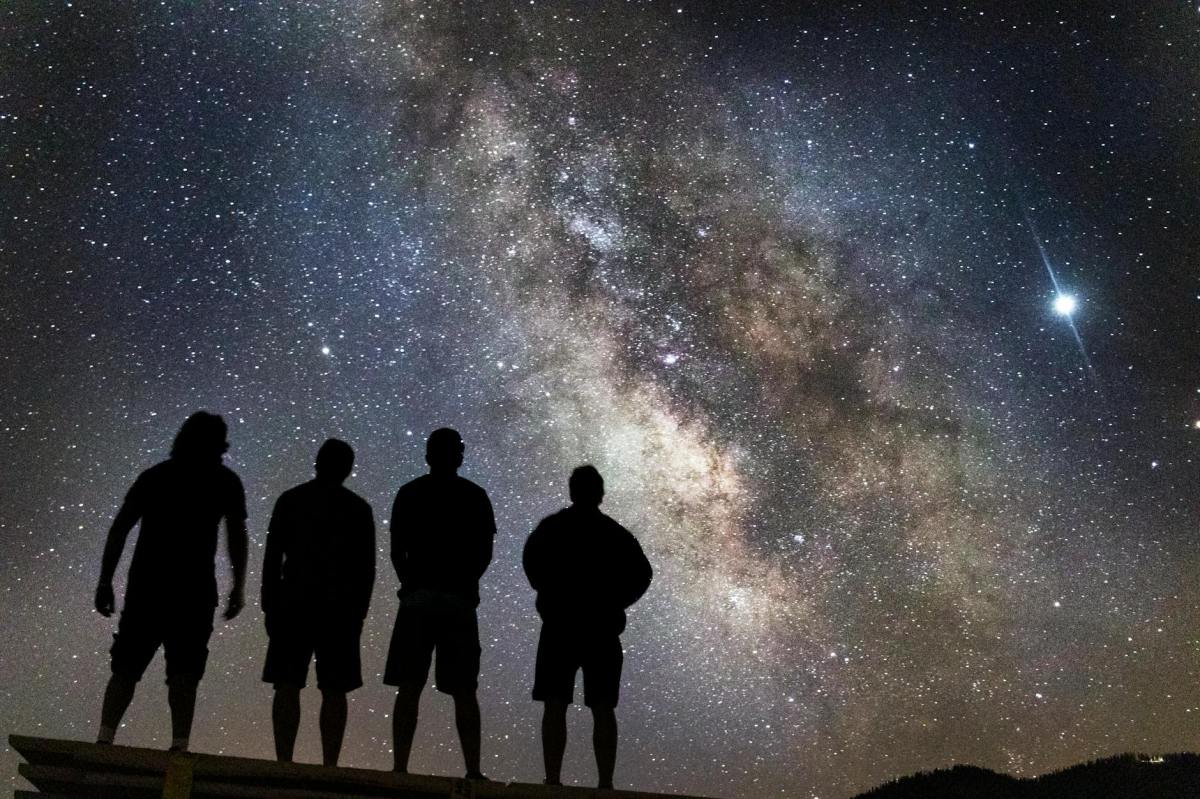
A sense of wonder about the heavens is as old as our human story. What’s up there? Could we live there? Are there others living there already?

I like the idea of an English bishop[2] in the 1630s. An early science fiction writer he imagined a flight into space in a craft pulled by a flock of wild swans. Ten to be precise. Since there are plenty of swans here in the English town of Newbury, I thought about investigating that idea. Maybe not.

Last evening, for the first time, I visited the British Interplanetary Society (BIS)[3] at Arthur C. Clarke House in London. Their HQ is in Lambeth. Can’t say I like that part of London at all. It’s a peculiar mix of sterile skyscrapers and spaces waiting to be re-developed. Old London has been pushed aside.

The BIS has a long history. It’s no fly by night organisation. Not as far back as the English bishop mentioned above, but more than 90-years extant. They have promoted thoughts and ideas that go way beyond past achievements. Trying to imagine what a future may look like if our capabilities and drive for exploration continue to advance here on earth. I think there’s always a need for that creative imagination to push the boundaries of what’s possible.

This week has been Space Week[4]. A week to highlight all things space. Back in 1999, the United Nations (UN) declared that World Space Week would be every year from 4 to 11 October. For this celebration, this year, the BIS had put on an evening event called: Living in Space: A World Space Week Special Panel.

I won’t say too much only that it was a fascinating evening. We were a small gathering full of questions. BIS had assembled a prestigious panel of experienced individuals. There wasn’t much in terms of the practicalities of living and working in space that didn’t get discussed.

I’m reminded that despite the hostility of the space environment for our biology, what we know is that all the materials of which the earth is made are there waiting for us. Constructing habitats, with the robotics we now have, isn’t just science fiction anymore.


[1] https://www.royalmint.com/discover/decimalisation/

[2] Francis Godwin (1562–1633)

[3] https://www.bis-space.com/

[4] https://www.worldspaceweek.org/

Light in Dr Who

I’ve started so I will finish. There’s a good line. Don’t worry I’m not going to write about quiz shows but it’s time for another short review. I have seen the light. Well, switched on the TV.

Flashy clothes, 50s vibe and excruciating way of getting there. The second in this new series of Dr Who twisted and turned around an attempt to get home. There’s a theme. Adventures on the way home. Wonder where that idea came from? An odyssey of a flight in time, one might say.

In a digital age a flip back to an age of film was a nice touch. It’s kind of funny how animation is now so much easier done. Film is becoming a museum artefact. I don’t think it will get the popular revival that vinyl is getting.

Explaining a job like “projectionist” to newer viewers isn’t necessary. Wasn’t done. Takes me back to the small flee pit of my youth and the story of a living Volkswagen Beetle[1]. That’s quite freaky. Jumps in the film, munching crisps in the theatre and sitting in the dark when it was daylight outside.

The sinister and creepy monster turned out to be a being of light. Like a Twilight Zone moment, a menacing cartoon character came to life. Given the various realms through which the doctor travels, this is not unexpected. Good job there was only one of them to defeat.

Beings of light[2] are a popular science fiction theme. They crop up now and then on both good and bad sides. I like the ambiguity. That one entity can flip between good and bad. It wasn’t so much a tale of an evil moonbeam as one of light finding a path to becoming substantial and physical. The dark of night or, in this case, the cinema world turned the mischievous moonlight to the bad side. Only a release back into the bright light of day let it rejoin the sunlight and starlight of the universe.

Plonk in the middle of the show was a breaking of the fourth wall. That boundary between the fictional characters, the Doctor and companion, and the imagined audience at home. Suddenly one was real, and the other was fiction (even though they were both fiction).

After a good haunting the colourful cartoon menace was expelled. Given how easily it got into the cinema in the first place it’s a wonder this story isn’t repeated a million times.

Confusing at times, the suspenseful moments were jarringly technicolour. Sometimes less is more. This was a case of packing too much content into a rapid-fire story.

Having wrapped up a 1950s mystery, the Doctor is back to his time travelling.


[1] https://en.wikipedia.org/wiki/Herbie

[2] https://babylon5.fandom.com/wiki/Vorlon

Who 15

As per tradition there was a moment of running down corridors pursued by robots. Add to that the shock horror realisation that it’s bigger on the inside than the outside and the staple diet of BBC Science Fiction is playing again.

Dr Who is rolling[1]. As expected, Russell T Davies works magic with a super-fast story line. In fact, so fast that I’m going to have to watch it again to figure out exactly what the featured rift in space and time did to the plot. Thematically up to date as the main baddy in control of the evil robots was both misogynistic and AI. I’ll give something away if I reveal that the two letters AI were not what they seemed. Not only that but the robots were redeemed.

Although there was a smidgen of absurdity and an expectation that the audience would draw of decades of Dr Who mythology, the show hit the mark. Afterall it’s entertainment not a profound reflection on the state of the world. It’s colourful Saturday night drama that the whole family can watch. Although in this case there was no need to hide behind the sofa. Also, a lot of the 21stC social commentary would be lost on younger viewers.

Because the series has been running for such a long time there’s a bit of repetition that creeps in. This is not bad per-se. It’s a reminder that coming up with truly original scripts is incredibly hard. Imagination has no limits but when pen hits paper past references helps move stories along quickly.

Adventures in space and time could go on forever. All time, in fact. The subject has no limits. Each version of the Dr Who saga will be set in the context of the audience’s everyday reality. So, the Daleks were a product of nuclear war, and now humanities greatest threat comes from billions and billions of electrical ones and noughts.

Playing with humankinds’ curiosity about space and time is fruitful territory. Imagery can be fantastical and push the boundaries of video production. If anything, Dr Who is modest in pushing at those boundaries. Mustn’t forget that it’s prime time entertainment. Real space and time are far more than a headful.


[1] https://www.radiotimes.com/tv/sci-fi/doctor-who-times-release-schedule/

Life on Mars Remains a Dream

Exploration is part of our DNA. There are parts of the planet that we don’t know well. That said, there are not so many spots where a human foot has not trod. The mysteries of the deep ocean remain to be better known. Only we more often look heavenward than we study deep waters.

Looking up at the night sky the fascination with a twinkling red dot runs through history. It’s surprisingly recent that the notion that Mars might be inhabited prevailed. A 100 years ago a scientist might be frowned upon but wouldn’t get locked up for such a conjecture.

The possibility of Martian life still gets discussed. If existing, it would be extremely rare and unlike the life we take for granted on Earth. Discoveries are more likely to tell us about the history of Mars than the present.

A search for other civilisations goes on. Today, Mars is a planet for robots. Rovers and other contrivances are best equipped to deal with the harshness of the natural environment. If the radiation doesn’t get you the wide-ranging temperature fluctuations will. Humans are not well suited to live in extremely harsh environments.

On a trip to Phoenix in the United States about 30-years ago, I drove out into the desert. This was to have a look at the Biosphere[1]. A curious experiment in human behaviour. The experiment attempted to reproduce what it would be like to live as extraterrestrials. We’d be the alien civilisation on Mars. Living in a huge greenhouse on Earth. As much as to say this brave but shaky experiment proved that extraterrestrial living is very hard. In fact, impossible in the way it was conceived. The lesson from such empirical experiments is to value our unique circumstances even more. Polluting and trashing Earth is about the stupidest act “intelligent” but fragile beings could do.

There are plenty of extremely harsh environments on Earth. Wisely we (humans) choose not to live in them on a permanent basis although we like to make documentaries about them. For example, there must be an exceptional motivator to get people to live in a box in Antarctica.

It’s reported that Musk says that Space X will go to Mars next year. Adding more robots to the Martian population. In the field of exploration this makes sense to me. What doesn’t make any sense at all is the determination to put humans on the surface of Mars.

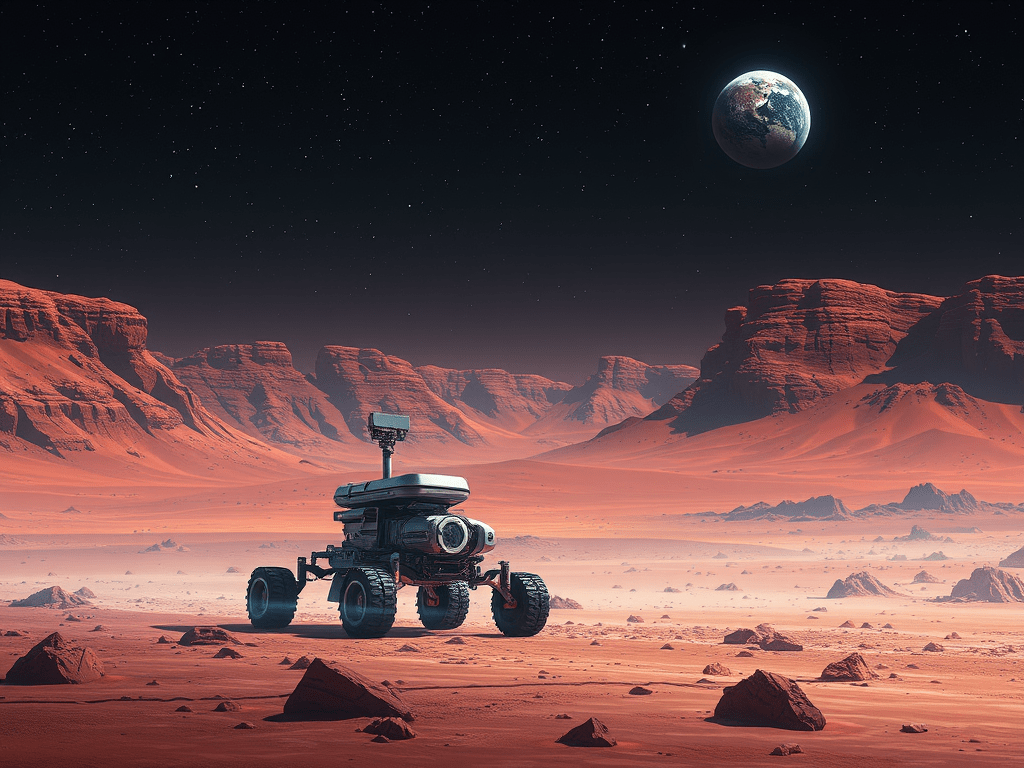
The only civilisation that is likely to inhabit Mars successfully, in the next century, is an android one. Every sign is that the capability of robotic life will advance ever more rapidly. They can be designed to thrive where we would fall by the wayside. What better use can we put our future robotic friends to than advancing exploration?

Putting a date on the first human footsteps on Mars is about as ridiculous as last century’s imaginative speculation about a Martian invasion. Although, such popular stories make great science fiction.

POST: This remote station has had reported problems. A case in point. Antarctic scientists plead for help after colleague ‘threatens to kill’ team members | The Independent


[1] https://www.euronews.com/green/2022/01/29/living-in-a-bubble-did-this-failed-90s-experiment-predict-the-future

Dr Who?

I’m having to get to know Paddington. For such a long time my route into London was via Victoria station. Every nook and cranny of that enormous railway station was etched into my brain. I could go from A to B with the speed of a swift. Southern trains trundle backwards and forwards, in and out of London. For the last 8 years, I’ve been able to navigate from my doorstep to the Royal Albert Hall (RAH) in about an hour. Only occasionally being marooned in Croydon.

Once I’d discovered the BBC proms it became a regular part of my annual schedule. That knocked off August and part of September. Promming[1] is a wonderful tradition that opens access to great music of all kinds for a token sum. Standing for me is no big deal.

Last night, I travelled through space and time. A different space and time from my normal one. Now, I’m having to get to know the ins and outs of a different railway company. To some extent they have “proper” trains that go somewhere. I mean, cities in Wales and the West of England.

This was only my second BBC prom of the year. This one was going to be different. For a start it was Bank Holiday Monday. It was the main day of the Notting Hill Carnival[2]. For those who don’t know that sat on my route into Paddington and round the Central Line to the RAH.

Busy, busy, busy. I don’t know if the National Orchestra of Wales to the same route as me. They were on stage for prom 48[3]. Thankfully, GWR speedily and safely got us into London.

The buzz was infectious. Whovian community folk like to dress-up. Standing in-line outside before 6pm, conversations were about favourite monsters and the authenticity of other prommers costumes. Fantastic handmade scarfs. Elaborate purchases from e-bay. Eccentric illusions to long lost baddies. I felt grossly underdressed. That said, I shouldn’t have been surprised but the audience was about as intergenerational as is imaginable. Maybe, I should have said intergalactic. I was standing next to a would-be William Hartnell in his 20s. Further along the que there were 2 Sylvester McCoys in their late 50s, at least.

What can I say about the evening? Hat’s off to all concerned. It was a dam good show. I don’t count myself as a Whovian even if this small screen fiction has populated most of my life. I was struck, not just by the obvious theatrics but how important the music had become to the whole drama. It really does pull on the emotional strings. Story telling needs that magical music.

Standing in a crowded arena, I wasn’t for one moment frightened. Which I would have been as a young boy with a cyberman walking straight toward me. An authoritarian Dalek called for the interval. Ordering the orchestra off the stage. The revered Russell T Davies was in the audience. They played out with the Doctor Who theme.

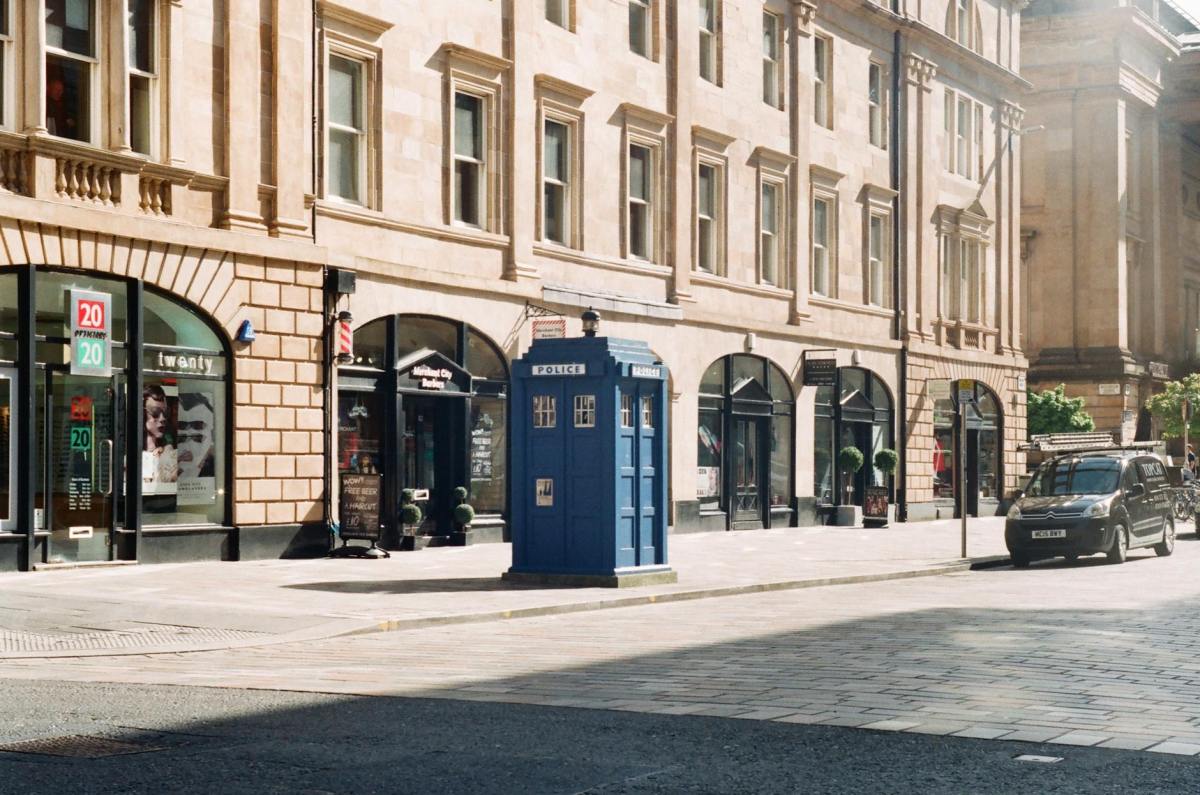
For an evening learning a new route in and out of London, all my effort was more than rewarded. Time and space well spent. I shall now turn my hand to inventing a working TARDIS. Then I could go back and do it all again. Well, that is except for the cool breezy late-night hanging about at Reading station platform 3.


[1] https://www.bbc.co.uk/programmes/articles/3598F306c3KnN6t3x6ThKpN/what-is-promming

[2] https://nhcarnival.org/

[3] https://www.bbc.co.uk/programmes/m00224zh

DUNE Part Two

It’s long. It’s engrossing and it’s a saga well told. That was my Monday afternoon. Sat in a comfortable seat curtsey of the Everyman in Reigate. The movie of DUNE is spread over 2-parts[1]. The second part is just out. It’s release was much delayed by the strikes in Hollywood. I’d say from my viewing this movie was well worth waiting for.

The whole world of DUNE centres around the most valuable commodity in the galaxy. A flash of an explanation can easily be missed. The desert planet Arrakis is the one source of that commodity. Science Fiction has a wonderful way of taking us to fantastical worlds filled with issues that are not so far from current day dilemmas. The commodity of Spice reminds me of several sought-after substances. The exploiting of valuable commodities at the expense of indigenous life has been a hallmark industrial progress.

In the imagination of Frank Herbert civilisations exist and compete within one almighty empire. The story in part 1 and 2 movies hinges on the dreams of a young man named Paul Atreides. I don’t want to give away key plot points but he’s special in so many ways.

Themes extend over the role of brutality and war in either imprisoning people or liberating them. I guess Frank Herbert didn’t see the passage of 800 centuries as a pathway to saving us from the 4-horsemen of the apocalypse. With that in mind, he’s stollen from religious texts as much as a Shakespearean landscape of ideas and the hero’s journey from Greek myths.

The enduring nature of grand sagas that show “good” overcoming “evil” have an immense appeal. All the twist and turns along the way and the troublesome megalomania that accompanies the coming of a liberator are as fresh ever.

DUNE long precedes Star Wars. The latter is cruder in pulling the emotional hearts strings and much more simplistic. The leadership of the Fremen people and mastering of “desert power” to defeat a devious Emperor doesn’t bring universal peace. In the span of the film, the planet Arrakis is freed form the cruel Harkonnen family. That is by no means the end of the story.

The intriguing role played by the Bene Gesserit women is a play over generations where influence is maintained regardless of who’s Emperor. This poses the question of the source of religion. Does it guide the Bene Gesserit (high priests), or do they guide it?

Back to the movie. I like the way it veers from the intimate relationships between individuals to the incredible sweep of vistas and strange technological imaginations. It deals with the environment and the nitty gritty drives and motivations of tyrants and powerful leaders. Is it inevitable that concentrated power produces a dark future. If the answer is “yes” we are in deep trouble with the digital world of now. We will not need to wait for thousands of years.

My recommendation is – see it. Choose the most comfortable seat in the cinema. Go on a rainy overcast day. Don’t go if your mind is cluttered up with trivia. By the way, the list of movies coming soon is dreadful. We are going into a nostalgic remake agony fest.


[1] https://www.dunemovie.net/