Magic Money Tree

The genuine problem with the today’s momentous announcements in the UK Parliament is that of political expediency. I don’t mean traditional political pragmatism but like a snake: the art of shedding one skin to replace it with another. Transformations are part of political life but total repudiation of statements, policies, and positions of only a couple of weeks ago are destabilising and lead to universal mistrust. Who are these Conservatives?

What I mean by this thought is the unsettling claim that some people have made that this is the first days of a true Conservative[1] government[2]. As if the entity that was elected at a General Election in 2019 was merely a dark cloak of convenience. As if the British Conservative Party General Election manifestos of 2019[3] was a prospectus that no one should ever have expected anyone to take seriously. As if the last decade of Conservative rule was merely a colourful sham.

Not so long ago, time and time again we were warned of that Magic Money Tree[4] was a dangerous myth. That the sirens of the opposition parties would entice the great British state onto the rocks. Financial doom would surely result if the public voted for social democrats, liberals, greens or socialist. The perils were exclusively caricaturised as attributed to “lefty” high spenders.

Magical thinking is now mainstream Conservative thinking. This smack of complete and utter hopelessness. The claim is that the new “Growth Plan” puts more money back into the pockets of businesses and families. It makes some attempt at putting some money back into the pockets of businesses but sets the cost against the ordinary taxpayer. Paying for borrowing will be an ever increasing burden.  New British Chancellor Kwasi Kwarteng is a gold rush gambler without the know-how, track record or skill of ever being a winning gambler.

The cynical political gamble is that increasing burden will not become disastrous until after the next General Election. The leader may have changed, but the same old desperation to cling to power, whatever the cost to the country continues in the Conservatives.

POST: Pound Sterling dives after British Chancellor Kwasi Kwarteng presented his budget to Parliament’s House of Commons on Friday.


[1] https://twitter.com/LordAshcroft/status/1573247615629758464?s=20&t=YGIIoj2ODXvpnLdMQHFE1Q

[2] https://www.managementtoday.co.uk/made-pile-lord-ashcroft-businessman-politician/article/940641

[3] https://www.conservatives.com/our-plan/conservative-party-manifesto-2019

[4] https://www.bbc.co.uk/news/uk-politics-44524605

Motorway

I can’t say the word motorway without the Tom Robinson Band[1] “2-4-6-8 Motorway” number going off in my head. In 1977, the whole experience of jumping on a British motorway was a million miles from where it is now. I guess, the song is a late-night drive from gig to gig. Last night, I saw – That same old motorway sun going down with the evening light. On my way home from a busy day.

COVID, cost of fuel, being environmentally aware, there’s no doubt I’m driving a lot less now than in the past. Yesterday, I had good reason to take a road trip of about 158 miles. Most of the daytrip was taken on packed motorways. That was the M25, that runs around London, and the M1 that heads north. The M1 being the first in its line. Opened in 1959. It’s a little older than me.

Here’s an observation. Logistics is big business. It’s not just the huge trucks that perpetually run up and down the motorways, but the massive steel-clad warehouse that line the route. Distribution centres as vast as many football fields. That seems to be the measure of these monoliths.

What was originally intended to speed a journey from A to B, isn’t living up to the road builders’ intentions. Motorways are a series of stop-go, stop-go encounters where nothing is smooth. In some places not even the road surface. In fact, that was one of the hold ups on the M1. Temporary repairs being done to fill a hole in the carriage way. I thought the guy with the pot of tarmac was particularly brave as he stood behind a few dayglow bollards to do emergency maintenance work.

Back to being environmentally aware. Left and right, being surrounded by heavy trucks, each one sported a slogan. Usually, a marketing company’s best attempt at three words to make a dull business look whizzy. Many of the slogans are now green. Not in colour but in what they are trying to say. There is a distinct overuse of the word “sustainable.” Sitting low down in my car and looking up at a big HGV guzzling diesel and I felt so much better thinking that these transport operators were concerned about the planet. Like hell I was. Maybe this fits the description of greenwashing. One exception was the bright red lorries of the Post Office. There are more concerned to let you know they shift a billion items every year.

So, where does all this activity sit in the world of Net Zero? It’s clear that the logistics trade isn’t entirely on-board with saving the planet. Do we blame them? Or do we look closer home? The ease with which a parcel can get from any part of the country to our doorsteps is a development we’ve grown to take for granted. I’d question that such conveniences are sustainable. Or a lot more must be done before they become sustainable.


[1] https://youtu.be/kGrnEc_3mYo

The queue

Likely a favourite subject of study for social scientists. The queue. That self-organising line of people that waits in an orderly manner. A way of passing the time of day so that everyone can do whatever needs to be done. To wait in turn.

Even that description isn’t accurate. Who amongst us hasn’t been in a disorderly queue. Often angry and frustrated people in an airport building, suffering lack of information. One desk open and hundreds of tired travellers lined up to take a voucher or ask desperate questions about connections. Staff like windup automatons handing out dollops of advice when all they want to do is go home. Overwhelmingly most of my queuing experiences have been at international airports. Well, that and supermarkets but it’s not the routine supermarket situations that carve their way into memories. There are moments at Amsterdam Schiphol Airport that I can never erase.

Being ever inventive, airports provide routine orderly queuing opportunities at security. These are strictly controlled up to a point. Asking for forgiveness and breaking the strict queuing coded there’s always the one or two people who are desperate not to miss their flight. “Please can I pass. I’m late for my flight”. Hearing this we generally stand aside thinking; that could be me one day.

This is where social scientists get their buzz. The etiquette of queues is so variable. Not only is the composition of the line a factor but the climate, time of day and final goal. Not to mention culture.

Now, in London the queue to see the Queen’s lying-in-state[1] is becoming more than just a queue. It’s a phenomenon where people are going to view the queue as much as stand in it. It’s a testament to the commitment of those standing in-line. As night-time temperatures start to fall it doesn’t seem to have acted as a deterrent. The drive to be part of history and pay their respects has overtaken a lot.

What is heartening is to hear the reports of the friendliness, humour, and comradery that’s evident. There’s a great spirt of making it up as they go along. Yet, maintaining a sense of purpose and order. These are admirable characteristics. Although, I don’t wish to join these good people, my appreciation for their efforts is here. By doing what they are doing they make us all a little bit better.

POST 1: Matt caputures it with his pen -https://www.facebook.com/mattcartoonist/posts/pfbid02v74vRWa7SwBqrFcuV9LmU9N2dirp39MxgjohSLVMZ2Dr2oNWp3sNrYT8z4YUc4Bvl

POST 2: I wasn’t thinking of an extra-dimensional being of unknown origin (“Q”) or a Spanish word but as my wife said – how can you spend all week reading articles about the London queue and still spell the word wrongly? To that, I have no answer.


[1] https://www.bbc.co.uk/news/uk-62872323

21st Century Gothic

It took over 600 years to complete, Cologne Cathedral[1] was finished in on 14 August 1880. That was about six months before the Conservative politician who served as United Kingdom (UK) Prime Minister (PM) twice, passed away. None other than Benjamin Disraeli. 

The Gothic revival has started. Europe became awash with gothic architecture. Cologne Cathedral ranks as a pre-eminent example of the style in all its glory.

Today, our UK Houses of Parliament, more accurately the “Palace of Westminster” is as gothic as gothic comes. After both houses has been burnt to the ground, in 1835 it was decided to rebuild. I guess that’s a clue as to why the architectural choice was made the way it was made.

The Germans, Czechs, Hungarians and British all had a taste for this grand nationalistic style. It had become fashionable with the Church as much as being a symbol of national triumphalism. It pushed aside the Classical style. Although many important buildings were still built in the Classical style at that time.

Honestly, I’m not being unkind. This week’s Ministerial appointment had more than one outstanding eyebrow lifer. I really wish I could do that trademark Roger Moore facial gesture[2]. What a handsome chap. I’ll forgive him his conservative leanings.

What got me thinking about a Gothic revival was not the famous painting: American Gothic[3]. Which is a wonderful parody. No, it was the image of a newly appointed Minister of Her Majesty’s Government. My thought was that this is NOT normal. This is worthy of exceptionally grave concern.

Jacob Rees-Mogg MP has been appointed Secretary of State for Business, Energy and Industrial Strategy. However, he might be most suited to the Gothic palace where he spends his time, the notion that that gentleman is the best choice for that office astounds me.

We are in 2022, aren’t we? There hasn’t been as sudden slip in the time continuum, and we are back in 1822, by any chance?

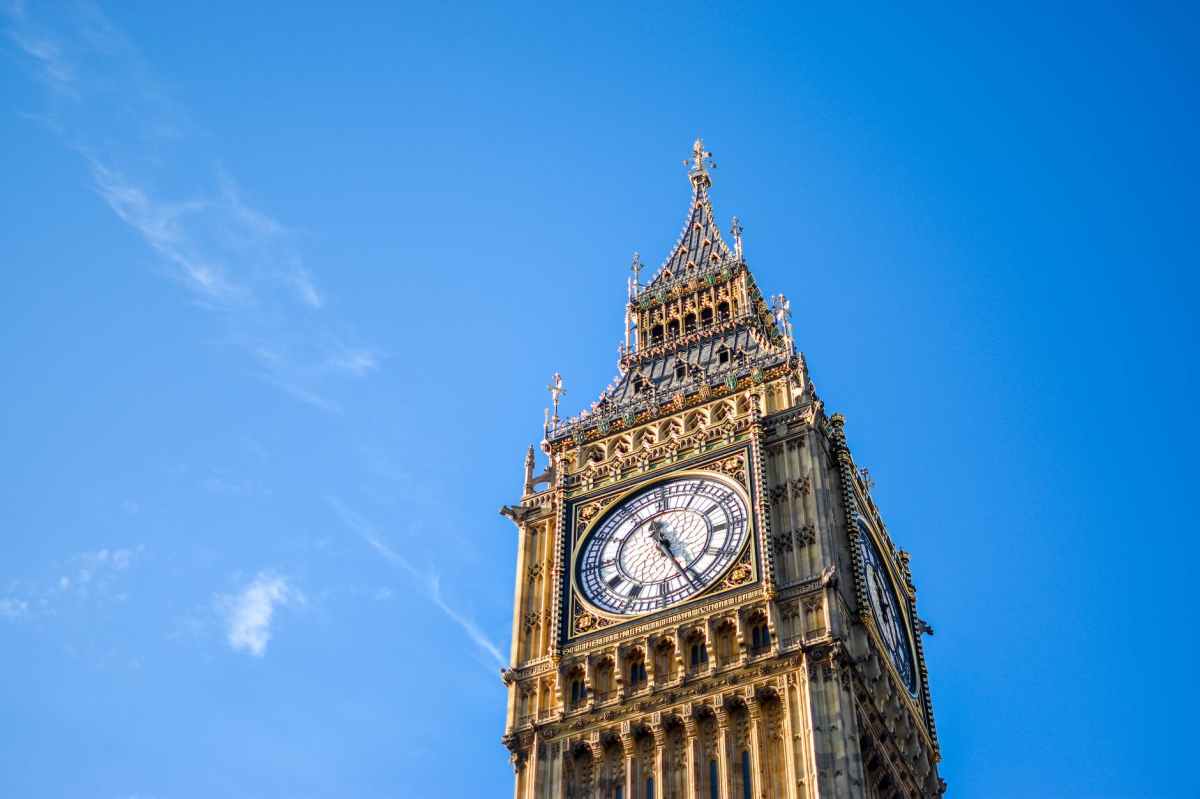
The UK Houses of Parliament have become iconic and symbolises the UK throughout the world. Big Ben, the clock tower, is in the Gothic style. I had no idea that this revival of the Medieval impacted the choice of Government Ministers. I’ve been shaken. I hate to use the words but – we’re all doomed[4].


[1] German: Kölner Dom

[2] https://britishheritage.org/en/roger-moore

[3] https://en.wikipedia.org/wiki/American_Gothic

[4] “We’re all doomed!” the classic catchphrase of Private Frazer in Dad’s Army.

Next Please

There’s no celebration. No fanfare. Today, the UK get a new PM. The 4th in 6-years. We have seen Cameron, May, come and go. Now Johnson is going in favour of Truss. If there’s a celebration, it’s that Johnson is going out of Number 10 Downing Street. The removal van is, no doubt, fully laden.

This is a transition that needs to be made as quickly as possible. For too long the Johnson cabal has been lingering and doing little of any use to the nation. However, the jobs are distributed it’s a time when decisions must be made fast, but with a degree of smart flexibility.

Truss has none of Johnson’s ability to bluff and shtick. The new PM has a delivery that’s wooden and gaff prone. Nevertheless, Tuss has beaten others who would dearly love to be in the hot seat. Although, there’s good reason to question why anyone sane would want to be PM in September 2022, given the vast size of the in-tray that is waiting.

Smaller taxes and smaller Government may have been Truss’s shop window to Tory members but that’s not what’s necessary to dig the country out of the doldrums. This is a time for intervention. We have markets that are actively working against the interests of the British people.

Denying the aftereffects of Brexit also needs to go in the dustbin. It’s only by recognising a problem that a better path can be taken.

The last thing we need is a laissez-faire leadership. The textbooks of the Reagan era do not contain the solutions to the problems of the 2020s. Immediate changes to the energy market are needed. Regulation is a major part of those changes. Not micromanagement but structural change. The accumulation of huge profits because of our peculiar regulatory structure can’t continue.

On this momentous day, change must happen. However, as a word of caution, that transformation must not disregard the real and urgent nature of climate change. If our hot summer wasn’t an indicator sufficient to catch the attention of the new PM, and whoever is appointed as energy secretary, then look at what’s happening in Pakistan[1].

Winter is coming. Short-term measures must prepare us for winter, but the long-term perspective is vital. Not only do we need to decarbonise but reducing demand for energy for heating is achievable. For too long the benefits of improving Britain’s housing stock have been neglected. We don’t need more spiel and the hands-off approach should be for the dustbin.


[1] https://www.msn.com/en-gb/news/world/pakistan-floods-more-than-450-children-killed-in-e2-80-98horror-show-e2-80-99-with-death-toll-feared-to-rise-further/ar-AA11uXnL

Do something

Understanding British reticence is part of understanding Brexit. This phenomenon is not new. Not new at all. It maybe culturally embedded. There’s an array of wonderful cartoons from Punch on the theme.

The late 1950s were peppered with such an inclination to paint a colourful picture: “You’ve never had it so good[1]” but closing a blind eye to unemployment, industrial stagnation, threatening Russians, and the aftermath of Suez. Substitute inflation for unemployment and Brexit for Suez. It’s all too familiar.

The early 2020’s is the era of unwillingness to do something about Brexit or talk about its damaging impact. All the time knowing that an accumulation of evidence all points one way. The nation is playing the 3-monkeies, in pretending that the facts don’t matter. It’s a lack of moral responsibility on the part of politicians who refuse to accept facts, looking the other way or faking ignorance.

Today, we see that Britain’s Brexitism, if there is such a word, is dedicated to a permanent anti-European sentiment. We see it in national newspapers like The Telegraph all the time. We hear it from would be political leaders. I’d even say we smell it.

This is done by politicians and establishment figures to preserve the sanctity of the 2016 referendum and as a means of explaining daily political failures. There must be a wild European ogre on the horizon otherwise the danger is that people might blame Brexit.

There are more successful times when the national code was discretion, pragmatism, and realism. These options have been thrown out of the window by the true believers in power. Such wise options are seen as “lefty” or U-Turns.

Johnson’s Government has capitalised on British reticence. Indications are that his successor will do the same, if not more so. The ideology of Brexitism is an over-simple belief. Which maybe explains why it spawns so many meaningless political slogans.[2] If it was complicated or in touch with reality the ideology would be more difficult to sustain. Hence the Brexiters inclination to capitalise on British reticence.

The means to break this destructive chain, whose links go from bad to worse, is radical change. The important part is that it must be change that the British people want. I suspect the conditions of that change are brewing. The next General Election must not be more of the same but under a different colour. There must be higher matters on the table when the country next decides.

POST: For balance, I’ll put the case for the Brexiters. The Brexit project has failed because the “liberal” and “lefty” establishment and outsiders that have sabotaged it. That is the civil service, the unions, the opposition parties, the judges, lawyers, the media, including the BBC, the banks, including the Bank of England, industrialist, immigrants, local government and anyone who isn’t a Brexiter and those countries that are punishing the UK. If that doesn’t work they then blame Harry and Megan. Yes, it is that mad.


[1] Conservative slogan in 1959.

[2] Get Brexit Done. Brexit means Brexit.

Sun & Wind

My morning routine includes switching on the radio. That already marks me down as being of a certain age. News and current affairs isn’t always a cheerful way to start the day but, at least, as a result I feel a bit better informed about the world and its ways.

Listening to Vince Cable[1], at the end of the BBC’s Today programme this morning[2] I agree. [At run time 2:37]. Sir John Vincent Cable, yes that makes me even more inclined to listen to him, has a wealth of knowledge and experience and puts his case well.

Yes, we have had four major shocks to the British economy. The banking crisis, Brexit, COVID pandemic, and war in Europe. Amongst these Brexit was self-inflicted and has cost the UK a great deal. To lump on top of all that we have had incompetence in Government the like of which hasn’t been seen for decades.

The blatant idiocy of suggesting that the answer is fracking to produce more gas and more exploratory drilling is needed are the ultimate in short-term planning. The UK is not the US. Believe it or not, there is a global climate crisis and burning more fossil fuels makes it worse. Short-term planning is one of the reasons that the UK economy is underperforming. Proposing more of that approach is to further embed reckless incompetence.

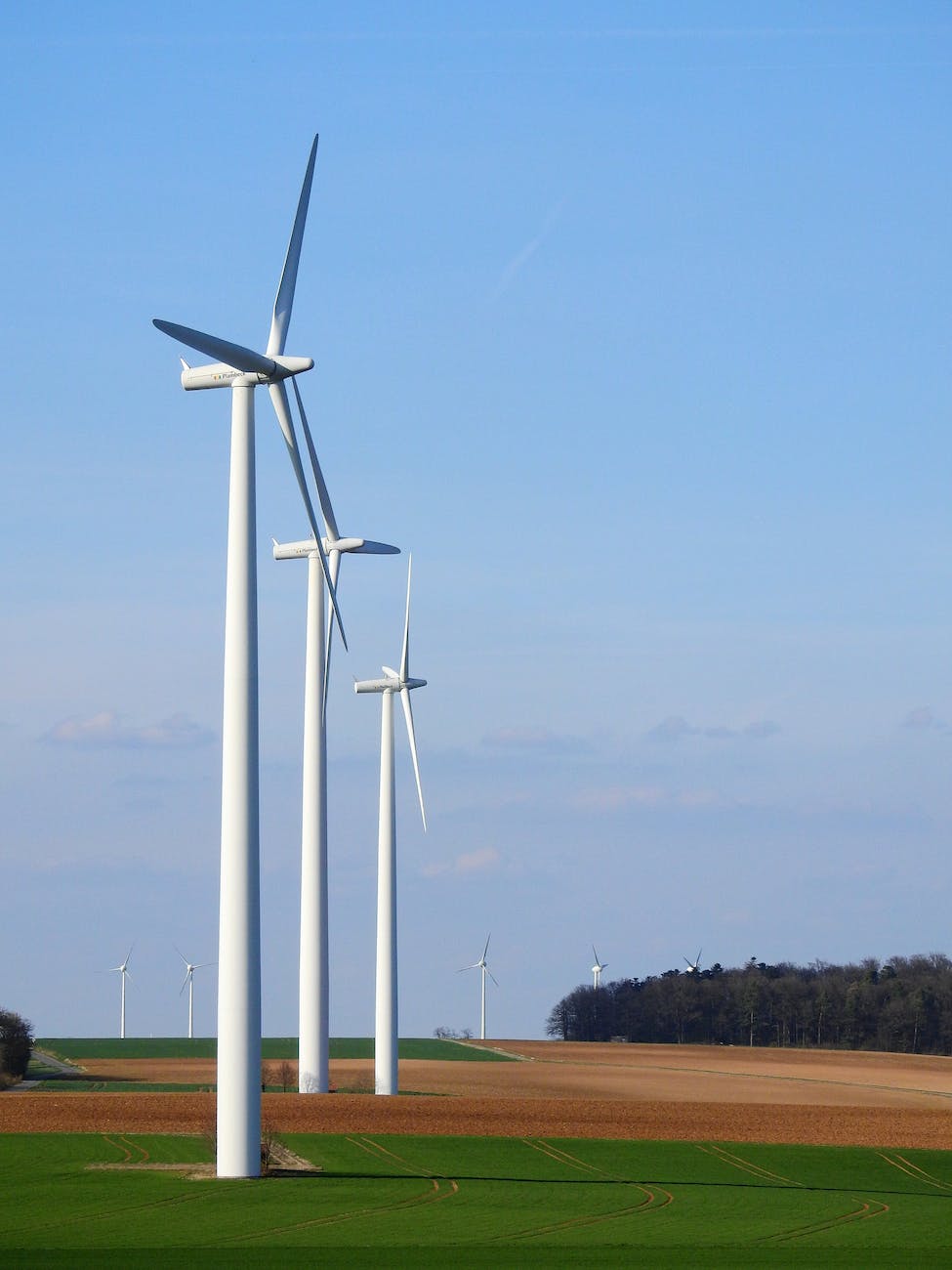
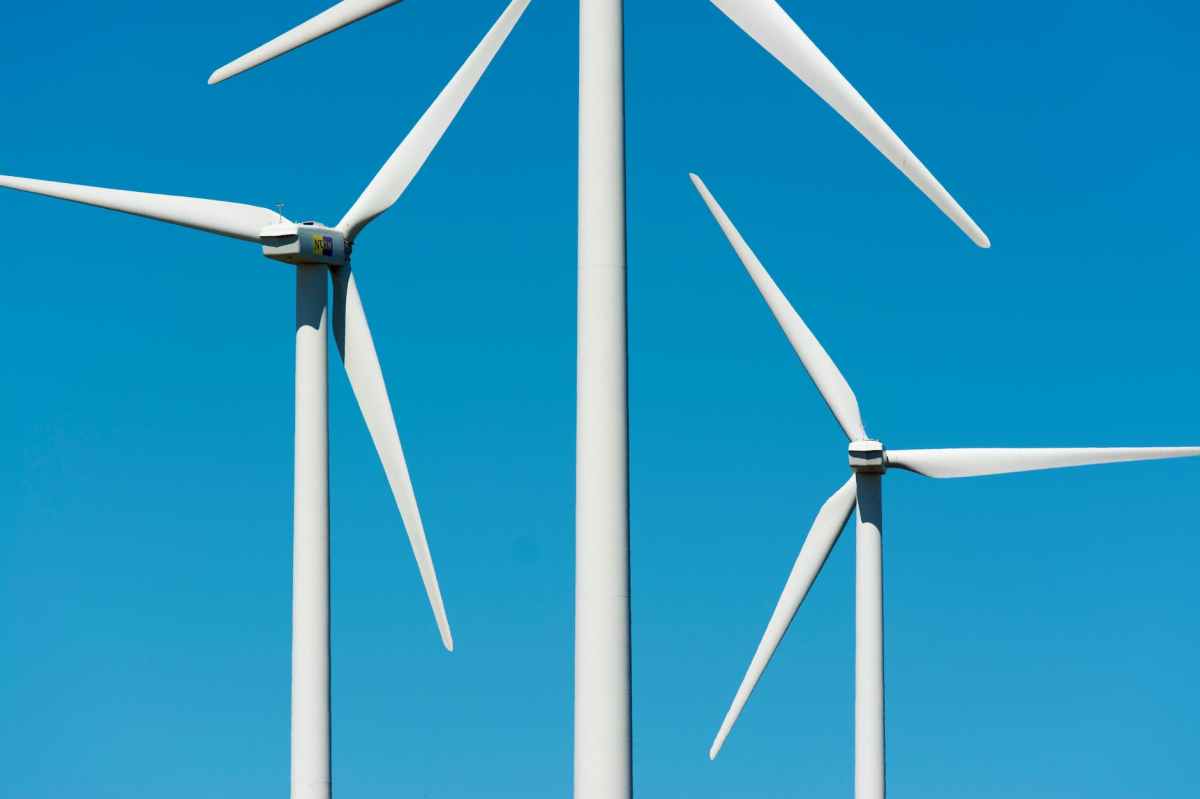
Vince is right. We should make it easier to build onshore wind turbines in the UK. I’m not saying completely deregulate the planning systems. That would be entirely foolish. However, in local development plans we have ridiculous absurdities that name wind turbines and solar farms as a particular danger to the character of the landscape. So, any proposal that is brave enough to come forward gets slapped down immediately. Local politicians run for the hills.

Like all such regulatory issues, there needs to be a balance struck. There are numerous places in the UK were wind turbines and solar farms have a great deal more positive impact than negative. Proposals for renewable energy developments should be given a leg up. The UK is blessed with renewable energy assets in wind, seas, rain, and enough sun to make a difference.

I am first in-line to defend the beauty of our countryside but not everywhere is equal in that respect. Not only that but compared to nuclear power stations of any size, wind turbines and solar farms can be removed after a life of service with little sign of their former presence.


[1] https://en.wikipedia.org/wiki/Vince_Cable

[2] https://www.bbc.co.uk/sounds/play/m001bbsv

Holiday from reality

All aboard for the fantasy rollercoaster. We are in for a new season of irrational excess. The winner of the competition for UK Prime Minister (PM) is to be a character out of Westminster folklore.

Mythology is powerful. It permeates our lives in the snap assumptions, unconscious bias, and it races through the pages of the tabloid press and social media.

I’m culpable. It’s that click-bait headline that stimulates an instant response. It can be as few as six words. “PM chews gum and walks too.” Immediately, the instinct to disagree is triggered in my mind. How can that be? So, I unwittingly join an avalanche of rancour and feed the machine.

People are more than the professional polarisers would like us to think. However, the idea that is a let-out clause for preposterous nonsense is not one that should stick. A candidate who wins votes by peddling blatant right-wing gibberish is dangerous.

For all the Brexit promoting fiction he is guilty of, in this case, former Minister Michael Gove[1] is right. It’s a nice journalists turn of phrase, being “on holiday from reality”. This is addressing Truss’s proposal to cut taxes as inflation takes-off and the cost-of-living presses hard on us all.

Pertinent when the Johnson, caretaker PM is holidaying. His would-be successor likes to pretend to be a next generation Thatcher but never has such a claim been more wayward. Thatcher wasn’t an advocate of ungrounded economics.

Back to the human capacity to believe political fantasies. It’s hard for progressives and more rational thinkers to accept but it’s real. Once upon a time there was a “centrist” wing of the UK Conservative Party that would debunk childish economic fictions. With a few exceptions, those people are now mute or considering their futures.

Since the 2016 EU referendum, the UK Conservatives Party has been transitioning into a version of the UK Independence Party (UKIP). These crude libertarian junkies have taken control. Brexit is not permanent. In fact, healthy national politics is dynamic and in-tune with what people are thinking. Unfortunately, a small self-selecting constituency is picking the UK’s next PM.

Get ready, the national rollercoaster ride is about to get a lot scarier.


[1] https://www.msn.com/en-gb/news/uknews/michael-gove-says-liz-truss-is-on-holiday-from-reality-as-he-backs-rishi-sunak-for-pm/ar-AA10Rtgq

Flight, Risk & Reflections 6.

It’s almost unnecessary to say that there’s little time left to secure an EU-UK deal this year. It’s now October. This week, the European Council has a 2-day Special Summit in Brussels. They meet again at a European Council Summit on 15th and 16th of the month. There’s a European Parliament plenary session between 19th and 22nd October too. Each of these is an opportunity to converge on an EU-UK deal, sign it, and ensure it gets ratified.

It might be apparent from my writings, as well as the media reports that the ups and downs of speculation about any potential deal have reached irritating proportions. One week a positive mood, next week a negative mood while progress on resolving Brexit issues continues at a snail’s pace.

In the UK Parliament, the UK Internal Markets Bill has passed on 3rd reading by 340 to 256 votes. Thus, the intention to break the existing Withdrawal Agreement with the EU has been signalled[1]. None of this peculiar negotiating dance seems to make much difference.  Extra costs, more red tape and shrinking investment continue to plague the UK economy.

When challenged about the growing Brexit costs, UK Government Ministers just say that’s an inevitable consequence of leaving the EU[2]. There’s no longer any attempt to justify new regulations other than to blame the EU.  With the UK planning to break a recently agreed deal, it makes it difficult for Europeans to have trust when ratifying the next one. 

The latest joint statement[3] coming from both side of the negotiation is short, but it does hold out hope for a deal. Trouble is that both sides keep saying the “ball” is in the others court. 

World-wide aviation continues to be buffeted by the coronavirus pandemic[4]. Millions of jobs hang on the line. Not only that but the hospitality and tourism industries are reeling as the downturn shows no sign of ending.

Recently a quote from Paul Everitt (aerospace trade body) summed up the situation with understatement: “It’s not a happy place for us to be.”


[1] https://www.prospectmagazine.co.uk/politics/internal-market-bill-break-international-law-brexit

[2] https://twitter.com/i/status/1311588865896058880

[3] https://ec.europa.eu/commission/presscorner/detail/en/statement_20_1821

[4] https://twitter.com/i/status/1305440885212094465

Flying, Democracy and Safety 8.

IMG_2082

Halfway through 2020. What a different kind of year than the one we’d expected. With 20-20 hindsight I’m sure we’d have approached it differently too. In that phrase, 20-20 is a reference to good vison but it could equally have been a joke on the year 2020. Now it’s July and Germany’s EU Council Presidency starts. Their theme is: “Together for Europe’s recovery” #EU2020DE[1].

It’s strange that during the years of Brexit debates those who supported it said that leaving the European Union (EU) would mean a break from competition rules to give Britain the opportunity to boost its own industries. What has happened recently has been the complete opposite. In the face of COVID-19, European Governments have been providing support to their aviation sector, but the UK has not provided similar support.

Now, UK Prime Minister Johnson repeats that the UK is ready to walk away without a deal with the EU if no agreement can be reached in what remains of the time available. At the same time, he’s “optimistic” that there’s a “good agreement” to be reached[2].

If the UK exits the mutually beneficial Withdrawal Agreement without a sound long-term deal, the effects will be felt by everyone[3]. With global tensions between many Countries and China continuing to mount, this is foolish.

Here we go again. The UK’s Conservative Government is getting more Brexity as the people of Britain are getting less Brexity. A recent European Social Survey has found support for Brexit has fallen to 35% of voters while a majority would prefer the UK to be in the EU[4].

The aviation sector hasn’t had a good week. Airbus plans to cut 15,000 jobs amid COVID-19 fallout. However, British politicians would rather talk about fishing than aviation. Yet, fishing contributes £1.4 billion to UK economy while aviation contributes £22 billion.

UK Foreign Office travel advice and the national quarantine continue to make it difficult for anyone to plan to travel. Portugal, a Country that the UK has always had excellent relationships with, has been left out in the cold.

The world’s biggest trading block is on the UK’s doorstep.  The bare-bones of a trade deal could happen but making it more difficult to trade with the EU seems unwise to say the least. Again, it has been conformed that the British membership of the European Union Aviation Safety Agency (EASA) will come to an end on 31 December. Historians will look mystified at this period. Governments don’t normally work assiduously to diminish their place in the world.

[1] The programme for is now online on http://eu2020.de.

[2] LBC on Friday, 03 July 2020.

[3] https://www.ft.com/content/e4da78ae-a428-4466-9721-d3841cc0e005

[4] https://ldeg.org/en/article/2020/1366373/survey-finds-35-want-brexit-while-57-back-rejoin