Navigating Heights

If I were to explain, the reasoning would go like this. It’s good to have a vivid imagination. As an engineer, it’s essential to be able to create a mental picture of what’s happening. But there’s a downside. Looking at a situation and seeing more than is there, opens the door to imagining all sorts of scenarios that are unlikely.

I’m talking about that experience of peering over a cliff edge to see what’s there. Curiosity being a strong urge. Then pulling back in fright of falling. Often when the ground is solid and safe. Often when nothing more than a spark in the imagination creates an unreasonable fear of falling. The fleeting image I have in mind is looking down at Beachy Head Lighthouse[1].

I have a curious relationship with hights. No, I’m not terrified of heights. It’s just that now and then that fear of falling does kick in. This feeling could be embedded or learnt from an early age. My mother tells a story of me as a toddler being halfway up a ladder. Sacring her. Me being oblivious to any danger and coming to no harm. Growing up on a family farm there was innumerable hazards around every corner.

One of the riskier things was to climb up the haybarn roof. This was an open steel framed structure spanning several bays. Corrugated sheets made up its roof. In the UK, we call these buildings a Dutch barn. This mostly refers to the curved shape of the roof. From the top of the barn, it was possible to see the whole farmyard.

Last week, I hiked around the Caldera de Taburiente on La Palma. I learnt that the term caldera has Spanish origins. So, I was in the right place to assess any fear of hights that might linger in my psyche. The Caldera de Taburiente is more than 2000 m deep.

Even the roughly hewn paths, some restored from local landslides, didn’t phase me. It’s as if, because I was one of thousands who have passed the same way, the dangers where contained. In fact, there were not. Some of the well-worn slippery stones underfoot had to be approached with a great deal of caution. Loose rocks and sheer drops had to be navigated with care.

The Caldera de Taburiente National Park is a magical place. It has a Jurassic Park feel about the place. Given that it’s not much more than a few million years old the place is far to youthful for dinosaurs. It has its own special natural beauty.

My aging but persisting vivid imagination had plenty to occupy itself as we climbed and descended in and out of the park. The whole hike was about 16 km. This was the second time I’d taken this circular route. What surprised me was the hard parts of the climb and decent following a riverbed on the way out. That part I’d conveniently forgotten.

No, I’m not terrified of heights when there’s solid ground underfoot. They do however have the capacity to scare or at least summon up a lot of extra care. I hope that inbuild sense of self-preservation never fails me.


[1] https://www.beachyheadlighthouse.co.uk/

I’m Mandy

It’s something to ague about. My view is that pop songs don’t have to have “official” meanings. If you listen to a song and it means something to you then there’s no point in arguing with someone else about what it means. Well, not much point other than the pure fun of it.

That doesn’t stop an argument. It’s like answers to quiz questions. There’s that strong desire to be the one with the right answer. With a song it’s not so easy to be literally right or wrong. There may be clues left by the song writers or a generally excepted interpretation. It’s not a subject to place major bets on. There’s likely to be no definitive answer.

This week, I popped into a small shop that is full of retro bric-a-brac. In one corner there’s a display of second-hand vinyl records. 45s and LPs nicely arranged in alphabetic order. I find it fascinating what’s fashionable, and thus pricy, and what’s not. This trendy little shop aims at a student market. What caught my eye is an album from the band 10cc[1] from 1976. It has a colourful fold-out album cover which is a story in of itself. It’s a real photographic artwork. And strangely profound in the age of the mobile phone. Lots of people holding telephone handsets.

“How Dare You![2]” is an immensely creative but almost incoherent jumble of wandering songs. It’s a kind of progressive rock music exposé but much more popular, in the sense of pop. And in its time, it did well for the band, giving them two charting singles from the album. It’s a 70s vinyl masterpiece that will not be entirely lost and forgotten.

10cc is part of my student history. From what I could see from the price, it’s not so fashionable with today’s students. In good condition, for £5, I was more than happy to spend my hard-earned cash. At the till, the young lad who was minding the shop took one look at the album cover and asked: do you mind if I take a photo of that? We both agreed that streaming music is fine but there’s something more satisfying about handing physical artwork like this album cover. It’s tangible. It’s real. It’s an artifact.

The most notable song on the album is “I’m Mandy, fly me”. What is known about 10cc and their song “I’m Mandy, fly me” is that it was kicked off by a National Airlines poster. Like so many American airlines, National got swallowed-up and those who swallowed them up suffered the same fate. But in the 70s they were going strong. What they will be remembered for is that one of their publicity stunts caused controversy. It’s the sort of situation that kicked-off protests and rightly so.

In the early 70s, to sell their long-haul seats National’s posters ran a slogan saying: “I’m (flight attendant’s name). Fly me.”. The sexist nature of the advertising slogan got heavily criticised. These airline posters must have been up in Manchester, UK. Enough for seeing them to inspire 10cc to write the song “I’m Mandy, fly me”[3].

What’s it about? I think it’s pure imagination. Wandering a street, seeing the poster and going off on a fanciful muse. In my view it’s not literal. There is no plane crash. The fantasy is that the flight attendant in the poster rescues the singer from the dullness of everyday Manchester. After a few moments he snaps out of it, realises that he’s been daydreaming, and life carries on.


[1] https://www.10cc.world/

[2] https://en.wikipedia.org/wiki/How_Dare_You!_(album)

[3] https://genius.com/10cc-im-mandy-fly-me-lyrics

Ethics of Medication

I don’t know about you but the whole idea of medicating people to increase the prosperity of society has a terrible echo of the worst kind of politics. Now, if we change the “p” word to protection of society, a policy of medication might make some reasonable sense. The COVID pandemic taught use that individual freedoms are not absolute. We know that allowing people to spread infection, whenever their personal beliefs, can kill other people. Reckless actions did exposed people to danger. Big name politicians did some dam stupid stuff just because they wanted to side with those who believed irrational, unscientific nonsense.

A UK Labour Health Minister saying that obese people would benefit from a jab so that they can get back to work makes me feel uneasy. It’s one thing to recognise that society has a problem with obesity but it’s entity another for the States to impose medication on specific groups of citizens. Expensive new medication that that.

I know it can be argued that the cost of obesity to the National Health Service (NHS) is high so there’s no zero cost answer. Having hammered down smoking deaths over decades of work it’s now obesity that’s the great societal challenge. The line between personal freedoms and social demands can be a fuzzy one.

The jab in question may have become fashionable as a weight loss aid[1]. That doesn’t justify a UK Minister, with all the power of the State, suggesting that overweight people be put on a regime of injections. And if they say “no” to the regime then be penalised in some vague manner.

It’s known that these new weight loss drugs have side effects. No everyone can take them without consequences. These drugs should only be used under medical supervision. That said, many people do take them without recourse to advice from a doctor.

To the Minister I say, don’t ague about the cost to the economy of obese people. Please ague for helping people to make weight management work for them as individuals. Obese people are not one amorphous mass of idle slobs who sit on the sofa all day. The Daily Mail characterisation of bludgeoning swarms of people burdening society with their indolent ways may chime with populists and the emerging Conservative Party. It’s no way for a Labour Minister to address a live challenge. 

National proposals to give unemployed obese people a jab to get them back to work has a ghastly ring to it. Yes, it’s not saying we (society) should send them down the salt mines but when the economic argument is the top one it does dehumanise the target audience.

Weight loss jabs may continue to have potential befits for many people. Let’s say that we are talking about health benefits, so that individuals can play their role in our society, whatever that role might be. State officials who attempt bring shame on people living with obesity, that’s just plain nasty.


[1] https://www.bbc.co.uk/news/articles/c981044pgvyo

Art and Emotion

Daily writing prompt
Who are your favorite artists?

Nice question. I can’t put one artist above all others. It’s a ridiculous question to ask. Not only that but as the days go by my likes and dislikes shift like sand on a beach. It’s not as if I am wholly inconsistent. It’s that moods and emotions move. Intangible criteria are not fixed in time and space. Top that with constantly learning about works that are either new or previously mysteries to me. The questions are never ending.

For a start, my thoughts instantly go to the visual arts. What image has had such an impact on me that I want to keep going back to it? In going down that road I’ve not considered dance, music or literature. Is one medium more important than all the rest? Of course not.

Although, I cannot forget seeing German artist Katharina Fritsch big blue chicken (cock) in London, it’s her Mouse and Man[1] in Dusseldorf that sticks in my mind. Now that’s potent.

I think David Hockney[2] is oversold but I wish I could paint like him. His brush dances. Forget his portrayal of people it’s the forest, the trees, the country lanes that hit me the most.

Edward Hopper[3] is a master of scenes placing people in situation that are mundane but are far from dull. Transforming the ordinary into the exceptional.

I’d be mad if I didn’t mention Vincent van Gogh[4]. So many great images to choose from. In this case I’ll go to his Irises. I do enough gardening to spend time looking at flowers. Capturing the vibrance of nature so that the life force of the flower cascades off the painting, now that’s magic.

Caspar David Friedrich is on my list. I saw “Wanderer Above the Sea of Fog” on display at Hamburg’s Kunsthalle. It’s an often-used image. Put aside the corruptions, the original has a message that says to me – there’s always something beyond what you can see.

And that’s just a 10 minute list.


[1] https://www.iainmasterton.com/image/I00006p4TTPTNQtE

[2] https://www.hockney.com/index.php/works/digital/arrival-of-spring-woldgate

[3] https://www.gettyimages.fr/photos/edward-hopper-paintings

[4] https://www.vangoghgallery.com/painting/irisesindex.html

Illusion of Sovereignty

Desperate for something to say because their arguments have been shot down in flames, those who continue to support Brexit raise the subject of sovereignty. It’s as big a red herring as you are likely to find. That said, the notion of complete autonomy does have a resonance with one part of the political class.

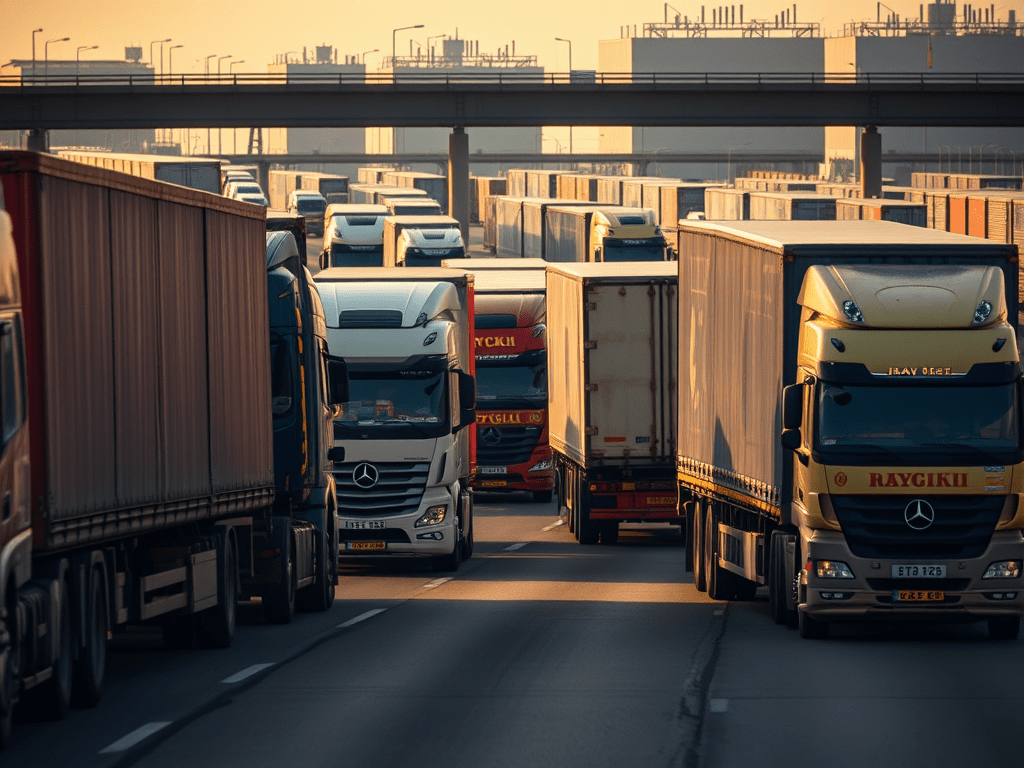
One example of reality being different from political rhetoric is one I regularly see. I’m driving more than I have done in a while. Mostly, on the M4, M3 and M25 motorways. In this country some freight goes by rail, but the overwhelming amount of freight goes by road.

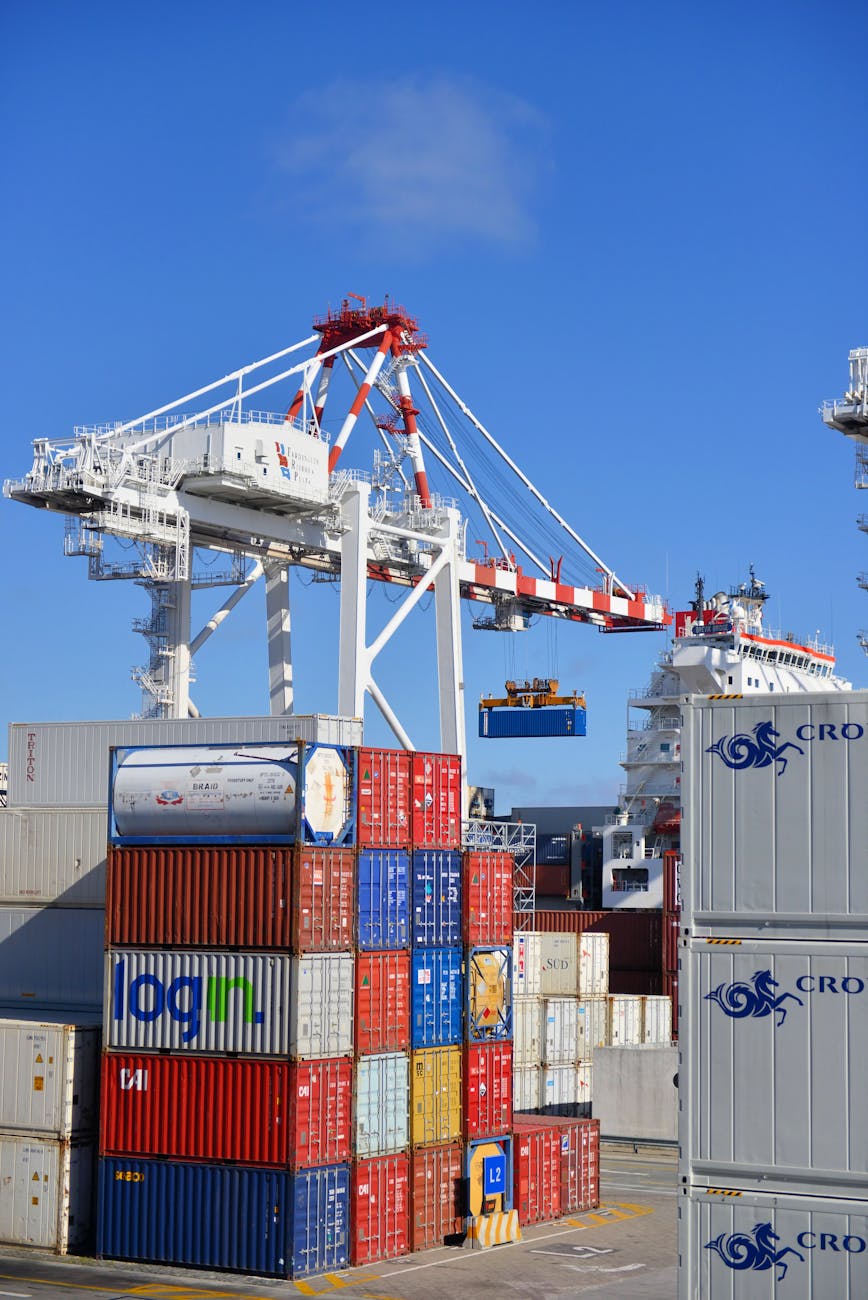
A sign of our times has been the construction of massive warehouses close to motorway junctions. Strategic non-motorway routes too. I do mean massive steel sheds. Counting the number of football fields covered by these structures doesn’t help. I’ll bet some of them can been seen from space.

Back to the British roads. 6-wheelers, 8-wheelers, 12-wheelers, big heavy trucks often showing the wear and tear from journeying great distances depend on the motorway system. A constant flow of heavy goods moves day and night.

Looking at the trucks, some have UK registration plates, some have UK registration plates thrown over their original plates. Most drive under the registration plates of a country of origin or wherever their commercial operations are based. Each plate tells a story. LT is Lithuania. PL is Poland. H is Hungary. NL is Netherlands. D is Germany.

So, every day we have tens of thousands of trucks maintained and operated to standards set by the European Union (EU) on our roads. They are left-hand-drive. Their speedometers are in kilometres per hour.

It occurs to me – what does “sovereignty” mean when everyday looks like a day driving?

For sure, no British inspector checks the condition of each one of these trucks on a regular basis. For sure, truck driver’s hours are only occasionally checked. For sure, maintenance records are locked away in a filing cabinet.

In the world of absolute sovereignty none of this should be allowed. In fact, much of the above-described transport operations are continuing as they did before Brexit but with extra paperwork attached. Extra costs.

It’s an observation. It’s easily made when stuck between a couple of heavy goods vehicles on the motorway. Pragmatism may have led to a blind eye being turned to reality. We shouldn’t delude ourselves that Brexit has delivered anything useful in this respect.

Rain and Life

Rain is inevitable. Rain is perpetual. Rain is ingrained in the fabric of life. Britain is a series of islands that’s buffeted by the winds that sweep across the Atlantic. Not always but mostly. 

We complain about it. We lament it when there’s not enough. We are shaped by it.  If ever there was a better sign of what’s called “small talk” it’s to talk about the weather. Having a conversational default like this one is deeply embedded in our culture.

The line to draw is one between the “normal” amount of rain and the periods when the torrents seem almost biblical. Record breaking is a talking point. Can’t ignore it.

According to the Met Office[1], Berkshire, where I am, received 3 times its average September rainfall. Southern England had its wettest September since 1918, and its 3rd wettest on record in a series from 1836.

Natural variations are to be expected. Afterall, what would there be to talk about if the only thing to say is that the weather is the same as yesterday, or last week. That is the fate of people in some parts of the world. No such predictability for our northern hemisphere islands. Up at above 50 degrees of latitude we see a moderate variation in almost everything.

The key word there being “moderate”. Months that are as wet as this past September, do impact the regular cycles of the seasons. Generally, it’s been warm too. I can’t help thinking it’s been a good year to be a tree. Roots have had a lot to soak up whenever the need arises.

Is what’s happening an indication of climate change? I’m not going to be the one to put my hand up on that one. I suspect that a greater degree of variation in the weather is a broader factor.

For the farming calendar this year has already been a strange one. Almanacks that tell you when to reap and sow might need revisiting. Whether cows will need to develop webbed feet or horded of ducks take over, I’ll leave that to the imagination.

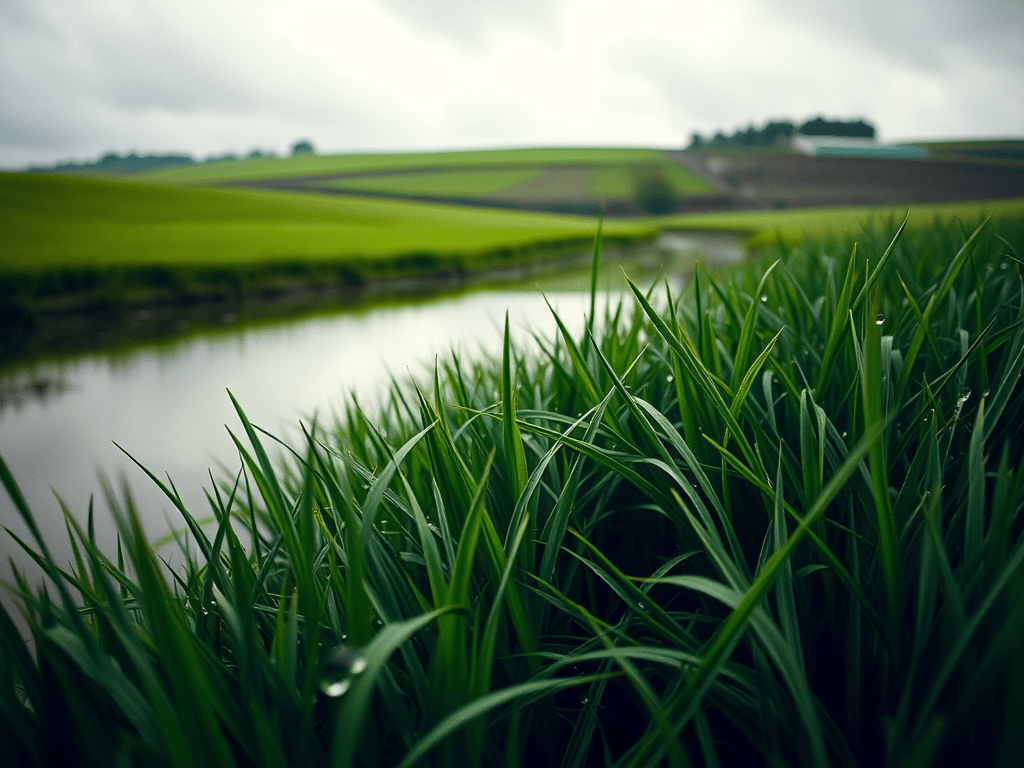
For me, since January, living near a river has become a source of curiosity. Luckily our house is many meters above the worst-case scenario for a sustained flood. The river runs fast. It’s a chalk stream. What’s interesting is that its level is highly dependent upon the degree of soaking that the surrounding land has received. Just now, the green fields around are like sponges that are nearing their capacity. I’m sure, that’s unusual for early Autumn.


[1] https://www.metoffice.gov.uk/about-us/news-and-media/media-centre/weather-and-climate-news/2024/record-breaking-rainfall-for-some-this-september

Changing Political Landscapes

You can tell the type of person I am. I occasionally stop for a morning coffee in Gail’s[1]. Overall, I favour cafe Nero. Better coffee. An Italian vibe. That said, the expanding up-market bakery has a pleasant ambience. They are taking over and restoring the more regal old bank buildings of the High Street. Britain’s national banks have long since moved out.

In the last 9-months, I’ve moved from a town that had both, to a town that until recently had only one. It wasn’t my influence, but a Gail’s has opened a new shop in recent weeks. Post election, I might add. I’ve moved from a Conservative town to one that is no longer a Conservative town.

Anyway, there I was doing a bit of lunchtime shopping in Waitrose. It has a small cafe in one corner of the supermarket. Stopped for a ham, egg and chips and a flat white coffee. On a rack on the wall is a display of daily newspapers. I’m pleased to say that there’s a weekly local newspaper there too.

The Times and The Daily Mail are there for the delight of their customers. Two national newspapers that I am not going to spend my hard-earned cash on unless I’m desperate for something to read. Both tabloids aimed at a broadly conservative readership. 

The Mail is serialising the writings of former Prime Minister Boris Johnson. No doubt he’s getting an astonishing amount of money for his latest scribblings. Journalism was his calling.

To sell a book about political life the book certainly mustn’t be boring. Charity shops are littered with shelves of books from long forgotten personalities. My observation is that Johnson has taken aim at an audience that still thinks of him as a worthy premier.

I couldn’t resist. Had to speed read the parts that spilled the beans. The parts that dug the dirt. The revelations. Except that’s not what I read in speech bubble paragraphs. First off, I was remined of The Beano[2]. The world’s longest-running comic for children. Johnson’s language assumed my reading age to be about 12-years old. A jolly wizard wheeze ticking-off those fancy pants or misery guts who haunted his days in power. Apart from saving the known universe his anecdotes were mostly to the detriment of the people mentioned. One exception being his dad.

In a moment of reflection, it’s astonishing that Johnson once led this great country. He led London too. What on earth were we thinking? How did it happen? One or two more serious books have gone down that road. I was recommended to read “Johnson at 10 by Anthony Seldon[3].” By the way, you can tell the type of person I am. Earlier in the year, that book suggestion came from the person standing next to me, wating to go into the BBC Proms at the Royal Albert Hall.


[1] https://gails.com/

[2] https://shop.beano.com/

[3] https://www.theguardian.com/books/2023/may/24/johnson-at-10-by-anthony-seldon-and-raymond-newell-review-the-great-pretender

Why the UK Should Rejoin

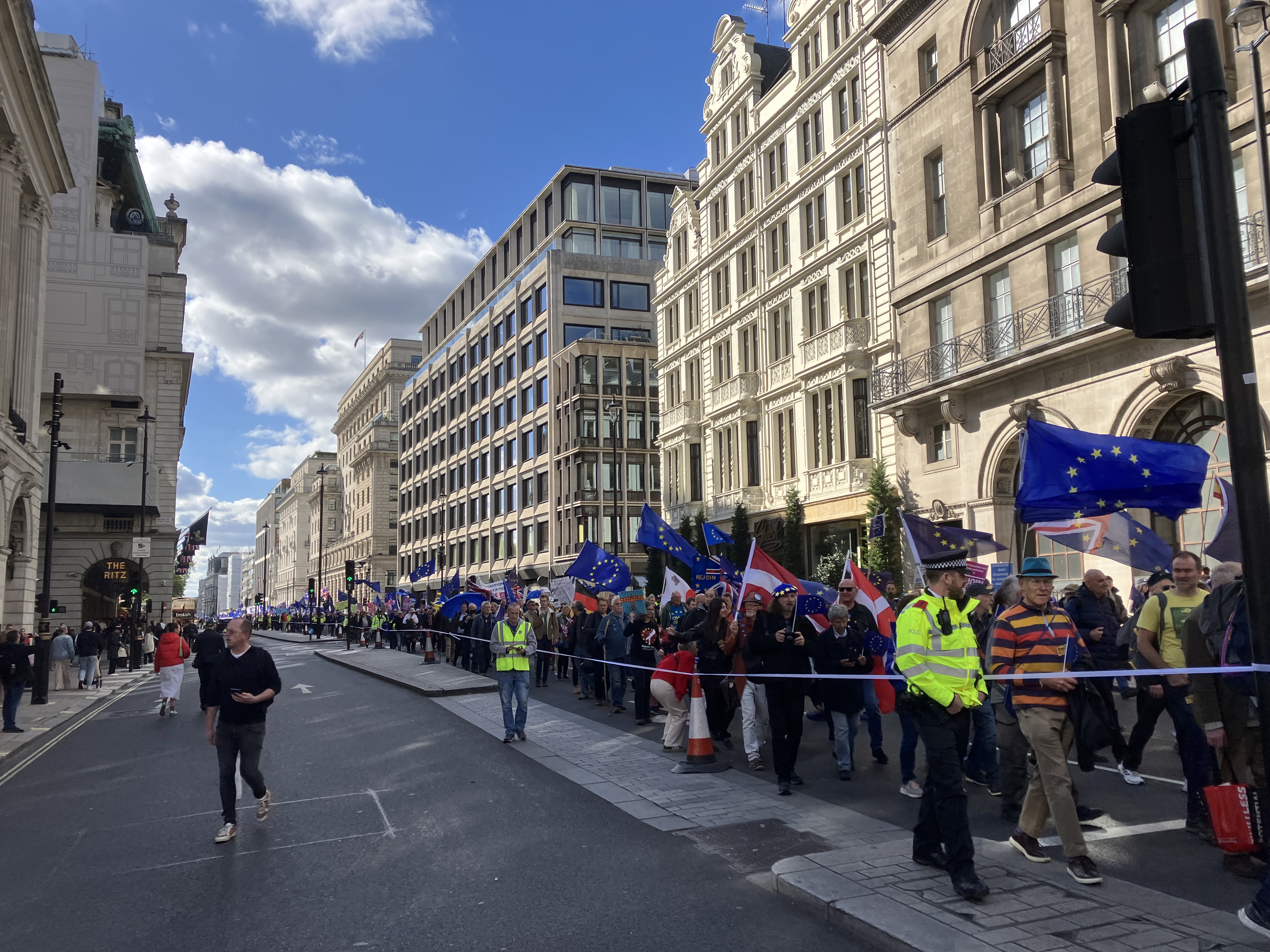
Fine, I’m happy to admit that my march, with thousands of others, through the streets of London on Saturday was not everyone’s cup of tea. There are a lot of people who support the idea of a return to European Union (EU) membership but are reluctant to raise the issue just now.

Often cited is the wave of right-wing politicians who are gaining ground in Europe’s larger countries. It’s as if they are going through their own Brexit like political moment but without anyone of any consequence advocating throwing away their EU membership.

Maybe the UK is ahead in this respect. We’ve been through the confusion and turbulence of the political right-wing eccentrics moment in the sun. They were never mainstream. However, they did hold the reins of power for some disastrous years. Thank God they are now behind us.

I have marched year-after-year because it’s the right thing to do. Tens of thousands from all over the UK have done the same as me. Millions if the numbers added-up from 2016 onward. Our future can be based on cooperation and mutual interests. Ideologically driven conflict and disruption have brought nothing but a lose – lose outcome.

So, what are the arguments for the rejoin movement? It’s all very well to shout at the thing we don’t like. Now, is the time to make the sound solid arguments for the thing we favour.

Let’s take trade for a start. The last UK Government wallowed in gushes of self-praise every time they signed an agreement with any country that was not European. Conservative Members of Parliament wanted to tower over the world like imperial overseers. It was an illusion.

Most of the so called “new” deals that were signed were simply a rollover that meant no change. In fact, more was given away than was gained. All in a desperate attempt to show progress. British farming was effectively shafted by Ministers.

One of the most touted possible “streets paved with gold[1]” was the prospect of a super new trade deal with the United States (US). Under President Trump, the prospect of an advantageous UK-US trade deal was an illusion.

Ironically, a claimed success was the joining of a regional trade block. I know it’s crazy that leaving a gigantic trade block on the UK’s doorstep was followed by joining one covering the Pacific. Yes, the other side of the world. Not only that but the projected gains are minuscule.

EU membership offers, as it did before, access to enormous trade benefits by comparison with what has been achieved since 2016. The numbers speak for themselves.

If the new Labour Government continues with a form of the fibs told during the “Get Brexit Done” phase, then trouble lies ahead. Next door, the UK has the world’s largest trading block. The value to the British economy of Single Market membership exceeds a mishmash of remote and small deals. There’s a positive way forward and it’s staring us in the face.

POST: It’s worth noting that the 1960 European Free Trade Association (EFTA ) was created, to promote free trade and economic integration included: Austria, Denmark, Norway, Portugal, Sweden, Switzerland and the United Kingdom.


[1] https://dictionary.cambridge.org/dictionary/english/streets-are-paved-with-gold

National Rejoin March: Unity for a European Future

The European Movement[1] has been around for 75-years. Yesterday, I was surrounded by a good number of their membership. That, and many Liberal Democrats. People, young and old, from communities up and down Britain. There were lots of people from the creative industries, so badly hit by Brexit. In fact, there were people of every political background marching through the streets of central London.

Everybody had gathered in central London with the aim of reversing the tragedy that is Brexit. I say “is” and not “was” because the disaster continues to have marked repercussions on everyday life. Reclaiming the freedoms that we once had has brought people together in large numbers.

On Saturday, pro-European campaigners made their way from Park Lane to Parliament Square for the third annual National Rejoin March (NRM)[2]. The weather smiled on the gathering. It couldn’t have been better in the light of torrential rain and the endless storms of past days. The sunshine and blue skies warmed my sprit.

The occasional chant of “Boll*cks to Brexit” has been replaced by Reset, Repair, Rejoin. As is the tradition of these events, posters ranged from the more obvious slogans, like #BinBrexit to the imaginative and sometimes bizarre. The group dressed in eye catching elephant costumes had a point to make. The elephant in the room being the protesters theme.

Standing next to me, one young lad asked his mate why he had decided to be on this rejoin march. I thought his response most was appt: “Because I want to be on the right side of history”. To me that just about sums it up. Brexit is an aberration. Eventually, after a great deal of to-and-fro the strong likelihood is that the UK will rejoin the European Union (EU), or its successor. Everything we know points in that direction. It may take a decade. It may take more.

The Labour Party won the 4th July UK General Election, and while it pledged not to reopen the main parts of Britain’s deal to leave the EU, does claim to want a significant reset. So far, the indications are that this policy line is typical political rhetoric, and little more. But it must be said that this is the early days of a new British government. If their claim to want growth in the economy to fuel spending on public services is honest, they would be mighty foolish to discount rejoining the European Single Market.

Thousands gathered in London. This will go on year after year. The diminishing number of objectors, who chant from the sidelines, remind me of the “Dead Parrot Sketch”[3]. For all intents and purposes all the arguments for Brexit have perished, much like the poor parrot. Even when that’s an obvious fact there are still those few people who will defend it to the hilt. As we walked down St James’s Street a well dressed bloke in a side street seemed most agitated. Shouted abuses and ran off. I looked around. We all shrugged our shoulders. I certainly thought – what a sad man.

I’m sure Britain can reclaim its place in Europe. It will take resolve and continuous effort but, as has been pointed out, this campaign is on the right side of history.


[1] www.europeanmovement.co.uk

[2] https://uk.news.yahoo.com/protesters-call-uk-rejoin-european-154046221.html?

[3] https://youtu.be/vZw35VUBdzo

Travel Educator

Travel is the great educator. Fundamentally – yes. My ordinary every day is extraordinary to someone. Just as their ordinary every day is extraordinary to me. There’s so much we take for granted, and we must, that we forget how strange our customs and practice can be.

Even if it’s so simple as bumping into people when they walk on the right and I walk on the left. Or I sneeze and the obligatory and automatic “bless you” takes me by surprise. Greetings can come as a shock too. Whereas if someone says, “are you going the same way?” might be taken as the introductory line of a serial killer in London, in a small country town it’s just a polite inquiry by a genuinely interested fellow traveller.

Does travel teach social skills? I’m not so on-side with that view. There’s no doubt that it can be a way to meet like minded people. That can often, on the downside, be a local bubble. Ending up chatting to likable people who are going through similar experiences. Identifying not with the people around but those who are similarly placed.

What’s a more regular encounter is the tall guy with the sharp elbows who doesn’t acknowledge that the person in the middle seat, namely me, is annoyed by how little care he’s taking with his lanky arms and legs. I suppose, if such occasions teach me anything it’s to not do what is being done to me. Especially when a homeward bound aircraft is on hold, going round and round, in bad weather trying to get into Heathrow. Time stands still.

One of the best realisations that flows from travel is that there’s a common humanity lurking everywhere on the planet. On the other hand, it’s not always obvious or the first encounter. I think, most people sit in the camp of being indifferent or helpful. Yes, a small percentage are out to do no good. Thankfully, they are a small percentage and best avoided at all costs.

Another realisation is that uncomfortable situations, like being lost after having misread the map App on my phone, are all part of life’s colourful pageant. There maybe moments of concern. I don’t like to use the word – fear. There’s generally a pathway back to the more familiar.

I’m not for one moment advocating taking unnecessary risks. Before wandering around any major city, it’s as well to do some research. To get a rough appreciation of the geography and what goes where. Like a layout of the metro map. It’s nice to have tall landmarks that sit of the skyline. The sun and a wristwatch always offer the most rudimentary navigation aides. Knowing that a river crosses the city or tourist congregate in a certain place works at nighttime.

If I probe my decades of memories of travel, a lot of vivid recollections come from unexpected discoveries. Afterall, part of travel is returning home and having stories to tell.