New Day

The UK’s recent elections saw a surge in candidates and new political forces, challenging voters to make informed choices.

We had a surfeit of manifestos that said, this is what we will do if you give us power. Today, we have a stronger commitment, in the form of a speech, saying this is what we will do now you have you given us power. You can’t say you haven’t been warned. Or more positively, at least someone is focusing on the issues that are of concern rather than the nonsense of the preceding administration.

Democracy is about choosing. For the next 5-years a choice has been made. OK, that’s assuming there’s no calamities that bring the new Labour Government to its knees.

At this moment, please give a thought to those who made that national democratic choice possible. I know, I was one of them. 4,515 candidates[1] stood for election to the UK’s Parliament in July 2024. In 2019, there were 3,327 candidates who stood in the General Election. So, this year the crop of candidates was much bigger and thus choice wider. No constituency in the UK had fewer than five candidates standing.

This crop of candidates is to fill 650 seats in the House of Commons (HoCs)[2]. That’s using the word “seat” to mean Parliamentary constituency. Which there are not on the green benches. The HoC chamber cannot accommodate all the Members of Parliament (MPs) that are elected. It’s rather a strange situation in modern times.

More candidates and more volatility. A lot of the strong political ties that people have exhibited in former generations have been broken. In future the UK’s electorate must put more effort into deciding who to vote for on polling day. We see a move in political forces that is new.

I salute you. All 3,865 candidates who have plenty of time to reflect on their experience. Yes, there were a small cohort of eccentrics, but they didn’t get the news coverage that they once did. The Official Monster Raving Loony Party raised twenty-two candidates.

Local identity did play a part. There was a Yorkshire Party, Lincolnshire Independents Lincolnshire First candidate, Portsmouth Independent Party South Devon Alliance, and a sprinkling of similar others.

Since 1985. the deposit in elections to the HoCs has been £500. This is only refunded if the election candidate gets more than 5% of the votes cast. I don’t yet know how many of the 3,865 candidates lost their deposits.

The loss of a deposit by a candidate maybe regarded as an embarrassment. I don’t think it is at all. It takes a certain kind of resolve to put yourself up in front of the electorate. Regardless of the outcome that commitment ought to be applauded. It’s certain; not free of costs in respect of the individual candidate. I’d defend having a deposit as one means of preventing abuse of the electoral system. That said, it should never be higher than it is now and maybe the threshold ought to be halved to 2.5%.


[1] https://commonslibrary.parliament.uk/who-stood-in-the-2024-general-election/

[2] https://members.parliament.uk/parties/commons

Speaking

Politics without passion is like a food without taste. The ancient Greeks sensed this a long time ago. Aristotle and his followers had a way of describing how a speaker should win over an audience. Let’s face it that’s one big part of a politicians aims.

It’s no good at all standing there and saying: we’ve got some fantastic politics, and our values are your values. If no one is listening, you can be the best thing since sliced bread and nothing much happens. I’ve seen a lot of good people who shout in the dark.

The capability to persuade an audience by whatever legal means puts politician A above politician B. It’s not just innate ability although, for those who have it, that is a great asset.

So, here’s the educational bit. It’s certainly something I keep in mind however bad at it I may be. To appeal to an audience, and thus persuade, three different spots need to be hit: logos, ethos, and pathos[1].

As a professional engineer, I know the first one of these categories well. It’s good solid sound logic. It’s the use of reason to construct an agreement. It’s the favourite of technocrats. It’s the 2 and 2 equals 4. Because of the power of logic, it tends to be elevated to the number one tool in the speaker’s toolbox. PowerPoint slide after PowerPoint slide.

The problem is that this approach doesn’t work when the audience is a general one. Brexit is a perfect example. So many of the arguments against Brexit were framed in terms of economic costs and benefits. Logical, rational, sensible and supported by evidence. As it turned out addressing the head and not the heart was not sufficient.

Next on the list of three, Ethos is all about credibility. It comes from the simple question; why should I listen to this person? Is the speaker truthful? It even comes down to simple appearance – do the look the part? Like it or not, I’m not going to be inclined to listen to a politician on a podium sporting a Micky Mouse tee-shirt, wearing clown shoes and mumbling bad poetry. There’s a normal expectation that a credible individual will be polished and professional.

And so, to the last on the list. Pathos is multifaceted. I may talk of music or poetry. Those who can speak with language that evokes strong feelings. Being able to shift the emotions of an audience by evoking beliefs and values can be extremely powerful.

This one is dangerous too. It can tap into prejudices and stir-up destructive as well as constructive passions. If we have a lesson from this electoral cycle, it’s that the overuse of emotional rhetoric in a civilised society needs to be restrained. It’s for each speaker to carefully consider how the message they are sending will be received.

Politics without empathy and passion is dull and unworkable. But exciting public passion beyond a certain point has a cost. The cry for social justice or the anger at a perceived stupidity must be recognised. Overplaying emotion for political gain. Demonising an opponent with vivid words of hate. This is path to destruction. A path to be avoided. A time to stop. 


[1] https://www.lsu.edu/hss/english/files/university_writing_files/item35402.pdf

Solar farms

New Government signs off solar farms. Not everyone happy.

It would be good if we could all agree that the UK needs to recognise the importance of locally produced food and drink. There’re large environmental gains to be made by reducing the distance between production and consumption. Thousands of heavy trucks thunder up and down the inadequate road infrastructure in the UK. Colossal amounts of food waste get thrown away from supermarkets. Questionable preservatives enable supply chains to grow longer and longer. There’s are bad trends.

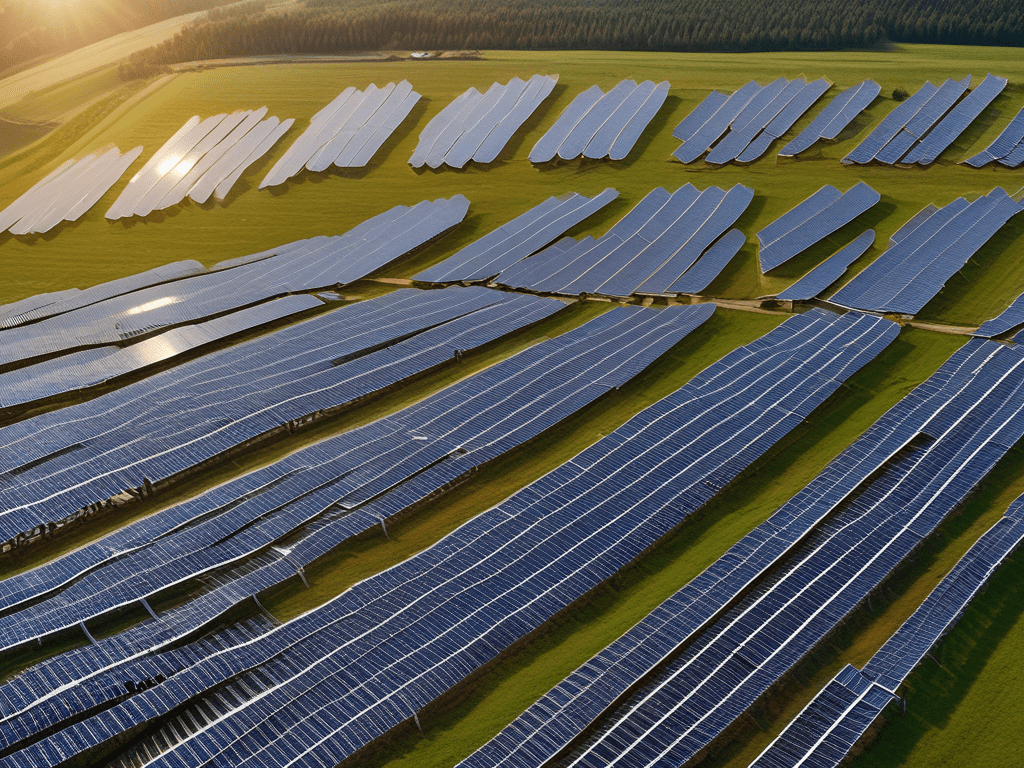
On a related subject, I do have a problem with proposals for large solar arrays that will take out productive farmland. However, that is by no means an objection to large solar arrays, or onshore wind farms for that matter.

It’s not as if we have always been so precious about what we do with our glorious countryside. One observation I’d make is that there has been a huge increase in the urbanisation of the countryside in my lifetime. Areas that were either wild or exclusively used for agriculture are now pony paddocks, car parks, golf courses, housing estates, out-of-town shopping warehouse, fulfillment centres[1], and bypasses. In 50-years, there’s little that remains untouched.

I’d sing “They paved paradise and put up a parking lot” if I could. We really do need to think carefully about what we industrialise and what we preserve and protect.

For me large solar arrays are in the same category as acres of poly tunnels. Both serve a fundamental purpose, and both are structure that can be relatively easily removed. Keeping the lights on and eating fresh food are both part of society’s basic needs.

So, I’m not going to raise an eyebrow at new Minister Ed Miliband approving 3 large solar arrays[2]:No shock but no blank cheque either. No jumping on a political bandwagon to condemn the immediate decision.  

It’s likely the decision was sitting on the former Conservative Minister’s desk. Is this a case of difficult decisions deliberately delayed because of an election? We may never know. It would be a bit disingenuous for such politicians to complain now. Wouldn’t it?

Let’s get it right. Failure to decarbonise our national energy system is a contribution to global warming we can’t afford to make. Long-term that global warming will impact food production.

In years to come it will be interesting to see what research flags up with respect to solar farms and biodiversity in an area. There’s some chance that the results will not be entirely negative. There’s all that sheltered and undisturbed soil under the array structures. A habitat for wildlife.

Choosing between what might seem as the lesser of two evils is often the situation a politician finds themselves in. Afterall, that’s the role they must play in a democracy. The outcome may not be popular in the short-term, but a balance must be struck.

Maybe we should reverse some of the urbanisation of the countryside. Return some little used roads to nature. Demolish unused industrial units. Put back the hedges that have been lost. Rewild one or two golf courses. It’s something to consider when building new infrastructure.


[1] Fulfillment centres enables outsourcing, warehousing and shipping. This is for online businesses to have the physical space to store stuff.  

[2] https://www.bbc.co.uk/news/articles/c4ng6036vgqo

Rethinking the House of Lords: Toward a Balanced and Democratic Approach

Good to hear that there’s a prospect of House of Lords reform in next week’s Kings speech. Change is on the agenda.

It’s astonishing that “hereditary” is a valid qualification for the job as a legislator. I’ve nothing against the individuals involved. Especially those who try to do the best they can. Put all that to one side, there’s a huge gulf between what’s normal in normal life and what’s normal in the Place of Westminster. It’s time to consider merit as more important than who your parents were.

The removal of hereditary peers should be just a first step. One of the most egregious unfairnesses is that way the HoL gets topped-up with political cronies a regular basis. We’ve institutionalised political tribalism in the second chamber. Ennobling people for dubious reasons has become a habit of Prime Ministers. Making contributions to political Party funds should not be a ticket to the HoLs.

There’s the religious element too. Whereas there’s a lot to be said for a level or moral guidance to be given to Peers there’s little justification for them to have votes in the HoL. I’m not denying the important part region plays in many people’s lives. What I am saying is that the laws that affect every citizen shouldn’t be shaped by a small cohort of clerics. Two countries have religious clerics in places of legislative power, and they are UK and Iran. That doesn’t sit well with me, and no doubt most people.

One change maybe controversial given that it smacks of discrimination and that is the setting of an age threshold. If Peers are given a compulsory retirement at the age of 80, it may meet an objective of getting the overall number of Peers down. What disconcerting is the implication that beyond the age of 80 a Peer’s potential contribution is less valuable.

I don’t agree that the compulsory retirement age for the HoL should be set at the state pension age. For some people age does mark a dimming of their intellect but for others they can be as sharp as a pin. The only easy option is a fixed threshold, but it should be a temporary measure.

Ideally, the size of the HoL should be fixed. Ideally, the size of both chambers should be similar. Not just because that number line-up but because the political weight should be set closer to a balance. I do assume in this formula that every Peer is a working Peer.

It’s been pointed out that in its current state the HoL makes it the second largest political chamber in the world. It’s reached ridiculous proportions for a country of our size.

Modest changes can only be a start. There’s the real need for permanent restructuring. Parliament’s second chamber must be replaced with a democratic upper house. One model would be an elected upper house with two members elected per UK region based on current/proposed metro mayoral regions or former regions used for electing MEPs.

Even the chamber’s name must go. It’s not good that we have legislators lording over us. Those sitting on the red benches are not superior beings. They are privileged. One would hope for them to be humble given that great privilege. Afterall they should be there to serve us. To serve the country.

Uneasy

Commentating is a big industry. Every moment of every day something floats to the top of the News. To make sense of it, or to make no sense at all, talking heads sit on comfy sofas and talk. We soak it up from traditional media but increasingly from social media.

I’ve often wondered how much influence is exerted by those who commentate. They often set the context within which events are interpreted. They often act like a pack, magnifying what’s first said. They are at their best when they make something complex and messy reasonably understandable.

Could it be that Heisenberg’s uncertainty principle applies[1]? It’s impossible to measure anything without affecting it. Transformed those words that might read: It’s impossible to comment on anything without affecting it. I guess that depends on the nature of the commentary. Here, I’m hardly likely to affect anything at all but you never know.

What this all about? Well, last night I was sitting on my comfy sofa watching the BBC’s Newsnight. As it happens, the leader of the free world was being televised making a gaff that led to a sharp intake of breath. It’s human error. Nobody is gaff free. What was shocking is the choreography of the moment.

Standing next to the President of the US was Ukrainian President Volodymyr Zelensky, whose name is not all that easy to pronounce, who everyone had just committed to supporting. It makes me cringe to repeat what happened[2]. I won’t.

The commentators went into overdrive. That’s to be expected. Within minutes the follow-on illustrated the avalanche of social media piggy backing that’s on-going about Joe Biden. Let’s duck the subject of age. Regardless of that factor, errors that reverberate around the media echo chamber generate a political toxicity that sicks. It’s not fair. It’s just reality.

Age may bring wisdom, or I hope it does. What’s different now from the era during which Joe Biden accumulated his experience is the relentlessness, speed and volume of communications. Not only that but messages are distorted and twisted with great ease.

To thrive in top roles, new generation skills are essential. Being savvy to the nature of social media isn’t optional. When serious events are magnified by massive proportions and presented to a global audience there’s nowhere to hide.

With perception being pivotal in politics this is an uneasy new world we are entering. I wouldn’t be foolish enough to predict what might happen next. I’m reminded of that advice offered to tourist seeking directions ‘‘Well, if I were trying to get there, I wouldn’t start from here.’’


[1] https://www.scientificamerican.com/article/what-is-the-scientific-pr/

[2] https://www.bbc.co.uk/news/articles/cgl75kdm420o

Just Culture

My thought is that we’ve forgotten the discussion of more than a decade ago. There was a time when the thoughtful reflections on responsibility and accountability were much discussed.

Without focusing on specific examples, there are plenty to choose from, there’s the propensity of our institutions and politicians to reach for “blame” as a first response. When situations go bad the instinctive inclination to hunt out someone to blame. This is an all too prevalent habit.

Naturally, in cases, there’s the strong need to identify who is accountable for bad decisions. Society does not like it when the powerful protect, cocoon themselves and grab for immunity. Certainly, some people and organisations are genuinely blameworthy. However, if we scrutinise and point the finger of blame, it doesn’t help if that finger is pointed at a person’s honest errors. There isn’t a human on this planet who hasn’t made an error.

The finger of blame is easily pointed. Judgment so often falls after an event. The time when more is known, and hindsight comes into play. This tips the balance. It’s so much easier to say: why on Earth did you do that? I would never have done that.

For people to come forward and be fairly heard in an open and fair inquiry or investigation they need to have the confidence that they are not stepping into a public blame-fest. Without trust between those on all sides of it’s less likely that the truth will come out.

“Just Culture” is a concept written into aviation legislation and followed by others. The overriding aim is to learn from mistakes. It’s the surest way of not repeating the same mistakes time and time again. It’s beneficial to have that long-term learning objective. Why suffer the pain of a bad event when the means to avoid it are known and understood?

Now, I’m going back 20-years. I remember being part of an international working group[1] called GAIN. The group compiled guidance about organisational culture. At the time, the group was considering the subject in the context of the air traffic profession. Guidance like the one referenced, emphasise that a Just Culture is not simply a no-blame culture. It’s not, and never has been a way of circumventing accountability.

Determining culpability can be complex. There’s often a test to consider the wilfulness of the participants in a bad event. In other words, did they carelessly, intentionally, maliciously or negligently make decisions that resulted in the bad event? In these cases, the “they” could be an individual or an organisation.

Gross negligence, wilful abuses and destructive acts should be addressed by the enforcement of laws. If we say the criminalisation of honest people involved in bad events has a negative impact. That is not to negate the need for enforcement. Regulators in all sorts of walks of life have a duty to apply enforcement where and when it’s appropriate. Maybe we ought to have applied that to the UK water industry.

My plea here is to first consider the nature of the events in question. Was there an element of genuine honest human error? Is the right balance being struck between the need to learn and the need to ensure accountability?

NOTE: Just Culture is defined in EU law as “A culture in which operational staff or others are not held accountable for actions, acts, omissions or decisions commensurate with their experience and training, but gross negligence, intentional violations and destructive actions are not tolerated” EC 376/2014 Art. 2 Para. 12.


[1] A Roadmap to a Just Culture https://flightsafety.org/files/just_culture.pdf

No Sprint

The last couple of days have seen a new UK Parliament take shape. Beaming smiles from an intake of rearing to go new Members of Parliament (MPs). There’s lashings of energy and enthusiasm. Every problem is to be looked at afresh. No problem is too big to tackle, even if some problems may take while to cure. Horizons stretch ahead full of oceans of possibilities.

Back in May 1993, I was a freshly elected young County Councillor. It was such a magic moment. One evening, at County Hall for the first time sitting in a room with 29 colleagues. For the first time the Council being No Overall Control (NOC). One room full of a mix of battle-hardened pros and fresh faces. A manifesto in hand and magic in the air.

Today, there are 72 Liberal Democrat MPs. Yes, 72 MPs. I can imagine, without looking at the press pictures what that may feel like. A wonderful feeling of hope, ambition and warmth. A little trepidation. Thoughts like: what will be my role in this epic journey? Those with small electoral majorities might be focused not only on their role in the team but how they will secure more than one term of office.

Politics is a precarious way of life. Any electoral success is certainly never to be taken for granted. This UK General Election has shown that in spades. Volatility amongst the voting population is probably higher than it has ever been. That impulsiveness sits in the background of the overall wish to throw out the mediocre incumbents.

At least for the honeymoon period, often characterised as the first 100 days, the new government and new effective opposition will be given a period of grace. It’s a time when everyone wishes the nation to succeed and prosper in the direction that is set.

A modern UK Prime Minister has a great deal of power in the first period of their office. On this occasion, those that lost, Conservatives will be struggling to rebuild their shattered party. Whether they bury Thatcherism or reincarnate it, they will be in turmoil for a considerable while. They may even strike up an extreme ideology and march off into the political wilderness.

Liberalism is in rude health. The 72 Liberal Democrat MPs will surely work with conviction and proudly hold their principles aloft.

It’s not the first time that I’ve referenced the Stoics. I am reminded that despite the joys of the moment and the races that have been won, the battle of ideas never stops or starts. There are peaks and troughs of optimism and pessimism. There are opportunities taken and lost. There are times of progressive advance and there’s inevitable push backs. He’s no longer with us, in fact if he was still around, he’d be nearly 100 years old. Labour MP Tony Benn was wrong on Europe but often wise about the UK Parliament. I agree with his view of Parliament in this respect, however flawed it may be: “Through talk, we tamed kings, restrained tyrants, averted revolution.” Long may that continue. There’s no finality in politics; there is always another step to take.

His maxim for MPs to operate on two levels makes a lot of sense. One is to be an agent of practical action and the other is to operate in the realm of ideas. Not so easy to do. Nevertheless, democracy is healthier if both delivery and values are never strangers.

Rapid

Such a rapid change. In days we go from one governmental regium to another. The government of the UK has changed. It’s now dramatically different from what it was only a couple of days ago. It’s not overstating the case to say dramatic. On a relatively modest percentage of the overall national vote the Labour Party has been handed all the leavers of power.

The UK’s main electoral system is not proportional. It tends to exaggerate and distort performance. Lifting those who do well in the national vote numbers but suppressing those who are supported by smaller overall percentages. Interestingly, the Liberal Democrats, who have always been in favour of a proportional representation electoral system, have an approximate match between the number of seats won and the number of votes cast across the country.

Sticking with the positives, this rapid change does mean policy resets are possible. One significant example is the immediate scrapping of the policy mess that the previous government had got itself into over immigration.

Accepting a fresh start has a upside. However, the difficulty that can present itself is the challenge to continuity. Lots of new faces with new responsibilities. Lots of people learning the ropes. One answer to that challenge is to say that the civil service provides a seamless continuity. The mandarins in Whitehall guide the ship of State through the transition. Not only that but many of the people coming into power have been preparing for this opportunity for a long time.

The difficulty is that the mismatch between the national percentages of the General Election vote and the number of Westminster seats held is there for all to see. It’s a stark indicator of the reality of people’s wishes verses the outcome of a process.

I was a counting agent standing in a sports hall until the early morning totting-up an estimate of the vote for a political party. Pen in hand watching officers carefully unfold paper ballots. In a world of smart phones and tablets there’s something very retro about looking at piles of black and white paper for hours.

One aspect of First Past The Post (FPTP) is the theoretical simplicity of the counting process. Naturally, it’s far from simple. One cross, in one box is well within the capability of every kind of voter. However, it’s crude in terms of what it says about the voter’s views. It forces everyone to make stark choices. There’s no accommodation of preference. Say, you are a person who’s essentially conservative or socialist but can’t stand that Party in its current form, you are forced to leap to vote, if you vote at all, for a political candidate that may not be your natural choice.

So, society ought to ask itself, do we value the result of the electoral process most? Or do we value the expression of the individual preference the most? There’s an inevitability to the answer to that question, if the horizon set is a long one. Where so much of what we now do is addressed by algorithms designed to distil our individual preferences how can we stick with a paper based last century electoral system that ignores preference?

Change will come one day. The difficulty is that if the UK’s FPTP electoral system offers no incentive to the winning Party to change it, so we will be bound to stick with it. Well, at least for the next few years.

Next Day

It’s that moment when I pile-up used elastic bands, I know the election is over. The recycling bin is full, and I must remember to put it out on Sunday night. Sorting out one or two mementos to keep. Saying “Thank You” to a few important people. Watching the analysis of the results.

The UK General Election results are declared. Once again, everyone knows the lay of the land. That national barometer of politics has indicated the weather for the next few years. I never say, next 5-years, given what has happened in the recent past.

Has the election’s outcome sorted out how we feel and think about the big issues facing us? Up to a small point. It’s reality. The issues that faced us yesterday are now going to be sitting in the in-tray of the incoming administration. What we can hope for, is that the administration will be competent, or at least a great deal more competent that its predecessor.

Having been up until well past 3am, my facilities for making insightful comments are somewhat lacking. There is a headful of moments that have flashed by in the last 24 hours. Delightful, taxing and slightly strange moments. Like the person who said – don’t worry I am going to vote. I’ll be there tomorrow. As if the polling stations are always open if you will them to be so.

There’s also this embedded expectation that a candidate should think the same way a resident thinks. I know it’s often labelled representative democracy. But if every candidate thinks the same way as every one of over 70,000 individuals, then they are going to have a mental overload the like of which is unimaginable. Frankly, we don’t have a representative democracy. Members of Parliament are not delegates. Nevertheless, the basic expectation sticks.

For a Liberal Democrat, like me the evening and morning was full of reasons to cheer. So, many constituencies turned away from the Conservatives and towards the Liberal Democrats. I will be, in respect of one set of figures, downbeat. Looking at the aggregate numbers of votes for each political party across the whole country there’s a message. It’s not a nice one.

Just as in France the right-wing populists are clocking up votes so are the same types of people clocking them up in the UK. For once the First Past The Post (FPTP) electoral systems has had a relatively positive impact. Spread thinly across England, the populists haven’t been able to win a lot of parliamentary seats. The Greens are in the same place. The difference between the two is that the right-wing populists have accumulated more national vote share. That’s scary.

One other notable thought is about nationalism. Given the way the poll has panned out, nationalists are going to be on the back foot for a long time. The United Kingdom isn’t in jeopardy. Their leavers of influence are somewhat reduced.

Now, I’m fumbling around trying to get back to where I was before this summer election was called. Bet Sunak regrets his choice of dates. All those things that got put-off can no longer be put-off. Time to put out the trash and get back to “normal”.

Service

The subject of national service, and its reintroduction is part of a memorable Yes, Prime Minister. “He thinks it’s a vote winner[1]” and so, apparently does our current PM.

This sketch is a wonderful example of how someone can be hood-winked into saying “yes” to something regardless of circumstances, or the foolishness of the idea. It’s comedy genius. Sadly, it’s reality in this early stage of campaigning for this UK General Election.

Conservative PM Sunak’s knee-jerk proposal to reinstate national service falls apart like a toilet roll falling in a bath of cold water. Layer by layer the logic crumbles, with any scrutiny.

For one, how come £4 billion can be found at an instant for something previously ignored. Frankly, anything that resembled civic service has been consistently rundown over the last decade[2]. Not to mention the massive rundown in youth services over a couple of decades.

It might be wise to ask if the UK military want such a new system of national service. One that hosts around 30,000 young people a year. The answer so far is – absolutely “no”. At a time when our professional services are stretched, it seems ridiculous to ask them to take on the task of administering and running a scheme that is extremely unlikely to boost their combat readiness and overall effectiveness.

I’m old enough to have been told a long list of anecdotes from those people who had to do national services in the 1960s. I worked with many of them in the 1980s and 90s. The stories are often humorous, eccentric and riddled with tales of timewasting schemes that were invented to keep young men occupied and out of trouble. Well, out of big trouble.

National service doesn’t offer a life of adventure. More like peeling potatoes, picking fruit and driving scruffy delivery vans around. Although such schemes may benefit a very few, for the vast majority would be spinning wheels and filling time. Wating to put time served behind them before getting stuck into a career of their choice. For a few young people, who could already be on the path to a criminal career, giving them weapons training isn’t a good idea.

Mr Sunak is betraying his fickle nature. He’s a desperate politician inclined to grab at something shiny. Magpie like. Retro policies, perhaps picked-up watching classic TV series from the past, are not the way forward for a country keen to make a new start.

We will not see Mr Sunak running a flower stall outside Waterloo Station if he fails to secure re-election. The post of UK PM will be filed quickly. More likely to see him on a sunny beach in California soon. I wonder if he’s packed his suntan lotion.

POST 1: The last thing we need to do now is to take young people out of existing apprenticeship and training schemes. The demand for young engineers and technologists is high. It would be far more constructive to offer sponsorships and subsistence support to applying and existing students rather than vague one-year gimmicks.

POST 2: Even The Daily Mail is commenting on how this proposal was sprung on unsuspecting candidates and Ministers without warning. Maybe the lobbying of parents prepping their offspring for Oxbridge, and alike is echoing loudly. Clearly, no one thought through the real life implications of a mandatory national service scheme for all 18-year olds.


[1] https://www.youtube.com/watch?v=ahgjEjJkZks

[2] https://schoolsweek.co.uk/national-citizen-service-cuts-ties-with-largest-provider/