Privilege

How we choose the people who make our laws. That matters. Or at least it should matter.

We are persuaded to think that UK General Elections solve this by putting a ballot in the hands of every eligible voter. Those national elections are called at the behest of the party in power, so there’s an element of choosing the playing field. Also, levels of voter engagement depend a greatly on the current affairs of the moment.

The song goes: “why should we be ballot with the ballot in our hands”[1]. That’s to say that elections should matter in the determination of what happens next. History shows that this is not quite what it seems. The song is a nice sentiment when the ballot makes a real difference. However, for a great number of positions of power and influence there’s no such thing as a ballot.

Basically, the British Prime Minister (PM) has powers that Julius Caesar would have coveted. Elements of the British political system remains feudal. Conferral of honours is part of the power package. There’s no argument that being PM is a demanding job but that shouldn’t be an automatic trigger to bestow gongs and seats on the red benches of Parliament.

The Liz Truss resignation honours list is an abomination.

An affection for honours is much more of a Conservative addiction than any other. It fits so well with a view that statesman come from an elite branch of British society. The over representation of the famous public schools of the country is one indicator. People with certain backgrounds are grossly overrepresented in Parliament. More recently professional political manipulators and bag carriers have been favoured.

Contribution to the political life of the country is code for having helped a particular political party or politician to get where they want to go. To the average citizen there’s little or no relationship between bestowed influential honours and the general public good.

Any appointments process benefits from being accountable and transparent. In this case there isn’t much of either. Publication of a list after the event doesn’t count.

There should be some interest in maintaining public confidence in the system. Well, that’s an assumption I’m making but the evidence shows that there isn’t much interest. Confidentiality surrounds the appointments process. That gives licence to speculation, conspiracy theories and unusual people unexpectedly popping up on lists.

Parliament’s House of Lords is no longer construction exclusively from the landed gentry, but lot of appointees owe allegiance to the status-quo. That status-quo being inherently conservative.

This is a time when people are pulling together plans for the next year. Restructuring ought to be near the top of the priorities. Respecting the merit of meritocracy has some legs. Overriding all, currently, is restoring public confidence in the political system. To not do so will result in troubles ahead. Big troubles.


[1] https://www.nuff.ox.ac.uk/Politics/papers/2005/McLean%20Nou%20Beggars3%20050617.pdf
Autotraffic

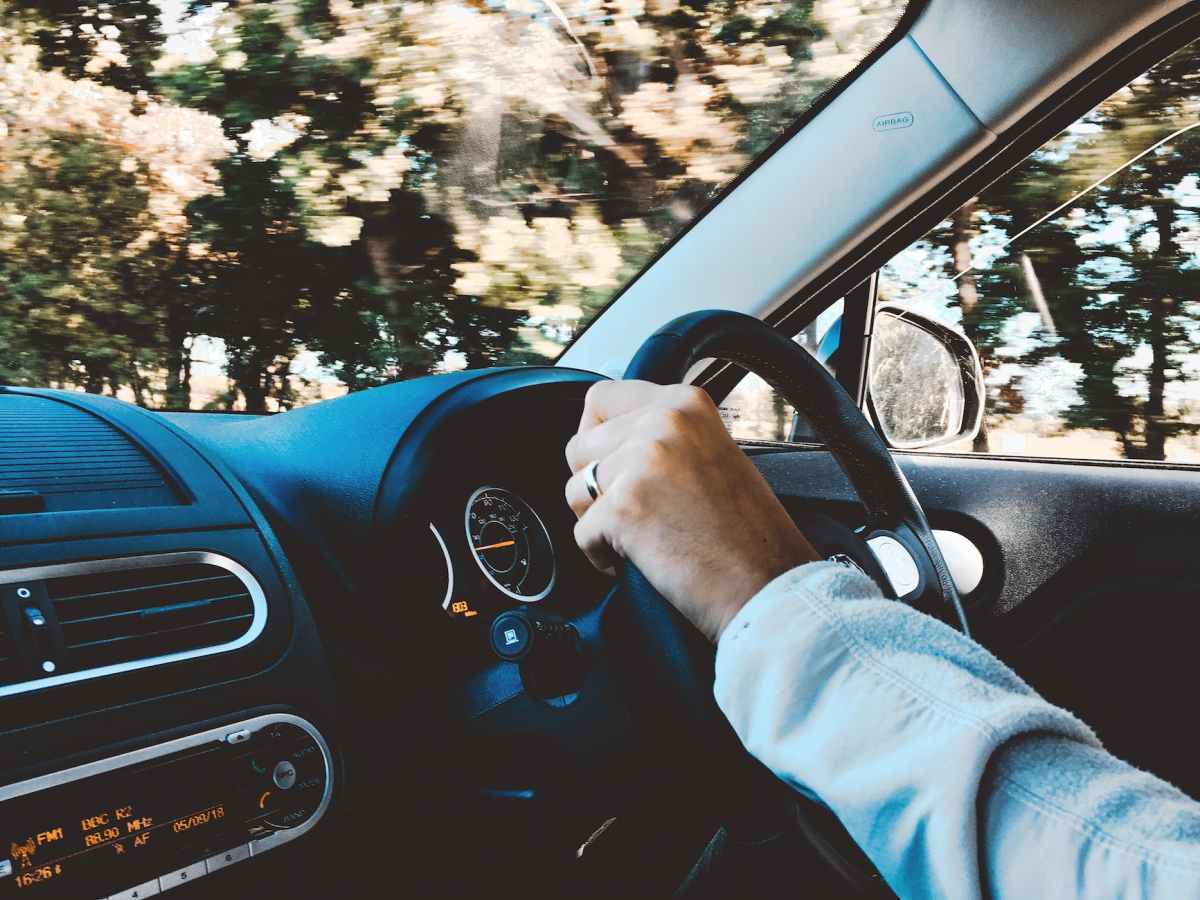
Driving back from Christmas. That’s not a Chris Rea song. Although, he did write “Driving home for Christmas[1]” while stuck in heavy traffic. I expect the feelings are similar – moving down the line. It took some time. Redlights flickering everywhere. Looking at the drivers next to me – looking just like me. Looking stoic or miserable or both.

Our carborne irritations were trivial when compared with the conditions in Scotland. We didn’t get 80 mph winds. At least the snail’s pace of the traffic on the main A303 was a snail’s pace. Inch by inch we moved closer to where we wanted to be. No streetlights on the jammed part of the A303, yesterday. The light went up and down with the heavy cloud cover. Colours ranging from gloomy grey to even gloomier dark grey.

Windborne debris, litter, like discarded crisp packets, set off on journeys of their own. Waterfilled potholes blended into the grey of everything. Crushed traffic bollards popped up as if they were growing amongst the sodden grass verges. Occasional motorcyclists took their life in the hands as they weaved amongst dozy drivers.

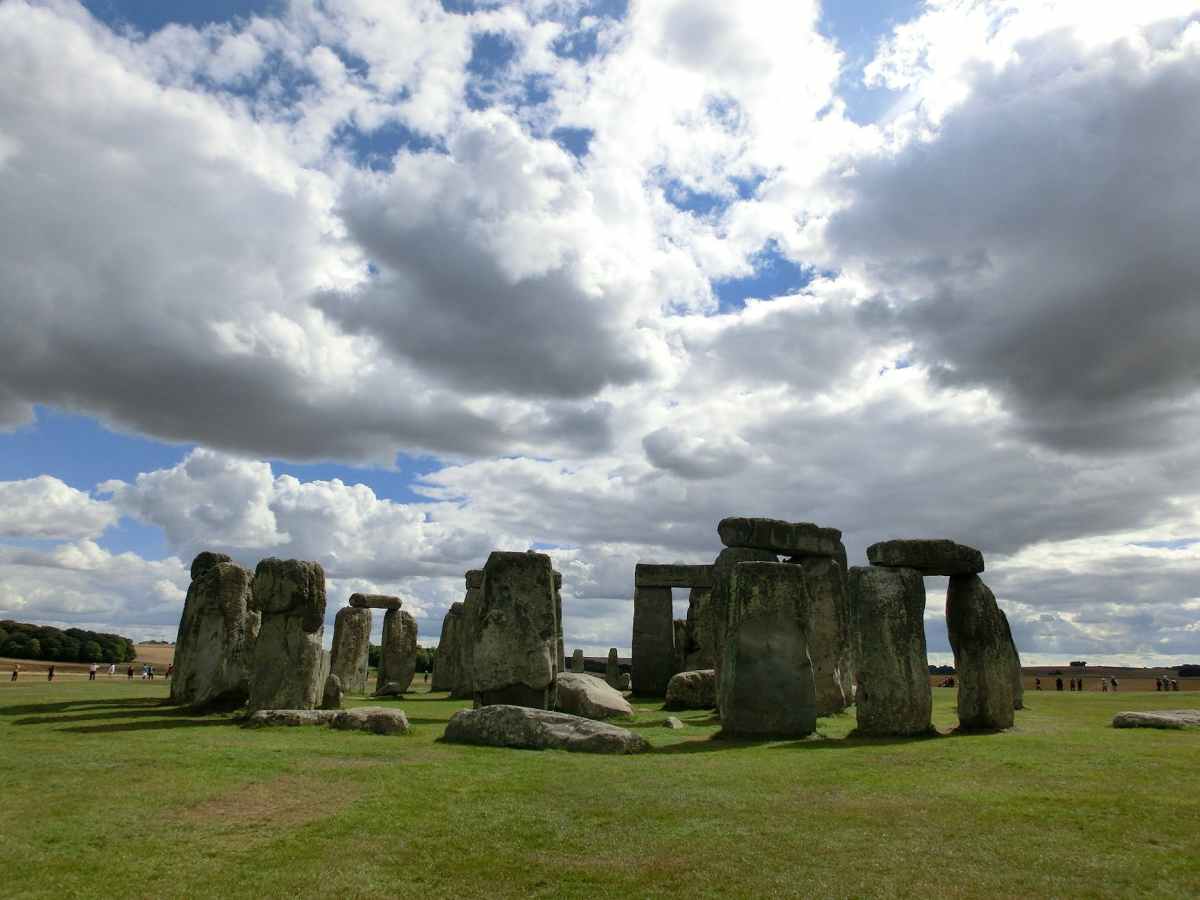
In the stationary moments my mind wandered. Who were those people dressed in the storm gear doing the tourist march around Stonehenge? They were not going to give up one moment of their vacation. What’s a blizzard of rain comparted to a once in a lifetime trip around ancient stones?

I got to thinking – how would this work if half the cars around me were automated? Human behaviour is pretty erratic. Driver temperament goes from kind and generous to intensely mean. From the laidback CofE vicar to the road rage professional. The circumstance of the drivers is hugely different too. One may be surrounded by screaming children while another is lone, absorbed in their favourite podcast. The first is a couple of hours into the worst drive of their entire lives. The second is in no hurry and happy for the day to drift by.

I sincerely hope that the makers and promoters of “driverless” cars take the human factor seriously. We know enough from aviation to know that the interaction between humans and semi-automated machines is exceedingly complex. That’s in situations where operating procedures are tightly controlled and monitored.

It’s one thing for car makers to rattle on about the importance of safety, it’s another for promises to meet the road. I’d say this is particularly true for the average British main road. Given its provenance there’s an excruciating number of variables. A truly dynamic set of variables that increase dramatically with speed. Weather goes from plus thirty summers to minus ten ice packs. Worn white lines come and go. Grass verges overhang the carriage way. Tarmac cracks and puddles compete with mud sloshing across the road in the heavy rain. Magpies dart into the road to munch the carcass of a dead hedgehog. The one that didn’t make it across the road.

Human drivers compensate for all the imperfections because that’s just what we do. It’s amazing even what the worst of us do. On the other hand, machines must characterise every single non-standard situation with accuracy, reliability and at great speed. Next time, I’m driving home for Christmas it will be manual. Likely, for a decade more too.


[1] https://youtu.be/uSjq7x67kzM

Gerrit

Apparently, Gerrit is the Dutch, and Frisian form of the more familiar name Gerard. It’s the name the UK Met Office[1] has given to the winter storm that has just barrelled its way across the country. I don’t normally write about wind and rain, but this storm is worth a short note. Not least because there was plenty of it for me to see as I was stuck in heavy traffic up on Salisbury Plain.

There’s some niggly social media kick-back on this habit of naming of storms. It’s winter after all. Having gloomy warnings pop-up for yucky British winter weather can get a bit tedious. In this case, I did take note of the weather warnings for Wednesday. Fortunately, the strong winds were blowing the right way for me. West to east.

My plan. Yes, I did have a vague travel plan. My plan was to get a major part of my journey, eastward on the main A303, done before the weather turned into heavy rain and strong winds. That well-meaning plan failed. Salisbury Plain[2] is an expanse of open chalkland which is exposed to weather from all directions. Today, I’ve spent too much time watching grey clouds traverse those uplands.

I blame Stonehenge. If prehistoric people hadn’t built it where they did then we’d have no traffic jams. The roads would be free. Those ancient builders must have been Europeans. In fact, they were since countries didn’t exist. Sorry, that’s just me pretending to be a Daily Express reporter.

Sure, enough it’s the stretch of the A303 that passes by Stonehenge that is the worst for traffic build up. Winter or summer. One of the reasons is the shear level of traffic on this main road. It’s a popular route across southern of England but it suffers from a classic road syndrome. The better it gets (condition wise) the more traffic it attracts. Road “improvements” continues to be made, often at great expense and controversy. The encampment of road protestors at Stonehenge has disappeared. That said, I’m absolutely sure their objections to further expansion of the road haven’t gone.

This year, for late December the temperature is remarkably warm. It’s wet too. Warm and wet. Is that what climate change has in-store for us in the south of England? Dull British winter weather is grey with extra grey bits. It can be mighty depressing. Short days don’t help either. Gradually they are getting longer. If only the worst of winter wasn’t still to come.

Whiling the hours away in nose to tail traffic doesn’t help with spirts. The only consolation is to look out at the drama of the landscape and the storm all around. I tend to get stoical about the whole sufferance. I pity those who sit agitated at the wheel trying to squeeze one car length ahead by getting out of roundabouts faster than others. The constant stop-go of taillights is a sure sign of a driver’s irritation. Me, I try to cruise forward inch by inch using as little power as possible.

The idiocy of playing psychological games in heavy traffic makes me wonder if some drivers ought to have a licence. This happens when two lanes merge into one. Me, I obey the one and one rule. Traffic should weave together in fairness to everyone. One from the left and one from the right.

So, bye bye Storm Gerrit. Thanks for bringing the winter wind and rain. The important part of all this is that we got home safely. Later than expected by safe.


[1] https://www.metoffice.gov.uk/about-us/press-office/news/weather-and-climate/2023/storm-gerrit-named

[2] https://en.wikipedia.org/wiki/Salisbury_Plain

1974

Inflation. A sign of our times. What in days gone by could be bought for a penny, now you need at least 50 pence. Coins exist for a few more years but their fate is sealed. This week, my 50p got me a 7-inch single from 1973. A flash of memory. Top of the Pops with Alvin Stardust[1] appeared like magic. It was in an unregarded box in the corner of a high street charity shop. What a delight to pick up such an important historic artifact for only 50p. A relic from my past.

With a typically glam pop music title, “My Coo Ca Choo” gave Alvin Stardust a Christmas hit in the 70s. On TV, he dressed in black leather like an imaginary Gene Vincent. Mind you, most of us kids of 1973 had no idea about 1950s rocker Gene Vincent. So, Stardust carried it off, acting out a rock-a-billy character to the delight Christmas audiences. He’ not remembered the way that Slade are remembered. To me there a connection that unique.

These threads. These recollections centre around brief and happy moments. The formidable farmhouse of my youth had more rooms than we ever used. Downstairs at the front of the house were the two square living rooms. Both with tall sash windows looking out to the South. On the one side was our everyday living room. On the other was a room that was kept for special occasions. High days and holidays. Oddly that room was called by us “New Room”.

We all decamped into the New Room for Christmas. That’s where the Christmas tree sat. That’s where the decorations went up. It took a while to get the room into a comfortable, liveable state. Most of the year it was relatively neglected. After the fireplace had been stoked up, bringing warmth, and drying out the damp outside walls, the room became the centre of our Christmas days. The “nice” sofa was pulled up to get the most warmth from the compact fireplace. Still there was plenty of space to litter the room with games, toys and torn wrapping paper.

It was the Philips company that introduced the first compact cassette recorder[2]. Until I looked it up, I didn’t know that it was as early as 1963 that the cassette first appeared. Cassettes dropped in a world dominated by vinyl records. So, the ability to record sound, without spending a pile on a reel-to-reel tape machine, was a great novelty and a lot of fun.

At first, I thought this Christmas memory was from 1973 but it couldn’t have been. It must have been 1974. That’s me at 14. Already at that age, I had a strong interest in electronic bits and pieces. My hobby was finding out how things worked. Often testing them to destruction. Living on a working farm there was plenty of opportunity to get to know about mechanics, hydraulics, and electrics. A little of chemistry too. However, for me circuits, valves and transistors had a particular fascination.

Christmas present in 1974? Well, it was a classic Philips compact cassette recorder and a K-tel compilation cassette called “Dynamite”. I must have had some blank cassette tapes too. What a compilation tape that was! Mud, Wizzard, Suzi Quatro, Mungo Jerry, Nazareth, Steeleye Span, Alice Cooper and, you guessed it, Alvin Stardust. 70s glam pop at its hight.

My flash of memory was sitting on the carpet to the left of the tiled fireplace engrossed in 1974’s Christmas present. I still have K-Tel’s Dynamite in a box somewhere. From yesterday, I have at least got a 7-inch single, in good condition from that distant era.


[1] https://www.theguardian.com/music/2014/oct/23/alvin-stardust

[2] https://collection.sciencemuseumgroup.org.uk/objects/co465542/philips-portable-tape-recorder-tape-recorder

Solstice

At last. The days will start to get longer. Dark mornings and dark evenings of wintertime, little by little start to recede. This is the Northern Hemisphere, and the Sun is low in the sky. Our winter solstice[1] takes place at a point when the Sun’s sweep across the sky is at its minimum. The celebratory time we have during this festive season tries to lift our spirits during these dark days.

It’s strange that we can attribute this to a tilt. The Earth’s tilt of 23.4 degrees on its axis generates the swings from summer to winter. On its stroll around the Sun, that marks a year, the Earth transforms. I wonder how different we would be if that tilt disappeared. Certainly, the cycle of life up at our latitude would be markedly different.

What would my Hellebore[2] do? Winter rose. I have a large white one that, even in damp ground has survived from last year. Shaded, it looks healthy as it’s putting out new growth. Its green leaves are more like light card than paper. Robust and deep green. It’s a cheery sight in amongst the gloom.

Mechanics, explained by astronomers, tell of the logic of the seasons. But it’s our emotional response that is most evident in the way we live. Naturally, that wasn’t always so. If we step back to the time of Stonehenge, then the knowledge of the cycle of summer and winter was a life and death matter. Now, with industrialise agriculture and life in centrally heated homes the seasons are most linked to our mood. Our habits and temperament.

The solstice is described as astronomical and cultural. 23.4-degrees shapes our society, born of generations of inheritance. The effect of time has piled high on the shape and form of what we take for granted. Look at a Christmas card scene. A red robin stands proud on top of a red-letter box covered in snow with holly and ivy in the background.

No snow this year. Not in Southern England. In fact, the solstice got to double figures. The temperature is mild. That little red robin isn’t going to be struggling to find food this year. Plenty of wind and rain. Rivers high to the point of flood.

Now, our Sun is lowest in the sky. Our spirts must not be. A New Year is just around the corner. Wishing everyone a wonderful time during this festive season.


[1] https://www.rmg.co.uk/stories/topics/when-winter-solstice-shortest-day

[2] https://www.rhs.org.uk/plants/hellebore

Democracy in Danger

Here’s a proposition. We are more adjusted to day-to-day fibs than we have been in the whole of history. The art of telling stories and telling lies has merged. Conflicts and tensions have fuelled a deluge of misinformation. It’s easy to put aside the clams of a flat Earth supporter but who’s to know about a major event that has just happened unless capable fact checking is immediately deployed? The liar’s advantage is an unfortunate reality. Bad New travels fast but corrections travel slowly.

Here’s some examples. Hardly a day goes by without a junk e-mail in my mailbox. These junk e-mails tell blatant lies as a means of deception. Either pulling heartstrings or threatening vicious measures. Absurd fake News is easy to spot but subtle – could be true or is that real – doubts can hang in the air.

We have got accustomed to bombardment of advertising that promises a glamourous perfume will enhance our lives immeasurably. Cars that will propel us into a technicolour future. Shop banners that proclaim being obviously better than other. Gambling opportunities that are only about winning.

An unspoken assumption exists. That is that our education, however elementary, provides each one of us with a sufficiency of cynicism to see through overblown promises. An ability to look a con artist in the eye and see through their smoke and mirrors. An in-built discriminating nature.

In fact, most people are quite insulted if it is suggested that they don’t have these superpowers. It’s an afront to say that someone has been led by the nose and scammed. Most of us are embarrassed if it happens, and we discover it. I mean extremely embarrassed. Then pure human pride can kick in and a period of denial is almost inevitable.

Has this atmosphere where truth and shams fight for attention put democracy in danger?

The origins of democracy weren’t about universal suffrage. Everybody being involved. Voting was reserved for citizens who held that status as a privilege. Today, we have come to think of democracy as every single person on a level playing field. This is idealism, but it’s a beautiful model.

Just as in ancient Rome, legislators exaggerate, manipulated information, build dubious alliances, and tell porkies to advance their positions. Some of this is the warp and weft of politics. It’s reasonable to say that we have evolved a discriminating nature. Only that discrimination is rather fragile.

The speed and volume of media communication grows with no seeming limit. Technology has enabled this advance. However, I’m wary of blaming technology for a proliferation of misinformation. That’s to deny that there’s an intent behind deception.

It’s going to be useless to have a highbrow intellectual discussion about Artificial Intelligence (AI) if the outcome is no change. We may as well blame the fibre optic cable that pump data around the world. Even with AI there is human intent behind the technology. These are behavioural matters.  

Yes, democracy is in danger, but the solutions are in our hands. We need not become victims.

Election

US President Donald Trump a second time around. Now, there’s a thought to concentrate minds.

It was our summer holiday in 2015. Doesn’t seem all that long ago. In July, we took a British Airways flight out of London Heathrow to Boston[1]. Picked up a car and drove. This may have been my last flight on a jumbo, a Boeing 747-400 before COVID struck and pensioned them off[2].

It was a terrific adventure as we had about 10 days to explore New England and the Hudson Valley. Sue and I had done a similar trip before but this time we had a well-thought-out itinerary that took us to new places. A couple of nights here and a couple of nights there, as we drove through the beautiful countryside in the sunshine.

This is not a travelog. A part of the story of the trip is of arriving at a motel after a long day, switching on a scruffy TV and watching practically whatever comes on first. On this road trip, often, the News was first. The News had a focus on the selection process for Republican candidates for the coming Presidential race. That’s the November 2016 United States presidential election.

The News was really like a scene from The Usual Suspects[3]. A line of suited and booted candidates vying for position, looking uncomfortable and one strange turbulent outlier. It was as if an alien had landed at a bank clerks’ convention. Commentators were going out of their way to say that the outlier didn’t have what it took to win a grown-up race. Of course, you know who I’m taking about.

As we went from motel to motel it became apparent from the viewing that we snatched that the Republican selection was not a normal one. The orthodox candidates had no idea how to deal with a bawdy cocky Donald Trump. The idea that Trump might serve as the 45th president of the United States was way off the chart. This media personality, come self-proclaimed successful businessman was hammering away at the mild-mannered dull opposition somewhat like a man with a chainsaw might attack a chicken coop. Still commentators derided the idea that he might win.

Let’s just say we have all learnt a lot since mid-2015. There are few people who can claim to have predicted what was to happen for the next 8-years. That is with 2017 to 2021, with Trump installed as the most powerful man on Earth. It sends shivers down my spine thinking about it. That said, the golf courses of world probably gained a lot and social media has never looked back.

The habit of spewing out constant streams of falsehoods and odious propaganda worked first-time around. Aided and abetted by shadowy media forces and with loads of funding the real estate man won. Surprisingly, all of this is alive and kicking in 2023. Ready for the same outcome.

Millions of people believed Trump, and guess what, they still do. By urging his supporters to march on Capitol Hill, when the last election result was being certified, he showed what he might do next. An insurgency, the like of which the United States hasn’t ever seen. The Usual Suspects maybe two movies in one. 2016 and 2024 maybe two elections with one outcome. It doesn’t seem like the law, however it’s interpreted, will prevent him standing for public office.


[1] BOS Boston United States, Logan International

[2] https://www.stroudnewsandjournal.co.uk/news/18590175.boeing-747-jumbo-jet-graveyard-gloucestershire/

[3] https://www.imdb.com/title/tt0114814

Next Decade Aviation

Here, I thought I’d speculate on what’s coming our way. That’s looking at the next ten-years.

Although this maybe contradictory to my earlier writings the subject is by no means all or nothing. Aviation is a technology-based means of mobility. Without the technology component there is no flight. Aviation a youthful industry when compared with ships, roads, and rail.

On the other hand, people are at the heart of the aviation system. That’s particularly true in assuring its stability, safety, and security. People create, innovate and fix systems when they fail. People make go-no go decisions. People protect systems from attack.

Commercial aviation maybe a youthful industry but it has an inbuilt conservatism. It’s the characteristic of not wishing to change when systems are working well. This has both and upside and downside.

A maturity of rules, regulations, processes, and procedures comes about by continuous improvement. By people learning. However, it’s often the case that industry does not reflect the society that it serves. People are excluded or walk away when expectations are dashed.

Across the globe, the future of the aviation workforce depends upon change. There again is a rub. People operating in a successful system rarely welcome change. Especially, if the drivers for that change come from outside the tight knit community of aviation professionals.

The first decades of the jet-age were characterised by a sense of adventure, glamour, and pride. As commercial aviation became available to a wider traveling public there was a gradual opening to professional entrants from most sections of society, even if that was predominantly male.

Now, big company traditional career paths are more an exception rather than the norm. Aviation competes with other industries at a time of rapid digital transformation. This has the impact of opening a wide range of options to potential professional entrants. In the coming decade the trend is going to advance.

A successful aviation industry organisation looks for skills and behaviours as much as it looks for raw technical talent. Assuring stability, safety, and security means having a responsible attitude, an instinct to challenge and question.

Today in the post-pandemic world, the industry is going through a period some people have called the “great resignation”. A generation have walked away from the pressure and stresses of the crisis. Industry behaviour, in a rush to cut costs, exasperated this by treating people exceptionally poorly.

For a sustainable future, commercial aviation needs to work to eliminate the hire and fire cycle. The global aviation industry needs to think and act differently. Aviation needs to get off the trap of the “similar-to-me” effect found in hiring. When a selection bias dominates potential professional entrants are put off. Talented young people are likely to choose meritocratic employment where rewards are there for achievement and commitment regardless of non-relevant factors.

Some work will be replaced by automation. However, retaining aviation people with people skills, regardless of background, will be invaluable in the next decade.

Pod

Will podcasts overtake broadcast radio? It’s a question that it had not occurred to me to ask until yesterday. I’ve not been a first adopter as far as listening to podcasts. There’s a routine of turning the radio on at a particular time of day to listen to news and current affairs. That daily routine or habit is born of a long tradition. The morning starts with the Today programme on BBC Radio 4.

Yes, I’m way behind the curve. Go into any large electrical shop, one wall of the warehouse will be filled with earpieces and headphones of every size and shape. The variety of choices is staggering. Sit on bus, train, or aeroplane and more than half the people around will be turned into a source of audio entertainment. Music and talk fight for our attention.

This is great for the streamers and downloaders but lossy for conversation. Sitting next to an interesting person on a long flight is a wonderful way of occupying a couple of hours. That opportunity is diminishing as people become absorbed in digital media. Even the smallest of phones has become a multipurpose entertainment system.

I have long been converted to digital media. FM radio is great for its universality but with less DAB[1] blind spots its life expectancy must be diminishing. Broadcast digital radio based on DAB is a global standard even though coverage is not universal. The digital avalanche is pushing aside any remaining analogue system that populate our lives. Ironically, as far as physical media ownership is concerned, vinyl and even cassettes are resurgent. On the airwaves it’s less likely there will be a romance for analogue radio.

Why have I reassessed the virtues of podcasts? Yesterday, I listened to The Rest Is Politics[2]. This podcast has a conversational style. It’s Alastair Campbell and Rory Stewart talking about current affairs in the UK. Two people who have had their moment in the political sun but remain articulate and inquisitive. They have something to say and it’s engaging.

This is a bridge to podcasts from broadcast radio in that the material is up to date. The topics discussed are wrapped around the news. It’s refreshing too. The ability of the two to argue in a calm and collected manner is unusual in our time. So much of the presentation of news is calamitous and confrontational that this is shocking to say.

Maybe that’s the role of podcasts. Reflection and analysis can be better done in slow time. Broadcast radio news is crammed full of snippets of what’s happening. It would loose its edge if it drifted off into too much extended investigations or drawn-out interviews. So, what may seem like competition between two forms of readily accessible media should be viewed as complementary. Both can fulfil an appealing role in the digital media landscape.


[1] https://www.worlddab.org/

[2] https://podcasts.apple.com/gb/podcast/the-rest-is-politics/id1611374685

Change needed

In so far as voting systems are concerned, it’s often been misleadingly said that Proportional Representation (PR) would result in endless back room deals and politics conducted behind the scenes. This is because different political parties would need to negotiate more often than they need to do so in a purely adversarial system. However, whether that political negotiation is in public or in private isn’t on the ballot.

Today, we have a perfect illustration of the downside of the current First Past The Post (FPTP) voting system in the UK. The results of the UK’s voting system are not a broad representation of the views of the voting public, rather it’s the representation of the factions of the dominant political party. That is dominant in terms of numbers of elected Members of Parliament (PMs).

Instead of negotiations going on between political parties with defined aims and objectives UK citizens have negotiations conducted behind the scenes in back rooms inside a political party.

Rather than tolerating more than one secret “star chamber” of MPs, we ought to be questioning these unstable undemocratic practices. The fragile coalitions within political parties, like the Conservative Party, are completely fragmented and hold wholly different views on important issues.

Surely, it would be much better if different party factions were honestly represented by the own political party. That would give the voting public a fair choice. That would make voting more meaningful. Today, under FPTP the voting public have no idea what they will get. Don’t doubt that statement just recall what has happened in the UK since 2010. The UK’s electoral system is broken. That’s why current opinion polling says that the level of trust in politicians is low and getting lower.

With PR difficult issues are openly discussed. Political parties exist to promote their philosophy. If they are liberal, they are liberal. If they are authoritarian, they are authoritarian. If they are progressive, they are progressive. If they are conservative, with a small “c”, they are conservative. If they are internationalist, they are internationalist. If they are nationalist, they are nationalist.

Today, for the two political parties often taking power in the UK their official names don’t mean a thing. It says little about what they will do when elected to a position of power.

In 2019, the Conservative Party were given a big majority of the seats in Parliament despite only winning 44% of the vote. Yet, MPs from fringe factions will stand-up pontificating about their representation of the people. Constantly, saying that the British people want this or that when such loud assertions are clearly untrue.

The UK’s FPTP system means that millions of public votes are wasted. Large numbers of people are denied a voice, and the make-up of Parliament does not reflect how people cast their votes. The UK’s electoral system is not fit for purpose.