Lables

Performance based regulatory systems are all the rage. That’s when regulatory action is taken based on the measurement of a key indicator or a series of indicators. Sounds like a good idea. It is for the most part. Set a target of reducing or eliminating something that is damaging or undesirable and track progress towards achieving that goal.

Wouldn’t it have been to the benefit of all if a performance-based approach had been applied in the 1989 Water Act which privatised water in England and Wales? A great deal of sewage flooding into rivers could have been avoided. 

However, it wouldn’t have helped to have nothing more than a simple “good” or “bad” indicator. In a performance-based system there’s a need for reasonably accurate measurement and graduated bans of performance achieved. The measurements taken need to be done in a timely manner too. Publishing measures that are a year or more out-of-date isn’t a good way of confidently plotting a way forward to hit a goal.

Listening to the News about Ofsted’s grading scheme, I can’t help but think that having a four-category grid is wholly inadequate for their purpose. Ofsted is the Office for Standards in Education, Children’s Services and Skills. The Education inspection framework (EIF)[1] in England is primitive in this respect. Shoe-horning every school in England into Outstanding, Good, Requires Improvement or Inadequate is brutal.

What’s the betting that at any one day many of the schools graded Outstanding are not, and many of the schools graded Inadequate are not either. The problem with these indicators is the crudity of the labels. We’ve all seen huge banners erected outside schools if there’s favourable news to communicate. What passers-by and parents see is the headline and not the reality of the performance of a particular school.

The sub-division of the lowest category into schools with serious weaknesses and in need of significant improvement doesn’t help much. Negative words get merged into a negative judgement.

Experience with risk management is that categorisation schemes face challenges when performance sits on the borderline between categories. That’s one reason why anything less than five categories is not often used.

The aim of a performance based regulatory systems is to improve performance. If the tools used become those that blame and shame, then that system is not working. Nothing, I’m saying here isn’t already written-up in the annals of quality management. People have been wrestling over different methods for 60 years, at least.

The current Ofsted’s grading scheme is poor and unimaginative.


[1] https://www.gov.uk/government/publications/education-inspection-framework/education-inspection-framework

Bad Moon

Despite climate change, economic downturns, war, and recovery from a pandemic no one was prepared for, this is a good time to be alive. We are a long way from the end of days. Or at least I hope we are.

The past is another country. Only that can be said of the future too. The difference is a record book. Behind us we have the chronicles, from the first written words to this next key I’m about to tap. In front of us spreads a great deal of uncertainty.

What’s with the gloom and doom? Media of all kinds seems to bathe in a pool of pessimism. I can hear Creedence Clearwater Revival singing Bad Moon Rising[1] in the background. Despite climate change, economic downturns, war, and recovery from a pandemic no one was prepared for, this is a good time to be alive. We are a long way from the end of days. Or at least I hope we are.

In so far as fiction is concerned, I love a good dystopia. Unfortunately, some of the movies on this theme are quite ridiculous or dammed right annoying. The Day After Tomorrow[2] is a bucket load of piety and the remake of The Day the Earth Stood Still[3] has me throwing things at the TV.

Last night, I tried to get through the first half of a more recent movie called Reminiscence. It does amaze me that what must have seemed like such good ideas on paper can be transformed, at great expense, into a relatively average film. Yes, we are going to have to cope with rising sea levels and it will change the way people live.

What I’m addressing is the assertion made by a journalist who covers the cultural effect of science and technology[4]. It’s basically, that all this focus on the end of the world stuff stops us from planning a positive future. I can quite understand the basis for such a proposition.

Dare I make a HHGTTG reference? Well, I’m going to anyway[5]. It’s that society collapses if we spend all day looking at our feet, or to be more precise our shoes. Looking down all the time is equated with being depressed about the future. That leads to people buying more colourful shoes to cheer themselves up. Eventually, that process gets out of control and civilization collapses.

For someone like me who has spent a lot of time looking at accidents and incidents in the aviation world, I’m not on-side with the notion that bad news leads to gloominess and then immobility. I guess it does for some people. For me, it’s almost the reverse.

What we learn from disasters and calamities is of great benefit. It stops us from making the same mistakes time and time again. Now, I know that doesn’t last forever. Human memory is not like a machine recording. We are incredibly selective (hence films like Reminiscence).

In my mind, none of this persistent immersion in stories with bad outcomes stops us from planning. To be positive, it stops us taking our plans for what we can do into the realms of pure fantasy. Or at least it should.


[1] https://youtu.be/zUQiUFZ5RDw

[2] https://en.wikipedia.org/wiki/The_Day_After_Tomorrow

[3] https://en.wikipedia.org/wiki/The_Day_the_Earth_Stood_Still_(2008_film)

[4] https://www.newscientist.com/article/mg25834380-100-why-we-shouldnt-fill-our-minds-with-endless-tales-of-dystopia

[5] https://hitchhikers.fandom.com/wiki/Shoe_Event_Horizon

Fake/Real?

So, why might artificial intelligence (AI) be so dangerous in a free society?

Democracy depends upon information being available to voters. Ideally, this would be legal, decent, and honest information. All too often the letter of the law may be followed whilst shaping a message to maximise its appeal to potential supporters. Is it honest to leave out chunks of embarrassing information for the one nugget that makes a politician look good? We make our own judgement on that one. We make a judgement assuming that outright lying is a rare case.

During key elections news can travel fast and seemingly small events can be telescoped into major debacles. I’m reminded of the remark made by Prime Minister Gordon Brown[1] when he thought the media’s microphones were dead. In 2010, when an aide asked: What did she say? Gordon Brown was candid in his reply. It’s an occasion when the honest thoughts of a PM on the campaign trail popped into the public domain and livened up that election coverage considerably.

What’s concerning about AI[2] is that, in the hands of a “bad actor,” such events could be faked[3] extremely convincingly. Since the fast pace of election campaigning leaves never enough time for in-depth technical investigations there’s a chance that fake events can sway people before they are uncovered. The time between occurrence and discovery need only be a few days. Deep fakes are moving from amateur student pranks to the tools of propagandists.

Misinformation happens now, you might say. Well, yes it does, and we do need people to fact-check claims and counter claims on a regular basis. However, we still depend on simple techniques, like a reporter or member of the public asking a question. It’s rather a basic in format.

This leaves the door open for AI to be used to produce compelling fakes. Sometimes, all it needs is to inject or eliminate one word from a recording or live event. The accuracy and speed of complex algorithms to provide seamless continuity is new. It can be said that we are a cynical lot. For all the protest of fakery that a politician may make after an exposure there will be a plenty of people who will not accept any subsequent debunking.

My example is but a simple one. There’s a whole plethora of possibilities when convincing fake pictures, audio and videos are only a couple of keyboard stokes away.

Regulatory intervention by lawmakers may not be easy but it does need some attention. In terms of printed media, that is election leaflets there are strict rules. Same with party political broadcasts.

Being realistic about the risks posed by technology is not to shut it down altogether. No, let’s accept that it will become part of our lives. At the same time, using that technology for corrupt purposes obviously needs to be stamped on. Regulatory intervention is a useful way of addressing heightened risks. Some of our 19th century assumptions about democracy need a shake-up. 


[1] https://www.independent.co.uk/news/uk/politics/bigotgate-gordon-brown-anniversary-gillian-duffy-transcript-full-read-1957274.html

[2] https://edition.cnn.com/2023/05/16/tech/sam-altman-openai-congress/index.html

[3] https://www.nytimes.com/2023/02/07/technology/artificial-intelligence-training-deepfake.html

Chips

Semiconductor superpower. Where have I heard that before? Let’s go back to the moment when the silicon revolution was a topic of popular conversations. Today, as much as people are speaking of AI. It has been difficult to accept that Moore’s Law is real. Early on, the notion that the number of transistors on a microchip would double every two years seemed far fetched.

I remember the 1980s, and the privatisation drive that effectively gave away the country’s technology crown jewels. UK semiconductor manufacturers of the 1980s such as GEC, Plessey, Ferranti and Inmos waned or sold-up[1]. Policy makers of that time saw globalisation as risk free. Now, that looks like selling off the family silver.

At the time, silicon chips were predicted to kill off a substantial percentage of white colour jobs. Only a few people saw the potential for massive new industries to spring-up and employ large numbers of new workers. It’s true that the jobs created were, on the whole, quite different from the ones they displaced. Admin work in a giant insurance office is miles from that of a being an on-line games developer, tester, or marketer.

My point is that Government intervention in technology hasn’t got a good record. That’s not an argument for a hands-off approach. That too has proven to have negative outcomes. I’m often tempted to go back to the story of videotape and VHS against Betamax[2] The better technology is not always the one that wins in the global marketplace. Boring reality and dull pragmatic considerations can tip the balance.

The record shows Government Ministers get swayed by the whizzy, super advanced, “superpower” labels that get stuck on the latest promotion. Let’s face it, a photo opportunity next to an exciting futuristic image gets the media’s heart beating. Marketing hype is not new. It has a role in druming-up investments in risky ventures.

Unquestionable is the intense level of competition in the global semiconductor marketplace. If the UK is to be taken seriously when billions of dollars are placed on the table by others there really must be a matching offer. One billion over a decade will end up getting spread as thin as oil on water. A strong collaboration with other, who have common interests would help. Let’s not forget that doing the “dull stuff” can be highly profitable too.

The open market, in deals of the past, has seen a concentration of power. This is not good for a medium sized country on the edge of a continent. Inward investment is to be welcomed. At the same time strategic domestic protections should have a place. Investments in domestic technology capabilities secures a future.


[1] https://www.ft.com/content/470bf7d8-cd32-472d-b75f-6019eb4b100a

[2] https://en.wikipedia.org/wiki/Videotape_format_war

Turbulence

Brexit “outrage” as The Express newspaper put it. Headlines like this are signs of shear desperation. It seems every time something goes wrong, which it regularly does, the call comes out from Brexit supporters – it must be Remainers or the House of Commons or Lords or civil servants or large corporations or lefty liberals thwarting the great Brexit plan. Noting, of course, that there never was a plan in the first place.

“Take Back Control” has become the hollowest political slogan in British history. Rather than dimming the light of fervent Brexit advocates these repeated setbacks just pump them up. This kind of thinking is both sad and dangerous. It has a deep flavour of paranoia.

This month, shocks from the Conservative Party’s council election meltdown are another trigger for the political right to agitate. Shouting: bring back Boris Johnson is unsurprising. The dreamy magical thinking is that because he delivered a big parliamentary majority in 2019, somehow, he, and he alone, can do the same in 2024. Other conservatives are positioning themselves for the next run at being Prime Minister.

I’m not one to totally dismiss the Johnson proposition. Naturally, it would be calamitous and beyond reason but that has not been an impenetrable barrier since 2016. Brexit, as a happening, delights in causing chaos. There’re political thinkers who invite chaos and disruption to free potentially creative energies. They’re not a bit concerned about the impact of that approach on the average person.

Brexit continues to hobble aviation in UK. A large percentage of the people who worked in UK aviation, before the COVID pandemic, were EU nationals. A lot have gone. Now, it’s often the case that when EU nationals apply for jobs in the UK, the aviation industry must turn them down[1].

The legislative proposal to remove retained EU laws has created yet more uncertainty for UK’s aviation sector. The threat remains regardless that it may be in the process of being watered down. Debates in the House of Lords focused on democratic scrutiny of the process where significant changes are planned[2]. Ministers continue to wish to use arbitrary powers to make changes. There’s ambition in the policies advanced while, at the same time, there’s a wish to look all ways at once.

For a lot of aviation topics, the UK has stated it will continue to use European Union Aviation Safety Agency (EASA) rules and guidance. Although, this is eminently sensible in an international setting it does suggest that Brexit benefits, if they exist at all, have been greatly overstated.

Given the tabloid media jitters seen in recent headlines, it’s perfectly clear that Brexit is a million miles from being “done”. A bad idea remains a bad idea, however it’s dressed up.

Expect turbulence right up to the next General Election. Change is not assured. People will have to campaign hard to make it happen. In comment on the change of the crown, “The country is in a waiting room” said historian Simon Schama.


[1] One major airline – We have had to turn down a huge number [8,000] of EU nationals because of Brexit. Another has blamed the British government’s post-Brexit immigration constraints on the labour market for fuelling staff shortages.

[2] https://www.bbc.co.uk/news/uk-politics-65605035

Engineering

I know this is not a new issue to raise but it is enduring. Years go by and nothing much changes. One of the reasons that “engineering” is poorly represented in the UK is that its voice is fragmented.

I could do a simple vox pop. Knock on a random door and ask – who speaks for engineers in the UK. The likelihood is that few would give an answer, let alone name an organisation. If I asked who speaks for doctors, those in the know would say the BMA[1]. If I asked who speaks for lawyers, most would answer the law society[2]. I dare not ask who represents accountants.

Professional engineering institution have an important role. That’s nice and easy to say, in-fact all the ones that are extant do say so. Supporting professional development is key to increasing access to engineering jobs. It’s spokespersons, specialist groups and networking opportunities can provide visibility of the opportunities in the profession.

So, why are there so many different voices? There’s a great deal of legacy. An inheritance from bygone eras. I see lots of overlap in the aviation and aerospace industries. There’re invitations in my in-box to events driven by IET[3], IMECHE, Royal Aero Society and various manufacturing, software, safety, and reliability organisations.

The variety of activities may serve specialist niches, but the overall effect is to dilute the impact the engineering community has on our society. Ever present change means that new specialist activities are arising all the time. It’s better to adapt and include these within existing technical institutions rather than invent new ones.

What’s the solution? There have been amalgamations in the past. Certainly, where there are significant overlaps between organisations then amalgamation maybe the best way forward.

There’s the case for sharing facilities. Having separate multiple technical libraries seems strange in the age of the connected device. Even sharing buildings needs to be explored.

Joint activities do happen but not to the extent that could fully exploit the opportunities that exits.

If the UK wishes to increase the number of competent engineers, it’s got to re-think the proliferation of different institutions, societies, associations, groupings, and licencing bodies.  

To elevate the professional status of engineering in our society we need organisations that have the scale and range to communicate and represent at all levels. Having said the above, I’m not hopeful of change. Too many vested interests are wedded to the status-quo. We have both the benefits of our Victorian past and the milestone of that grand legacy. 


[1] https://www.bma.org.uk/

[2] https://www.lawsociety.org.uk/en

[3] http://www.theiet.org/

Eurovision – the result

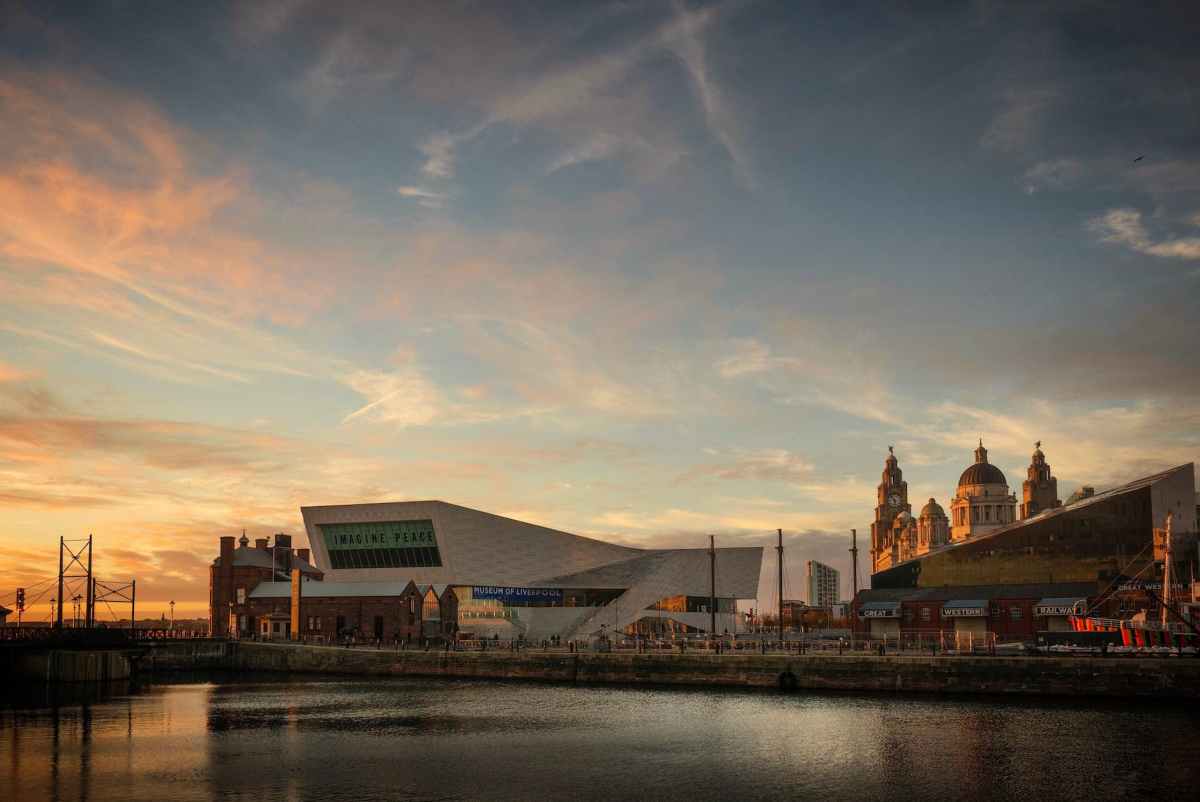
Time for a bit of post-match analysis. We can have all sorts of theories about what entertainment is but last night it was very much on the box[1]. It was Liverpool. It was in solidarity with Ukraine. It was Europe and beyond. When Reith put it that the BBC’s role is to: inform, educate, entertain, he must have had Eurovision in mind. Connecting broadcasters together, in unity across Europe is a wonderful achievement. Every year we are reminded of the things that draw us together.

For all the devices we carry around and snap five second glimpses of the world, they cannot compete with a large scale, live, in the moment experiences, shared with millions of other people. Especially when that massive event springs positivity from every direction.

Not only that, but the talent on displays in Liverpool this year was astonishing. Fine that one or two acts tipped the balance of the crazy scales to the limits. The bulk of the acts were briming over with enthusiasm, excitement, and electricity.

To the technical staff who made the staging work – what an incredible job. The ability to create impact and spectacle is a great gift. And no doubt, extremely hard work.

Eurovision has taken place with a war raging in Europe. Lives are being lost. Communities are being devastated. This is a good reason to remind ourselves that the world can be a better place and that better place is worth fighting for.

As per previous years, the voting system is a mysterious concoction of strange machinations. As complex and opaque as a social media algorithm. As the votes roll-in so expectation builds. It’s cruel too. Sudden leaps from single figure votes to hundreds of votes can be seconds away.

It was sad to see the UK entry fall by the wayside. To me it was a good song, but it peaked at average.

I was converted to Sweden. It’s not easy to put into words. The story telling wasn’t overblown. However, the act drew my attention like a powerful magnet to a chunk of steel. As the staging ascended so the song climbed. Its pacing didn’t race. It burrowed deeper into my mind.

Sweden’s Loreen had a magical attraction that captivated both judges and the public. Commiserations to Finland. Loreen is a worthy winner of the Eurovision Song Contest 2023. 

For me the star of the show was a song. A song that is so inspiring in difficult times. Singing this song is open to everyone and the moment you sing the song, the words become true. You’ll Never Walk Alone[2] with hope in your heart. Thank you, Gerry & The Pacemakers.  Thank you, Liverpool. 


[1] Or on the tube as we once said, when it was a tube. It’s TV. 

[2] https://youtu.be/OV5_LQArLa0

Eurovision

Eccentricity, excess and exuberance. That’s entertainment. Eurovision is a big mark on the calendar. Each year it’s getting bigger. It has songs and it has a contest and much more besides.

This year’s coverage is a bit OTT. Now, I like the occasional bacon and eggs for breakfast, but I don’t want it for lunch and dinner too. And for supper I’d like anything but bacon and eggs. Media’s May menu is a video age version of Monty Python’s Spam sketch. That’s how I’m getting to feel about the wall-to-wall coverage. Yes, you can have too much of a good thing.

That’s what’s special about Eurovision. It comes but once a year in a blaze of musical colour and preposterous lyrics. Then it’s gone only to rise like a phoenix in the year to come.

This scribbling is no criticism of the massive stage set and inventive use of every form of graphical illusion. Even some music. Liverpool is proving to be a number one venue for this extravaganza. The stage set and the mastery of its technical complexities are outstanding.

Please, no more Beatles illusions. We get it.

Earlier this evening, BBC Radio 4 gave us proof that Artificial intelligence (AI) has a way to go. It’s attempts at writing funny jokes are beyond a joke. With that in mind, maybe the writers of the hosts scripts for the semi-finals were using AI. I’d cringe even if I didn’t hide behind the sofa. I know British humour doesn’t always translate well but it’s better if it’s aimed at real humans.

Musicality is all well and good, it’s the weirdness that makes an act stand out. Staging a whole song around Edgar Allan Poe[1] is mind bending. Well, you might say, why not? I wish Austria well with their catchy use of Poe, Poe, and more Poe.

Australia is not in Europe. Who said that? It doesn’t matter. They are 100% welcome. Especially when they bring a regular rock rampage to the stage. Their efforts are not going to win. That much doesn’t matter. Their stadium rock show number is still going to do well.

I not sure why but my soft spot goes to Belgium. That guy has got a star quality that shines bright. Is he a contemporary version of Boy George? Not sure. Then there’s Cyprus. At the other end of the scale, he’s auditioning to be a Greek God. Thunder and lightning. Very Very Exciting (to quote Queen).

Sweden has the drama. It’s a mega blast that dominates the arena. She could be the winner.

Saturday evening should be a memorable triumph. Let’s hope it is for the sake of unity and good fun.

POST: Liverpool is twinned with Cologne in Germany. I’ve always found that a good match. Two major cities with a strong sense of their identity and place in the world.


[1] https://en.wikipedia.org/wiki/Edgar_Allan_Poe

Deregulation

There’s nothing wrong with making an argument for deregulation. What’s absurd is to make that argument as an unchallengeable dogma. It’s the irrationality of saying that deregulation is good, and regulation is bad, de-facto. This kind of unintelligent nonsense does permeate a particular type of right-wing political thinking. It pops it’s head up in a lot of Brexiters utterances. For advocates of Brexit their great goal is to throw away rules and lower standards. Mostly, this is for financial gain.

Let’s take some simple examples. The reasons for rules and regulations can often be found in recent history. Hazards are recognised and action is taken.

There’s still lead paint to be found in many older houses. There was a time when such paint was used on children’s toys. Toy safety has been a confusing area of law, and there have been several sets of regulations since the 1960. From our current perspective this past laxness seems insane, but such lead paint mixtures were commonplace. In fact, all sorts of toxic chemicals have been used in widely used paints.

I remember working in one factory building where a survey was done of the surrounding grounds. Outside certain windows there were small fluorescent flags placed at in the grass verges. They marked places where minor amounts of radiation had been detected. This came from discarded paint brushes and tins that had accumulated in the war years. At that time radioactive luminescent paint was used to paint aircraft instrument dials.

Any arguments for the deregulation of toxic chemicals in commonly used paints should be one that is quashed instantly. However, some deregulation fanatics are only to happy to endorse a loosening of the rules that protect the public from toxic chemicals.

One result of the loosening of public protection is often to put greater profits in the hands of unscrupulous industrialist. Across the globe there are numerous cases studies of this sad folly. Newspapers and political parties that push the line that rules, regulations and regulators, by their very nature are crushing our freedoms are as bad as those unscrupulous industrialists.

Yes, there’s a case to be made for pushing back over-regulation. There’s risks we are prepared to take where the risks are low, and the benefits are large. This is a matter for intelligent debate and not throwing around mindless slogans. We should not be cowed by loud voices from small corners of society intent on tearing down decades of learning and sound practical laws. I could come up with an encyclopaedic list of examples. Opponents rarely, if ever want to address a particular case since it’s much easier for them to thunder off sweeping assertions. Beware these siren voices.

NOTE: The Toys (Safety) Regulations 2011 implemented the requirements of Directive 2009/48/EC, whose purpose is to ensure a high level of toy safety.

Protest

Any study about “change” will tell you that it’s not easy. Take a few of the big social transformations that have occurred over the last six decades. I can’t point to one that just happened without a campaign or fight. Social and political change comes when momentum has built-up. Pressure is needed. Often that pressure comes in the form of protest and extensive campaigning in public.

As ever faster digital connections are becoming universal, it’s still possible to buy physical digital media. Charity shops have piles and piles of CDs and DVDs as people off-load the stuff that clutters their shelves. It’s remarkable that yesterday’s whizzy new thing has become a historic artefact so quickly[1]. In 40-years, the optical digital disk has risen and then faded into the background.

I picked up a little bit of social history in a Red Cross charity shop. It’s a series of 3 DVDs that captures a slice of the career of the well-known journalist and broadcaster Alan Whicker. Stretching over six decades of travelling around the globe it’s a great watch. The series is called “Journey of a Lifetime” and was published in 2009[2]. Although, there’s plenty that dates Whicker’s documentary style there’s no doubt that his ability to quickly summing up big changes is a masterclass.

That straightforward diction and incongruous club jacket became a trademark. It gave him a neutral camouflage so he could talk eye-to-eye with hippies, dictators, evangelists, social campaigners, film stars and dubious gurus. That’s what created so many revealing conversations that are now time stamped as emblematic of an era. I recommend viewing the Whicker’s reflections on six decades of social history. It’s a great reminder of where we have been and how learning the lessons of the past is so difficult.

Back to my initial subject – change. It’s easy to say that it’s inevitable and unrelenting but its nature is less easy to discern. Change undulates. We go forwards then we go backwards in differing amounts.

I have a theory that our social progression can be plotted like an inclined wood saw. Yes, I know. It’s the engineer in me. Look at the shape of the saw’s teeth. They go forwards, and then quickly go backwards but they always go backwards less than they go forwards. That’s how a saw’s teath cut.

This is one of my abstrat reasons why the UK Government’s most recent laws to supress public protest are as stupid as political debate can get. Resisting change is nothing new. After all, the word “conservative” has a simple commonplace meaning. When all else fails, the basic political instinct to push out laws that comfort supporters is built in. As a direction for a whole country to take, this way of working is foolish and naive.

Locking up climate change protestors is not going to fix climate change. Locking up protestors against sewage on beaches and in rivers not going to fix greedy water companies. Locking up republican protestors is not going to fix the decline in public support for the monarchy.

Using the pretext that – this is what the public want – as a cover for these policies is to show the vacuum that conservative political thinking is thrashing around in. Sadly, as I’ve said, reflection on the last six decades of conservative thinking shows regressive tendencies in abundance.


[1] https://www.bbc.co.uk/archive/optical-storage-technology/zv7bpg8

[2] https://en.wikipedia.org/wiki/Whicker%27s_World