Radio on the hill

We take radio for granted. I’m listening to it, now. That magic of information transferred through the “ether[1]” at the speed of light and without wires. This mystery was unravelled first in the 19th century. Experimentation and mathematics provided insights into electromagnetics.

The practical applications of radio waves were soon recognised. The possibility of fast information transfer between A and B had implications for the communications and the battlefield.

It’s unfortunate to say that warfare often causes science to advance rapidly. The urgency to understand more is driven by strong needs. That phrase “needs must” comes to mind. We experienced this during the COVID pandemic. Science accelerated to meet the challenge.

It wasn’t until after he failed as an artist that Samuel Morse transformed communications by inventing the telegraph with his dots and dashes. There’s a telegraph gallery with a reproductions of Morse’s early equipment at the Locust Grove Estate[2] in Poughkeepsie. I’d recommend it.

The electromagnetic telegraph used wires to connect A and B. Clearly, that’s not useful if the aim is to connect an aircraft with the ground.

The imperative to make air-ground communication possible came from the first world war. Aviation’s role in warfare came to the fore. Not just in surveillance of the enemy but offensive actions too. Experimentation with airborne radio involved heavy batteries and early spark transmitters. Making such crude equipment usable was an immense challenge. 

Why am I writing about this subject? This week, on a whim I visited the museum at Biggen Hill. The Biggin Hill Museum[3] tells the story the pivotal role played by the fighter station in the second world war. The lesser-known story is the origins of the station.

It’s one of Britain’s oldest aerodromes and sits high up on the hills south of London. Biggin Hill is one of the highest points in that area, rising to over 210 metres (690 ft) above sea level. 

It’s transformation from agricultural fields to a research station (south camp) took place in 1916 and 1917. Its purpose was to explore the scientific and technical innovations of that time. Wireless in particular.  141 Squadron of the Royal Flying Corps (RFC) was based at Biggin Hill and equipped with Bristol Fighters.[9] RFC were the first to take use of wireless telegraphy to assist with artillery targeting.

These were the years before the Royal Air Force (RAF) was formed.

100 years later, in early 2019, the Biggin Hill Museum opened its doors to the public. It’s a small museum but well worth a visit. I found the stories of the early development of airborne radio communications fascinating. So much we take for granted had to be invented, tested, and developed from the most elemental components.

POST 1: Now, I wish I’d be able to attand this lecture – Isle of Wight Branch: The Development of Airborne Wireless for the R.F.C. (aerosociety.com)

POST 2: The bigger story marconiheritage.org/ww1-air.html


[1] https://www.britannica.com/science/ether-theoretical-substance

[2] https://www.lgny.org/home

[3] https://bigginhillmuseum.com/

Alexander Boris de Pfeffel Johnson

There’s a good argument for boring politics. Yes, it’s reasonable to get aerated about big choices and fundamental differences in belief. However, a lot of politics is implementing policy and taking corrective action when something goes wrong. For the bigger part of practical politics, the qualities of attention to detail and diplomacy are of paramount importance. One thing we know for certain is that we got the exact opposite from former British Prime Minister (PM) Boris Johnson[1]. Gesticulation and flowery language took the place of thoughtfulness, care, and compassion.

Johnson denies lying to the UK Parliament. He once revelled in his performances at the dispatch box in the House of Commons (HoC). His period as UK PM was turbulent and full to the brim with bullish rhetoric. There’s no doubt that there’s an audience who laps up those political theatrics.

In the promotion world, adverts are supposed to be “legal, decent, honest and truthful.” In the political world, it would be asking a lot for all four of those to be observed all the time.

One place where there’s an extremely high expectation that a PM will be honest and truthful is while they are standing at the dispatch box[2] in the HoC. Now, that doesn’t preclude them from failing to say all there is to say about a given subject but what they do say should be correct. Better said; must be correct. In a lot of ways this is one of the primary responsibilities of a UK PM.

A PM, or Government Minister found lying to Parliament is committing a significant offence and carries the likelihood of suspension. It’s not a trivial matter, neither should it be.

In public, as a campaigning conservative politician there are lots of cases where Boris Johnson has been casual with the truth. Britain’s exit from the European Union (EU) was driven by a cacophony of factual falsifications and gross distortions of the truth. Boris and Brexit are synonymous.

A HoC committee will decide on the facts surrounding the downfall of former British PM Boris Johnson. His peers, as members of a privileges committee will make a statement on his behaviour in coming weeks. With all the evidence in the public domain now, it seems probable that the committee will find that Johnson was at least reckless, if not that he intentionally lied in the HoC chamber, fellow Members of Parliament and the country.

Although, it would be unwise to discount Johnson’s political comeback, one day, there may be a chance that his style of politics will be shown to be as damaging as we know it to be. This should be a turning point where accountability wins out over bluster and fibs. Let’s hope it is.


[1] Alexander Boris de Pfeffel Johnson is the politician, writer and journalist who was Prime Minister of the UK and Leader of the Conservative Party from 2019 to 2022.

[2] https://www.parliament.uk/about/living-heritage/building/cultural-collections/historic-furniture/the-collection/scott/despatch-boxes-/

Lost nature

Looking at lines and lines of felled trees is not a pleasing sight. The world outside the car window is a sight of devastation. I understand what’s going on and we have been forewarned of it for a long time. Whatever, the junction of the A3 and M25 motorway[1] looks a dreadful mess. The scheme to turn the junction into a mini spaghetti junction is underway.

This comes on top of two news stories that display an attitude to our green spaces that is disheartening and sad. One in Sheffield[2] where the local council was criticised for deceiving the public. The other story, an overnight savaging of city trees in Plymouth[3].

I’m going to be unkind to highway engineers. The impression given is that their attitude to trees, in general, is one that sees them only as an impediment to progress. A blight that stops their beautiful drawing board schemes from rising from the dirt. The obstacles in the way of more tarmac.

Now, the M25 junction 10/A3 Wisley interchange is as ugly as hell. Even when it’s finished it’s going to be one of those places in the world where a sane person would not want to spend a minute more than necessary. Watching the seasons change from a motorway jam is a poor way to live.

The largescale initiatives there are to plant more trees are great. Unfortunately, all to often the stock of mature native trees and ancient woodlands has fallen markedly in my lifetime.

Natural events play their part too. I remember massive Elm trees that disappeared as Dutch Elm disease struck. These majestic trees can reach over 40 metres in height. A row of these huge Elms dominated the skyline of my childhood. A green wall that seemed everlasting. Sadly, millions of Elm trees have been killed in the UK over the last 40 years.

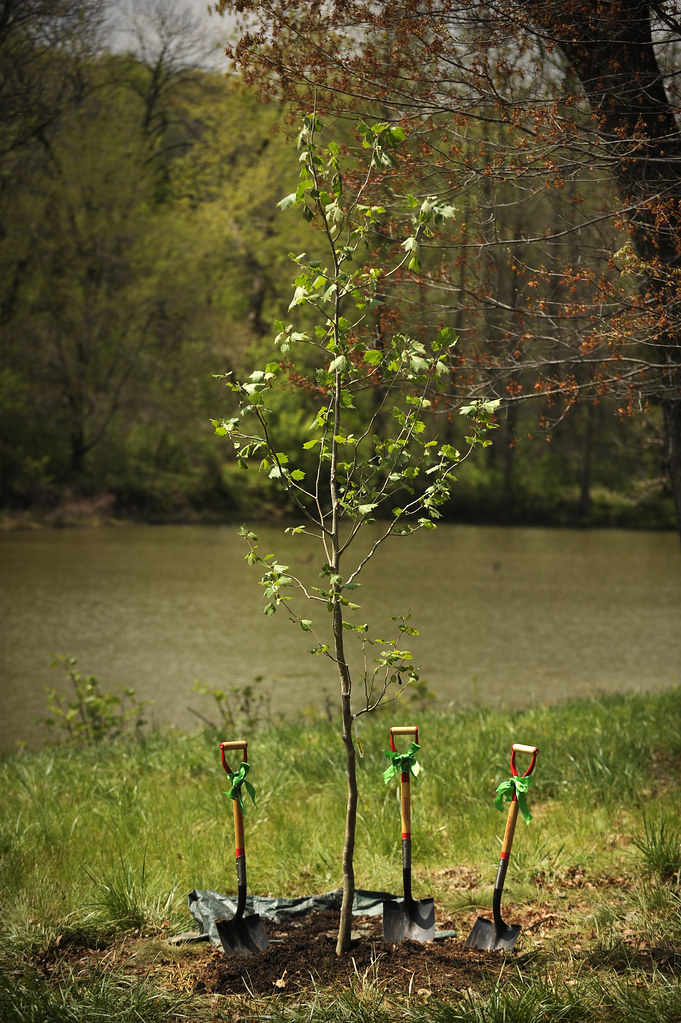
A tree produces oxygen and can absorb carbon dioxide. What could be more useful that that? We must reverse the loss of nature in the UK[4], if we are to stand any chance of addressing climate change. So, plant a tree for 2023. 


[1] https://www.surreycc.gov.uk/roads-and-transport/roadworks-and-maintenance/roadworks/junction-improvement-programme-m25-junction-10a3-wisley-interchange

[2] https://www.bbc.com/news/uk-england-south-yorkshire-64863130

[3] https://www.itv.com/news/westcountry/2023-03-15/anger-as-monsters-in-the-night-chop-down-more-than-100-trees

[4] https://www.woodlandtrust.org.uk/plant-trees/advice/how-to-plant/

Digital toxicity

There’s a tendency to downplay the negative aspects of the digital transition that’s happening at pace. Perhaps it’s the acceptance of the inevitability of change and only hushed voices of objection.

A couple of simple changes struck me this week. One was my bank automatically moving me to an on-line statement and the other was a news story about local authorities removing pay machines from car parks on the assumption everyone has a mobile phone.

With these changes there’s a high likelihood that difficulties are going to be caused for a few people. Clearly, the calculation of the banks and local authorities is that the majority rules. Exclusion isn’t their greatest concern but saving money is high on their list of priorities.

The above aside, my intention was to write about more general toxic impacts of the fast-moving digital transition. Now, please don’t get me wrong. In most situations such a transition has widespread benefits. What’s of concern is the few mitigations for any downsides.

Let’s list a few negatives that may need more attention.

Addiction. With social media this is unquestionable[1]. Afterall digital algorithms are developed to get people engaged and keep them engaged for as long as possible. It’s the business model that brings in advertising revenues. There’s FOMO too. That’s a fear of missing out on something new or novel that others might see but you might miss out on.

Attention. Rapidly stroking a touch screen to move from image to image, or video to video encourages less attention to be given to any one piece of information. What research there is shows a general decline in the attention span[2] as a characteristic of being subject to increasing amounts of information, easily made available.

Adoration. Given that so many digital functions are provided with astonishing accuracy, availability, and speed there’s a natural inclination to trust their output. When that trust is justifiable for a high percentage of the time, the few times information is in error can easily be ignored or missed. This can lead to people defending or supporting information that is wrong[3] or misleading.

It’s reasonable to say there are downsides with any use of technology. That said, it’s as well to try to mitigate those that are known about and understood. The big problem is the cumulative effect of the downsides. This can increase fragility and vulnerability of the systems that we all depend upon.

If digital algorithms were medicines or drugs, there would be a whole array of tests conducted before their public release. Some would be strongly regulated. I’m not saying that’s the way to go but it’s a sobering thought.


[1] https://www.theguardian.com/global/2021/aug/22/how-digital-media-turned-us-all-into-dopamine-addicts-and-what-we-can-do-to-break-the-cycle

[2] https://www.kcl.ac.uk/news/are-attention-spans-really-collapsing-data-shows-uk-public-are-worried-but-also-see-benefits-from-technology

[3] https://www.bbc.co.uk/news/business-56718036

Drop Of A Tweet

I’ve got a couple of vinyl copies of “At The Drop Of A Hat”. They turn up in charity shops from time to time. Those responsible maybe from the 1950s but the genius of Flanders & Swann never wanes.

For those of us who grew up in the 1960s there are songs that embedded in our childhood. “Junior Choice” was a BBC programme broadcast on Radio 1 and 2. From that regular show there’s a whole string of comic sings that I cannot erase from my memories.

There one song that we are told started life in Scarsdale Villas[1], South Kensington, South West London. Now, a part of London where the house prices mount in the millions.

Introducing each of their songs there was often a monologue saying something about the song. So, we know, uniquely one famous song is inspired by a badly parked car but is about an animal.

It goes like this. Michael Flanders was a wheelchair user. Kensington Borough Council helpfully dug out a part of the pavement and curb outside his flat so that he could get around. He recounts his annoyance that a thoughtless driver would often steal his parking space. 

In his monologue he jokingly praises the independent minded councillors of Kensington adding – there’re all Conservatives. That little bit of humour is so British. It maybe goes to the heart of the BBC’s current problems. They could be saying to us all: “of course we are independent, we are all conservatives.” Equating conservative attitudes to being “independent” is the norm in my part of Surrey.

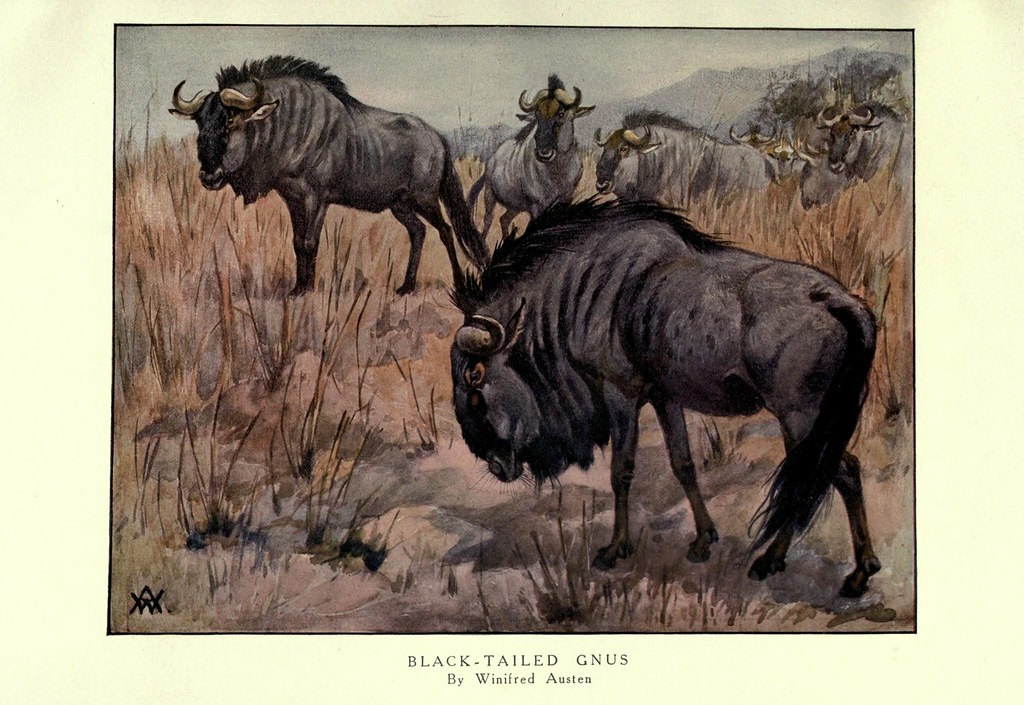
Back to the song. The antisocial parked car’s number plate began with the letters GNU. The rest is comic history. The two wrote: “The Gnu.[2]

To make the song work. They pronounced the animal’s name “G-noo”. What could be better than a word that rhymed with “zoo”. A place where we might find a Gnu[3].

The English language was changed forever.

Perhaps the lesson for the BBC is to look at its comic history. Learn lessons. To rise above the serious and intense debate of the moment, concede and reflect in amusement, and at leisure.

Sport is entertainment but so is politics when it gets absurd and ridiculous.


[1] https://en.wikipedia.org/wiki/Scarsdale_Villas

[2] https://youtu.be/j53z6RfFb7U

[3] a large African antelope with a long head, a beard and mane, and a sloping back. Also called a wildebeest.

Shameful

Let’s look at the current fetor objectively. Is it reasonable to say that the Government is using language that is reminiscent of political parties in Germany in the 1930s?

Politicians speaking stridently about making new laws plays well with media commentators and meets the need of being seen to be doing something, even if that something is highly flawed.

To marshal support for a much-criticised proposal, the language being used by Conservative politicians is harsh. Speaking in the House of Commons, a Minister said “there are 100 million people” who would qualify for asylum in the UK. This is reminiscent of the right-wing rhetoric used in 2016 by the referendum Leave campaign to say that 10s of million of Turkish people would come to the UK is we stayed in the European Union (EU).

Shamefully, scare stories about migration are the bread and butter of right-wing politicians much as they were in early 1930s in Germany. It’s clear, that the much-discussed Tweet by a well know football commentator[1], this last week has touched a political nerve. The truth often does touch a nerve.

There’s more than double trouble with Conservative politicians forcing the UK’s “independent” national broadcaster to sanction a well know football commentator for a private remark.

Godwin’s law[2] is known to politicians but maybe not more widely known. Basically, starting an argument by mentioning a comparison to Nazis is not a good a way to win a case. It’s that making an extreme comparison can undermine the credibility of a fair case against something bad.

Now, a national broadcaster with an obligation to aim for political impartiality, with respect to news and current affairs, is inconsistency jumping on the head of one of its popular faces. 

It’s sad that scrutiny of a proposal for a bad law is being overshadowed by an entirely unnecessary media spat. An unnecessary spat that is undermining free speech in the UK[3]. I do not think that Conservative politicians engineered this situation, but they unjustly are benefiting from it. The controversy is corralling right-wing support for a government bill that is full of holes.

I don’t know how we got to this ridiculous state but it’s part of a trend that has been evident since 2016. The reason an evil political party succeeded in Germany in the early 1930s is that they masked their true intent, and countless people discounted their prospects of electoral success. There’s an important lesson in history that we should never ignore.

The language politicians use does matter. It matters a lot.


[1] https://www.standard.co.uk/topic/gary-lineker

[2] https://en.wikipedia.org/wiki/Godwin%27s_law

[3] https://news.sky.com/topic/gary-lineker-7610

Comms

The long history of data communications between air and ground has had numerous stops and starts. It’s not new to use digital communications while flying around the globe. That said, it has not been cheap, and traditional systems have evolved only slowly. If we think Controller Pilot Data Link Communications (CPDLC)[1] is quite whizzy. It’s not. It belongs to a Windows 95 generation. Clunky messages and limited applications.

The sluggishness of adoption of digital communications in commercial aviation has been for several reasons. For one, standardised, certified, and maintainable systems and equipment have been expensive. It’s not just the purchase and installation but the connection charges that mount-up.

Unsurprisingly, aircraft operators have moved cautiously unless they can identify an income stream to be developed from airborne communication. That’s one reason why the passengers accessing the internet from their seats can have better connections than the two-crew in the cockpit.

Larger nations’ military flyers don’t have a problem spending money on airborne networking. For them it’s an integral part of being able to operate effectively. In the civil world, each part of the aviation system must make an economic contribution or be essential to safety to make the cut.

The regulatory material applicable to Airborne Communications, Navigation and Surveillance (CS-ACNS)[2] can be found in publications coming from the aviation authorities. This material has the purpose of ensuring a high level of safety and aircraft interoperability. Much of this generally applicable material has evolved slowly over the last 30-years.

Now, it’s good to ask – is this collection of legacy aviation system going to be changed by the new technologies that are rapidly coming on-stream this year? Or are the current mandatory equipage requirements likely to stay the same but be greatly enhanced by cheaper, faster, and lower latency digital connections?

This year, Starlink[3] is offering high-speed, in-flight internet connections with global connectivity. This company is not the only one developing Low Earth Orbit (LEO)[4] satellite communications. There are technical questions to be asked in respect of safety, performance, and interoperability but it’s a good bet that these new services will very capable and what’s more, not so expensive[5].

It’s time for airborne communications to step into the internet age.

NOTE: The author was a part of the EUROCAE/RTCA Special Committee 169 that created Minimum Operational Performance Standards for ATC Two-Way Data Link Communications back in the 1990s.

POST 1: Elon Musk’s Starlink Internet Service Coming to US Airlines; Free WiFi (businessinsider.com)

POST 2: With the mandate of VDLM2 we evolve at the pace of a snail. Internet Protocol (IP) Data Link may not be suitable for all uses but there’s a lot more that can be done.


[1] https://skybrary.aero/articles/controller-pilot-data-link-communications-cpdlc

[2] https://www.easa.europa.eu/en/document-library/easy-access-rules/easy-access-rules-airborne-communications-navigation-and

[3] https://www.starlink.com/

[4] https://www.esa.int/ESA_Multimedia/Images/2020/03/Low_Earth_orbit

[5] https://arstechnica.com/information-technology/2022/10/starlink-unveils-airplane-service-musk-says-its-like-using-internet-at-home/

Small Boats

Are there really hundred million people coming to Britain? Or is this a desperate scare tactic adopted by a Conservative Minister who has run out of workable ideas? It’s certainly the sort of tabloid headline that a lot of conservative supporters like to read. As we saw in the US, with former President Trump’s rhetoric on building a wall these themes stir-up negative emotions and prejudice. It’s a way of dividing people.

Xenophobia is defined as a fear and hatred of strangers or foreigners or of anything that is strange or foreign. With nearly 8 billion people on Earth[1] the potential for this destructive fear to be exploited has never been greater. Here, the Conservative Party is increasingly dominated by xenophobia and demagoguery, whatever a change of leadership may be trying to cover-up.

Will Parliamentary debate save us from the worst instincts highlighted in the Government’s latest proposals on small boat crossings? That’s a big question when the ruling political party has such a large parliamentary majority. Debate is likly to be heated and lacking objectivity.

Pushing the boundaries of international law can cause reputational damage, even if these rum proposals are defeated. However, what concerns most commentators is the high likelihood that the proposed measure will not work. They are merely a more extreme version of past failed policies.

One of the poorest political arguments is to criticise an opponent for reasoned opposition. It goes like this: here’s my policy and by opposing, it without providing your policy, you automatically make my policy a good one. It’s like planning to build a dangerously rickety bridge, likely to fail, and pointing to those who criticise the project as a reason why it’s a good to project.

When spelt out, like this it’s clear how curiously subversive this shoddy bombast can be. However, one of the basic party-political instincts, to seek headlines and publicity, has overridden common sense in this case. In the Government’s case, legislating regardless of the consequences, is an act of political desperation. Sadly, that’s where we are in this pre-election period.

NOTE: In June 2022, the UK had a prison population of roughly 89,520 people. The detention facilities needed to enable the Government’s small boats policy would need to be in the region of 40,000 people. Yet, there’s no published plan for a significant expansion of detention facilities. 


[1] https://www.census.gov/popclock/world

Big Red Barn

Farmers lung is not a myth. Or at least the causes are real. Being under a haybarn roof on a super-hot summer day with dust and chaff saturating the air is not to be recommended. The red painted galvanised tin roof of the barn created an oven to work in.

Haymaking was a big event in my family’s year. My pocket money was earnt at haymaking time. My brothers and I did a lot for 25p an hour.

It was never entirely the same from year to year. That is, even if the work of cutting grass, drying it, baling it, stacking it, and hauling it back to the barn was the same. Weather made the biggest difference. Damp heavy bales or light dry bales are a world apart.

Each field presented a different test of our strength and endurance. They all had names. “Big Ground” was flat, wide, and open but wet at one end. “Pump Ground” sloped towards the small brook and had its own ruts and wet patches. “Goulds Farm Moor” was a far-off place, or it seemed to me, that was bounded by the River Cale. “Little Ground” was the easiest and its name says why.

Back to the big red barn. We refined stacking hay bales as if it was an artform. There were good practical reasons for taking care where hay bales were placed. They were building bricks. Like Lego. Stacking them alternately gave some stability. We learnt by making mistakes. If we didn’t stack them differently from layer to layer the whole construction would move alarmingly or present crevasses which were less than safe.

In the big red barn, at least the steel uprights gave some square corners and support. In a field, a hayrick had to be built with a sound foundation and skill otherwise it would not survive the winter.

Most of the summertime, it was too hot and sweaty to wear gloves. That wasn’t so bad when baler twine was made of sisal[1]. As polythene baler twine came along it could be brutal on the hands.

As a 15-year-old, my ability to throw hay bales across a barn is not something I could match now. That is picking them off a much abused Lister bale elevator and then throwing them to whoever was staking, Dad or one of my brothers. We’d swap jobs from time to time. Staking was often the hardest job. Keeping up with the pace was tough.

As an aside the bale elevator[2] itself was a story. Every year, Dad would grease and oil it to make sure the moving parts worked. Inevitably the winter took its toll on the mechanics and a fix had to be improvised. I use the word “improvised” but what I really mean is botched. Baler twine, coach bolts and nails have many uses.

Powering the whole contraption was a much-abused Briggs and Stratton petrol engine[3]. It had a cord pull start. It was one where we often pulled endlessly in hope rather than and chance of getting it to start. When it did start, if the drive chain didn’t come off, it would warble away contently.

It’s droning sound moved up and down the scales as more or less bales were place on the elevator. If, usually my Mum, would put more than 4 bales on the conveyer it would all but stop. Slowly puffing away and straining to get the load to move. Most disturbing was the habit the engine had of leaking petrol. How we never came to burn down a hay barn or stack I will never know.

Looking back in time, the whole show was a health and safety nightmare. In 1975, that was not the overriding thought that went through anyone’s head. We live to tell the tale.


[1] https://www.chelfordfarmsupplies.co.uk/farmer-s-golden-sisal-baler-twine-9000

[2] https://www.agrimanuals.com/lister-multi-level-elevator-brochure-4522-p.asp

[3] https://www.briggsandstratton.com/na/en_us/support/faqs/browse/antique-engine-specifications.html#Collectors

App folly

Isabel Oakeshott is interviewed. We are no wiser. The ins and outs of the story of Conservative Government Ministers during the COVID pandemic lockdowns is a story that will be written a thousand times. Hectares of the social media landscape will repeat every embarrassing blunder and poorly thought-out assertion. These ins and outs need to be dissected but it’s not work for those tying to improve their mental health.

People who have had some exposure to British politics often love “Yes Minister”, the BBC series that overflowed with wit, twists and turns. It lifted the lid on the stumbling workings of Whitehall and the political class. At the time the series was made there were no mobile phones in every pocket and paper was still king. Civil servants carried bundles of files down endless corridors. This wood panelled and stuffy environment was a commonplace image.

Opening a file really meant getting a folder and putting numerous memos and reports in it. Staking it high with the record of decision-making for future generations of historians to dissect.

In the 1970s, the speed of communication was mitigated by the medium. When it came to paper trails, that was a relatively human speed. Typed up memos were rarely dashed off without a thought. Documents were released with an official stamp and multiple signatories.

Fast forward to the 2020s. Office desks appear totally different from the past, that is if one exists at all. Mobiles have concentrated super-fast digital communication tools into the palm of a hand.

That said, official and unofficial communication channels continue to play their part in the corridors of power. What is shocking, in the current news stories is just how much the unofficial communication channels seem to dominate.

Afterall, we are not taking about a release of official Government emails. It’s worth asking; why are Government Ministers using WhatsApp[1] so much? It’s a widely available commercial messaging application owned by the US company Meta.

Is the machinery of political governance getting so lax in the UK that we are behold unto a messaging mobile App over which we have no control what-so-ever? 

Globally, WhatsApp may have over 2 billion users but that’s no guarantee of its integrity. The system does get hacked. Ministers using unofficial communication channels as if they were totally within their control are foolish, unethical, and naïve, to say the least.


[1] https://en.wikipedia.org/wiki/WhatsApp