Cold Data

It’s cold. The numbers on the energy meter keep clocking up and getting to new highs. Compared with last year my energy bill is going to be horrendous. Add to that inflation on just about everything else and it’s hard work to make it a winter of good cheer. Smart energy meters are useful in that they give real time feedback on household energy use. I’m not sure they have an impact on behaviour, but meters do forewarn of astronomical bills to come. Comparing Christmas past, present and Christmas future gave author Charles Dickens an idea.

Looking at media reports this year’s Christmas looks more Dickensian than ever. That is without the transformation that Mr Scrooge[1] underwent. It’s certain the attitudes of Ministers resemble that of Mr Scrooge. Protect the moneymen in their obsession with money and penalise the ordinary working soul. This story is being played out up and down Britain.

The fact that it’s not seen as strange to be talking of freeing up the City of Lonon from regulation at the same time as restricting and controlling working men and women is a bad indication of these difficult times. The Prime Minister may look like a busy light-hearted mouse, but he has a heart as cold as the winter mists.

As the Government has said it wants to collect data from our smart meters, I wonder what can possibly flow from that intrusion into our privacy. In so far as it might guide national policy and reminds Ministers of the benefits of insulating homes, data collection could be helpful. However, there’s a dangerous precedent set when Governments collect every bit of data homes produce.

There’s a creeping tendance to always ask for more data. Mr Scrooge can then compile a leger on the comings and goings of every citizen. Don’t believe for one moment that GDPR will protect our data. Personal information such as names, addresses and bank details are not stored on a smart energy meter. However, computing capability being as powerful as it is, relating energy data to its point of collection and thus bill payer isn’t so difficult to do.

To me, this recalls the saying about knowing the cost of everything but the value of nothing[2].


[1] Ebenezer Scrooge, character in the story A Christmas Carol (1843) by Charles Dickens

[2] Oscar Wilde’s famous definition — someone who “knows the price of everything and the value of nothing”

Reform

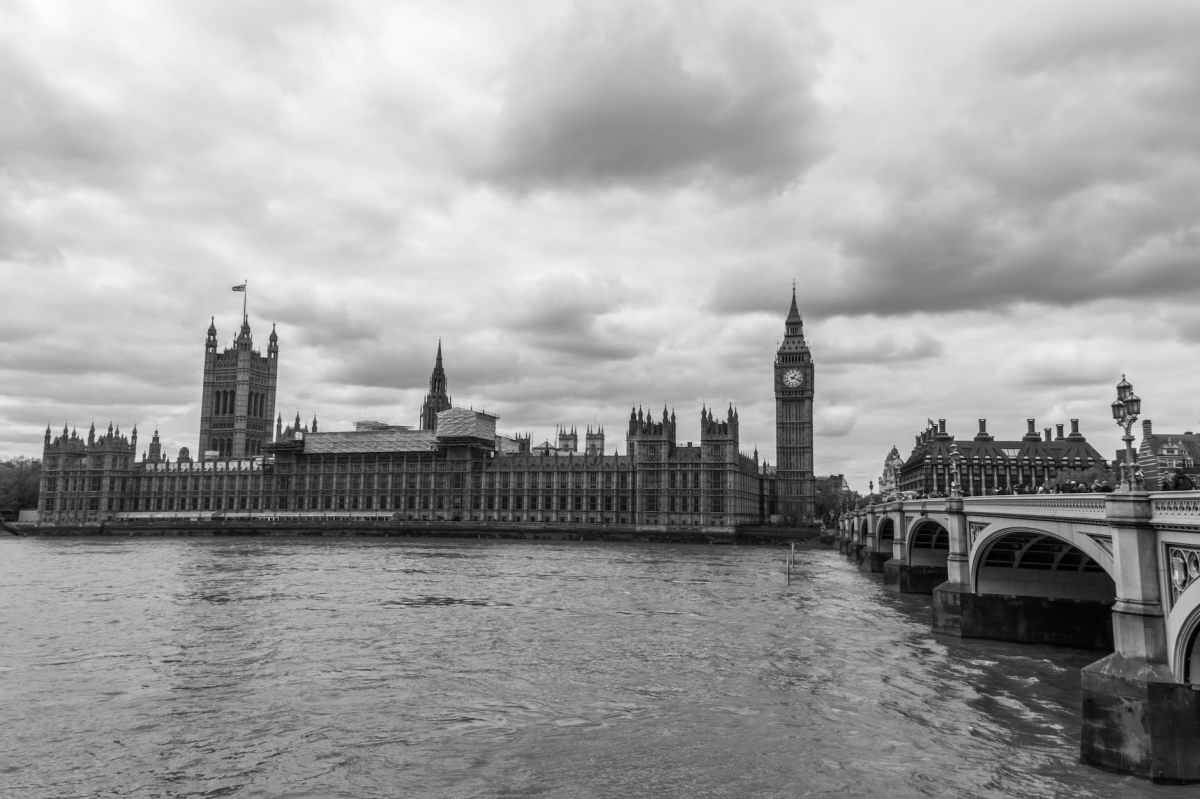
The UK’s recent political calamities make it look like we have a long-run soap opera rather than an example of effective governance. There are examples of good governance. Look at the role played by select committees in holding decision makers to account. That’s a rare example. One reason for the last six years of turmoil is that stultifying lack of innovation and blockheaded belief in MPs superiority. Gradually, Parliament has become disconnected from everyday life. It mimics a theatre of the absurd in its form and manners. 

Parliament will be relevant to people if it’s seen to work for people. Today, any claim that it works raises laughter and sullen looks.

So, I welcome Labour’s former Prime Minister proposing a rewiring of the UK Parliament. The House of Lords (HoLs) in its current form is “indefensible”. Naturally, the tabloid media uses the word “abolish” for its dramatic impact. Better to say that there’s a transformation to be undertaken to bring our democracy into the 21st century.

This is not as new as detractors might suggest. Here I sit not far from a rotten Borough[1] that returned two Members of Parliament at a time when cities like Manchester returned none. Gatton’s disfranchisement was agreed on 20 Feb. 1832. Yes, that’s 192 years ago but in terms of the evolution of the British constitution that isn’t that long ago.

The arguments against the current HoL should not be based on an attack against all its members. There are many who take their role extremely seriously and perform the scrutiny of Government bills with care and diligence. However, out of the large number of members many do little.

It’s the legitimacy and structure of the institution that are highly questionable in the 2020s. The form of the HoLs does not represent the country. It’s manner of working is stuck in pre-history. It’s a sign of reward for a tiny minority.

Both Canada and Australia have a Parliamentary system. Their second chambers are based on a more rational, democratic and effective structure. They provide regional representation as well as scrutiny.  A Senate of the UK makes sense to me.

It’s well overdue that the “Mother of Parliaments” stepped into the world we all inhabit.


[1] https://historyofparliamentonline.org/volume/1820-1832/constituencies/gatton

Pet Peeves

We all have annoyances that set off a cringe. Some of these are individual and some are widely held. A 19th century term sums up these irritations. We can group them together and call them “pet peeves[1]”.

Adding ingredients can make a better bake. It’s the right ingredients, and the right proportions that make the bake work. If words are the ingredients there are some phrases that taste bad regardless.

In German the habit is to composite words. To take two ingredients and add them up to make something new. I think “Fernsehen” for Television is a wonderful example. But here both German and English do the same thing.

Adding words together to convey an idea or emphasis can backfire in producing ambiguous baloney and irritation.

One of my recent pet peeves is the overuse of “laser like focus.” It’s meaningless even though it tries to say that a person focus is heightened in some way. It’s a politician’s favourite.

Back to ingredients. It’s like, instead of saying: it’s a carrot, say it’s a carroty carrot. So, let’s keep one’s eye on the ball and make a mental note of the need for complete and utter focus. Excluding everything else is not only dangerous, but also a deception.

There’s a pollical combination of words that makes me cringe every time I hear it echoed. The two words are “world-beating.” It’s trying to capture the notion of unparalleled superiority. Putting an achievement, policy, or idea beyond comparison, which is clearly nonsense.

Another pet peeves, that’s come up this week is “technology agnostic.” I know what it means but it’s like taking vagueness and making it vaguer.

As the word get ever more complex so words like “sociotechnical” pop-up. In fact, lots of words get composited with tech or techno or technical. Some make sense and other are pure baloney.

There’s “tech enabled” where a thing is boosted by new technology. That’s not so bad. This then means there are such things as “enabling technologies” which is a leap of faith. Point being that all new technology can be enabling something or other.


[1] https://www.merriam-webster.com/words-at-play/why-do-we-have-pet-peeves

Tramline

The time for change is now. It’s not much more than a year before a UK General Election. Sadly, we are seeing only reactive thinking from the two largest British political parties. Both bounce off each other like a game of ping pong. There’s a conversation going on across the country about the need for change, but the Conservatives and Labour Party are stuck on a tram line.

“It’s the economy, stupid.[1]” I remember reading James Carville’s book about Bill Clinton’s 1992 presidential campaign. It’s about the great political motivator of how people feel about the amount of money they have in their pockets. Probably shouldn’t put it like that anymore since we tap every purchase with a card and local bank branches are closing. Cash is no longer king.

As an example of the terrible economic damage that Brexit is doing, we need only look at trade figures between the UK and Germany[2]. There’s been a huge fall in trade between the UK and Germany during the first period of the post-Brexit trading relationship. So far, the impact of the EU-UK Trade and Cooperation Agreement (TCA) has been negative.

Knowing the facts, the Conservatives and Labour Party still parrot the nonsense that they know how to make Brexit work. It’s a peculiar dance around an economic corpse. Where both political parties point fingers at each other for ruining the dance.

Except for trade specialists, the British media are being inarticulate about the failings of Brexit. It’s as if there’s a distinct fear of being called out and ostracised. Many of those who should be speaking out are sitting on their hands. Maybe this is the dull precursor to change since we don’t know what the public mood will be in a year’s time.

Brexit does not negate the facts of geographic proximity, globalisation and decades of close economic partnership. Close European links will continue and need to be nurtured. Politicians who have wilfully attempted to destroy the bridges built between the UK and the EU belong to the past.

A Government that continues to endanger more than just back pockets and living standards shouldn’t win another term of office – should they? Will people vote for candidates who plan to improve our dismal economic outlook? Those who will tell the truth about Brexit. Today, neither the Conservatives nor Labour Party are telling the truth.

POST: What can we know about the cost of Brexit so far? | Centre for European Reform (cer.eu)


[1] https://en.wikipedia.org/wiki/It%27s_the_economy,_stupid

[2] https://www.bbc.co.uk/news/56347096

Air Safety List

A long time ago in a far away place. Well, that’s how it seems, and it was more than 17 years ago.

A flight ban was placed on Turkish airline Onur Air back in 2005. At that time, I was in my first full year in Cologne, Germany building up the European Aviation Safety Agency (EASA). We were well on the road managing the handover of responsibilities from activities of the Joint Aviation Authorities (JAA) to EASA. However, the European legislation that empowered EASA was in a first and most basic version. This was planned to be so because taking on aircraft certification work was a big enough task to start the new Agency.

The JAA had coordinated an aircraft ramp inspection programme and maintained a centralised database for its members. This was where a member state would inspect an aircraft arriving from a third country to ensure that international rules were fully met. The SAFA programme was launched by the European Civil Aviation Conference (ECAC) in 1996. SAFA standing for Safety Assessment of Foreign Aircraft.

Onur Air failed such inspections, and the Dutch government imposed a flight ban[1]. Similar bans were imposed by Germany, Switzerland, and France. However, if my reflections are correct the airline moved operations to Beligum where there was no ban. As you might imagine this caused concern amongst EU Member States. Where everyone had agreed to cooperate on aviation safety matters there seemed to be a degree of incoherence.

Long before the first EASA Basic Regulation, which by the way, didn’t address this subject, there was Regulation 3922/91[2]. I remember a hastily convened committee composed of representatives of the Member States and chaired by the European Commission (EC). The “3922[3]” committee hadn’t sat for years but then it sprung into action in response to the lack of a consistent approach to airline safety bans across Europe. I was there representing EASA.

So, the EU Air Safety List was born and the associated legislation[4] to support it. Even though the UK has left the EU, and left EASA this safety list remains the basis of the UK’s own Air Safety List[5]. Adding and removing air carriers and States that fail to meet internationally agreed safety standards is work that no one State should do alone.

[For safety’s sake, this should not be one of the parts of adopted EU legislation the UK Parliament wants to sweep away with its planned new Brexit law].

POST: Current list The EU Air Safety List (europa.eu)


[1] https://www.expatica.com/nl/general/dutch-lift-ban-on-onur-air-38258/

[2] Council Regulation (EEC) No 3922/91 of 16 December 1991 on the harmonization of technical requirements and administrative procedures in the field of civil aviation.

[3] https://eur-lex.europa.eu/LexUriServ/LexUriServ.do?uri=OJ%3AL%3A1991%3A373%3A0004%3A0008%3AEN%3APDF

[4] https://eur-lex.europa.eu/legal-content/EN/TXT/PDF/?uri=CELEX:32005R2111&rid=6

[5] https://www.caa.co.uk/commercial-industry/airlines/licensing/requirements-and-guidance/third-country-operator-certificates/

House of the past

Legacy. So, many of our problems are because we carry the millstone of the worst of the past. It would be nice if the best of the past guided us forward but that’s not the English way.

In 1990, we were treated to a television feast. A wonderful political thriller that echoes down the years. House of Cards[1] reflected and exaggerated the twists and turns of life in a fictional Westminster. It was the post Thatcher era. Surrounding succession, intrigue, and dastardly goings on filled the corridors of power and Parliament.

One of those sayings that keeps bouncing back in respect of politics is: “under a tall tree nothing grows” and variations on that theme. In essence it can mean that the aftereffects of having had a powerful leader, or a period of unchallenged power is inevitably a desert of ideas and imagination.

Ian Richardson’s portrayal of Francis Urquhart is masterful. House of Cards depicts the scrabbling for power, for the sake of power that consumes British politics from time to time. It shows how the greedy, incompetent, and foolish can be manipulated by a clever person with devilish intent.

32 years on it is surprising, although it shouldn’t be, how much of the series resonates with the political turbulence of 2022. The 1990s were different times. No social media. An infant digital world as mobile phones were just starting to impact daily life. That said, untrammelled ambition adapts to whatever technology is available.

What’s missing this year is any British politician that can be said to be charismatic. We are blighted by a cohort of dreary managers, automatons, and greasy pole climbing jobs worths. This adds to the reason that we need a General Election. Not for more turbulence and squabbling but for a clear out and to bring in new thinking.

What might happen on the other hand is that those who still have the potential to thrive outside Westminster will jump ship rather than suffer defeat. That means the good and the bad. Case in point being the former pensions secretary Chloe Smith Conservative MP for Norwich North, who will be standing down.

The shadow of the Thatcher era haunts the Parliament. It’s about time to open the curtains and let in the light in. There’s a stale mist hanging over the House of Commons. The remaining Eurosceptic vampires need to be consigned to the vaults.


[1] https://www.bbc.co.uk/programmes/b0082dzs

Migration

Should we dismiss Sunak’s and Starmer’s recent statements as political posturing as they look towards the next UK General Election (GE)? There’s an effort to stand on a tight rope or draw nil – nil. Both by softening attitudes towards the European Union (EU) but at the same time throwing the occasional policy red meat to the entrenched Tory and Labour Eurosceptics.

It’s a strange game of chicken? Both major British political parties are fractured by Brexit. Both would wish to see that fracture grow in the other.To date the bigger fracture is in the Tory party. That should not be a surprise given the large number of UKIP and Brexit Party supporters it has integrated into its core. Old fashioned “one nation” Tories must feel lonely indeed. Then again, former Corbyn supporting Labour socialists must feel an equal loneliness.

It’s like, it can be said that all new cars look the same. The migration towards one political formula, that is believed to be mainstream, even if it isn’t, has become irresistible by Sunak and Starmer. It’s a 180-degree change in political strategy, putting the Truss debacle behind them both blue and red now want to occupy the same political space.

There’s no doubt we all want a more prosperous society. It’s how to get there given the perceived political constraints that becomes a great barrier. The power to make changes rests with businesses, industry, and those in political office. This week the CBI’s membership has invited both blue and red to make their pitch[1]. Two days of high-profile speeches are taking place in Birmingham. Both parties are aiming low.

Listening to Jonathan Reynolds, Shadow Secretary of State for Business and Industrial Strategy there’s little to choose between Labour and the Tories. Against freedom of movement. Both pandering to their Eurosceptics. Both peddling policies that look like variations on a theme. Playing as if the stands are empty. As if no one is watching.

Today, indications are that there will be a large anti-Tory vote at the next GE. They deserve to loose. However, if between now and then both blue and red make themselves look the same to the electorate, the winning gap may be smaller than expected.

There’s a crucial role for the Liberal Democrats and the Greens to offer a real choice of real change.


[1] https://www.cbi.org.uk/articles/cbi-annual-conference-2022-watch-the-keynote-speeches-live/

Betrayal

One word that sums up this UK Conservative Government is “betrayal”. Certainly, that’s what British farming is thinking as people hear a former Secretary of State for Environment, Food and Rural Affairs rubbish a deal that he sold to the UK Parliament. The post-Brexit free trade deal between UK and Australia, which was much criticised when announced, is now described as a bad deal by the person who sold it. British farmers have been sold down the river.

It does say to the world that you are a complete mug if you believe anything a Conservative Cabinet Minister says. Breaking promises so blatantly has stirred up much disbelief and anger[1]. This case is especially shocking given that there was virtually no parliamentary scrutiny of the trade deal.

So, what’s Brexit advocate George Eustice’s[2] defence for such disgraceful behaviour. It’s to raise the flag of collective responsibility. In other words – I was only following orders.

Spearheading the trade deal, Liz Truss, under the leadership of Boris Johnson, it seems Eustice behaved more like a mouse than an honourable gentleman. If he truly believed that the deal between UK and Australia was a bad deal[3], he should have resigned and said so. To cling on to power these betrayers stand-up in parliament selling a deal that favours farmers in other countries.

Integrity is not just a word. Ministers should not stand-up and sell deals that they believe to be damaging[4]. Not only does it undermine trust in democratic politics but, in this case, it undermines the negotiating position for future trade deals.

Peddling an ill-conceived and appallingly enacted Brexit is immoral. Backing a party-line that is damaging to British interests criminal. Sadly, that’s where we are in 2022. This happened in the face of loud warnings being sounded. Dogma ment that Ministers activly ignored these warnings. Surely, it’s time to turn the tide on this dreadfully damaging behavour. We need a General Election – now.


[1] https://www.fwi.co.uk/news/eu-referendum/george-eustice-faces-farmer-backlash-over-trade-deal-comments

[2] Eustice stood unsuccessfully in the 1999 European Parliament Elections as a candidate for UKIP in the South West of England.

[3] https://www.bbc.co.uk/news/uk-politics-63627801

[4] https://www.standard.co.uk/news/politics/george-eustice-australia-brexit-trade-deal-uk-b1039875.html

Change

It might be tempting for some politicians to thinks that the Conservatives have behaved so badly that the British public will not forgive their follies. In 2022, levels of incompetence and bad conduct have been astounding in the modern era.

The latest election polls for the next General Election (GE)[1] constructed with a uniform swing calculation of the polling averages (poor way to compute), shows a large winning Labour Party majority. That would be the political pendulum swinging hard from right to left, from blue to red.

There’s a problem with this analysis. Not least does it skate over the conditions that exist within the “swing seats”, that is those Parliamentary seats that are expected to change hands. It also takes for granted that the public mind will continue to be affected by the dreadful performance of the Conservatives in power. That famous political quote: a week is a long time in politics[2], surely needs to be read more than once.

It is often the cases that an incumbent party has an advantage in any political competition. Uprooting those clinging to power is never easy. Countering that, it is the case that a party is more likely to win by highlighting the deficiencies of their opponents. Eventually voters get fed up with a litany of failures and stupidities.

What’s missing is a positive construction of a vision for the future. Bringing about political transformation should not be a leap of faith brought on by sheer desperation. It’s understandable that voters may not wish to stomach more of the same. Wouldn’t it be so much better if they are drawn to a vision for a brighter future?

Today, I don’t see the articulation of that brighter future. What I do see is too much on specifics like how to fix this or that and how to pile more funds into this or that. A lot of what we hear is chasing the daily news cycle. The speed of news drives the political responses. Potential leaders are lagging the immediate cacophony.

My view is that a progressive political transformation can happen. What’s needed is that expression of, not so much how to change, but what will a changed country look like, and feel like. It is that vision of the promised land. Now, that sounds a bit grand. Maybe that’s what scares off opposition leaders from speaking of a better world.

Is it the case that modern-day British politicians fear raising the bar too high? Fear that raising expectation will result in ultimate disappointment. It could be so. What is needed is someone to cut through that fear. To frame words that communicate a vision.


[1] UK General Elections are scheduled to be held a max of 5-years from the first meeting of Parliament plus 25 working days, in accordance with the Dissolution and Calling of Parliament Act 2022.

[2] https://en.wiktionary.org/wiki/a_week_is_a_long_time_in_politics

What next?

When I returned from German, in early 2016, I had no idea there would be a national referendum. Let alone that the referendum on European Union (EU) membership would be lost by a tiny margin and then send the UK into political and economic turmoil for years and years. It was a strange period.

As of me writing these words, the UK has had its fifth Prime Minister (PM) since the Brexit referendum. We’ve had a pandemic, the invasion of the Ukraine and the now an energy and economic crisis, not to mention an on-going climate crisis.

I don’t say it was, but if Brexit was a politically inevitability there couldn’t have been a stupider time to do it in the history of the country. There we were, having all but recovered, remarkably quickly from the banking crisis of 2008 and then we voluntarily threw asunder the UK’s most important trading relationship. There even seemed a time of relative national contentment as London hosted the most spectacular Olympic games in 2012. That was washed away like a flood of foolishness.

As idioms go: “here’s nowt so queer as folk[1]” about sums it up. That could be a political maxim for our times. It may be a particularly English trait. I absent my Scottish, Welsh, and Irish friends from this classification. It goes like this, I’d say, when all’s well it’s a time to do something daft. That feeling should be resisted as much as possible.

The result of 2016’s fantasy is that the relationship between the UK and EU is torn by tension, disputes, and disappointments. Instead of everyone benefiting from the excellent innovations of the Single Market and freedom of movement in Europe, the UK continues to pedal backwards.

There’s coming a moment when change might be possible. I am a great believer in disproportionate relationships. It’s like the statistical curiosity of buses arriving in threes. There are periods of time when things seem to be stuck on a tramline and nothing interesting changes. Then a moment of transition occurs and suddenly new possibility crop-up.

Why do I say this? Well, polls, such as they are, are showing a significant public willingness to reconsider what happened in June 2016[2]. Not only that but because of the “Truss debacle” the advocates of Brexit are on the back-foot. They did trash the economy with little care or concern.

With a UK General Election (GE) looming there’s a strong likelihood that anyone shouting for more Brexit will suffer the same fate as Trump’s red wave (or lack of it) in the United States (US). This will upset hard core Brexiters, but in all fairness, they have had plenty of time to show the benefits of their beloved project. They have shown none. In fact, we continue to go backwards under the yoke of blind Brexit dogma.

The UK and the EU can greatly improve their current relationship if they both choose. We have common problems, common challenges, and common threats. It would be of great benefit to all Europeans if we worked more closely together.

POST: The evidence points to one conclusion Why is the UK struggling more than other countries? – BBC News


[1] This phrase is typically used to emphasise someone’s particularly behaviour. (“Nowt” is a Northern English variation on “naught.”)

[2] https://bylinetimes.com/2022/11/02/brexit-polls-uk-public-want-to-rejoin-eu/