Windy Days

At a young age, I had learnt how to harness the power of the wind. One of my childhood constructions was based on a chunky 4-wheelled trolley that was used to move milk churns around our farm. It may have been redundant at the time when my boys own “land yacht” was created. What made it fun was that the front wheals were steerable. With a slight slope on the concrete farmyard and a windy day, it’s amazing how much fun could be had despite a crash now and then. My poor parents must have spent a lot of time patching up me and my brothers’ grazes, bumps, bruises and hurt pride.

In the 1960s, dad and mum were still milking cows, but milk churns had been replaced by a polished stainless steel bulk milk tank installed in the dairy at the back of the farmhouse. It wasn’t so much a dedicated dairy farm, as we had pigs and chickens and cattle, but the cheque from the Milk Marketing Board[1] probably kept the family finances in the black.

To create working sails there was plenty of discarded black plastic sheeting. This was used a lot to cover hay ricks so they would survive the winter without rotting. Nicely, this tough sheeting could easily be cut to any size and shape even if the discarded bits had rips and holes.

My first experiments with flight were unique. In so far as I know. More accurately the term “controlled falling” describes what we got up to when parents were not looking. Built on the fun had with my milk trolley yard yacht it seemed natural to experiment. Being in the Southwest windy days filled a sizeable number of days of the year.

Out the back, in a field behind the cow stalls was a standard Dutch barn. Quite a big one with a lean-to that faced roughly north. That painted red lead[2] barn was filled to the brim with hay. It was a sturdy construction that wasn’t going anywhere. A steel roof strong enough to hold an 11-year-old without any problem. I’m sure we were told off many times for getting up on that barn roof.

The black plastic rick covering material didn’t make good kites. It was too thick and heavy. What it did make was crude parachute constructions. I tried these as a substitute for a kite. Seeing a strange boy running with a string attached to an inflated plastic parachute must have been quite perplexing.

Having gained some feel for the power of the wind by playing, it was time to see if these experiments could be taken to the next level. Jumping off a hay barn roof may sound reckless and downright dangerous. However, I never was one disregard my own safety, even as a mischievous young boy. Having springy hay bales to land on or a soggy field where wellington boots sank deeply into the mud, lowered any physical risk considerably.

Parachuting off the hay barn roof proved to be a short-lived project. It almost worked. The wind did slow the inevitable plunge but not enough to make it enough fun to do it too many times. The baler twine parachute attachments got twisted and broke loose far too often. In so far as I remember no injuries were sustained in this boyhood madness. Well, a couple of bumps.


[1] https://discovery.nationalarchives.gov.uk/details/r/C179

[2] https://en.wikipedia.org/wiki/Lead-based_paint_in_the_United_Kingdom

Christmas past

My interest in machinery goes back to an age of 9 or thereabouts. It’s not easy to be accurate about times past. Memories are moments in time that can get mixed up in a chain of events.

Christmas presents for me, and my brothers were a mix of new and second-hand. Someone the second-hand ones were more valued than the new ones. If I close my eyes, I can still see the auction sale room[1] in Gillingham, Dorset where a mysterious collection of toys and bric-a-brac where exhibited every December. A white painted outhouse building that was never warmer than a fridge. Full to the brim with cast-off items and curiosities.

In the afternoon, surveying the goods before the sale was an exciting moment for me. It was a time to say, “can we have that?” The answer would depend on how much my dad was prepared to bid. That was a good life lesson. Knowing that wants were not always going to be met.

That’s where my Meccano[2] came from. Not just the metal variety but there was a larger plastic type too. It was a junior range. More cherished was the classic metal version. Green strips of metal and boxes of nuts and bolts arranged in neat plastic compartments. Unlike current versions, these kits gave only the merest hint as to what to build and how to do it. So much was left to the imagination.

Cranes and bridges were one of the more basic designs, I liked to build. The cranes had strings and pulleys to lift and lower things for the fun of it. Bridge builds could be tested to see if they were strong enough to carry weight.

Inevitably, the more I played the more the small Meccano nuts and bolts went missing. The noise an upright Hover vacuum cleaner makes picking up those nuts and bolts was so distinct. It was like many large hail stones hitting a tin roof. Rummaging through the vacuum cleaner bag with a magnet ensured all the neat plastic compartments remained full.

Those long gone dusty sale rooms in Gillingham were also the source of more than one chemistry set. That’s when a boy’s chemistry set paid only scant attention to personal safety. As much as to say I had an experimental childhood with a degree of freedom that was wonderful. The more I reflect, the more I can see that was the case. Luckly, I learnt a lot and got through it relatively unscathed.


[1] Chapman Moore & Mugford

[2] https://www.meccano.com/en_gb

Omnishambles

Ten years ago, the Oxford English Dictionary (OED) Word of the Year was a word that is as usable as ever. It wasn’t brought to the fore by social media. At that time, social media hadn’t bitten such a big chunk out of our attention time. We even had enough time to sit in front of the box on an evening. That said, the box hasn’t faded into the background entirely. The massive screens displayed in electrical stores remain a standard part of a typical living room.

“The Thick of It[1]” ran for four series and captured the insanity of Government spin-doctoring and fanatical incompetence. Unapologetically self-indulgent Ministers and their aides scuttled around reacting to every small vibration coming from the media. This was masterful fiction but it’s closeness to reality is the story of 2022.

In 2012, the media political arena adopted “Omnishambles” as shorthand for chaotic behaviour on a large scale. Although it started life as a way of describing the Labour Party’s muddles and confusions before 2010, it has a universal applicability. Westminster can be a whirlpool of volte-faces, embarrassments and unfathomable twists and turns. 2022 ends with none of this diminished.

So, what have we to look forward to in 2023? This winter of discontent[2] is mostly likely to escalate. The impact of inflation and energy bills are like an erupting volcano. A few minor earthquakes, then an explosive plum and finally the top gets blown off the mountain.

Brexit and the pandemic have left people feeling exhausted. So, to see their standard of living diminish as this Conservative Government shamelessly wobbles on regardless, then this becomes the straw that breaks the camel’s back.

The Prime Minister may try to mine what popularity there is in the public mind, but this is not the time when a new Margaret Thatcher[3] will step forward. This is where simple analogies with the past quickly unravel. In this case the Conservatives own the problems. There’s no denying their responsibility for the last 12-years.

To restore the hope, that things can improve, a new formula is needed. People are not looking for perfection but a convincing vison, some basic honesty, and robust resolve. 


[1] https://en.wikipedia.org/wiki/List_of_The_Thick_of_It_episodes

[2] https://www.bbc.co.uk/programmes/p06yc8k4

[3] https://www.businessinsider.com/thatcher-and-the-winter-of-discontent-2013-4?r=US&IR=T

Voters

It’s one of those things I do, most years. For the greatest part, I can predict what I’ll be doing in March-and April. It started back in the 1980s. At the time we lived in Cheltenham[1] town. Putting leaflets through doors. Knocking on doors. “Hello, I’m calling on behalf of …….” was usually the introductory line. With prepared words not only did I remind the town’s residents that there was a local election in May but let them know the name of the best candidate.

I’m writing this as credentials. Yes, I know a thing or two about the nitty gritty of local elections in the UK. My experience has been accumulated over nearly 40-years. Lots of cold early spring evenings and weekend delivery rounds to get a message out in a short space of time.

One of the biggest changes, in terms of practical organisation, has been a change that has affected all parts of life. In 1985, everything was paper based. If I said: “Shuttleworths[2]” to a 21st century campaigner there’s a good chance they will not have a clue what I’m talking about. These were paper pads used to record names and addresses of supporters.

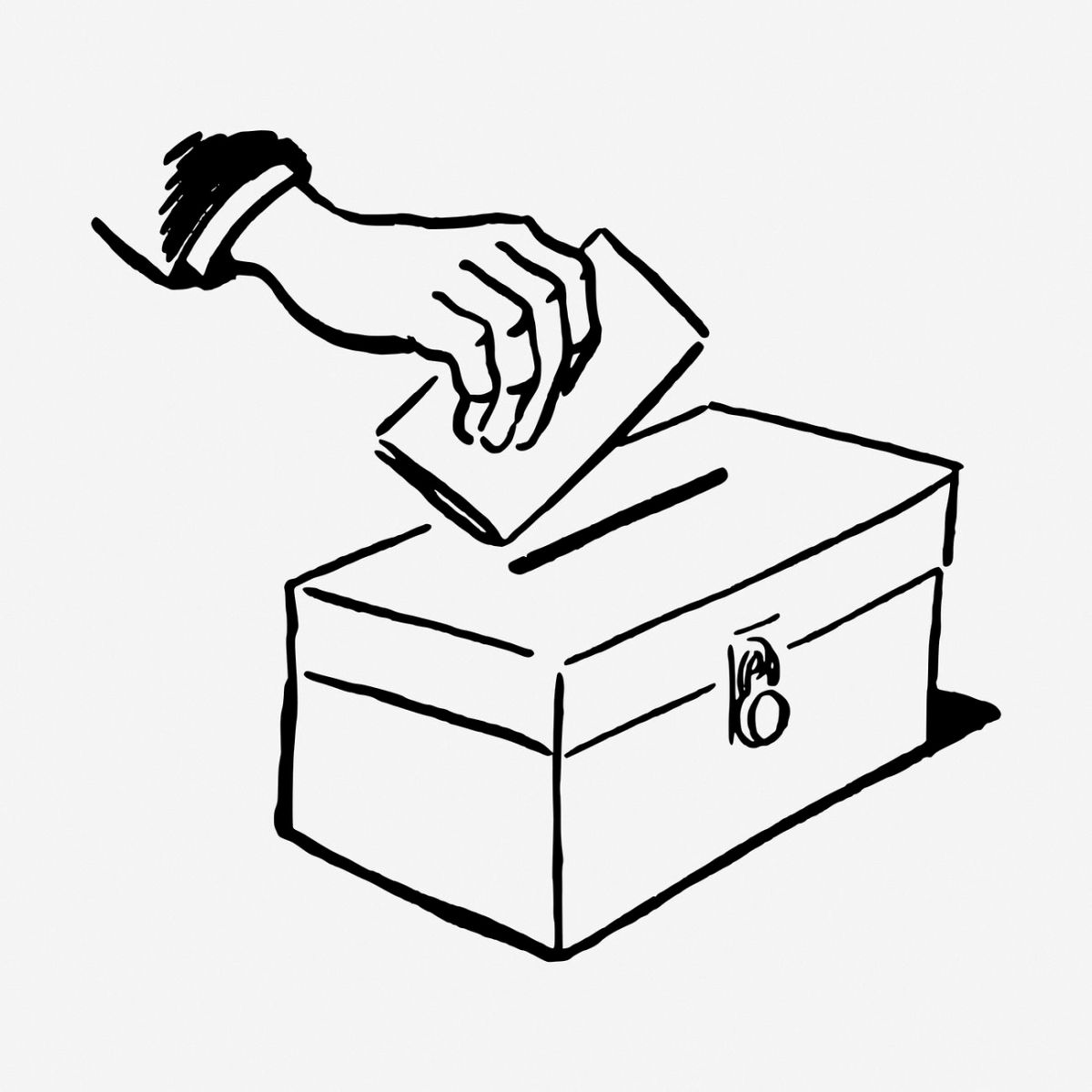
Local campaigning has undergone a digital transformation. However, in the British electoral system paper is still at the heart of everything that is done. The ballot paper is sacrosanct. Voters put a cross in a box set against a name and a logo. It remains inclusive in that there are few people who cannot manage that basic act.

In all my time campaigning, I can remember no voter fraud or corrupt activities. Yes, over enthusiastic, or idiotic behaviours pop-up now and then, as they do in all walks of life. It’s always an important function but also amusing to check spoilt ballot papers at an election count. A small number of voters can be creative in the insults and images they draw on ballot papers.

So, listening to last night’s Parliamentary debate on new Voter ID Regulations was distressing. The Conservative Government plan is to spend £180 million on solving a problem that doesn’t exist. This law is being pushed forward aggressively at a time when local Councils are cutting services due to lack of funding. The Local Government Association (LGA)[3] is saying that there’s not enough time to make the demanded changes before next May.

Ministers are ignoring such advice. Additionally, these regulations seem nonsensical. They impose new requirements on the operation of polling stations but do nothing in respect of postal voting. The natural suspicion for the forceful timescale is that this act is to suppress votes at a time when Conservative candidates are expected to loose in great numbers next May.

A further reason to be sceptical that Voter ID can prevent instances of electoral fraud is that convictions for voting offences have overwhelmingly related to postal votes, not personation at polling stations. Measure that create a barrier to voting in person will lower local election turnout. That’s a voter turnout that is as low as 29% of registered voters in my Borough.

This is a sad day for British democracy.


[1] https://www.visitcheltenham.com/

[2] https://www.libdemvoice.org/how-did-shuttleworths-get-their-name-40299.html

[3] https://www.local.gov.uk/about/news/lga-statement-parliamentary-vote-plans-introduce-voter-id

Cold Data

It’s cold. The numbers on the energy meter keep clocking up and getting to new highs. Compared with last year my energy bill is going to be horrendous. Add to that inflation on just about everything else and it’s hard work to make it a winter of good cheer. Smart energy meters are useful in that they give real time feedback on household energy use. I’m not sure they have an impact on behaviour, but meters do forewarn of astronomical bills to come. Comparing Christmas past, present and Christmas future gave author Charles Dickens an idea.

Looking at media reports this year’s Christmas looks more Dickensian than ever. That is without the transformation that Mr Scrooge[1] underwent. It’s certain the attitudes of Ministers resemble that of Mr Scrooge. Protect the moneymen in their obsession with money and penalise the ordinary working soul. This story is being played out up and down Britain.

The fact that it’s not seen as strange to be talking of freeing up the City of Lonon from regulation at the same time as restricting and controlling working men and women is a bad indication of these difficult times. The Prime Minister may look like a busy light-hearted mouse, but he has a heart as cold as the winter mists.

As the Government has said it wants to collect data from our smart meters, I wonder what can possibly flow from that intrusion into our privacy. In so far as it might guide national policy and reminds Ministers of the benefits of insulating homes, data collection could be helpful. However, there’s a dangerous precedent set when Governments collect every bit of data homes produce.

There’s a creeping tendance to always ask for more data. Mr Scrooge can then compile a leger on the comings and goings of every citizen. Don’t believe for one moment that GDPR will protect our data. Personal information such as names, addresses and bank details are not stored on a smart energy meter. However, computing capability being as powerful as it is, relating energy data to its point of collection and thus bill payer isn’t so difficult to do.

To me, this recalls the saying about knowing the cost of everything but the value of nothing[2].


[1] Ebenezer Scrooge, character in the story A Christmas Carol (1843) by Charles Dickens

[2] Oscar Wilde’s famous definition — someone who “knows the price of everything and the value of nothing”

Reform

The UK’s recent political calamities make it look like we have a long-run soap opera rather than an example of effective governance. There are examples of good governance. Look at the role played by select committees in holding decision makers to account. That’s a rare example. One reason for the last six years of turmoil is that stultifying lack of innovation and blockheaded belief in MPs superiority. Gradually, Parliament has become disconnected from everyday life. It mimics a theatre of the absurd in its form and manners. 

Parliament will be relevant to people if it’s seen to work for people. Today, any claim that it works raises laughter and sullen looks.

So, I welcome Labour’s former Prime Minister proposing a rewiring of the UK Parliament. The House of Lords (HoLs) in its current form is “indefensible”. Naturally, the tabloid media uses the word “abolish” for its dramatic impact. Better to say that there’s a transformation to be undertaken to bring our democracy into the 21st century.

This is not as new as detractors might suggest. Here I sit not far from a rotten Borough[1] that returned two Members of Parliament at a time when cities like Manchester returned none. Gatton’s disfranchisement was agreed on 20 Feb. 1832. Yes, that’s 192 years ago but in terms of the evolution of the British constitution that isn’t that long ago.

The arguments against the current HoL should not be based on an attack against all its members. There are many who take their role extremely seriously and perform the scrutiny of Government bills with care and diligence. However, out of the large number of members many do little.

It’s the legitimacy and structure of the institution that are highly questionable in the 2020s. The form of the HoLs does not represent the country. It’s manner of working is stuck in pre-history. It’s a sign of reward for a tiny minority.

Both Canada and Australia have a Parliamentary system. Their second chambers are based on a more rational, democratic and effective structure. They provide regional representation as well as scrutiny.  A Senate of the UK makes sense to me.

It’s well overdue that the “Mother of Parliaments” stepped into the world we all inhabit.


[1] https://historyofparliamentonline.org/volume/1820-1832/constituencies/gatton

Pet Peeves

We all have annoyances that set off a cringe. Some of these are individual and some are widely held. A 19th century term sums up these irritations. We can group them together and call them “pet peeves[1]”.

Adding ingredients can make a better bake. It’s the right ingredients, and the right proportions that make the bake work. If words are the ingredients there are some phrases that taste bad regardless.

In German the habit is to composite words. To take two ingredients and add them up to make something new. I think “Fernsehen” for Television is a wonderful example. But here both German and English do the same thing.

Adding words together to convey an idea or emphasis can backfire in producing ambiguous baloney and irritation.

One of my recent pet peeves is the overuse of “laser like focus.” It’s meaningless even though it tries to say that a person focus is heightened in some way. It’s a politician’s favourite.

Back to ingredients. It’s like, instead of saying: it’s a carrot, say it’s a carroty carrot. So, let’s keep one’s eye on the ball and make a mental note of the need for complete and utter focus. Excluding everything else is not only dangerous, but also a deception.

There’s a pollical combination of words that makes me cringe every time I hear it echoed. The two words are “world-beating.” It’s trying to capture the notion of unparalleled superiority. Putting an achievement, policy, or idea beyond comparison, which is clearly nonsense.

Another pet peeves, that’s come up this week is “technology agnostic.” I know what it means but it’s like taking vagueness and making it vaguer.

As the word get ever more complex so words like “sociotechnical” pop-up. In fact, lots of words get composited with tech or techno or technical. Some make sense and other are pure baloney.

There’s “tech enabled” where a thing is boosted by new technology. That’s not so bad. This then means there are such things as “enabling technologies” which is a leap of faith. Point being that all new technology can be enabling something or other.


[1] https://www.merriam-webster.com/words-at-play/why-do-we-have-pet-peeves

Tramline

The time for change is now. It’s not much more than a year before a UK General Election. Sadly, we are seeing only reactive thinking from the two largest British political parties. Both bounce off each other like a game of ping pong. There’s a conversation going on across the country about the need for change, but the Conservatives and Labour Party are stuck on a tram line.

“It’s the economy, stupid.[1]” I remember reading James Carville’s book about Bill Clinton’s 1992 presidential campaign. It’s about the great political motivator of how people feel about the amount of money they have in their pockets. Probably shouldn’t put it like that anymore since we tap every purchase with a card and local bank branches are closing. Cash is no longer king.

As an example of the terrible economic damage that Brexit is doing, we need only look at trade figures between the UK and Germany[2]. There’s been a huge fall in trade between the UK and Germany during the first period of the post-Brexit trading relationship. So far, the impact of the EU-UK Trade and Cooperation Agreement (TCA) has been negative.

Knowing the facts, the Conservatives and Labour Party still parrot the nonsense that they know how to make Brexit work. It’s a peculiar dance around an economic corpse. Where both political parties point fingers at each other for ruining the dance.

Except for trade specialists, the British media are being inarticulate about the failings of Brexit. It’s as if there’s a distinct fear of being called out and ostracised. Many of those who should be speaking out are sitting on their hands. Maybe this is the dull precursor to change since we don’t know what the public mood will be in a year’s time.

Brexit does not negate the facts of geographic proximity, globalisation and decades of close economic partnership. Close European links will continue and need to be nurtured. Politicians who have wilfully attempted to destroy the bridges built between the UK and the EU belong to the past.

A Government that continues to endanger more than just back pockets and living standards shouldn’t win another term of office – should they? Will people vote for candidates who plan to improve our dismal economic outlook? Those who will tell the truth about Brexit. Today, neither the Conservatives nor Labour Party are telling the truth.

POST: What can we know about the cost of Brexit so far? | Centre for European Reform (cer.eu)


[1] https://en.wikipedia.org/wiki/It%27s_the_economy,_stupid

[2] https://www.bbc.co.uk/news/56347096

Air Safety List

A long time ago in a far away place. Well, that’s how it seems, and it was more than 17 years ago.

A flight ban was placed on Turkish airline Onur Air back in 2005. At that time, I was in my first full year in Cologne, Germany building up the European Aviation Safety Agency (EASA). We were well on the road managing the handover of responsibilities from activities of the Joint Aviation Authorities (JAA) to EASA. However, the European legislation that empowered EASA was in a first and most basic version. This was planned to be so because taking on aircraft certification work was a big enough task to start the new Agency.

The JAA had coordinated an aircraft ramp inspection programme and maintained a centralised database for its members. This was where a member state would inspect an aircraft arriving from a third country to ensure that international rules were fully met. The SAFA programme was launched by the European Civil Aviation Conference (ECAC) in 1996. SAFA standing for Safety Assessment of Foreign Aircraft.

Onur Air failed such inspections, and the Dutch government imposed a flight ban[1]. Similar bans were imposed by Germany, Switzerland, and France. However, if my reflections are correct the airline moved operations to Beligum where there was no ban. As you might imagine this caused concern amongst EU Member States. Where everyone had agreed to cooperate on aviation safety matters there seemed to be a degree of incoherence.

Long before the first EASA Basic Regulation, which by the way, didn’t address this subject, there was Regulation 3922/91[2]. I remember a hastily convened committee composed of representatives of the Member States and chaired by the European Commission (EC). The “3922[3]” committee hadn’t sat for years but then it sprung into action in response to the lack of a consistent approach to airline safety bans across Europe. I was there representing EASA.

So, the EU Air Safety List was born and the associated legislation[4] to support it. Even though the UK has left the EU, and left EASA this safety list remains the basis of the UK’s own Air Safety List[5]. Adding and removing air carriers and States that fail to meet internationally agreed safety standards is work that no one State should do alone.

[For safety’s sake, this should not be one of the parts of adopted EU legislation the UK Parliament wants to sweep away with its planned new Brexit law].

POST: Current list The EU Air Safety List (europa.eu)


[1] https://www.expatica.com/nl/general/dutch-lift-ban-on-onur-air-38258/

[2] Council Regulation (EEC) No 3922/91 of 16 December 1991 on the harmonization of technical requirements and administrative procedures in the field of civil aviation.

[3] https://eur-lex.europa.eu/LexUriServ/LexUriServ.do?uri=OJ%3AL%3A1991%3A373%3A0004%3A0008%3AEN%3APDF

[4] https://eur-lex.europa.eu/legal-content/EN/TXT/PDF/?uri=CELEX:32005R2111&rid=6

[5] https://www.caa.co.uk/commercial-industry/airlines/licensing/requirements-and-guidance/third-country-operator-certificates/

House of the past

Legacy. So, many of our problems are because we carry the millstone of the worst of the past. It would be nice if the best of the past guided us forward but that’s not the English way.

In 1990, we were treated to a television feast. A wonderful political thriller that echoes down the years. House of Cards[1] reflected and exaggerated the twists and turns of life in a fictional Westminster. It was the post Thatcher era. Surrounding succession, intrigue, and dastardly goings on filled the corridors of power and Parliament.

One of those sayings that keeps bouncing back in respect of politics is: “under a tall tree nothing grows” and variations on that theme. In essence it can mean that the aftereffects of having had a powerful leader, or a period of unchallenged power is inevitably a desert of ideas and imagination.

Ian Richardson’s portrayal of Francis Urquhart is masterful. House of Cards depicts the scrabbling for power, for the sake of power that consumes British politics from time to time. It shows how the greedy, incompetent, and foolish can be manipulated by a clever person with devilish intent.

32 years on it is surprising, although it shouldn’t be, how much of the series resonates with the political turbulence of 2022. The 1990s were different times. No social media. An infant digital world as mobile phones were just starting to impact daily life. That said, untrammelled ambition adapts to whatever technology is available.

What’s missing this year is any British politician that can be said to be charismatic. We are blighted by a cohort of dreary managers, automatons, and greasy pole climbing jobs worths. This adds to the reason that we need a General Election. Not for more turbulence and squabbling but for a clear out and to bring in new thinking.

What might happen on the other hand is that those who still have the potential to thrive outside Westminster will jump ship rather than suffer defeat. That means the good and the bad. Case in point being the former pensions secretary Chloe Smith Conservative MP for Norwich North, who will be standing down.

The shadow of the Thatcher era haunts the Parliament. It’s about time to open the curtains and let in the light in. There’s a stale mist hanging over the House of Commons. The remaining Eurosceptic vampires need to be consigned to the vaults.


[1] https://www.bbc.co.uk/programmes/b0082dzs