Drive

Listening to talk radio passes the miles of spray as I thundered down the motorway in the heavy rain. Oddly, going West to East seems somehow to be “down” although that makes no sense at all. Today, the M4 looked at its least attractive.

Inherently, those who take the time to phone in to radio stations are a self-selecting group of people who have been themselves been selected by the station’s editors. Afterall, who wants a dull silence or an abusive incoherent rant? That’s what social media is for (smile).

I’m guilty as a listener of quick stereotyping. I’m human. Radio voices do give a hint of education and personality. Unfortunately, my irrational biases are not too different from a lot of people. That association of a middle English accent-less voice as being “intelligent” is so easy to make. Contrasted that person with a broad regional accent, God forbid, West Country, then it’s all to easy to think smock and pitchfork.

What I’m recalling is a man speaking in the poshest London accent one can imagine. The subject was flip flops (flippy floppy[1]) that opposition politicians are doing as they change their policies. Is it national News that circumstances change and policies change accordingly? Apparently, it is.

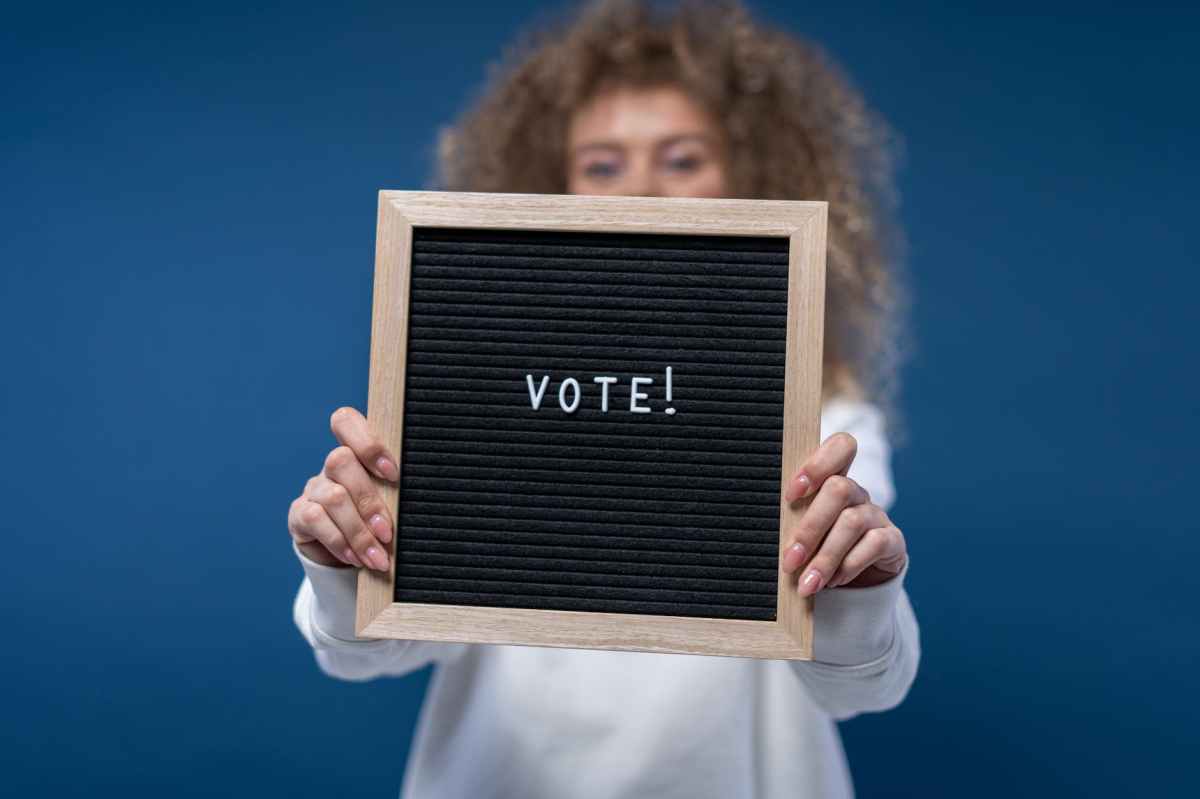
He was saying that he had intended to vote Labour in the forthcoming UK General Election because he wanted change. It’s time for a change. Now, recent announcements had put him off. The radio host asked him who he was going to vote for when the election finally came. His answer was not inspiring; the devil you know, he said. My reaction was one of destain. I wanted to shout at the radio; you mean after all the screw-ups this lot have made you would still want them back in power!

I thought how can an intelligent person, maybe that was a leap too far, stick with the devil you know, when you know that devil is so grossly incompetent? Their overall performance has been poor. It’s a mystery but is that’s a common view? Is the taste for change so weak?

That sort of spur of the minute instinctive reaction is quite legitimate. Afterall, it’s a secret ballot. So, if that’s the way a person feels then that’s the way they will go. Comfort blanket politics.

My problem is that the whole notion of accountability goes out of the window if people constantly stick with the “devil you know” regardless of what they have done. If choosing differently is always considered to be too risky then no one will ever know if things can get better (to paraphrase a slogan from a past election[2]).

There’s some political mendacity here too. If we go back to the 2016 referendum, it was decidedly risky to vote for Brexit. That didn’t stop tub thumping right-wing politicians from pushing the risky option. Now, those same right-wing politicians want to cling to power so they are advocating exactly the opposite. That’s to encourage the electorate to think that change is far too risky. I can image a new political slogan saying – Yes, we are awful but we say we are not so awful as all the others. Dick Emery[3] would be proud.


[1] https://youtu.be/CFNML_MGq-M

[2] https://youtu.be/V6QhAZckY8w

[3] https://www.theguardian.com/tv-and-radio/2020/jan/03/dick-emery-dies-archive-1983

Look ahead

Much as I support the UK Government’s position on hormone injected beef, the exit from negotiations on trade have wide implications. Maintaining the regulations that ban the use of hormones in beef is a good move for farmers and consumers.

However, for cheese exports the collapse of talks is tragic. Zero to 200% is one hell of a tariff jump. The UK will be in a worse position with respect to trade than it was pre-referendum. That’s with a strong ally, namely Canada[1]. Brexit has made us worse-off.

Yet, the Brexit supporters that remain, still herald Brexit as a wonder. Logic plays no part in their thinking. It’s easy to respond in an angry way to this self-inflicted blindness. It does no good. The stubborn streak in those who have dug a big hole is a thick one. And the hole is getting ever bigger.

Clearly, there’s no urgency on the part of Canada[2]. On the UK side the urgency is much greater. The need to stimulate growth to bring about a recovery in the British economy is much needed. Sadly, the legacy of a decision made in 2016 has made created a weak negotiating position.

For a long time, the UK has been given a soft landing due to transitional arrangements. Now, these arrangements are drying up. Far from the propaganda of the Brexiters, trade deals are not easy.

The problem is a reference back to the past is like crying over spilt milk[3]. How to go forward when the relationship between different States has been significantly changed is no simple matter. The situation is not irrecoverable but the avenues that can be explored are limited.

So, I caution of a never-ending lament. Brexit will need to be rectified. The means to do it are tortuous and may take a long time. The means to undo the mistakes of the past may face opposition from many quarters. One of the predictions for the European elections, this year, are that there will be a swing to the political right. Several right-wing political parties across Europe are on the ascendancy.

Instinctively these right leaning political parties are likely to less internationalist and more focused on immediate domestic concerns. So, third parties, like the UK, may not be high on Europe’s future agenda. On the UK side the major political parties have gone quite on Europe. There’s plenty of campaigning on international issues, like climate change and military conflict but little on enhanced working together.

There are many national news stories where solutions are best arrived at by greater communication, cooperation, and coordination. This year, so far, the signs are that these three “c” are going to take a back seat. Ironic, isn’t it. Facing greater international challenges than for decades, States choose to look inward. This myopia will continue until leaders speak positively of the future. Vision is needed.


[1] https://www.reuters.com/markets/canada-britain-pausing-free-trade-agreement-talks-2024-01-25/

[2] https://www.cbc.ca/news/politics/canada-uk-trade-cheese-1.7094817

[3] https://www.collinsdictionary.com/dictionary/english/cry-over-spilt-milk

Bland & Blue

How do we get the politicians we do? There’s no originality in that monster question. If we look across the Atlantic the most political peculiar fight is going on. A couple of elder gentlemen running as fast as they are able. I have to say that with solemnity as I’m in my sixties. The United States (US) has a fight no one seems to want, brought about by an inability to plan successions.

In Britain, I look around and see a country full of capable and talented people and then compare them with the political choices in front of us. Big choices are going to be needed this year. The limited choice is as peculiar as any. It’s maddening.

This week, a full gloss blue leaflet popped through our letterbox. Now, I’ve no objection to people putting traditional political messages through the letterbox. One of my favourite sayings is from a long-gone Cornish politician of great merit. If you have something to say, put it on a piece of paper and stuff it through the letterbox. David Penhaligon[1] would make that a mantra. It was about community politics. It was about talking about the local issues that were of most concern to local people. Focusing on what matters.

Anyway, the folded A4 headshot that came through my door looked more like an advert for dentistry than a local political message. Gleaming smiles are fine. When they gleam so much and so wide, I’m reminded of the jailed politician in the second Paddington Bear movie[2]. More of the same and can I count on your vote? No meaningful substance.

The fictional Peruvian bear who travels to London in search of a home would have swiftly been sent to Rwanda by this mob. Paddington’s admirable and lovable qualities wouldn’t last ten minutes in real 21st century Britain.

I’m assuming this was a paid political leaflet distribution. The Post Office (PO) gave us two copies in two days. Along with some pizza adverts. This is not material carefully delivered by dedicated local party activists. No, it’s a commercial distribution. Remarkable when considering that Reigate’s constituency is a “safe seat”, where the past results for the Conservatives hardly need counting. Just measure the length of the ballot pile on the table.

These expensive colour leaflet distributions happen long before an election is called so that the costs don’t have to be counted in the election expenses of the candidate.

What’s surprising is that this shiny blue leaflet didn’t have a single potholes picture. That’s where the candidate or prospective candidate stands over a pothole and points. Implication being that they will solve that problem. No pictures of flood waters or the attendant sewage outfalls that have become fashionable on political leaflets. No pictures of traffic hazards or schools that need money spent on upkeep. No pictures of abandoned plans to improve local railway services. Just bland page fillers.

Nothing from other Parliamentary candidates – yet. Let’s hope they have something to say.


[1] https://en.wikipedia.org/wiki/David_Penhaligon

[2] https://en.wikipedia.org/wiki/Paddington_2

Democracy

It’s one thing to talk about elections in theory it’s another to talk about them in practice. Only one person knows when the next UK General Election will be held. It’s the privilege of one person to say so. Since the UK gave up on fixed terms, power rests with the Prime Minister.

The Fixed-term Parliaments Act 2011 set a five-year interval between ordinary general elections[1]. The next UK General Election would have been scheduled to take place on 2 May 2024. Now, all of that has gone, within the life of a Parliament, it’s for one person to call a General Election at the time of their choosing. Imagine a race where one competing athlete gets to fire the starting gun. There’s no role for Parliament in deciding when a UK General Election will be held.

What we do know about this year is that there will be European Elections held between 6th and 9th June. I would say, mark the dates on your calendar. In fact, I will say mark the dates on your calendar, if you’re a European citizen living and working in the UK.

In this case citizens know when they will have the power to exercise their democratic right. They can plan accordingly. They can play a part in the process. They can weight-up the options.

Hundreds of millions of people in Europe can determine the nature of the next European Parliament. British citizens, because of Brexit will have no say in this huge application of democracy.

This is undoubtably a time when unity amongst European allies is of paramount importance. There are threats in numerous places around the globe. The need for close cooperation between the UK and EU is becoming ever more evident[2].

Foreign policy and defence interests have a great number of common threads that bind Europe together. Couple that with the uncertainty that exists in relation to future transatlantic links, then getting along better is an absolute necessity.

The naïve – go it alone – attitude of Brexiters has unravelled. A more pragmatic settlement is essential for mutual benefit as we move forward. Defence industrial collaboration is a must. It hardly needs to be questioned. Many of the large aerospace and defence enterprises that the UK military depends upon are established European companies. Collaboration is nothing new.

War in Ukraine came as an unexpected nightmare. This European conflict is likely to become ever more protracted. Much as the country might wish it was not so, there are limited ways in which the conflict can be resolved. Self-determination remains a core belief amongst western democracies. This must be backed up by force otherwise it becomes meaningless.

After Brexit, going forward the UK will have no say, and no veto, over how EU defence progresses. From here, it’s best that cooperation, collaboration, and influence go hand in hand.


[1] https://commonslibrary.parliament.uk/research-briefings/sn06111/

[2] https://www.politico.eu/article/brexit-rishi-sunak-ukraine-war-europe-uk-inches-toward-eu-defense-projects/

Votes count

Sneaking past the national news this week was a change that is of more than a little significance.

For more than a decade, I did live outside these shores. All the time that I did, I continued to vote in local and national elections. At that time, I still had an address in the UK. What would have happened if I’d continued to live abroad, for more than 15-years, is that my right to vote would have been taken away. This so-called 15-year rule meant that millions of British citizens were excluded from voting.

During the referendum of 2016 a great number of British citizens living abroad were unable to vote for or against Brexit. At the time this was seen as a great injustice. This was especially true for those who maintained strong links with the UK.

Now, almost without anyone noticing, the UK is aligning itself with other major democracies in the world. The 15-year rule has been scrapped. Some people estimate that the change to the franchise could mean an additional 3 million British citizens will have the right to vote restored.

British citizens living abroad, who no longer have an address in the UK, can now register to vote in UK General Elections. Which is convenient given that one is imminent. Naturally, this still requires those who are eligible to know about the change and to register to vote.

Interestingly, it’s the Conservatives who promised to enact “Votes for Life” in three previous election manifestoes. It’s taken a long time but the reality of the extension of the franchise is now with us[1].

The ability to donate to political parties comes with these changes. Maybe that’s one reason that Conservatives were persuaded of the need to change voting rights for the British abroad.

There’s still a possible Brexit related uncertainty. Should they occur, each UK referendum has different voting rules. So, the general restoration of the franchise may not impact any future vote on the reversal of Brexit. That would be a matter for specific legislation.

Lifelong voting rights have both a plus and a minus. For most people who retain interests in the UK it’s a matter of natural justice. They may have UK pensions, pay taxes, or have family members that are directly affected by changes that British politicians can, and do make.

For those people who have completely severed ties with the UK it maybe argued that this restored right to vote is generous. However, there’s no obligation for those who have no interests in British governance to register to vote.

Given that the British abroad can all participate in national elections, it will be interesting to see if future UK governments take more interest in their situations.

Starting on 16 January 2024, if you are a British citizen living abroad, now is the time to act. Register to vote.


[1] https://www.gov.uk/voting-when-abroad

Distraction

The Rwanda debate is an enormous distraction. I know there’s a hard core rump of Conservatives who will jump on the deterrent argument in a microsecond. It’s nonsense. For people who are willing to risk their lives to cross the busiest shipping lane in the world, the possibility of deportation isn’t going to make an ounce of difference.

No, this is mainly lawyers, talking lawyerly talk about what lawyers might do. Then getting wrapped around the axial about what their colleagues may or not think. Trying to fly the dark flag of nationalism higher than anyone on the green benches. All the time with their eyes on the headlines of tabloid newspapers[1]. No surprises, no innovation and chance of making a difference.

The bill in Parliament has little to do with the practical realities of the problems that the UK faces. There’s also the pernicious euro bashing opportunity that some of the more unscrupulous MPs are only too happy to exploit. There’s nothing more they like than to point fingers at others to avoid taking any responsibility for the current situation.

A week in Parliament gets wasted. This is not unfamiliar when governments have run their course. They wander around concerned about making a show. Troubled about opinion polls. Wondering how to hang on to their jobs. This is not a good season for practical problem solving.

Sitting in a local cafe drinking coffee isn’t the best way to judge the public mood at the moment but isn’t the worst either. So, I’ll paint a picture. An unrepresentative picture. Ironically, the picture comes from the old town hall in this town. A place that, no doubt was the seat of much local debate and discission in past decades. Now a coffee shop for a major brand. Where isn’t?

To my right a gentleman, who must have been at least in his 70s, sat in a comfortable chair head down engrossed in the Daily Mail. One of the few people with a daily newspaper in hand.

To my left young people sitting over their studies. Flicking between their workbooks and mobile phones. Consumed by their mate’s chat. Busy with something but who knows what.

In front, a group of female friends taking the time to meet. Exchanging stories of the week. Families, children, distant relatives, work, money, holidays, in fact all the topics of everyday life.

Where does the Rwanda debate sit with this random selection of coffee shop drinkers? In my estimation only with the man who may have caught the headlines. The only consolation prize for the Conservatives is that one man maybe likely to be a regular voter. Goes out in all weathers and marks his cross in a box.

Now, I hope I’m not maligning anyone. It’s mighty foolish to look at someone and say I know how they vote. Do that on the doorstep and be immediately surprised. Believe it or not I’ve known lifelong socialists who read The Sun newspaper for the sports stories. Or that’s what they’ve said.

The strategy of the Conservatives would seem to be to try and secure their core supporters having given up on the thought of winning a general election they still don’t what to lose too heavily.


[1] https://www.bbc.co.uk/news/blogs-the-papers-67989069

Look ahead

The predictions are not good. That said, this is not 1997 all over again. For one, social media didn’t exist when Tony Blair was swept to power. Prices are almost double what they were 27-years ago. Astonishingly, average house prices have gone from about £55,000 to over £250,000.

One analogy worth mentioning is the schism in the Conservative party. It’s what they often do when their coalition breaks down. The political distance between the moderate “one nation” types and the mad, swivel-eyed loons on the right (using the term coined by Lord Cameron) is too big to bridge. The right remains bitter at the part played by the current Prime Minister in ousting Boris Johnson.

Unity can be forged in common interest. In this case professional Conservative operators will do almost anything to stay in power. That’s much as it ever was. Money still fuels their campaigning machine. Even if donors must be thinking that burning piles of cash is a better investment.

1997 saw Katrina and the Waves winning the Eurovision Song Contest and the rise of ‘Mondeo Man’ signalled change. The Spice Girls[1] were at their peak and Buffy the Vampire Slayer was a must see on TV. It was a different time.

General Election preparations, rumours and stories are going to be the meat and potatoes of 2024. If the situation continues as it is there’s a chance that the Labour leader will get a large majority more because of the public’s boredom with the party in power.

There’s not much of a sign of a great new hip Britain emerging from an era of troubles and turmoil. Labour is trying to make pragmatism exciting. Almost as if the thought is that shining a bright light on greyness makes it electrifying. The people’s flag may be red, but it looks toned down and ruddier brown than in past lives.

Elections are an opportunity for yet unheard characters to find their voice. Already one or two people are starting to emerge as good on the stump. 

MP Wes Streeting is starting to sound as if he knows what he wants to do and can express it in a coherent manner. Maybe it’s his local government experience that is coming through.

MP Daisy Cooper[2] has campaigning zeal that is hard to ignore. She looks like she is in a hurry to get things done. We surely need people with a more internationalist perspective.

Let’s expect election campaigning to be dirty, dishonest, and unpleasant. Today, so much of politics is a response to circumstances. It’s got to be more. People expect more.

When a political party, an awkward coalition of ideas, comes to the point it has no new ideas it needs to go. The Conservatives maybe heading for an electoral wipeout. What we need now is a set of ideas fit for this generation.


[1] @spicegirls

[2] https://www.libdems.org.uk/daisy-cooper

Call to account

Accountability. There’s a nice word. It’s kind of biblical. It’s one of those so-called golden rules. An account is about balance and fairness. “Do unto others as you would have them do unto you”. A simple and straightforward notion.

I’d say that means that we expect ourselves to account for errors and misdeeds, and we are often our own greatest critics. In balance then we expect others to account for their errors and misdeeds.

Our society doesn’t have a police officer standing on every doorstep. That would be intolerable. What we call civilised behaviour requires each of us to be accountable for our action, to ourselves as much as to everyone else.

Listening to the story of the Post Office (PO), and its persecution of postmasters, it’s apparent that the innocent individuals first questioned themselves before they questioned the failing computer system that they had been forced to use.  

Go back 20-years and Computer Weekly[1] was pointing out that the large-scale transition from a paper-based system to a computer system was going badly wrong. An accountable institution would have urgently investigated and fixed any problems, which are not unexpected in the introduction of a new system. In this case, cover-up and denial seems to have been the strategy. Then blaming the innocent and going to extreme measure to punish postmasters.

The PO did not do unto others as it would have them do unto it. The corporate blindness to injustice and its self-protection mechanisms were the worst of what an institution can be. Now, the appalling injustice is evident to everyone and it’s difficult to understand where accountability was in the past. By cruel imposition, accountability was distorted by the powerful.

I hate to say it but there’s a general lesson in what has happened at the PO. In the last 10-years there are numerous significant national failures where the strategy of blame and going to extreme avoidance measure has prevailed. The billions (£) wasted on personal protective equipment (PPE)[2] during the pandemic is only one case. The billions (£) wasted by Truss in a few days. Don’t start me on the billions (£) wasted on Brexit.

In our democracy the notion is that accountability comes through free and open elections. The argument goes: if you don’t like what they have done you can kick them out. If there is such a thing as natural justice, we might expect that to happen. I remain an idealist in a year of elections.

I sat down in Morrisons[3] yesterday morning. There was a copy of a national tabloid newspaper lying around. I picked it up to read it with my tea. The line it took, on the one hand, is to highlight the injustice of the PO scandal. On the other hand, it did its best to exonerate the current government and cast shadows over the opposition. Not much honest accountability. Conservatives, who have been in power for more that a decade, are swiftly trying to rebrand.

Golden rules are great but political expediency is much in play as we run up to a General Election. I hope that the public will see through rebrand underway. Let’s hope.


[1] https://www.computerweekly.com/feature/Post-Office-Horizon-scandal-explained-everything-you-need-to-know

[2] https://www.transparency.org.uk/track-and-trace-uk-PPE-procurement-corruption-risk-VIP-lane

[3] https://groceries.morrisons.com/

Enough

I’m not a supporter of the Labour party leader but his call for change is surely one that is echoing through every street of the land. By the way, good choice for a location to make a national New Year speech[1]. And all the Conservatives could do in response is make populists claim that he’s a populist whilst doing nothing other than being populist. Populism eating itself. Populists accusing others of being populists. Admitting the flaws in what they do whilst trying to paint those flaws on others.

No, Prime Minister Sunak procrastination is not the way forward. He’s without core principles, hanging on to exploit whatever comes along. There’s zero authenticity only maximum opportunism.

Liberal Democrat party calls for a General Election are spot on. The reality is that we are destined to have a year’s worth of election campaigning ahead if the election date if not called for the spring.

Liberal Democrats “Tory Removal Service” may signal a love for publicity gimmicks but getting national attention when the media landscape is polarised is not a simple business.

Leader Ed Davey is showing that there is an alternative to the worn-out outdated political parties[2]. It’s a challenge to the British electorate. Do you want the stale ding-dong of national political debate to go on disappointing forever? We can do better. We can mend a political system that has been fundamentally broken for an age.

Rather than feathering the beds of supporters we need a government commitment to equality. Rather than short-termism we need a government that takes the long view. Rather than shunning our neighbours we need a government that embraces internationalism.

Yesterday’s resignation of Conservative MP Chris Skidmore[3] appears much like a rat leaving a sinking ship but it’s more important than that classic media interpretation of events.

Skidmore addressed the issue of short-termism head on. He’s resigning citing the on-going legislation to boost North Sea oil and gas drilling. Next week, the UK Parliament returns to consider an Offshore Petroleum Licensing Bill. This Conservative Government’s move is a kick in the teeth to the country’s green credentials. He states, I can no longer stand by. The climate crisis that we face is too important to politicise or to ignore.

Promoting the production of new oil and gas sources is a backward move. Yes, we need energy security but that should be a driver to invest in electrification and reducing energy waste. There’s a list of policy moves that could return the UK to a position of leadership on climate change.

2024 is likely to see the current Conservative administration flaking like peeling paint as it slowly decays. We do not need opportunistic papering over the cracks. It would be so much better for the whole country if they stood aside – soon.


[1] https://www.bbc.co.uk/news/uk-politics-67880324

[2] https://www.libdems.org.uk/news/article/new-year-2024

[3] https://news.sky.com/story/tory-mp-chris-skidmore-to-stand-down-over-bill-that-promotes-production-of-new-oil-and-gas-13042746

Comment

Custom and practice are as important as the rules and regulations that are part of our lives. Now and then, someone is criticized for applying the letter of the law without care for the spirit of the law. The same is true for custom and practice. Whereby, acting outside past norms can trigger a backlash.

Because, in free countries we believe in a free press, the rules and regulations that imping on what should and should not be said about events are always hard fought over. The banner of the “public interest” is touted as overriding. It may or may not be, but there’s an argument to be had.

In the aviation safety profession, I’ve grown up with an instinctively “need to know” disposition. I’ve shaken it off, mostly but there are signs that the attitude persists. This instinct can run counter to the transparency and openness that most people expect to see.

Why talk about the way major events are talked about?

A case in point is the recent runway collision in Tokyo. There’s much already written about the newsworthy aspects of the event, so I’ll desist from adding much more. There’s a lot of speculation too.

Graphs can be drawn of the media attention given to such tragic events against time. It’s typical that from moments after a major aviation accident until a few days after most initial facts are known there’s a huge surge in activity. This used to be described as newspaper column inches.

Today, wide ranging speculation is inevitable. It can be highly literate, and, on the other side of the coin, it can be badly informed, and now and then damaging.

In over three decades, I’ve been dealing with aviation accidents and incidents there has been notable changes in media and communications. For one, the universality of the INTERNET is now unquestionable. For another, the deference offered to authorities has diminished markedly. For yet another, the speed of with which images can travel around the globe is astonishing.

Most aviation professionals are tempered by caution. Aware of the techical complexities that can arise in aviation accident scenarios. What can seem in the heat of the moment to be an obvious cause and effect, after detailed analysis turns out to be wrong, or only a partial picture.

So, should aviation professionals be scathing about the enormous growth in commentary and public speculation? Especially when some of it is wild and or even outrageous on social media. No. I don’t think so. Like it or not this is our digital world. The freedom it affords to throw-up any opinion or theory can only be tempered a bit. The hope is always that the pure dross fades away when a reputable authority challenges it.

That then puts a responsibility on someone, with professional knowledge to challenge ill-founded speculation. Or, at least, to ensure that the major media outlets have reliable sources of trustworthy information. I don’t think aviation professionals should remain silent concerning speculation. That may have been the strategy decades ago. It no longer works. The greatest degree of transparency and openness, based on verifiable facts, should be the aim.

Comment?