Star’s Law

It’s one thing to hear a report. It’s another to understand – what does it mean? Planning reform doesn’t often capture the national headlines. In this case, it’s a national celebrity that seems to be running changes in planning laws[1].

I’m more than a bit suspicious when I see the lines explaining legislation that say: “A full impact assessment has not been produced for this instrument as no, or no significant, impact on the private, voluntary or public sector is foreseen.” The word significant is purely subjective.

Like so many Statutory Instruments[2] (SIs) this subject makes for a hard read. SIs are English law that is made, not by parliamentarians debating and voting on it, but by amendments to existing law placed in front of them for a short while.

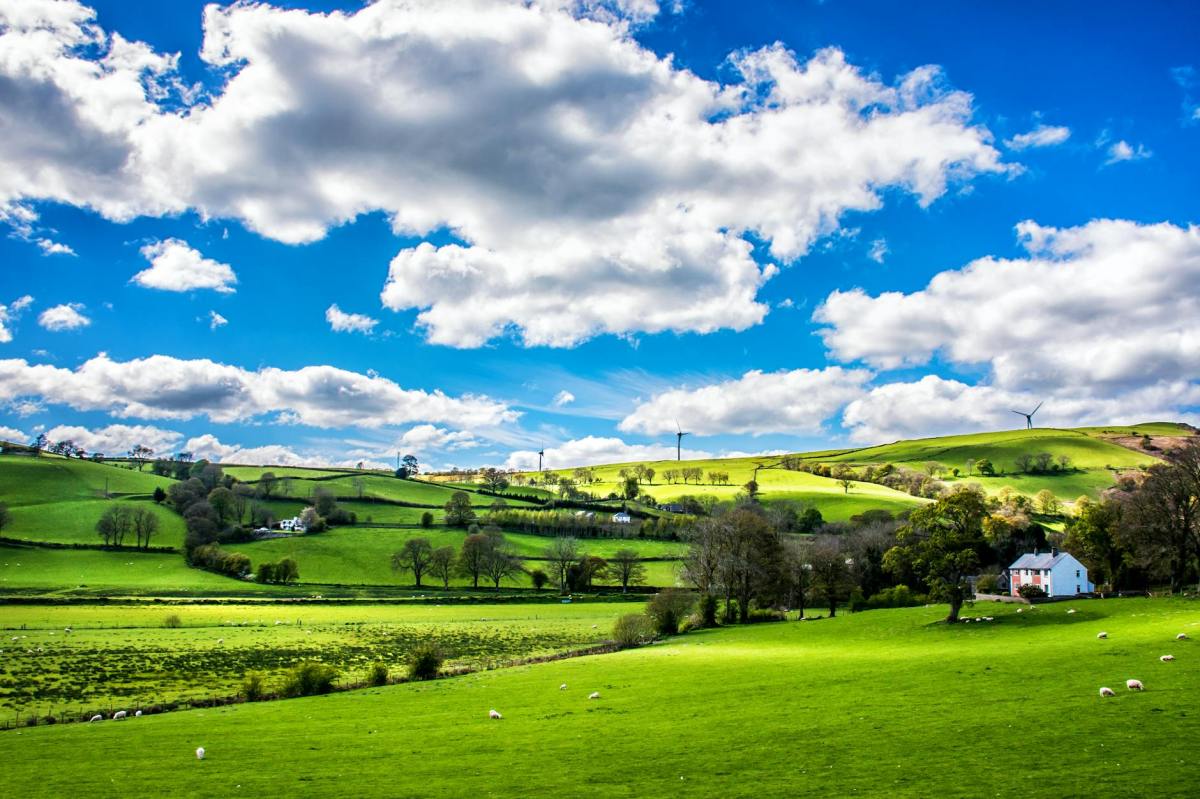
There’s no doubt that English farmers and landowners, under pressure post-Brexit, are going to be pleased by the planning alleviations offered by this new planning law. Being able to convert existing buildings into new houses, or new businesses, like farm shops, without local authorities intervening to say “no” has been dubbed – cutting red tape.

It needs to be noted that this action is being taken in the run up to a General Election (GE). For me, I see this as a two-edged sword. Sure, the name of UK Minister Michael Gove might be viewed more favourably by English farmers and landowners. That may not be the case by those people who live in the countryside adjacent to new developments.

Planning gets local people very agitated. A risk of a middle-class “civil war” is more likely to come from villagers and residents of small country towns than ever is the case from farmers. Neighbour disputes can be some of the worst disputes. I know of a case where a shotgun was used to make a point and that wasn’t by the farmer concerned. Boundaries being the issue.

Mr Gove has made a political choice. Framing the argument as cuts to “needless bureaucracy” may not be the whole picture, or even an accurate one but it does make Ministers feel good – like a sugar rush.

Converting more former agricultural buildings into dwellings or small businesses does make sense in many situations. Doing it without proper controls opens a pandora’s box of possible conflicts and disputes. Afterall the planning system is supposed to balance the rights and responsibilities of all concerned.

It’s all too easy for those in central government, heavily lobbied, to make local government the evil monster. I could say: a simple matter of power play and political expediency. Especially when the government minister making the decisions has just seen his political party devastated in local government elections.

Building more houses and shops without the need for planning permission might be a bit like that sugar rush, I mentioned. It last for a short while and then, well you know what happens.


[1] https://www.independent.co.uk/business/jeremy-clarkson-farm-shop-downing-street-b2341181.html

[2] https://www.legislation.gov.uk/uksi/2024/579/made

Hydrogen in Aviation

The potential for LH2 (liquid hydrogen) is enormous. That’s matched by the logistical and technical difficulties in exploiting this gas’s great potential. It offers energy for a means of propulsion that is nowhere near as environmentally damaging as existing means.

Society already integrates hazardous liquids and gases into everyday life. Each one has been through several iterations. It has been a rollercoaster. Each one has been at the root of disasters, at one time or another.

  • We use gas for cooking and heating in domestic settings. Periodically explosions demolish buildings. Leaks cannot be ignored. Harm can be done.
  • We use light and heavy oils widely in transport systems. Periodically intense fires burn vehicles. Care in handling is essential. Harm can be done.

Without having to say it, both above harm the environment. The search for non-CO2 emitting ways of flying is urgent. Here, I’m writing about harm to people. Physical harm. The business of aviation safety.

Often the physical harm is not associated with the design of the systems used but to the maintenance of those systems. Naturally, there was a learning curve. If we look at early versions of those systems, fatal accidents and incidents were far more regular. So, here’s the challenge for aviation. How do we skip the dangers of the early learning phase? How do we embed rigorous maintenance practices from day one? Big questions.

On the first one of these, lots of fine minds are engaged in putting together standards and practices that will address good design. If this works, and it will be tested extensively, the chance opens for introduction to service with a great deal of confidence that the main risks will be managed.

On the second of these, there’s not much happening. You might say there’s an element of chicken and egg. The shape and form of future LH2 systems needs much more work before we can think deeply about how they will be maintained.

I think that’s wrong. It’s old-fashioned thinking. As the industry has often practiced, making the systems first and then devising ways of maintaining them while in-service. That’s yesterday’s reasoning.

Making aviation system maintenance the Cinderella in the LH2 world is to invite failure. This is a situation where advancing the consideration of how the in-service realm could work, day by day, is necessary. It’s advantageous.

Here’s my reasons.

  1. There are generic approaches that can be tested without knowing the detailed design. That can take existing learning from other industries, like chemical and space industries, and consider their application in aviation.
  2. Emerging technologies, like machine learning, coupled with large scale modelling can provide ways of simulating the operational environment before it exists. Thereby rapidly testing maintenance practices in a safe way.
  3. It’s imperative to start early given the mountain that needs to be climbed. This is particularly true when it comes to education and training of engineers, flight crew, airport and logistics staff and even administrators.

Everyone wants to accelerate environmentally sustainable solutions. When they do get to be in-service, they will be there for decades. Thus, an investment, now, in study of maintenance systems will pay dividends in the longer term. Remember, early fatal accidents and incidents can kill otherwise sound projects or at least put them back on the drawing board for a long time.

NOTE 1: I didn’t mention Liquefied Petroleum Gas (LPG). It’s in the mix. Another CO2 contributor. LPG containers have pressure relief valves. LH2 containers will likely have pressure relief valves too. That said, venting LPG is a lot more environmentally damaging than LH2. From a safety perspective they can both create explosive conditions in confined spaces. Maintenance staff may not need to carry a canary in a cage, but they will certainly need to carry gas detectors when working on LH2 powered aircraft. Our noses will not do the job.

NOTE 2: Events on the subject: https://www.iata.org/en/events/all/iata-aviation-energy-forum/

https://events.farnboroughinternational.org/aerospace/sustainable-skies-world-summit-2024

2024 ICAO Symposium on Non-CO₂ Aviation Emissions

Choice

Desperate British Prime Minister (PM) comes out with the line that the future will be troubled and fast paced change will outstrip past progress. Ok, so what’s new? Hasn’t that been the path of the world since the invention of the computer? Acceleration of change is now locked into humanities destiny.

The audacity of the man is astonishing. Having been intimately associated with calamitous failures of the past decade he espouses his unique abilities to keep us safe and secure.

Hell, I thought former PM Boris Johnson had a big ego. Monday’s speech goes beyond ridiculous[1]. When he says: “People are abusing our liberal democratic values” what comes to my mind is the right-wing government he leads.

We all know, it’s reported continuously, how dangerous the world has become. Noone in any major political party would dismiss that reality. That is bar the eccentric, downright crazy and maybe the fringes of the Greens party.

Interestingly, as far as I know, PM Rishi Sunak isn’t a climate change denier, but he doesn’t have much to say on this monumental global issue. When he says: “And in this world of greater conflict and danger, 100 million people are now displaced globally.” It should occur to him that competition for resources in a world where the climate is changing is at the root of this movement. By the way, there are 8 billion people in the world[2]. So, let’s get our reality in proportion. True, the 0.1 billion people now displaced globally is a figure likely to grow in the next decade. But they are not the enemy.

I had to laugh when I came to the mention in the speech of “robust plans”. The thing that has been characteristic of this Conservative period of government is the distinct lack of planning.

The country’s whole relationship with its neighbours was changed without any plan (Brexit). The ups and downs of the COVID epidemic were endured without a plan, other than that which was made up day-to-day. Year-on-year cuts in defence spending have only been reversed in the wake of global events not a plan of any kind. Surely the Conservatives can only offer a – make it up as we go along – way of governing? It’s what they’ve always done. Hence, the slow decline that has afflicted the country.

The PM lapses into a lazy “needs must” argument that sprinkled with Brexit bull****. Shakespeare would have approved. One example, in All’s Well That Ends Well:

Countess: Tell me thy reason why thou wilt marry.

Clown: My poor body, madam, requires it: I am driven on by the flesh; and he must needs go that the devil drives.

Nothing wrong with being positive about the future. As a country we can do great things. What the PM claims is to have a plan. What he hasn’t got is a plan. And if he did have a plan the likelihood of his own side following that plan is absolutely minimal. He only goes where the devil drives. 


[1] https://www.gov.uk/government/speeches/pm-speech-on-security-13-may-2024

[2] https://www.census.gov/popclock/world

AAM

This week, I watched an FAAs Advanced Air Mobility (AAM) webinar[1]. The subject was community engagement. AAM could be air taxies but it’s many uses of the new electric aircraft that are becoming a reality. The term eVTOL is used for those aircraft that have the capability of vertical flight. My reflection is that there are several aspects of AAM that need much more attention. Naturally, I’m taking the discussion of what’s going on in the US and thinking about it in relation to the UK.

  • Land Use Planning

Generally, National Aviation Authorities (NAAs) are consultees when it comes to land use planning. They do not determine planning applications. NAAs may well have set out policies and guidance on the subject but they will not be determining the site of vertiports.

It seems to me that there’s little chance that eVTOL aircraft routes will be established without sufficient community consent.  Community engagement has been appropriately recognised as essential. The aspects in play are like those for existing aerodromes. Often for AAM applications proposals are for the use of new locations, hence a concern. Anytime there’s a serious proposal for a new aerodrome the opposition is up and running long before the proposers have got their act together.

The subject is complicated by the mix of public and private ownership of infrastructure. If the intention is to interconnect AAM with other transport services (bus/train/boat/road), then complicated agreements are going to be inevitable. It’s not just about buildings and tarmac but having a trained workforce available is a location dependent issue too.

  • Business Models

I’m about to sound as if I’m securitising the plans of a contestant on The Apprentice[2]. There are plenty of way of losing money in commercial aviation. It’s been a well-practiced art over the years. Great ideas fall by the wayside after huge amounts of money have been expended. Customers are key. People must want to fly the routes available, time and time again. And like London Black Cabs be prepared to pay the fare. Given the relatively small cabin sizes that are on offer these people are likely to be moderately prosperous groups or individuals.

Regular schedules air services can produce a reliable income. Airport-to-airport connections seem like a good bet. Problem there is the conveyancing of weighty luggage. Busy airspace could be a challenge too. That said, with tens of thousands of people at both ends of a route, no doubt some people will choose a comfortable, speedy direct connection.

There are good possibilities for major event driven transport services. Getting to and from a motor race or horse race event or a concert or festival can be hell when tens of thousands of people are all trying to get to and from a location or venue. The numbers may well stack-up to make eVTOL a premium way of dodging the crowds in an environmentally sound way.

  • Batteries, Batteries, Batteries

Everything in respect of aircraft performance depends on power density. How much oomph can you get out of a small, light weigh physical space. Recharge and go. Do it, again and again. It’s as simple as that. Not only that but aircraft battery packs must be affordable and available. Whizzy technology that cost a mountain of cash and can only be use for a few hundred cycles is no use at all.

Power distribution infrastructure must be up to the job too. Who will pay for this is up for grabs. There’s a good case for public funding given that there are multiple uses of enhanced electrical supply. Given the monopolistic nature of power generation and distribution this will not be easy or quick.

That’s only three issues that require a great deal of attention. Not the attention of researchers. Not the attention of academics, Not the attention of political policy wonks. Connecting entrepreneurs and public bodies needs practical stimulus. The possibilities are exciting.


[1] https://youtu.be/1sfVuJlPQoY

[2] https://www.independent.co.uk/arts-entertainment/tv/news/the-apprentice-2024-winner-pies-b2531331.html

Muddy

Rain, rain, rain. It’s been a wet spring, so far. Let’s put that down to global warming. The cause is one thing, but the symptoms another. They are there to see every day as I look out of the kitchen window. At the back of our house, the open field that stretches out towards the river Lambourn is about 7 acres in size. At least half of it has been flooded or is caught in that cycle of the ebb and flow of the river for the last 3-months. Great for wildlife. It’s a soggy marshland.

We are into mid-April and there are rainless days. Bit by bit, it looked as if the river’s flood waters[1] were receding, and they were but now and then a burst of rain tops up the pools and streams. That’s this morning in a nutshell.

Our lawn is growing fresh grass enough to fuel a herd of wildebeest. I jokingly said we need a goat to eat it all off. Getting my battery powered mower to control the lawn is a real effort. A healthy growing season. That’s the good side of a damp climate.

For livestock, and wildlife the flourishing fodder is a positive. Already there are two families of ducklings swimming around and eating as much as they can. On the negative side, parts of the field outback are too wet to allow cattle to trample the new grass. A seasonal problem I’m familiar with having grown-up in a place called Horsington Marsh.

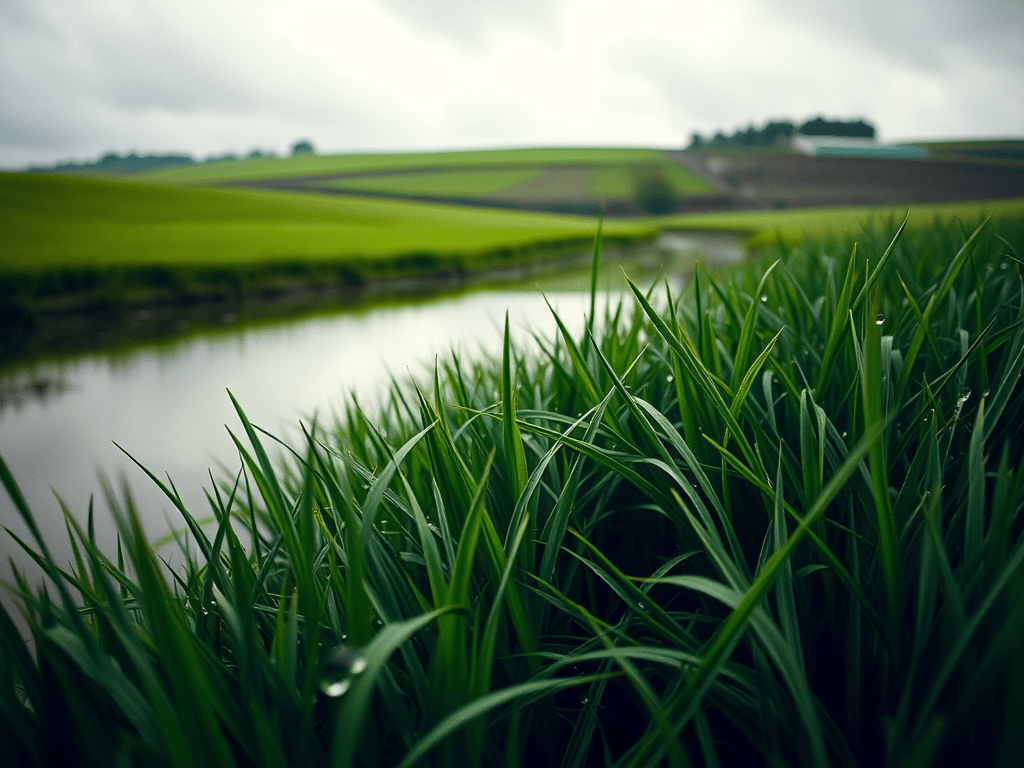
Bright green growth is one of the delights of springtime. Leaves on the trees and the fresh grass as it reaches skyward. Even the moss looks shiny and alive. This is the two-edged sword of farming. Grass needs the rain but too much and the land becomes a potential mud bath.

Eventually, the fast-flowing waters of the River Lambourn run into the River Kennet and then the River Thames. Strange to think that the water the ducks and geese stomp around in around here eventually passes through the heart of London on its way to the sea.

It’s notable that the grass grows where the flood water has receded. That part of the adjoining field where the waters come and go has turned into a combination of mud and aquatic vegetation. There are plants that can tolerate little air getting to their roots and there’s others that start to die back if there are submerged for too long.

Sadly, although the river’s waters look clean and clear, sewage treatment works, septic tanks, arable farming, road run-off and industrial processes have all had their impact. Technically the river is in an “unfavourable condition[2]” when it comes to aspects of water quality.

What of the mud? It will be interesting to see how quickly the submerged areas recover as the weather improves. I’ll be looking out for how all the phosphates in the water and the dead grass come alive again. Or do we end up with a low-lying grimy mud riverbank supporting rushes, reeds, and algae? Climate change and the human activity are changing the nature of watercourses. It’s difficult to say if the worsts aspects of this can be mitigated.


[1] https://check-for-flooding.service.gov.uk/target-area/061WAF22Lambourn

[2] https://www.westberks.gov.uk/article/41082/River-Lambourn-Special-Area-of-Conservation-SAC

Smart

One of the most irritating peak-time adverts on British TV, now, is the one where a fake Albert Einstein wibbles on to a fake dog in a hideously fake humorous manner. It’s condescending and preachy. What on earth the Albert Einstein has to do with household energy meters I can’t imagine. His famous equation is more useful for making nuclear bombs than measuring domestic power consumption. You might think the great man was an annoying Italian computer gaming character.

The smart meter is pushed on the basis that “you can better manage your energy”. I expect that’s true in most cases when they work well. I’ve had one for some time. We recently changed energy supplier. Guess what? In the transition I had to throw away an indicator and replace it with another.

In the news are reports of defunct smart meters causing people concerning problems. Smart meter mode means a meter can automatically send readings to an energy supplier. When they don’t work, lack of meter readings opens the door to energy companies making up bill estimates often to their advantage.

When I informed our power company, I got an education that put me right. Can’t possibly call the whole system a smart meter. No, that would be wrong. So, says the company:

“The smart meter you are enquiring about is actually an In Home Display, the smart meter is the meter on the wall.”

That informative reply reminded me of the Not The Nine O’clock sketch set in a gramophone shop. Foolish householder not knowing that it’s called an In Home Display (IHD). The smart meter is installed on the wall.

I’m in support of energy saving and the role an intelligent meter can play in monitoring the use of domestic energy. What are they trying to do – put me off?

Long gone are the days when meter readers knocked on the door and with a cheery smile jotted down the gas or electricity numbers in the understairs cupboard.

Now, I see the claim is that the “vast majority” of smart meters are operating as intended. That’s good. Those words mean about 88% according to a BBC report[1]. That sounds fine but what about the 12% who are in limbo? That’s not an inconsiderable number of people.

The roll out of smart metering technology started in 2011. There’s a first-generation and second-generation set-up out there in homes. A lot of work has been done to sort out communication problems. However, network coverage is not universal. Those connection issue are familiar to anyone with even the best mobile phone.

The BBC report is right to highlight problems. There ought to be a bigger focus on a plan for maintenance of the system as much as pushing new smart meter installations.


[1] https://www.bbc.co.uk/news/articles/cz9zqn77ezno

Safety

A considerable part of my working life has been in the analysis of occurrence data and trying to distiller the factors that cause or contribute to accidents and incidents. It’s rewarding work. An opportunity to influence that has value. I subscribe to the dictum that everything we do should contribute to continuous improvement in safety. Not zero risk but to keep risks low and under control, in so much as it’s possible.

Aviation only has the great success that it does because it’s a safe industry. For mass transport by air to be viable across the globe, the public must have confidence in it. They are willing to place whole families in the care of an airline to get them from London Gatwick to the Canary Islands for something that is not a physical need[1]. Regular leisure travel is a luxury and a privilege. We live in a fortunate age when overseas travel can be afforded by a large section of the population.

I watched the recent documentary on flight MH370. It’s sobering. It’s a story of the loss of a large aircraft that still seems unbelievable in this era. It’s the 10th anniversary of the disappearance of Malaysia Airlines flight MH 370 on 8 March 2014. The loss is a stark reminder that the oceans cover over 70% of the surface of the Earth. We know less about parts of the oceans than we do about the surface of Mars. The depths remain uncharted.

With a paucity of evidence theories have taken root. Official investigation reports are available. However, mystery remains particularly when it comes to answering the question – why? If as the documentary suggest, the willful actions of the pilot-in-command brought about the fatal outcome then there’s little to tell of his motivation. Highlighting the tragic Germanwings aviation accident doesn’t offer anything other than a context to possibilities. Evidence that the MH370 pilot-in-command was suicidal is scant. Although his known actions do not make much sense without invoking such a theory. Understanding what drives people to purposefully undertake unpredictable and irrational actions is an area of study that always needs attention.

Yesterday, Sunday, I was remined that threats to safety can come out of nowhere. Seemingly routine car journeys can suddenly take a turn in an unexpected direction. We become subject to the fates. I use the word “fate” but I’m not a great believer in the fates. Randomness plays a part but, in this case, yesterday afternoon, I was the subject to the foolish and negligent actions of another car driver.

On a wet “B” road that climbs and descends over chalk hills, there are triangular road signs that warn drivers that the road is a high risk road. What the signs are referring to is the wildlife. A deer may leap out of a roadside hedge at great speed and misjudge the road traffic. In fact, I did see an unfortunate small dead deer at the kerbside.

What happened to me had a purely human cause. Naturally, I would call it complete idiocy. Coming over the brow of a hill, and descending, suddenly there was 4 bright headlights ahead. On a narrow country road, with overgrown banks on either side that was a scary sight. Nowhere to go. In a faction of a second the overtaking car coming up the hill veered back into the right-hand lane. No more than a couple of yards in front of my car. Fortunately, there was no collision. What on earth was the motivation of that driver? Overtaking, at high speed, approaching the brow of a hill, on a wet county road, in poor light, sheer madness. A small red car, overtaking a larger car.

In safety work this points to the most difficult situations to understand. The irrational, or stupid or reckless, or carless human drives that are hard to design out of systems. How do we take effective corrective action when one person’s risk threshold is so very much higher than normal or acceptable? The problem with saying – take their licence away – is that this is always reactive. After a negative event. Maybe even a fatal one.


[1] https://www.simplypsychology.org/maslow.html

Spring

References to meteorological spring are all well and fine. I accept that those with the expert knowledge and data say that the 1st March[1] marked the transition into spring. For me that’s too early. Jumping the gun a bit.

The occurrence of astronomical spring makes more sense to me. That puts the transition on 20th March. So, a couple more weeks of tapering winter to go. I never like counting on spring before my birthday. I may have said this before, I’ve watched the Cheltenham Gold Cup[2] in a snow shower. That race is on the 15th March this year.

Nature is being the wake-up phases. Those buds that can be seen everywhere there hedges and bushes are a good indicator. Bulbs are well advanced this year. The snowdrops came and went with great speed.

This morning a frosty mist hung over the river. Slowly the sun’s rays burn-off this obscuring icy fog. The vail is lifted. The flood is receding after a couple of days of nothing more than light showers. Gradually the wetland grass is adjusting to a new phase of growth.

Riverbank trees are bare. The stretch up through the mist like a charcoal painting. Shades of grey gradually give way to colour as the dawn takes hold. A cloudless sky frames the outline with a pure morning blue. Backlight as I’m looking North.

Nothing but a troop of stubborn fat geese waddle around at the edge of the slivery water. The mirror like water is their playground. Preening and feeding the empire of Canadian geese numbers more than ten. Their peaceful contentment contrasts with the commuter traffic on the Oxford Road.

All the signs are of a sunny morning further hastening the approach of natures spring.


[1] https://www.metoffice.gov.uk/weather/learn-about/weather/seasons/spring/when-does-spring-start

[2] https://www.thejockeyclub.co.uk/cheltenham/events-tickets/the-festival/gold-cup-day/

March

The North wind doth blow and we shall have snow[1]. Well, today on the first day of March and it’s more of a gusty North Westerly wind and heavy rain. The snow maybe falling on high ground in the North of England but here in the South the temperature remains mild. Although, the line on the thermometer is slowly descending.

The flood in the small field out back waxes and wanes but is far from drying up. In fact, the extent of the water is greater now than it has been in a while. A lone Swan rests close to the riverbank. Not fussed by the driving rain. That makes me curious, where is its mate? On previous occasions, we have seen a pair of Swans cruising up and down the river Lambourn.

March comes in like a Lion[2]. That’s as true as it ever was of our weather, but will the next part of the saying happen as the month rolls on? Will March leave like a lamb? Winter may still have a sting in its tale. A misty wet March is in prospect.

March is always a month of transition. It certainly is for me. Having a birthday in the middle of the month is quite a good time to clock up another year. I never count winter as being behind us until I’ve put a candle on a cake. There’s an idea for a folksy modern saying.

There one more snowy white bird prancing around at the waters edge this morning. He or she is rather elegant small bird. It’s interesting to note that this bird was first recorded as breeding in Berkshire in 2007. Our visiting Egret[3] is dipping into the grass surveying the flood water with confidence.

Fishing is not just the exclusive rights of the Egret. There’s a slim tall Heron[1] who looks very regal. My guess is that the flood water has created small pools within which some small fish have become trapped. That’s a nice easy meal for a patient Heron. With spindly legs standing in the wet grassland any small fish would not see their fate coming.

As the sun has come up both Swan and Egret have moved on. The flood has been left to the ducks and geese. I don’t mention the Crows, Magpies and Pigeons. Although I just have. The wildlife seen from my window doesn’t mind gusty, wet, and windy anything like as much as I do.


[1] https://www.rspb.org.uk/birds-and-wildlife/grey-heron


[1] https://songsofchildhood.wordpress.com/2011/10/31/the-north-wind-doth-blow/

[2] https://www.theparisreview.org/blog/2015/03/02/folk-wisdom/

[3] https://www.wildlifetrusts.org/wildlife-explorer/birds/herons-egrets-spoonbill-and-crane/little-egret

EVs

I do find the anti-EV campaigning on social media a bit peculiar. It’s a bit like the arguments for smoking that were made in the 1950s and 60s. Combustion engine vehicles are slowly but surely going to become history. The time for that change is the subject that should be discussed and not whether it’s a good idea or not[1].

One “argument” out there is that adding together all the elements that make-up an electric vehicle there’s a lot of environmental cost in their production. There’s no doubt that nothing is for free. For example, mining lithium and cobalt are not nice in every respect. There’s the concern that demand could quickly eat-up global supply too.

The “arguments” I’ve seen fall apart when considering not only the vehicle production environmental costs but the lifetime costs of an EV when compared with an internal combustion engine vehicle. 20-years of belching out toxic emissions stacks-up. 20-years of using renewable electricity is a far better solution. In theory the potential for recycling valuable materials is high with EVs too. However, we have yet to see if that works successfully in practice.

Other “arguments” look to demean the performance of EV’s when compared to conventional vehicles. Naturally, the time taken to recharge is one of the biggest gripes. For a conventional fuelling at a petrol station a tank can be filled with 500 miles worth of fuel in 15 minutes. For a current EV more preparation, planning and patience are needed to achieve a lesser range.

Some EV performance figures are far superior to conventional air breathing vehicles. Acceleration is one. Powerful electric motors unencumbered by complex mechanical transmission systems react immediately to demands[2]. EVs use power better.

There’s another gripe or moan and that’s about weight. Taking two comparable vehicles, in performance terms, the electric one will be heavier. That’s the technology we have now.

It’s a different kind of weight if that makes any sense. What I mean is that an EV is roughly the same weight whatever the state of the machine. Whereas a vehicle that uses liquid fuel varies in weight according the amount of fuel on-board. Of course, all vehicles vary in weight depending on the payload they carry (goods or passengers or both).

What’s a little difficult to take from the anti-EV lobby is that those who complain about EVs impacting roads, due to their weight, are rarely the same people who express concerns about heavy diesel delivery trucks or Chelsea tractors thundering down residential roads.

There’s one hazard that must be managed for all types of vehicles. A view of a serious fire involving either an EV or a conventional vehicle quickly shows what that threat can do. What we have now less experience dealing with EV fires. They can be severe and difficult to supress.

Regulation is often reactive. The fire threat is real. In this case maybe we do need fire suppression systems in integrated household garages. Multistorey car parks packed full of EVs are going to be a real challenge if a major fire sparks off. That said a fire started with a “diesel-powered vehicle” can be just as challenging[3].


[1] https://www.ft.com/video/95f86c5d-5a94-4e63-bbe8-6cc5ffb59a2b

[2] https://www.caranddriver.com/features/a38887851/why-are-evs-so-quick/

[3] https://www.bbc.co.uk/news/uk-england-beds-bucks-herts-67077996