Time for Change

….people have been living, loving, and telling tales for thousands of years on this great European island.

The past is another country. So, it’s said. We now hear those who claimed Boris Johnson was the only man who could unite the Conservative Party eating their words. Eating them with a shovel. It wasn’t as if their support for the former Prime Minister was measured and rational, earlier it reached blind obedience as the troubles of the last decade accumulated. Lies, monstrous errors and blatant foolishness were defended by many who claim to be – working for you. 

I know loyalty is important. Any team, or institution needs a degree of unity to go forward with confidence that it can deliver. It’s the miss-appropriation of that loyalty and its twisting into unquestioning conformity that corrupts democratic processes. Politician minions will tramp along under any flag that will give them gongs.

It’s fascinating how flamboyant and raucous personalities can steamroller over convention and Pied Piper[1] like lead us into misfortunes. Hang about – we have a recuring problem here. This week, I was reminded of Itay’s challenges of a couple of decades ago. I remember Italian colleagues quietly apologising for Silvio Berlusconi[2].

A common feature of these personalities is an immense sense of self-importance. Whatever the story, it’s always about them. This is playing out with Boris Johnson’s departure from parliament. It’s playing out with Trump’s ambitions in the US. There are others but the mere act of using their names is distasteful.

Vulgar, scandal-ridden, and manipulative characters make good drama. On the pages of plays or the big or small screen we like to see rampage and for them get their just deserts. Classic stories of the rise and fall of demi-gods, showmen and tyrants are a literary staple. They are fictional warnings that can, and do, get copied into real life. We should, more often, heed those warnings.

There such a thing as a free lunch. Having your cake and eating it too, is a myth.

It’s coming up to Brexit’s 7th birthday and the annual pagan midsummer celebrations at Stonehenge[3]. Of the two, one reminds us of how foolish we can be. The other, reminds us of the enduring nature of our beautiful landscape and heritage. It comforts me every time I go up and down the A303. The reason being that whatever folly we encounter in our era, people have been living, loving, and telling tales for thousands of years on this great European island.

The people of Stonehenge were not isolationists. Artifacts found show that they traded widely. They communicated over large distances as part of a widespread prehistoric society. Brexit will be consigned to the dustbin of history in coming years. What counts about this wonderful land will endure for generations.


[1] https://www.bbc.com/travel/article/20200902-the-grim-truth-behind-the-pied-piper

[2] https://www.bbc.co.uk/news/world-europe-65877241

[3] https://www.english-heritage.org.uk/visit/places/stonehenge/things-to-do/solstice/

Link Box

It’s the petite agricultural tractor commonly known as the Little Grey Fergie

The Mendip Hills in Somerset are known for quarrying. A variety of rock types end up in construction and road building. For farmers, not far under the soil that rock is both good and bad. When it comes to grazing land and the annual ritual of haymaking, hard rock is a menace to machinery.

I’m going back in time. I did this, this week. One or two memories flashed through my head as I walked around the vintage tractors at the South of England Show[1] in Ardingly, West Sussex. I’m glad I went on Friday. A large agricultural showground in the heat of this summer weekend must have been quite testing. It was dry, hot, and breezy on Friday. Every other stall was selling hats. It was a day for suncream and plenty of drinking water.

There was a good selection of livestock at the show but no poultry, for obvious reasons this year. Bird flu. The animal numbers were not large, as they might have been in former times, but the quality was clear to see. Sitting under the shade of a large oak tree watching the pigs being judged was more entertaining than it sounds. Pigs have a mind of their own, and go the way they want.

In the 1960s, farm machinery was miniature in comparison with the massive high-tech machines on display to serious buyers. It was basic. Much like the cars and vans of the time. An average village mechanic could fix just about anything. Everything was manual. Everything was raw metal. Everything wasn’t made for comfort, or safety for that matter.

Seeing the simple cast iron seat of a Fordson Major[2], the contrast with an environmentally controlled tractor cabs of today couldn’t be starker. That said, there’s something to love about these heritage farm machines. Often lovingly restored, cherished by their owners and worth more than you would imagine. It’s the petite agricultural tractor commonly known as the Little Grey Fergie that I’m remembering. My granddad had one. A Ferguson TE20 to be precise[3]. And it was grey, or was it red?

On the A371, south of Shepton Mallet, Somerset is a small hamlet called Prestleigh. It was a regular haunt of my early childhood. Yew Tree Farm consisted of an ancient farmhouse on the west side of the main road and buildings and a yard on the eastern side of the road. The farm gate was in a treacherous place. On a corner, on a steep hill. In my time, my grandparents sold the farmhouse and built a bungalow to the south of the farmyard.

As far as I recollect, it was a small business that ticked over keeping my granddad busy. He was an avid gardener too. Nothing is flat in that part of the Mendip countryside. The rolling slope of the land formed a shallow valley. You couldn’t avoid the local landmark. The Somerset & Dorset railway traversed the valley by an impressive viaduct. Granddad’s fields went up to the railway and to the other side of the viaduct.

Yes, some of my early childhood conjures up images of The Railway Children. The steam trains trundled along that line until 1965. After that it was a place for us to explore and have mini adventures. It’s more the stories of steam trains than the trains themselves. It’s difficult to believe that the trains acted as a time piece for the countryside. Daily trains signalled milking time or teatime.

Back to stones. Sharp limestones. They littered the field above the Prestleigh railway viaduct. When it came to mowing that field, the abundant stones would blunt the blades of a cutter bar mower[4]. They could do a lot of damage.

There was a job for the Little Grey Fergie, my granddad, my brother, and me. He had two energetic young boys in his service. He’d drive the tractor at a snail’s pace across the field. We’d jump in and out of the link box on the back. Strong summer sun turned the grass brown.

Arm outstretched granddad pointed out the bigger stones and, like a couple of retrievers we’d run off, pick them up and then stash them in the tractor link box. It was the task of Sisyphus[5]. There was no beginning and no end to the task. The sun backed ground brought stones to the surface every season. At the end of the day we measured our work by the weight of the link box.

That’s what the vintage tractors at the South of England show reminded me of, amongst other childhood farming memories of an era gone forever.


[1] https://www.seas.org.uk/south-of-england-show/

[2] https://heritagemachines.com/tractors/the-fordson-major-story/

[3] https://www.coventrytelegraph.net/news/coventry-news/massey-ferguson-coventry-manufacturing-giant-15739539

[4] https://www.pinterest.at/pin/121034308718777099/

[5] Sisyphus is punished in the underworld by the god Zeus, who forces him to roll a boulder up a hill for eternity.

UAP

….none of us are familiar with the variety in shape and size of flying machines currently being designed and developed for general use

There was a time when anyone raising the issue of the potential for an asteroid to send humans back to the stone age was mocked and derided. Anyone bringing apparent sci-fi plots into Parliament was jeered. Now, the subject is studied with intensity and considerable resources. The probabilities of Near-Earth Object[1] (NEO) impact is calculated, and small asteroid and comet orbits are monitored in detail.

Really bad films, like the one starring Bruce Willis have a lot to answer for. That space between fiction and reality gets filled with more than a few eccentrics and conspiracy theories. Trouble is that gives you, and me licence to smirk anytime cosmic occurrences come into discussion.

I must admit I like the term Unidentified Anomalous Phenomena (UAP) better than UFO. They are airborne phenomena, they are unidentified until we know better, and they are anomalous. Although, most reports are attributed to things that are known, even if they are rare events. Some are pooly reported and only scant evidence is avialable.

Discovering all there is to know about such airborne phenomena is a matter of both safety and security. However remote it might seem, part of this is the safety of aircraft in flight. I know of no examples of extra-terrestrial objects colliding with aircraft but it’s not impossible. I’m reminded of that classic picture of a bullet hitting a bullet in-flight and fusing together. It’s from the Battle of Gallipoli.

We might be entering a new era of transparency in the scientific study of UAP. This is a wholly good thing and highly necessary given the coming expansion in the number of air vehicles in flight. If Advanced Air Mobility (AAM) is going to do anything, it’s going to led to an increase in aviators and public reports. For one, none of us are familiar with the variety in shape and size of flying machines currently being designed and developed for general use. It’s likly that red and green lights moving through the sky at night is going to prompt public reports of the “unknown”.

Perspective plays a part too. A small drone close can look like a large airship at distance. As environmental conditions change so the perception of airborne objects can change dramatically. So, what we might observe and confidently attribute to be a drone or helicopter or aircraft in-flight is not always definitive. Applying disciplined scientific analysis to the data that is available has benefits.

Given that our airspace is likely to become ever more crowded, NASA’s study[2] of UAP has much merit. Recognising that resources are needed for this work is a lesson most nations need to learn. We can sit on our hands or giggle at the more ridiculous interpretations of observations, but this kind of reporting and analysis will be advantageous to aviation safety and security. It’s part of giving the public confidence that nothing unknown, unmanaged or uncontrolled is going on abover their heads too.

POST: UFOs: Five revelations from Nasa’s public meeting – BBC News


[1] https://neo.ssa.esa.int/home

[2] https://www.youtube.com/watch?v=bQo08JRY0iM

Ban

Some policies are directly targeted to fix a problem, other policies maybe aimed at indicating a direction of travel. I think the measures in France to ban domestic flights on short routes is the later.

Internal routes that can be flown in less than two-and-a-half hours, are prohibited[1]. That can be done because high-speed rail transport offers a means of connecting certain French cities.

The calculation being that greenhouse gas emissions will be reduced by this control. There had been many calls for even stricter restrictions on flying in France. Lowering carbon emissions is a priority for many European governments. Sovereignty is primary in this respect. A State can take measures to control domestic flying much more readily than they can internationally. Connecting flights will not be changed by this new legislation.

High-speed trains do take passengers from airlines and take cars off the roads. Where a mature rail network exists, there are significant benefits in focusing on rail transport between cities. Often rail and air are complementary, with major high-speed rail stations at airports.

Given the rhetoric surrounding the “climate emergency” these restrictions are a modest measure that will make only a small difference to carbon emissions. The symbolism is significant. It’s a drive in a transport policy direction that may go further in time and other States may do the same.

Flying between Paris and Lyon doesn’t make much sense when a good alternative is available. Flying between London and Birmingham doesn’t make much sense either. However, changes like these need to be data-driven transformations. There needs to be a measure reduction in greenhouse gas emissions because of their implementation. For example, displacing travellers onto the roads would be a negative outcome.

The imperative of greenhouse gas emission reduction means creative and new measure will happen. It’s far better for aviation to adapt to this framework of operations rather than push back. The direction of travel is set.


[1] https://www.bbc.co.uk/news/world-europe-65687665

Bad Moon

Despite climate change, economic downturns, war, and recovery from a pandemic no one was prepared for, this is a good time to be alive. We are a long way from the end of days. Or at least I hope we are.

The past is another country. Only that can be said of the future too. The difference is a record book. Behind us we have the chronicles, from the first written words to this next key I’m about to tap. In front of us spreads a great deal of uncertainty.

What’s with the gloom and doom? Media of all kinds seems to bathe in a pool of pessimism. I can hear Creedence Clearwater Revival singing Bad Moon Rising[1] in the background. Despite climate change, economic downturns, war, and recovery from a pandemic no one was prepared for, this is a good time to be alive. We are a long way from the end of days. Or at least I hope we are.

In so far as fiction is concerned, I love a good dystopia. Unfortunately, some of the movies on this theme are quite ridiculous or dammed right annoying. The Day After Tomorrow[2] is a bucket load of piety and the remake of The Day the Earth Stood Still[3] has me throwing things at the TV.

Last night, I tried to get through the first half of a more recent movie called Reminiscence. It does amaze me that what must have seemed like such good ideas on paper can be transformed, at great expense, into a relatively average film. Yes, we are going to have to cope with rising sea levels and it will change the way people live.

What I’m addressing is the assertion made by a journalist who covers the cultural effect of science and technology[4]. It’s basically, that all this focus on the end of the world stuff stops us from planning a positive future. I can quite understand the basis for such a proposition.

Dare I make a HHGTTG reference? Well, I’m going to anyway[5]. It’s that society collapses if we spend all day looking at our feet, or to be more precise our shoes. Looking down all the time is equated with being depressed about the future. That leads to people buying more colourful shoes to cheer themselves up. Eventually, that process gets out of control and civilization collapses.

For someone like me who has spent a lot of time looking at accidents and incidents in the aviation world, I’m not on-side with the notion that bad news leads to gloominess and then immobility. I guess it does for some people. For me, it’s almost the reverse.

What we learn from disasters and calamities is of great benefit. It stops us from making the same mistakes time and time again. Now, I know that doesn’t last forever. Human memory is not like a machine recording. We are incredibly selective (hence films like Reminiscence).

In my mind, none of this persistent immersion in stories with bad outcomes stops us from planning. To be positive, it stops us taking our plans for what we can do into the realms of pure fantasy. Or at least it should.


[1] https://youtu.be/zUQiUFZ5RDw

[2] https://en.wikipedia.org/wiki/The_Day_After_Tomorrow

[3] https://en.wikipedia.org/wiki/The_Day_the_Earth_Stood_Still_(2008_film)

[4] https://www.newscientist.com/article/mg25834380-100-why-we-shouldnt-fill-our-minds-with-endless-tales-of-dystopia

[5] https://hitchhikers.fandom.com/wiki/Shoe_Event_Horizon

Deregulation

There’s nothing wrong with making an argument for deregulation. What’s absurd is to make that argument as an unchallengeable dogma. It’s the irrationality of saying that deregulation is good, and regulation is bad, de-facto. This kind of unintelligent nonsense does permeate a particular type of right-wing political thinking. It pops it’s head up in a lot of Brexiters utterances. For advocates of Brexit their great goal is to throw away rules and lower standards. Mostly, this is for financial gain.

Let’s take some simple examples. The reasons for rules and regulations can often be found in recent history. Hazards are recognised and action is taken.

There’s still lead paint to be found in many older houses. There was a time when such paint was used on children’s toys. Toy safety has been a confusing area of law, and there have been several sets of regulations since the 1960. From our current perspective this past laxness seems insane, but such lead paint mixtures were commonplace. In fact, all sorts of toxic chemicals have been used in widely used paints.

I remember working in one factory building where a survey was done of the surrounding grounds. Outside certain windows there were small fluorescent flags placed at in the grass verges. They marked places where minor amounts of radiation had been detected. This came from discarded paint brushes and tins that had accumulated in the war years. At that time radioactive luminescent paint was used to paint aircraft instrument dials.

Any arguments for the deregulation of toxic chemicals in commonly used paints should be one that is quashed instantly. However, some deregulation fanatics are only to happy to endorse a loosening of the rules that protect the public from toxic chemicals.

One result of the loosening of public protection is often to put greater profits in the hands of unscrupulous industrialist. Across the globe there are numerous cases studies of this sad folly. Newspapers and political parties that push the line that rules, regulations and regulators, by their very nature are crushing our freedoms are as bad as those unscrupulous industrialists.

Yes, there’s a case to be made for pushing back over-regulation. There’s risks we are prepared to take where the risks are low, and the benefits are large. This is a matter for intelligent debate and not throwing around mindless slogans. We should not be cowed by loud voices from small corners of society intent on tearing down decades of learning and sound practical laws. I could come up with an encyclopaedic list of examples. Opponents rarely, if ever want to address a particular case since it’s much easier for them to thunder off sweeping assertions. Beware these siren voices.

NOTE: The Toys (Safety) Regulations 2011 implemented the requirements of Directive 2009/48/EC, whose purpose is to ensure a high level of toy safety.

Protest

Any study about “change” will tell you that it’s not easy. Take a few of the big social transformations that have occurred over the last six decades. I can’t point to one that just happened without a campaign or fight. Social and political change comes when momentum has built-up. Pressure is needed. Often that pressure comes in the form of protest and extensive campaigning in public.

As ever faster digital connections are becoming universal, it’s still possible to buy physical digital media. Charity shops have piles and piles of CDs and DVDs as people off-load the stuff that clutters their shelves. It’s remarkable that yesterday’s whizzy new thing has become a historic artefact so quickly[1]. In 40-years, the optical digital disk has risen and then faded into the background.

I picked up a little bit of social history in a Red Cross charity shop. It’s a series of 3 DVDs that captures a slice of the career of the well-known journalist and broadcaster Alan Whicker. Stretching over six decades of travelling around the globe it’s a great watch. The series is called “Journey of a Lifetime” and was published in 2009[2]. Although, there’s plenty that dates Whicker’s documentary style there’s no doubt that his ability to quickly summing up big changes is a masterclass.

That straightforward diction and incongruous club jacket became a trademark. It gave him a neutral camouflage so he could talk eye-to-eye with hippies, dictators, evangelists, social campaigners, film stars and dubious gurus. That’s what created so many revealing conversations that are now time stamped as emblematic of an era. I recommend viewing the Whicker’s reflections on six decades of social history. It’s a great reminder of where we have been and how learning the lessons of the past is so difficult.

Back to my initial subject – change. It’s easy to say that it’s inevitable and unrelenting but its nature is less easy to discern. Change undulates. We go forwards then we go backwards in differing amounts.

I have a theory that our social progression can be plotted like an inclined wood saw. Yes, I know. It’s the engineer in me. Look at the shape of the saw’s teeth. They go forwards, and then quickly go backwards but they always go backwards less than they go forwards. That’s how a saw’s teath cut.

This is one of my abstrat reasons why the UK Government’s most recent laws to supress public protest are as stupid as political debate can get. Resisting change is nothing new. After all, the word “conservative” has a simple commonplace meaning. When all else fails, the basic political instinct to push out laws that comfort supporters is built in. As a direction for a whole country to take, this way of working is foolish and naive.

Locking up climate change protestors is not going to fix climate change. Locking up protestors against sewage on beaches and in rivers not going to fix greedy water companies. Locking up republican protestors is not going to fix the decline in public support for the monarchy.

Using the pretext that – this is what the public want – as a cover for these policies is to show the vacuum that conservative political thinking is thrashing around in. Sadly, as I’ve said, reflection on the last six decades of conservative thinking shows regressive tendencies in abundance.


[1] https://www.bbc.co.uk/archive/optical-storage-technology/zv7bpg8

[2] https://en.wikipedia.org/wiki/Whicker%27s_World

Going backwards

I find it difficult to believe anyone who gets into their sixties and says that they have never had an accident. My latest isn’t original or without minor consequence. Yesterday morning a kind nurse gave me a bandage to hold two fingers straight.

At the start of the month my gardening efforts amounted to emptying pots, replanting pots, and moving pots. I’ve got far too many pots. Plants that had not survived the winter freeze were unceremoniously sent to the compost heap. Plants that looked like the spring was bringing them back to life were given a bit of pampering.

Sitting in the shade, one large square container held a small fir tree. The tree wasn’t in the best of health but remained well worth saving. What I was unhappy about was its position on the patio out the back of the house. So, it occurred to me that it was logical to move the container to a spot where the tree might flourish in future. The large square container was made of fiberglass but had the appearance of grey slate. It had been standing unhindered in one place for well over a year.

Now, you would think an engineer, like me, would know something about friction. Or in this case stiction, that is the friction that tends to stop stationary surfaces from easily moving. There are more than two ways I could have attempted to move this heavy garden container. One was to push and the other was to pull. I opted to pull and that was my big mistake.

I crouched down and with both hands pulled hard. The container was stubborn. Again, I pulled hard. Then without warning the side of the container gave way, and I went flying. Afterwards, I wish I had paid attention to what was behind me. I hit the ground awkwardly.

When adverse events like this happen, it’s as if time momentarily slows down. Naturally, it doesn’t but it feels like an out of body experience when there’s nothing you can do to stop the inevitable happening. That split second ended with me lying on my right side with my hand extended two steps down on the patio steps. My fall was broken by my backside and my right-hand middle finger.

Oh dear, this is going to hurt – that was my first thought as I lay on the hard ground looking back at the roots of the tree I was trying to save. Second thought was – why did I do that?

Knowledge with hindsight can be a universal blight. Sure, I wouldn’t have done what I did if I’d taken the time to think more deeply about all the possible consequences linked to moving heavy objects. In this case there was only me siting on the ground painfully recounting what happened. No one to say – are you crazy? You shouldn’t have pulled that part of that container.

Accidents are a part of life. Better they be minor. Better we learn from them every time.

Working hard for the money

What goes wrong with research spending? It’s a good question to ask. In some ways research spending is like advertising spending. “Half the money I spend on advertising is wasted; the trouble is I don’t know which half.[1]” Globally billions are spent on advertising so you might say – it must be working. In fact, far more is spent on advertising than is ever available for research in the aviation and aerospace world.

Research spending is a precious asset because of its bounds. Even so, a great deal of research spending is lost on activities that deliver no or little benefit. It’s true Governments, institutions and industry don’t often put-up funds for vague and imprecise aspirations or outlandish predictions but nevertheless money goes down a sink hole on far too many occasions.

A reluctance to take tough decisions or at the other extreme of the spectrum a relish in disruption plagues research funding decision making. Bad projects can live long lives and good projects get shut down before their time. My observations are that these are some of the cases that crop-up all too often across the world.

Continuing to service infrastructure that cost a great deal to set-up. It’s the classic problem of having spent large sums of money on something and thereby the desperation to see a benefit encourages more spending. Nobody likes to admit defeat or that their original predictions were way off the mark.

Circles of virtue are difficult to address. For example, everyone wants to see a more efficient and sustainable use of valuable airspace therefore critics of spending towards that objective are not heard. That is even if substantial spending is misdirected or hopelessly optimistic.

Glamourous and sexy subjects, often in the public limelight, get a leg-up when it come to the evaluation of potential research projects. Politicians love press photographs that associate them with something that looks like a solution in the public mind. Academics are no different in that respect.

Behold unto the gurus! There’s conferences and symposiums where ideas are hammered home by persuasive speakers and charismatic thinkers. Amongst these forums there are innovative ideas but also those that get more consideration than they warrant.

Narrow focused recommendations can distort funding decision making. With the best of intent an investigation or study group might highlight a deficiency that needs work, but it sits in a distinct niche of interest. It can be a push in direction the opposite of a Pareto analysis[2].

Highlighting these points is easier than fixing the underlying problems. It’s a good start to be aware of them before pen and ink meets, and a contract is signed.


[1] statement on advertising, credited to both John Wanamaker (1838-1922) and Lord Leverhulme (1851-1925).

[2] https://asq.org/quality-resources/pareto

Lost nature

Looking at lines and lines of felled trees is not a pleasing sight. The world outside the car window is a sight of devastation. I understand what’s going on and we have been forewarned of it for a long time. Whatever, the junction of the A3 and M25 motorway[1] looks a dreadful mess. The scheme to turn the junction into a mini spaghetti junction is underway.

This comes on top of two news stories that display an attitude to our green spaces that is disheartening and sad. One in Sheffield[2] where the local council was criticised for deceiving the public. The other story, an overnight savaging of city trees in Plymouth[3].

I’m going to be unkind to highway engineers. The impression given is that their attitude to trees, in general, is one that sees them only as an impediment to progress. A blight that stops their beautiful drawing board schemes from rising from the dirt. The obstacles in the way of more tarmac.

Now, the M25 junction 10/A3 Wisley interchange is as ugly as hell. Even when it’s finished it’s going to be one of those places in the world where a sane person would not want to spend a minute more than necessary. Watching the seasons change from a motorway jam is a poor way to live.

The largescale initiatives there are to plant more trees are great. Unfortunately, all to often the stock of mature native trees and ancient woodlands has fallen markedly in my lifetime.

Natural events play their part too. I remember massive Elm trees that disappeared as Dutch Elm disease struck. These majestic trees can reach over 40 metres in height. A row of these huge Elms dominated the skyline of my childhood. A green wall that seemed everlasting. Sadly, millions of Elm trees have been killed in the UK over the last 40 years.

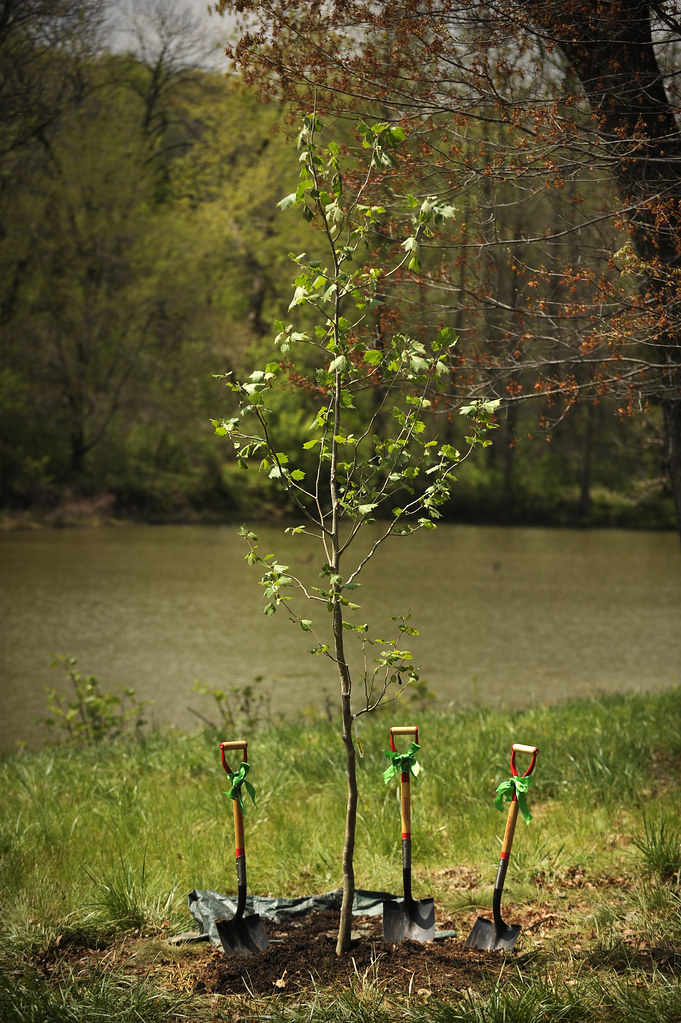
A tree produces oxygen and can absorb carbon dioxide. What could be more useful that that? We must reverse the loss of nature in the UK[4], if we are to stand any chance of addressing climate change. So, plant a tree for 2023. 


[1] https://www.surreycc.gov.uk/roads-and-transport/roadworks-and-maintenance/roadworks/junction-improvement-programme-m25-junction-10a3-wisley-interchange

[2] https://www.bbc.com/news/uk-england-south-yorkshire-64863130

[3] https://www.itv.com/news/westcountry/2023-03-15/anger-as-monsters-in-the-night-chop-down-more-than-100-trees

[4] https://www.woodlandtrust.org.uk/plant-trees/advice/how-to-plant/