Even more H2

There’s a couple of Hydrogen related topics that are worth a moment. One is super conductors and the other is fire.

Heavy complex equipment like the magnets for particle accelerators use superconductors[1]. When there’s space and a need for powerful magnetics, materials with special physical properties, at extreme cold temperatures find a good use.

Talk of room-temperature superconductors is far from what it seems. Such a wonderful innovation is a million miles from any practical applications, if it exists at all. There’s no theory of high-temperature superconductivity, but there’s quite a few physicists who would like to find one[2].

Aviation researchers search for high temperature superconductors for electrical propulsion with extraordinary performance is on. The likelihood of success is low, and the timeframes are very long.

When an aircraft is flying at high altitude, the cabin altitude is maintained for the safety and comfort of passengers and crew. Air compressors, valves, sensors, and controllers make sure that cabin pressure remains at equivalent to an altitude of about 8,000 feet, and lower in some cases. So, any kind of simply flammable gasses or materials inside an aircraft cabin are a definite no no. It’s a big hazard.

In flight, the positive pressure should keep leaking gas out of the cabin. That is as long as the sources of fresh air for the cabin are keep well away from potential leaks.

That’s where Hydrogen gas can present trouble. Leaks can be common in dynamic Hydrogen systems. Storage tanks must be very strong to resist pressures and insulated to keep cold, at around –250°C. Escaping H2 gas is tiny. If that’s vented overboard then the risk of explosion or fire is significantly lowered. Knowing the exact flows of liquid or gas is a must.

However, if the gas finds its way into a pressurise cabin that basic option is limited. Not only that but detecting low concentrations of the gas in the first place is mighty difficult. Its odourless but at least Hydrogen isn’t poisonous.

The big safety issue is that the gas has a very wide flammability range (4 – 70% H2 in air mixture)[3]. Yes, H2 needs a spark to ignite. A typical aircraft cabin environment will easily provide that event. Dry air and static electricity will do it even if other sources will not.

To compound difficulties, if H2 does ignite, and not explode, then its flame may not be visible to the human eye. The flame is almost colourless. Certainly, not what most people think of as a gas flame. Gas and flame detectors could be installed in aircraft cabins and baggage compartments. Audible and visual alarms could be generated but what would be the associated crew actions?

All the above requires detailed consideration in aircraft safety assessments. The move away from prescriptive regulatory requirements means each specific aircraft configuration must be addressed. There are no generic lessons to learn from past aviation accidents and incidents.

Although, I think these puzzles can be solved it’s a huge leap from here to there.

POST: Yes, Hydrogen is not for every application. Small scale aviation is better served by electrification Five Hydrogen Myths – Busted. – RMI


[1] https://home.cern/science/engineering/superconductivity

[2] https://www.science.org/doi/epdf/10.1126/science.adk2105

[3] https://h2tools.org/bestpractices/hydrogen-flames

More H2

I think this came at me both ways as a schoolboy. Both from chemistry and physics. In our 1960s chemistry lab, Bunsen burners, flasks and array of hazardous substances were the norm. Physics seemed more cerebral. Still, the hands-on side of teaching still meant some practical experimentation. That’s the part that most engrossed me.

Electrolysis starred in two mostly harmless experiments. The colourful one was about copper sulfate[1] and the other was about splitting water into its component parts. Getting Oxygen (O2) and Hydrogen (H2) gas by electrolysis[2] is mighty simple and one of those wonders of nature.

Electrolysis is a way of producing carbon-free Hydrogen from renewable and nuclear resources. Despite the apparent straightforwardness of the process, it’s quite tricky to industrialise on a large scale. One key factor to the future use of Hydrogen is getting the cost per Kg down[3].

Let’s presume that this is a solvable problem and cheap and plentiful gas supplies will be up and running by 2030. That’s not so far off given its 2023. There will surely be a market for ample supplies given the multitude of applications for Hydrogen. Will it be a global market? It needs to be.

It’s a talking point. Hydrogen fuel is one of the viable fuels for aviation. Generating power and returning it to water in the atmosphere is an attractive idea. The process meets carbon-free ambitions even if it does have lots of complications.

On average, a Boeing 737-800 uses about 5,000 lbs (2268 kg) of conventional fuel per flight hour[4]. Cryogenic Hydrogen has lower energy density. That means much more on-board fuel storage will be needed to go as far or fly as long as a current day common commercial jet aircraft.

Designing an aircraft configuration that can accommodate these facts can be done but what of the space that remains for the payload? As it does today, on-board fuel storage will need to meet stringent safety requirements.

Adding this up, it may not be the technical issues that make this difficult. Although they are difficult the technical issues can be addressed. However, will the overall package that results be economically viable? If costs are increased by a factor of, say 5, will this provide for a commercial air transport system that is like the current one?

We may have to accept that carbon-free flying reverts to the 1960s[5]. What I mean is that, instead of low-cost flights hopping here, there, and everywhere for £100, the future maybe one where long-haul flying is a relative luxury or an expensive business need.


[1] https://www.bbc.co.uk/bitesize/guides/zgn8b82/revision/3

[2] https://www.bbc.co.uk/bitesize/guides/zv2yb82/revision/1

[3] https://www.statista.com/statistics/1220812/global-hydrogen-production-cost-forecast-by-scenario/

[4] http://www.b737.org.uk/fuel.htm

[5] https://www.skyscanner.com.au/news/airlines/the-golden-age-of-plane-travel-what-flying-was-like-in-the-1950s-and-1960s-compared-to-now

ULEZ 2

It’s not the first time I’ve experienced poor air quality. It’s a wonderful city but, on certain days of the year, the air in the German city Cologne is unpleasant. It can be stagnated, stale and dirty when the weather’s hot and there’s no wind blowing.

It was compulsory. You get a fine if you don’t have one. I remember getting a green environmental badge for my car[1]. This is a scheme by which the most polluting vehicles are banned from the central city. Introduced in 2008, initially vehicles were not banned but everyone had to have a coloured badge. These were red, yellow, or green depending upon the type of vehicle. Now, only green environmental badged vehicles are permitted to enter a prescribed city zone.

Yesterday, I drove from Reigate in Surrey to Croydon. Purley Way in fact. That’s a part of the main A23 road in the London Borough of Croydon. I now wonder at my sanity in doing so. The traffic was abominable. Purley Way is a mass of shopping warehouses, tarmac, and suburban sprawl.

What’s visible is the provisions for the introduction of the Ultra Low Emission Zone (ULEZ)[2] at the end of the month. Cameras and signs. This doesn’t ban dirty vehicles from London, but it does charge them a £12.50 daily to drive into or within the ULEZ zone. 

So, here are two different approaches to addressing poor air quality. The German one doesn’t require extensive infrastructure, but it does mean additional policing. The London one is more permissive but at a price. Collecting money from polluting vehicle owners to pay for cameras, enforcement, and publicity. Both require signage to warn drivers of the zone boundaries. Both have their detractors who object to any kind of restrictions.

To me, the problem of poor air quality can not be put on the back burner. You don’t need sensors and precision measurement to know that the problem is huge, real, and persistent. Even in my small Surrey town, the marked difference between days of traffic jams and empty roads is so evident. In the middle of COVID, I walked the High Street of Reigate, and the air was as clear and fresh as a Cornish village in winter. This week, with road works underway the town has been one big traffic jam and breathing the steamy air walking the pavement is not nice. Health suffers and it’s not just the environmental damage.

The utility of the internal combustion engine has seduced our communities. Now, the balance between the benefits of driving and the freedom it once symbolised has tipped. The sheer mass of vehicles in urban environments and their daily impact is so damaging that restrictions must be mandatory. There’s no turning back.

In Cologne, these changes are particularly pertinent. It could be said that the whole ball started rolling in that city. In the district of Deutz there’s a monument to Nicolaus August Otto[3]. He was a German engineer who successfully developed the internal combustion engine.


[1] https://www.stadt-koeln.de/leben-in-koeln/klima-umwelt-tiere/luft-umweltzone/die-koelner-umweltzone

[2] https://tfl.gov.uk/modes/driving/ultra-low-emission-zone

[3] https://www.deutz.com/en/media/press-releases/125th-anniversary-of-the-death-of-nicolaus-august-otto

Electric Flight

Hype has its place. Being positive while buffeted by the inevitable ups and downs of life is purposeful and necessary. What’s not true, and might be the impression, is that electric aviation is easy. When forging ahead to build a future, that is not yet realised, there’s a need to maintain confidence. However, being blinded by the light doesn’t help when it comes to tackling difficult problems. Proof-of-concept is just that.

The big positives of electric aviation are the environmental benefits. Electric aviation is spawning many new types of aircraft and the possibilities of new types of operation. So, there’s no doubt that this is an exciting time to be an aviation enthusiast. What a great time to be in aerospace design and manufacturing. Here we are at the start of a new era[1].

My point is that high power electrics, and their control are not “simple” or intrinsically safe in ways other types of aircraft are not. I know that’s a double negative. Better I say that high power electrics, operated in a harsh airborne environment have their own complexities, especially in control and failure management. Fostering an illusion that the time between having an idea and getting it into service can be done in the blink of an eye is dangerous.

The design, development and production of advanced aircraft power distribution, control and avionics systems is not for the faint hearted. Handling large amounts of electrical power doesn’t have the outward evidence of large spinning mechanical systems but never underestimate the real power involved. Power is power.

The eVTOL aircraft in development deploy innovative design strategies. There’s a lot that’s new. Especially all together in one flying vehicle. Everyone wants fully electric and hybrid-electric aircraft with usable range and payload capacity. So, the race is one. Companies are productising the designs for electric motors of powers of greater than 10kW/kg[2] with high efficiency and impressive reliable. These systems will demand suitable care and attention when they get out into the operating world.

A 500kW motor will go up with one hell of a bang and fire when it fails. The avionics may shut it down, but everything will have to work smoothy as designed every day, not just in-flight but on the ground too. Suppressing an electrical fire isn’t the same as a conventional fuel fire either. To fix these machines the care needed will be great. 1000 Volt connections capable of supplying high power can kill.

Not wishing to be focussed on the problems but here I go. Another major problem is the number of qualified engineers, with knowledge and experience who can work in this area. The companies who know how to do this demanding work are desperately searching for new people to join their ranks.

Educators are starting to consider these demands as they plan for the future. Sadly, there’s not so many of them across the globe who are so foward looking.

The global aviation industry needs to step-up and train people like crazy. The demand for Subject Matter Experts (SMEs) is self-evident. That’s true in design, production, and maintenance. Post COVID budgets maybe stretched but without the big-time investments in people as well as machinery success will be nothing but an illusion.

POST1 : Or 150 kW motors when you have many of them going at once. Rolls-Royce Electrical Testing eVTOL Lift Motor | Aviation Week Network

POST 2: Getting ready Preparing Your Airport for Electric Aircraft and Hydrogen Technologies | The National Academies Press


[1] https://smg-consulting.com/advanced-air-mobility

[2] https://www.electricmotorengineering.com/h3x-new-investments-for-the-sustainable-aviation/

H2 is difficult

I mentioned Hydrogen as an option for aviation. The use of Hydrogen to either power jet engines or to power fuel cells to provide electricity is a real technical option. Although the person I was talking to was engaged in environmental work, they shrugged their shoulders when I mentioned Hydrogen. They were certainly not impressed by these possibilities despite our agreement on the urgent need for de-carbonisation.

I can understand why there’s a level of cynicisms. On my part, it’s like the X-Files[1]. Fox Mulder was the believer and Dana Scully the sceptic. Broadly, I want to believe.

Today’s, liquid fuels can be explosive in certain conditions. However, it takes a considerable effort to create the conditions whereby a devastating explosion can occur. The Boeing 747-100 that was Trans World Airlines Flight 800 (TWA 800)[2] exploded, broke up in the air and fell into the Atlantic Ocean in 1996. This was an example of a worst-case scenario. 230 people were lost in that fatal accident. Now, the ignition of a flammable fuel/air mixture in aircraft tanks is better prevented by design and operational procedures.

If Hydrogen is to be viable in civil aviation such hazardous conditions will be harder to prevent. A flammable hydrogen/air mixture can be ignited much more easily than conventional liquid fuels. Such dangerous situations can be prevented but the measure to do so will require robust design and stringent operational procedures.

Several development programmes are underway, making practical Hydrogen powered aircraft viable. A range of aircraft configurations are possible. From hybrid generator and electric motor set-ups to combustion-based propulsion. This work is moving from academic research into commercial possibilities.

There little read across between the behaviour of conventional hydrocarbon liquid fuels and liquid Hydrogen. This would be evident in any serious incident or accident scenario. Let us imagine the case of British Airways Flight 38, in 2006, a Boeing 777-236 that came down at the end of a runway at London Heathrow[3]. A significant amount of fuel leaked from the aircraft after it came to rest, but there was no fire. There were no fatalities.

The breakup of liquid Hydrogen tanks or plumbing in such a scenario would almost certainly result in a significant fire. The mitigating impact of that fire is the lightness of the gas. Instead of liquid fuel pooling on the ground, Hydrogen would burn upward. However, any explosion could be devastating.

So, for large aircraft design the provisions to protect liquid Hydrogen tanks and plumbing must be extensive and extremely robust. This would have to be maintained, as such throughout the whole operational life of the aircraft. These requirements would be onerous.

Keeping crew and passengers well away from Hydrogen infrastructure will be a must.

POST 1: Crashworthiness doesn’t get much of a look-in. Without it there’s going to be a problem over the horizon. https://www.ati.org.uk/flyzero-reports/

POST 2: At least for eVTOL aircraft some work is being done. https://ieeexplore.ieee.org/document/10011735


[1] https://www.imdb.com/title/tt0106179/

[2] https://www.history.com/news/twa-flight-800-crash-investigation

[3] https://assets.publishing.service.gov.uk/media/5422ec32e5274a13170000ed/S1-2008_G-YMMM.pdf

2053, not so far off

Language is marvellous. We have all sorts of ways of expressing ups and downs, goods and bads, dreams and realities. This week this slogan caught my eye: “Our third decade of climate action”. I didn’t know whether to be impressed or to think that’s a long time given how little we have achieved. I suppose both responses are off the mark. Neither should I be impressed or dismissive of what has been done in the last 30-years.

Now, “sustainability” is a word[1] that gets banded around like confetti. That certainly wasn’t the case in 1990. That’s not to say there wasn’t a green movement. Public awareness of the need to change was triggered in the 1970s. It’s only that what was a minority interest is now a mass interest.

If the multiple crises of the 1970s had motivated sustained change, then there’s no doubt we would be in a hugely better place than we are now. A great number of projects would have matured and alleviated the globes environmental burdens. New markets would have developed.

The observation I have is that rather than adopting the tough route of positive change, instead we took the easier path of going for the low-cost option. Oil and gas were as alluring as chocolate and sunny summer beaches. Does this tell us anything useful about human nature? Loads of memes scattered around social media would like us to think so. They are hardly profound. Mostly bland.

Language is marvellous. There’s a catalogue of famous speeches that mark moments in history when change happened. Or at least, times when many people pivoted from one position to another. Powerful words can transform.

Our problem in 2023 is that we are saturated with noise. Endless reassurances that big organisations pump out tell us how well we are doing. Brave politicians implore us to move in a different direction. Campaign groups thrust “in-your-face” activist at us. Sadly, the collective effort is culminating in many people switching off. There’s the real danger that the next 30-years will experience a sluggish movement and even a dumb reversion to past practices[2]. It’s a prospect that hovering in plain sight.

Language is marvellous. What we need, at this moment in history, is not more words but some truly meaningful words that motivate real change. Future generations, and it’s unlikely that I’ll be here after the next three decades, but not impossible, must not be left with an enormous mess brought on by our reluctance to change. Oil and gas are not the future. We must not put off the day we wean ourselves off these two.


[1] https://www.un.org/en/academic-impact/sustainability

[2] https://www.gov.uk/government/news/hundreds-of-new-north-sea-oil-and-gas-licences-to-boost-british-energy-independence-and-grow-the-economy-31-july-2023

Local air

There are cases of synergy. That’s where aviation and local authorities have a mutual interest. This often centres around the economic prosperity of an area. Relationships can be complex, difficult, and fraught with volatility. There are plenty of housing and industrial estates that cover the ground of former airfields. Like the railways that closed under Beeching’s axe[1].

Public interest was dominant 50-years ago, but privatisation dramatically changed relationships. Sustaining profitability through good times and bad have proven to be more than some locations could support. There’s so many combinations and permutations but fewer and fewer active commercial airfields in the UK.

London Manston Airport is an airport that only just clings on to existence. In 2013, the Welsh Government acquired Cardiff Airport. So, some aviation facilities have returned to public ownership and run as an arm’s length business. A few airports are given support to ensure connections exists between remote parts of the UK. Highlands and Islands Airports is an example.

Advanced Air Mobility (AAM) is coming. This is the extensive use of electric vertical take-off and landing aircraft (eVTOLs). AAM is an innovative concept that will require Vertiports and integration into busy airspace. To make the economics work a lot of routes will be in, and over urban areas.

My view is that AAM will only succeed in the UK if aviation and local authorities come together and embrace it. That is going to be a massive challenge whatever national government does.

In the case of local authorities with a mission of protecting the interests of residents this has often meant objecting to aviation developments. I go back to proposals of 30-years ago to make Redhill Aerodrome a feeder to London Gatwick Airport[2]. This was well and truly shot down by local interests. In fact, rightly so given the complex twists and turns it would have made in the airspace.

AAM needs the harmonisation of standards to ensure interoperability anywhere in the country. There are one or two UK local authorities that are already embracing the potential opportunities of this new form of flying. Coventry City Council is taking on the challenge[3]. It’s welcoming the development of the ground infrastructure for “air taxis” and delivery drones.

By the way, my view is that introducing the subject as “flying cars” or “air taxis” is not a good idea. This creates images from science fiction that may not resemble the reality of these new air services.


[1] https://www.networkrail.co.uk/who-we-are/our-history/making-the-connection/dr-beechings-axe/

[2]https://john-w-vincent.com/wp-content/uploads/2023/08/bf3ec-clear_for_take_off.pdf

[3] https://www.coventry.gov.uk/news/article/4232/world-first-hub-for-flying-taxis-air-one-opens-in-coventry-uk-heralding-a-new-age-of-zero-emission-transport

ULEZ

Londoners in all Boroughs need clearer air to breathe

Oh yes. London has an air quality problem. It’s not the only city by any means. My recent trip to Cologne left me in no doubt that cities must address this problem. It’s an insidious hazard. It’s not so – in your face – as noise or water pollution. We’ve this human capacity to normalise bad things. Much to our detriment. Air quality becomes most evident when you move from a place of bad air quality to a place of good air quality. Then the difference becomes acutely noticeable.

Last weekend, I was in the West Country. Way down the A303. The difference is quite striking.

Last evening, I was traveling on the Tube to get to the Albert Hall. The difference is quite striking.

Whatever you may think about the implementation of the Ultra Low Emission Zone (ULEZ) in London, there’s a need to do something drastic.

Expanding ULEZ across all London Boroughs from 29 August 2023 is getting a lot of political attention. No doubt some of this is whipped up purely to punish the Labour Mayor. However, the dilemma is clear. Penalising a lot of people who are not directly feeling the discomfort of poor air quality is inevitably going to cause a stink.

Now, we shouldn’t get disproportionately agitated. That fact is that poor air quality is killing people is not in question. The fact that a small fraction of vehicle owners will be made to pay is not in question[1]. The balancing act between reliving an unacceptable situation of harm and causing minimal economic pain is a tricky one. It would be a tricky one for whoever was in power.

My view is that measure that force people to change their vehicles should be accompanied with a practical scheme to compensate them for significant financial losses. Or that the emissions thresholds set should take account of the natural turn-over of vehicles that takes place in normal years. The political controversy of the moment is much because of the speed of change and its coincidence with a cost-of-living crisis that is very real.

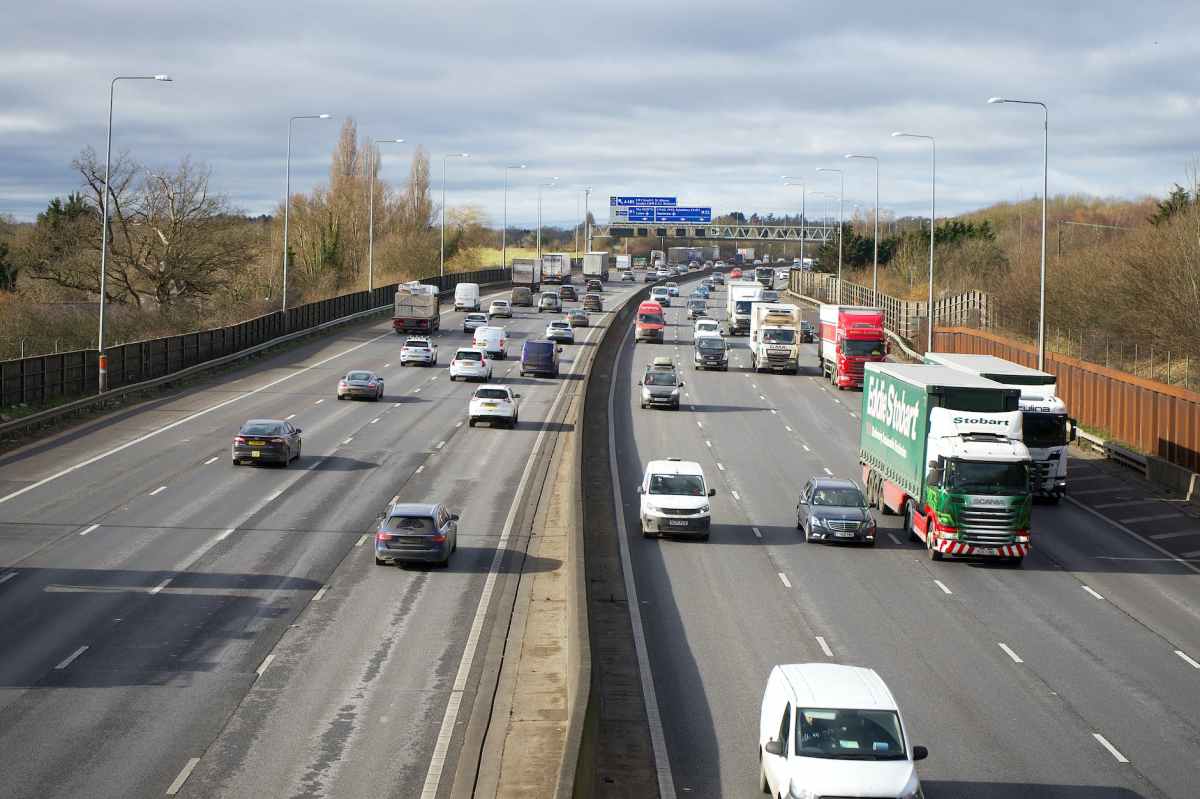
Londoners in all Boroughs need clearer air to breathe. But London doesn’t sit in isolation. Afterall the Borough boundaries do not track urban boundaries. Parts of adjoining areas are equally urbanised, and the air doesn’t know about administrative boundaries. The M25 motorway doesn’t do much for air quality, that’s for sure. So, hearing of the London Mayor doing battle with adjoining areas is a bit sad. Solutions need to be negotiated with all impacted parties regardless of the politics.

By the way, I’m not impressed with communications from Transport for London. I clicked on an e-mail sent to me on the above subject and this came up: “This link has expired. Please contact the sender of the email for more information.” Thanks a lot.


[1] More than 4 out of 5 vehicles meet emissions standards, but if you use a petrol vehicle over 16 years old, or a diesel vehicle over 6 years old, you need to check it.

Energy Policy

Saint Augustine’s early life was not what we associate with a saint. As a young man he prayed “Lord, make me chaste (pure) – but not yet!” Just now that’s the way, I fear, we are thinking of the environment. Global, national, or local. It’s total human but it needs to be fully recognised for its downside. Yes, we would like to do more to restore our environment and fight climate change but we’d rather it happened tomorrow. Tomorrow, tomorrow.

The instinctive urge to put-off decisions for what appears to be an easier life now rattles down through history. The lesson we might learn is that this approach is generally a bad way of going about thing if long-term success is the aim. Civilizations have ended because they failed to change.

This blinkered approach could be called political expediency. It’s at the core of what has become political populism[1]. The drive to persuade an electorate by retreating from commitments and heralding jam today. This fits our social media saturated public debate to the tee. I want it, and I want it now. The future will look after itself.

It’s a sad philosophy. I say that because the premises is that we may as well live well today because we have no control over what happens next. In populist terms, that’s put down to an imaginary conspiring elite that will inevitably win regardless of what you do. Truly nonsense.

That might have been true in the stone age but its far from true in the 21st Century. In reality, and on average, individual citizens have more choice than they have ever had. I say “on average” because there’s a billion people in the world who still live on the breadline.

Anyway, my point is that putting-off environmental measure is foolish. I’m reacting to a Conservative Energy Minister, has said that the UK government will “max out” remaining reserves of North Sea oil and gas[2]. I’s almost as if the Minister thinks this has no impact. That’s other than short-term political gain amongst climate sceptics and right-wing newspaper owners.

If the target for Net Zero is – yes but not yet – there’s virtually no hope of achieving the goal. Events being what they are there will never be a perfect time to stop using fossil fuels. I’m in agreement that the rundown of fossil fuel use should be graduated. However, putting off real change doesn’t make change easier. In fact, it makes change harder.

In the run-up to a UK General Election the possibilities for policies of self-harm are all too evident. A Conservative Government desperate to cling on to power will wriggle and produce contorted justifications for delay. It’s a basic instinct.

I’m not saying that we should all become zealous exponent of hairshirt policies. What is desperate is that we don’t become side-tracked from practical measures that can be practically taken. Taken now.

Work as though everything depended on you, and the choices you make. That needs to be true of Government Ministers as much as every one of us[3].


[1] https://www.thoughtco.com/populism-definition-and-examples-4121051

[2] https://www.ft.com/content/407b834e-a503-4de9-acab-fcf88d76dbb3

[3] Pray as though everything depended on God. Work as though everything depended on you. Saint Augustine

Short-sighted

None of that comes cheap.

OK. Why are mini-nuclear power stations such an irrational idea? The industry is selling these untried, untested power station as completely unlike that which has gone before. A Conservative Minister has been echoing their marketing brochures.

Let me say, with power generation there are some basic realities that remain the same.

Fuel must be transported to power stations and waste must be removed from them on a regular basis. For coal, that was the reason for the sitting of large power stations in the past. For gas, there was more flexibility in location, but the costs of transportation still needed to be minimised. For such innovations as waste-to-energy plants, proximity to the source of waste presented a major problem. Neighbourhoods rarely invited these plants to be built close by.

Spreading the distribution of nuclear fuel and waste around the country doesn’t sound like a good idea to me. Cost of transportation are high. Safety is paramount. Security is always a grave concern.

Now, I understand the need for limited numbers large-scale nuclear power stations. They provide a reliable base load when the renewable sources of power are not available. The wind doesn’t blow.

Although, there are a variety of different international companies in the nuclear business the notion of a “free market” in the conventional sense is not a real prospect. The investments needed to be competent and meet regulatory requirements in the nuclear business are huge. Projects are there for the long-term. A whole working career of a nuclear engineer may be locked to one technology.

Experience has shown us that a goal of zero accidents rarely delivers a reality of zero accidents. These are complex engineered systems. It doesn’t matter if they are big or small the complexities remain. Yes, safety can be managed in a safety critical industry but there had better be preparedness for worst possible outcomes[1]. With these nuclear plants decommissioning and recovery from significant incidents of contamination must be accounted for in any design, implementation, and operation. None of that comes cheap.

Overall, in Britain there are much better paths to travel than the mini-nuclear one.

It absolutely astonishes me that, given the enormous tidal range of the Severn Estuary[2] we have never captured the energy of those waters. Equality in a nation, with a coast as large as ours, we have only ever dabbled in wave power[3]. Let’s have some genuine innovation. Let’s think like the Victorians and build for the long-term.

Why are we so incredibly short-sighted in Britain?


[1] https://www.bbc.co.uk/news/world-13047267

[2] https://en.wikipedia.org/wiki/Severn_Barrage

[3] https://en.wikipedia.org/wiki/Salter%27s_duck